
Note: This article contains affiliate links. If you click on these links and make a purchase, we may earn a small commission at no extra cost to you. This helps support our research and content. Read our full affiliate disclosure here.
If your home draws water from a private well, the filter you choose affects taste, safety, and equipment longevity. Well water can contain sediment, iron, sulfur, hard minerals, and bacteria that standard municipal filters are not designed to handle. Picking the right drinking water filter for well water reduces unpleasant odors and particulates and helps protect plumbing and appliances. This guide shortlists the top options for well water treatment and explains how each type addresses common well-specific issues. We evaluated systems for contaminant removal, flow performance, and ease of maintenance to help you find a long-term solution. Read on to see the best picks and what to consider before installing a system in your home.
Top Picks at a Glance
| Best Overall The best all-around choice for most situations | iSpring RCC7AK-BN RO System |  |
| Best Quality Built to a higher standard if you want something more solid | Waterdrop G3P600 Reverse Osmosis |  |
| Best Value The sweet spot between price and what you get | Waterdrop WD-10UA Under Sink Filter | 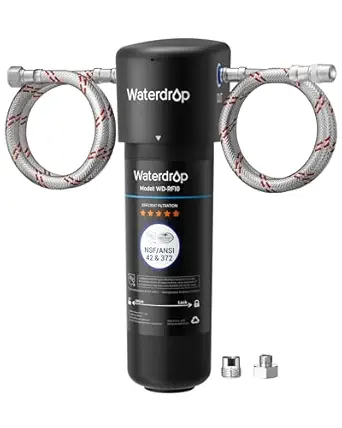 |
| Best Budget The cheapest option that still gets the job done reliably | ZeroWater 22-Cup Ready-Read Dispenser |  |
| Top Rated A top-rated pick with lots of positive feedback | Ziwshom Whole Home Water Filter |  |
| Most Popular A crowd favorite that many people choose with confidence | Brita Metro 6-Cup Pitcher |  |
| Best Seller A high-volume bestseller chosen again and again | Camco TastePure RV Water Filter 40043 |  |
iSpring RCC7AK-BN RO System

| Purification Method | Reverse Osmosis, Alkaline, Activated Carbon, Carbon block |
|---|---|
| Power Source | No Power Needed |
| Maximum Flow Rate | 284 liters_per_day |
| Supported Water TDS Level Maximum (PPM) | 750 |
| Filter Life Cycle | 6 months |
The iSpring RCC7AK-BN is a six-stage under-sink reverse osmosis system designed to deliver very low-TDS, mineral-balanced drinking water for a household. It uses sediment and carbon prefilters, an RO membrane, and a final alkaline remineralization stage to restore healthy minerals and raise pH after filtration. The system is NSF/ANSI 58 certified for full-system RO performance and comes with a storage tank and a brushed-nickel faucet for drinking water access. Practical features include a transparent first-stage housing for easy visual checks, push-to-connect fittings and color-coded tubing to simplify a DIY install, and a top-mounted faucet fastener that lets you tighten the faucet from above. Because it runs without electricity it works with standard home plumbing and is compatible with many refrigerators for an ice maker feed. Limitations are routine filter replacements roughly every 6 months for some stages and the under-sink footprint and tank that require cabinet space and installation comfort with basic plumbing.
Best for: Buyers seeking a reliable, tested RO system that produces very low-TDS, mineral-balanced drinking water for everyday use and who prefer a long-term, installed under-sink solution they can maintain themselves.
Less Ideal for: Renters who cannot alter plumbing, users with extremely tight undersink space, or anyone wanting a countertop or pitcher-style filter instead of a permanent installed system.
- NSF/ANSI 58 full-system certification ensures verified RO contaminant reduction
- Included alkaline remineralization returns minerals and raises pH for better-tasting water
- Transparent sediment housing allows quick visual monitoring of filter condition
- DIY-friendly fittings, color-coded tubing, and top-mounted faucet fastener simplify installation
- Operates without electricity and includes storage tank and faucet for ready access
- Requires periodic filter and membrane changes which add ongoing maintenance
- Takes under-sink cabinet space for the tank and unit hardware
Verdict: Choose the iSpring RCC7AK-BN if you want a certified, no-electricity under-sink RO system that returns minerals for better-tasting, well-suitable drinking water.
Waterdrop G3P600 Reverse Osmosis
| Filtration stages | 8-stage |
|---|---|
| Flow rate | 600 GPD |
| Purification method | Reverse Osmosis, Carbon Block |
| Pure to drain ratio | 2:1 |
| Power source | Corded Electric |
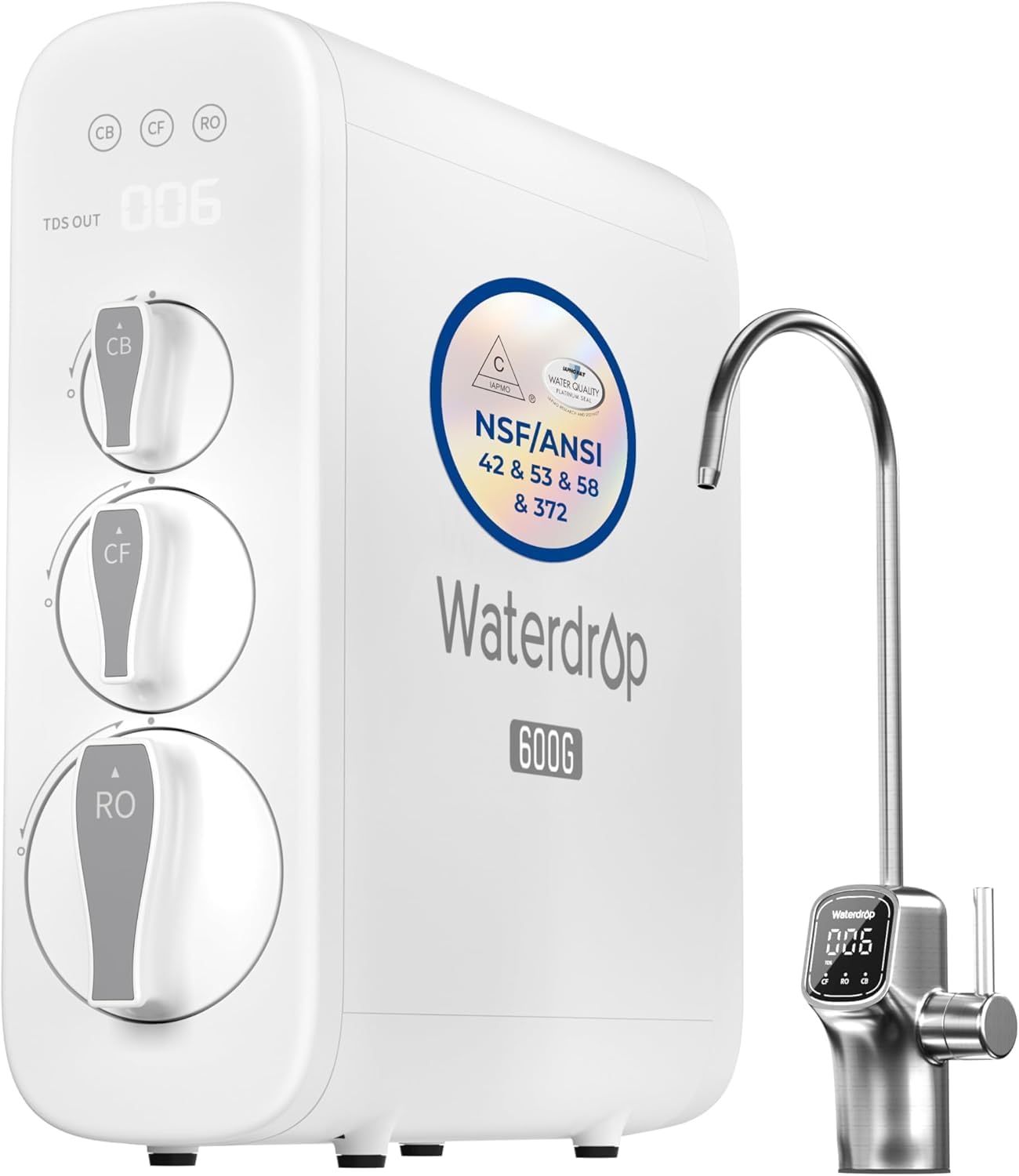
The Waterdrop G3P600 is a tankless under-sink reverse osmosis system designed for heavy-duty household use and well water treatment. It uses an 8-stage filtration train including carbon block and an RO membrane to reduce TDS, heavy metals, PFAS, chlorine and other contaminants, and the unit delivers up to 600 gallons per day with a fast flow that fills an 8 oz cup in about 8 seconds. The smart LED faucet shows TDS and filter life, and the system reports a 2:1 pure-to-drain ratio to limit wastewater compared with traditional RO units. Tankless construction saves under-sink space and allows tool-free filter changes by twisting cartridges. The system needs a plug-in power source and under-sink clearance for installation, and it requires two drilled holes for faucet and drain connections. Buyers should expect standard RO maintenance like periodic filter and membrane replacement and confirm cabinet fit before ordering.
Best for: Households that prioritize high-performance contaminant reduction and fast continuous output for drinking and cooking, especially where well water demands robust filtration and frequent use.
Less Ideal for: Renters without ability to drill holes or households without nearby under-sink power access should consider simpler countertop or non-powered filtration options.
- High daily output rated at 600 gallons per day for fast steady supply
- 8-stage filtration that targets TDS, heavy metals, PFAS, chlorine and other common contaminants
- Smart faucet with TDS readout and filter life indicator for real-time water quality and maintenance alerts
- Tankless design frees substantial under-sink space and enables quick, twist-to-replace filters
- Requires under-sink electrical outlet and two drilled holes for faucet and drain connections
- Pure-to-drain ratio is low relative to non-RO alternatives despite being 2:1
Verdict: Choose the Waterdrop G3P600 when you want tankless, high-capacity RO performance and real-time TDS monitoring for demanding well-water filtration.
Waterdrop WD-10UA Under Sink Filter

| Purification Method | Activated Carbon |
|---|---|
| Maximum Flow Rate | 2.5 gpm |
| Filter Life Cycle | 1 years |
| Supported Water TDS Level Maximum (PPM) | 700 |
| Capacity | 11000 gallons |
The Waterdrop WD-10UA is an under-sink activated carbon filter built for simple, tool-free installation and basic contaminant reduction on municipal cold water lines. It connects directly to standard 3/8" or 1/2" feed valves with included fittings and uses a twist-and-lock cartridge so replacements are quick and straightforward. The cartridge is NSF/ANSI 42 certified and rated to reduce chlorine, lead, PFAS/PFOA/PFOS, and bad tastes and odors, while retaining beneficial minerals. Waterdrop advertises an 11,000-gallon capacity and a one-year filter life under municipal conditions, with tested flow rates reported around 0.75 to 1.33 gpm depending on hookup. Practical benefits include compact under-sink footprint, push-to-connect plumbing, and a replaceable WD-RF10 cartridge that keeps ongoing costs lower than many multi-stage systems. Important limitations: the unit is specified for cold municipal water only and is not suitable for well water or hot water, and it does not provide ultra-fine or microbial-grade filtration, so it will not address bacteria, viruses, or sediment-heavy supplies.
Best for: Buyers who prioritize an inexpensive, easy-to-install under-sink filter to improve tap taste and reduce common municipal contaminants and who want low-effort cartridge replacement.
Less Ideal for: Homeowners with well water, heavy sediment, or microbiological concerns should avoid this system and consider a dedicated well-water treatment or multi-stage filtration with microbial protection.
- NSF/ANSI 42 certified for common chemical and taste reduction
- Twist-and-lock cartridge and push-to-connect fittings for fast, tool-free install and swap
- Compact design fits easily under most sinks and includes necessary adaptors and hoses
- Keeps beneficial dissolved minerals while removing targeted contaminants
- Long advertised service life and high total capacity for a single cartridge (11,000 gallons)
- Not suitable for well water or hot water use
- Does not provide microbial or ultra-fine filtration for bacteria or viruses
Verdict: Choose the WD-10UA if you want a compact, NSF-certified under-sink carbon filter that is easy to install and inexpensive to maintain for municipal tap water.
ZeroWater 22-Cup Ready-Read Dispenser

| Capacity | 5.2 liters (22 cups) |
|---|---|
| Filtration | 5-stage ion exchange |
| Included components | Dispenser, 5-stage filter, TDS meter |
| Supported Water TDS Level Maximum (PPM) | 1 |
| Installation Type | Countertop |
The ZeroWater 22-Cup Ready-Read dispenser is a pour-through countertop system that uses a 5-stage ion-exchange filter to strip nearly all total dissolved solids from drinking water and includes a TDS meter so you can check water purity before pouring. It is typically used on a kitchen counter or in small households to replace bottled water and reduce contaminants often found in well water, such as dissolved minerals and certain heavy metals. The included filter is IAPMO certified to reduce lead, chromium, PFOA/PFOS and mercury, and the dispenser's 22-cup capacity makes it convenient for daily drinking and cooking use. Practical benefits include clear visual monitoring of filter performance via the TDS meter and a slim footprint that fits most counters. Limitations are typical for pitcher-style systems: filters need periodic replacement based on water quality and TDS levels, and flow rate is slower than instant under-sink or whole-house systems, so it is best for point-of-use drinking and cooking rather than whole-house treatment.
Best for: Buyers who want an affordable, countertop point-of-use system to noticeably reduce dissolved solids and specific contaminants from well water and who value being able to verify filter performance themselves.
Less Ideal for: Homes that need whole-house treatment, high-flow dispensing, or users who prefer an under-sink or professionally plumbed filtration system for comprehensive well water treatment.
- Five-stage ion exchange filtration that reduces TDS and heavy metals
- Integrated TDS meter for on-demand verification of water purity
- 22-cup capacity suitable for families and frequent use
- IAPMO certification for reduction of lead, PFOA/PFOS, chromium and mercury
- Not a whole-house solution so it does not treat water for showers or laundry
- Filter replacement frequency depends on well water quality and can add ongoing cost
Verdict: A simple, budget-friendly countertop system that delivers near-zero TDS and lets you verify purity with the included meter, making it a practical point-of-use choice for well water drinking and cooking.
Ziwshom Whole Home Water Filter

| Purification Method | Activated Carbon, Sedimentation |
|---|---|
| Maximum Flow Rate | 15 gpm |
| Supported Water TDS Level Maximum (PPM) | 1000 |
| Filter Life Cycle | 6 months |
| Capacity | 10000 gallons |
The Ziwshom three-stage whole-home filter is a compact under-sink/utility-room system intended to improve water quality from both wells and municipal supplies. It uses a polypropylene housing with sediment (PP), granular activated carbon (GAC), and CTO cartridges to cut sediment, chlorine, and odor while preserving dissolved minerals, and the kit ships with three complete sets of filters—enough for roughly 1.5–2 years of typical use. Installation is practical for a confident DIYer: the head includes two built-in shutoff valves and 3/4" ports so you can change cartridges without shutting the main line, and the package includes connectors, a wrench, and tape. With a stated 15 gpm max flow rate and a 10,000-gallon capacity per lifecycle, it can handle whole-house flow demands for many homes. Limitations: it does not lower TDS or soften water, and filter life is about six months per set depending on water quality; very hard or highly contaminated well water may require pre-treatment or more robust media.
Best for: Buyers who prioritize a dependable, easy-to-maintain whole-house filter that reduces chlorine, sediment, and odors and want a ready-to-install kit with spare cartridges for long initial service life.
Less Ideal for: Households needing TDS reduction, water softening, or heavy contaminant removal should look at reverse osmosis or dedicated softening systems instead.
- Three-stage filtration (PP+GAC+CTO) removes sediment, chlorine, and odors for better-tasting water.
- Three complete sets of cartridges included provide approximately 1.5–2 years of replacement filters out of the box.
- Built-in dual shut-off valves and included connectors make filter changes faster and reduce the need to shut off the main water line.
- Rated maximum flow up to 15 gpm and 10,000 gallon capacity suits many whole-house applications.
- Does not reduce total dissolved solids (TDS) or remove hardness minerals.
- Filter life (around six months) depends on incoming water quality and may require earlier replacement with dirty well water.
Verdict: A practical, reliability-minded whole-house three-stage system that ships with two years of filters and built-in shutoff valves for easy maintenance.
Brita Metro 6-Cup Pitcher

| Filter Life Cycle | 2 months |
|---|---|
| Maximum Flow Rate | 9.7 milliliters_per_second |
| Supported Water TDS Level Maximum (PPM) | 500 |
| Upper Temperature Rating | 85 °F |
The Brita Metro pitcher is a small, fridge-friendly filtered water pitcher designed for everyday countertop use and dorms. Water passes through a standard Brita filter that uses activated carbon and ion exchange resin to reduce chlorine taste and select metals like copper, mercury, and cadmium, and the SmartLight filter indicator times replacements at about every 40 gallons or two months. Its easy-fill lid and space-saving shape make refilling simple and storing in a mini-fridge straightforward, and one included filter is rated to replace roughly 300 single-use 16.9 oz bottles. Practical benefits are clearer-tasting water without bottles and broad compatibility with Brita standard filters. Limits for this article: the Metro is intended for treated tap water and is not designed to address common well-water specific issues such as high iron, bacteria, nitrates, or very high TDS, so performance may be insufficient for many well-water households without pre-treatment or a well-specific filtration system.
Best for: Buyers who want an affordable, space-saving pitcher to improve tap water taste and reduce common municipal contaminants and who prioritize reliable third-party certification and social-proofed performance.
Less Ideal for: Households relying on untreated well water or with known heavy contamination should avoid this pitcher as a primary treatment and instead choose well-specific filtration or disinfection systems.
- Certified to reduce chlorine taste and odor and select heavy metals
- SmartLight indicator gives a clear reminder for filter changes
- Compact, fridge-door friendly design with easy-fill lid
- Compatible with standard and Elite Brita filters for flexibility
- Not intended to remove well-water contaminants like bacteria, iron, or nitrates
- Small capacity may require frequent refilling for larger households
Verdict: Choose the Brita Metro if you want a compact, certified pitcher that reliably improves tap water taste and signals timely filter changes.
Camco TastePure RV Water Filter 40043

| Certifications | NSF/ANSI 42, NSF/ANSI 53, NSF/ANSI 372 |
|---|---|
| Sediment rating | 20-micron |
| Included components | Adapter |
| Material type | Polypropylene (PP) |
The Camco TastePure RV Water Filter is an inline hose filter designed to deliver better-tasting, lower-chlorine water on the road or at a campground. It installs between a standard garden or drinking-water hose and the supply, and the included flexible hose protector helps prevent kinks at the connection. Filtration is staged — granular activated carbon (GAC) plus KDF media and a 20-micron sediment screen — so it cuts chlorine, bad tastes, odors, and visible sediment while the KDF layer helps limit bacterial and mold growth when idle. The wide-body, high-flow shape is intended to keep water pressure usable for drinking and filling tanks. It is made in the USA and carries NSF/ANSI 42, 53, and 372 listings for the claimed contaminant reductions and lead-free materials, which supports its reliability for drinking-water use. Limitations: this is an inline consumer hose filter, not a whole-house or point-of-entry well system, so it will not address dissolved minerals, heavy metals beyond cert limits, or microbiological contamination that requires disinfection or specialized treatment.
Best for: Buyers who prioritize proven, certified inline filtration for campground or RV hookups and want a low-risk, tested solution for better tasting drinking water on trips.
Less Ideal for: People needing comprehensive well-water treatment for hardness, high dissolved solids, heavy metals outside the filter’s certified claims, or microbiological disinfection should choose a dedicated well treatment system instead.
- Multi-stage filtration combining GAC, KDF, and 20-micron sediment for improved taste and reduced chlorine
- NSF/ANSI 42 and 53 listings plus NSF/ANSI 372 lead-free certification
- High-flow wide-body design that maintains usable water pressure
- Made in the USA and includes a flexible hose protector to reduce kinks and strain
- Not a substitute for a whole-house or well-point treatment system for dissolved minerals or microbial disinfection
- 20-micron sediment rating will not remove very fine particulates or viruses
Verdict: A certified, easy-to-install inline filter that gives risk-averse campers and RV users noticeably better tasting, lower-chlorine drinking water at the hose connection.
Choosing the Right Drinking Water Filter for Well Water: Key Factors to Consider
Contaminant Profile and Test Results
Knowing your well water chemistry is the first step. A recent lab test will show levels of sediment, iron, manganese, hardness minerals, sulfur compounds, nitrates, and microbial indicators. Those results determine which filtration technologies you need. For example, particulate filters handle sand and silt, oxidizing filters or adsorption media target iron and sulfur, and specialized membranes or UV systems address microbial concerns. Choosing a system without matching it to your test results can leave key contaminants untreated.
Different contaminants require different media and staged approaches. A multi-stage setup often starts with coarse sediment removal, followed by targeted media or softening, and ends with polishing or disinfection. Budgeting for an initial water test and periodic retests will keep treatment aligned with changing groundwater conditions.
Required Filtration Technology
Well-water treatment commonly combines multiple technologies. Sediment cartridges, backwashable filters, catalytic carbon, manganese greensand, ion exchange, oxidizing media, reverse osmosis, and ultraviolet disinfection each solve particular problems. The right mix depends on the contaminants you need to remove and whether you want point-of-use drinking-water treatment or whole-house conditioning.
Some technologies reduce specific constituents but not others. For example, standard carbon does not remove dissolved iron effectively, and softeners reduce hardness but do not disinfect. Reverse osmosis provides excellent final-stage polishing for drinking water but is impractical as a whole-house solution without multiple units. Plan system stages to match both the contaminant reduction goals and the location of use.
Flow Rate and System Capacity
Flow rate matters for both comfort and system sizing. Whole-house filters must maintain sufficient gallons-per-minute for showers, faucets, and appliances while point-of-use units can accept lower flow. Evaluate peak household demand and choose systems rated to meet that flow at the necessary reduction levels. If a filter has a high contaminant removal rating but drastically reduces flow, it will cause frustration and may lead to bypassing the system.
Capacity is also important. Filters with larger media beds or replaceable cartridges rated for higher gallon counts require less frequent service and can be more convenient for busy households with variable demand.
Maintenance Frequency and Ongoing Cost
Well-water systems require routine upkeep. Some systems have replaceable cartridges that need changing every few months, while others use media that should be backwashed or regenerated on a schedule. Factor in the cost and availability of replacement cartridges, media, and any chemical regenerants. Also consider whether filter maintenance is a simple homeowner task or whether it needs a service technician.
A system with low maintenance frequency and widely available parts can reduce long-term ownership cost and downtime. Conversely, an inexpensive initial purchase with expensive or rare replacement parts can become costly over time.
Installation and Plumbing Compatibility
Assess whether you need a point-of-entry whole-house installation or under-sink point-of-use treatment for drinking water. Whole-house systems usually install at the main supply and may require bypass valves, pressure regulation, and professional plumbing work. Under-sink or freestanding units are less invasive but only protect specific taps.
Consider the physical footprint, mounting requirements, and whether prefiltration or a softener should be installed upstream. Proper installation affects performance and longevity, so factor in whether you will DIY or hire a contractor and choose a system that matches that plan.
Certification and Lab Data
Look for systems with independent test data or third-party certifications that validate contaminant reduction claims. Certifications and test reports provide measurable assurance about what a filter will remove and to what extent. For well water, lab reports showing reductions for iron, manganese, turbidity, cysts, bacteria, and sulfur compounds are particularly useful.
Even without certification, published lab challenge tests for specific media can help you compare likely performance. Prioritize systems with transparent testing and clear performance specifications for the contaminants you care about.
Common Well Water Contaminants and How Filters Address Them
Well water can contain a mix of physical, chemical, and biological contaminants. Suspended solids like sand and silt increase turbidity and damage downstream equipment if left unchecked. Dissolved iron and manganese cause staining and off tastes, while hydrogen sulfide produces a noticeable rotten-egg odor. Hardness minerals make soap less effective and deposit scale on fixtures. Finally, bacteria and cysts present acute health risks if not removed or inactivated.
Different filter technologies target these issues in specific ways. Mechanical sediment filters reduce turbidity and protect downstream media. Oxidizing media and catalytic carbon can convert dissolved iron and sulfur into particulate form that can be filtered out. Ion-exchange softeners remove hardness but do not disinfect. Reverse osmosis or specialty membranes provide fine polishing for drinking-water quality. UV disinfection is a chemical-free option for inactivating microbes when mechanical filtration has already removed turbidity that would otherwise shield organisms from UV exposure.
- Sediment filters: remove sand, silt, and large particulates
- Oxidizing media: convert dissolved iron and sulfur for filtration
- Ion exchange: reduce hardness minerals
- Reverse osmosis: high-level dissolved solids and taste polishing
- UV disinfection: inactivate bacteria and viruses after turbidity removal
Point-of-Use Vs Whole-House Strategies
Decide whether you need treatment for all water entering the home or only for drinking and cooking taps. Whole-house systems protect plumbing and appliances and treat issues like sediment and iron ahead of the water distribution system. They are sized for higher flow and typically reduce wear on water-using appliances.
Point-of-use units under sinks or at dedicated taps focus on producing high-quality drinking water. These systems are more economical for drinking-water polishers, reverse osmosis units, or dedicated carbon filters. In many well houses, a combination of whole-house pretreatment plus a point-of-use polishing system offers the best balance of protection and drinking-water quality.
- Whole-house systems: protect plumbing, require higher flow capacity
- Point-of-use systems: focus on taste and dissolved contaminants at specific taps
- Hybrid approach: pretreat at entry, polish at drinking taps
When to Add Disinfection
Disinfection is necessary if tests show bacterial contamination or if the well has experienced flooding or structural issues. UV systems offer a chemical-free method to inactivate microbes when installed after mechanical filtration. If turbidity remains high, filtration first is essential because suspended solids can shield organisms from UV exposure.
Chemical disinfection options exist but require careful handling and proper dosing. For many homeowners, UV plus routine water testing provides an effective strategy to manage microbial risks without introducing ongoing chemical treatment.
- Test before deciding on disinfection
- Install filtration upstream of UV for best effectiveness
- Consider seasonal or event-driven testing after storms or well service
Sizing Filters and Planning for Peak Demand
Match a system's flow rating to your household's peak demand. Factor in simultaneous uses such as showers, laundry, and dishwasher cycles. Manufacturers provide gallons-per-minute ratings and peak flow suggestions; choose a system with headroom above typical household peaks to avoid reduced water pressure.
Account for filter loading over time. Smaller cartridges clog faster in particulate-heavy wells, increasing pressure drop. Larger-capacity media beds or backwashable designs handle variable conditions with less frequent maintenance and more consistent flow.
- Calculate peak household flow to choose appropriate gpm rating
- Prefer larger media beds or backwashable filters for high-sediment wells
- Plan for replacement intervals based on reported gallon capacities
Maintenance Best Practices for Well Water Filters
Establish a maintenance schedule based on the system type and your water quality. Replace cartridges and media at recommended intervals, monitor pressure differentials to spot clogging, and inspect prefilters after heavy storm events. Keep a log of cartridge changes and water tests to track system performance over time.
Retest your well annually or after any maintenance event that could affect water quality. That testing validates that the chosen system continues to address contaminants effectively and flags changes that may require adjustments or service.
- Monitor pressure drop to detect clogged filters
- Keep replacement parts on hand to minimize downtime
- Retest water annually and after major well events
How We Chose the Best Drinking Water Filter for Well Water
Our selection focused on systems and components suited specifically to private-well water, not typical municipal-supply cartridges. We prioritized demonstrated contaminant removal relevant to wells, including particulate filtration, iron and manganese reduction, hydrogen sulfide control, and bacterial or cyst removal where applicable. Flow and capacity were treated as separate, measurable criteria because many well homes need whole-house or point-of-use flow rates that support sinks and appliances without throttling. Ease of maintenance and replacement-filter availability were assessed to reflect ownership cost and downtime. Installation complexity and compatibility with common household plumbing were also evaluated, since many well users handle installation themselves or rely on local contractors. We excluded products designed only for municipal chlorine removal, countertop pitchers, or single-stage filters that lack the capacity to address typical well contaminants. Systems that require specialized, hard-to-find replacement parts or professional-only servicing were deprioritized. The final shortlist balances measurable contaminant reduction, usable flow rates, predictable maintenance schedules, and realistic DIY or contractor installation needs.
Our full evaluation process is outlined in our review methodology.
FAQ
Do I always need to disinfect well water with UV?
Not always. UV is recommended when tests show bacterial contamination or after events that risk contamination. If routine tests show no microbial issues and the well is properly sealed, UV may be unnecessary. However, UV is a low-impact option when added after effective mechanical filtration.
Can a drinking-water filter remove iron and manganese from my well?
Yes, but removal depends on the form and concentration. Dissolved iron and manganese often require oxidizing media or catalytic carbon and proper staging to convert them into filterable particles. Very high concentrations may need specialized treatment or pretreatment steps before standard cartridge filtration.
How often should I test my well water?
Annual testing is a good baseline for most wells. Test more frequently after nearby construction, flooding, or if you notice changes in taste, odor, or clarity. Targeted tests for specific contaminants can be run between full panels when you suspect particular issues.
Is reverse osmosis practical for well water drinking supply?
Reverse osmosis provides strong dissolved-solids reduction and taste improvement and is well suited for point-of-use drinking-water systems. It is usually impractical as a whole-house solution due to low flow and storage requirements but works well under a sink where high-quality drinking water is desired.
Will a water softener remove hydrogen sulfide odor?
Water softeners can reduce low levels of sulfur odor when paired with oxidizing pretreatment, but they do not directly eliminate hydrogen sulfide in all situations. For noticeable rotten-egg odors, dedicated oxidizing media or aeration followed by filtration is often more effective.
Final Verdict
Choose a drinking water filter for well water based on your specific test results and the scope of protection you need. Prioritize systems that target the contaminants identified in lab tests, provide sufficient flow for your household, and have predictable maintenance requirements. Be realistic about tradeoffs: whole-house systems protect plumbing but cost more to size and service, while point-of-use polishing gives excellent drinking-water quality with lower flow demands. With a matched filtration strategy and routine testing, you can secure safer, better-tasting water from a private well.