
Note: This article contains affiliate links. If you click on these links and make a purchase, we may earn a small commission at no extra cost to you. This helps support our research and content. Read our full affiliate disclosure here.
If your tap water smells like rotten eggs, a targeted water filter can remove the sulfur compounds that cause the odor and make water safe and pleasant to use. Choosing the right water filter for sulfur smell matters because treatment methods, flow rates, and filter life vary widely depending on whether the smell is intermittent, present only in hot water, or constant at the tap. This guide shortlists the top options across common home setups and explains the practical tradeoffs we considered, including filtration effectiveness, installation type, and ongoing maintenance. Read on to find a solution that fits your plumbing and household use patterns.
Top Picks at a Glance
| Best Overall The best all-around choice for most situations | iSpring WGB32B 3-Stage Whole House Filter |  |
| Best Quality Built to a higher standard if you want something more solid | iSpring WCFM500K Whole House Filter |  |
| Best Value The sweet spot between price and what you get | Waterdrop WD-15UA Under Sink Filter |  |
| Best Budget The cheapest option that still gets the job done reliably | ICEPURE 10" x 4.5" Carbon Filter |  |
| Top Rated A top-rated pick with lots of positive feedback | Waterdrop WD-10UA Under Sink Filter | 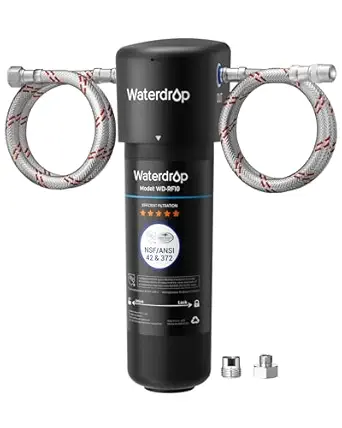 |
| Most Popular A crowd favorite that many people choose with confidence | Camco Tastepure RV Water Filter |  |
| Best Seller A high-volume bestseller chosen again and again | ICEPURE CTO10 Carbon Filter |  |
iSpring WGB32B 3-Stage Whole House Filter

| Inlet / Outlet | 1 inch Female NPT |
|---|---|
| Maximum Flow Rate | 15 gpm |
| Operating Pressure Range | 25 – 80 psi |
| Operating Temperature | 40 – 100 °F |
| Filter Life Cycle | Up to 100,000 gallons / ~12 months |
The iSpring WGB32B is a tankless, DIY whole-house filter designed to remove sediment, chlorine, tastes, and odors before water reaches fixtures and appliances. It uses a 3-stage setup: a multi-layer polypropylene sediment cartridge followed by two coconut-shell carbon block filters that the manufacturer says remove up to 99% of chlorine and reduce smells and tastes. The unit accepts 1-inch female NPT plumbing, handles typical household flow rates up to 15 gpm, and is intended for indoor installation with straightforward instructions and online video support. Practical benefits include long filter life (up to 100,000 gallons or roughly 12 months under many conditions), preserved water minerals since it is not an RO system, and robust chlorine and odor reduction backed by lab testing. Limitations are that it does not reduce water hardness or TDS above the stated max, and it requires space and basic plumbing skills for installation and periodic cartridge replacements. For sulfur smell specifically, the carbon block stages will reduce many odor compounds but very strong hydrogen sulfide may need a dedicated sulfur-targeting media or additional treatment.
Best for: Homeowners seeking a balanced whole-house filter that prioritizes chlorine and common odor removal while keeping normal water flow and simple DIY installation top of mind.
Less Ideal for: Homes that need water softening, RO-level TDS reduction, or specialized sulfur-only treatment without adding an extra media stage should look at alternative or supplemental systems.
- Three-stage filtration with sediment prefilter plus two carbon block stages for strong chlorine and odor reduction
- High nominal capacity up to 100,000 gallons or about 12 months between changes in many households
- Supports high flow rates up to 15 gpm so it will not noticeably restrict whole-house water delivery
- DIY-friendly with included wrench, manual, and online video guidance for home installation
- Does not remove hardness or significantly lower TDS, so it will not address mineral scaling
- Designed for indoor installation and needs protection/insulation for outdoor setups
Verdict: Choose the WGB32B when you want a high-flow, three-stage whole-house filter that reliably cuts chlorine and common odors while keeping installation and maintenance straightforward.
iSpring WCFM500K Whole House Filter

| Purification Method | Activated Carbon |
|---|---|
| Maximum Flow Rate | 12 gpm |
| Filter Life Cycle | 10 years |
| Capacity | 500000 gallons |
| Inlet / outlet | 3/4 inch or 1 inch NPT |
The iSpring WCFM500K is a point-of-entry whole-house filter built to tackle iron, manganese and sulfur odors while protecting plumbing and appliances. It uses preloaded activated carbon media and a programmable digital control head to run automatic backwash, air oxidation, and rapid rinse cycles without chemical injectors. Homeowners set regeneration intervals on the LED display and can use vacation and smart-clean modes to minimize maintenance. The system filters down to about 3 microns and the manufacturer rates media life up to 10 years under typical conditions, so you avoid frequent cartridge swaps. It does not soften water or reduce TDS, so a separate softener or RO system is needed if hardness or dissolved solids are a concern. Installation requires indoor space and appropriate plumbing connections, and the unit relies on drain access for regeneration. For homes with well water or pronounced sulfur smell, the WCFM500K delivers targeted contaminant removal and low hands-on upkeep compared with cartridge-only options.
Best for: Buyers who prioritize effective removal of sulfur smell, iron, and manganese across the entire house and want a low-maintenance, programmable system rather than swapping cartridges frequently.
Less Ideal for: If you need a compact under-sink or point-of-use drinking water purifier, or you require water softening or TDS reduction as a single-solution, this whole-house filter is not the right choice.
- Specifically reduces iron, manganese and hydrogen sulfide so it addresses sulfur odor at the source
- Programmable digital control head with auto-backwash and air oxidation for low-maintenance operation
- 3-micron filtration removes solids and turbidity to protect appliances and fixtures
- Pre-loaded media with up to 10 years of service life reduces recurring filter replacement
- Designed for whole-house installation with flow capacity suitable for typical residential needs
- Does not reduce water hardness or Total Dissolved Solids so additional treatment may be required
- Requires indoor, frost-protected installation and drain access for regeneration
- Relatively large and heavy unit that needs professional or experienced DIY plumbing for installation
Verdict: Choose the WCFM500K when you need a robust, set-and-forget whole-house system that reliably eliminates sulfur smell, iron and manganese with minimal hands-on maintenance.
Waterdrop WD-15UA Under Sink Filter
| Purification Method | Activated Carbon |
|---|---|
| Capacity | 19000 gallons |
| Filter Life Cycle | 2 years |
| Maximum Flow Rate | 0.75 gpm |
| Supported Water TDS Level Maximum (PPM) | 700 |
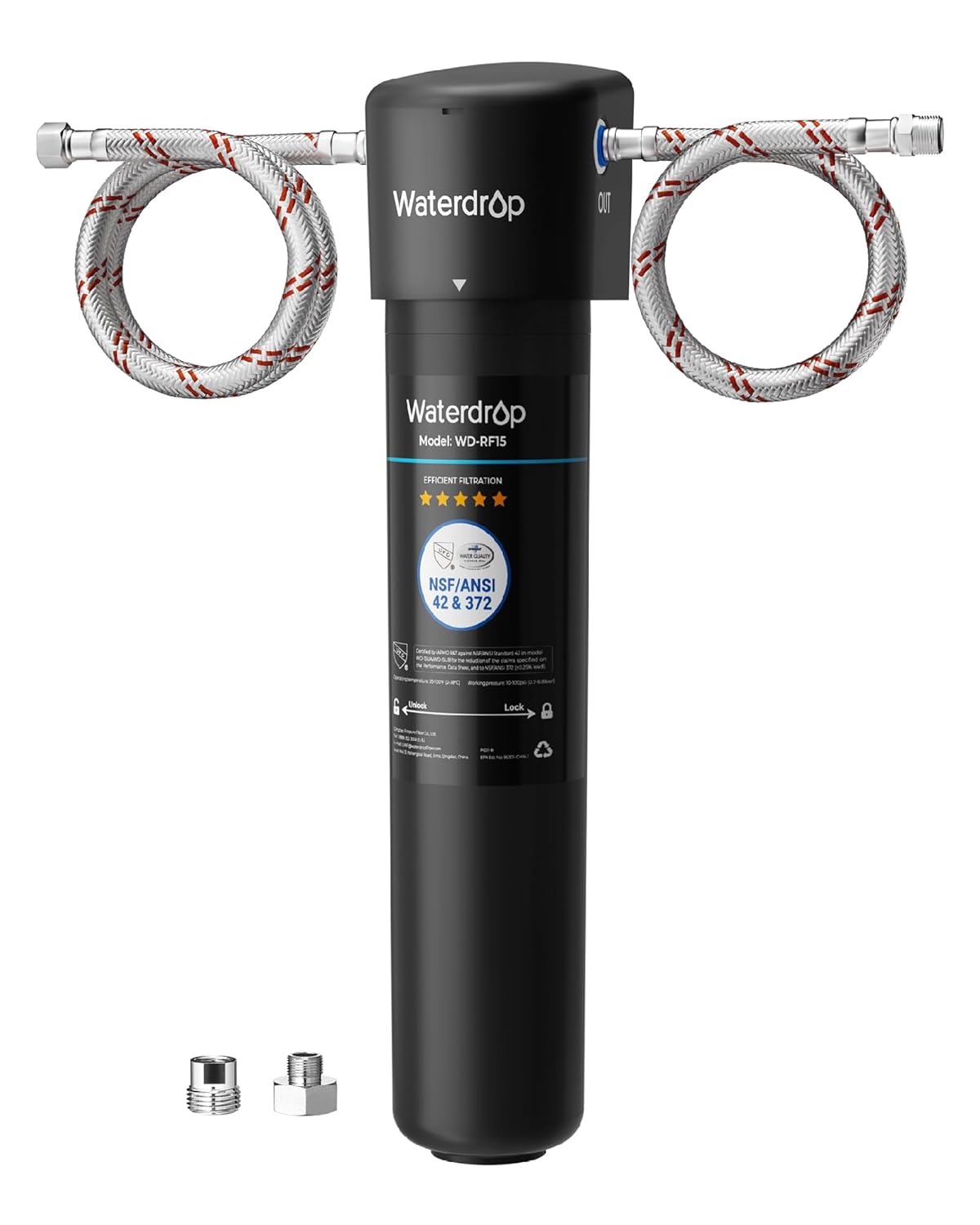
The Waterdrop WD-15UA is an under‑sink activated carbon filter that connects directly to your cold water line with push‑to‑connect fittings for tool‑free installation. It is intended for everyday drinking and cooking water and targets chlorine, lead, PFAS/PFOA/PFOS and common taste and odor problems, so it can help reduce sulfur smell caused by some contaminants that carbon captures. The unit is rated for a high cumulative capacity of about 19,000 gallons or roughly 24 months of service on municipal water, and it delivers a tested flow of about 0.75 gpm at 60 psi for steady faucet performance. The cartridge is easy to replace and the system includes hoses and a 3/8″–1/2″ adapter, making it suitable for typical kitchen sinks, bathrooms, RVs, or small office taps. Limitations: it is for cold municipal supply only, not suited for well water or hot lines, and it does not claim microbiological filtration, so it will not address bacterial hydrogen sulfide sources of rotten‑egg smell.
Best for: Buyers who want a low‑maintenance under‑sink filter that eliminates common chemical causes of foul taste and odor and who prioritize long cartridge life and quick DIY installation.
Less Ideal for: Homes on untreated well water or anyone needing microbial or thermal (hot water) filtration should consider other systems designed for those specific contaminants and conditions.
- Reduces chlorine, lead, PFAS/PFOA/PFOS and improves taste and odor.
- Very long service life rated up to 19,000 gallons or 24 months on municipal water.
- Push‑to‑connect fittings and included adapter/hoses enable quick, no‑plumber installation.
- Delivers a steady flow (0.75 gpm at 60 psi) suitable for faucet use without noticeable slowdowns.
- Designed for cold municipal water only and not appropriate for well water or hot water lines.
- Does not provide bacterial or viral filtration, so it will not fix biologically caused sulfur odors.
Verdict: Choose the WD-15UA if you want an easy‑to‑install under‑sink carbon filter that reliably reduces chemical causes of sulfur smell while running for up to two years between changes.
ICEPURE 10" x 4.5" Carbon Filter

| Material Type | 100% natural coconut shell activated carbon |
|---|---|
| Compatible Water Purifier Models | GE GNWH38S, GE GXWH35F, GE GXWH40L |
| Unit Count | 2 Count |
| External Testing Certification | NSF/ANSI 42 & 372 |
| Product Benefits | Reduce Chlorine, Taste and Odor |
This two-pack ICEPURE 10" x 4.5" carbon and sediment cartridges pair a sediment layer with coconut-shell activated carbon to cut chlorine, taste, and common odors from municipal tap water. Installed in a standard 10" x 4.5" whole-house or under-sink housing, the filters act as pre-filtration for particles and as an absorbent stage for chlorine and organic compounds that cause smells. The manufacturer rates effective capacity up to 30,000 gallons depending on water quality and recommends changing cartridges every 3 to 6 months for best results. Materials are food-grade and NSF/ANSI 42 and 372 certified, which supports their odor and chlorine reduction claims, though they are aimed at municipal water rather than heavily contaminated well water. For homes battling intermittent sulfur or rotten-egg smells from chlorinated supply lines the carbon media can noticeably reduce those odors, but persistent hydrogen sulfide from well sources typically needs a dedicated sulfur-specific treatment. The pack gives straightforward, budget-friendly replacement options for standard housings and is a practical choice when you want basic odor reduction without specialized equipment.
Best for: Practical buyers on a budget seeking a straightforward replacement cartridge to reduce chlorine and common municipal odors in a standard 10" x 4.5" system.
Less Ideal for: Homes relying on untreated well water with persistent sulfur or high sediment levels should consider targeted sulfur removal systems or multi-stage pretreatment instead.
- Coconut-shell activated carbon media reduces chlorine, taste, and many organic odors
- Works in any standard 10" x 4.5" filter housing for easy replacement
- NSF/ANSI 42 and 372 certification for chlorine and aesthetic claims
- Two-pack offers immediate spares and better value for routine changes
- Not formulated for heavy-duty well water problems like high hydrogen sulfide or large particulate loads
- Filter lifespan varies widely with water quality, requiring more frequent changes in poorer water
Verdict: If you need an affordable, certified replacement to cut chlorine and common odors from municipal tap water, these coconut-shell carbon cartridges are a practical choice.
Waterdrop WD-10UA Under Sink Filter

| Purification Method | Activated Carbon |
|---|---|
| Maximum Flow Rate | 2.5 gpm |
| Filter Life Cycle | 1 years |
| Supported Water TDS Level Maximum (PPM) | 700 |
| Capacity | 11000 gallons |
The Waterdrop WD-10UA is a compact under-sink activated carbon filter intended for point-of-use drinking and cooking water. It installs inline to the cold-water feed with push-to-connect fittings and a 3/8" outlet that can be adapted to 1/2" lines, and the cartridge is twist-and-lock for quick one-way replacements. The unit is NSF/ANSI 42 and 372 certified for chlorine, taste and odor reduction and lists PFAS and lead among the contaminants it reduces, so it is suited to improving sulfur or chlorine smells and general tap taste. Waterdrop claims an 11,000-gallon capacity and a 12-month filter life on municipal cold water, and the system maintains a steady flow rate designed to avoid frequent clogging. It is mechanical pressure powered so no electricity is needed, and the small footprint fits neatly under most cabinets. Limitations: it is designed only for cold municipal water and is not intended for well water or hot lines, and performance depends on feed-water quality so heavily sulfurized or high-TDS sources may need a dedicated sulfur-specific or multi-stage system instead.
Best for: Buyers who prioritize dependable, certified under-sink odor and taste improvement for municipal tap water and want a low-maintenance, quick-replacement cartridge system.
Less Ideal for: People with private well water or persistently strong hydrogen sulfide smells should consider multi-stage or specialized sulfur-removal systems instead.
- NSF/ANSI 42 & 372 certification for chlorine, taste, and odor reduction
- Push-to-connect and twist-and-lock fittings for tool-free installation and quick cartridge changes
- Designed to reduce PFAS, PFOA/PFOS and lead in municipal cold water
- Compact footprint that fits under most sinks and includes connectors for common pipe sizes
- Not suitable for well water or hot water lines
- Filter effectiveness depends on incoming water quality and may not fully resolve severe sulfur problems
Verdict: Choose the WD-10UA when you need a compact, certified under-sink filter that reliably improves taste and reduces common municipal contaminants and odors for up to a year.
Camco Tastepure RV Water Filter

| Certifications | NSF/ANSI 42, NSF/ANSI 53, NSF/ANSI 372 |
|---|---|
| Filtration media | GAC & KDF with 6-step Hex-Flow |
| Sediment rating | 20-micron |
| Made in | USA |
The Camco Tastepure RV Water Filter is an inline hose filter designed to give campers and boaters cleaner, better-tasting water straight from a campground spigot or garden hose. It installs between your water source and hose using standard fittings and uses a 6-step Hex-Flow filtration stack combining GAC and KDF media plus a 20-micron sediment barrier to cut chlorine, bad tastes, odors and some particulates. The wide-body, high-flow shape keeps water pressure reasonable compared with tiny cartridge filters, and the included flexible hose protector helps prevent kinks and strain at the connection point. It is NSF/ANSI 42 and 53 listed and CSA lead-free certified, which supports its claims about removing taste, chlorine and certain contaminants. Limitations: it is an inline disposable-style filter so it will need replacement over time and is not designed for fine particulate removal below 20 microns or for comprehensive chemical removal beyond the scope of GAC/KDF media.
Best for: Buyers who prioritize proven performance and verified testing for better-tasting campsite water and want a simple inline solution that installs to standard hoses.
Less Ideal for: Anyone needing removal of dissolved hydrogen sulfide (strong sulfur smell) or very fine contaminants should consider point-of-entry systems or filters specified for sulfur removal rather than a general-purpose inline hose filter.
- Multi-stage GAC and KDF media targets chlorine, taste and odor effectively
- NSF/ANSI 42 and 53 certifications and lead-free listing provide independent verification
- Wide-body, high-flow design maintains usable water pressure
- Includes flexible hose protector to reduce kinks and connection stress
- 20-micron sediment rating does not remove very fine particulates or most dissolved sulfur compounds
Verdict: A certified, high-flow inline RV hose filter that improves taste and removes chlorine and sediment, ideal for campers who want a tested, easy-to-install solution.
ICEPURE CTO10 Carbon Filter

| Material Type | Activated Carbon |
|---|---|
| Set Name | Pack of 4 |
| Compatible Water Purifier Models | Bepure Ace, GE GXWH20F |
| External Testing Certification | NSF/ANSI42 Certified by IAPMO |
This ICEPURE CTO10 is a 10" x 2.5" coconut-shell activated carbon cartridge sold in a four-pack for whole-house or under-sink 10" housings. It is designed to reduce chlorine, taste, and odor and is NSF/ANSI 42 certified, so it targets the same contaminants that commonly cause sulfur or rotten-egg smells in municipal water after chlorine reactions. The filter uses sintered carbon to trap fine particles and adsorb volatile compounds, and ICEPURE rates the life at up to 13,000 gallons depending on water quality, with a recommended six-month change interval. The cartridge is BPA-free and the listing emphasizes pressure-tested, multi-step quality control and a leak-resistant seal. Practical benefits include a familiar 10" size that fits standard housings and broad compatibility with many branded RO and whole-house systems. Limitations are that it is optimized for municipal tap water and not intended as a standalone fix for heavy hydrogen sulfide from well water, which may require a dedicated sulfur or catalytic carbon media and prefiltration to avoid rapid clogging.
Best for: Buyers who prioritize verified contaminant reduction and a factory-quality replacement that fits standard 10" housings and want a straightforward, low-risk solution to reduce chlorine-related tastes and odors.
Less Ideal for: Homes with strong sulfur smells from well water or high sediment loads should consider catalytic carbon systems or prefiltration instead of this standard CTO cartridge.
- NSF/ANSI 42 certified to reduce chlorine taste and odor
- Made from coconut shell activated carbon for effective adsorption of VOCs
- Sold as a convenient 4-pack for scheduled replacements
- Compatible with standard 10" x 2.5" housings and many common filter models
- Not formulated for high levels of hydrogen sulfide common in well water
- Effectiveness depends on upstream sediment levels and water quality
Verdict: Choose this factory-quality 10" CTO carbon cartridge if you want a verified, easy-to-fit replacement that reliably reduces chlorine taste and odor in municipal water.
Choosing the Right Water Filter for Sulfur Smell: Key Factors to Consider
Type of Sulfur Problem
Identify whether the sulfur smell is constant, appears only when water is stagnant, or occurs only from hot taps. Constant hydrogen sulfide presence often indicates a source in the well or municipal feed and usually requires whole-house treatment or targeted oxidation. Intermittent odors may be caused by bacterial activity in plumbing lines or water heaters and can sometimes be resolved with flushing, targeted point-of-use treatment, or water heater maintenance.
Matching the treatment to the problem type matters because different technologies address different causes. For example, catalytic carbon or manganese greensand oxidizes and removes dissolved hydrogen sulfide, while simple carbon block filters primarily mask or adsorb lower concentrations. Knowing the pattern of the smell helps you pick a system sized and specified for the real issue rather than an over- or undersized solution.
Filtration Technology
Understand the active technology behind the filter: adsorption media, catalytic carbon, oxidation media, aeration, or chlorination/chemical injection. Adsorptive media like activated carbon can remove low concentrations of odor-causing compounds but may become saturated and less effective over time. Oxidation media and catalytic carbon are better for dissolved hydrogen sulfide because they oxidize the gas into removable solids or bound compounds.
Aeration or oxidizing systems change the chemical state of sulfur compounds so they can be trapped by downstream filters. Each technology has operational tradeoffs, such as the need for periodic backwashing, the potential for reducing flow, or the requirement for a secondary filter stage. Choose the technology that fits both the concentration of the contaminant and the level of maintenance you are willing to accept.
System Location and Installation
Decide whether you need a point-of-use solution for a single tap or a point-of-entry solution for the whole house. Whole-house installations treat all incoming water and prevent odors in showers and laundry but typically require more space and basic plumbing modifications. Point-of-use devices are smaller, simpler to install under a sink or on a countertop, and can be sufficient when only drinking water is affected.
Consider plumbing layout, available space, and whether you can shut off water or need a plumber. Some systems require dedicated drain lines or electricity for air pumps and control valves. Installation complexity affects both upfront effort and the types of systems you can practically use in your home.
Flow Rate and Household Capacity
Look at rated flow rate and contaminant capacity to ensure the system meets peak household demand. If a filter cannot handle your household's simultaneous usage, you will notice reduced water pressure at multiple fixtures. Whole-house systems are rated to deliver a continuous flow without significant pressure drop, while point-of-use filters are sized for single-tap use.
Capacity ratings also show how much contaminant the media can treat before replacement. High-capacity media reduces the frequency of filter changes, which matters for homes with persistent sulfur problems. Always choose a system with a margin above your expected daily usage to avoid early saturation and odor breakthrough.
Maintenance Requirements
Maintenance includes filter or media replacement intervals, any required backwashing or regeneration cycles, and whether specialized consumables are needed. Some oxidation media require periodic regeneration with a chemical solution or backwash to remove accumulated solids. Carbon-based filters generally require cartridge swaps when exhausted and may need prefiltration if water has high sediment.
Maintenance frequency directly affects long-term ownership cost and practical convenience. Consider whether you prefer a low-maintenance cartridge swap every few months or a more involved annual service that extends media life. Clear and accessible replacement schedules and readily available parts simplify upkeep.
Taste and Byproduct Considerations
Treatments that oxidize sulfur can create precipitates that must be trapped by downstream filtration, and some chemical treatments can alter mineral balance or leave residual tastes. Carbon polishing stages are often used after oxidation to remove any off-tastes and improve overall water flavor. If your water is sensitive, select a multi-stage approach that pairs oxidation with final polishing.
Avoid systems that trade one taste issue for another by checking how each technology affects water flavor. Materials and media should be certified for potable use to minimize unwanted leaching or secondary contaminants.
Point-of-Use Vs Point-of-Entry Solutions
Choosing between a point-of-use and a point-of-entry system depends on where the odor is noticeable and how much of the home you want treated. Point-of-use devices, typically installed at a single sink, are cost-effective for drinking and cooking water but do not address odors in showers or laundry. Point-of-entry whole-house systems treat all incoming water and eliminate odor across fixtures, but they require more space and a more involved installation.
When deciding, weigh the convenience of whole-home odor removal against the lower cost and complexity of point-of-use options. For many households with localized smell issues, a targeted under-sink system paired with simple maintenance on the water heater is sufficient.
- Point-of-use: easy install, focused treatment, lower cost
- Point-of-entry: comprehensive coverage, higher installation needs
- Combine approaches if odor sources vary across fixtures
Pre-filtration and Sediment Concerns
Sediment in water can clog adsorptive and oxidation media quickly, reducing sulfur-removal effectiveness. A basic sediment pre-filter preserves media life and keeps flow rates steady. Many whole-house systems include a sediment stage upstream of the active odor-removal media for this reason.
If your water has visible particulates or high turbidity, start with a dedicated sediment filter and then add the sulfur-specific treatment. Prefiltration is a small extra step that often pays off in longer media life and more predictable performance.
- Use 5-micron or finer sediment filters to protect downstream media
- Check sediment filter pressure drop during initial weeks
- Replace sediment cartridges more frequently in high-turbidity water
Testing Water Before and After Treatment
Test water to quantify hydrogen sulfide levels before choosing a system. Home test kits can give an initial indication, while professional lab tests provide precise concentrations and identify related issues. Post-installation testing confirms that the chosen approach removes the sulfur odor to acceptable levels.
Testing also reveals whether other contaminants are present that might affect treatment choices, such as iron, manganese, or high organic load that can foul media. Use test results to size media capacity and select any necessary pretreatment steps.
- Start with a hydrogen sulfide-specific test
- Consider a broader panel if other metals or organics are suspected
- Retest after installation to verify performance
Practical Installation Tips
Plan the installation location with access and service in mind. Whole-house systems should be placed where incoming water enters the home and where there is space for media tanks and backwash drains if required. Point-of-use units should leave enough cabinet room for cartridge swaps.
Label shutoff valves and maintain a simple bypass for systems that require service. If electrical power or an air pump is needed, confirm outlet availability and secure wiring away from wet areas. Small installation upgrades up front will make maintenance easier and reduce the chance of service-related issues later.
- Reserve space for periodic media exchanges
- Install a bypass valve for easy servicing
- Confirm drain and power requirements before purchase
Long-Term Ownership Considerations
Think beyond initial installation: replacement media cost, frequency of service, and potential long-term adjustments matter for budget and convenience. Some media provide long life with infrequent service but require periodic regeneration steps that are more complex than simple cartridge swaps. Others are user-friendly but need frequent replacement.
Plan for the ongoing supply of replacement parts and the logistics of disposal for spent media. Choose a solution that matches both your technical comfort level and the level of maintenance you are willing to commit to.
- Estimate annual maintenance hours and consumable costs
- Check local disposal rules for spent media
- Consider professional service if regeneration is needed
How We Chose the Best Water Filter for Sulfur Smell
We prioritized products and approaches that specifically address hydrogen sulfide and other sulfur-based odor sources without requiring major plumbing overhauls. Our selection criteria focused on measurable filtration methods and user-facing factors that affect real-world performance. Key criteria included filtration method effectiveness, measured by media or technology proven to oxidize or adsorb sulfur compounds. Flow rate and capacity were included to ensure treatments work at typical household demand without causing pressure drops. Installation type and plumbing compatibility were evaluated to match common kitchen, point-of-entry, and point-of-use scenarios. Maintenance burden was assessed by filter life, media replacement frequency, and the availability of straightforward service procedures. Finally, materials and safety considerations were checked to ensure treated water meets normal potable standards and avoids byproducts that create other taste issues. We excluded general-purpose filters that only advertise broad contaminant reduction without specifying sulfur or hydrogen sulfide performance. Systems requiring specialized external utilities or professional chemical feeds were also set aside for typical homeowner practicality. The result is a selection that balances efficacy, ease of installation, predictable upkeep, and household compatibility.
Our full evaluation process is outlined in our review methodology.
FAQ
What causes a rotten-egg smell in tap water?
The rotten-egg odor is usually caused by hydrogen sulfide gas or sulfur compounds produced by bacteria. It can originate from well water, municipal sources, or bacterial growth in plumbing or water heaters. Identifying the source helps determine the appropriate treatment approach.
Can a simple carbon filter remove sulfur smell?
Activated carbon can reduce low concentrations of sulfur odor through adsorption, but its effectiveness declines as the media saturates. For moderate to high dissolved hydrogen sulfide, catalytic carbon or oxidation-based systems are typically more reliable.
Do I need to test my water before choosing a filter?
Yes. Testing reveals hydrogen sulfide concentration and other contaminants like iron or manganese that affect system choice. Test results help select the correct media type, capacity, and pretreatment needs for consistent odor control.
Will treating sulfur smell affect water safety or minerals?
Most physical filtration and oxidation treatments do not remove beneficial minerals, but chemical treatments can alter water chemistry. Properly designed systems avoid harmful byproducts and usually include polishing stages to preserve taste and safety.
How often will I need to replace filter media?
Replacement intervals vary widely by technology and water conditions. Carbon cartridges might need replacement every few months in high-odor situations, while some oxidizing media last much longer but require periodic regeneration. Expect shorter intervals with higher contaminant loads.
Is professional installation necessary for whole-house systems?
Many whole-house systems are best installed by someone comfortable with plumbing modifications because they often require shutoffs, bypass valves, and potential drain connections. Point-of-use units are often simple enough for a confident DIYer to install.
Final Verdict
Choose a water filter for sulfur smell based on the odor source, contaminant concentration, and how much of the home you want treated. Match the filtration technology to the problem: adsorptive options can work for low-level odors while catalytic or oxidation-based approaches handle dissolved hydrogen sulfide more reliably. Prioritize systems with appropriate capacity, straightforward maintenance, and minimal negative taste impacts. With the right balance of installation type and upkeep expectations, you can eliminate rotten-egg odors and restore fresh, usable water throughout your home.