
Note: This article contains affiliate links. If you click on these links and make a purchase, we may earn a small commission at no extra cost to you. This helps support our research and content. Read our full affiliate disclosure here.
Living in an apartment without dryer hookups changes how you approach laundry. You need a machine that fits limited space, works with available power or venting options, and keeps fabrics safe. Choosing the right dryer matters because it affects run times, energy use, and how often you need to air-dry delicate items. This guide shortlists the top compact and nontraditional dryers built for apartments without hookups. We focus on ventless designs, low-power options, and units that balance drying performance with gentle fabric care. Below you will find our picks plus the criteria we used to evaluate them and practical buying guidance.
Top Picks at a Glance
| Best Overall The best all-around choice for most situations | Panda Portable Dryer PAN725SF | 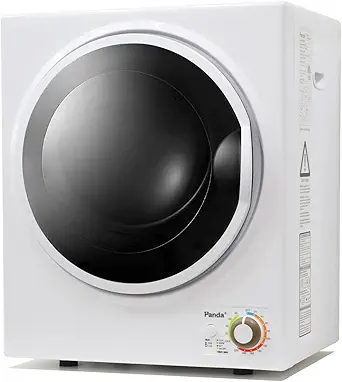 |
| Best Quality Built to a higher standard if you want something more solid | Feelfunn 3.5 Cu. Ft. Portable Dryer |  |
| Best Value The sweet spot between price and what you get | The Laundry Alternative Nina Soft Spin Dryer |  |
| Best Budget The cheapest option that still gets the job done reliably | qiunhang Portable Dryer HGJ |  |
| Top Rated A top-rated pick with lots of positive feedback | Euhomy Portable Clothes Dryer 1.5 Cu. Ft. |  |
| Most Popular A crowd favorite that many people choose with confidence | MOJOCO Portable Dryer MJC-T03 |  |
| Best Seller A high-volume bestseller chosen again and again | BLACK+DECKER BCED26 Compact Dryer |  |
Panda Portable Dryer PAN725SF

| Capacity | 1.5 cubic feet |
|---|---|
| Voltage | 120V/60Hz |
| Rated Input | 850W |
| Form Factor | Front Load |
The Panda PAN725SF is a compact 1.5 cubic foot front-load dryer built for apartments, dorms, and other small laundry spaces where a full-size hookup is not available. It runs on a standard 120V outlet with an 850W motor and offers multiple heat settings including cold, warm, hot, and an air-freshen mode, plus a timer that ranges from 20 to 200 minutes so you can tailor cycles to fabric type. The stainless steel drum and a three-layer lint filter make maintenance straightforward, and the see-through door with automatic shutoff adds safety and convenience. Installation is flexible: free-standing, stacked, or wall-mounted using the included bracket and mounting kit, and an exhaust vent pipe is supplied for venting to the outdoors. Expect longer dry times compared with larger, higher-power machines, especially on heavier or larger loads, but the low wattage helps keep electricity use down. For small loads like shirts, towels, and delicates this dryer provides reliable, space-saving drying without the need for special electrical work.
Best for: Buyers who need a reliable, low-power dryer that fits tight spaces and runs from a regular outlet and who prioritize energy savings and installation flexibility over fast, large-load drying.
Less Ideal for: Households that regularly dry large loads, bulky bedding, or need fast turnaround should choose a higher-capacity, higher-power dryer instead.
- Operates on a standard 120V outlet at 850W, so no special electrical hookup is required
- Compact 1.5 cu.ft capacity fits small spaces and supports wall-mounting, stacking, or freestanding installation
- Multiple heat modes and a wide timer range let you tailor drying for delicates, everyday clothes, or hot drying
- Stainless steel drum and removable three-layer lint filter simplify cleaning and durability
- Lower 850W power means longer drying times for heavier or larger loads
- Limited 1.5 cu.ft capacity is best for small loads and not suitable as a full-house dryer
Verdict: A space-saving, low-watt portable dryer that runs on a standard outlet and works well for small loads in apartments without hookups.
Feelfunn 3.5 Cu. Ft. Portable Dryer

| Capacity | 3.5 cubic feet |
|---|---|
| Rated Power | 1500W |
| Access Location | Front Load |
| Control Method | LED touch control |
The Feelfunn 3.5 Cu. Ft. portable dryer is a compact electric dryer built for apartments, dorms, and other spaces without hard plumbing or gas hookups. With a 1500W heater and a maximum temperature around 140°F it delivers relatively quick drying for small to medium loads, and the forward/reverse tumble reduces tangling and wrinkles. Controls use an LED touch panel and the transparent door lets you monitor progress; a stainless steel drum and multi-layer lint filter improve durability and keep lint contained. The unit is light enough to be wall-mounted and includes brackets and an exhaust connector for venting when needed, while safety auto-stop when the door opens adds practical protection. Expect best results with limited wet weight (manufacturer suggests up to 26 lb) and for items like shirts, underwear, and baby clothes rather than large bedding. Noise is described as low but it is still a full electric dryer so it will use standard household power and take longer than a full-size vented unit for very heavy loads.
Best for: Buyers who need a high-performing electric dryer for apartments or RVs without hookups and prioritize faster drying and reliable tumbling in a compact footprint.
Less Ideal for: Those who regularly need to dry large loads, heavy bedding, or want the fastest possible cycle times should consider a full-size or commercial-grade dryer instead.
- 1500W heating for relatively fast drying in a compact unit
- Front-load stainless steel drum for durability and gentle tumbling
- LED touch controls and transparent door for easy monitoring and use
- Includes wall-mounting brackets and exhaust connector for flexible installation
- Multi-layer lint filter that is easy to clean and helps contain lint
- Not suited for very large or heavy loads like bulky comforters
- Requires household electrical power and will be slower than full-size commercial dryers
Verdict: A compact, performance-focused electric dryer that delivers fast, reliable drying and tumble action for apartment dwellers without hookups.
The Laundry Alternative Nina Soft Spin Dryer

| Capacity | 17 pounds |
|---|---|
| Form Factor | Top Load |
| Spin Speed | 1800 RPM |
| Power | 136W |
| Warranty Description | 3 years |
The Nina Soft Spin Dryer is a lightweight, ventless centrifugal spinner intended to extract water from small laundry loads quickly rather than fully dry them. You load wet items into the top drum, secure the lid and run a high-speed spin cycle; the 1800 RPM motor and 17 lb capacity claim that most laundry is about 90% dry in roughly five minutes. Because it uses no heat, it avoids shrinking or heat damage and consumes very little electricity compared with a conventional dryer, making it useful in apartments without hookups or where venting is not possible. The unit is compact and easy to move thanks to a built-in handle and 15 lb weight, but it does not replace a condenser or vented dryer if you need fully dry, warm clothes or want to refresh bulky items. Expect to finish garments by air-drying or a short tumble in another appliance after spinning, and note that noise and vibration during high-speed spins can be noticeable in lightweight cabinets or thin floors.
Best for: Buyers who want a practical, low-energy solution to remove excess water from laundry in apartments or spaces without dryer hookups and who plan to finish drying items by air or with a small secondary method.
Less Ideal for: Those who need fully dry, warm clothes straight from the machine or who regularly launder bulky items like heavy comforters.
- Ventless centrifugal design removes most moisture quickly without heat
- Low power draw (136W) for energy-efficient operation
- Compact and lightweight with a built-in handle for easy transport
- Large 17 pound capacity handles small to moderate loads
- Does not fully dry clothes since it is a spin dryer and uses no heating
- High-speed spins can produce noticeable noise and vibration
Verdict: A compact, energy-efficient spin dryer that quickly extracts moisture for apartment dwellers who finish drying by air or a secondary method.
qiunhang Portable Dryer HGJ

| Access Location | Top Load |
|---|---|
| Capacity | 9 load |
This compact portable dryer is built for small loads and travel use, using PTC heating and focused airflow to dry up to nine garments in roughly 50 minutes. It is a top-load, lightweight unit that folds for storage and includes a remote control and carry bag for convenience, making it easy to run quick refresh cycles in apartments, RVs, or hotel rooms where hookups are not available. The PTC heating element is intended to maintain steady temperatures while limiting power draw, and the unit claims whisper-quiet operation for use in shared living spaces. Practical benefits include fast turnaround for daily wear and delicate items and simple controls for timer-based drying without complex setup. Expect limitations typical of mini dryers: capacity is small so bulky items and heavy fabrics will need multiple cycles, and the plastic construction suggests it is best for occasional or supplemental use rather than full household replacement. Noise and drying times will vary with load size and fabric type.
Best for: People living in apartments or on the go who need an inexpensive, space-saving way to dry small loads or refresh clothes without a dryer hookup.
Less Ideal for: Households that need to dry large loads, heavy bedding, or want a durable daily-use replacement for a full-size dryer.
- Compact foldable design with included carry bag for easy storage and travel
- PTC heating for steady, energy-efficient warmth
- Remote control and built-in timer allow convenient, hands-off operation
- Can dry small loads quickly—advertised up to nine garments in about 50 minutes
- Small capacity unsuitable for bulky items or full household loads
- Plastic construction may feel less durable than full-size dryers
- Performance depends heavily on fabric type and load distribution
Verdict: A budget-friendly, portable choice for quickly drying or refreshing small loads when you have no dryer hookup.
Euhomy Portable Clothes Dryer 1.5 Cu. Ft.

| Capacity | 1.5 cu. ft. |
|---|---|
| Power | 850W |
| Max temperature | 140°F |
| Load | Up to 10 lb wet laundry |
| Voltage | 120V |
This Euhomy portable dryer is built for small living spaces and short, frequent drying tasks. It holds up to about 10 lb of wet laundry in a 1.5 cu. ft. stainless steel drum and uses an 850W heater that can reach roughly 140°F, with separate high and low settings plus multiple timed modes (cold, warm, hot, air dry) to match fabric needs. Loading and unloading is easier thanks to a wide 105° door and a lint-capture triple-layer filter helps keep the drum cleaner and reduce lint scatter. The unit is lightweight and can sit on a shelf, be wall-mounted, or placed on a counter, and it includes mounting brackets and an exhaust fitting. Noise is reported low enough for apartment living, and ETL/DOE certifications cover basic safety and efficiency. Expect longer cycle times and lower capacity compared with full-size dryers, and it requires pre-spun laundry for best results; very heavy or bulky items may not dry fully in one cycle. For steady, small-load use in places without dedicated vent hookups this dryer offers a reliable, compact solution.
Best for: Practical apartment dwellers who need a dependable small electric dryer for regular small loads and who prioritize steady, safe operation over high capacity.
Less Ideal for: Large households, users who frequently dry bulky items, or anyone needing fast, full-size dryer throughput should look at larger vented or full-size electric models instead.
- Compact footprint and 1.5 cu. ft. drum fits small apartments and dorms
- Multiple timed heat modes (cold, warm, hot, air dry) for fabric-specific drying
- Wide 105° door and 850W stainless steel drum ease loading and speed up cycles
- Triple-layer lint filter catches fibers to reduce lint scatter and pet hair spread
- Includes mounting brackets and exhaust fitting for flexible installation
- Lower capacity and slower dry times compared with full-size or vented dryers
- Requires clothes to be well spun before drying for best performance
Verdict: A compact, safety-certified small dryer designed to reliably handle frequent small loads in apartments without hookups.
MOJOCO Portable Dryer MJC-T03

| Form Factor | Top Load |
|---|---|
| Capacity | 22 pounds |
| Power | 600W |
| Included Components | Dryer, Dryer Bag |
The MOJOCO Portable Dryer is a top-load, foldable dryer built for small-space living and travel. It uses a 600W heating element with two temperature modes and a timer to dry lightweight garments; the brand claims light items can finish in about 1–2 hours while heavier pieces may take longer. The unit holds up to nine lightweight items or a maximum load of 22 pounds and is designed to be quiet and energy efficient compared with full-size dryers. Useful extras include built-in UV LED sanitizing and automatic overheat protection for safety. Because it is compact and portable, it works well hung in a bathroom, bedroom, or inside an RV and comes with a storage bag for transport. Expect limitations: drying times are longer than a vented electric dryer, bulky or very wet items will take several hours, and capacity is best suited to small loads rather than full-family laundry. The MOJOCO is a practical, low-energy solution when you need a temporary or occasional dryer without permanent hookups.
Best for: Buyers who need a low-energy, portable drying solution for apartments, travel, or occasional loads and who prioritize compactness and quiet operation over fast throughput.
Less Ideal for: Those who regularly need to dry large, heavy, or multiple full-size loads at once or who expect full-size dryer speed and capacity should choose a conventional or hookup-capable dryer instead.
- Compact, foldable design for easy storage and travel
- Two temperature modes and timer let you tailor drying to fabric types
- Built-in UV LED sanitizing adds an extra hygienic step
- Automatic overheat protection enhances safe operation
- Slower drying than full-size vented or condenser dryers for heavy or very wet items
- Capacity and performance are best for lightweight garments, not bulky loads
Verdict: A compact, energy-efficient option for apartment dwellers or travelers who need a quiet, portable dryer for small, lightweight loads.
BLACK+DECKER BCED26 Compact Dryer
| Capacity | 2.65 cubic feet |
|---|---|
| Load weight | 8.8 lbs |
| Power | 1400W, 120V |
| Drying modes | Air Dry, Cool, ECO, Warm, Hot |
| Exhaust connector | Fits 4" vent hose |
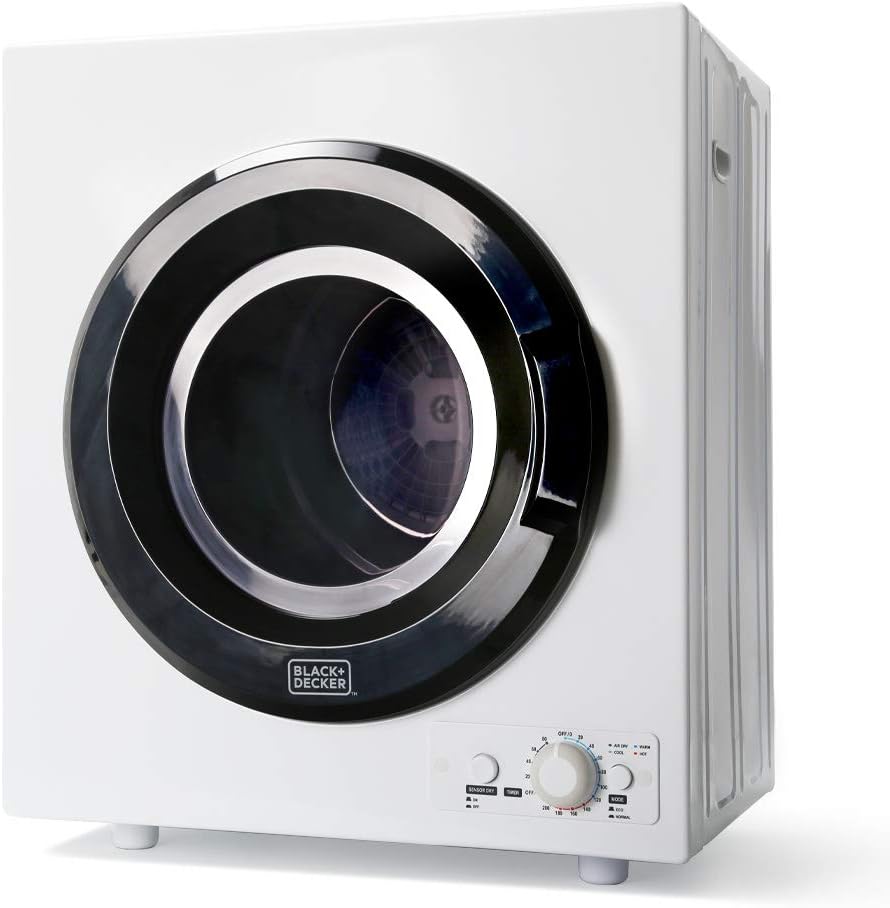
The BLACK+DECKER BCED26 is a compact, vented electric dryer intended for apartments and other spaces without 240V hookups. It uses a 120V, 1400W motor to dry up to about 8.8 pounds (2.65 cu ft) per load and offers five modes—Air Dry, Cool, ECO, Warm and Hot—plus a Sensor Dry feature that measures moisture to stop the cycle when clothes are dry. The unit includes a 4" exhaust connector, lint and exhaust filters, adjustable leveling legs and a stainless steel drum with a front-loading clear lid for easy monitoring. Expect longer cycle times compared with full-size 240V dryers, and for best results fill the drum only halfway as recommended; ECO mode helps reduce energy use by starting with cool air then using heat as needed. Installation is straightforward: plug into a standard outlet and route the vent. For apartment use the compact footprint and included venting make it a practical substitute where full-size hookups are unavailable, though drying large or heavy items will take more time than a conventional dryer.
Best for: Buyers who need a plug-in dryer that fits tight apartment spaces and value simple, reliable operation without a 240V hookup.
Less Ideal for: Those who routinely dry large bedding, heavy blankets, or very large loads should consider a full-size dryer for faster drying and higher capacity.
- Works with a standard 120V outlet so no special hookup required
- Compact footprint designed for small spaces and apartments
- Sensor Dry and multiple modes tailor drying to fabric moisture and save energy
- Includes 4" exhaust connector, lint and exhaust filters for straightforward venting and maintenance
- Longer drying times compared with full-size 240V dryers
- Vented design requires an exhaust path which may limit placement options
Verdict: If you need a dependable plug-in dryer that fits an apartment and vents to the outside, this compact BLACK+DECKER delivers practical drying without a 240V hookup.
Choosing the Right Dryer for Apartment Without Hookups: Key Factors to Consider
Drying System Type
The core drying method—condenser, heat pump, or compact ventless drum—determines how moisture is removed and whether you need a vent. Condenser units collect water into a reservoir or drain and work without ducting, which suits rentals. Heat pump models are more energy-efficient because they recycle warm air, often producing lower operating costs but sometimes at higher upfront size or complexity. Compact ventless drums are simple and cheap but can be slower and warmer in small spaces.
Understanding the drying system affects both installation and performance. In apartments without hookups, ventless options avoid permanent modifications. Think about how you will empty condensate reservoirs or route a drainage hose when planning placement.
Installation and Space Requirements
Measure the location where the dryer will sit and leave clearance for airflow and door swing. Compact models vary widely in depth and height; make sure the unit can be moved into the laundry area and that there is enough space to service filters and empty reservoirs. Some machines are stackable with compact washers but check compatibility before assuming stackability.
Also confirm the electrical needs. Many apartment-friendly dryers run on a standard 120V outlet, but higher-capacity or faster models may require 240V. If your space has only standard outlets, favor units designed for 120V operation or that advertise low-power modes.
Energy Consumption and Operating Cost
Energy use matters more in apartments where you may pay utility costs directly or share a limited electrical circuit. Heat pump dryers are typically the most efficient and reduce long-term energy bills compared with resistive-heat ventless or condenser designs. Check rated power draw and typical cycle times because a low-wattage unit that runs twice as long may still use more energy.
Also consider features that save energy, such as moisture sensors that end cycles when clothes are dry, low-heat or eco modes, and delay-start options to run during off-peak hours. These features help manage your electric load and reduce unnecessary runtime.
Fabric Care and Cycle Options
Apartment dryers should do more than just dry quickly; they should protect clothes. Look for adjustable heat levels, sensor-based drying, and delicate or low-heat cycles for synthetics and fine fabrics. Steam refresh or wrinkle-reduction settings are helpful when you want to avoid ironing or to freshen items between washes.
Cycle customization matters if you routinely dry mixed loads. Programs that combine gentle tumbling with low heat can extend garment life. A reliable lint filter and easily accessible panels make maintenance simpler and reduce fire risk.
Moisture Management and Venting Alternatives
Without a vent, the dryer must manage the moisture inside the unit or send it to a drain. Condenser and heat pump dryers collect water that you either dump from a tank or route to a drain pan or hose. Ensure where you will empty condensate and whether that is practical for your layout. Some units also offer timed drainage or continuous drain adapters.
Poor moisture handling can raise humidity in your apartment, causing musty odors or mold. If your laundry area is small or poorly ventilated, favor systems with built-in condensate pumps or easy drain routing to avoid humidity buildup.
Noise and Vibration Considerations
Close quarters make dryer noise and vibration more noticeable. Look for models with vibration damping, balanced drums, and quiet fan motors. Check for low-decibel operation or user reviews that mention quiet performance if you plan to run the dryer during evenings or overnight.
Also consider mounting options and surface stability. Placing the dryer on a stable, level platform reduces vibration transfer through floors and walls. If sound is a major concern, prioritize units designed for apartment use that advertise reduced operational noise.
Venting Alternatives for Hookup-Free Apartments
When you cannot install a ducted vent, a few ventless technologies handle moisture differently. Condenser dryers collect water in a reservoir or send it to a drain, making them simple to place near sinks or utility drains. Heat pump dryers extract moisture using a refrigeration cycle and are generally the most energy-efficient ventless option.
Consider where drained water will go. A nearby floor drain, utility sink, or dedicated condensate hose route will make maintenance easier. If none are available, choose models with easy-to-empty reservoirs and clear fill indicators.
- Condenser: collects water, no external duct required.
- Heat pump: energy-efficient, slower but lower operating cost.
- Compact ventless drums: simple installation, may run warmer and longer.
Electrical Supply: 120V Vs 240V Tradeoffs
Many apartments only support standard 120V outlets. Dryers designed for 120V use are easier to install but often have longer cycle times due to lower available power. 240V-capable units provide faster drying and higher capacity but typically need special wiring or a dedicated circuit.
If you only have 120V, prioritize energy-efficient technologies and moisture sensors to avoid excessively long cycles. If a building upgrade to 240V is possible, weigh the installation effort against faster drying and potentially larger capacity.
- 120V: widely available, simpler install, possibly slower cycles.
- 240V: faster drying, higher capacity, may require electrician.
Placement, Ventilation, and Humidity Control
Even ventless dryers need space for airflow and to avoid heat buildup. Place the dryer in a well-ventilated area or near a bathroom or kitchen where ambient ventilation reduces moisture accumulation. Avoid enclosed closets without ventilation unless the unit is explicitly rated for that location.
Add a small exhaust fan or dehumidifier in tight laundry spaces to control humidity if you notice increased moisture after drying. This helps prevent mildew and keeps the living area comfortable.
- Leave clearance per manufacturer guidance for air inlet and outlet.
- Consider a condensate hose to a nearby drain to reduce emptying frequency.
- Use supplemental dehumidification in poorly ventilated rooms.
Maintenance Tips for Long-Term Reliability
Routine maintenance keeps ventless dryers efficient and safe. Clean lint filters after every load and periodically inspect internal screens and condensate tanks. Removing lint buildup helps maintain airflow and reduces cycle times.
Empty condensate reservoirs regularly and check hoses for blockages or mold. For heat pump models, occasional filter cleaning or professional servicing of the refrigerant circuit can preserve efficiency. Follow simple manufacturer maintenance steps to extend unit life.
- Clean lint filter after each load.
- Empty and sanitize condensate tanks on a schedule.
- Inspect hoses and seals for wear or leaks.
Liveability: Noise, Cycle Timing, and Shared Walls
Consider when you will run the dryer. Quiet operation matters in apartments with shared walls or thin floors. Choose models with low noise ratings or reputation for gentle operation if you will run them during evenings. Timer and delay-start features let you schedule cycles during less disruptive times.
Cycle length influences convenience as well. Very long cycles can be impractical if you need quick turnarounds between loads. Balance energy efficiency against cycle time to match your routine.
- Look for delay start and quiet modes for night use.
- Compare typical cycle durations for dry loads similar to yours.
- Place on stable surfaces to reduce noise transfer.
How We Chose the Best Dryer for Apartment Without Hookups
We prioritized features that matter for apartments without traditional dryer hookups. Core evaluation criteria included drying system type, installation flexibility, energy consumption, and cycle variety. Drying system type distinguishes condenser, heat-pump, and compact ventless drum styles because each affects moisture handling and electricity needs. Installation flexibility covers footprint, required clearances, and whether the unit runs on standard household outlets or needs a dedicated circuit. Energy consumption was measured by typical wattage and cycle efficiency to estimate operating cost and suitability for shared or limited electrical capacity. Cycle variety and fabric care looked at available heat settings, sensor drying, and gentle cycles to protect mixed loads and delicate items. Noise and vibration were assessed for apartment living where sound transfer matters. We excluded large-capacity, full-size vented dryers and any units that require professional ducting or permanent modifications to building infrastructure. In short, we filtered for compact, ventless, or low-power units with clear installation paths, sensible energy use, and fabric-friendly controls that make sense in rental settings.
Our full evaluation process is outlined in our review methodology.
FAQ
Can I use a ventless dryer in an apartment without a vent?
Yes. Ventless dryers such as condenser and heat pump models are designed to operate without an external duct. They collect or remove moisture internally, but you should plan for condensate disposal or emptying the water reservoir and monitor humidity in small spaces.
Do ventless dryers take longer to dry clothes?
Often they do. Ventless models can have longer cycle times than vented dryers because they reuse air or condense moisture rather than expelling it quickly. Heat pump variants are more efficient and may balance longer cycles with lower energy use.
Will a dryer for apartments without hookups damage delicate fabrics?
Not if you choose a model with adjustable heat settings and sensor-based cycles. Look for low-heat and delicate programs and avoid overloading the drum to maintain proper tumbling and fabric care.
How much electrical capacity do these dryers need?
Requirements vary. Some compact units are designed to run on a standard 120V outlet, while others need 240V. Check the rated power draw for the model you consider and confirm your apartment's outlet type before purchasing or installing.
How do I handle condensate disposal in a unit without a drain?
Many condenser dryers collect water in a removable tank you empty manually. If you have a nearby utility sink or floor drain, some models can be configured with a condensate hose to drain automatically. Choose whichever option fits your space and maintenance preferences.
Final Verdict
For apartments without hookups, prioritize a ventless drying system that matches your space and electrical limits. Heat pump units offer the best long-term energy efficiency, while condenser and compact ventless drums provide simpler installation and lower upfront complexity. Balance cycle time and power draw against convenience and noise sensitivity. Focus on installation flexibility, moisture management, and fabric-care cycles when choosing. With those tradeoffs in mind, you can select a compact dryer that fits your apartment layout and daily routine with minimal disruption.