
Note: This article contains affiliate links. If you click on these links and make a purchase, we may earn a small commission at no extra cost to you. This helps support our research and content. Read our full affiliate disclosure here.
Finding a capable Dryer on a strict budget matters when you need reliable laundry performance without a big upfront cost. A sensible low-cost dryer still needs to dry evenly, be simple to operate, and hold up to regular household loads. This guide shortlists the top options under $300 that balance drying power, capacity, and energy efficiency. We evaluated features that affect everyday use, like cycle selection, drum size, and durability, so you can pick a model that fits your space and routine. Read on for our top picks and the practical criteria we used to assess them.
Top Picks at a Glance
| Best Overall The best all-around choice for most situations | EUHOMY 2.65 Cu. Ft. Portable Dryer |  |
| Best Quality Built to a higher standard if you want something more solid | BLACK+DECKER BCED26 Compact Dryer |  |
| Best Value The sweet spot between price and what you get | ROVSUN Portable Clothes Dryer |  |
| Best Budget The cheapest option that still gets the job done reliably | Rolitwils Portable Clothes Dryer GYJ-002 |  |
| Top Rated A top-rated pick with lots of positive feedback | Panda Portable Dryer PAN725SF 1.5 cu ft | 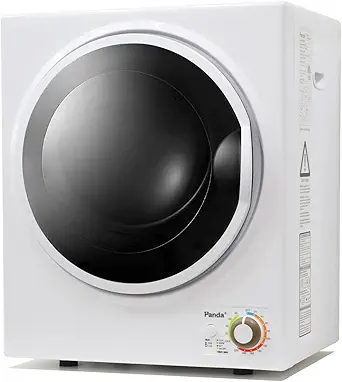 |
| Most Popular A crowd favorite that many people choose with confidence | Euhomy Portable Clothes Dryer 1.5 Cu. Ft. |  |
| Best Seller A high-volume bestseller chosen again and again | MOJOCO Portable Dryer MJC-T03 |  |
EUHOMY 2.65 Cu. Ft. Portable Dryer

| Capacity | 2.65 cubic feet |
|---|---|
| Power | 1400W |
| Form Factor | Front Load |
| Certification | ETL, DOE |
The EUHOMY 2.65 cu ft portable dryer is a space-conscious electric dryer built for apartments, dorms, and other tight laundry spots. It uses a 1400W heater and a stainless steel drum to dry small loads quickly and the LCD touch panel provides four modes including Strong, Intelligent, ECO, and Normal with an ironing option to leave garments slightly damp for easier pressing. Practical touches include a 105 degree door for easy loading, multilayer lint filter, adjustable feet, and an exhaust connector for venting. ECO mode and the Intelligent sensor aim to reduce runtime and energy use by stopping when clothes are dry, while the Strong mode runs full power for heavier items. The unit is ETL and DOE certified and can be floor- or wall-mounted with the included brackets. Expect standard limitations of compact dryers: you will need to avoid overloading to prevent wrinkles and drying times will be longer than full-size models for big or very wet loads, and the unit requires proper ventilation to perform optimally.
Best for: Buyers who need a true compact dryer that balances drying power, energy-saving sensor modes, and thoughtful features for apartment or small-home use.
Less Ideal for: Large households or anyone who regularly dries very heavy or bulky loads should choose a full-size dryer instead.
- Generous 2.65 cu ft capacity for a compact dryer that handles multiple small loads
- Multiple drying modes including sensor-based Intelligent and energy-saving ECO
- Stainless steel drum reduces snags and helps protect clothing
- Included mounting brackets and exhaust connector allow flexible installation
- User-friendly features such as LCD touch panel, wide 105° door, and multilayer lint filter
- Smaller footprint means longer cycles and limited throughput compared with full-size dryers
- Requires proper exhaust/venting for best performance and moisture control
Verdict: A roomy compact dryer with sensor-driven ECO modes and a 1400W heater that delivers practical, energy-conscious drying for apartments and small homes.
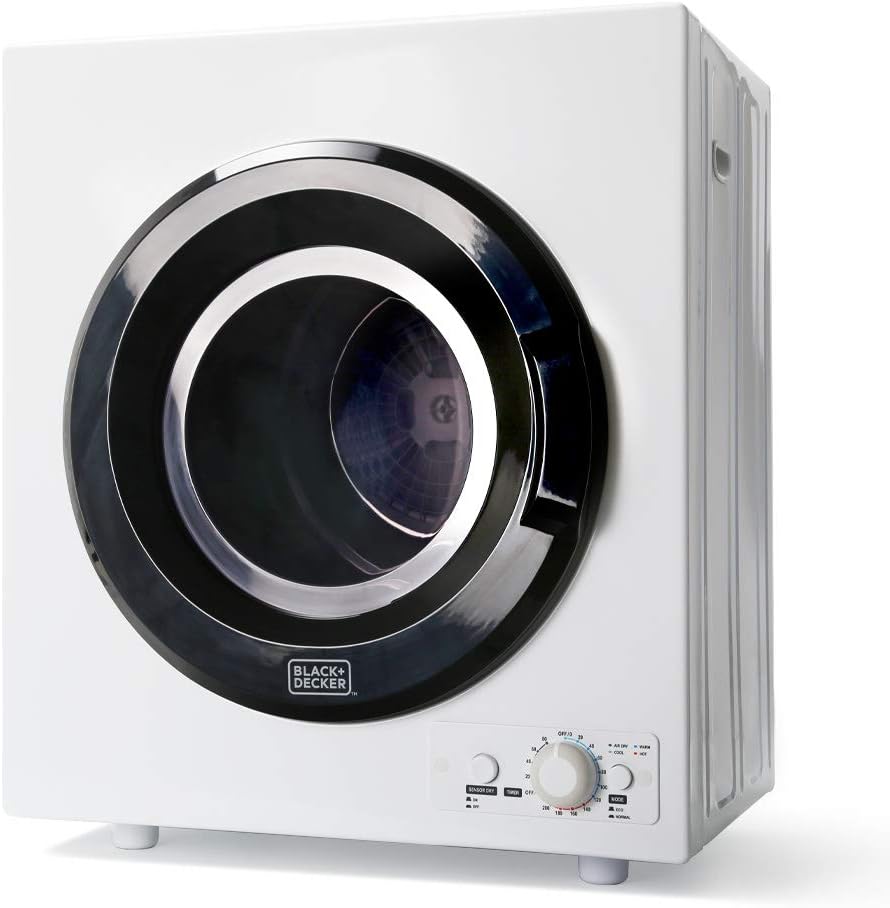
BLACK+DECKER BCED26 Compact Dryer
| Capacity | 2.65 cubic feet |
|---|---|
| Load capacity | 8.8 lbs. |
| Power | 1400W, 120V |
| Form Factor | Front Load |
The BLACK+DECKER BCED26 is a compact vented electric dryer built for small spaces and apartments where a standard 120V outlet is the only power source. It offers five drying modes including Air Dry, ECO, Warm, Hot and Cool plus Sensor Dry and an ECO mode that starts with cool air then switches to heat as needed, which helps avoid over-drying. The 2.65 cu. ft. stainless steel drum holds up to about 8.8 lbs. per load and comes with a 4-inch exhaust connector, lint and exhaust filters, and adjustable leveling legs for simple installation. Dry times range widely from about 30 to 200 minutes because the unit runs at 1400W on 120V, so expect longer cycles than full-size 220V machines but gentler handling of fabrics. Practical limits are its smaller capacity and slower cycles compared with full-size dryers, and it requires venting through the included connector. For someone who needs reliable drying in a compact footprint and standard outlet compatibility, this unit delivers sensible features and safety functions like overheat protection and moisture sensing.
Best for: Buyers who need a compact, plug-in dryer for apartments, small homes, or occasional use and prioritize easy installation and fabric-safe drying over rapid full-size performance.
Less Ideal for: Households that routinely dry large loads, need very fast cycle times, or cannot provide an external vent should look at larger or higher-voltage models instead.
- Runs on a standard 120V outlet so no special wiring required
- Five drying modes plus Sensor Dry and ECO mode for more efficient cycles
- Stainless steel 2.65 cu. ft. drum that treats fabrics gently
- Includes 4" exhaust connector, lint and exhaust filters for straightforward setup
- Smaller capacity and longer drying times compared with full-size 220V dryers
- Requires venting which limits placement options in some apartments
Verdict: If you need a no-frills, plug-in dryer that fits small spaces and uses a standard outlet, this BLACK+DECKER compact dryer delivers sensible features and reliable drying in a compact footprint.
ROVSUN Portable Clothes Dryer

| Capacity | 5.5 pounds |
|---|---|
| Rated Input | 850W |
| Form Factor | Front Load |
| Material Type | Stainless Steel |
The ROVSUN portable clothes dryer is a compact front-load tumble dryer intended for apartments, dorms, RVs and other tight laundry spaces. It uses an 850W heater that can reach about 140°F to dry small loads (the recommended capacity is 5.5 pounds), and the stainless steel drum plus a multi-stage lint filter help keep airflow and longevity reasonable. Controls are a single, simple knob that cycles drying modes and temperatures, so it is easy to operate without a lengthy learning curve. The unit is light enough to sit on a countertop or be wall-mounted with the included kit, and the see-through door makes it simple to check progress mid-cycle. Expect relatively slow drying on heavier or dense items and the usual need to avoid overloading to prevent reduced performance. Ventilation and regular lint-filter cleaning are important for reliable operation. For buyers who need a basic, space-saving dryer to finish small loads quickly, this model delivers straightforward performance without extra smart features.
Best for: Buyers who prioritize compact, no-frills drying for small loads in apartments, dorms, RVs or tight laundry spaces and want an easy-to-use machine that saves floor space.
Less Ideal for: Those who regularly dry large loads, bulky items, or need fast cycle times should consider a larger, higher-powered dryer instead.
- Compact front-load design fits small spaces and can be countertop-placed or wall-mounted
- Stainless steel drum for better durability compared with plastic tubs
- Simple knob controls make operation quick and intuitive
- Multi-stage lint filtration helps protect airflow and reduces lint escape
- Low 5.5 lb recommended capacity limits load size and requires more frequent small cycles
- 850W power means slower drying times compared with higher-wattage full-size dryers
Verdict: A space-saving, easy-to-use portable dryer that reliably handles small loads for buyers who need compact laundry solutions under $300.
Rolitwils Portable Clothes Dryer GYJ-002

| Form Factor | Freestanding |
|---|---|
| Access Location | Top Load |
| Capacity | 33024.5 cubic centimeters |
| Specification Met | UL |
This compact portable dryer is designed as an assistive drying solution for small loads in apartments, RVs, or when traveling. You load partially spun garments into the included drying bag, set the timer or modes with the remote, and expect typical cycles of roughly 45 to 120 minutes for lightweight items; heavier fabrics are discouraged. The unit folds for storage and claims a dual-layer drum and even heat distribution to speed drying for multiple thin items at once. Notable extras are LED UV hygiene and a remote control that makes operation convenient when the dryer is out of reach. Because it is small and lightweight, it is easy to move and store but it is not meant to replace a conventional dryer for bulky items or large loads, and drying times are long compared with full-size machines. Buyers should plan to pre-spin laundry and redistribute items mid-cycle for best results.
Best for: Buyers who need an inexpensive, highly portable solution for drying small, lightweight loads in tight spaces or while traveling and prioritize convenience over speed.
Less Ideal for: Households that require frequent drying of heavy garments, large families, or anyone who expects full-size dryer performance should choose a different appliance.
- Compact foldable design for travel and small spaces
- Remote control for simple operation from a distance
- Built-in LED UV hygiene feature
- Includes carry bag for storage and transport
- Limited capacity and long cycle times make it unsuitable for bulky or heavy items
- Not intended as a full replacement for a household dryer
Verdict: If you want an affordable, travel-friendly dryer for small lightweight loads, this compact foldable unit delivers convenient remote operation and portable hygiene features.
Panda Portable Dryer PAN725SF 1.5 cu ft

| Capacity | 1.5 cubic feet |
|---|---|
| Voltage | 120V/60Hz |
| Rated Input | 850W |
| Drum Material | Stainless Steel |
| Installation | Vented with exhaust pipe; wall-mountable |
The Panda PAN725SF is a space-saving portable dryer intended for apartments, dorms, and other tight laundry areas. It handles small loads—up to roughly 10 lb of wet laundry—inside a 1.5 cu ft stainless steel drum and offers multiple heat settings (cold, warm, hot, and air-dry) with a timer that runs from 20 to 200 minutes. Practical touches include a see-through door that opens to 105 degrees, a three-layer lint filter, automatic shutoff when the door opens, and several installation options: freestanding, stacked, or wall-mounted using the included kit. The 850W motor keeps power draw low compared with full-size dryers, so drying takes longer but costs less to run. Because it vents to the outside through the supplied exhaust pipe and is ETL listed, it fits into standard household setups, but users should expect longer cycle times for heavy or bulky items and may need to manage added indoor humidity if not vented properly. For small, regular loads where footprint and energy use matter, it is a reliable compact choice; for frequent large loads, a full-size dryer is more practical.
Best for: Buyers who prioritize dependable, low-power drying in small living spaces and want a compact machine they can mount or move as needed.
Less Ideal for: Households that need to dry large or frequent heavy loads such as full-size bedding, towels, or family laundry should look at larger-capacity dryers.
- Compact 1.5 cu ft stainless steel drum fits tight spaces and offers wall-mounting or freestanding installation.
- Multiple heat modes plus a long timer provide flexible drying for different fabrics and load sizes.
- Includes venting kit, power cord, and mounting hardware for straightforward setup.
- Three-layer lint filter is removable for easy cleaning and helps protect the unit and clothes.
- Lower 850W power means longer drying cycles compared with full-size, higher-wattage dryers.
- Small capacity limits each load to light or moderate-sized items, not bulky bedding.
Verdict: A compact, energy-light portable dryer built for small spaces and steady, reliable drying of light loads.
Euhomy Portable Clothes Dryer 1.5 Cu. Ft.

| Capacity | 1.5 cu. ft. |
|---|---|
| Power | 850W |
| Max temperature | 140°F |
| Max load | 10 lb |
This small electric dryer is built for apartments, dorms, RVs, and other tight spaces where a full-size dryer is impractical. It uses an 850W heater to reach about 140°F and accepts up to roughly 10 lb of wet laundry, with separate high and low fan/heat settings and multiple timed programs including cool, warm, hot, air dry, and an anti-wrinkle option. The drum is stainless steel and the 105° wide-angle door plus a triple-layer lint filter make loading, unloading, and maintenance straightforward. Installation is flexible — free-standing, wall-mounted, or placed on a shelf — and the unit includes mounting hardware and an exhaust fitting. Expect relatively low noise and modest energy use compared with larger dryers, but drying very heavy items or large loads will take longer than a full-size machine and requires a prior spin in a washer for best results. Safety features include an automatic shutoff if the door opens and ETL certification. For buyers focused on small-load convenience and compact footprint, this hits the mark; those needing fast, large-load drying should look at larger models.
Best for: Buyers who prioritize space-saving, low-noise drying for small frequent loads and want a reliable, safety-certified unit with flexible installation options.
Less Ideal for: Households that need to dry large loads, heavy bedding, or want fast cycle times comparable to full-size dryers should look at larger-capacity machines.
- Compact footprint suited to apartments and RVs
- Multiple timed programs including cool, warm, hot, air refresh, and anti-wrinkle
- Stainless steel drum and wide 105° door for easier loading and unloading
- Includes mounting hardware and exhaust fitting for flexible placement
- ETL certified and automatic door-shutoff for safety
- 850W heater is modest so large or very wet loads dry slowly
- 10 lb capacity limits usefulness for families or bulk items
Verdict: If you need a compact, safety-certified dryer that handles small loads reliably in tight spaces, this Euhomy portable dryer is a practical under-$300 choice.
MOJOCO Portable Dryer MJC-T03

| Form Factor | Top Load |
|---|---|
| Capacity | 22 pounds |
| Heating Power | 600W |
| Included Components | Dryer, Dryer Bag |
The MOJOCO Portable Dryer is a lightweight, foldable top-load dryer intended for apartments, travel, and small-space use. It uses a 600W heating system with two temperature modes and a timer to dry up to nine lightweight garments or roughly 22 pounds per cycle, with typical light-item drying times of one to two hours. The unit includes a built-in UV LED for added sanitizing and automatic overheat protection for safer operation, and the brand emphasizes quiet, energy-efficient performance compared with full-size dryers. Practical benefits include portability, easy setup and storage, and lower energy use when you only need to dry a few items. Important limitations are slower drying for heavier fabrics, restricted capacity for bulk laundry, and dependence on ventilation in small rooms because it emits warm air during use. Buyers should also plan for longer cycles versus vented full-size machines when drying dense or very wet loads.
Best for: Buyers who prioritize safety and predictable performance in small-space laundry—those who need a quiet, energy-conscious option for occasional loads, travel, or apartments.
Less Ideal for: Homes that regularly wash large, heavy items or need fast turnaround for full loads should choose a vented or full-size dryer instead.
- Compact, foldable design for easy storage and travel
- 600W heater with two drying modes for delicate and faster drying
- Built-in UV LED for added garment sanitizing
- Automatic overheat protection for safer operation
- Quiet operation suitable for small indoor spaces
- Not suitable for heavy or bulky loads due to limited capacity
- Longer drying times for dense fabrics compared with full-size dryers
- Requires a ventilated space to disperse warm, moist air during use
Verdict: A compact, energy-efficient portable dryer that delivers safe, quiet drying and sanitizing for small, occasional loads.
Choosing the Right Dryer: Key Factors to Consider
Drying Performance and Heat Control
How well a dryer removes moisture from clothing affects cycle time and fabric care. Consistent heat distribution and accurate cycle timers reduce overdrying and underdrying, which protects garments and saves time.
Look for machines with clear temperature settings or moisture-sensing options when available in the price range. Even without advanced sensors, predictable performance and user-adjustable cycles let you fine-tune run times for mixed loads.
Energy Use and Operating Cost
Initial cost is only part of ownership expense; energy consumption determines ongoing cost. More efficient dryers complete cycles faster or at lower temperatures, which lowers monthly electricity usage.
Compare estimated energy use per cycle when available, and consider dryer type and insulation. For budget models, simple design choices like shorter default cycles and manual settings can still yield reasonable efficiency if used thoughtfully.
Capacity and Physical Fit
Drum capacity and external footprint determine whether a dryer suits your laundry volumes and installation space. A compact dryer saves space but may require more frequent loads, while a larger drum handles bulky items but needs more room.
Measure your laundry area and door clearances before buying. Also check stackability or under-counter compatibility if you plan to pair the dryer with a washer or install it in a closet or cabinet.
Ease of Installation and Venting
Installation type affects where you can place the dryer and whether additional work is required. Vented models need a reliable duct route to the outside, while ventless units allow more placement flexibility but may be less common in the lowest price tier.
Consider whether your home already has a dryer vent and how long the duct run would be. Simple installation can reduce setup costs and make it easier to move the appliance later.
Controls, Cycles, and Usability
Straightforward controls reduce mistakes and speed up routine laundry. Useful cycle options include timed dry, delicates, and a sensor-based or auto-dry mode if available, plus child locks or delay-start features when relevant.
Check that labeling is clear and knobs or buttons are durable. A limited but well-designed control set is often preferable to a complex interface filled with seldom-used modes on budget models.
Maintenance and Serviceability
Routine upkeep keeps a dryer safe and efficient. Accessible lint filters, easy-to-clean exteriors, and straightforward access to vents matter for long-term performance and safety.
Also review warranty terms and availability of replacement parts or local service options. A model that is easier to service or maintain will usually cost less to own over time.
Sizing the Dryer for Your Household
Estimate weekly laundry volume before choosing a dryer size. Singles or couples often do well with a compact unit that handles smaller loads efficiently, while families may prefer the largest drum that fits the allotted space to avoid running multiple cycles.
Also think about load type. If you frequently dry bulky items like blankets or jackets, prioritize a taller drum depth and a wider opening to prevent tangling and improve airflow.
- Measure doorway and closet clearances before purchase
- Check drum depth for bulky items
- Remember that bigger drums use more energy per cycle but reduce the number of cycles
Vented Vs Ventless: Practical Tradeoffs
Vented dryers move warm, moist air outside through ducting and typically dry faster and more efficiently. Venting requires an external outlet and some planning for duct routing, but it is the common and effective choice for many homes.
Ventless options eliminate the need for external ductwork and are useful where venting is impossible. They may be limited in low-cost models and can run longer or generate more heat in small rooms, so weigh convenience against performance.
- Vented: faster drying, needs exterior duct
- Ventless: installation flexibility, may run longer
Installation Tips for Tight Spaces
Allow adequate clearance for venting and door swing. Some budget dryers are designed for compact quarters but still need several inches of rear clearance for vent connections. Use rigid or semi-rigid ducting where possible and minimize bends to preserve airflow.
If stacking over a compatible washer or installing under a counter, confirm stacking kits or counter-clearance dimensions. Simple modifications like a short, straight duct and a properly sized vent hood improve performance and reduce lint buildup.
- Keep duct runs short and straight
- Use the correct vent hood and screen
- Follow manufacturer clearance recommendations
Common Safety and Longevity Concerns
Lint buildup is the most frequent safety issue with dryers. Clean lint filters after every cycle and inspect ducting periodically for obstructions or accumulated lint. Restricted airflow increases cycle times and can present fire risks.
Watch for unusual vibrations, excessive heat on the cabinet surface, or persistent odors. These signs can indicate mechanical wear or venting problems that deserve prompt attention to maintain safe operation and extend service life.
- Clean lint trap every cycle
- Inspect and clean ducts annually
- Address odd noises or smells promptly
Getting the Most Out of a Budget Dryer
Balance load size and cycle selection to reduce wear and energy use. Running consistently full but not overloaded cycles is more efficient than many small partial loads. Use lower heat settings for delicate fabrics and higher heat for towels and heavy cottons.
Routine maintenance keeps a budget model performing well. Regular filter cleaning, occasional duct checks, and avoiding overloading will maintain drying speed and help the unit last longer under everyday use.
- Group similar fabrics together
- Use proper heat settings for fabric type
- Perform simple maintenance to extend life
How We Chose the Best Dryer
We focused on criteria that directly affect day-to-day use and long-term ownership. Our selection filtered for machines priced under $300 and suitable for typical apartment or budget-conscious households. The primary evaluation dimensions were drying performance under mixed loads, energy efficiency and running cost estimates, build quality and warranty support, control simplicity and cycle variety, and physical fit including drum capacity and installation footprint. We prioritized models with consistent heat delivery and sensible cycle timers over features that inflate cost without improving core drying. Units lacking basic safety features or with persistently poor user feedback on reliability were excluded. We also favored designs that simplify cleaning and maintenance, such as accessible lint filters and straightforward venting. These filters produced a shortlist that balances daily performance, economy, and durability for buyers working within the under-$300 constraint.
Our full evaluation process is outlined in our review methodology.
FAQ
Can a dryer under $300 dry large loads effectively?
It depends on drum size and motor power. Some budget models handle moderate loads well but may take longer on very bulky items. Choosing a model with a larger drum within the price constraint improves capacity.
Are ventless dryers available under this price point?
Ventless models are less common at the lowest price tiers. When available, they trade installation flexibility for potentially longer cycles and slightly higher indoor heat. Consider your venting options before assuming a ventless unit is the best fit.
How much maintenance does a budget dryer need?
Basic maintenance is minimal but important. Clean the lint filter after every cycle, check the vent duct periodically for buildup, and keep the exterior and control panel free of dust. These steps preserve performance and safety.
Will a cheaper dryer cost more to operate over time?
Operating cost depends more on efficiency and cycle length than purchase price. Some low-cost units are fairly efficient if used with sensible load sizes and settings, while older or poorly ventilated units can increase energy use.
What should I check before installing a new dryer?
Confirm that the dryer fits the intended location with sufficient clearance, that the vent path is available and short, and that electrical or gas hookups match the unit requirements. Planning these details avoids installation delays.
Final Verdict
When choosing a dryer under $300, prioritize consistent drying performance, sensible capacity for your household, and ease of installation. Accept that some advanced features may be unavailable at this price, and focus instead on reliable heat delivery, straightforward controls, and maintainable venting. By balancing capacity, efficiency, and serviceability you can find a budget model that meets daily needs without unnecessary compromises. Use the evaluation criteria above to compare shortlisted models and choose the unit that best fits your space and laundry habits.