
Note: This article contains affiliate links. If you click on these links and make a purchase, we may earn a small commission at no extra cost to you. This helps support our research and content. Read our full affiliate disclosure here.
If you print regularly at home, choosing the right duplex printer makes two-sided documents easier, saves paper, and reduces clutter. The right model handles everyday tasks like schoolwork, home office documents, and occasional photos while keeping operating costs reasonable and setup simple. This guide covers six shortlisted duplex printers for home use that stood out for print quality, ease of setup, and cost to run. Below you will find concise evaluations and the criteria we used to vet each pick so you can quickly decide which features matter most for your household workflow.
Top Picks at a Glance
| Best Overall The best all-around choice for most situations | HP OfficeJet Pro 8125e | 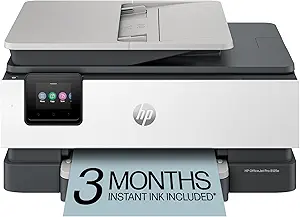 |
| Best Quality Built to a higher standard if you want something more solid | Epson EcoTank Pro ET-5800 |  |
| Best Value The sweet spot between price and what you get | Canon PIXMA G3290 MegaTank |  |
| Best Budget The cheapest option that still gets the job done reliably | Canon PIXMA TS4320 |  |
| Top Rated A top-rated pick with lots of positive feedback | HP LaserJet Pro MFP 3101sdw |  |
| Best Seller A high-volume bestseller chosen again and again | Brother DCP-L2640DW Laser Printer |  |
HP OfficeJet Pro 8125e

| Printer Output Type | Color |
|---|---|
| Scanner Type | Flatbed, 1-sided ADF |
| Maximum Sheet Capacity | 225 |
| Duplex | Automatic (standard) |
| Printer Connectivity Type | Apple AirPrint; Ethernet networking; USB; Wireless (Wi-Fi); Wireless direct printing |
The HP OfficeJet Pro 8125e is an all-in-one inkjet that focuses on everyday home-office productivity with automatic two-sided printing and a 35-sheet automatic document feeder for multi-page jobs. It prints color documents up to 10 ppm and black up to 20 ppm, and the HP app plus AirPrint and Ethernet/Wi-Fi connectivity make mobile and network printing straightforward. Notable features include AI-assisted formatting for cleaner web and email prints, a 225-sheet input capacity for longer runs, and touchscreen controls for quick setup and scanning. The printer supports HP 923 series cartridges and works with HP+ features such as Instant Ink trials and enhanced security updates. Trade-offs are typical for inkjets: photo-quality output benefits from specialty photo paper and the cost of replacement cartridges can add up compared with laser alternatives, and some advanced functions require HP+ activation. For a balanced home-office user who needs duplex, scanning and decent speeds in a compact footprint, the 8125e covers core needs well.
Best for: Buyers who want a compact all-in-one that handles everyday home-office tasks—printing, duplexing, scanning and light copying—without needing enterprise features.
Less Ideal for: Those who print large monochrome volumes regularly or need the lowest long-term cost per page should consider a monochrome laser instead.
- Built-in automatic duplex printing saves paper and simplifies multi-page jobs
- 225-sheet input capacity reduces how often you refill paper
- Multiple connectivity options including dual-band Wi-Fi, Ethernet, AirPrint and USB
- Automatic document feeder and touchscreen make scanning and copying faster
- AI-driven formatting helps produce correctly laid-out web and email prints
- Inkjet cartridge costs can be higher over time compared with laser printers
- Some enhanced features require enrollment in HP+ or Instant Ink
Verdict: If you need a versatile home-office printer with reliable automatic duplexing, scanning and solid connectivity in a compact package, the OfficeJet Pro 8125e is a practical choice.
Epson EcoTank Pro ET-5800

| Printer Type | Inkjet |
|---|---|
| Duplex | Automatic |
| Display Type | LED 4.3-inch color touchscreen |
| Printer Connectivity Type | Wi-Fi |
| Maximum print Resolution Color | 4800 x 2400 |
The Epson EcoTank Pro ET-5800 is a cartridge-free all‑in‑one aimed at high-volume home or small office use. It prints, copies, scans and faxes, and uses large refillable ink bottles to drive very low running costs compared with cartridge or toner-based machines. The ET-5800 offers automatic two-sided printing, two 250-sheet front trays plus a rear specialty feed for flexible media handling, a 4.3-inch color touchscreen, Ethernet and Wi‑Fi connectivity, and voice-activated printing for hands-free jobs. Print quality uses DURABrite pigment inks and a 4800 x 2400 resolution that produce crisp black text and vibrant color pages, while PrecisionCore heat-free technology keeps warmup time minimal and helps deliver fast black speeds. Important trade-offs are the printer's physical footprint and weight for a home environment and the need to use genuine pigment bottles to avoid warranty issues; initial setup uses some of the included ink. For buyers who need reliable duplex output, low cost per page and robust paper capacity, the ET-5800 behaves like a small workhorse in a home office.
Best for: Home users who prioritize fast two-sided printing, low cost per page and high-duty output for small office or heavy home-office workloads.
Less Ideal for: Those with very limited space or occasional, low-volume home printing needs should consider smaller, lighter models designed for casual use.
- Large refillable ink tanks cut running costs compared with cartridges or toner
- Automatic duplexing and multiple paper trays support two-sided, high-volume jobs
- High print resolution with pigment DURABrite ink for sharp text and vivid color
- Fast black print speeds and heat-free PrecisionCore output reduce wait time
- Both Wi‑Fi and Ethernet connectivity plus a color touchscreen and voice control for flexible workflows
- Bulky and heavy for limited-desk home setups
- Requires genuine pigment ink bottles to avoid potential damage and warranty issues
Verdict: Buy this if you want a duplex-capable, low-cost-per-page supertank printer that handles heavy home-office print volumes reliably.
Canon PIXMA G3290 MegaTank

| Printer Type | Inkjet SuperTank |
|---|---|
| Duplex | Automatic |
| Printer Connectivity Type | USB, Wi-Fi |
| Maximum print Resolution Color | 4800 x 1200 dots_per_inch |
| Maximum Sheet Capacity | 100 |
The Canon PIXMA G3290 is a MegaTank inkjet all-in-one aimed at home and small-office users who want very low running costs and built-in duplex printing. It prints, copies, and scans and connects via Wi-Fi or USB, with mobile printing support and a 2.7" color touchscreen for simple on-device operation. The refillable ink bottles deliver very high yield per set (Canon states up to 6,000 black and 7,700 color pages), which makes the printer economical for heavy document workloads and frequent photo printing on compatible media. Paper handling is practical for home use with a 100-sheet plain paper capacity and support for many photo sizes and envelopes, while auto two-sided printing saves paper on multipage documents. Print quality is strong for documents and borderless photos thanks to a hybrid pigment-and-dye ink system and up to 4800 x 1200 dpi color resolution. Trade-offs include moderate print speeds (about 11 ppm black, 6 ppm color) and a larger physical footprint than the smallest home printers, so it suits buyers focused on low cost per page rather than fastest single-page throughput.
Best for: Buyers who prioritize low long-term ink costs and need reliable two-sided printing for home or small-office document and photo work.
Less Ideal for: Users who need the fastest single-page throughput or a very compact travel-friendly printer should consider alternatives tailored for speed or minimal size.
- Very high ink yield from refillable MegaTank bottles for low cost per page
- Built-in automatic duplexing for two-sided printing
- Wi‑Fi and USB connectivity with mobile printing support and a color touchscreen for easy use
- High maximum color resolution for good photo and document detail
- 100-sheet plain paper capacity with support for many photo and envelope sizes
- Print speed is modest compared with business laser printers
- Larger footprint and 14.2 lb weight may be bulky for very small desks
Verdict: Choose the G3290 if you want affordable, large-volume two-sided printing at home with excellent yield from refillable ink tanks.
Canon PIXMA TS4320

| Printer Type | Inkjet |
|---|---|
| Duplex | Automatic |
| Connectivity | USB, Wi-Fi (2.4GHz/5GHz) |
| Maximum Media Size | Letter (8.5 x 11 inches) |
| Maximum print Resolution Color | 1200 x 1200 dots_per_inch |
The Canon PIXMA TS4320 is an entry-level all‑in‑one inkjet designed for light home use where affordability and simple features matter most. It prints color documents and photos using a 2‑cartridge hybrid ink system, scans on a flatbed, and copies basic pages; automatic duplexing saves paper for everyday tasks. Setup is straightforward with the Canon PRINT app, Apple AirPrint, and dual‑band Wi‑Fi support, and the small footprint fits easily on a desk or shelf. Print quality is good for schoolwork, recipes, and casual photos, and the 100‑sheet input keeps occasional printing from being a nuisance. Expect modest speeds (around 9 ppm color, 14 ppm black) and no advanced features like an ADF or touchscreen, so it is not aimed at heavy office workloads or bulk scanning. The starter ink set helps out of the box but frequent photo-heavy use will increase running costs. For buyers who want a simple, reliable duplex-capable home printer without premium extras, the TS4320 covers the essentials well.
Best for: Buyers looking for an inexpensive, easy-to-use home printer that can handle occasional duplex document and photo printing with minimal setup fuss.
Less Ideal for: Users who need high-volume printing, fast professional photo output, or frequent multi-page scanning and copying for a home office.
- Automatic two-sided printing reduces paper use for typical home documents
- Compact footprint that fits small desks and counters
- Wireless printing with Canon PRINT app, AirPrint, and dual-band Wi‑Fi for easy mobile printing
- Good color and document quality for casual photos, school projects, and household printing
- Includes starter ink tanks and supports common media up to letter size
- No automatic document feeder for multi-page scanning or copying
- Uses a basic two‑cartridge system which can raise ink costs with frequent photo printing
- No touchscreen or advanced control panel for on-device navigation
Verdict: A compact, budget-minded duplex-capable all‑in‑one that delivers reliable everyday printing and easy wireless setup for home users.
HP LaserJet Pro MFP 3101sdw

| Printer Type | Laser |
|---|---|
| Maximum Print Resolution Black and White | Up to 1200 x 1200 dpi |
| B&W Pages per Minute | 40 |
| Maximum Sheet Capacity | 250 |
| Scanner Type | ADF, flatbed |
The HP LaserJet Pro MFP 3101sdw is a compact monochrome laser all-in-one built for steady document workflows at home or in small offices. It prints, scans (ADF and flatbed), copies and supports automatic two-sided printing, with a 250-sheet input tray and a 50-sheet ADF for batch scanning. In daily use it delivers quick first pages and sustained speeds—HP lists up to 35–40 pages per minute—so long print runs and reports complete without long waits. Connectivity includes Wi‑Fi, Ethernet, USB and mobile options like AirPrint and Mopria, and the HP app simplifies remote printing and basic management. Image quality is sharp for black-and-white documents at up to 1200 x 1200 dpi, and the unit ships with an introductory toner to get started. Be aware this model enforces use of HP-chipped cartridges and may apply firmware updates that affect third-party supplies, and it is monochrome only so color printing is not available. For buyers who prioritize dependable, speedy black-and-white output and built-in duplexing, this is a solid choice.
Best for: Buyers who want a reliable, business-grade black-and-white MFP for consistent duplex document printing and frequent scanning in a home office or small-team environment.
Less Ideal for: Users who need color printing, very compact portable units, or who prefer unrestricted use of third-party toner supplies.
- Fast monochrome print speeds suitable for high-volume document jobs
- Automatic duplexing and 50-sheet ADF for hands-off two-sided scanning and copying
- 250-sheet input tray reduces frequent paper refills for busy households
- Multiple connectivity options including Wi‑Fi, Ethernet, USB and mobile printing for flexible setup
- High print resolution (up to 1200 x 1200 dpi) for crisp text and fine detail
- Monochrome only so no color printing capability
- Requires HP-chipped toner cartridges and firmware can limit third-party supplies
Verdict: A dependable high-speed monochrome MFP with automatic duplexing and ADF that keeps home-office document workflows fast and reliable.
Brother DCP-L2640DW Laser Printer

| Print speed | 36 ppm |
|---|---|
| ADF capacity | 50 pages |
| Paper capacity | 250 sheets |
| Connectivity | Ethernet, USB, Wi‑Fi |
| Compatible cartridge | TN830, TN830XL |
The Brother DCP-L2640DW is a compact black-and-white laser multifunction printer designed for home offices and small businesses that need dependable duplex printing. It delivers up to 36 ppm and a short first-page-out time, and includes a 250-sheet tray plus a 50-page auto document feeder to handle multi-page copy and scan jobs without constant attention. Connectivity is flexible with dual-band Wi-Fi, Ethernet, and USB, and the Brother Mobile Connect app lets you print and scan from smartphones and tablets. Eco-minded features such as automatic duplex and Toner Save Mode help stretch consumables and reduce paper use. Practical limits include monochrome-only output and an average in-box toner yield, so color work is not possible and ongoing toner costs should be considered; the unit is also moderately heavy for a desktop device. For buyers prioritizing reliable, fast black-and-white duplex printing and straightforward network setup, this model offers solid performance in a small footprint.
Best for: Buyers who want dependable, fast two-sided black-and-white printing and scanning for a home office or small business and value straightforward network setup and reliable daily use.
Less Ideal for: People who need color printing, photo output, or an ultra-light portable unit should consider alternative printers that support those needs.
- Fast monochrome printing up to 36 pages per minute for quick document production
- Automatic duplexing reduces paper use and saves time on two-sided jobs
- 50-page auto document feeder speeds multi-page scans and copies
- Multiple connectivity options including dual-band Wi-Fi, Ethernet, and USB
- 250-sheet input tray lowers refill frequency for higher-volume tasks
- Prints only in black and white so no color documents or photos
- In-box toner yield is modest, so consider replacement toner frequency for heavy users
- Relatively heavy for a desktop printer which may be awkward to move
Verdict: A reliable, fast monochrome duplex multifunction printer built for home offices that need dependable two-sided printing and simple networked setup.
Choosing the Right Duplex Printer for Home: Key Factors to Consider
Duplex Mechanism and Paper Path
Automatic duplexing can be implemented with a built-in reversible feed or by flipping paper internally. A straight-through or short paper path reduces the chance of jams and is gentler on heavier paper types. For home use, a reliable internal duplex mechanism matters because misfeeds or frequent jams quickly become a nuisance.
Also consider how the printer handles different paper weights and finishes. If you occasionally print on cover stock or photo paper, look for models that explicitly support heavier media through the duplex path. Manufacturer specs that list supported paper weights and mention a low-jam duplex design are useful signals when choosing a home duplex printer.
Print Quality for Text and Images
Home printing needs vary from crisp black text for documents to decent color for school projects and occasional photos. Resolution and color accuracy influence how sharp text appears and how natural colors look in images. For text-heavy use, prioritize models optimized for small-font clarity and consistent toner or ink laydown.
For mixed use, check sample prints or specification details about dpi and color reproduction. A printer that balances good text output with serviceable color printing will suit most households without the complexity or cost of dedicated photo printers.
Running Cost and Consumables
The cost to print over time depends on cartridge yield, cost per cartridge, and whether the model uses separate color cartridges or combined units. For frequent printing, high-capacity or XL cartridges and an efficient toner system reduce long-term expense. Inkjet printers often have lower up-front cost but can be more expensive per page, while small laser models tend to offer lower per-page cost for black-and-white documents.
Consider whether remanufactured or third-party consumables are widely available if you expect to optimize costs. Also account for how often you print; occasional users may prefer low-cost starter cartridges to avoid ink-drying issues, while heavy home-office users should prioritize yield.
Connectivity and Mobile Printing
Home networks include multiple devices and mobile phones. Built-in Wi-Fi, reliable network setup, and support for mobile printing standards or proprietary apps make it easy to print from laptops, phones, and tablets without plugging in. Ethernet can be helpful when a stable wired connection is desired, though many homes rely on Wi-Fi.
Also consider USB for direct printing and whether the printer supports printing from cloud services or email-to-print features. Easy access to these options simplifies sharing a single home printer across the family.
Size, Noise, and Placement
A duplex printer for home should fit the intended location and not draw attention with loud operation. Check the footprint and recommended clearance for maintenance tasks like replacing cartridges or clearing jams. Smaller models are convenient for crowded desks but may sacrifice input tray capacity.
Noise ratings and user reviews about operational noise are worth checking if the printer will live near living areas or in a home office where phone calls happen. Quiet modes or delayed printing features can help in noise-sensitive environments.
Ease of Setup and Ongoing Maintenance
Home users typically prefer straightforward setup wizards and minimal maintenance. Look for models with clear documentation, intuitive control panels, and driverless printing options that leverage common operating systems. Simple cartridge replacement and accessible paper paths speed routine tasks.
Maintenance considerations include how the printer handles occasional long idle periods, whether print heads are user-serviceable, and what warranties or customer support options are provided. These elements reduce the chance of downtime and frustration for home users.
Why Automatic Duplexing Saves Time and Paper
Automatic duplexing eliminates manual paper flipping and cuts paper consumption roughly in half for multi-page documents. For families and home offices, that translates to lower ongoing supply needs and fewer interruptions during multi-page print jobs.
Beyond conserving paper, reliable two-sided printing helps maintain a tidy workflow: multi-page reports, school packets, and reference materials come out ready to staple or bind without extra handling.
- Reduces paper use and storage needs
- Speeds multi-page printing jobs
- Produces ready-to-use double-sided documents
Inkjet Vs Laser for Home Duplex Printing
Inkjet models often offer better color gradients and can handle a wider range of media finishes, making them attractive if you print photos or color school projects. However, ink can dry in infrequently used machines, and per-page costs for color may be higher.
Laser models, especially monochrome lasers, typically deliver lower per-page costs for text and faster first-page times. They are a strong choice if your home printing is dominated by text documents and you want predictable running costs.
- Inkjet: Better color, flexible media, higher color cost
- Laser: Lower per-page text cost, faster text jobs
Managing Consumables and Yield at Home
Cartridge yield and whether a printer uses individual color cartridges affect replacement frequency and cost. For households that print a lot of color, models with separate high-yield color cartridges or affordable refill options reduce interruptions.
Keeping spare cartridges or using subscription services offered by some manufacturers can reduce the hassle of running out, but consider shelf life and storage conditions for ink in home environments.
- Check yield estimates and cartridge types
- Keep spares if you rely on frequent color printing
- Consider shelf life and storage of unused consumables
Practical Tips for Reducing Duplex Jams
Use paper within the recommended weight and humidity range, and fan a stack before loading to prevent sheets sticking together. Avoid heavily textured or coated papers unless the printer specifies support for them through the duplex path.
Keep paper trays clean and aligned, and use the printer's recommended tray settings. If you print mixed media often, schedule occasional test runs with the same media to verify consistent duplex behavior.
- Use recommended paper weight and humidity
- Align and fan paper stacks before loading
- Run test jobs when switching media types
Security and Privacy for Home Printers
Networked printers connected to a home Wi-Fi network can expose documents if not configured securely. Enable password protection for the printer admin console when available and keep firmware updated to address security patches.
Disable unneeded network services and set strong Wi-Fi encryption to limit access. For sensitive documents, consider direct USB printing or removing the device from the network when not in use.
- Enable admin passwords and update firmware
- Use strong Wi-Fi encryption
- Consider direct connections for sensitive prints
How We Chose the Best Duplex Printer for Home
We selected candidates by prioritizing features that directly affect home printing experience. Key evaluation criteria included print quality and resolution for text and photos, duplex reliability to ensure consistent two-sided output without jams, and ease of setup and use for nontechnical home users. We also measured running cost factors such as ink or toner yield and typical page-cost estimates, plus connectivity options including Wi-Fi and mobile printing since home networks vary. Physical footprint and noise during operation were considered because many home printers share small spaces. We excluded commercial and heavy-duty office models that require specialized maintenance or have enterprise-only consumables. The final short list favors printers that balance compact design, dependable automatic duplexing, manageable operating costs, and straightforward day-to-day operation.
Our full evaluation process is outlined in our review methodology.
FAQ
Do duplex printers cost more to operate?
Operating costs depend more on ink or toner yield than duplex capability itself. Duplexing saves paper, which lowers supply costs, but the printer type and consumable yields drive per-page expenses.
Can all paper types be used for duplex printing?
Not all papers are suited to duplex paths. Heavier cover stock and some coated photo papers may jam or not feed properly. Check the supported paper weights and finishes for duplexed two-sided printing.
Is automatic duplexing reliable for long documents?
Many home duplex printers handle long documents reliably if you use recommended paper and maintain the machine. However, longer runs increase the chance of a jam, so models with a straight paper path and higher duty cycle perform better.
How important is mobile printing support?
Mobile printing is useful for families that use phones or tablets to generate content. Built-in Wi-Fi and app support simplify printing without a PC, but wired or USB options still matter for stability and initial setup.
What maintenance keeps a duplex printer running smoothly?
Regularly cleaning paper trays, keeping firmware current, and replacing cartridges before they completely run out help prevent jams and maintain print quality. Running occasional test prints after long idle periods prevents dried ink issues in inkjets.
Final Verdict
Prioritize the duplex mechanism, running cost, and print quality when choosing a home duplex printer. If most of your printing is text, a compact monochrome laser with reliable automatic duplexing will minimize cost and speed up jobs. If you need occasional color and photo output, an inkjet that supports the paper weights you use and offers separate color cartridges will be more flexible. Balance footprint and noise against input capacity and connectivity to match your home layout. Focus on the scoring criteria above to weigh tradeoffs and select the duplex printer that fits your household workflow with the fewest compromises.