
Note: This article contains affiliate links. If you click on these links and make a purchase, we may earn a small commission at no extra cost to you. This helps support our research and content. Read our full affiliate disclosure here.
Picking the right Electric Dryer under $800 matters because a dryer is one of the most-used appliances in a household and directly affects energy bills, laundry turnaround time, and fabric care. You want a machine that dries consistently, handles your typical load size, and offers controls you actually use. This guide shortlists the top options in the under-$800 price band that balance drying performance, energy use, and durability. Below you will find concise evaluations that focus on the features most likely to impact everyday use: cycle reliability, capacity, run time, and running costs. Use the summary to match a model to your laundry habits, then dive into the product details to make a final choice.
Top Picks at a Glance
| Best Overall The best all-around choice for most situations | CONTOURE 24" Stackable Electric Dryer |  |
| Best Quality Built to a higher standard if you want something more solid | Midea MLTE41N1BMG 7 Cu. Ft. Dryer |  |
| Best Value The sweet spot between price and what you get | EUHOMY CD-14 3.5 Cu. Ft. Dryer |  |
| Best Budget The cheapest option that still gets the job done reliably | MOJOCO Portable Dryer MJC-T03 |  |
| Top Rated A top-rated pick with lots of positive feedback | Panda Compact Dryer PAN760SF |  |
| Most Popular A crowd favorite that many people choose with confidence | BLACK+DECKER BCED37 Portable Dryer |  |
| Best Seller A high-volume bestseller chosen again and again | BLACK+DECKER BCED26 Compact Dryer | |
CONTOURE 24" Stackable Electric Dryer

| Capacity | 13.2 lbs |
|---|---|
| Cycles | 4 drying cycles |
| Temperature settings | 3 settings |
| Power rating | 120V AC / 60Hz |
| Drum | Stainless Steel |
This 24-inch CONTOURE stackable electric dryer is built for tight spaces like RVs, boats, and small apartments and handles everyday loads with a 13.2 lb capacity. It offers four drying cycles, three temperature settings, and a digital control panel that makes selecting and monitoring cycles straightforward. The stainless steel drum is a durable touch that helps protect fabrics, and the wide-angle reversible door with a transparent window simplifies loading and checking progress. Designed to stack with CONTOURE washer WH-2700W, it saves floor space when paired as a laundry pair. Practical limitations include the modest capacity that will require splitting larger loads and a 120V power rating that may limit drying speed compared with full-size 240V models. The unit includes an exhaust vent and an electronic lock for safe operation, but it does not offer steam or specialty drying programs. For buyers needing a compact, space-conscious electric dryer with simple digital controls and a sturdy drum, this is a sensible choice under $800.
Best for: Buyers who need a reliable, space-saving electric dryer for small living areas and prioritize compact footprint and straightforward controls over large capacity.
Less Ideal for: Anyone who regularly dries large family-sized loads or expects quick, high-power drying performance should look at larger household models instead.
- Compact stackable footprint suited to RVs, boats, and small homes
- User-friendly digital controls with clear display for easy cycle selection
- Stainless steel drum for durability and gentler fabric care
- Reversible wide-angle door with a transparent window for easy access and monitoring
- 13.2 lb capacity is small compared with full-size dryers, requiring more frequent loads
- 120V power rating may mean longer dry times versus 240V household dryers
Verdict: A compact, stackable electric dryer that delivers simple digital controls and a durable stainless drum for small-space households and RVs.
Midea MLTE41N1BMG 7 Cu. Ft. Dryer
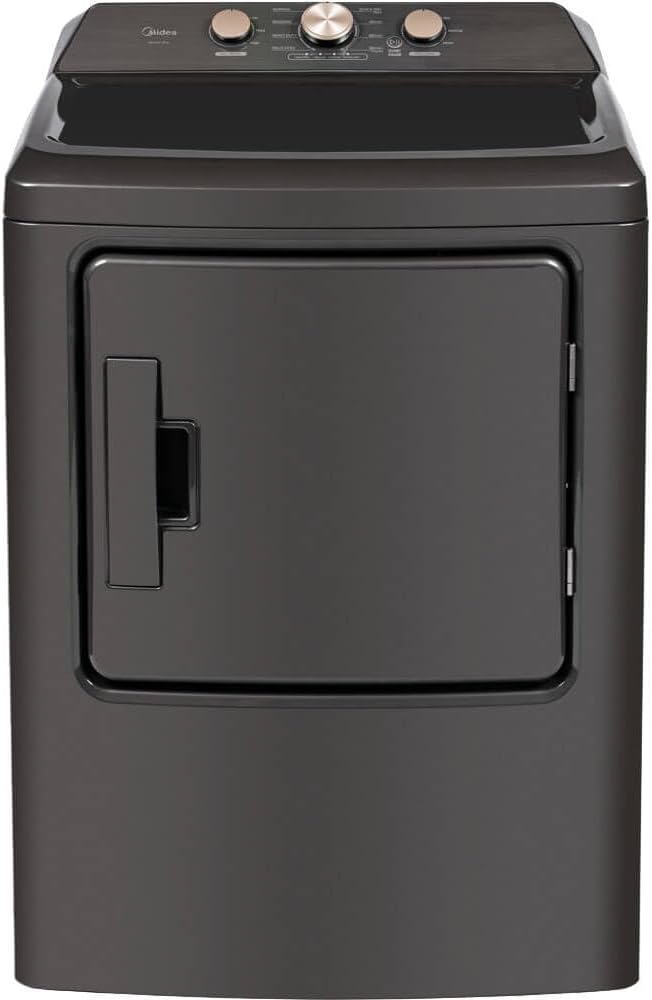
| Form Factor | Front Load, Freestanding |
|---|---|
| Capacity | 7 cubic feet |
| Access Location | Front Load |
The Midea MLTE41N1BMG is a large-capacity front-load electric dryer designed for straightforward, high-volume household drying. It offers a 7 cu ft drum that handles bulky loads, a set of eight preset cycles for common fabrics, and sensor dry to help prevent overdrying while saving time on repeat checks. Practical touches include a wrinkle care option to reduce creasing and a reversible door for flexible placement. The controls are simple and task-focused rather than feature-heavy, so the dryer is easy to operate for busy households that prioritize capacity and reliable drying performance. Limitations include a basic feature set compared with premium models and no smart or advanced steam options, so buyers looking for connected controls or specialty cycles may want to consider alternatives. For the price range it targets, the MLTE41N1BMG delivers roomy drying power and sensible features for everyday laundry needs.
Best for: Buyers who prioritize straightforward, high-capacity drying for busy households and want reliable cycle presets without paying for premium smart features.
Less Ideal for: Users who need connected controls, advanced steam or sanitizing cycles, or specialty fabric programs should consider more feature-rich models.
- Spacious 7 cu ft drum handles large or bulky loads
- Sensor dry reduces overdrying and helps save time
- Eight preset cycles for common fabrics and needs
- Reversible door increases installation flexibility
- Lacks smart connectivity or steam/sanitizing cycles
- Feature set is basic compared with higher-end dryers
Verdict: A roomy, no-nonsense electric dryer that delivers dependable large-load drying and sensor-controlled cycles for budget-conscious performance buyers.
EUHOMY CD-14 3.5 Cu. Ft. Dryer

| Capacity | 99.11 liters |
|---|---|
| Rated Input | 1500W |
| Power Source | 120V/60Hz |
| Drying Capacity (dry) | 13.2lbs |
The EUHOMY CD-14 is a compact freestanding electric dryer aimed at households that need a full-size drying cycle without built-in hookups. It offers a 3.5 cu ft drum and 1500W heating to handle family loads, with a timer up to 200 minutes plus Sensor Dry that monitors moisture and stops heating early when clothes are dry. An ECO mode alternates cold and hot air for extended low-energy drying cycles, and the stainless steel drum and wide 105° door make loading and unloading straightforward. The unit ships with an exhaust hose and has an adjustable base so it can sit on a countertop or floor; lint is collected by a front-access filter that is easy to clean. Trade-offs are typical for a portable vented dryer: you need to run the exhaust hose to the outside or a window and it will take longer than a high-capacity condenser or heat-pump dryer to reach fully dry on large loads. The CD-14 is best when you want near-room dryer performance in a compact, movable package rather than a permanent built-in appliance.
Best for: Buyers who prioritize getting near-full-size drying capacity in a portable, movable unit and want energy-saving options for regular household loads.
Less Ideal for: People who need a ventless or built-in solution, rapid commercial-style drying, or those who cannot accommodate an exhaust hose to the outside or a window.
- Generous 3.5 cu ft drum that fits family-sized loads
- Sensor Dry detects moisture and reduces over-drying
- ECO mode for lower-energy extended drying cycles
- Stainless steel drum and wide 105° door for durability and easy access
- Requires venting via the included exhaust hose so placement is limited
- Longer cycle times in ECO or moisture-controlled modes compared with high-end heat-pump dryers
Verdict: If you want a portable dryer that handles family-sized loads with sensor and ECO energy-saving modes, the EUHOMY CD-14 delivers full-size drying in a movable package.
MOJOCO Portable Dryer MJC-T03

| Form Factor | Top Load |
|---|---|
| Capacity | 22 pounds |
| Included Components | Dryer, Dryer Bag |
The MOJOCO portable dryer is a lightweight, top-load unit designed to dry small loads where a full-size machine is impractical. It uses a 600W heater with two temperature modes and a timer to dry lightweight garments—the brand says light items can finish in about 1–2 hours while heavier pieces may take 3–4 hours. The unit folds for storage and includes a carry bag, so it is convenient for apartments, RVs, and travel. Notable extras are a built-in UV LED claimed to freshen garments and automatic overheat protection for safety. Because it is low-power and compact it runs quietly and uses less electricity than standard dryers, but capacity and airflow limit it to about nine lightweight items per cycle and drying is slower than vented machines. Expect longer times for towels or dense fabrics and plan for some ventilation in the room to handle warm, moist air. For anyone needing an inexpensive, portable way to dry occasional small loads, this is a practical option.
Best for: Buyers who need an inexpensive, space-saving dryer for occasional small loads, travel, or apartment living and prioritize portability and low operating cost over full-size capacity.
Less Ideal for: Households that regularly dry large or heavy loads, need fast turnaround for towels and bedding, or require a vented, high-capacity dryer.
- Compact, foldable design with included carry bag for easy storage and travel
- Two heat modes and timer allow control for delicate versus faster drying
- Built-in UV LED for added garment freshening and automatic overheat protection
- Low 600W power draw and quiet operation reduce energy use and noise
- Limited real-world capacity and airflow mean longer drying times for heavier items
- Not suitable as a replacement for full-size vented dryers for large loads
- Requires a well-ventilated room since it releases warm, moist air
Verdict: A budget-friendly, portable dryer that delivers quiet, low-power drying for small loads and travel needs.
Panda Compact Dryer PAN760SF

| Capacity | 3.52 cubic feet |
|---|---|
| Rated Input | 1500W |
| Voltage | 120V/60Hz |
| Tumble Material | Stainless Steel |
| Included Components | Plastic Venting Hose, mounting kits |
The Panda Compact Dryer PAN760SF is a vented front-load electric dryer designed for apartments, dorms, and other tight laundry spaces where a full-size unit will not fit. It runs on a standard 120V household outlet and offers selectable time and heat modes including Cold, Hot, Air Dry, ECO, and Sensor Dry, so you can tailor cycles for delicate items or bulky loads. Practical features include a stainless steel drum, a three-layer lint filter system, a see-through door that opens to 105 degrees, automatic shutoff when the door is opened, and included venting hose and wall-mount kit for freestanding, stacked, or wall-mounted installation. In real use it handles medium loads up to about 13.2 lb and provides convenient, safe drying with overheat protection, though venting to the outside is required for optimal humidity control and drying speed. The 1500W power rating means drying times are typical for compact dryers rather than matching full-size machines, but the unit's small footprint and installation flexibility make it a reliable secondary or primary dryer for constrained spaces.
Best for: Buyers who need a dependable, compact electric dryer for small living spaces and prioritize straightforward operation and flexible installation over maximum load size.
Less Ideal for: Households that regularly dry large family-sized loads or need the fastest drying cycles should consider a full-size dryer instead.
- Space-saving 3.5 cu ft capacity suited to apartments and dorms
- Works with a standard 120V outlet so no special wiring required
- Multiple installation modes: freestanding, stacked, or wall-mounted
- Stainless steel drum and three-layer lint filter for durability and easier maintenance
- Requires an exterior vent for best humidity control and drying speed
- Smaller capacity and 1500W power mean longer cycles compared with full-size dryers
Verdict: Choose the Panda PAN760SF when you want a reliable, install-everywhere compact electric dryer that fits small spaces and runs on a standard outlet.
BLACK+DECKER BCED37 Portable Dryer
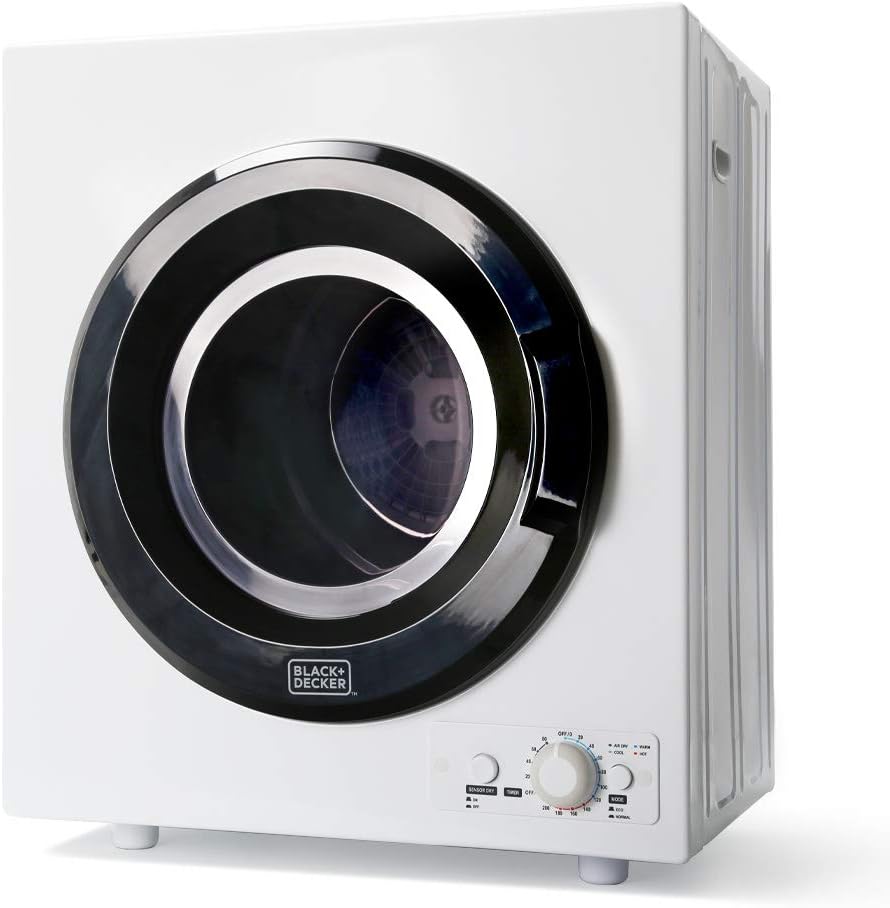
| Capacity | 3.5 cubic feet |
|---|---|
| Load Volume | 13.2 lbs. |
| Power | 1500W, 120V |
| Drum Material | Stainless steel |
| Vent Connector | 4" diameter |
The BLACK+DECKER BCED37 is a compact, vented electric dryer designed for apartments, RVs, or laundry closets where a standard 120V outlet is the only power available. It uses a 3.5 cubic foot stainless steel drum and 1500W heating to dry up to roughly 13.2 pounds per load, and offers multiple modes including Air Dry, Cool, ECO, Warm and Hot plus a Sensor Dry function that monitors moisture. Setup is straightforward thanks to the included 4" exhaust connector and reusable lint and exhaust filters, and the front-loading transparent lid makes it easy to check progress. Expect longer cycle times than a 220V full-size dryer; manufacturer drying time guidance ranges from about 30 to 200 minutes and recommends filling the drum halfway for best results. The unit is portable and includes leveling legs and overheat protection, but at nearly 50 pounds it is not ultra-light and does require venting to the outside to perform optimally. For buyers prioritizing space savings and standard-outlet compatibility, it delivers reliable, fabric-friendly drying with a few compromises on speed and weight.
Best for: Buyers who need a vented dryer that fits small spaces and runs from a standard household outlet and who prefer a proven, review-backed model with sensible safety features.
Less Ideal for: Those who need very fast turnaround on large loads or who cannot provide an external venting path should consider a full-size or condenser dryer instead.
- Runs on a standard 120V outlet so no special wiring required
- Stainless steel 3.5 cu ft drum is gentle on fabrics
- Multiple drying modes plus Sensor Dry for moisture-based shutoff
- Includes 4" exhaust connector and reusable lint/exhaust filters
- Longer drying times compared with 220V full-size dryers
- Relatively heavy for a 'portable' unit at about 49.5 pounds
Verdict: If you need a reliable vented dryer that works from a standard 120V outlet and fits small spaces, this BLACK+DECKER model is a practical, feature-complete choice.
BLACK+DECKER BCED26 Compact Dryer
| Capacity | 2.65 cubic feet |
|---|---|
| Load volume | 8.8 lbs. |
| Power | 1400W, 120V |
| Vent connector | Fits 4" vent hose |
The BLACK+DECKER BCED26 is a compact, front-load vented dryer designed for apartments, dorms, and closets where a standard dryer would not fit. It plugs into a regular 120V outlet and uses a 4" exhaust connection, so installation is simple compared with hard-wired units. Users pick between five modes including Air Dry, Cool, ECO, Warm and Hot, and the Sensor Dry system monitors moisture to cut runtime when clothes are dry. The stainless steel drum is gentler on fabrics than many small plastic drums, and adjustable leveling legs plus a transparent front lid make loading and placement easy. Expect longer cycles than a full-size 240V dryer—manufacturer times range from about 30 to 200 minutes—so this performs best for smaller, partial loads rather than heavy bedding. The unit includes lint and exhaust filters and overheat protection for safer operation. If you need reliable, space-saving drying that works with a standard outlet, this model covers the basics well but sacrifices speed compared with full-size machines.
Best for: Buyers who prioritize a reliable, easy-to-install dryer for small living spaces and prefer a product with basic safety features and straightforward controls over high-speed performance.
Less Ideal for: Households that need to dry large loads, heavy bedding, or who expect fast cycle times should consider a full-size 240V dryer instead.
- Fits standard 120V outlet for easy installation without hard wiring
- Stainless steel drum is gentler on fabrics than plastic drums
- Sensor Dry and multiple modes (Air Dry, ECO, Cool, Warm, Hot) help tailor cycles
- Compact footprint and adjustable leveling legs for small spaces
- Uses 120V power so drying times are noticeably longer than full-size 240V dryers
- Vented design requires a 4" exhaust hookup and nearby venting option
Verdict: A practical compact vented dryer that delivers safe, fabric-friendly drying for apartments and small homes without requiring special electrical work.
Choosing the Right Electric Dryer: Key Factors to Consider
Drying Efficiency and Energy Use
Drying efficiency affects both monthly energy bills and how often you need to run the machine. Energy-efficient models use moisture sensors and optimized cycle algorithms to stop the cycle as soon as clothing is dry, rather than running a fixed time. Over a year, better efficiency can offset higher upfront costs by lowering electricity consumption.
When buying an Electric Dryer under $800, check for energy-saving features, sensor drying, and estimated annual energy use. These specs tell you how much power the dryer is likely to consume with typical loads and help you predict running costs.
Capacity and Drum Size
Drum capacity determines how much laundry you can dry per cycle and affects cycle length. If you regularly process large family loads, a larger drum reduces the number of cycles needed and saves time. However, extremely large drums can reduce efficiency for small loads and may increase the machine footprint.
Measure the space where the dryer will sit and consider your typical laundry volume. Balance drum size against drying efficiency and available room to ensure the machine fits both your schedule and your laundry area.
Cycle Options and Fabric Care
Different fabrics require different heat levels and tumble patterns. Useful cycle options include timed dry, sensor dry, delicate or low-heat settings, and specialized cycles for items like activewear or bulky bedding. Sensor-driven cycles are particularly valuable because they reduce overdrying, which can damage fibers and shrink clothing.
Evaluate the control panel and listed cycles to confirm the dryer offers the specific care modes you need. Simpler controls can be advantageous if you prefer fewer choices and straightforward operation.
Noise and Installation Location
Noise matters when dryers are installed near living spaces or bedrooms. Quieter machines use better insulation, balanced drums, and gentler motors to reduce vibration and sound. If the dryer will be on an upper floor or adjacent to common areas, prioritize models with low dB ratings or noise-reduction features.
Also consider installation type and surface; a solid, level floor and proper anti-vibration pads can meaningfully reduce perceived noise.
Durability, Maintenance, and Warranty
A dryer is an appliance you expect to run for years. Look for solid materials, durable drum finishes, and straightforward access to common service items like lint traps and ventilation connections. Regular maintenance tasks, such as lint removal and vent cleaning, affect long-term reliability.
Warranties and the availability of replacement parts matter because repairs can be the largest single cost after purchase. Prefer machines with clear warranty terms and accessible maintenance procedures to minimize downtime and repair bills.
Understanding Sensor Drying Vs Timed Drying
Sensor drying measures moisture in the drum and automatically ends the cycle when clothes reach a target dryness. This approach reduces energy use and prevents overdrying, which is especially important for mixed loads and delicate fabrics.
Timed drying runs for a preset duration regardless of residual moisture, which can be useful for very wet loads or items that need extra drying time. However, timed cycles often use more energy and increase the risk of fabric wear if used exclusively.
- Sensor Drying: Best for everyday loads and energy savings
- Timed Drying: Useful for heavy or extra-wet loads
- Tip: Use sensor cycles for mixed fabrics and timed cycles for bulky bedding when necessary
Installation, Venting, and Space Planning
Proper installation affects performance and safety. Measure the available footprint, account for door swing, and verify electrical requirements for an electric dryer. Vented installation requires an accessible duct run to the exterior and regular vent cleaning to maintain airflow.
Consider vent length and bends when planning placement. Longer or convoluted vent runs reduce drying efficiency and increase lint buildup risk. If your laundry area restricts venting options, prioritize models designed for shorter duct runs or that provide better airflow performance.
- Plan for a straight, short vent run when possible
- Leave clearance for door swing and routine maintenance
- Confirm the dryer matches your electrical circuit and outlet
Noise Reduction Tips for Quieter Operation
If noise is a concern, look beyond decibel ratings and focus on how the dryer is installed. A level, firm surface minimizes drum imbalance, and anti-vibration pads can further reduce transmitted noise. Regularly check and tighten any mounting hardware to avoid rattles.
Choosing cycles with gentler spin and lower heat for lighter loads can reduce operational noise. Also clean the lint trap and vent to avoid restricted airflow, which can make the machine work harder and sound louder.
- Use anti-vibration pads on hardwood or uneven floors
- Keep vents and lint traps clean for smoother operation
- Prefer sensor cycles when possible to avoid extended noisy run times
Managing Fabric Care and Preventing Damage
Select cycles that match fabric labels and avoid high-heat settings for items that specify low-temperature drying. Overdrying accelerates fiber breakdown and can shrink garments. For delicate items, use low-heat or air-dry settings and shorter cycles.
For bulky bedding or towels, use larger-capacity models and choose the appropriate bulky or bedding cycle to allow better airflow. Periodically air-dry or line-dry items that are prone to damage from tumbling.
- Sort laundry by fabric type and moisture level
- Use sensor-dry modes to prevent overdrying
- Run bulky cycles with reduced load sizes for better airflow
Maintaining Performance Over Time
Routine maintenance keeps a dryer running efficiently. Clean the lint trap after every load, inspect and clean the vent duct periodically, and wipe the drum to remove residue that can trap lint. These small tasks preserve airflow and reduce cycle times.
Address unusual noises or longer run times promptly to prevent small issues from becoming costly repairs. Keep warranty information and service contacts accessible in case professional attention is required.
- Empty the lint trap after each cycle
- Schedule vent cleaning at least annually or more often with heavy use
- Monitor cycle times and noises for early signs of problems
How We Chose the Best Electric Dryer
We prioritized criteria that reflect real-world household use for Electric Dryers under $800. Key filters included energy efficiency ratings and estimated annual energy consumption to ensure picks keep operating costs low over time. Drying performance was assessed via cycle variety and user-adjustable moisture sensing, since actual dryness and cycle length matter for fabric care and convenience. Capacity and drum size were evaluated to match common family loads while avoiding oversize machines that add expense. Build quality and warranty coverage were considered to reduce repair risk and extend usable life. Noise levels and available sound-reduction features were included because quieter operation improves household comfort. Finally, we excluded specialty or commercial-grade dryers and units that lack basic moisture sensing or temperature controls; those omissions ensure the list focuses on practical, consumer-oriented machines. The result is a curated set of Electric Dryers that balance efficiency, reliability, and everyday usability.
Our full evaluation process is outlined in our review methodology.
FAQ
How much electricity does an average electric dryer use?
Usage varies by model and cycle, but most modern electric dryers with sensor drying use noticeably less energy than older timed-only units. Frequency of use, load size, and cycle selection are the biggest factors that determine actual consumption.
Can I install an electric dryer myself?
Many homeowners can complete basic installation if they have the correct electrical outlet and a proper vent path. However, ensure the circuit and outlet match the dryer's requirements and follow local codes. Professional installation is recommended if you are unsure about wiring or venting.
Is ventless drying a good alternative for tight spaces?
Ventless or condenser-style options can be useful where external venting is impractical, but they may have different performance and efficiency characteristics. Consider whether the variant meets your drying speed and energy expectations before choosing it for a confined laundry area.
How often should I clean the dryer vent?
For typical household use, inspect and clean the dryer vent at least once a year. Households with heavy or frequent laundry cycles should clean the vent more often to maintain airflow and reduce fire risk.
Will using sensor drying damage delicate fabrics?
Sensor drying reduces overdrying by stopping cycles when moisture targets are met, which generally helps protect delicate fabrics. For very sensitive items, use dedicated low-heat or air-dry cycles and shorter durations.
Final Verdict
When choosing an Electric Dryer under $800, prioritize drying efficiency and the presence of reliable sensor controls to minimize energy use and prevent overdrying. Match drum capacity to your typical load sizes and consider noise and installation constraints to ensure the machine fits your home. Expect to trade off some premium features at this price point, so focus on core strengths: consistent dryness, accessible maintenance, and solid warranty support. With these priorities in mind, you can confidently select a budget-friendly dryer that meets your household needs.