
Note: This article contains affiliate links. If you click on these links and make a purchase, we may earn a small commission at no extra cost to you. This helps support our research and content. Read our full affiliate disclosure here.
Picking a heat pump dryer for the money changes how often you run laundry and how much you pay to dry it. These models use lower operating temperatures and recycle heat, so they often cost less to run and reduce wear on clothes compared with traditional options. If you do a lot of loads, prioritizing efficiency and gentle drying can save meaningful money over time while extending garment life. This guide shortlists the top picks across the budget-to-midrange spectrum, with attention to energy use, drying speed, and cycle flexibility. Below you will find our evaluation criteria and practical notes to help you choose the best heat pump dryer for your household needs.
Top Picks at a Glance
| Best Overall The best all-around choice for most situations | Samsung Bespoke AI Washer Dryer Combo |  |
| Best Quality Built to a higher standard if you want something more solid | Samsung 4.0 cu. ft. Heat Pump Dryer |  |
| Best Value The sweet spot between price and what you get | LG WashTower WKHC152HWA | 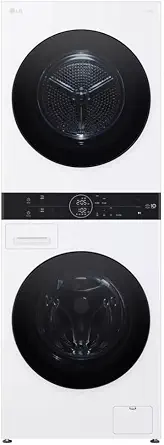 |
| Best Budget The cheapest option that still gets the job done reliably | Smad Heat Pump Dryer DDF-100ALBMW | 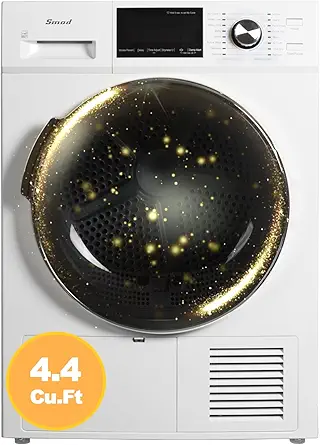 |
| Top Rated A top-rated pick with lots of positive feedback | LG DLHC1455W Heat Pump Dryer |  |
| Best Seller A high-volume bestseller chosen again and again | KoolMore Washer Dryer Combo FLC-3CWH |  |
Samsung Bespoke AI Washer Dryer Combo

| Capacity | 5.3 cubic feet |
|---|---|
| Cycle Options | Active Steam, Auto Dry, Delicates, Prewash, Sensor Dry |
| Voltage | 120 volts |
| Controller Type | Smartphone App and Physical Controls, Touch |
| Number of Washing Cycles | 23 |
This Samsung Bespoke AI Laundry ventless combo combines a 5.3 cu. ft. front-load washer with a heat-pump dryer so washing and drying happen in one machine without transferring loads. It is typically used in apartments, condos, or homes where space or a dryer vent are limited and where you want a single appliance to handle full wash-to-dry cycles. Notable features include AI Opti Wash & Dry that adjusts settings for soil and fabric, a Super Speed cycle that can wash and dry a 10 lb. DOE load in about 98 minutes, touch controls plus smartphone app control, and an auto-dosing dispenser that handles detergent and softener for many loads. Practical benefits are strong convenience from the all-in-one workflow, energy-efficient drying with the heat-pump system, and a generous 5.3 cu. ft. capacity for larger loads. Important limitations are the unit weight and size that require planning for delivery and placement, and typical combo-cycle times are still longer than separate high-speed washer plus dryer setups for heavy weekly laundry loads. Buyers should also confirm a nearby water line and drain for installation.
Best for: Buyers who want a space-saving, convenient single appliance that can wash and dry a household’s regular loads without a dryer vent and value intelligent auto-adjusting cycles and auto-dosing.
Less Ideal for: Households that run very large weekly laundry volumes or need the fastest possible separate washer and dryer throughput should consider separate machines instead.
- All-in-one washer and ventless heat-pump dryer eliminates transferring loads
- AI Opti Wash & Dry adjusts cycles for soil level and fabric type
- Plug-in 120V installation works without a dedicated dryer vent
- Auto-dosing dispenser handles many loads without refilling
- Large 5.3 cu. ft. capacity for an all-in-one combo
- Combo units generally have longer full wash-and-dry cycle times than separate machines
- Heavy and bulky unit requires pre-planned delivery and installation space
Verdict: Choose this combo if you need a ventless, space-saving heat-pump washer-dryer that intelligently adjusts cycles and handles wash-to-dry loads in one machine.
Samsung 4.0 cu. ft. Heat Pump Dryer

| Capacity | 4 cubic feet |
|---|---|
| Form Factor | Front Load |
| Model Number | DV25FG62B0BEA2 |
This Samsung 4.0 cu. ft. heat pump dryer is a ventless front-load unit designed to cut energy use while protecting clothing with lower-temperature drying. It uses heat pump technology and Sensor Dry to adjust time and temperature automatically, and the AI Smart Dial learns preferred cycles to simplify controls. Wi‑Fi and SmartThings integration let you receive end-of-cycle alerts, remotely start or schedule runs, and tweak settings from a phone. The compact, space-saving design makes it suitable for closets or apartments where venting is not possible, and ENERGY STAR certification helps lower operating costs. Expect gentler drying than conventional vented dryers but longer cycle times typical of heat pump systems. The 4.0 cu. ft. capacity handles small to medium loads well but may be tight for bulky items like large comforters. Installation is easier without a vent, though the upfront cost and longer cycles are trade-offs for energy savings and fabric care.
Best for: Buyers who prioritize energy efficiency and gentle fabric care and want a compact, ventless dryer that fits apartments or tight laundry spaces.
Less Ideal for: Households that need to dry very large or frequent bulky loads quickly should consider larger-capacity or high‑speed vented models instead.
- Ventless heat pump design for lower energy use and flexible placement
- Sensor Dry that adjusts time and temperature to protect fabrics
- AI Smart Dial that learns and simplifies cycle selection
- Wi‑Fi with SmartThings for remote control and notifications
- ENERGY STAR certified for reduced operating costs
- Smaller 4.0 cu. ft. capacity may be limiting for very large or bulky loads
- Heat pump cycles typically run longer than conventional vented dryers
Verdict: Choose this dryer if you want a compact, ventless heat pump machine that cuts energy use and treats clothes gently while offering smart controls.
LG WashTower WKHC152HWA
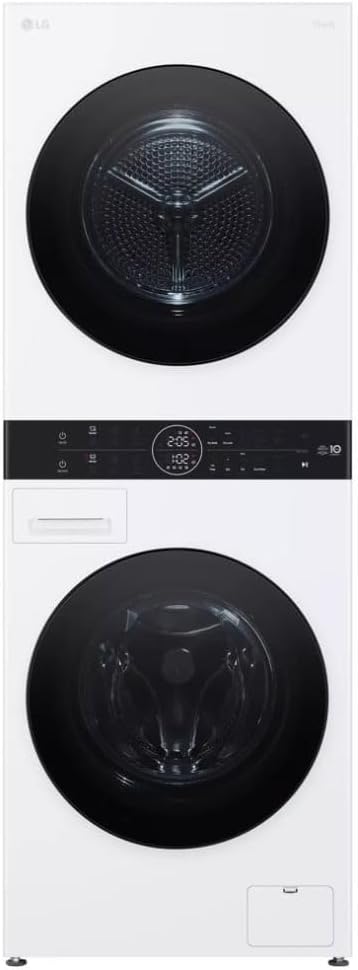
| Washer capacity | 6.6 cubic feet |
|---|---|
| Dryer capacity | 4.2 cu. ft. |
| Voltage | 240 volts |
| Annual energy consumption | 180 kilowatt hours per year |
| Washer dispenser | Dual-compartment, AI auto-dosing |
The LG WashTower WKHC152HWA combines a front-load washer and an integrated ventless Dual Inverter Heat Pump dryer in a single 24-inch vertical cabinet, making it a space-conscious laundry center for apartments and tight laundry closets. The washer and dryer share a center control panel for simplified operation, and the washer offers dual-compartment dispensing with AI auto-dosing to reduce detergent guesswork. The heat pump dryer uses sensor dry and steam features to protect fabrics while avoiding an external vent, and the unit is ENERGY STAR certified for improved efficiency. Built-in Wi-Fi and ThinQ app support let you monitor cycles and receive status alerts remotely. Trade-offs are the narrower cabinet and combined layout, which mean you get smaller individual drum volumes than a pair of full-size side-by-side machines, and the non-vented dryer may extend some dry times compared with high-power vented models. For buyers prioritizing energy efficiency and a compact footprint, this unit delivers convenient, factory-quality performance without the need for extra venting.
Best for: Buyers who need a compact, energy-efficient laundry solution for apartments or small homes and value simplified controls and remote monitoring.
Less Ideal for: Households that regularly run very large loads or need the fastest possible drying times should consider full-size separate washer and vented dryer setups instead.
- Space-saving integrated washer and ventless heat pump dryer in a single 24-inch tower
- ENERGY STAR certified and Dual Inverter Heat Pump for efficient, gentle drying
- AI auto-dosing and center control simplify detergent use and cycle selection
- Wi‑Fi and ThinQ app enable remote monitoring and control
- Smaller individual drum volumes compared with full-size separate machines
- Ventless drying can take longer on heavy loads compared with high-output vented dryers
Verdict: Choose this compact LG WashTower if you want a space-saving, energy-efficient heat pump laundry center with smart controls and low-vent hassle.
Smad Heat Pump Dryer DDF-100ALBMW
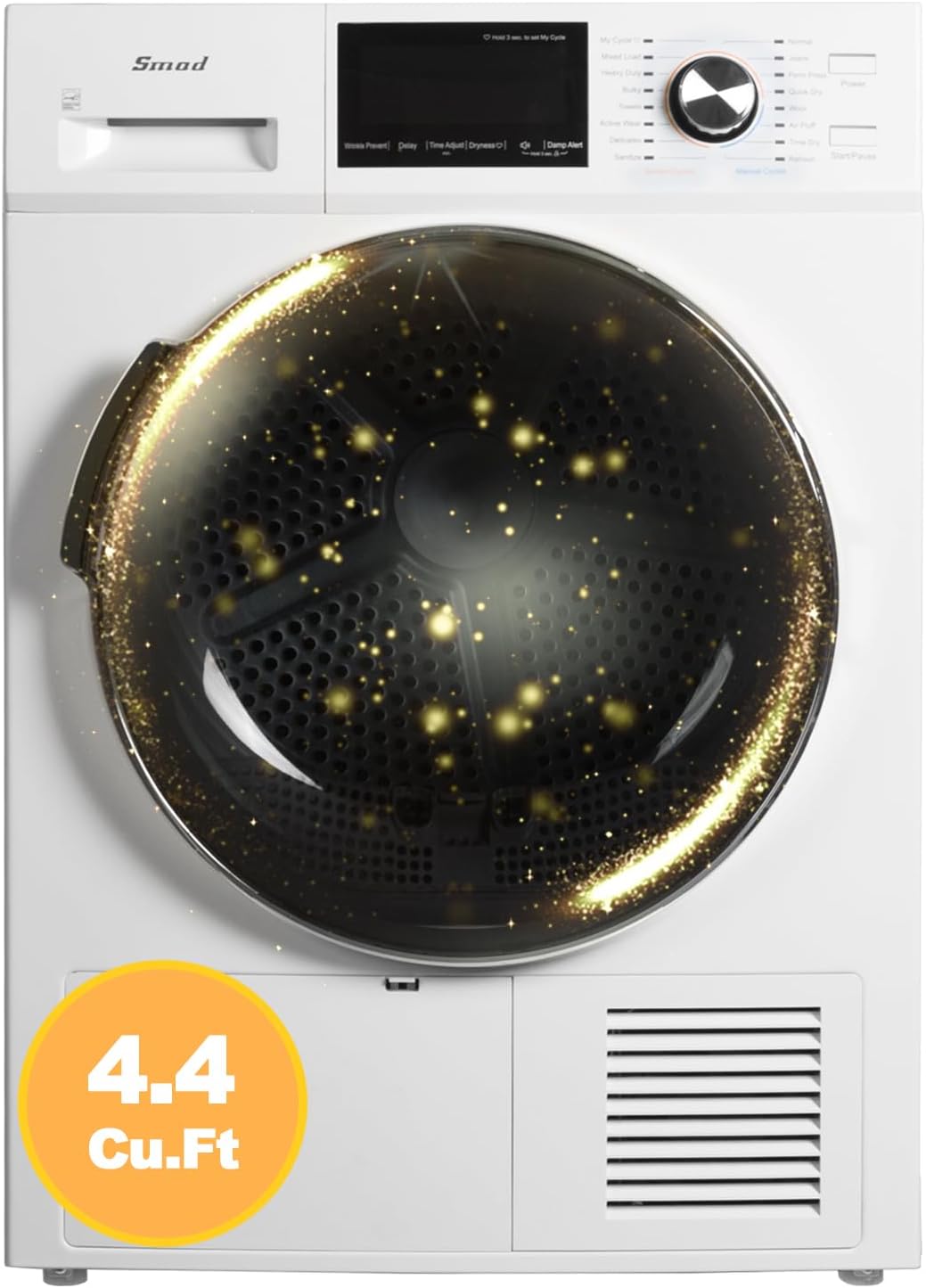
| Form Factor | Front Load |
|---|---|
| Capacity | 4.4 cubic feet |
| Item Type Name | Heat-Pump Dryer |
| Specification Met | UL |
This Smad heat pump dryer uses a ventless heat pump system to dry clothes more efficiently than a conventional electric dryer, which can help lower energy use for budget-minded buyers. It has a 4.4 cubic foot drum and 16 preset programs accessed through an LED control panel, with features such as a damp-dry signal, wrinkle-care and a sanitize option for hygiene-minded loads. The front-load, stackable design and compact footprint make it suitable for apartments or tight laundry spaces, and the included power cable simplifies installation in typical 120/240V hookups. Practical limitations include a smaller capacity than full-size dryers and likely longer cycle times typical of heat-pump units, so very large or heavy loads may need splitting. The unit is built with alloy steel and meets UL specifications, but buyer feedback on the listing is limited and professional installation may be advisable for stacked configurations.
Best for: Buyers prioritizing lower operating costs and a compact, stackable dryer for small homes or apartments who want multiple preset programs for fabric care.
Less Ideal for: Households that regularly dry very large or bulky loads and need the fastest possible cycle times should consider larger capacity or conventional vented dryers.
- Ventless heat pump design for lower energy consumption
- Compact, stackable front-load format fits small laundry spaces
- 16 drying programs for tailored fabric care
- LED display and cycle indicators for easy monitoring
- Smaller 4.4 cu ft capacity may require splitting large loads
- Heat-pump cycles can take longer than traditional dryers
Verdict: A compact, energy-efficient heat pump dryer that stretches a tight appliance budget by cutting operating costs while fitting small laundry spaces.
LG DLHC1455W Heat Pump Dryer

| Capacity | 4.2 cubic feet |
|---|---|
| Access Location | Top Load |
| Door Orientation | Reversible |
| Form Factor | Smartphone |
The LG DLHC1455W is a ventless compact heat pump dryer designed for small laundry spaces that need efficient, low‑temperature drying. It uses Dual Inverter HeatPump technology to recycle moisture during the cycle, which reduces energy use compared with conventional condenser ventless dryers, and it includes sensor dry to adjust run time based on moisture. The 4.2 cubic foot drum fits a typical household load for apartments or closets and offers 14 preset programs to handle different fabric types, while the stainless steel drum aims to be gentle and durable. Wi‑Fi smart control through the LG ThinQ app lets you start cycles and receive alerts remotely. Practical trade‑offs are its compact footprint: it is intended for smaller loads and stacked installations rather than large family laundry, and being a heat pump unit means initial cycle times can be longer than high‑heat vented dryers. For buyers prioritizing energy savings and gentle fabric care in tight spaces, it delivers a solid balance of features.
Best for: Buyers who prioritize reliable, energy‑efficient drying and gentle fabric care in small spaces and who value smart controls for convenience.
Less Ideal for: Households that need to dry large or bulky loads frequently or want the fastest possible cycle times.
- Dual Inverter HeatPump design reduces energy use compared with conventional condenser ventless dryers
- Ventless compact footprint fits closets or stacked installations where venting is not possible
- Sensor Dry and 14 programs provide automated, fabric‑appropriate drying
- Wi‑Fi ThinQ remote control and cycle alerts for convenient monitoring
- Smaller 4.2 cu ft capacity limits load size compared with full‑size dryers
- Heat pump drying generally takes longer per cycle than high‑heat vented models
Verdict: A compact, energy‑saving heat pump dryer that delivers reliable, gentle drying and smart controls for small laundry spaces.
KoolMore Washer Dryer Combo FLC-3CWH

| Capacity | 2.7 cubic feet |
|---|---|
| Voltage | 120 volts |
| Number of Washing Cycles | 16 |
| Number of Drying Cycles | 4 |
| Max Spin Speed | 1300 RPM |
This KoolMore FLC-3CWH is a space-saving all-in-one washer and dryer meant for apartments, dorms, and RVs where a separate washer and dryer are not practical. It washes and dries in the same tub, offers a quick 20-minute wash plus 16 wash programs and 4 drying programs, and uses a 1300 RPM spin to reduce drying time. Controls are simple push-button and an LED display shows status, making it straightforward to run everyday loads and delicates. Because it is ventless and runs on 120V electric power, it avoids a vent installation and fits where conventional dryers cannot. The unit is compact and reasonably versatile, but capacity is limited by the 2.7 cubic foot drum so larger households will need more frequent cycles. As a combo appliance drying times can be longer than a separate heat-pump or vented dryer, especially on heavy fabrics, and service is covered by a one-year parts and labor warranty. For buyers prioritizing convenience and a small footprint this unit handles mixed laundry well, but expect slower drying on large or bulky loads.
Best for: A cautious buyer who values a reliable, compact laundry solution for tight spaces and wants straightforward controls and predictable operation without installing a vent.
Less Ideal for: Families or users who need to handle frequent large or bulky loads or who prioritize the fastest possible drying times should choose a larger separate washer and dryer instead.
- All-in-one washer and ventless dryer saves space and removes need for external venting
- Multiple cycle options including a 20-minute quick wash for fast turnaround
- 1300 RPM max spin helps extract water and shorten drying time
- Simple push-button controls and LED display make operation easy
- 2.7 cu ft capacity limits load size compared with full-size machines
- Drying in a combo unit can take longer than a dedicated heat-pump or vented dryer
Verdict: Buy this if you need a simple, ventless combo that saves space and handles everyday small loads reliably.
Choosing the Right Heat Pump Dryer for the Money: Key Factors to Consider
Energy Consumption & Running Cost
How much energy a dryer uses per cycle directly affects monthly utility bills. Heat pump dryers are more efficient than conventional vented or condenser models because they recover and reuse heat, but efficiency varies between units. Look at standardized kWh-per-cycle or annual energy consumption estimates to compare operating costs.
Lower consumption often comes with longer cycle times, so weigh the tradeoff between electricity savings and time. If you run many loads each week, even small differences in kWh can add up to notable savings over a year. Also consider the dryer's control over temperature and cycle length, since more precise controls let you minimize energy use for lightly soiled or thin loads.
Drying Performance & Cycle Options
Drying performance covers how quickly and thoroughly a machine removes moisture without overdrying. Look for clear cycle descriptions such as timed dry, sensor dry, and fabric-specific cycles. Sensor-based drying adjusts runtime to moisture levels and helps avoid wasted energy and damaged clothes.
Cycle variety matters when you need to handle mixed loads, delicates, heavy towels, or bulky items. A good midrange heat pump dryer should offer at least basic sensors plus cycles for delicates and bulky bedding so you can balance speed and fabric care depending on the load.
Fabric Care and Temperature Control
Heat pump dryers operate at lower temperatures than conventional units, which is gentler on fabrics and reduces shrinkage. Still, heat and drum action can stress some textiles. Check for features like low-heat delicates, steam refresh or anti-crease functions, and adjustable heat settings.
Better fabric care features extend the life of garments and reduce replacement costs. If you dry performance fabrics, knitwear, or mixed-fiber wardrobes, prioritize models that let you tailor temperature and time to fabric needs.
Drum Capacity and Load Compatibility
Capacity influences how many loads you run and whether large items like comforters will fit. Larger drums reduce the number of cycles per week, which can lower operating costs and save time. However, larger drums may increase the unit's footprint, so check physical dimensions against your laundry space.
Also consider drum design details like paddles and interior finish that affect how evenly garments tumble. A well-designed drum improves drying consistency and reduces tangling, which helps both drying speed and fabric longevity.
Noise Level and Installation Location
Noise and vibration matter if the dryer is near living areas or installed on a shared wall. Heat pump dryers typically run at lower temperatures but can have variable noise profiles depending on fan and compressor design. Look for rated decibel levels and quiet-cycle options.
If noise is a concern, plan the installation to minimize transmitted vibration and consider anti-vibration feet or a dedicated laundry closet. Lower noise can improve household comfort and make overnight or off-peak drying more practical.
Maintenance and Filter Accessibility
Routine maintenance affects long-term performance and operating cost. Heat pump dryers require periodic cleaning of filters and condensers to maintain efficiency. Easy access to lint traps, removable condenser units, and clear service indicators reduce the time and cost of upkeep.
Poor maintenance access can increase energy use and risk component wear. Choose designs with washable filters and straightforward cleaning procedures to keep the dryer running efficiently with minimal hassle.
How Heat Pump Dryers Save You Money
Heat pump dryers lower energy consumption by capturing and reusing heat that would otherwise be expelled. That recovered heat reduces the amount of fresh electrical energy required to evaporate moisture, which can significantly reduce kWh per cycle compared with traditional electric dryers. Over many loads, the cumulative savings can offset a higher upfront cost.
Savings are most meaningful for households that run frequent loads or dryer-heavy items like towels. To estimate savings for your situation, compare the dryer's stated kWh per cycle or annual energy use against your local electricity rate and typical laundry frequency.
- Reduced kWh per cycle translates to lower monthly bills
- Longer cycle times may be offset by energy savings
- Greater impact in high-use households
Sizing for Your Household
Select a drum capacity that matches your typical load size. Singles and couples often do well with smaller drums, while families benefit from larger drums that can handle bulky bedding and reduce cycle count. If your laundry includes large duvets or heavy towels, prioritize capacity and a robust tumble action.
Consider the washer you pair it with. Matching capacities helps avoid running half-loads or overloading. Also factor in stackable or freestanding installation constraints and available floor space.
- Match drum size to load types and laundry frequency
- Account for installation orientation and clearance
- Larger drums save time but increase unit footprint
Practical Installation and Venting Notes
Heat pump dryers are condenser-style units that do not require external venting, which makes them versatile for apartment, closet, or garage installations. They usually need an electrical connection and sufficient airflow around the case. Check clearances in your laundry area and avoid enclosing the dryer in a fully sealed cabinet without ventilation.
Drainage options vary. Some models collect condensed water in an internal tank you empty manually, while others offer a direct-drain option. If you prefer hands-off operation, confirm whether a direct drain is supported and compatible with your space.
- No external venting required for most heat pump dryers
- Plan for airflow and clearance to reduce noise and heat buildup
- Verify condensation drain options for convenience
Dealing with Longer Cycle Times
Because heat pump dryers run at lower temperatures, they often require longer cycles to reach the same moisture level. That tradeoff is the core of energy savings. If you value faster turnaround, look for models with higher-efficiency heat exchangers and sensor-driven cycles that stop when clothes are dry rather than running a fixed time.
Use program selection to shorten effective wait time. For lightly damp loads, choose short or quick-dry cycles. Staggering loads and running dryer cycles during off-peak electricity hours can also reduce perceived inconvenience while saving on energy costs.
- Longer cycles are typical but can be optimized with sensors
- Select appropriate programs for partial or light loads
- Run cycles during off-peak hours when possible
Maintenance Tips to Maintain Efficiency
Keeping filters and condensers clean preserves airflow and efficiency. Clean the lint trap after every load and follow manufacturer guidance for condenser cleaning intervals. A clogged condenser increases cycle time and energy use and can stress internal components.
Perform occasional drum and gasket inspections to remove trapped debris and ensure seals are intact. If your model has a reusable filter, wash it according to instructions and allow it to dry fully before reinstalling to avoid mold or performance loss.
- Clean lint trap after each cycle
- Schedule condenser and filter cleaning per manufacturer recommendations
- Inspect seals and drum interior periodically
How We Chose the Best Heat Pump Dryer for the Money
We focused on attributes that matter when buying a heat pump dryer aimed at delivering the best total cost of ownership and reliable day-to-day performance. Primary evaluation criteria included energy consumption and efficiency ratings, because lower running costs are central to finding a dryer that is economical over time. Drying performance and cycle variety were measured to ensure machines handle common fabrics and load sizes without excessive runtimes. Build quality and drum capacity were considered to balance longevity and the number of loads per week. Noise levels and vibration were reviewed for livability in homes where the laundry area is near living space. Finally, maintenance needs and filter accessibility were assessed since easier upkeep keeps operating costs and downtime lower. We excluded specialty or commercial dryers that are not intended for residential use and units that rely on obsolete or inefficient design approaches. We prioritized models with transparent efficiency specs and realistic user-focused features rather than one-off gimmicks. The listed items are those that met performance, efficiency, durability, and upkeep standards suitable for long-term household savings.
Our full evaluation process is outlined in our review methodology.
FAQ
Are heat pump dryers really worth the extra cost?
Often yes for households that run many loads. Lower energy use typically reduces operating costs over time. The payback depends on your laundry frequency, local electricity rates, and the model's efficiency.
Do heat pump dryers take much longer than conventional dryers?
Usually they have longer cycle times because they dry at lower temperatures. Sensor-based cycles help limit extra time by stopping when items reach the desired dryness rather than running a fixed period.
Can I install a heat pump dryer in a closet or small laundry space?
Yes. Heat pump dryers do not require external venting, making them suitable for closets and compact spaces. Ensure there is adequate clearance for airflow and access for maintenance tasks like emptying condensate or cleaning filters.
How often do I need to clean the condenser or filters?
Frequency varies with usage but plan to clean the lint trap after every load and the condenser or internal filters several times per year. Regular cleaning keeps efficiency high and prevents longer cycle times.
Will a heat pump dryer shrink or damage clothes more than other dryers?
No. Heat pump dryers typically use lower temperatures, which are gentler on fabrics and reduce shrinkage risk. Still, follow garment care labels and use low-heat or delicate cycles for sensitive items.
Final Verdict
When choosing a heat pump dryer for the money, prioritize models that combine high energy efficiency with reliable drying and easy upkeep. Expect longer cycle times but lower running costs, and weigh drum capacity against how often you run heavy loads. Pay attention to maintenance accessibility and noise if the dryer sits near living areas. Focus on the criteria that will affect your household most: energy use if you run many loads, capacity for bulky bedding, or quiet operation for shared spaces. That approach will help you select a heat pump dryer that delivers the best balance of operating savings and practical performance.