
Note: This article contains affiliate links. If you click on these links and make a purchase, we may earn a small commission at no extra cost to you. This helps support our research and content. Read our full affiliate disclosure here.
If you squeeze citrus frequently, the right electric lemon juicer can save time and get more juice from each fruit. You want a tool that extracts efficiently without overworking your hands, fits easily on a countertop, and is simple to clean between uses. This guide shortlists the top electric lemon juicers available for home kitchens and evaluates them on extraction performance, cleanup, and everyday convenience. Read on to find a model that matches how often you juice, the typical lemon sizes you use, and the amount of counter space and maintenance you can tolerate.
Top Picks at a Glance
| Best Overall The best all-around choice for most situations | Cuisinart Pulp Control CCJ-500P1 | 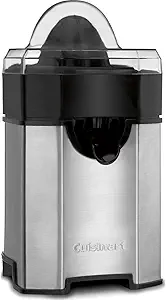 |
| Best Quality Built to a higher standard if you want something more solid | Breville Citrus Press Pro 800CPXL |  |
| Best Value The sweet spot between price and what you get | Eurolux Electric Citrus Juicer ELCJ-1600SN |  |
| Best Budget The cheapest option that still gets the job done reliably | Elite Gourmet ETS623 Citrus Juicer |  |
| Top Rated A top-rated pick with lots of positive feedback | Eurolux Electric Citrus Juicer ELCJ-4800 |  |
| Most Popular A crowd favorite that many people choose with confidence | BLACK+DECKER Citrus Juicer CJ625 |  |
Cuisinart Pulp Control CCJ-500P1

| Capacity | 12 ounces |
|---|---|
| Power Source | Corded Electric |
| Number of Speeds | 3 |
| Material | Stainless Steel |
The Cuisinart Pulp Control CCJ-500P1 is a small electric citrus juicer designed to handle everything from limes to grapefruits. It uses an auto-reversing universal reamer and a final-spin feature to extract extra juice, and three pulp-control settings let you dial in how much pulp you want. Juice flows through an extra-long snap-up spout to fit taller glasses and reduce drips, and the removable parts are dishwasher-safe for straightforward cleanup. The motor is intended for light kitchen use and the unit is compact enough to store on a counter or in a cabinet. Its stainless-steel construction and button controls feel durable and simple to operate, but the carafe is limited in capacity so frequent juicing sessions require emptying more often. This model is ideal for everyday fresh-squeezed citrus at home, offering a good balance of efficiency, ease of use, and easy maintenance for buyers who want reliable results without professional-level equipment.
Best for: Buyers who want a straightforward countertop citrus juicer that delivers good juice yield and easy cleanup for daily home use.
Less Ideal for: People who need to juice large volumes regularly or require a heavy‑duty commercial machine should look at larger extractor models.
- Auto-reversing reamer and final-spin feature boost juice yield
- Three pulp-control settings for customizable texture
- Dishwasher-safe removable parts for easy cleaning
- Compact stainless-steel design fits small kitchens
- Small 12-ounce capacity means frequent emptying for larger batches
- Motor and power profile intended for light home use rather than heavy commercial use
Verdict: A compact, easy-to-use citrus juicer that maximizes yield with pulp control and simple cleanup, making it a strong everyday choice for home citrus juicing.
Breville Citrus Press Pro 800CPXL

| Wattage | 110 watts |
|---|---|
| Power Source | Corded Electric |
| Voltage | 120 volts |
| Capacity | 800 ml |
| Material | Stainless Steel |
The Breville Citrus Press Pro 800CPXL is a heavy-duty countertop citrus juicer that uses a triple-hinged, power-assisted arm and a quadra-fin die-cast cone to squeeze more juice with less hand effort. You lower the arm onto halved fruit and the motor drives the cone only when safety switches register sufficient pressure, which makes extraction efficient and reduces splatter. The acid-resistant die-cast cone and body handle frequent use and the drip-stop spout plus removable fruit dome keep the counter cleaner during operation. Parts that contact juice are dishwasher safe, so cleanup is straightforward after batches of fresh juice. It is a single-speed, corded unit rated around 100–110 watts, so it focuses on robust pressing rather than variable speeds or blending. The unit is fairly substantial in weight and footprint, which helps stability but may be too large for very small kitchens. If you want a rugged, high-extraction machine built for frequent citrus juicing, this model delivers consistent results with minimal fuss.
Best for: Buyers who prioritize maximum juice extraction and durable, pro-style pressing for frequent citrus use and want a machine that reduces manual effort and mess.
Less Ideal for: People who need a compact, lightweight unit for occasional use or want adjustable speeds and multi-function juicing capabilities.
- Power-assisted lever and triple-hinged arm for efficient, low-effort extraction
- Quadra-fin die-cast cone maximizes juice yield from all citrus sizes
- Acid-resistant die-cast construction designed for durability with citrus acids
- Drip-stop spout and removable fruit dome reduce mess and simplify cleaning
- Juice-contact parts are dishwasher safe for easier cleanup
- Single-speed design lacks variable speed control for delicate handling
- Relatively heavy and larger footprint compared with compact juicers
Verdict: Choose the Breville Citrus Press Pro if you want a heavy-duty, high-extraction electric citrus press built for frequent, efficient juicing.
Eurolux Electric Citrus Juicer ELCJ-1600SN

| Maximum Power | 120 watts |
|---|---|
| Power Source | Corded Electric |
| Material | Stainless Steel |
| Product Care Instructions | Dishwasher Safe |
The Eurolux ELCJ-1600SN is a countertop electric citrus juicer designed to make quick, seed-free orange and lemon juice with minimal fuss. You press the soft rubber handle and the motor runs automatically, using a single all-in-one cone that accommodates different fruit sizes so you do not need to swap parts. Its stainless steel construction and integrated filter trap pits and residue for cleaner juice, and the detachable components are dishwasher safe which keeps cleanup simple. The unit is marketed as having a 120-watt motor tuned for quiet, efficient extraction and includes protections like auto-reverse and overheat protection to extend motor life. Practical buyers will appreciate the sturdy metal build and the ease of use for daily morning juice or occasional citrus prep for recipes. Limitations include its focus on citrus only, so it cannot process whole fruits or vegetables, and its larger footprint may take more counter space than compact citrus presses.
Best for: Buyers who want a durable, easy-to-use countertop citrus juicer that produces cleaner, seed-free juice with minimal setup and cleanup and who value a sturdy stainless steel machine for daily or frequent use.
Less Ideal for: If you need an all-purpose juicer for leafy greens, whole fruits, or small kitchens where counter space is at a premium, this citrus-only electric press is not the best choice.
- Integrated stainless steel filter for reduced seeds and pulp in the cup
- One-touch automatic operation with soft-grip handle for easy, hands-off juicing
- Dishwasher-safe detachable parts for quick cleaning
- Stainless steel construction that feels durable and looks kitchen-ready
- Auto-reversing and overheat protection to help prolong motor life
- Designed only for citrus so it cannot juice non-citrus fruits or vegetables
- Relatively large footprint compared with compact handheld citrus squeezers
Verdict: A solid, easy-to-clean stainless steel citrus juicer that delivers seed-reduced juice with one-touch operation for buyers prioritizing reliable daily citrus extraction.
Elite Gourmet ETS623 Citrus Juicer

| Maximum Power | 40 watts |
|---|---|
| Power Source | Corded Electric |
| Capacity | 24 oz |
| Special Features | Quiet Motor |
The Elite Gourmet ETS623 is a simple, budget-friendly electric citrus juicer built for everyday home use. It uses a 40-watt motor and an auto-reversing reamer that spins both directions when you press down, which helps extract more juice than many entry-level 25-watt models. The 24 oz container collects about 2–3 servings and has a built-in pulp and seed filter plus an easy-pour spout so you can serve directly from the pitcher. Detachable parts are top-rack dishwasher safe for faster cleanup, and the compact footprint makes it easy to store in small kitchens, dorms, or RVs. Practical downsides are modest power compared with larger juicers and the recommendation to hand wash for longest life, which may limit heavy daily use. For straightforward citrus squeezing—lemons for dressings, limes for cocktails, or small orange batches—the ETS623 delivers good extraction and low fuss at an affordable price.
Best for: Anyone seeking an inexpensive, no-frills citrus juicer for occasional home use who values compact size and easy serving for small batches.
Less Ideal for: People who need a high-capacity or industrial-strength juicer for frequent large-volume juicing should look at more powerful models.
- 40-watt motor with auto-reversing reamer improves juice extraction over weaker models
- 24 oz container with built-in pulp and seed filter for smoother juice and easy pouring
- Compact footprint suitable for small kitchens, dorms, and RVs
- Detachable parts are top-rack dishwasher safe for faster cleanup
- Not powerful enough for heavy-duty or continuous juicing sessions
- Manufacturer recommends hand washing for longest product life despite dishwasher-safe parts
Verdict: A compact, affordable electric citrus juicer that delivers better extraction than basic models and is ideal for small-batch home squeezing.
Eurolux Electric Citrus Juicer ELCJ-4800

| Wattage | 300 watts |
|---|---|
| Power Source | Corded Electric |
| Material | Stainless Steel |
| Special Features | Auto-Reversing |
The Eurolux Electric Citrus Juicer is a small countertop squeezer built for simple, regular use. Its 300W motor runs at a low 110 RPM with an auto-reversing function to extract juice efficiently while staying relatively quiet, and one-touch operation makes juicing a straightforward four-step routine: cut, place, close, and press. The stainless steel housing and dishwasher-safe removable parts keep cleanup easy and help the unit resist wear from daily use. Safety features such as secure part locking and a stable base reduce wobble during operation, and the juicer is suitable for lemons, limes, and medium oranges. Limitations include its compact size, which is geared to household servings rather than commercial throughput, and the simple control set means there is no variable speed or pulp-adjustment dial for fine tuning. For buyers who prioritize a durable, easy-to-use machine for daily home juicing, this model delivers dependable performance without complexity.
Best for: Buyers who want a reliable, no-fuss countertop juicer that handles daily lemon and orange use with durable construction and simple controls.
Less Ideal for: People who need high-volume commercial juicing or want advanced controls for pace and pulp customization should look elsewhere.
- Powerful 300W motor with auto-reversing for more complete extraction
- One-touch operation simplifies juicing to a single button press
- Stainless steel construction and dishwasher-safe parts for easy cleaning and durability
- Quiet operation suitable for early mornings or shared spaces
- Compact capacity better suited to household servings rather than frequent large-volume juicing
- No speed control or adjustable pulp settings for customized extraction
Verdict: A sturdy, easy-to-use stainless steel juicer with a 300W auto-reversing motor that reliably handles daily citrus juicing tasks.
BLACK+DECKER Citrus Juicer CJ625

| Power Source | Corded Electric |
|---|---|
| Wattage | 150 watts |
| Voltage | 120 volts |
| Special Features | Auto-Reversing |
The BLACK+DECKER CJ625 is a countertop citrus juicer designed for quick home squeezing of lemons, limes, oranges, and other citrus. It uses auto-reversing reamer cones to extract more juice with less manual repositioning and includes both small and large cones to fit different fruit sizes. Juice collects in a clear plastic pitcher with measurement markings and a drip-free pour spout so you can juice straight into recipes or a glass, while a pulp basket lets you control how much pulp ends up in the juice. The unit is corded and easy to clean since the pitcher, cone, and strainer are dishwasher-safe. Practical limits are its modest motor rating and plastic construction, which keep the price and footprint low but mean it is not built for continuous commercial use or heavy-duty juicing sessions.
Best for: Buyers who want an inexpensive, no-fuss electric juicer for regular home use and value easy cleanup and reliable extraction backed by many positive user reviews.
Less Ideal for: People who need a heavy-duty or commercial juicer for high-volume daily use should look at more powerful, durable models.
- Auto-reversing cones improve extraction without manual flipping
- Includes two cone sizes for small and large citrus
- Clear pitcher with measurement markings and drip-free spout for easy pouring
- Dishwasher-safe removable parts for straightforward cleanup
- Plastic construction and modest motor limit long heavy-duty use
- Not intended for continuous commercial juicing
Verdict: A simple, easy-to-clean countertop citrus juicer that reliably extracts juice for everyday home use.
Choosing the Right Electric Lemon Juicer: Key Factors to Consider
Extraction Efficiency
How much juice a unit extracts from a lemon affects both value and convenience. Efficient extraction means less waste and fewer fruits needed for the same recipe. Efficiency depends on the reamer shape, whether the machine applies pressure or relies on rotation, and how well pulp and seeds are separated. For home users who juice frequently, higher extraction reduces prep time and grocery needs.
Also consider whether the juicer uses a forceful press or centrifugal action. For small citrus, a reamer-driven extractor usually yields more juice and handles variable fruit sizes better. Check for adjustable reamers or pressure features if you regularly work with under-ripe or larger fruit.
Ease of Cleaning
Citrus juice is sticky and acidic, so a design that disassembles quickly and has dishwasher-safe parts will get used more often. Look at how many nooks the juicer has and whether pulp traps and strainers are easy to rinse free of membrane and seeds. Units with fewer small parts reduce the time between uses and limit lingering odors.
Also think about how the motor base handles moisture. A sealed motor housing and accessible removable parts reduce the risk of juice entering electrical components and extend the appliance's usable life.
Size and Countertop Fit
A compact footprint makes it easier to leave the juicer on the counter ready for use, which increases the likelihood you will use it regularly. Consider both height and base diameter, especially if you store the unit in a cabinet. Taller machines can be awkward in limited storage spaces, while very wide bases may dominate a small countertop.
If you have limited storage, prioritize models with simple stacking parts or that nest together. Also consider the juice container capacity if you often prepare multiple servings at once.
Material and Corrosion Resistance
Lemon juice is acidic and can corrode inferior metals and degrade some plastics over time. Parts that contact juice should be made from corrosion-resistant metals or high-grade, acid-resistant plastics. Stainless-steel strainers, hard-wearing reamers, and BPA-free containers will last longer and keep odor and staining to a minimum.
Pay attention to the finish and how joins are constructed. Sealed seams and quality fasteners resist deterioration and are easier to keep sanitary.
Motor Power and Heat Management
Motor strength determines how easily the unit handles repeated juicing without bogging down. For lemon-sized fruit, you do not need industrial power, but a motor that runs smoothly with low noise and does not overheat during multiple short cycles is important. Heat management features, such as thermal cutouts or ventilated housings, prevent damage during heavier use.
Also consider the duty cycle recommendations from manufacturers and whether the design allows short cooldowns between batches. For frequent juicers, a slightly more robust motor reduces the risk of premature failure.
Spout and Drip Design
How the juicer dispenses liquid affects mess and convenience. A well-designed spout pours cleanly into a glass or bowl without dripping down the front of the unit. Some models include anti-drip mechanisms or built-in containers with pour spouts to simplify transfer.
Consider whether the spout sits high enough for your glasses or if you will need to pour into an intermediate container. A good drip design reduces cleanup and makes repeated juicing less frustrating.
Manual Vs Electric Features to Expect
Electric lemon juicers automate the twisting and extraction steps found in manual reamers, but models vary in how much user interaction they require. Some spin when the fruit is pressed down, while others use a motorized press. Expect differences in noise, speed, and how much control you retain over pulp content.
Think about whether you want a simple push-and-go style for quick single glasses or a model with variable pressure and reamer sizes for recipes that need different pulp levels. Electricity adds convenience, but it also brings weight, parts, and the need for maintenance.
- Press-activated reamers are simple and fast for small quantities
- Motorized press units can extract more juice with less manual effort
- Variable speed or reversible rotation helps control pulp and seed release
How to Maximize Juice Yield From Lemons
Simple pre-steps improve yield regardless of the juicer. Roll lemons on the counter with firm pressure before cutting to loosen internal membranes. Warm lemons to room temperature for best extraction. Cutting lemons in half across the equator exposes more pulp to the reamer.
When using an electric unit, press steadily and allow the motor to finish each cycle. Avoid forcing the fruit beyond the designed motion, which can stress the motor or reamer. If your model has an adjustable strainer setting or pulp control, experiment to find the balance between yield and clarity you prefer.
- Roll and warm fruit before juicing
- Cut lemons across the middle for better exposure
- Let the motor complete its cycle for maximum extraction
Cleaning and Maintenance Tips
Disassemble removable parts immediately after use and rinse them with warm water to prevent sticky residue. For stuck-on membrane or seeds, use a soft brush to avoid scratching plastic screens. Dishwasher-safe parts speed cleanup, but hand-washing often preserves seals and finishes longer.
Wipe the motor base with a damp cloth and avoid immersing it in water. Periodically inspect seals and fasteners for wear, and replace any parts showing corrosion or cracks to keep performance consistent. Regular maintenance keeps the unit sanitary and extends service life.
- Rinse parts promptly to prevent build-up
- Use a soft brush for strainers and reamers
- Avoid soaking motor housing; wipe clean instead
Choosing the Right Capacity and Bowl Style
If you frequently juice for cocktails or meal prep, a model with a larger integrated container or a high-flow spout reduces interruptions. For single-serve use, compact designs with small juice cups are more space efficient. Consider whether you want a removable pitcher for pouring or a direct-spout model that fills a glass.
Bowl and reamer geometry also affects how seeds and pulp are captured. Look for strainers with appropriately sized holes for lemons rather than coarse screens designed for larger citrus. The right bowl style makes pouring and storage simpler.
- Larger containers reduce back-and-forth when making multiple servings
- Small, compact bowls are ideal for occasional single glasses
- Removable pitchers make transfer and storage easier
Noise and Placement Considerations
Electric units create varying levels of noise depending on motor type and build. Quiet operation matters for early-morning use or small homes. If noise is a concern, look for models engineered with heavier housings or lower-RPM motors that still deliver adequate torque.
Placement matters for vibration and splatter. A rubberized base reduces movement on countertops, and locating the unit near a sink makes cleanup easier. Keep the power cord length and outlet position in mind during placement.
- Lower-RPM motors often run quieter while providing sufficient torque
- Rubber feet reduce vibration and movement
- Place near a sink for quick cleanup
How We Chose the Best Electric Lemon Juicer
We focused on tangible, repeatable criteria that matter to people who juice lemons at home regularly. Extraction efficiency was a primary filter, looking at machines designed to maximize yield from small, high-acidity fruit. Ease of cleaning was another essential criterion because citrus juice and pulp build-up quickly and determines whether a unit becomes a daily tool or an occasional chore. Durability and build quality were weighed to ensure components that contact acid resist wear and maintain performance over time. Motor reliability and run-time characteristics were considered so units handle repeated short uses without overheating. Ergonomics and usability—including bowl size, spout design, and how well the reamer handles different lemon sizes—rounded out the evaluation. We excluded tools intended primarily for large citrus like grapefruits or for commercial heavy-duty production, focusing on models optimized for lemons and similar small citrus. Units with fragile plastic reamers, poor juice separation, or impractical cleaning requirements were removed from consideration. The resulting picks reflect machines that perform well on extraction, are easy to maintain, and suit typical home use patterns.
Our full evaluation process is outlined in our review methodology.
FAQ
Can an electric lemon juicer handle limes and small oranges?
Often yes. Many electric lemon juicers are sized for small citrus and will handle limes and certain small oranges, but performance varies. If you plan to juice several types, check that the reamer size and pulp strainer work well across the fruits you use most.
How often should I clean the juicer to prevent odors?
You should rinse removable parts after each use and give them a thorough wash daily if you juice frequently. Leaving juice residue on strainers and containers can lead to odors and stickiness, so prompt cleaning is the best prevention.
Do electric juicers remove seeds automatically?
Most home electric lemon juicers include a built-in strainer that captures seeds and larger bits of membrane. Very small fragments can still pass through, so some recipes may benefit from an additional fine strain after juicing.
Will a stronger motor always yield more juice?
Not necessarily. Motor power helps with repeated cycles and tougher fruit, but reamer design and fit to the fruit are often more important for yield. A balanced combination of appropriate motor torque and a well-shaped reamer produces the best results.
Are parts usually dishwasher-safe?
Some models offer dishwasher-safe strainers, reamers, and pitchers, but not all. Check the product details for machine-washable parts and consider hand-washing components that contact the motor base to preserve seals and finishes.
Final Verdict
Prioritize how often you will use an electric lemon juicer and which attributes matter most: extraction efficiency if you want maximum juice, ease of cleaning if you need daily convenience, or a sturdier motor if you juice frequently or in batches. Smaller, simpler units are ideal for occasional single-serve use, while models with larger bowls and better heat management suit heavier routines. Balance the tradeoffs between yield, maintenance, and countertop footprint to pick a juicer that you will reach for every time you need fresh citrus.