
Note: This article contains affiliate links. If you click on these links and make a purchase, we may earn a small commission at no extra cost to you. This helps support our research and content. Read our full affiliate disclosure here.
If you want fresher juice at home, picking the right Fruit and Vegetable Juicer makes a big difference in yield, nutrition, and everyday use. The right juicer fits your kitchen routine, handles the produce you use most, and is straightforward to clean and maintain. This guide shortlists the top options in the category and explains why each style might suit different routines and priorities. We evaluated extraction efficiency, ease of cleaning, noise and footprint, and build durability to help you find the best match. Read on for practical buying guidance and the criteria we used to select these top picks.
Top Picks at a Glance
| Best Overall The best all-around choice for most situations | Breville Juice Fountain Cold BJE430SIL | 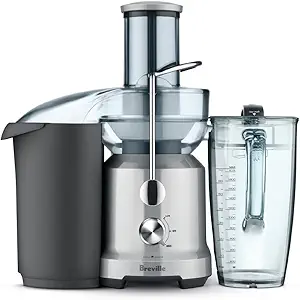 |
| Best Quality Built to a higher standard if you want something more solid | Hurom H70 Slow Juicer |  |
| Best Budget The cheapest option that still gets the job done reliably | QCen 500W Centrifugal Juicer | 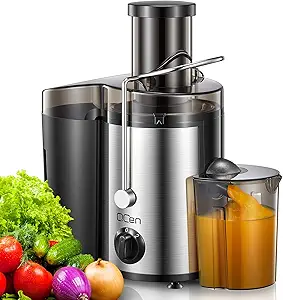 |
| Top Rated A top-rated pick with lots of positive feedback | ECOSELF Cold Press Juicer |  |
| Most Popular A crowd favorite that many people choose with confidence | Breville Juice Fountain Plus JE98XL |  |
| Best Seller A high-volume bestseller chosen again and again | Juilist Centrifugal Juicer AMR526 |  |
Breville Juice Fountain Cold BJE430SIL

| Power | 850 watts |
|---|---|
| Number of Speeds | 2 |
| Feed Chute | 3 inch extra-wide |
| Capacity | 70 fl oz jug |
The Breville Juice Fountain Cold is a fast centrifugal juicer built for everyday kitchen use and bigger batches. Its 850-watt motor and Cold Spin Technology pair with an Italian-made precision mesh filter to reduce heat during extraction, which helps preserve vitamins and reduce foam. The 3-inch extra-wide chute accepts whole fruit and many vegetables with less prep, and two speed settings let you adjust for softer or harder produce. The included 70 fl oz seal-and-store jug and large pulp container make it easy to juice enough for a family and refrigerate for up to three days. Practical touches include a detachable drip/nozzle to juice directly into a glass and an LED overload indicator to protect the motor. Clean-up is mostly straightforward since several parts are dishwasher safe, though the unit has several removable components to rinse. The juicer is larger and a bit heavy for small counters, and as a centrifugal model it will produce more foam and slightly less yield than slow masticating machines, but it delivers quick, nutrient-forward juice with minimal prep for busy households.
Best for: Buyers who want fast, low-prep juicing for family-sized batches and prioritize speed and convenience over maximum yield and ultra-quiet operation.
Less Ideal for: People whose priority is the highest possible juice yield, very quiet operation, or a compact, lightweight countertop appliance should consider slow masticating or more compact models instead.
- Cold Spin Technology and precision mesh filter help limit heat and preserve nutrients
- 3" extra-wide feed chute reduces prep by allowing whole fruits and many vegetables
- 70 fl oz seal-and-store jug lets you make larger batches and store juice in the fridge
- 850-watt motor with two speeds handles both soft and hard produce
- Detachable nozzle and dishwasher-safe parts simplify pouring and cleaning
- Centrifugal design produces more foam and slightly lower yield than slow juicers
- Relatively large and heavy footprint may be cumbersome for small kitchens
Verdict: Choose this juicer if you want quick, low-prep family-sized juicing with technology that helps preserve nutrients during fast extraction.
Hurom H70 Slow Juicer

| Wattage | 150 watts |
|---|---|
| Power Source | Corded Electric |
| Recommended Uses | Juicing fruits and vegetables |
| Material | Plastic |
The Hurom H70 is a slow masticating juicer that squeezes fruits and vegetables at low speed to produce smooth, high-yield juice with minimal pulp. It uses a strainer-free Easy Clean chamber and two-part auger system so pulp separation happens internally, and the removable parts rinse clean quickly for fast turnaround between batches. The wide, self-feeding hopper accepts larger pieces and reduces prep time, while the front gauge window lets you monitor juice level without stopping. At 150 watts it handles leafy greens, apples, carrots and firmer produce reliably, and the low RPM operation keeps noise and heat down so juice stays fresher longer. Important limitations are the plastic construction and hand-wash-only care, which may not suit buyers seeking stainless components or dishwasher convenience, and the unit is sized for countertop use rather than heavy commercial loads. For home users focused on getting the most juice per piece with easy cleanup, the H70 balances performance and convenience well.
Best for: Buyers who prioritize extracting maximum juice yield and smooth texture from fruits and vegetables while wanting a countertop juicer that is quick to clean and easy to use.
Less Ideal for: Those needing a commercial-grade or dishwasher-safe juicer for continuous heavy use should look at more robust, professional models.
- Strainer-free Easy Clean chamber reduces scrubbing and speeds cleanup.
- Self-feeding wide hopper minimizes chopping and speeds prep.
- Slow masticating auger yields more juice with less pulp.
- Front-facing gauge lets you monitor juice level during operation.
- Plastic construction and hand-wash-only parts may feel less durable and require care.
- Not intended for heavy commercial or continuous high-volume use.
Verdict: Choose the H70 if you want a quiet, high-yield home cold-press juicer that minimizes pulp and makes cleanup fast.
QCen 500W Centrifugal Juicer

| Maximum Power | 500 watts |
|---|---|
| Wattage | 500 watts |
| Power Source | Corded Electric |
| Number of Speeds | 2 |
| Capacity | 3 liters |
The QCen 500W Centrifugal Juicer is a compact countertop juicer built for quick extraction from fruits and vegetables. It uses a 500-watt high-speed motor and a 3-inch wide feed chute so you can juice whole small fruits or larger pieces with minimal prep, and two speed settings let you choose lower rpm for soft produce and higher rpm for harder items like carrots. The unit includes a safety locking arm and overload protection that stops the motor if the cover is not locked or the machine overheats, and most parts are detachable for hand washing. In practice it is fast and convenient for morning juices or occasional heavy-duty sessions, but as a centrifugal design it produces more foam and pulp than slow masticating juicers and may yield slightly less juice from leafy greens. The stainless steel construction and simple button controls make it easy to operate, though the manufacturer recommends hand washing parts rather than using a dishwasher. For buyers who want quick, no-fuss juicing of everyday fruits and vegetables, this model balances power and ease of use at an economical level.
Best for: Buyers looking for an affordable, fast juicer for daily fruit and vegetable juices who prioritize speed and convenience over maximum yield and minimal foam.
Less Ideal for: Those who want the highest juice yield from leafy greens or a near-silent, low-foam cold-press experience should consider a masticating juicer instead.
- 500W motor delivers fast extraction for most fruits and vegetables
- 3-inch wide feed chute reduces prep time by accommodating larger pieces
- Two speed settings for tailoring performance to soft or hard produce
- Safety locking arm and overload protection improve user safety
- Detachable parts make the juicer straightforward to disassemble and clean
- Centrifugal design tends to produce more foam and pulp and lower yield on leafy greens compared with masticating juicers
- Parts are hand-wash only which adds maintenance time
Verdict: A budget-friendly, quick centrifugal juicer that saves prep time with a wide feed chute and delivers fast everyday juice extraction.
ECOSELF Cold Press Juicer

| Brand Name | ECOSELF |
|---|---|
| Material | Acrylonitrile Butadiene Styrene (ABS) |
| Special Features | Easy to Clean, High Juice Yield, Reverse Function, Low Noise Motor, Self Feeding, Wide Feed Chute |
The ECOSELF Cold Press Juicer is a slow masticating, single-auger machine built for daily home juicing. It accepts whole produce through a wide feed chute and an auto-feeding, hands-free design so you spend less time prepping, and its one-touch rotary control with a reverse function helps clear clogs during use. The low-speed cold-press method emphasizes nutrient preservation and produces a smooth, low-pulp juice while the manufacturer claims a high juice yield to reduce waste. Assembly is straightforward and cleaning is eased by an integrated hopper, filter, and included brush, though as with other masticating units you should expect a minute or two of manual rinsing after each session. The motor is described as high power but low noise, so it should handle leafy greens and firmer vegetables without excessive sound. For buyers focused on reliable, everyday performance, the unit's simpler controls and reverse function support consistent results, but those wanting dishwasher convenience or very fast throughput may find a centrifugal model more suited to quick, occasional use.
Best for: Home cooks who want a dependable daily juicer that emphasizes nutrient retention and consistent, low-pulp results with minimal prep time.
Less Ideal for: Buyers who need the absolute fastest juice output or who prefer full dishwasher-safe convenience for every component.
- Wide feed chute and auto-feeding design reduces prep work for whole fruits and vegetables.
- Slow masticating extraction preserves nutrients and yields smoother, low-pulp juice.
- Reverse function and simple rotary control make clog clearing and operation easy.
- Included cleaning brush and integrated parts simplify assembly and post-use cleanup.
- Not designed for dishwasher cleaning of parts, so some hand cleaning is required.
- Slower extraction speed than centrifugal juicers, so it takes longer to produce juice.
Verdict: A reliable, hands-free cold press juicer that prioritizes nutrient-preserving extraction and consistent everyday performance.
Breville Juice Fountain Plus JE98XL

| Wattage | 850 watts |
|---|---|
| Number of Speeds | 2 |
| Power Source | Corded Electric |
| Capacity | 1 liters |
The Breville Juice Fountain Plus JE98XL is a straightforward centrifugal juicer built for fast daily use. It uses an 850W motor with two speeds so you can run soft fruits and leafy greens on low and harder items on high, and the 3-inch wide chute reduces prep time by allowing many pieces to be juiced whole. A titanium-reinforced disc and stainless steel micro-mesh filter are intended to improve extraction, and the included 35.2 fl oz jug has a built-in froth separator for clearer pours. Cleanup is simplified by a detachable pulp container and dishwasher-safe parts, and the unit stores neatly with a cord wrap. Expect quick juice sessions and high throughput, but like other centrifugal machines it will produce more foam and slightly less smooth juice than slow masticating models and can be louder during operation. The design is practical for everyday kitchen counters and delivers fast results for people who prioritize convenience over cold-press smoothness.
Best for: Buyers who want fast, convenient home juicing with minimal prep and easy cleanup and who value proven, well-reviewed equipment.
Less Ideal for: People seeking the very smoothest, highest-yield cold-pressed juice or an ultra-quiet machine should consider masticating or hydraulic press alternatives instead.
- Extra-wide 3-inch chute reduces prep time by allowing many fruits and vegetables to be fed whole
- 850W motor with two speeds for handling both soft and hard produce
- Titanium-reinforced disc and stainless steel micro-mesh basket for improved juice extraction
- Integrated froth separator in the juice jug for clearer pours
- Dishwasher-safe removable parts and cord wrap for easier cleanup and storage
- Centrifugal design yields more foam and less smooth texture than slow masticating juicers
- Can be relatively noisy during high-speed operation
Verdict: Choose this Breville if you want a fast, no-fuss centrifugal juicer that handles whole produce with easy cleanup and reliable extraction.
Juilist Centrifugal Juicer AMR526

| Maximum Power | 800 watts |
|---|---|
| Wattage | 400 watts |
| Feed Chute | 3" |
| Number of Speeds | 3 |
| Material | Stainless Steel |
The Juilist Centrifugal Juicer is a compact, stainless steel machine built for quick countertop juicing of fruits and firmer vegetables. It uses a high-speed motor (max 800W, running at 400W nominal) and a 3" wide feed chute so you can juice larger pieces with less prep, and three speed settings let you match speed to soft or hard produce. A visible window and one-button controls make operation straightforward, while the supplied brush and dishwasher-safe components simplify cleanup. Safety features include a double lock arm and automatic overheat protection, and the stainless cutting disc with micro-mesh filter aims to boost yield and clarity. Expect louder operation than slow masticating models and avoid frozen items or very high-fiber low-juice vegetables, which the product notes are not recommended. The unit is best for everyday home juicing where speed, easy cleaning, and a small footprint matter more than the absolute quietest operation or maximum extraction from leafy greens.
Best for: Buyers who prioritize fast, fuss-free fresh juice with minimal prep and easy cleanup and who want a reliable, factory-quality centrifugal unit for everyday use.
Less Ideal for: People who need the quietest machine or who want the best extraction from leafy greens and very fibrous produce should consider a slow masticating juicer instead.
- 3" wide feed chute reduces prep time by allowing larger fruit and vegetable pieces
- Three speed settings (including a pulse/high option) let you match speed to produce
- Stainless steel construction and dishwasher-safe parts make cleaning and durability easier
- Visible window and simple one-button controls simplify monitoring and use
- Built-in safety features include automatic overheat protection and a double safety lock
- Centrifugal high-speed design is louder than masticating juicers
- Not recommended for frozen items or very high-fiber, low-juice vegetables
Verdict: A fast, easy-to-use centrifugal juicer that cuts prep time with a wide feed chute and keeps cleanup simple for risk-averse buyers seeking reliable daily juicing.
Choosing the Right Fruit and Vegetable Juicer: Key Factors to Consider
Extraction Efficiency
How much juice a machine extracts from the same amount of produce affects both cost and nutrition. Higher extraction yield means you use less fruit and vegetables to get the same volume of juice, which matters if you juice regularly or use pricier organic produce. Efficiency varies by mechanism: slow-speed, low-heat designs tend to squeeze more liquid from fibrous greens, while centrifugal styles can be faster but leave wetter pulp. Consider the types of produce you plan to juice most often because leafy greens, soft fruits, and hard roots behave very differently.
Ease Of Cleaning
Cleaning time and complexity are major factors that determine whether a juicer becomes a daily habit or an occasional chore. Models with fewer parts and larger openings wash and reassemble faster. Removable screens and shredding components that rinse clean, plus dishwasher-safe parts, reduce post-juice friction. Also consider pulp disposal: closed pulp containers and easy-to-empty designs make the cleanup loop faster. If a juicer requires long soaks or scrubbing fine mesh filters, you are less likely to use it consistently.
Motor Power And Durability
The motor must handle dense produce and repeated cycles without overheating or losing torque. A robust motor with good cooling and thermal protection sustains extraction quality during longer sessions, such as when preparing juice for several people or batch-making. Durability also covers bearings, drive trains, and seals that resist wear from moisture and acidic juices. Look for machines designed for regular home use rather than occasional hobby use, since repairability and available replacement parts affect lifetime value.
Feed Chute And Prep Requirements
Feed-chute size and feed-station design determine how much prep you need to do before juicing. Wider chutes let you process whole apples or large carrots with less chopping, saving time during morning routines. Conversely, narrow chutes require more prep but can make for a smaller countertop footprint. The design also affects clogging: some machines include pre-cutting mechanisms or augers that reduce jams and speed throughput. Consider how much time you want to spend on prep versus juicing speed.
Noise Level And Countertop Footprint
Noise matters if you juice in shared living spaces or early in the morning. Centrifugal units tend to be louder but faster, while masticating or cold-press designs run quieter. Footprint influences where you can store and run the machine; a compact unit fits under cabinets or in small kitchens but may sacrifice chute size or capacity. Balance the tradeoff between a quiet, space-saving machine and the throughput or convenience you need for your routine.
Pulp Management And Versatility
How a juicer handles pulp affects cleanup and what you can do with the leftover fiber. Some juicers produce relatively dry pulp suitable for baking, composting, or dehydrating; others leave moist pulp that can be harder to repurpose. Versatility also covers whether the machine can handle a wide range of produce types—soft fruits, leafy greens, and hard roots—without frequent adjustments. If you plan to make nut milks, sauces, or baby food, check for attachments or suitable operating modes that enable multiuse.
Juicer Types Explained
Different mechanisms suit different priorities. Slow-speed, masticating methods compress produce to squeeze out liquid with lower heat, which can preserve delicate enzymes and produce drier pulp. Centrifugal juicers use high-speed spinning to shear produce quickly, trading some yield for faster throughput and simpler operation. Twin-gear and triturating designs offer high extraction but are often more complex to clean and typically larger in size.
When choosing a style, think about what you juice most. For heavy leafy-green use, slower extraction types typically give better results. For quick morning juices of apples and carrots, faster centrifugal units may be more convenient.
- Masticating: higher yield, quieter, better for greens
- Centrifugal: faster, simpler, may leave wetter pulp
- Twin-gear: excellent yield, more parts and maintenance
Daily Use Tips To Keep Your Juicer Working
Routine maintenance extends lifespan and keeps extraction consistent. Rinse parts right away to prevent pulp from drying on fine filters. Run a quick flush with water while the machine is still warm when possible, and use a soft brush for mesh screens to avoid damage.
Pay attention to duty-cycle limits and give the motor short rests during batch juicing. Store removable parts dry and inspect seals periodically to catch wear before leaks occur.
- Rinse screens and pulp containers immediately after use
- Use a soft brush on mesh filters to prevent clogging
- Let the motor cool per manufacturer duty-cycle recommendations
Choosing For Specific Produce Types
Not all juicers perform equally across produce categories. Leafy greens and wheatgrass respond best to slow, high-pressure extraction that collapses cellular walls to release juice. Hard roots and apples are processed well by both types, but centrifugal units handle firm items faster. Soft fruits like berries can be messy in centrifugal systems and may benefit from low-speed extraction or a pre-maceration step.
If you plan to vary produce regularly, prioritize versatility and test for how the machine handles transitions without clogging or long clean cycles.
- Greens: favor slow masticating extraction
- Roots and apples: choose based on prep and speed needs
- Berries: consider slow-speed or specialized attachments
Pulp Uses And Waste Reduction
Pulp is a byproduct that can be valuable. Many home juicers produce pulp suitable for baking, soups, compost, or dehydrating into snacks. Drier pulp is easier to repurpose and reduces kitchen waste, so extraction efficiency ties directly to sustainability.
If reducing food waste is a priority, look for units that leave pulp noticeably dry and have easy-empty pulp containers. Planning recipes that reuse pulp increases the overall value of home juicing.
- Use pulp in baking, broths, compost, or dehydrated snacks
- Drier pulp is easier to store and repurpose
- Choose easy-empty pulp bins to speed cleanup
Countertop Placement And Storage
Consider where the juicer will live. If you have limited counter space, a slim-profile unit or one with a removable feed chute for compact storage may be preferable. Noise and vibration also influence placement; quieter models can stay out on the counter without disrupting household activities.
Think about access to the sink for quick rinsing and where you will empty the pulp. If you plan to juice frequently, keeping the machine accessible encourages regular use.
- Measure counter depth and cabinet clearance before purchase
- Quieter units can be left on the counter for convenience
- Plan storage for accessories and cleaning tools
How We Chose the Best Fruit and Vegetable Juicer
We focused on features and real-world performance metrics that matter for home juicing. First, extraction efficiency: models were evaluated on how much juice they extract from a range of fruits and vegetables, including leafy greens and harder root vegetables. Second, ease of cleaning and disassembly: machines that require long soak times or have many small parts were downgraded. Third, motor durability and cooling: sustained performance under repeated juicing cycles was a key filter, with attention to thermal protection and duty cycle. Fourth, versatility and feed-station design: wide chutes and effective shredding or grinding mechanisms that reduce prep were prioritized. Fifth, noise and countertop footprint: quieter units and those that fit most kitchens scored better. We excluded specialty or commercial-only machines that are impractical for everyday home kitchens, as well as models lacking basic safety interlocks or replacement-part availability. The final selections balance extraction performance, user convenience, and long-term reliability while favoring units suitable for typical home use.
Our full evaluation process is outlined in our review methodology.
FAQ
How often should I clean my juicer?
You should rinse removable parts after every use and do a more thorough cleaning after each session. Allowing pulp to dry on screens makes it much harder to clean and can reduce extraction performance.
Is a slow juicer better for leafy greens?
Often yes. Slow, low-heat extraction methods typically break down leafy cell walls more effectively, yielding more juice from greens than many high-speed centrifugal machines.
Can I juice whole fruits without chopping?
That depends on feed-chute size. Some units accept larger pieces and reduce prep, while others require apples and carrots to be quartered. Check chute size and prep requirements relative to your routine.
What should I do with leftover pulp?
Leftover pulp can be composted, added to baked goods or soups, or dehydrated into snack chips. Drier pulp is easier to repurpose, so extraction efficiency affects usability of the fiber byproduct.
How loud do juicers get during use?
Noise varies by mechanism. Centrifugal juicers are typically louder because of high-speed motors, while masticating or slow juicers run quieter. If noise is a concern, prioritize low-RPM or insulated designs.
Final Verdict
Choose a Fruit and Vegetable Juicer by balancing extraction needs, cleanup tolerance, and kitchen constraints. If you juice lots of leafy greens, prioritize slow, high-yield designs. If speed and minimal prep matter more, a faster machine with a larger chute may suit your routine. Remember that easier cleaning and reliable motor cooling increase the chances you will use the juicer regularly. Focus on the tradeoffs between yield, convenience, and footprint to pick the option that fits your daily habits.