
Note: This article contains affiliate links. If you click on these links and make a purchase, we may earn a small commission at no extra cost to you. This helps support our research and content. Read our full affiliate disclosure here.
Quilting combines careful piecing, accurate seam allowances, and often decorative embroidery to add personality to blocks and borders. Picking the right embroidery sewing machine for quilting matters because quilting projects demand consistent stitch length, ample throat space, and reliable hooping or stabilization options to avoid distortion. This guide covers our top shortlisted embroidery sewing machines for quilting, focusing on stitch precision, quilting-friendly features, and ease of use. Read on to see which models balance free-motion capability, hooping accuracy, and workflow features to make quilting smoother and more predictable.
Top Picks at a Glance
| Best Overall The best all-around choice for most situations | smartstitch S-1201 Plus |  |
| Best Quality Built to a higher standard if you want something more solid | Smartstitch S-1501 15-Needle Embroidery Machine |  |
| Best Value The sweet spot between price and what you get | SINGER SE9180 Sewing & Embroidery |  |
| Top Rated A top-rated pick with lots of positive feedback | Brother SE700 Sewing & Embroidery |  |
| Most Popular A crowd favorite that many people choose with confidence | Brother SE2000 Sewing & Embroidery |  |
smartstitch S-1201 Plus
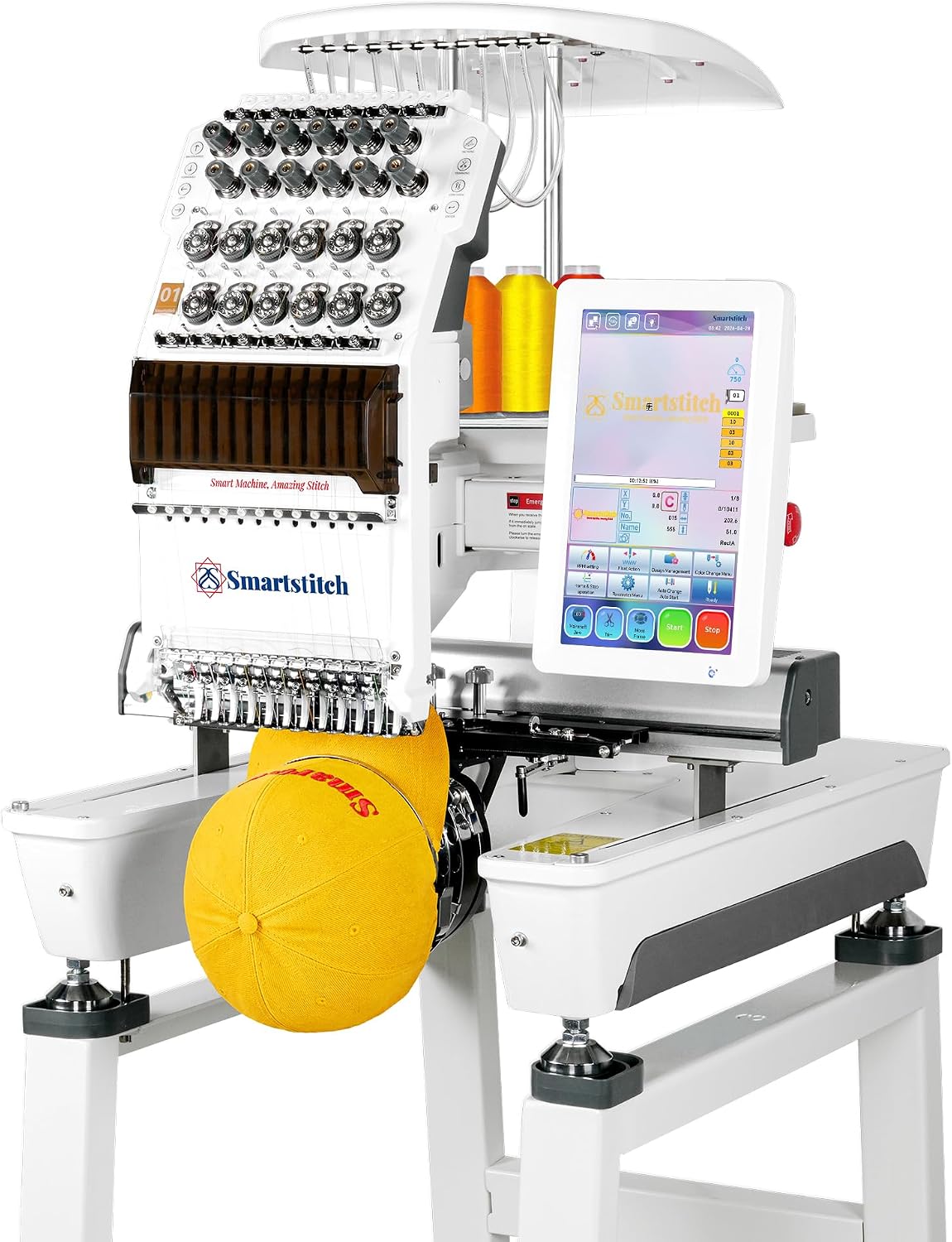
| Needles | 12 |
|---|---|
| Max speed | 1200 SPM |
| Embroidery area | 12" x 16" |
| Touch screen | 10" |
| Connectivity | Wi‑Fi |
The smartstitch S-1201 Plus is a multi-needle embroidery machine built for serious hobbyists and small businesses that need stable, repeatable embroidery on larger pieces. It handles up to 12 colors without rethreading and offers a 12"x16" embroidery area that makes it convenient for quilting panels, large appliques and home-decor projects. Key conveniences include auto thread trimming, automatic color changing, thread-break detection, self-lubrication and laser positioning, while a 10" touch screen and Wi‑Fi simplify design transfers and job setup. The machine is rated for up to 1200 SPM so it moves quickly through large runs, and the vendor supplies starter threads, stabilizers and bobbins to get you started. Because it is a compact commercial-style unit it requires space, a learning curve and routine maintenance, and setup/returns protocols note keeping wooden packing materials for potential returns. For quilters who want a high-capacity embroidery head to add consistent, multi-color stitched designs to quilts or large blocks, this machine delivers production-friendly features in a compact footprint.
Best for: Quilters and small-business stitchers who want a production-capable embroidery head for large quilt blocks and multi-color designs and who are willing to invest time learning a commercial-style machine.
Less Ideal for: Casual sewists who only need occasional single-needle embroidery or users with very limited workspace should consider simpler home machines instead.
- 12-needle head supports multi-color designs without frequent rethreading
- Large 12"x16" embroidery area suited to quilt blocks and larger motifs
- Auto thread trimming and color changing speed up production
- 10" touch screen and Wi‑Fi make design transfer and job setup straightforward
- Includes starter pack of threads, stabilizers and bobbins to begin stitching
- Requires some maintenance and learning to run like a commercial unit
- Machine is large and needs dedicated workspace
Verdict: If you need a compact commercial 12-needle machine that handles large quilt panels and multi-color designs efficiently, the smartstitch S-1201 Plus is a practical production-focused choice.
Smartstitch S-1501 15-Needle Embroidery Machine
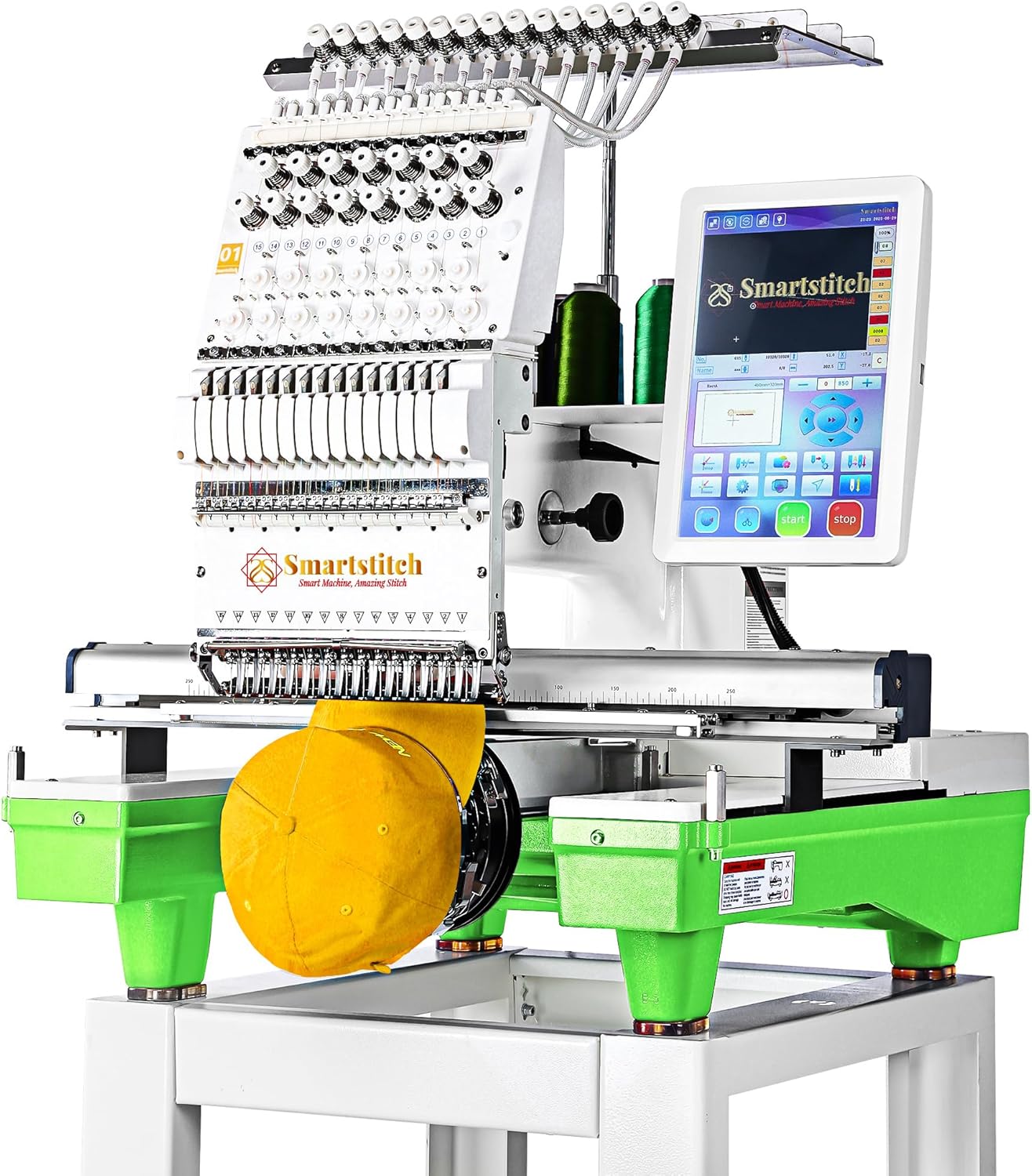
| Needles | 15 |
|---|---|
| Embroidery area | 14"x20" |
| Max speed | 1200 SPM |
| Touch screen | 12" |
| Power source | Corded Electric |
The Smartstitch S-1501 is a heavy-duty 15-needle commercial embroidery machine built for production work and large projects. It handles flats, 3D caps, shirts, bags and even shoes using a 14"x20" embroidery area and a 270-degree cap system, and it accepts DST/DSB files via USB or Wi‑Fi for straightforward job transfer. The large 12" touchscreen and laser positioning simplify setup and design placement, while automatic color change and a 1200 SPM top speed keep multi-color runs moving with minimal intervention. The package includes a stand, cap and flat frames, a bobbin winder and starter supplies so you can begin stitching right away, and the brand provides video training and live demo support to shorten the learning curve. This is a sizable, industrial-weight machine that demands floor space and an electrical outlet, and it is optimized for volume rather than delicate home hobby sewing, so it may feel overbuilt for occasional quilters focused on small piecing or free-motion quilting.
Best for: Quilters who plan to add heavy embroidery work to their projects or run small-scale production runs and prioritize speed, multi-color capability and a large hoop area.
Less Ideal for: Casual quilters who only need basic piecing, patchwork or free-motion quilting and do not require commercial embroidery throughput should consider smaller, dedicated quilting machines instead.
- Large 14"x20" embroidery field good for big quilt motifs and multi-block designs
- 15 needles with automatic color change speeds up multi-color embroidery runs
- 1200 SPM max speed supports high production throughput
- 12" touchscreen and laser positioning make design placement and control intuitive
- Includes essential accessories and a stand so it is ready to use out of the box
- Heavy, commercial footprint requires dedicated space and setup
- Focused on embroidery production rather than standalone quilting sewing features
Verdict: If you need production-level embroidery with a large hoop and fast automatic color changes to add professional stitched motifs to quilts, this machine delivers.
SINGER SE9180 Sewing & Embroidery

| Power Source | Corded Electric |
|---|---|
| Built-in stitches | 250 |
| Embroidery designs | 150 |
| Touchscreen | 7-inch color |
The SINGER SE9180 is a hybrid sewing and embroidery machine aimed at hobbyists who want a single unit for quilting, home decor, and garment work. It offers 250 built-in stitches, 401 stitch applications, 150 embroidery designs, and 10 fonts, plus mirror imaging and endless hooping for continuous borders—features useful for quilt blocks and appliquŽ work. The 7-inch color touchscreen and start/stop slider make selecting and previewing designs straightforward, and mySewnet WiFi lets you transfer designs and receive progress notifications. Time-saving hardware like an automatic needle threader, built-in cutter, top drop-in bobbin, and one-step buttonhole foot speed routine sewing, while the machine can reach up to 800 spm for stitching and 450 spm for embroidery. The SE9180 ships with a useful accessory kit including a 170x100mm hoop and multiple presser feet so you can start quilting and embellishing immediately. Expect a moderately heavy, corded machine that occupies bench space and may be more feature-rich than needed if you only want basic quilting stitches, but for makers who want integrated embroidery capability alongside robust sewing functions, it is a practical choice.
Best for: Quilters and craft sewists who want an all-in-one machine that combines robust sewing functions with integrated embroidery and wireless design transfer to streamline project workflow.
Less Ideal for: Users who need an ultra-portable or minimalist sewing machine or those who only want a basic quilting machine without embroidery capabilities.
- Large 7-inch color touchscreen simplifies design selection and editing
- mySewnet WiFi lets you transfer embroidery files and monitor progress remotely
- Comprehensive stitch and embroidery library with mirror imaging and endless hooping
- Convenience features like automatic needle threader, built-in cutter, and top drop-in bobbin
- Includes a 170x100mm hoop and a full accessory kit for quilting and embroidery projects
- Corded and relatively heavy, requiring dedicated workspace
- Many advanced features may be unnecessary for users who only want basic quilting stitches
Verdict: Choose the SE9180 if you want a practical single machine that combines full-featured sewing and onboard embroidery with WiFi design transfer to speed up quilting and embellishment work.
Brother SE700 Sewing & Embroidery

| Embroidery field | 4" x 4" |
|---|---|
| Built-in embroidery designs | 135 |
| Built-in sewing stitches | 103 |
| Display | 3.2 x 1.8" LCD color touchscreen |
| Power source | Electric |
The Brother SE700 is a midrange combo machine designed to handle everyday sewing projects and small embroidery work with dependable, user-friendly features. It combines 103 built-in sewing stitches, 10 one-step buttonhole styles, and a 4" x 4" embroidery field with 135 built-in embroidery designs and 10 fonts, so you can switch between sewing and simple decorative embroidery without changing machines. A 3.2 x 1.8" color LCD touchscreen lets you preview and edit designs, and wireless LAN support lets you transfer designs from a PC using Brother software instead of USB. The machine ships with an extensive accessories kit including multiple presser feet, bobbins, hoops, and tools that shorten setup time for quilting and patchwork tasks. Practical benefits include straightforward on-machine editing, reliable built-in stitch choices for seam work, and good out-of-the-box support for small embroidery placements. Limitations to note are the modest 4" x 4" embroidery area, which restricts large quilt-block motifs, and the machine's midrange positioning so advanced commercial quilting features are absent.
Best for: Quilters who prioritize a reliable, easy-to-use machine that handles everyday piecing and small embroidery accents and value straightforward setup and software transfer.
Less Ideal for: Users who need large-area embroidery, multi-hooping for big quilt panels, or professional-level quilting automation should consider a larger-format or advanced quilting machine.
- Combined sewing and embroidery functions reduce the need for separate machines
- Wireless LAN and on-screen editing simplify transferring and adjusting designs
- Large accessory kit includes multiple presser feet and hoops for quick setup
- Wide selection of built-in stitches and buttonhole styles suitable for quilting seams
- 4" x 4" embroidery field is small for large quilt blocks or multi-hoop projects
- Midrange feature set lacks advanced quilting-specific functions found on higher-end machines
Verdict: Choose the SE700 when you want a dependable combo machine that makes quilting piecing and small embroidery accents easy with wireless design transfer and a broad set of built-in stitches.
Brother SE2000 Sewing & Embroidery

| Embroidery field | 5" x 7" |
|---|---|
| Built-in embroidery designs | 193 + 50 downloadable |
| Sewing stitches | 241 built-in |
| Screen | 3.7" LCD touchscreen |
| Connectivity | Wireless LAN, USB |
The Brother SE2000 is a combination sewing and embroidery machine designed for hobbyists and serious home sewers who want both capabilities in one unit. It stitches with 241 built-in sewing stitches and offers 193 built-in embroidery designs plus 50 downloadable designs via the Artspira app, and the 5" x 7" hoop accommodates larger motifs and lettering useful for quilt blocks and appliqué. The 3.7" color touchscreen makes it straightforward to preview, rotate, resize, combine designs, and edit lettering on-screen, while Color Sort and Jump Stitch Trimming streamline multicolor embroidery runs. Wireless LAN and Design Database Transfer let you send files from a PC without USB drives, and the included accessory set covers common needs out of the box. Trade-offs to consider: it is a substantial, heavier tabletop machine that benefits from a stable work surface, and advanced commercial users may find the 5" x 7" field limiting compared with larger single-purpose embroidery machines. For quilting projects the SE2000 balances everyday sewing features and accessible embroidery functions in a single, well-supported package.
Best for: Quilters who want a single machine that handles both everyday sewing and medium-size embroidery projects, and who value easy design editing plus wireless file transfer for using downloadable patterns.
Less Ideal for: Users who need a lightweight portable machine for travel or those who require very large embroidery fields for full-size quilt panels should consider other options.
- Combined sewing and embroidery functionality reduces the need for multiple machines
- 5" x 7" embroidery field suitable for larger quilt blocks and monograms
- Wireless LAN and Design Database Transfer for sending designs from a PC without a USB drive
- 3.7" color touchscreen for on-machine editing and previewing designs
- Includes a wide set of accessories and multiple presser feet for common quilting tasks
- Relatively heavy and best used on a stable table rather than moved frequently
- Embroidery field is limited to 5" x 7", which may require rehooping for very large quilt panels
Verdict: Choose the SE2000 when you want a reliable combo machine that handles quilting sewing tasks and medium-size embroidered embellishments with easy on-screen editing and wireless design transfer.
Choosing the Right Embroidery Sewing Machine for Quilting: Key Factors to Consider
Stitch Precision and Repeatability
Quilting relies on consistent stitch length for accurate seam allowances and even decorative quilting. Machines with precise stitch regulation and stable tension produce straighter piecing seams and uniform quilting lines, which matter especially when sewing long seams or detailed embroidered motifs across blocks.
For embroidered embellishments on quilts, repeatability is critical so that multiple motifs match across a quilt top. Look for machines with fine stitch-length adjustment and stable tension systems to reduce the chance of skipped stitches or variable stitch length that can distort patchwork and applique edges.
Workspace Size and Throat Clearance
A generous throat or harp space makes it much easier to handle bulky quilt sandwiches and large blocks. Small workspaces force you to constantly reposition the quilt, increasing the risk of uneven stitching and frustration during long quilting runs. Larger clearance also improves comfort when free-motion quilting or positioning hoops while stitching.
Consider how you plan to quilt. If you often work on bed-sized quilts or use free-motion techniques, prioritize machines with expanded work areas or removable accessories that increase clearance to accommodate thick layers and large pieces.
Hooping Accuracy and Stabilization Options
Embroidery on quilted fabric requires secure hooping and appropriate stabilization to prevent puckering and distortion. Machines with precise hoop alignment, a variety of hoop sizes, and clear hooping guides reduce repositioning errors and help maintain motif placement across a quilt.
Stabilization choices matter: heavier batting and textured quilt tops may need firmer backing or adhesive stabilizers. Machines that offer convenient hooping accessories and accessible stabilizer recommendations make getting crisp embroidered details on quilts more predictable.
Feed System and Fabric Handling
How a machine feeds fabric affects how smoothly quilt layers move under the needle. A strong, consistent feed system prevents uneven stitches and skipped feeds when sewing through multiple layers. Features like adjustable presser foot pressure and walking feet compatibility improve handling of thick quilts and multiple fabric layers.
For embroidered designs stitched on quilt sections, the ability to maintain fabric flatness and prevent shifting during embroidery is important. Machines that allow fine tension adjustments and have reliable feed dogs or dual-feed systems will give cleaner results on layered work.
Ease of Use and Control Options
Quilting often involves repetitive tasks and frequent adjustments. Intuitive controls, easy-to-read displays, and accessible stitch-editing options reduce setup time and user error. For embroidery combined with quilting, simple design placement tools and clear guided prompts speed up hooping and alignment.
Consider machines with programmable stitch memory, straightforward tension adjustment, and reachable controls for changing settings mid-project. Good documentation and on-machine guidance for hooping and stabilization also shorten the learning curve for embroidery on quilted fabrics.
Free-Motion Quilting Vs Hoop-Based Embroidery
Free-motion quilting and hooped embroidery are different workflows that sometimes overlap when adding decorative motifs to quilt tops. Free-motion lets you move the quilt under the needle to create custom quilting lines, while hoop-based embroidery uses preset designs sewn by the machine within a hooped area.
When planning embroidered accents, think about whether you will quilt first and then hoop sections for embroidery, or embroider blocks before assembling them. Each approach affects how you stabilize and manage fabric bulk, and it will influence the machine features you value most.
- Free-motion work benefits from a large throat and adjustable presser foot pressure.
- Hoop-based embroidery needs accurate hoop positioning and reliable stabilization.
- Embroidering pre-quilted sections requires consideration of batting thickness and hoop clearance.
Stabilizers and Thread Choices for Quilted Embroidery
Choosing the right stabilizer and thread is essential for embroidered details on quilts. Lightweight stabilizers can work for top-stitched motifs on pieced blocks, while heavier stabilizers or tear-away backings are often necessary when stitching dense designs over batting or thick seams.
Thread type affects how embroidery sits on textured surfaces. Polyester embroidery thread is common for durability and sheen, but lower-tension thread choices and appropriate needle sizes help reduce puckering on bulky quilts.
- Test stitch designs on scraps that mimic your quilt sandwich.
- Use stabilizers that match design density and batting thickness.
- Match needle size to thread weight and fabric layers to avoid skipped stitches.
Managing Bulk: Needles, Feet, and Presser Adjustments
Quilts create significant thickness under the needle, which calls for heavier-duty needles, compatible presser feet, and correct presser foot pressure settings. Needles designed for quilting or embroidery with reinforced shafts reduce breakage when piercing layers repeatedly.
A walking foot or even a dual-feed arrangement helps feed layers evenly and prevents shifting. Also verify that the machine allows easy presser foot pressure adjustment so you can dial in smooth feeding without crushing batting or compressing seams.
- Use quilting or topstitch needles for thick layered work.
- Employ a walking foot for piecing and some quilting tasks.
- Adjust presser pressure when switching between single-layer embroidery and thick quilt sandwiches.
Hoop Placement Strategies on Pieced Blocks
Accurate hoop placement on pieced blocks matters if you want embroidery centered within a block or along sashing. Mark reference points on your quilt top and use clear templates or temporary stabilizer markers to align designs before stitching.
When hooping near seams or bulky intersections, consider shifting motifs slightly or using smaller hoop areas to avoid stitching over thick seam allowances. Planning hoop placement ahead of time reduces the need for re-hooping and trimming later.
- Mark centers and reference points before hooping.
- Avoid hooping directly over bulky seam intersections when possible.
- Consider dividing large designs into multiple hoopings with careful alignment marks.
Maintenance and Long Runs
Quilting and embroidery projects can be time-consuming. Regular maintenance like cleaning lint from bobbin areas, oiling if the machine requires it, and checking feed dog condition reduces interruptions during long sewing sessions. Machines that provide easy access to common maintenance points save time and frustration.
Also factor in spool and bobbin capacity for long stitched runs. Machines that support larger spools or have convenient bobbin winding features reduce interruptions and help maintain consistent thread tension across extended projects.
- Keep lint and dust cleared from the bobbin area regularly.
- Check needle condition frequently during long projects.
- Use larger spools or thread stands when planning extended embroidery runs.
How We Chose the Best Embroidery Sewing Machine for Quilting
We screened machines for features that directly affect quilting and embroidered quilt embellishment. Primary filters included stitch precision and repeatability, since consistent stitch length keeps piecing and decorative stitches true across long seams. We also prioritized throat space and clearance because a larger working area makes it easier to maneuver quilt tops and manage bulk. Hooping accuracy and stabilization options were evaluated because poorly seated fabric or inadequate stabilization causes puckering during embroidery and density issues in quilted areas. Additional criteria included adjustable presser foot pressure and hopping foot compatibility for layered work, a strong feed system for consistent fabric movement, and user-friendly controls for setting stitch length, tension, and embroidery positioning. We excluded machines lacking basic quilting support, such as inadequate throat space or no way to secure hoops reliably. Our final selection emphasizes machines that balance robust mechanical feeding with reliable embroidery features suitable for quilting projects at hobbyist and advanced hobbyist levels.
Our full evaluation process is outlined in our review methodology.
FAQ
Can I embroider directly on a finished quilt?
You can, but finishing the quilt first adds bulk and can make hooping and stabilization more difficult. For dense embroidery, it is usually easier to embroider blocks or sections before final quilting and assembly.
What stabilizer should I use for embroidery on a quilt sandwich?
Stabilizer choice depends on design density and batting thickness. Heavier tear-away or cut-away stabilizers are often required for dense fills on batting, while lighter stabilizers work for sparse motifs. Testing on a sample sandwich helps determine the best option.
How do I avoid puckering when embroidering over seams?
Avoid hooping directly over bulky seams when possible, use stronger stabilization, and choose an appropriate needle and thread. Reducing stitch density or repositioning the motif slightly can also prevent puckering.
Is a walking foot necessary if I plan to do both piecing and embroidery?
A walking foot greatly helps with piecing and feeding layered fabrics evenly, reducing shifting. For hooped embroidery it is less critical, but having one improves the overall versatility when switching between tasks.
How should I choose needle size for embroidered quilting?
Select a needle sized for the combined thickness of your quilt layers and the thread weight used for embroidery. Quilting or embroidery needles with a stronger shaft and an appropriate eye size reduce breakage and tension issues.
Final Verdict
When choosing an embroidery sewing machine for quilting, prioritize stitch precision, generous workspace, and reliable hooping or stabilization features. Those dimensions most directly affect how accurately embroidered motifs sit on pieced blocks and how comfortably you can manage bulky quilt sandwiches. Balance feed system quality and ease of use with the workspace and hooping options to match your typical project sizes. Focus on the tradeoffs between throat clearance and embroidery capability to select the machine that best fits your quilting workflow.