
Note: This article contains affiliate links. If you click on these links and make a purchase, we may earn a small commission at no extra cost to you. This helps support our research and content. Read our full affiliate disclosure here.
If you are starting sewing and want a machine that can handle tougher fabrics and last through practice sessions, choosing a heavy-duty sewing machine designed for beginners matters. The right machine reduces frustration by offering straightforward controls, reliable stitch quality, and a solid metal chassis that stands up to denim, canvas, and repeated use. This guide shortlists the top heavy-duty sewing machines for beginners, each chosen for durability, ease of use, and practical features that speed learning. Below you will find concise evaluations, clear decision factors, and the criteria we used to select these models, helping you pick a machine that fits your projects and skill level.
Top Picks at a Glance
| Best Overall The best all-around choice for most situations | Bernette B33 Sewing Machine |  |
| Best Quality Built to a higher standard if you want something more solid | Janome HD5000 Heavy-Duty Sewing Machine |  |
| Best Value The sweet spot between price and what you get | Janome HD3000 Heavy-Duty Sewing Machine |  |
| Best Budget The cheapest option that still gets the job done reliably | SINGER Heavy Duty 4411 |  |
| Most Popular A crowd favorite that many people choose with confidence | SINGER Heavy Duty 4432 |  |
Bernette B33 Sewing Machine
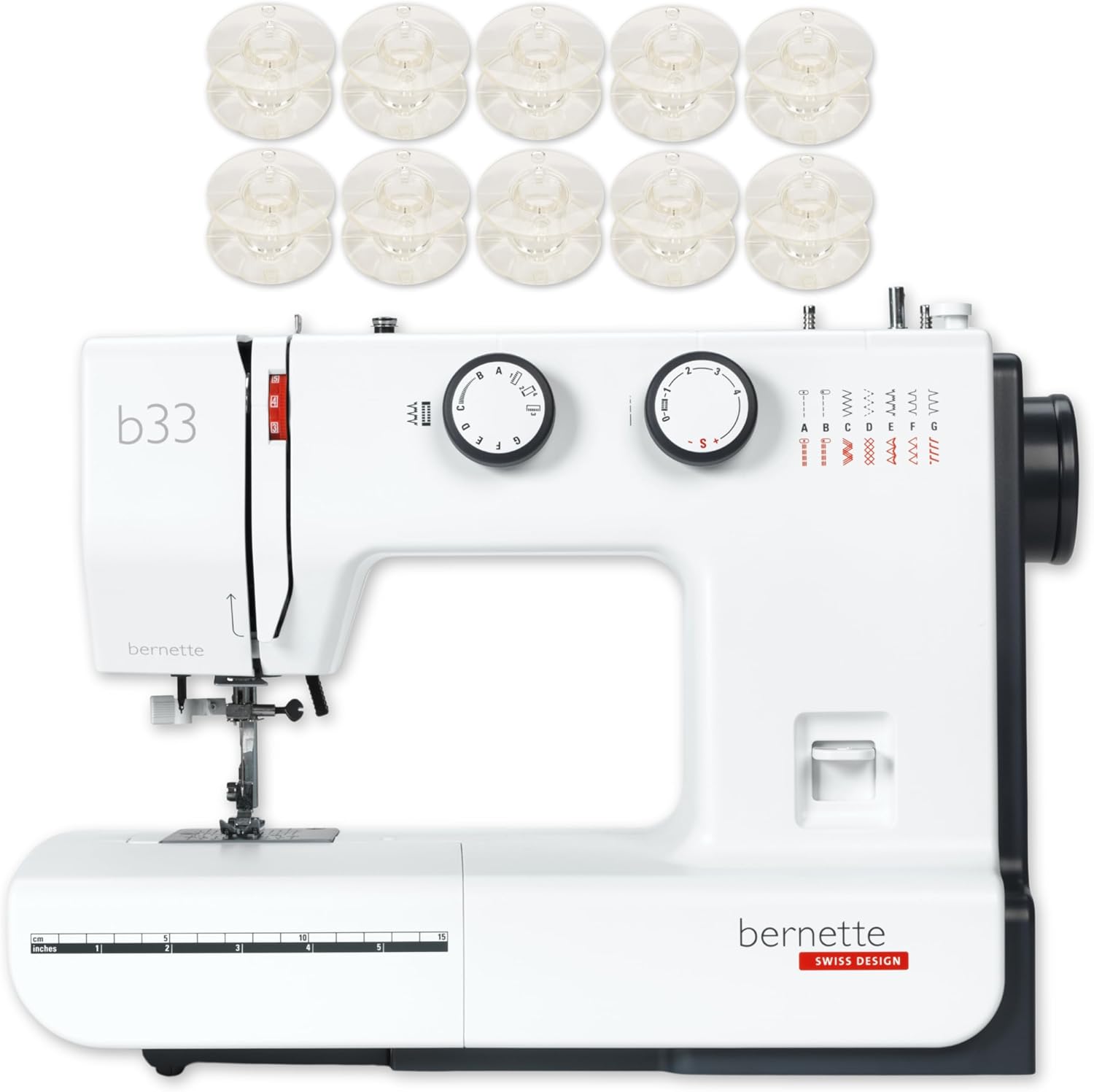
| Power Source | Corded Electric |
|---|---|
| Number of Items | 13 |
| Model Number | B33 |
| Brand Name | Bernette |
The Bernette B33 is a straightforward mechanical sewing machine aimed at home sewers and beginners who want a durable, no-frills workhorse. It offers 15 built-in stitches and simple knobs for stitch length and width, so switching between utility and decorative stitching is quick and easy. The front-loading bobbin, semi-automatic threader, manual cutter, and manual tension control make setup and thread changes predictable and serviceable. A robust motor and reinforced reverse lever help handle heavier fabrics like denim and canvas better than typical beginner machines, and the built-in storage keeps presser feet and small tools organized for classes or small projects. Practical extras include a 10-pack of bobbins and a compact, portable footprint for home or classroom use. Trade-offs are that it is a mechanical (not computerized) unit with plastic exterior parts, so it lacks advanced stitch programming, automatic features, and some of the convenience aids found on higher-end machines.
Best for: Beginners and hobby sewers who want a reliable, easy-to-use mechanical machine that can handle heavier fabrics and everyday projects without a steep learning curve.
Less Ideal for: Users seeking computerized features, extensive decorative stitch libraries, or a premium metal-bodied industrial machine for continuous heavy commercial use.
- Sturdy motor and reinforced reverse lever suitable for heavier fabrics
- Simple mechanical controls make it easy for beginners to learn stitch adjustments
- Front-loading bobbin and semi-automatic threader speed up thread changes
- Built-in storage and included 10-pack of bobbins keep supplies organized
- Plastic exterior and basic feature set lack advanced computerized conveniences
- No automatic tension or wide range of specialty stitches for complex projects
Verdict: Choose the Bernette B33 if you want a beginner-friendly, heavy-duty mechanical machine that handles thick fabrics and basic home sewing reliably.
Janome HD5000 Heavy-Duty Sewing Machine

| Power Source | Corded Electric |
|---|
The Janome HD5000 is a mechanically controlled, corded sewing machine that brings heavy-duty capability to beginners without a steep learning curve. It uses simple dial controls and a foot pedal for precise speed from slow stitching up to 860 stitches per minute, and a built-in automatic needle threader speeds setup. The aluminum frame, five-piece feed dog and extra-high presser foot lift let you sew denim, canvas, layered seams and leather more reliably than lighter machines, and the drop-feed makes free-motion quilting and darning possible. Janome bundles seven presser feet, bobbins, a quilting guide and a hard cover so you can start projects right away. The machine is portable enough to carry to classes but substantial in feel, which helps with stitch stability on heavier materials. Limitations include a primarily mechanical interface with no computerized stitch memory or touch screen and a heavier body that is less convenient for frequent transport compared with ultra-compact machines.
Best for: Buyers who want a beginner-friendly machine that still delivers professional-level durability and can handle heavy fabrics and quilting tasks.
Less Ideal for: If you need a lightweight travel machine, a fully computerized model with programmable stitches, or minimal footprint for occasional mending, this is more machine than necessary.
- Robust aluminum frame and 5-piece feed dog for reliable handling of thick fabrics
- High presser foot lift and strong motor for sewing denim, canvas, upholstery and leather
- Simple mechanical dials and automatic needle threader make it approachable for beginners
- Includes a variety of presser feet and accessories so you can start quilting, hemming, and buttonholes immediately
- No computerized features such as stitch memory, touchscreen, or automatic tension
- Heavier and bulkier than compact starter machines, which reduces portability
Verdict: Choose the Janome HD5000 if you want a beginner-accessible sewing machine that performs like a small workshop workhorse for heavy fabrics and quilting.
Janome HD3000 Heavy-Duty Sewing Machine
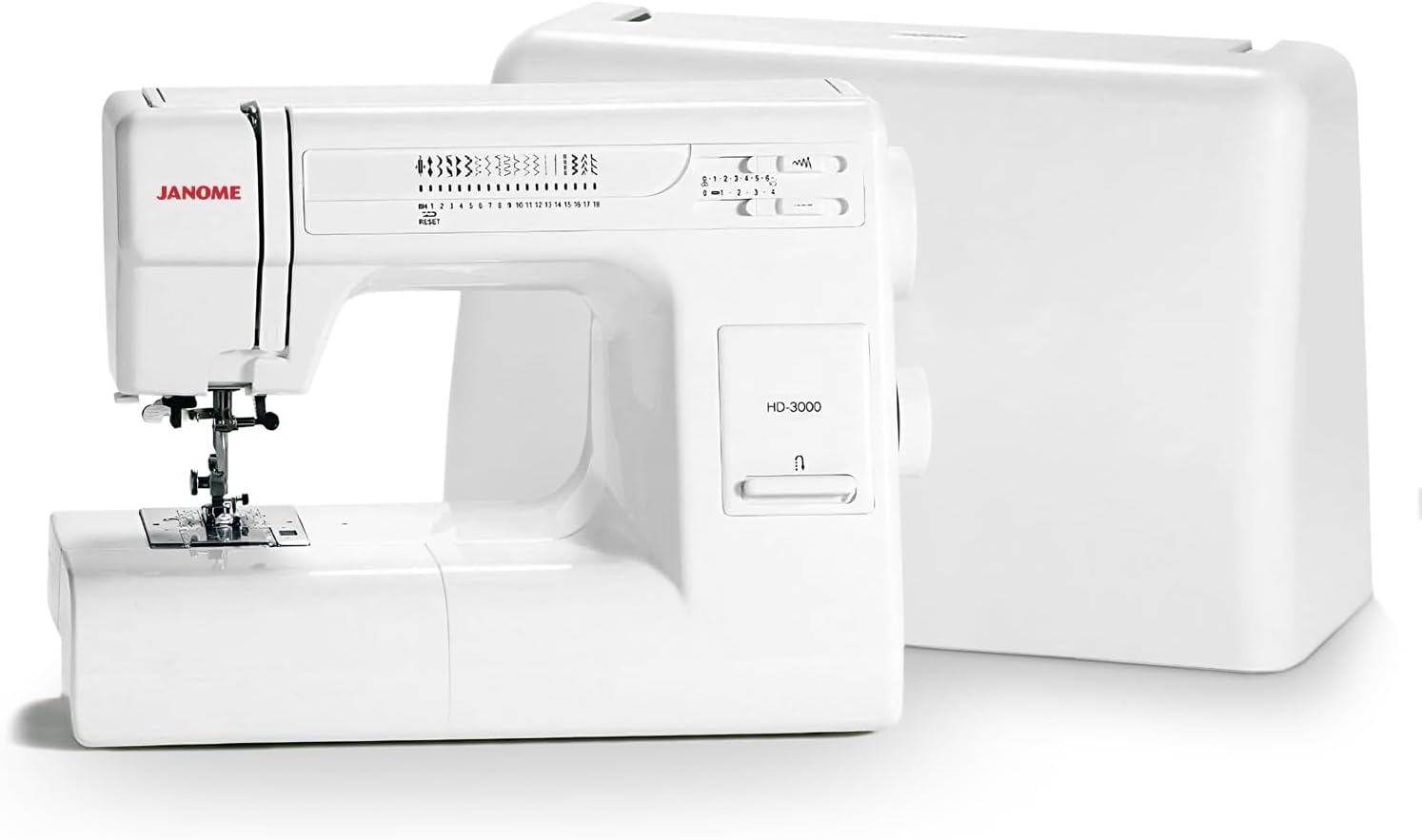
| Model Number | HD3000 |
|---|---|
| Included Components | Foot Control, Power Cord, Standard Accessories |
| Power Source | Corded Electric |
| Material | Aluminum, Plastic |
The Janome HD3000 is a straightforward, mechanically driven heavy-duty sewing machine aimed at users who want a durable daily driver rather than digital bells and whistles. It offers 18 built-in stitches including a one-step buttonhole, a built-in needle threader, snap-on presser feet and an automatic bobbin winder, so basic garment construction, mending and small home projects are quick to set up. The metal internal frame and manual foot pressure adjustment give a solid feel and handle thicker fabrics like denim or canvas better than lightweight domestic models. Because it is purely mechanical, adjustments are tactile and simple, which suits learners who want to understand how settings affect stitching, but it lacks computerized stitch memory, automatic tension, or advanced decorative stitch options. The included hard carrying case and standard accessories make it ready to use out of the box, though users who prefer touchscreen controls or many specialty stitches will find the feature set modest.
Best for: Practical beginners who want a durable, easy-to-maintain machine that teaches mechanical sewing basics and can handle heavier fabrics for garments and home projects.
Less Ideal for: Users who want touchscreen operation, extensive decorative stitches, or automated tension and stitching features for advanced quilting or embroidery.
- Robust metal internal frame for better stability and handling of heavier fabrics
- 18 built-in stitches with one-step buttonhole cover common sewing needs
- Built-in needle threader and automatic bobbin winder speed setup
- Snap-on presser feet and manual foot pressure let you adapt to different materials
- Includes a hard carrying case and standard accessories for easy transport and storage
- Mechanical controls lack computerized features like stitch memory or automatic tension
- Limited stitch variety compared with computerized machines focused on decorative work
Verdict: Buy this if you want a sturdy, no-frills mechanical machine that teaches foundational sewing and reliably handles heavier fabrics.
SINGER Heavy Duty 4411

| Built-in stitches | 11 |
|---|---|
| Stitch applications | 69 |
| Max stitches per minute | 1,100 |
| Bobbin system | Top drop-in bobbin |
| Power source | Corded Electric |
The SINGER Heavy Duty 4411 is a straightforward mechanical sewing machine built to tackle demanding home projects from denim and canvas to lighter fabrics. It delivers up to 1,100 stitches per minute and includes 11 built-in stitches with 69 stitch applications for basic, stretch, and decorative work, plus a 4-step buttonhole. The machine's heavy-duty metal frame and stainless steel bed plate keep seams steady when sewing multiple layers, while the top drop-in bobbin with a transparent cover makes thread monitoring simple. Included accessories like four presser feet, bobbins, needles, and a seam ripper help beginners get started without buying extras. Practical conveniences such as adjustable presser foot pressure and LED lighting improve control on delicate fabrics and small details. Limitations include a modest stitch selection compared with computerized models and a more manual setup process that requires learning tension and foot pressure adjustments, but its reliability and power make it a solid pick for starter sewers who need something that can handle heavy materials.
Best for: Beginners on a budget who want a durable, no-frills machine that can handle heavy fabrics and grow with basic sewing projects.
Less Ideal for: Sewers who prioritize a large variety of automatic stitches, touchscreen menus, or fully computerized features should consider a different model.
- Powerful motor and metal frame for sewing thick fabrics and multiple layers.
- High top speed (up to 1,100 spm) that speeds up project completion.
- Top drop-in bobbin with transparent cover for easy thread checks.
- Includes essential presser feet and accessories to start sewing right away.
- Limited built-in stitch variety compared with computerized machines.
- Manual controls require more learning to fine-tune tension and presser foot pressure.
Verdict: A budget-friendly, heavy-duty starter machine that delivers reliable speed and power for beginners working with thick fabrics.
SINGER Heavy Duty 4432

| Built-in stitches | 32 |
|---|---|
| Stitch speed | 1,100 stitches per minute |
| Included accessories | General Purpose, Zipper, Buttonhole, Button Sewing feet; bobbins; needles |
| Power source | Corded Electric |
The SINGER Heavy Duty 4432 is a straightforward mechanical sewing machine aimed at tackling everyday and heavy fabrics with a stronger motor and rugged metal frame. It delivers up to 1,100 stitches per minute and includes 32 built-in stitches plus a one-step buttonhole, making it useful for garment sewing, upcycling denim, and simple home-decor projects. Practical features like a top drop-in bobbin with a clear cover, built-in needle threader, stainless-steel bed plate, and adjustable presser foot pressure help beginners get neat results and handle both lightweight and thicker materials. The machine ships with several presser feet and basic tools so you can start sewing right away. Expect a no-frills user experience: controls are mechanical rather than computerized, so stitch selection and adjustments are manual but reliable, and the higher speed can feel loud to new users. This model leans toward durability and power rather than advanced automation, which is ideal if you want a dependable, easy-to-repair machine rather than one packed with digital conveniences.
Best for: Buyers who prioritize proven reliability and strong performance for mixed projects and want a beginner-friendly, workhorse machine backed by extensive user feedback.
Less Ideal for: Users seeking a feature-rich computerized machine with touchscreen controls, automated stitch programming, or ultra-quiet operation should look elsewhere.
- Robust metal frame and powerful motor for sewing thick fabrics
- High top speed (1,100 stitches per minute) speeds up long seams
- 32 built-in stitches and one-step buttonhole cover common sewing needs
- Top drop-in bobbin with clear cover and built-in needle threader simplify setup
- Includes multiple presser feet and accessories so you can start immediately
- Mechanical controls lack computerized stitch customization found on newer models
- Higher sewing speed can be noisy for quiet workspaces
Verdict: Choose the Singer 4432 if you want a durable, high-speed beginner machine that handles heavy fabrics and basic sewing tasks reliably.
Choosing the Right Heavy-Duty Sewing Machine for Beginners: Key Factors to Consider
Build Durability
A heavy-duty sewing machine should have a solid chassis and reinforced internal components to resist flex and wear when sewing thick fabrics. Durable construction reduces vibration and keeps feed dogs aligned, which preserves stitch quality over time.
Look for metal frames, steel gears, and sturdy needle bars. These elements matter if you plan to sew denim, canvas, upholstery, or multiple fabric layers regularly because cheaper plastic components can warp or strip under higher loads, leading to inconsistent tension and more frequent repairs.
Ease of Use and Learning Curve
Beginners benefit from clear, simple controls and intuitive layout so they can focus on learning techniques instead of fighting the machine. Large, well-labeled dials or digital displays, straightforward stitch selection, and an easy-to-thread path shorten setup time and frustration.
Also consider features that support learning such as automatic needle threaders, top-loading bobbins with transparent covers, and built-in stitch diagrams. These conveniences lower the barrier to practice and help new sewists gain confidence faster.
Stitch Quality and Versatility
Consistent stitch formation across a range of fabrics is crucial for good results. A machine that maintains even tension and feed through both lightweight and heavy materials will produce neater seams and fewer skipped stitches.
Versatile stitch options — including straight, zigzag, reinforced stitch settings, and a reliable buttonhole function — expand what you can make as your skills grow. Quality of the feed system, presser foot pressure adjustment, and a stable needle mechanism all influence stitch consistency.
Motor Torque and Speed Control
Sewing heavy fabrics requires sufficient motor torque to carry a needle through multiple layers without stalling or producing uneven stitches. For beginners, variable speed control is equally important because it allows practicing at a controlled pace while still having enough power when you need to sew thicker sections.
A well-matched motor reduces strain on internal parts and lessens the chance of skipped stitches or needle breakage when transitioning between fabric weights.
Throat Space and Working Area
The throat space — the distance between the needle and the machine body — determines how comfortably you can manage large projects. A larger working area makes it easier to maneuver quilts, large garments, or home-dec projects without bunching fabric.
Consider whether removable extension tables or accessory work surfaces are available, since these can convert a compact machine into a more capable workspace for bigger pieces as your projects grow.
Maintenance and Serviceability
Routine maintenance keeps a sewing machine performing well and minimizes downtime. Beginner-friendly designs will offer easy access to the bobbin case, straightforward oiling points if required, and clear cleaning instructions. Machines that allow owners to perform basic servicing without specialized tools save time and cost.
Also consider the availability of user manuals, replacement parts, and user communities or tutorials. Good documentation and easy serviceability help beginners troubleshoot common issues and extend the machine's usable life.
Why Choose a Heavy-Duty Machine as a Beginner
Choosing a heavy-duty machine when you are starting out gives you extra margin for error and more project flexibility. These machines tolerate thicker fabrics and repeated practice sessions better than lightweight models, so you can progress from basic hems to heavier applications like denim repairs or home decor without upgrading immediately.
A beginner-oriented heavy-duty machine balances robustness with approachable features. You get the durability needed for demanding materials plus accessible controls that help you learn staples like tension adjustment, seam finishing, and using different presser feet.
- Handles thicker fabrics and multiple layers with less strain
- Typically reduces vibration for steadier stitching
- Extends usable lifespan for learners who practice frequently
Essential Accessories to Look For
Certain accessories make working with heavy materials much easier and improve the beginner experience. A sturdy all-purpose presser foot, a walking or even-feed foot for layered fabrics, and a zipper foot for close seams are particularly useful.
Also valuable are extra needles sized for heavy fabric, a heavy-duty bobbin case or metal bobbins, and a seam ripper and lint brush for maintenance. An extension table or flatbed adapter can help manage larger pieces as your projects scale up.
- Walking or even-feed foot for even fabric feeding
- Heavy-duty needles and spare bobbins
- Extension table for large projects
Setting Up and First Projects
Proper setup matters more with heavy fabrics. Use a suitable needle size and type, adjust presser foot pressure if available, and slow your stitch speed until you are comfortable. Test stitches on scrap pieces of the same fabric and thickness before sewing your project seams to dial in tension and stitch length.
Good starter projects include reinforced hems, simple tote bags, or pillow covers using medium-heavy fabric. These projects let you practice seam allowances, topstitching, and edge finishes without overwhelming complexity.
- Always test on scrap fabric of the same weight
- Start slow and increase speed as you gain control
- Match needle and thread to fabric weight
Common Beginner Issues and Fixes
Beginners often encounter skipped stitches, puckering, or thread breakage. These issues usually stem from incorrect needle choice, improper threading, or inconsistent tension. Re-thread the machine, check the bobbin orientation, and ensure the needle is fully inserted and not bent.
If the machine struggles with thick seams, try a heavier needle, reduce fabric bulk when possible, and use the appropriate presser foot. Regular cleaning of lint and periodic lubrication according to the manual will prevent common mechanical problems.
- Skipped stitches: check needle, threading, and tension
- Puckering: reduce presser foot pressure or adjust stitch length
- Motor stalling: use correct needle and slow the feed speed
Long-Term Care to Extend Machine Life
Routine care helps a heavy-duty sewing machine remain reliable as you learn. Brush out lint from the bobbin area after projects, change needles regularly, and follow the manufacturer-recommended maintenance schedule for oiling or servicing if applicable.
Store the machine covered in a dry, dust-free place and avoid leaving threads or pins in the working area. For machines used on heavy fabrics frequently, periodic professional servicing can identify wear on drive components before they fail.
- Clean bobbin area after each sewing session
- Replace needles regularly to avoid fabric damage
- Follow the manual for periodic lubrication and checks
How We Chose the Best Heavy-Duty Sewing Machine for Beginners
We focused on attributes that matter most to new sewists who need a machine capable of everyday heavy-duty tasks without a steep learning curve. Primary evaluation criteria included build durability, ease of learning and controls, stitch quality and versatility, motor power and throat space, and maintenance simplicity. We prioritized machines with robust metal frames or reinforced parts that resist flexing when sewing thick layers, reliable feed systems that reduce puckering, and straightforward tension and stitch selection mechanisms that beginners can master quickly. Additional practical factors were included such as presser foot options, accessory usefulness for common heavy fabrics, and available support documentation or clear on-machine labeling. We excluded specialty industrial machines and models intended only for advanced tailoring or commercial production because they require professional setup and training. The final selections favor well-rounded, beginner-appropriate heavy-duty sewing machines that balance durability with user-friendly operation.
Our full evaluation process is outlined in our review methodology.
FAQ
Can a beginner use a heavy-duty machine for delicate fabrics?
Often yes. Heavy-duty machines with adjustable presser foot pressure and a range of stitch settings can handle delicate fabrics if you use the correct needle, lighter thread, and slower speeds to avoid puckering or damage.
Do heavy-duty machines require special needles or thread?
They usually perform best with stronger needles and all-purpose or heavy-duty thread when working with thick fabrics. For lighter materials, switch to finer needles and appropriate thread to avoid visible holes or puckering.
How important is motor torque for a beginner?
Motor torque matters when sewing multiple layers or dense fabrics because it prevents stalling and skipped stitches. For beginners, having both adequate torque and adjustable speed control is helpful for learning without overwhelming the machine.
Can I maintain a heavy-duty machine at home?
Yes. Basic maintenance like cleaning the bobbin area, changing needles, and light lubrication per the manual is something most owners can do. More complex repairs should be handled by a technician, especially if the machine uses sealed or specialized drive components.
Is throat space important for home sewing projects?
Throat space affects how easily you manage large or bulky projects. Beginners who plan to sew quilts, curtains, or large garments benefit from extra working area or an extension table to prevent fabric dragging or bunching.
Final Verdict
When choosing a heavy-duty sewing machine as a beginner, prioritize machines that combine a sturdy build with approachable controls. Focus on stitch consistency, motor torque that handles heavier materials, and features that simplify learning such as easy threading and clear stitch selection. Expect tradeoffs between advanced industrial features and user friendliness; the right pick will give you room to grow while minimizing maintenance headaches. Choose a model that fits your typical project sizes and fabric weights, and you will have a reliable machine that supports learning and more ambitious sewing over time.