
Note: This article contains affiliate links. If you click on these links and make a purchase, we may earn a small commission at no extra cost to you. This helps support our research and content. Read our full affiliate disclosure here.
If you store wine at home, an energy-efficient wine cooler saves money while protecting bottles from temperature swings and excess vibration. The right cooler keeps temperatures steady across its shelves, prevents humidity loss, and runs quietly without spiking your utility bill. This guide highlights seven shortlisted wine coolers chosen for efficient compressors or thermoelectric designs, effective insulation, and precise temperature control. Below you will find our top picks plus the evaluation criteria we used so you can choose a unit that fits your bottle capacity, installation, and operating-cost priorities.
Top Picks at a Glance
| Best Overall The best all-around choice for most situations | BLACK+DECKER 12-Bottle Wine Fridge BD60336 |  |
| Best Quality Built to a higher standard if you want something more solid | EORICE Dual Zone Wine & Beverage Refrigerator |  |
| Best Value The sweet spot between price and what you get | EUHOMY Wine Cooler BR001-110 |  |
| Best Budget The cheapest option that still gets the job done reliably | YDOOLNG 8-Bottle Wine Cooler | 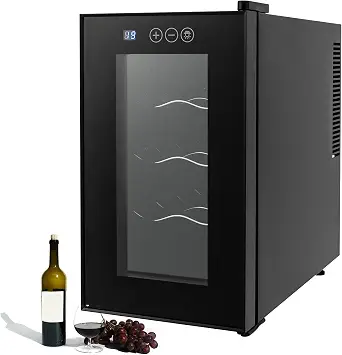 |
| Top Rated A top-rated pick with lots of positive feedback | Ivation 18-Bottle Wine Cooler |  |
| Most Popular A crowd favorite that many people choose with confidence | Antarctic Star 12-Bottle Wine Cooler |  |
| Best Seller A high-volume bestseller chosen again and again | EUHOMY 16-Bottle Wine Cooler |  |
BLACK+DECKER 12-Bottle Wine Fridge BD60336

| Capacity | 12 Bottles |
|---|---|
| Temperature Range | 46°F – 66°F |
| Cooling Method | Thermoelectric |
| Shelves | 5 removable chrome racks |
| Power | 115 volts |
The BLACK+DECKER 12-bottle wine fridge is a small freestanding cooler that uses thermoelectric cooling to keep bottles between 46 and 66°F. It is set up with five removable chrome racks and an LED temperature display for simple electronic control, plus an interior light and a recessed handle for a tidy look. Thermoelectric technology means quieter operation and low vibration, which helps short- to medium-term storage and entertaining use in living rooms, home bars, or offices. The mirrored glass door blocks UV light and gives the unit a sleek, space-conscious presence on a countertop or floor. Because it is thermoelectric rather than compressor-based, it is more energy efficient and avoids refrigerants, but it will struggle to maintain very low temperatures in hot ambient rooms and is not intended for long-term cellar aging. Its 12-bottle capacity and compact footprint make it a practical, affordable option for buyers who want a stylish secondary cooler rather than a high-end cellar-grade appliance.
Best for: Buyers on a tight budget who want a tidy, low-noise secondary cooler for entertaining or short-term bottle storage and who prioritize style and compact footprint over professional-grade performance.
Less Ideal for: Collectors who need long-term, cellar-grade temperature stability or anyone placing the unit in very warm rooms where compressor cooling is required.
- Compact 12-bottle capacity fits small spaces and counters
- Thermoelectric cooling provides quiet, low-vibration operation
- Electronic temperature control with LED display for easy set-up
- Mirrored glass door blocks UV light and adds a modern look
- Five removable chrome racks and interior light improve access and presentation
- Thermoelectric system cannot cool as aggressively as compressor units in hot rooms
- Not designed for long-term cellar aging or strict temperature stability
Verdict: A budget-friendly, compact wine cooler that delivers quiet, low-vibration chilling and a stylish mirrored door for short-term storage and entertaining.
EORICE Dual Zone Wine & Beverage Refrigerator

| Capacity | 4.42 cubic feet |
|---|---|
| Cooling Method | Compressor |
| Temperature Range (Left) | 35°F–50°F |
| Temperature Range (Right) | 41°F–64°F |
| Annual Energy Consumption | 160 kilowatt hours per year |
This EORICE dual-zone wine and beverage refrigerator pairs a compressor cooling system with independent temperature control for each side, so you can store cans and wine at different setpoints. It is typically used under a counter or freestanding in a kitchen, office, or entertainment area; front ventilation supports built-in installation and the soft blue LED interior light makes bottle selection easy. Notable features include a quiet compressor with advertised noise below 38 dB, 360-degree air circulation to even out temperatures, auto defrost to reduce maintenance, and adjustable wood and wire shelving to fit bottles or cans. The double-layer tempered glass doors help insulate and block UV, and an activated carbon filter reduces odors. For buyers focused on performance and stable cooling, the unit delivers consistent, frost-free temperatures and a factory-style fit for under-counter installs. Limitations are its modest 4.42 cu ft capacity if you need large wine collections and the unit is relatively heavy, which may complicate installation in tight spaces.
Best for: Buyers who prioritize stable, performance-oriented cooling and want a built-in-capable dual-zone unit for a kitchen, home bar, or office where precise temperature control matters.
Less Ideal for: People needing high-volume wine storage or a lightweight, easily moved cooler for occasional use should consider larger-capacity or more portable alternatives.
- True dual-zone compressor cooling with independent temperature ranges for beverages and wine
- Quiet operation with low vibration design (advertised under 38 dB)
- Front-venting design supports built-in under-counter installation
- Adjustable wood and wire shelves accommodate bottles and cans
- Double-layer tempered glass doors with UV reduction and soft blue LED lighting
- Capacity is limited to about 21 bottles and 60 cans, which is small for larger collections
- Unit weight and size may make installation and moving more difficult
Verdict: Choose this under-counter dual-zone cooler when you need reliable, energy-conscious compressor cooling and precise independent temperature control for both drinks and wine.
EUHOMY Wine Cooler BR001-110

| Capacity | 3.2 cubic feet |
|---|---|
| Bottle capacity | Up to 25 standard 750ml bottles |
| Temperature range | 41°F to 64°F |
| Cooling method | Compressor |
| Door orientation | Reversible |
This EUHOMY wine cooler is a compact freestanding unit aimed at steady, long-term beverage storage. It uses a compressor cooling system with a 41 to 64°F temperature range controlled by a digital touchscreen, so you can keep reds, whites, and sparkling bottles at appropriate serving temperatures. The interior offers four chrome full-width racks, a flat shelf and a bottom compartment to fit up to 25 standard 750ml bottles and to reconfigure storage as needed. The double-layer thermopane glass door reduces temperature swings and blocks UV light, and soft LED lighting helps with visibility without harsh heat. Practical touches include adjustable leveling legs, a built-in handle and a reversible door for flexible placement under counters or freestanding in a bar or office. Expect manual defrosting and typical small-fridge energy use; for buyers prioritizing quiet, vibration-free operation the compressor is described as high-performance and low-vibration but compressor units can still be noisier than thermoelectric models. The unit is supported by a one-year warranty and arrives with a user manual for setup and operation.
Best for: Buyers who want a compact, reliable freestanding cooler for steady storage of a small to medium wine collection and value precise temperature control and flexible placement.
Less Ideal for: Those seeking a zero-maintenance built-in cellar replacement, ultra-low energy operation, or very large bottle capacity should consider larger or different-style units.
- Compressor cooling with a wide 41–64°F range for storing different wine styles
- Double-pane glass door that insulates and blocks UV to protect wine quality
- Adjustable shelves and mix of racks allow flexible storage up to 25 standard bottles
- Digital touchscreen control and internal LED lighting simplify temperature monitoring and viewing
- Reversible door and leveling legs make placement under counters or freestanding easier
- Manual defrost requires occasional user maintenance
- Annual energy consumption is relatively high compared with the smallest thermoelectric units
Verdict: A compact, compressor-cooled freestanding wine cooler that delivers precise temperature control and flexible storage for a small commercial or bar setting.
YDOOLNG 8-Bottle Wine Cooler
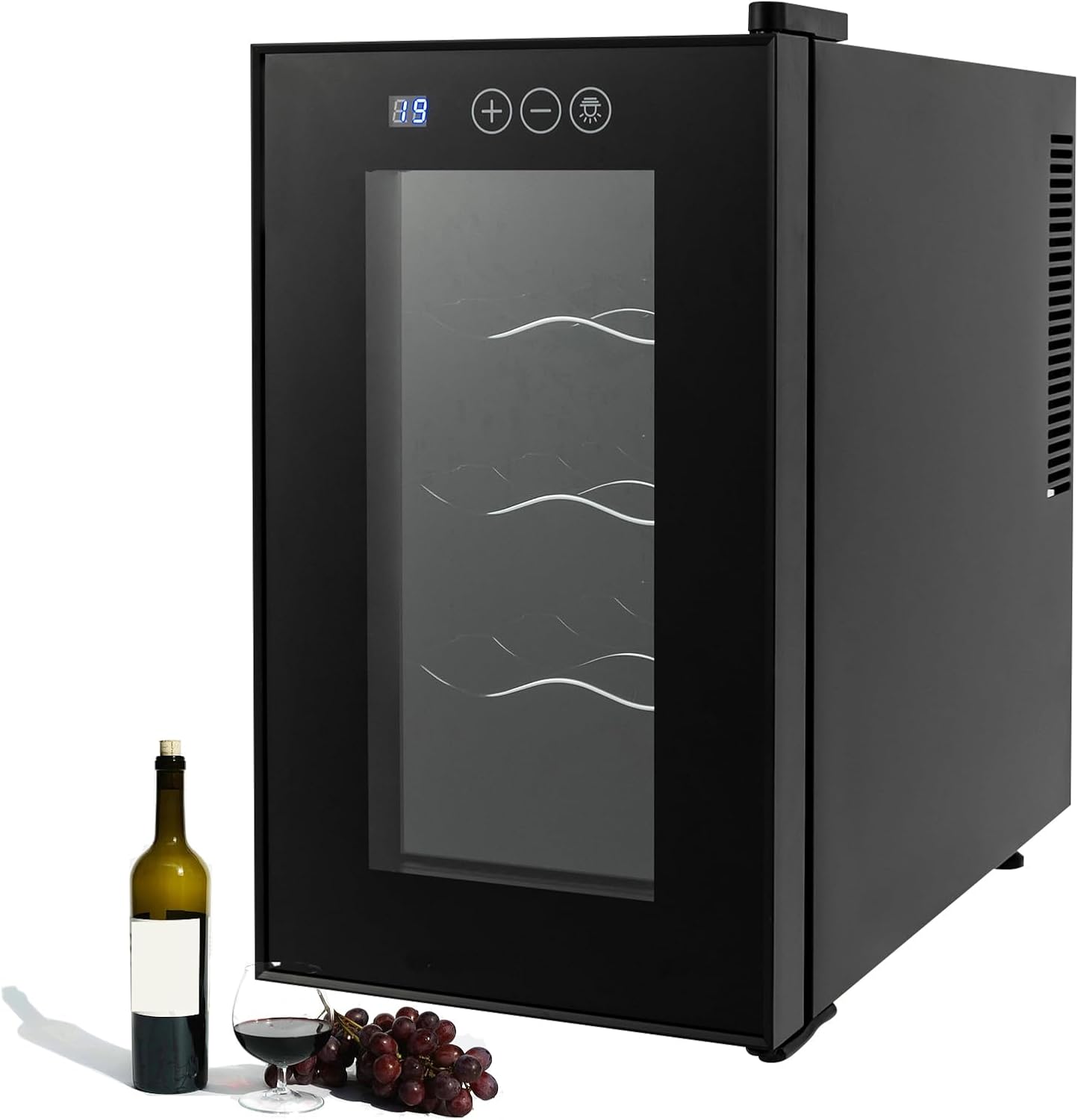
| Capacity | 23 liters |
|---|---|
| Applicable Bottles | 8 |
| Rated Power | 55W |
| Temperature Range | 46.4-64.4°F |
| Cooling Method | Compressor |
This compact YDOOLNG wine cooler is a budget-friendly freestanding unit designed for basic home wine storage. It uses a 55W compressor-based cooling system with a digital display and touch controls to set temperatures between about 46.4 and 64.4°F, which covers common serving and short-term storage needs. The interior has removable racks and a four-tier layout that fits up to eight bottles and includes an internal blue LED light so you can view bottles without opening the door. The case uses HIPS, cold-rolled sheet, and glass and has adjustable feet and exterior vents to help heat dissipation. Practical benefits include simple temperature accuracy, compact footprint for counters or small corners, and low rated power that helps keep energy use modest. Limitations are the small capacity, a relatively narrow temperature range compared with dedicated long-term cellars, and a short 3-month warranty, so buyers should expect basic performance appropriate for casual use rather than cellar-grade aging.
Best for: Buyers seeking an inexpensive, space-saving cooler to store a small selection of everyday wines and who prioritize straightforward temperature control and low energy draw.
Less Ideal for: Collectors who need large capacity, long-term cellar conditions, or extended manufacturer support should consider larger, higher-end units instead.
- Compact freestanding design fits on counters or small spaces
- Digital temperature control with LED display for easy, accurate setting
- Low rated power (55W) that helps keep energy usage modest
- Removable racks and adjustable feet for flexible bottle placement
- Only holds about eight bottles, unsuitable for larger collections
- Short 3-month warranty which offers limited manufacturer protection
Verdict: A low-power, budget-friendly compressor cooler that reliably stores up to eight bottles for everyday drinking with straightforward digital controls.
Ivation 18-Bottle Wine Cooler

| Capacity | 1.8 cubic feet |
|---|---|
| Bottle Capacity | 18 Bottle |
| Temperature Range | 41°F–64°F |
| Cooling Method | Compressor |
| Defrost System Type | Automatic |
The Ivation 18-Bottle Wine Cooler is a compact freestanding unit that uses a compressor and internal fan to keep temperatures steady between 41°F and 64°F, making it suitable for storing reds, whites, and sparkling wines. It typically sits on the floor or a countertop and is configured as a single-zone cooler with six wire racks that are removable to fit different bottle sizes. Notable features include a double-paned thermopane glass door that reduces UV exposure, a digital touch display with lock, soft LED interior lighting, and automatic defrost for low-maintenance operation. The compressor design and inverter help the cooler maintain set temperatures even when ambient room temperature fluctuates, which is valuable for long-term storage and reliability-focused buyers. Trade-offs are its single-zone layout, which does not allow separate temperatures for whites and reds, and modest capacity, which limits it to small collections or secondary storage. Energy consumption is moderate and the unit is intended as a dedicated wine fridge rather than a full-size cellar.
Best for: Buyers who prioritize a reliable, temperature-stable freestanding cooler for a small collection or secondary wine storage and want a low-maintenance unit with clear digital controls.
Less Ideal for: Collectors who need a large-capacity or dual-zone cellar for storing multiple wine types at different temperatures should consider larger or dual-zone models instead.
- Compressor cooling with internal fan for stable, consistent temperatures
- Double-paned thermopane glass door that helps block UV and insulates the interior
- Digital touch controls with lock and clear LCD for easy temperature management
- Removable wire racks accommodate different bottle sizes and simplify loading
- Single-zone design cannot maintain different temperatures for whites and reds
- Limited 18-bottle capacity may be too small for larger collections
Verdict: Choose this Ivation cooler when you want a compact, compressor-driven freestanding unit that keeps a small wine collection at stable, reliable temperatures.
Antarctic Star 12-Bottle Wine Cooler

| Capacity | 1.3 cubic feet |
|---|---|
| Temperature Range | 40°F–61°F |
| Cooling Method | Compressor |
| Installation Type | Freestanding |
| Defrost System Type | Manual |
This Antarctic Star wine cooler is a compact freestanding unit designed to store up to 12 bottles at controlled temperatures between 40°F and 61°F. It uses a compressor cooling system with electronic digital controls and a sealed glass door to keep temperatures steady and reduce vibration, which helps protect corks and preserve flavor. The single reversible door, two door shelves and one interior shelf make it simple to organize bottles and cans in a small footprint for a home bar, office, or den. Setup is straightforward for freestanding placement and the manual defrost system keeps the design simple, though it does require occasional maintenance. The unit is quiet in operation and has a modest 1.3 cubic foot capacity, so it is best for small collections or daily beverage access rather than long cellaring of many bottles. Energy use is reported but relatively high on an annual basis, so buyers balancing capacity and efficiency should weigh that against its compact convenience.
Best for: Buyers who want a small, reliable cooler to keep a modest wine or beverage selection at consistent serving temperatures and who value quiet operation and easy freestanding placement.
Less Ideal for: Not a good choice for collectors needing long-term storage, large-capacity cellaring, or the lowest possible annual energy use for bigger fridges.
- Compact 12-bottle capacity fits small spaces and home bars
- Digital temperature control with 40°F–61°F range for wine-friendly storage
- Compressor cooling and sealed glass door for steady temperatures and reduced vibration
- Reversible door and internal shelving allow flexible placement and organizing
- Quiet operation suitable for living areas
- Manual defrost requires occasional user maintenance
- 1.3 cu ft capacity is small for larger collections
Verdict: A compact, quiet compressor wine cooler that reliably holds up to 12 bottles and keeps them at serving temperatures, ideal for small home bars or daily use.
EUHOMY 16-Bottle Wine Cooler

| Capacity | 1.7 cubic feet |
|---|---|
| Bottle capacity | 16 bottles (750ml) |
| Temperature range | 40°F to 61°F |
| Defrost system | Manual |
| Installation Type | Countertop |
The EUHOMY 16-Bottle Wine Cooler is a countertop freestanding unit that uses a compressor and circulating fan to keep bottles between 40°F and 61°F. It is typically used to store mixed collections of red, white, and sparkling wines or to chill beverages in a kitchen, home bar, or office. Notable features include a double-pane UV-protected glass door with an airtight seal, a digital control panel for setting temperature, soft blue LED interior lighting, four removable wire shelves for flexible bottle arrangements, and a reversible door with leveling feet for stable placement. In real use it cools steadily with claimed quiet operation around 38 dB and the compressor-based system handles warmer ambient temperatures better than thermoelectric coolers. Trade-offs are its modest 1.7 cu ft capacity, which limits large collections, and manual defrosting rather than an automated system. Energy consumption is moderate at the listed annual figure, so it is best where a compact, reliable cooler is needed rather than as a full cellar replacement.
Best for: Buyers who want a compact, reliable single-zone cooler for everyday wine and beverage storage and who prioritize steady temperature control and low noise over large capacity.
Less Ideal for: Collectors who need to store dozens of bottles or require multi-zone temperature control should look at larger or dual-zone units.
- Compressor cooling with circulating fan for consistent temperatures in varied room conditions
- Digital temperature control covering 40°F to 61°F for common wine and beverage needs
- Double-pane UV-protected glass door and airtight seal help protect bottles from light and preserve conditions
- Removable adjustable shelves and reversible door allow flexible placement and bottle arrangements
- Small 1.7 cu ft capacity limits the number of bottles you can store
- Manual defrost requires occasional maintenance
Verdict: A compact, quiet compressor wine cooler that delivers reliable single-zone temperature control for everyday collections and small home bars.
Choosing the Right Energy-Efficient Wine Cooler: Key Factors to Consider
Capacity and Bottle Fit
Choose a cooler sized for how many bottles you typically store and the bottle shapes you own. Overfilling a cooler forces the compressor to run longer, raising energy use and stressing the cooling system. Conversely, a very large cabinet used only intermittently wastes energy keeping unneeded space cool.
Also consider shelf configuration and adjustable racking. Flexible shelves let you accommodate magnums or larger-format bottles without blocking airflow, which helps maintain even temperatures and reduces hot spots.
Cooling Type and Efficiency
Wine coolers typically use compressor or thermoelectric cooling. Compressor systems are generally more powerful and better for larger capacities or multi-zone cabinets, but their efficiency depends on component quality and how well matched the compressor is to the cabinet volume. Thermoelectric coolers have fewer moving parts and can be quieter for small, single-zone units, but they struggle with large loads and high ambient temperatures.
Understanding the cooling method helps you predict running costs and performance in your home environment. Look for systems with documented low idle power and adaptive cycling that minimize compressor run time without sacrificing stability.
Insulation, Door Construction, and Glazing
Good insulation limits heat gain, so the cooling system runs less often. Pay attention to wall thickness, foam quality, and the effectiveness of door seals. Double-pane low-emissivity glass reduces radiant heat transfer and helps maintain set temperatures while still allowing bottle visibility.
A tight door seal prevents moisture ingress that can force the system to dehumidify more often. If the cooler will sit in a warm kitchen, prioritize thicker insulation and quality door glazing to reduce energy draw and temperature fluctuations.
Temperature Control Precision and Zoning
Precise digital controls and independent zones matter when you store both reds and whites at their ideal temperatures. A well-designed thermostat keeps setpoints within a narrow range, reducing the need for long compressor cycles that consume more power.
When choosing a multi-zone cooler, ensure the zones are physically separated with proper insulation and independent sensors. That ensures each zone can hold its target temperature without one compartment forcing the other to overwork.
Vibration, Noise, and Placement
Excessive vibration can disturb sediments in older wines and noise affects where the cooler can comfortably sit in your home. Look for units with vibration-dampening mounts, quiet fans, and compressor isolation. Lower vibration also correlates with more efficient mechanical operation because fewer parasitic losses occur.
Placement matters too. Install the cooler on a level surface with adequate clearance for ventilation. Poor placement can force the unit to run harder and spend more energy maintaining temperature.
Maintenance and Long-Term Operating Costs
Routine maintenance affects both energy use and longevity. Clean condenser fins and ensure door gaskets remain supple to keep inefficiencies from developing. Easy-to-service designs reduce the likelihood of neglected maintenance that leads to higher energy draw over time.
Consider filter access, replaceable seals, and user-serviceable fans or thermostats. Lower long-term operating cost comes from both initial efficiency and the ability to keep the system running near its original specifications with minimal effort.
Single-Zone Vs Multi-Zone: When to Choose Each
Single-zone coolers hold a uniform temperature throughout the cabinet and are a practical, energy-efficient choice when you primarily store one style of wine or serve bottles at similar temperatures. They typically consume less power than multi-zone models because they only need a single thermostat and cooling loop to maintain one setpoint.
Multi-zone units are useful if you frequently store reds and whites together or want ready-to-serve bottles at different temperatures. However, they are more complex and can be less efficient if zones are not well insulated from each other. Evaluate how often you will use both temperature ranges simultaneously before opting for a multi-zone cabinet.
- Single-zone: simpler controls, lower average power draw, better for uniform collections
- Multi-zone: flexibility for mixed collections, potentially higher complexity and energy use
Placement and Ventilation Tips to Maximize Efficiency
Where you install the cooler affects how hard it must work. Keep the unit away from direct sunlight, ovens, or heaters and allow manufacturer-recommended clearance for ventilation. A cooler in a hot, poorly ventilated spot will cycle more frequently and use more energy.
Built-in or undercounter installations require correct venting to avoid trapping heat. If the model supports either built-in or freestanding installation, follow the ventilation guidance exactly to avoid efficiency losses. Using the cooler in a consistently moderate ambient temperature yields the best energy performance.
- Avoid sunlit walls and heat sources
- Provide recommended clearance for proper airflow
- Check whether the unit requires front-venting for built-in installs
Understanding Energy Use Labels and Specs
Energy labels and technical specs provide measurable clues about likely operating costs. Look for documented average power consumption or watt-hours per day when available, and compare that figure relative to cabinet volume. A lower watt-hour per liter or per bottle typically indicates a more efficient design.
Be cautious with short-term test numbers. Real-world energy use depends on ambient temperature, how often the door is opened, and fill level. Use spec-sheet figures as one input alongside insulation, cooling type, and thermostat precision when estimating annual energy use.
- Compare watt-hour/day relative to interior volume
- Consider ambient conditions and usage patterns when estimating real energy costs
Noise and Vibration: Impacts on Wine Quality and Placement
Noise matters for placement in living areas, while vibration has a direct effect on how wine ages. Even low-level vibration over time can disturb sediments and subtly influence maturation. Seek units with compressor isolation and rubber mounts to minimize transmission.
If the cooler will live near seating areas or open-plan spaces, prioritize lower decibel ratings and fans designed for quiet operation. For cellar or garage placement, slightly higher noise may be acceptable if it comes with better energy performance.
- Check vibration-dampening features for long-term storage
- Match noise levels to installation location
Seasonal Use and Standby Considerations
If you will only run the cooler seasonally, consider models that handle intermittent use without requiring heavy cycling to reestablish temperature. A unit with good insulation and a reliable thermostat will return to setpoint faster and use less energy when restarted.
For backup or occasional storage, a smaller, thermoelectric unit can be efficient. For year-round storage of valuable bottles, a proper compressor-driven cooler with better insulation is usually the more stable long-term choice.
- Thermoelectric may be fine for short-term or occasional use
- Compressor units are more robust for continuous, year-round storage
How We Chose the Best Energy-Efficient Wine Cooler
We prioritized measurable energy and temperature-control features that matter to long-term wine storage. Key evaluation criteria included actual power draw under normal load, the insulation quality and door glazing that reduce cooling cycles, the temperature stability across the cabinet, and vibration and noise levels that affect delicate wines. We also considered control precision and zone separations for multi-temperature needs, and build quality elements that influence heat leakage and compressor efficiency. Units that lacked verifiable energy-efficiency design details, poor temperature stability data, or excessively high vibration were excluded. We favored coolers with efficient cooling systems sized appropriately for their interior volume, clear thermostat control, and evidence of low idle power. The result is a shortlist of models that balance low operating costs with the environmental control required for proper wine preservation.
Our full evaluation process is outlined in our review methodology.
FAQ
How much can an energy-efficient wine cooler save on electricity?
Savings depend on ambient conditions, usage patterns, and cooler size. Efficient models with good insulation and low idle power can reduce daily energy draw noticeably compared with older or poorly insulated units. Estimating savings requires comparing documented watt-hours per day for the models you are considering and scaling by local electricity rates.
Is thermoelectric cooling more energy-efficient than a compressor?
Thermoelectric units can be efficient for small, single-zone applications and are typically quieter. For larger capacities or in warmer ambient temperatures, compressors usually deliver better efficiency because they handle heat-loads more effectively. The best choice depends on cabinet size and where the cooler will be installed.
Does door glass make a cooler less efficient?
Not necessarily. Double-pane or low-emissivity glass can provide visibility without large efficiency penalties. The key is the glazing quality and the effectiveness of the door seal. Well-glazed doors with strong seals can approach the efficiency of solid doors while offering the convenience of display.
How often should I service a wine cooler to maintain efficiency?
Inspect condenser fins and door gaskets at least annually and clean or replace parts as needed. Keeping vents clear and seals in good condition prevents loss of performance. More frequent checks are sensible in dusty environments or if the unit runs in a garage or workshop.
Can I install an energy-efficient wine cooler undercounter?
Many models are suitable for undercounter installation but require proper ventilation. Some are front-venting to allow built-in installation without trapping heat. Always follow the installation guidance for clearance and venting to maintain efficiency and avoid overworking the cooling system.
Final Verdict
Prioritize temperature stability, insulation quality, and low power draw when choosing an energy-efficient wine cooler. Decide whether a single-zone or multi-zone layout fits your collection and match the unit size to your typical bottle count to avoid unnecessary cycling. Consider placement, ventilation, and noise to ensure efficient operation in your home. Focus on models that combine precise controls, solid door construction, and documented low energy use. That approach delivers reliable storage while minimizing operating costs and gives you confidence the cooler will protect your bottles over time.