
Note: This article contains affiliate links. If you click on these links and make a purchase, we may earn a small commission at no extra cost to you. This helps support our research and content. Read our full affiliate disclosure here.
If you plan to pull espresso shots and steam milk at home, the right espresso machine with milk steamer makes a huge difference in drink quality and daily convenience. You want reliable steam pressure, stable brew temperature, and controls that let you texture milk for lattes and cappuccinos without a long learning curve. This guide shortlists the top choices for home baristas and compares how they handle steaming power, temperature consistency, and ease of use. Below you will find our top picks plus clear criteria and practical tips to help you choose the machine that fits your routine and skill level.
Top Picks at a Glance
| Best Quality Built to a higher standard if you want something more solid | Breville Barista Touch BES880BSS |  |
| Best Value The sweet spot between price and what you get | CASABREWS 3700 Essential |  |
| Best Budget The cheapest option that still gets the job done reliably | IMUSA Espresso Maker GAU-18202AMZ |  |
| Top Rated A top-rated pick with lots of positive feedback | Breville Barista Express BES870XL |  |
| Most Popular A crowd favorite that many people choose with confidence | Keurig K-Cafe K-Cafe |  |
| Best Seller A high-volume bestseller chosen again and again | CASABREWS CM5418 Espresso Machine |  |
Breville Barista Touch BES880BSS

| Wattage | 1680 watts |
|---|---|
| Voltage | 120 |
| Human Interface Input | Touchscreen |
| Coffee Input Type | whole_beans |
| Filter Type | Reusable |
The Breville Barista Touch is a compact, performance-focused espresso machine that combines a conical burr grinder, touch display and automatic milk texturing to simplify cafe-style drinks at home. You grind directly into the portafilter with 30 grind settings and dose control, then use the touchscreen to select preprogrammed drinks or make manual adjustments to shot volume, temperature and milk texture. The ThermoJet heating system brings the machine up to temperature fast, so you can pull a shot and steam milk with minimal wait. Hands-free Auto Milk texturing creates consistent microfoam for lattes and cappuccinos, and the included stainless milk jug and razor dose trimming tool help produce repeatable results. Practical limitations include a 4.2 pound bean hopper capacity that may need frequent refills in heavy use and the semi-automatic workflow still requires some user familiarity with tamping and cleaning. The machine rewards users who prioritize control over purely one-touch convenience by delivering rich extraction and reliable milk steaming in a kitchen-friendly footprint.
Best for: Buyers who want near-professional espresso performance and consistent milk steaming at home while keeping control over grind and extraction settings.
Less Ideal for: Casual users who want a completely hands-off, single-button coffee maker or those who prefer very large daily volumes without refilling.
- Integrated conical burr grinder with 30 grind settings for precise dosing
- Touchscreen with programmable drink presets for quick, repeatable results
- ThermoJet heating system reduces heat-up time for faster workflow
- Auto milk texturing produces consistent microfoam suitable for latte art
- Includes useful accessories like stainless milk jug and razor dose trimming tool
- Bean hopper and water capacity require regular refilling during heavy daily use
- Semi-automatic aspects mean some manual steps and a learning curve for beginners
Verdict: Choose the Barista Touch if you want a compact machine that pairs a precision grinder with automatic milk texturing for café-quality lattes and cappuccinos at home.
CASABREWS 3700 Essential

| Output Pressure | 20 bar |
|---|---|
| Operation Mode | Semi-Automatic |
| Wattage | 1350 watts |
| Coffee Input Type | Ground |
| Capacity | 43.9 fluid ounces |
The CASABREWS 3700 Essential is a compact semi-automatic espresso maker designed for home baristas who want café-style drinks without a large footprint. It uses a 20-bar Italian pump and PID temperature control to deliver consistent extraction and crema, and the 51mm portafilter supports single or double shots. The machine includes a powerful steam wand for creating microfoam suitable for lattes and cappuccinos, plus a removable 43.9 oz water tank and removable drip tray for easier refills and cleaning. Practical features such as a low-pressure pre-infusion, cup warmer, and programmable single-cup volume make daily use straightforward. Expect a short warm-up time and metal housing that feels more durable than plastic alternatives. Limitations include the single-boiler design, which means you may need to wait briefly between steaming milk and pulling a shot, and the lack of a built-in pressure gauge for manual fine-tuning. For straightforward at-home espresso and milk drinks, this model balances performance and convenience well.
Best for: Buyers who want a reliable, compact home espresso machine that makes both espresso and steamed milk with consistent results and straightforward controls.
Less Ideal for: People who need back-to-back professional workflow with simultaneous steaming and brewing or who want advanced pressure monitoring and commercial-level features.
- 20-bar pump with PID temperature control for stable, consistent extraction
- Powerful steam wand capable of producing microfoam for lattes and cappuccinos
- Detachable 43.9 oz water tank and removable drip tray for easy refilling and cleaning
- Programmable single- or double-shot volume and low-pressure pre-infusion for smoother shots
- Stainless steel housing offers a durable, compact design that fits small kitchens
- Single-boiler design requires a short wait between steaming and brewing
- No built-in pressure gauge for monitoring extraction pressure
Verdict: A compact, user-friendly espresso machine that delivers reliable shots and quality milk frothing for home baristas seeking practical, consistent performance.
IMUSA Espresso Maker GAU-18202AMZ

| Capacity | 4 cups |
|---|---|
| Operation Mode | Semi-Automatic |
| Wattage | 800 watts |
| Other Special Features of the Product | Milk Frother, Permanent Filter |
This IMUSA espresso maker is a small, straightforward machine aimed at home users who want basic espresso and milk-based drinks. It brews up to four cups and uses a 3-position selector and 5-bar pressure to extract espresso into a glass carafe, while the steam nozzle froths milk for cappuccinos and lattes. The unit includes a permanent filter, removable drip tray, and cool-touch carafe handle, which make daily use and cleanup simpler than machines with single-use pods. At 800 watts it heats quickly for back-to-back drinks, and its compact matte-black housing fits easily on a countertop. Expect a no-frills experience: it lacks high-pressure commercial parts, advanced temperature or pressure controls, and the frother is manual rather than automatic, so milk texture depends on technique. For buyers on a budget who want a reliable way to make espresso-style coffee and foamed milk at home, this machine delivers sensible features without unnecessary complexity.
Best for: Buyers prioritizing an affordable, simple machine that makes espresso-style coffee and steamed milk at home without advanced controls or commercial complexity.
Less Ideal for: People seeking professional-grade pressure, precise temperature control, or automatic milk systems should consider higher-end machines instead.
- Compact countertop footprint suitable for small kitchens
- Built-in steam nozzle produces froth for cappuccinos and lattes
- Permanent filter and removable drip tray reduce ongoing consumable costs and simplify cleaning
- 800W power offers relatively quick heat-up and brewing
- 5-bar pressure is lower than prosumer machines, limiting crema and extraction depth
- Frothing is manual and requires practice to achieve café-quality microfoam
Verdict: A budget-friendly countertop espresso maker that reliably brews multiple servings and froths milk for basic cappuccinos and lattes.
Breville Barista Express BES870XL

| Wattage | 1600 watts |
|---|---|
| Voltage | 120 |
| Coffee Input Type | whole_beans |
| Filter Type | Reusable |
| Capacity | 1 cups |
The Breville Barista Express BES870XL combines a built-in conical burr grinder, a 54mm portafilter, and a powerful steam wand to let home users go from whole beans to textured milk drinks in one machine. It grinds on demand with 16 grind settings and dose control, then uses a thermocoil heating system and digital temperature control to stabilize extraction. The steam wand produces manual microfoam suitable for latte art, and included accessories such as a tamper, razor dose trimming tool, and multiple filter baskets help deliver consistent shots. Typical use is hands-on: you grind, dose, tamp, and steam manually, which gives control but requires practice to dial in shots and milk texture. The machine is robustly built in stainless steel and designed for daily use, though its manual workflow means it is not as fast or automated as pumps with automatic milk systems. Water tank access and routine cleaning are required to keep performance steady. For buyers who value a reliable, factory-quality semi-automatic with an effective milk steamer, this is a practical midrange choice.
Best for: Buyers who prioritize a dependable, well-built semi-automatic machine and want hands-on control to produce café-style espresso and steamed milk at home.
Less Ideal for: People who need fully automatic or one-touch milk steaming and shot preparation or who prefer a no-training, plug-and-play countertop appliance.
- Integrated conical burr grinder with 16 grind settings for fresh dose-controlled grounds
- Thermocoil heating and digital temperature control for stable extraction
- Powerful steam wand capable of producing microfoam for latte art
- Solid stainless steel construction and included accessories for consistent results
- Manual operation requires practice and regular hands-on maintenance
- Single-boiler thermocoil design limits simultaneous steaming and brewing speed
Verdict: A reliable, factory-quality semi-automatic that pairs a built-in grinder with a powerful steam wand for home-made espresso and milk drinks when you want hands-on control.
Keurig K-Cafe K-Cafe

| Coffee Maker Type | Espresso Machine |
|---|---|
| Wattage | 1500 watts |
| Coffee Input Type | K-Cup Pods |
| Water Reservoir Capacity | 60 oz removable |
| Filter Type | Reusable |
The Keurig K-Café is a single-serve pod brewer that adds a simple milk-frothing step to everyday K-Cup coffee. It brews regular 6–12 oz cups, offers a SHOT button to make a concentrated espresso-style shot from any K-Cup pod, and pairs that shot with a removable dishwasher-safe frother that has hot and cold settings for lattes, cappuccinos, and iced drinks. Controls are button-based and straightforward, the Strong Brew option increases boldness, and the 60 oz removable water reservoir reduces refill frequency. The frother works well with common dairy and many plant milks but results can vary by milk type, and the unit relies on K-Cup pods rather than true espresso extraction, so you get convenience more than barista-style crema or pressure-based espresso. The smart start heating and programmable auto-off are handy for morning routines, and included accessories make it easy to get started. If you want fast, consistent specialty drinks with minimal learning curve, this blends pod convenience with basic frothing, but it is not a substitute for a pump espresso machine for serious espresso enthusiasts.
Best for: Buyers who value speed, easy cleanup, and social-proof reliability and want to make café-style lattes and cappuccinos at home without learning espresso technique.
Less Ideal for: People seeking authentic, pressure-extracted espresso or advanced milk-texturing control should consider a pump espresso machine instead.
- Makes concentrated coffee shots and froths milk for lattes and cappuccinos using K-Cup pods
- Dishwasher-safe removable frother with hot and cold settings simplifies cleanup
- Large 60 oz removable water reservoir reduces how often you refill
- Simple button controls and Smart Start heating make brewing fast and intuitive
- Uses K-Cup pods and does not provide true pressure-based espresso extraction
- Frothing performance can vary depending on the type of milk used
Verdict: Pick the K-Café if you want a reliable, easy-to-use single-serve brewer that produces concentrated shots and froths milk for café-style drinks with minimal fuss.
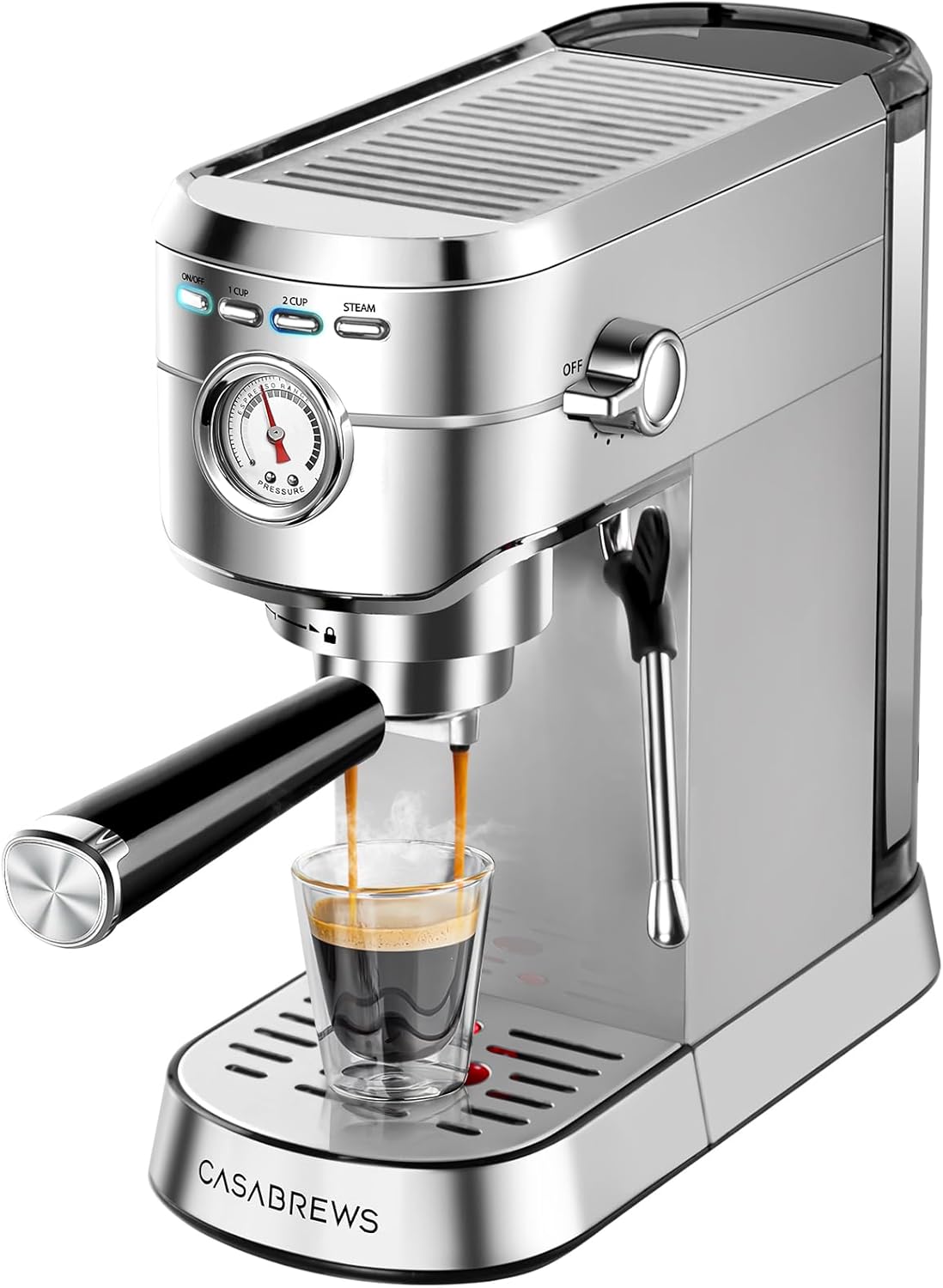
CASABREWS CM5418 Espresso Machine
| Operation Mode | Semi-Automatic |
|---|---|
| Wattage | 1350 watts |
| Output Pressure | 20 bar |
| Coffee Input Type | ground_coffee |
| Filter Type | Reusable |
The CASABREWS CM5418 is a compact, semi-automatic espresso maker aimed at home users who want café-style drinks without a large footprint. It uses a 20-bar Italian pump with a built-in pressure gauge and pre-infusion to help produce good crema and consistent extraction, and the 51mm portafilter accepts the included single- and double-shot filter baskets. The powerful steam wand textures milk into microfoam suitable for cappuccinos and lattes, and a removable 34 oz water tank lets you brew multiple cups before refilling. Controls are button-based and the top cup warmer and removable drip tray add everyday convenience. Expect a short warm-up cycle and routine maintenance like descaling and soaking filter baskets to keep flows steady. Because it is a single-boiler design, allow time for the machine to cool between steaming and brewing to avoid overheating protection activating. For buyers who prefer a straightforward, feature-focused home espresso machine, the CM5418 delivers strong steam performance and visual pressure feedback for dialing in shots.
Best for: Buyers who want a compact, easy-to-use home espresso machine that produces café-style drinks and value visual pressure feedback and strong steam performance.
Less Ideal for: People seeking a commercial-grade machine with dual boilers or those who want instant back-to-back brewing and steaming without wait time.
- 20-bar pump with built-in pressure gauge for visible extraction feedback
- Powerful steam wand capable of producing microfoam for latte and cappuccino
- Compact stainless steel body with removable 34 oz water tank for easy refills
- Includes portafilter, single- and double-shot baskets, and tamper for ready-to-use brewing
- Single-boiler design requires cooling time between steaming and brewing
- May need regular descaling and basket soaking to prevent slow extraction
Verdict: A compact home espresso machine that gives reliable pressure feedback and strong steam performance for creamy milk drinks.
Choosing the Right Espresso Machine with Milk Steamer: Key Factors to Consider
Steam Power and Flow Control
Steam power determines how quickly and effectively you can heat and texture milk. Higher steam pressure and good flow control let you create dense microfoam for lattes and a drier, airier texture for cappuccinos. Variable control over steam output helps you adapt to different milk types, cup sizes, and recipes.
If a machine has only an on/off steam valve with one fixed flow, you may struggle to dial in microfoam without overheating. Look for machines that let you modulate steam pressure manually or offer multi-stage steam control to shape texture without overworking the milk.
Temperature Stability and Boiler Design
Consistent brewing and steaming temperatures are essential for balanced espresso and properly textured milk. Boiler size and type (single boiler, heat exchanger, or dual boiler) affect how well a machine maintains temperature when switching between extraction and steaming. A stable temperature reduces shot variability and prevents milk from being overheated or under-steamed.
For home machines, consider whether the unit recovers steam pressure quickly between drinks. Faster recovery means you can make back-to-back lattes without long waits, which matters if you often prepare multiple beverages in one session.
Steam Wand Shape and Reach
The configuration of the steam wand influences technique and comfort. A well-placed wand with adequate reach lets you position a pitcher naturally and create a steady whirlpool for smooth microfoam. A swivel joint or ergonomic bend reduces wrist strain and gives more control when juggling temperature and texture.
Also evaluate tip design and the availability of single- or multi-hole tips. Some tips introduce more air and speed texturing, while others create finer foam. Consider how easy it is to remove and replace tips for cleaning or for switching between textures.
Ease of Cleaning and Routine Maintenance
Milk residues can quickly build inside wands and tips, affecting hygiene and steam performance. Machines that allow easy removal of tips, provide accessible steam pathway cleaning, and include user-friendly backflushing or descaling procedures will save time and extend service life.
Check whether replacement parts like seals and tips are straightforward to access. A machine that requires complex disassembly for routine cleaning will be less practical for daily milk-based drink preparation.
Control Features and Usability
Controls that match your skill level make a big difference. Simple knobs and a single dial may suit beginners, while dedicated steam pressure gauges, programmable shot volumes, and separate steam switches benefit more experienced users. Intuitive controls help you learn faster and reduce user error.
Consider additional conveniences such as an accessible water reservoir, cup warmer surface, and clear feedback on when the boiler is ready. These small usability features impact whether the machine becomes a seamless part of your morning routine.
Milk Types and Steaming Techniques
Different milks froth and heat differently because of varying protein and fat content. Whole milk produces creamier microfoam and warms predictably, while lower-fat and plant-based milks often need more careful technique to achieve the same texture.
Technique matters as much as equipment. Position the steam tip just below the milk surface to introduce air, then lower the pitcher to create a whirlpool. Pay attention to pitcher size and angle to maintain a consistent vortex and avoid large bubbles.
- Whole milk: easier to achieve stable microfoam and glossy texture.
- Oat or almond milk: requires slightly lower steam power and longer swirling to avoid separation.
- Skim milk: foams quickly but can produce larger bubbles and a drier mouthfeel.
Daily Routines for Reliable Steam Performance
Start each steaming session by purging the wand for one or two seconds to clear residual water. Keep a damp microfiber cloth nearby to wipe the tip immediately after steaming and purge again to prevent milk from entering the steam pathway.
Regular short maintenance—wiping, brief tip removal and rinse—prevents buildup that reduces steam flow. For machines used daily for milk drinks, schedule a more thorough cleaning weekly to maintain consistent performance.
- Purge and wipe after every steam.
- Soak removable tips weekly in warm, soapy water.
- Backflush or descale on the manufacturer-recommended schedule to protect boiler performance.
Common Steam Issues and Quick Fixes
If steam output is weak or sputters, check for milk residue or scale buildup in the tip and wand. A clogged tip is often the simplest cause and can be cleared by soaking and using a small brush.
Temperature swings during extraction and steaming usually come from insufficient recovery time or inadequate boiler size. Allow the boiler to come to operating temperature and give the unit time to recover steam pressure between beverages.
- Clogged tip: remove and soak, then gently brush to clear holes.
- Inconsistent steam pressure: allow longer recovery time or reduce consecutive steaming volume.
- Scalded milk: lower steam power or reduce steaming time; practice slower stretching for better texture.
Accessories That Improve Milk Steaming
A good metal steaming pitcher with a tapered lip makes lacing and pouring easier. Pitcher size should match the cup size you commonly use; a 12–20 ounce pitcher suits most home lattes.
A thermometer is helpful when you are learning to dial in temperature, and a tamp with a flat base improves puck consistency for even extraction. Other useful accessories include a small cleaning brush for the tip and a dedicated microfiber cloth for wiping.
- Choose a pitcher with clear volume markings.
- Use a thermometer during practice sessions until you learn temperature cues by touch.
- Keep spare tips and seals on hand if you use milk drinks heavily.
Energy Use and Daily Cost Considerations
Boiler type and volume affect how much energy a machine uses, especially if you leave it on for extended periods. Smaller boilers or heat-exchange systems can be more efficient for occasional use, while larger boilers are better for continuous steaming but may consume more energy.
If you prepare multiple milk-based drinks in a row, choose a machine with quick steam recovery to reduce wasted time. For occasional users, a machine with shorter heat-up time may be more practical and energy-efficient.
- Turn off or use an energy-saving mode if available when not in use for long periods.
- Factor in recovery time when planning back-to-back drinks.
- Consider boiler size relative to typical drink volume to avoid unnecessary energy use.
How We Chose the Best Espresso Machine with Milk Steamer
We focused on attributes that directly affect steamed-milk drinks and daily usability. Key evaluation dimensions included steam output consistency, boiler or thermoblock temperature stability, wand ergonomics and frothing control, build quality and durability of steam components, and serviceability such as access to replaceable seals and cleaning parts. We prioritized machines that offer repeatable steaming performance across multiple milk-based drinks, not only a single strong burst of steam. We excluded models that lack a proper steam wand or only offer milk frothing via separate pods or closed milk systems, because those do not give the same control for texturing. We also filtered out appliances with poor temperature control that can scorch milk or underheat espresso shots. Finally, we considered user-focused features like pressure gauges, adjustable steam flow, and straightforward maintenance procedures since these affect long-term satisfaction for home use.
Our full evaluation process is outlined in our review methodology.
FAQ
How much steam power do I need for home milk drinks?
Most home users benefit from moderate to strong steam power that recovers rapidly between drinks. The right level depends on whether you routinely make multiple beverages back-to-back; faster recovery and higher sustained output help with consecutive steaming.
Can I steam plant-based milks with these machines?
Yes, you can steam many plant-based milks but expect variation in texture. Oat and barista-formulated plant milks generally produce better microfoam. Adjust steam flow and stretching technique to avoid separation or large bubbles.
How often should I clean the steam wand and tip?
Wipe and purge the wand after every use and remove tips for a thorough rinse weekly. More frequent deep cleaning is recommended if you steam milk several times a day to prevent residue buildup and clogging.
Will a larger boiler give better steam performance?
A larger boiler can provide more stable steam for extended use and faster recovery between drinks, but it may consume more energy. Choose boiler size based on how many milk drinks you make per session.
What causes milk to taste scorched after steaming?
Scorched taste usually comes from overheating milk or leaving steam on too long. Use lower steam power, watch pitcher temperature, and develop a steady stretching technique to avoid high localized temperatures.
Final Verdict
When choosing an espresso machine with milk steamer, prioritize reliable steam power, stable temperature control, and a wand design that suits your preferred milk textures. Balance boiler size and recovery capability with your typical drink volume to avoid long waits or poor steam performance. Focus on usability and maintenance features if you plan to make milk drinks daily. With attention to these tradeoffs, you can pick a machine that delivers consistent café-style milk texture and fits your routine confidently.