
Note: This article contains affiliate links. If you click on these links and make a purchase, we may earn a small commission at no extra cost to you. This helps support our research and content. Read our full affiliate disclosure here.
If you want direct control over every shot, a lever espresso machine puts you in charge of pressure and extraction. These machines reward practice with a distinctive crema and flavor profile that automatic machines rarely match. This guide shortlists the six best lever espresso machines for home use, focusing on machines that balance consistency, durability, and ease of use. We evaluate each model for extraction consistency, build quality, temperature stability, and user ergonomics so you can choose a lever machine that fits your workflow. Read on for the top picks and the criteria we used to choose them.
Top Picks at a Glance
| Best Overall The best all-around choice for most situations | ALM KOPi MW2 Manual Lever Espresso |  |
| Best Quality Built to a higher standard if you want something more solid | La Pavoni Esperto Abile 16-Cup |  |
| Best Value The sweet spot between price and what you get | LEVERPRESSO Leverpresso V4 |  |
| Best Budget The cheapest option that still gets the job done reliably | Flair Classic Solo |  |
| Top Rated A top-rated pick with lots of positive feedback | La Pavoni Professional PB-16 |  |
| Most Popular A crowd favorite that many people choose with confidence | Flair 49 PRO |  |
ALM KOPi MW2 Manual Lever Espresso

| Coffee Maker Type | Espresso Machine |
|---|---|
| Operation Mode | Manual |
| Coffee Input Type | ground |
| Power Source | Manual |
The ALM KOPi MW2 is a hand-operated lever espresso machine aimed at home baristas who want direct control over extraction without an electric pump. You load ground coffee into a 58 mm portafilter, use the long lever to build and release pressure, and watch the built-in gauge to judge shot pressure for better consistency. The stainless steel body and solid wood base give the machine a stable, heavy feel and a cafe-style look, while the 58 mm sizing makes it compatible with common professional baskets and tampers. Because it has no boiler or pump, it does not require electricity and produces espresso through manual hydraulic force, which rewards practice and technique but adds a learning curve. Practical benefits include tactile control over shot dynamics and durable construction, but expect slower workflow, no automatic steaming or temperature programming, and a need to master lever timing and dosing for repeatable results. For someone who enjoys the craft of pulling espresso, the MW2 offers an authentic lever-machine experience in a home-sized package.
Best for: Buyers who prioritize hands-on control and the ritual of manual espresso extraction and who enjoy learning and refining technique to improve shot quality.
Less Ideal for: People who need quick, repeatable espresso with automated steaming or who prefer a plug-and-play machine with minimal skill required.
- Manual lever and pressure gauge provide direct control over extraction and visible feedback
- 58 mm group compatibility works with professional baskets and tampers
- Stainless steel body and solid wood base offer stability and a premium look
- Operates without electricity for a pure, mechanical espresso workflow
- Requires practice to achieve consistent shots because extraction is fully manual
- No built-in boiler, pump, or automated steaming for milk preparation
Verdict: Pick the MW2 if you want a durable, non-electric lever machine that gives you direct pressure control and a true hands-on espresso experience.
La Pavoni Esperto Abile 16-Cup

| Operation Mode | Manual |
|---|---|
| Wattage | 1000 |
| Voltage | 110 volts |
| Filter Type | Reusable |
| Capacity | 16 cups |
The La Pavoni Esperto Abile is a traditional lever espresso machine built for hands-on espresso enthusiasts and small-scale entertaining. It uses a 54-ounce nickel-plated boiler to supply consistent steam and enough capacity for multiple 2-ounce shots before a refill, while the manual lever operation and mounted group pressure gauge give direct control over extraction. The machine includes competition-style filters in 9 g, 16 g, and 20 g sizes and embossed group screens, so you can dial in grind and dose precisely. Dual frothing systems and dedicated steam controls make it practical for preparing milk drinks for guests. Its chrome exterior and rosewood lever and knobs emphasize classic Italian styling but also mean it is a heavier, more traditional appliance that requires some barista skill and regular maintenance. There is no automated dosing or built-in grinder, so expect hands-on prep and a learning curve to get consistent pulls, but for someone focused on extraction control and build quality this delivers a satisfyingly tactile experience.
Best for: Buyers who prioritize hands-on control and extraction quality and enjoy refining shots manually for high-performance results and entertaining small groups.
Less Ideal for: Casual users who want push-button convenience, built-in grinding, or a low-maintenance plug-and-play espresso machine should consider simpler automatic models instead.
- Large 54 oz nickel-plated boiler supports multiple consecutive shots without reheating
- Manual lever and group pressure gauge enable fine control over extraction
- Includes competition-style 9 g, 16 g, and 20 g filters for precision dosing
- Dual frothing systems provide flexibility for steaming milk and making cappuccinos/lattes
- Fully manual operation means a steeper learning curve compared with semi-automatic machines
- No built-in grinder or automated dosing features require extra equipment and setup
Verdict: If you want a performance-focused, traditional lever machine that gives direct control over extraction and steaming for high-quality, cafe-style shots, this La Pavoni is a top choice.
LEVERPRESSO Leverpresso V4

| Output Pressure | 9 bar |
|---|---|
| Power Source | Manual |
| Coffee Input Type | ground_coffee |
| Filter Type | Reusable |
| Capacity | 60 g |
The Leverpresso V4 is a portable manual lever espresso maker that produces café-style shots without power by using a dual-lever piston to generate up to 9 bar extraction pressure. It is set up for ground coffee and includes a 51mm pressurized basket that helps deliver consistent crema even with pre-ground beans, while a single-wall option is available for experienced users chasing fuller flavor. You use it by adding hot water, dosing and tamping your grounds, and pulling the levers to control pressure and volume, which makes it capable of producing a double shot in about three minutes. At roughly thermos-sized and very lightweight, it is easy to carry for travel, camping, or small kitchens. The build mixes plastic with stainless and aluminum parts for durability without electronics, though the molded finish can show small surface marks. Its strengths are portability, extraction control, and the ability to work without electricity, but it will require a learning curve for consistent results and careful cleaning of the reusable filter.
Best for: Buyers who prioritize a compact, no-power espresso solution and want direct manual control over extraction for travel, camping, or small-space brewing.
Less Ideal for: People who want instant, repeatable automated shots with no technique to learn or those who prefer fully metal, premium-finish machines for long-term countertop use.
- Portable, lightweight design ideal for travel and outdoor use
- Dual-lever manual extraction gives direct control over pressure and shot profile
- Includes 51mm pressurized basket for consistent crema with pre-ground coffee
- Durable construction without electronics reduces failure points and maintenance
- Manual operation requires practice to dial in consistent shots
- Exterior plastic finish may show mold lines or surface marks from manufacturing
Verdict: Choose the Leverpresso V4 if you want a truly portable, electricity-free lever espresso maker that gives hands-on pressure control and café-style shots on the go.
Flair Classic Solo

| Cylinder Water Capacity | 60 ml |
|---|---|
| Shot Volume | Roughly 45 ml |
| Lever Pressure | 6 BAR to 9 BAR |
| Coffee Grounds Input Weight | 13–18 grams |
The Flair Classic Solo is a hand-operated lever espresso maker designed to deliver cafe-style single shots without electricity. You add boiled water to the removable cylinder, dose 13–18 g of coffee, then use the lever and built-in pressure gauge to control extraction for a roughly 45 ml shot and crema. It ships with two portafilters—a bottomless 2-in-1 and a flow-control option—so beginners can brew more simply while experienced users dial in pressure and flow. The detachable stainless steel brewing head and simple aluminum press make cleaning and maintenance straightforward, and the compact footprint fits small counters. Expect a short water capacity and manual workflow: it is optimized for single shots, not continuous or automatic brewing, and it requires a separate kettle and some practice to hit consistent extractions. For buyers willing to trade convenience for hands-on control, it delivers precise, high-quality espresso without electronics.
Best for: Buyers who want a low-cost, hands-on way to learn lever espresso and prioritize control over automation for home single-shot brewing.
Less Ideal for: People who need hands-free, high-volume, or automated espresso brewing or who prefer a plug-in machine with built-in heating and timers.
- Fully manual lever operation for precise pressure control
- Includes both bottomless and flow-control portafilters for beginner and advanced use
- Integrated pressure gauge for repeatable extractions
- Detachable brewing head for easy rinsing and maintenance
- Compact, powder-coated aluminum build suited to small counters
- Small 60 ml cylinder limits you to single shots and requires refilling between uses
- Requires practice and a separate heat source to achieve consistent results
Verdict: If you want an affordable, compact lever press that teaches you manual espresso technique while producing cafe-quality single shots, the Flair Classic Solo is a strong pick.
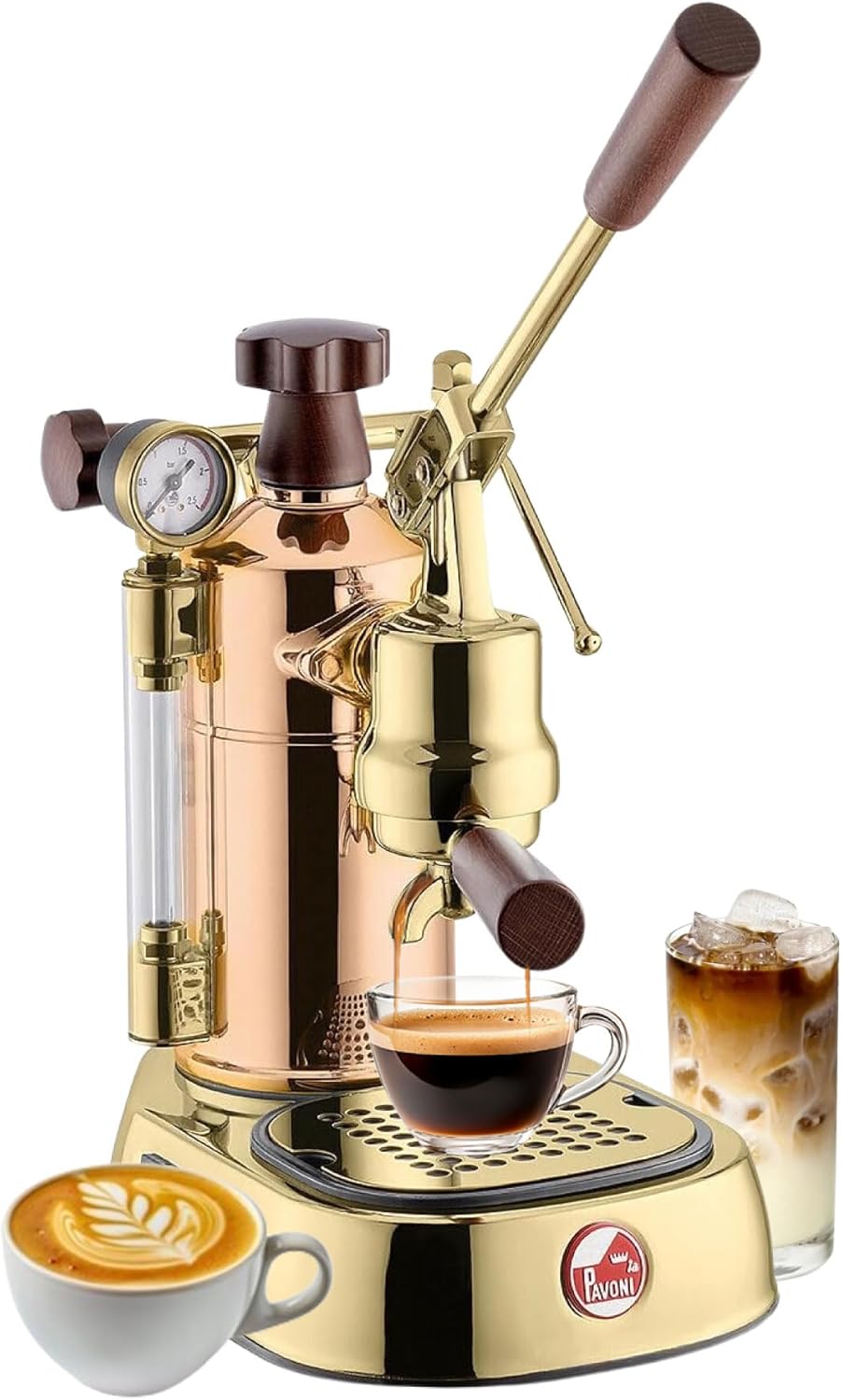
La Pavoni Professional PB-16
| Wattage | 1000 watts |
|---|---|
| Voltage | 110 volts |
| Operation Mode | Manual |
| Coffee Input Type | ground_coffee |
| Filter Type | Reusable |
The La Pavoni Professional PB-16 is a classic lever espresso machine built for hands-on home brewing and occasional entertaining. Its solid copper boiler, brass base, and wooden lever deliver a tactile, vintage experience where you control pre-infusion and extraction via the manual piston lever. The large 38-ounce boiler can provide many short shots between refills and includes a pressure gauge and internal thermostat to monitor extraction and temperature. It ships with a bottomless portafilter and a steam wand plus an automatic frother for milk work, so you can pull single or double shots and texture milk for cappuccinos. The machine is robustly constructed and meant to last with routine care, but lever operation has a learning curve and requires attention to dosing, tamping, and timing to get consistent results. It is not an automatic solution for busy kitchens and needs space and basic maintenance like descaling and boiler checks to stay reliable over years of use.
Best for: Buyers who prioritize a long-lived, mechanically simple espresso machine and enjoy learning hands-on extraction techniques will appreciate this model.
Less Ideal for: Those who want a plug-and-play, fully automatic espresso maker or need rapid multi-drink service in a commercial setting should look elsewhere.
- Hand-built copper boiler and brass base for durable, long-lasting construction.
- Manual lever gives full control over pre-infusion and extraction for skilled users.
- Large 38 oz boiler supports multiple short shots without frequent refilling.
- Includes bottomless portafilter and pressure gauge for visible feedback during pulls.
- Steam wand and frother let you texture milk for cappuccinos and lattes.
- Manual lever operation requires practice to produce consistent shots.
- Large, heavy build needs a dedicated counter space and routine maintenance.
Verdict: Choose the La Pavoni PB-16 if you want a durable, hand-built lever machine that rewards hands-on users with full control over espresso extraction.
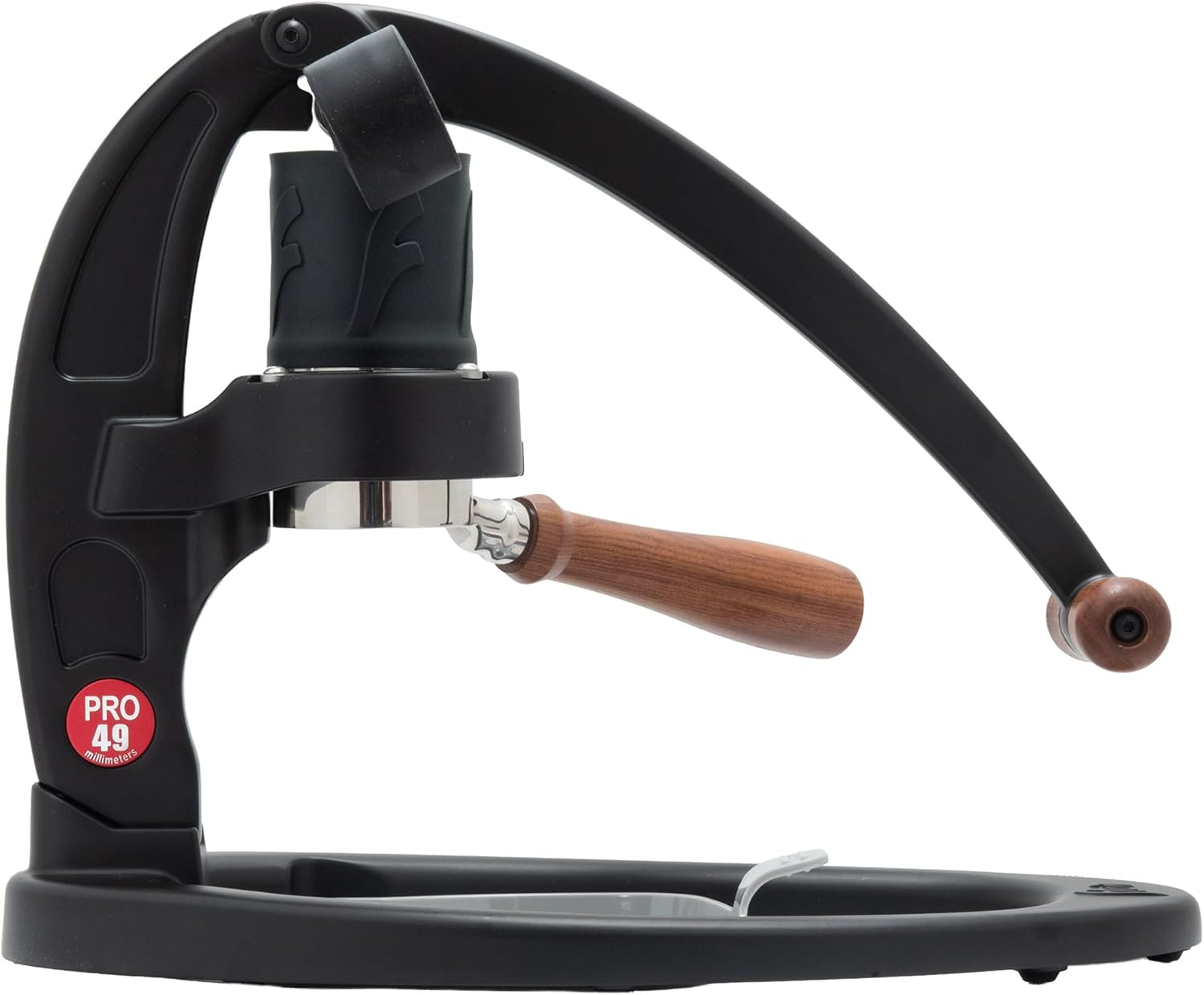
Flair 49 PRO
| Operation Mode | Manual |
|---|---|
| Output Pressure | 9 bar |
| Coffee Input Type | ground coffee |
| Capacity | 70 ml |
| Wattage | 800 watts |
The Flair 49 PRO is a direct-lever, manual espresso maker that puts extraction control in the user's hands for cafe-style shots at home. You preload ground coffee into the 49mm portafilter, heat water separately, then use the lever to generate up to 9 bar of pressure while watching the built-in pressure gauge to manage flow and yield. Its stainless steel cylinder, valve plunger, and stem keep brew water away from plastics, and the deeper 49mm group geometry makes dialing in coarser grinds easier and can yield a fuller mouthfeel. The machine is intentionally compact and stripped of pumps and electronics, so it fits small counters and is easy to service, but it requires a kettle and some technique—beginners can use the pressurized basket to simplify dialing in, while experienced users will appreciate the bottomless basket and naked portafilter for direct feedback. Expect a learning curve for consistent shots and slower workflow compared with automatic machines, but for hands-on users the 49 PRO delivers precise, high-quality manual extractions.
Best for: Buyers who want hands-on control and predictable community-validated performance—people willing to learn lever technique and value a metal brew path and pressure readout for repeatable results.
Less Ideal for: Those who need fast, push-button espresso, high-volume output, or a fully automated workflow should choose a semi-automatic or super-automatic machine instead.
- Full metal brew path with stainless steel cylinder and plunger avoids plastic contact with brew water
- Integrated pressure gauge (with espresso zone) lets you monitor and control extraction pressure in real time
- 49mm portafilter design that favors dial-in with coarser grinds and can produce a fuller mouthfeel
- Compact, minimal footprint that is easy to set up and service without electronics or pumps
- Requires external heated water source and manual technique, so shots take longer than automatic machines
- No pump or electric heating makes it less convenient for high-volume use or quick consecutive shots
Verdict: If you want a compact, all-manual lever machine that gives precise, gauge-monitored control and a fully metal brew path, the Flair 49 PRO is the best pick for hands-on home espresso.
Choosing the Right Lever Espresso Machine: Key Factors to Consider
Extraction Consistency
Consistency in extraction is the most important factor for lever machines because the user directly controls pressure profile and timing. A machine that delivers predictable resistance during the lever stroke makes it easier to reproduce shots once you dial in dose and grind.
Look for groupheads and valves that provide steady flow and consistent preinfusion behavior. Even with manual pressure control, stable hydraulics reduce the amount of technique adjustment required between shots.
Temperature Stability
Stable brew temperature ensures the same solubles are extracted from shot to shot, which is crucial when you are manually controlling pressure. Temperature fluctuations will make it hard to judge whether changes in flavor come from your technique or the machine.
Evaluate how the machine manages heat between brew and steam demands. Machines with good thermal mass or separate circuits for brew and steam give more stable results, especially during multiple back-to-back extractions.
Build Quality and Serviceability
A solid mechanical build matters on lever machines because parts like springs, seals, and levers undergo physical wear. Choose machines built with durable metals and accessible service points so you can maintain performance over time.
Consider how easy it is to access common wear items, whether replacement parts are readily available, and whether the machine's internal layout supports routine maintenance without specialized tools.
Ergonomics and Workflow
Lever machines require an efficient workflow because multiple manual steps are involved for each shot. Good ergonomics reduce physical strain and speed up the routine of dosing, tamping, and pulling.
Assess lever travel and resistance, portafilter clearance, drip tray access, and how the machine fits on your counter. Comfortable lever feel and logical placement of controls will shorten the learning curve.
Steam Power and Recovery
If you plan to texture milk, steam performance and recovery time are important. Strong steam power delivers microfoam quickly, while fast recovery lets you switch from steaming to brewing without long waits.
Look at boiler size and whether the machine isolates steam from brew temperatures. Faster recovery is helpful for preparing multiple drinks in succession and for maintaining temperature consistency.
Size, Weight, and Counter Fit
Lever espresso machines vary in footprint and weight. Make sure the machine you choose fits your counter space and can be moved for cleaning or maintenance if necessary.
Consider how the machine's height affects clearance for cups and whether its weight requires a dedicated spot. A compact but well-built machine can be preferable to a heavier unit that dominates limited kitchen space.
Why Choose a Lever Espresso Machine
Lever machines give the user direct mechanical control over pressure during extraction, which creates opportunities to shape shot dynamics in ways that pump-driven machines do not. For many home baristas, that tactile control leads to a more engaging brewing ritual and the potential for distinctive flavor results.
They also teach excellent technique because the operator must manage variables such as preinfusion length, lever speed, and how the puck responds under pressure. That learning curve is part of the appeal for people who want to master espresso rather than rely on automation.
- Direct pressure control adds a tactile element to brewing
- Good for practicing and refining extraction technique
- Can deliver unique flavor profiles not always accessible on automatics
Setting Up Your Routine
Establish a reproducible workflow: dose, distribute, tamp, preheat portafilter, and perform a purge or short preinfusion before the main pull. Consistency in those steps reduces variability so you can focus on lever technique.
Use scales and a timer during practice pulls to track yield and extraction time. Over time you can translate those numbers into a repeatable routine that produces consistent shots even when you vary beans or grind slightly.
- Preheat portafilter and cups
- Weigh dose and yield for every shot during dialing
- Start with a slow, controlled lever stroke and adjust speed to taste
Common Maintenance Tasks
Routine maintenance keeps a lever machine reliable. Regular descaling, grouphead gasket inspections, and periodic replacement of seals and springs will prevent gradual performance degradation. Clean the grouphead and portafilter after each use to avoid oil buildup that can affect flavor.
Check the lever mechanism for smooth movement and lubricate pivot points if specified by the manufacturer. Replace commonly worn items on a schedule rather than waiting for failure to preserve consistent extraction characteristics.
- Flush grouphead and wipe portafilter after each shot
- Descale according to water hardness and usage
- Inspect and replace gaskets and seals periodically
Dialing In Grind and Dose for Lever Machines
Because lever machines can be more sensitive to pressure changes, a slightly coarser or finer grind may be needed compared with pump machines to achieve the same extraction time. Start with a dose and grind that produces the recommended yield in roughly the expected time, then use taste and puck assessment to refine.
Adjust the grind in small steps and practice the same lever stroke for each test. Monitor puck dryness and channeling as signs that dose, tamp, or grind need attention rather than blaming the lever alone.
- Make incremental grind changes
- Keep tamping consistent
- Use visual puck inspection to catch channeling early
Milk Texturing on Manual Machines
If you steam milk, learn how boiler capacity and wand power affect texture. Manual machines often demand tighter coordination between steaming and brewing to maintain temperature and pressure for good shots. Practice steaming into different pitchers to find the right angle, depth, and wand technique for consistent microfoam.
Allow the boiler to recover after heavy steaming before attempting another shot. In many home contexts, steaming one drink at a time and then letting the machine stabilize yields the best combined espresso and milk results.
- Use a thermometer or visual cues to judge milk temperature
- Purge steam wand before and after each use
- Give the boiler recovery time after extended steaming
How We Chose the Best Lever Espresso Machine
We focused on machines that are purpose-built for manual lever operation and suited to home or small-kitchen use. Key evaluation criteria included extraction consistency, temperature stability, build materials and serviceability, ergonomic design and workflow, and boiler or heating system performance. Extraction consistency covers how repeatable pressure profiles are when operated by a typical home user. Temperature stability measures the machine's ability to hold brew and steam temperatures within usable ranges for back-to-back shots. Build materials and serviceability emphasize durable components, accessible parts for routine maintenance, and the availability of replaceable wear items. Ergonomic design and workflow assess lever throw, grouphead access, portafilter fit, and how efficiently you can dose, tamp, and pull shots. Boiler or heating system performance looks at recovery time, steam pressure, and how the machine isolates brew temperature from steaming. We excluded semi-automatic and fully automatic machines without a true manual lever or machines intended solely for commercial heavy-duty use. Units with unclear service support or nonstandard parts were deprioritized. The final selections represent machines that balance hands-on control with practical home use, favoring models that help owners learn consistent technique without sacrificing reliability.
Our full evaluation process is outlined in our review methodology.
FAQ
Are lever espresso machines hard to learn?
They have a learning curve because you control pressure manually, but most home users become competent with practice. Start with a consistent routine and small adjustments to grind and dose to speed learning.
Do lever machines need special maintenance?
Maintenance is similar to other machines but with added attention to mechanical wear items like seals and lever pivots. Regular cleaning, descaling, and periodic parts replacement will keep performance stable.
Can I steam milk and pull shots at the same time?
It depends on the machine's boiler capacity and recovery. Many home lever machines handle one task at a time most effectively, so schedule steaming and brewing to allow temperature recovery for best results.
Will a lever machine improve espresso taste?
A lever machine gives different pressure control that can reveal new flavor nuances, but improvement depends on learning technique and using fresh, well-prepared coffee. The tool enables potential, but results come from the operator.
What grind setting works best with lever machines?
There is no single setting. Lever machines can require slightly different grind sizes than pump machines; start with a baseline similar to other espresso setups and adjust in small increments while monitoring extraction time and taste.
Final Verdict
Lever espresso machines prioritize tactile control and the potential for highly personalized shots. When choosing one, prioritize extraction consistency, temperature stability, and a durable mechanical design that supports maintenance and long-term use. Consider ergonomics and steam performance based on whether you will routinely texture milk. Accept that there is a learning curve: buyers who invest time in a consistent workflow and incremental adjustments will gain the greatest reward from a lever machine's capabilities. Focus on the factors above to choose a machine that matches your technique goals and kitchen setup.