
Note: This article contains affiliate links. If you click on these links and make a purchase, we may earn a small commission at no extra cost to you. This helps support our research and content. Read our full affiliate disclosure here.
Choosing the right fan for large rooms matters because floorplan size, ceiling height, and open layouts all change how air moves and how comfortable the space feels. A properly sized fan can improve comfort, reduce reliance on air conditioning, and keep air moving in a way that feels natural rather than drafty. This guide shortlists six top fans for large rooms and evaluates them across performance and livability factors like airflow, noise, and control options. Read on for the criteria we used to pick these options and practical notes to help you decide which unit will suit your space and routine.
Top Picks at a Glance
| Best Overall The best all-around choice for most situations | Vornado 660 Large Air Circulator |  |
| Best Quality Built to a higher standard if you want something more solid | Rowenta Turbo Silence VU5670 |  |
| Best Value The sweet spot between price and what you get | Amazon Basics 20" High Velocity Fan |  |
| Best Budget The cheapest option that still gets the job done reliably | Lasko 2520 Oscillating Pedestal Fan | 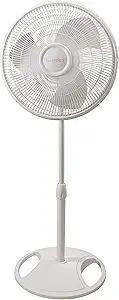 |
| Top Rated A top-rated pick with lots of positive feedback | DREO TurboPoly Fan 512 |  |
| Best Seller A high-volume bestseller chosen again and again | DREO Tower Fan DR-HTF018 |  |
Vornado 660 Large Air Circulator

| Number of Speeds | 4 |
|---|---|
| Noise Level | 45 db |
| Wattage | 56 |
| Motor Type | Brushless |
The Vornado 660 is a purpose-built whole-room air circulator that delivers steady, directed airflow instead of simple spot cooling. It uses deep-pitched blades, an inlet guide cone, and a spiral grill to generate Vortex circulation that the manufacturer says can reach across large rooms, and the fan offers four push-button speed settings so you can dial between whisper-quiet and stronger airflow. The chrome glide bar provides 90-degree tilt for directing the stream, and the front grill removes for easy cleaning. With a brushless motor and corded plug-in power it runs efficiently for extended use and is built for indoor freestanding placement. Practical benefits include reliable, room-filling circulation for bedrooms, offices, or open living spaces and low-noise operation at lower speeds. The trade-offs are that it is a single-purpose circulator with a plastic body and no remote or timer features, and it requires a standard outlet so it is not battery-powered or wall-mounted without modification.
Best for: Buyers who want reliable, consistent whole-room airflow in large bedrooms or open living areas and prioritize continuous performance and simple controls over smart extras.
Less Ideal for: People seeking a multi-function fan with remote control, app connectivity, or battery/portable operation should consider other options.
- Designed for whole-room circulation using Vortex technology to move air across large spaces
- Four push-button speed settings from quiet to powerful for flexible use
- 90-degree tilt with chrome glide bar for precise directional airflow
- Brushless motor and removable front grill for quieter operation and easier maintenance
- No remote control, timer, or smart features for hands-off operation
- Plastic construction may feel less premium than metal alternatives
- Not designed for outdoor use or battery operation
Verdict: If you want a no-nonsense circulator that delivers steady, room-filling airflow for large spaces, the Vornado 660 is a dependable choice.
Rowenta Turbo Silence VU5670

| Air Flow Capacity | 2436 cfm |
|---|---|
| Noise Level | 35 db |
| Number of Speeds | 5 |
| Blade Diameter | 16 inches |
| Power Source | AC |
The Rowenta Turbo Silence VU5670 is a pedestal fan built to move a lot of air while keeping noise low, making it suited to bedrooms and larger indoor spaces. It uses a 16-inch head with five blades and claims airflow up to 2436 cfm; five speed settings include a Turbo Boost for maximum circulation and a Silent Night mode for near‑quiet operation. The fan oscillates automatically, has an adjustable height, and includes a remote with onboard storage plus an 8‑hour timer and energy‑save mode to reduce power use over time. In practice this means strong, room‑filling airflow on higher settings and comfortable, whisper‑quiet background operation for sleeping or focused work on low. The motor is a brushed design and the unit is primarily plastic, so it is lighter and easier to move than metal alternatives but may show wear sooner under heavy continuous use. Controls are straightforward and the remote makes adjusting from across a large room convenient, though some buyers may prefer brushless motors for longer service life.
Best for: Buyers who prioritize powerful, room‑filling airflow but need to keep noise low—ideal for cooling large bedrooms or living rooms where quiet operation matters.
Less Ideal for: Users seeking an industrial‑grade, metal‑built fan or a brushless motor for maximum long‑term durability should consider more heavy‑duty models instead.
- Very high claimed airflow (up to 2436 cfm) for broad room coverage
- Quiet operation with a low 35 dB(A) noise level at minimum and a dedicated Silent Night mode
- Five speeds including Turbo Boost let you balance power and noise
- Remote control with onboard storage and an 8‑hour timer for convenient operation
- Energy‑save mode that reduces airflow gradually to conserve power
- Brushed motor rather than brushless may limit long‑term durability under heavy daily use
- Plastic construction is lightweight but less robust than metal alternatives
Verdict: Choose the Rowenta Turbo Silence if you want one of the most powerful yet quiet pedestal fans for moving air across large indoor rooms.
Amazon Basics 20" High Velocity Fan

| Power Source | Corded Electric |
|---|---|
| Wattage | 125 watts |
| Number of Speeds | 3 |
| Air Flow Capacity | 3542 cfm |
| Material | Aluminum |
This Amazon Basics 20" high velocity floor fan is built for moving large volumes of air in garages, workshops, gyms, and other large rooms. Its metal housing and three aluminum blades are designed for durability in commercial-style environments, and the 125W motor produces a strong 3,542 CFM that can accelerate cooling or improve ventilation across wide open spaces. You get three simple speed settings and a tilt head to aim airflow where it is needed, plus a rotary knob and push-button controls for straightforward operation. Setup is tool-free and the unit is ETL listed for safety, which makes it practical for regular use in work areas. The fan is a no-frills solution focused on airflow rather than quiet operation or smart controls, so if you need variable quiet modes, remote control, or precise speed increments this model may feel basic. For large-room circulation and heavy-duty daytime use it offers dependable performance at a simple, utilitarian price point.
Best for: Buyers who prioritize strong, reliable airflow and durable construction to cool or ventilate large workshops, garages, or gym spaces without needing advanced features.
Less Ideal for: Those seeking whisper-quiet operation, app or remote control, or fine-grained speed adjustments for living-room or bedroom use should consider quieter, feature-rich alternatives.
- High airflow capacity (3,542 CFM) for effective circulation in large spaces
- Commercial-grade metal construction and aluminum blades for durability
- Three-speed control with tilt head to direct airflow where needed
- ETL listed for meeting North American safety standards
- Basic control set with only three speeds and no remote or smart features
- Likely louder than residential fans due to high-velocity motor and metal blades
Verdict: If you need a rugged, high-airflow floor fan to move air across large rooms, this Amazon Basics high-velocity unit delivers strong performance without unnecessary frills.
Lasko 2520 Oscillating Pedestal Fan

| Number of Speeds | 3 |
|---|---|
| Blade Length | 16 inches |
| Motor Type | AC |
| Wattage | 91 watts |
| Power Source | Corded Electric |
The Lasko 2520 is a straightforward pedestal fan that brings adjustable, directional airflow to bedrooms and living spaces. It extends to 47 inches, tilts to direct air, and uses widespread oscillation to move air across a larger area than a small tabletop fan. Three quiet speed settings and a 16-inch plastic blade keep operation simple and unobtrusive, while the AC motor and manual controls make it easy to operate without a learning curve. Assembly requires no tools and the unit is lightweight enough to move between rooms for spot cooling. Important limitations include a modest maximum airflow compared with high-velocity or multi-blade floor fans and a lack of advanced features such as remote control, timers, or a digital display. The fan is manufactured with basic plastic components and uses standard pull-chain or push-button switching, so it is best viewed as an affordable, no-frills circulation solution rather than a heavy-duty room cooler.
Best for: Buyers seeking an inexpensive, easy-to-use floor fan to add general air circulation to medium to large rooms without extras or complicated controls.
Less Ideal for: People needing maximum airflow for very large open spaces or those who want smart features, remote control, or heavy-duty metal construction.
- Adjustable height up to 47 inches and tilt head for targeted airflow
- Widespread oscillation covers more area than a stationary fan
- Three relatively quiet speed settings suitable for bedrooms
- Tool-free assembly and lightweight for easy portability
- Modest airflow compared with high-velocity fans designed for large rooms
- No remote, timer, or digital controls for convenience
- Mostly plastic construction may feel less durable over heavy use
Verdict: A budget-friendly, no-frills pedestal fan that delivers adjustable directional airflow for people who want simple, portable cooling in larger rooms.
DREO TurboPoly Fan 512

| Power Source | dc |
|---|---|
| Air Flow Capacity | 1150 cfm |
| Number of Speeds | 9 |
| Noise Level | 28.2 db |
| Wattage | 24 watts |
The DREO TurboPoly Fan 512 is a tall pedestal air circulator designed to move air across large rooms while staying relatively quiet. It uses a brushless DC motor and turbine-style blades to deliver up to 1150 cfm, with nine speed settings and four operating modes selectable from the touchpad or included remote. The fan offers wide coverage through 120° horizontal oscillation and a 120° manual vertical tilt plus adjustable height, so you can aim airflow to different corners of a living room or open-plan space. An LED display, timer function and low standby power make it convenient for overnight or continuous use. Practical strengths are the efficient DC motor that cuts energy use and the high airflow for whole-room circulation; the plastic construction keeps weight down but may feel less durable than metal units. Cleaning is straightforward thanks to disassemblable parts, though the vertical tilt is manual rather than motorized which limits hands-off repositioning. For large rooms this fan balances strong airflow and low noise without high power draw.
Best for: Buyers who prioritize consistent, energy-efficient whole-room airflow in large living areas and prefer a quiet, controllable fan for continuous or overnight use.
Less Ideal for: People seeking a heavy-duty metal fan or fully motorized multi-axis positioning should consider other options; it also may not suit those who need outdoor-rated equipment.
- High airflow rating (1150 cfm) suitable for whole-room circulation
- Energy-efficient brushless DC motor that runs quietly
- Nine speed settings and four modes provide flexible airflow control
- Remote and touchpad controls plus LED display and timer for convenience
- Disassemblable grille for easier cleaning
- Vertical tilt must be adjusted manually rather than by motorized control
- Plastic build may feel less robust than metal-bodied pedestal fans
Verdict: If you need powerful, energy-efficient, and quiet whole-room circulation for a large room, the DREO TurboPoly Fan 512 delivers that performance with easy remote control.
DREO Tower Fan DR-HTF018

| Number of Speeds | 9 |
|---|---|
| Special Features | 9 Speeds 4 Modes, Oscillating, Timer |
| Wattage | 35 watts |
| Air Flow Capacity | 1473 cfm |
| Motor Type | brushless |
The DREO Tower Fan DR-HTF018 is a freestanding 42-inch tower fan built around a brushless DC motor that delivers high airflow for large rooms. It offers nine speed settings and four modes (Standard, Natural, Sleep, Turbo), plus 90 degree oscillation and a 12-hour timer, so you can run a steady powerful breeze across open floorplans during the day and quiet airflow at night. The unit includes electronic touch controls and a remote for convenient adjustments from across the room, and the rear grille is removable for straightforward cleaning. With a published airflow of 1473 CFM and a low noise figure listed at 25 dB on lower settings, it balances strong circulation with relatively quiet operation. Expect simple tool-free setup and basic plastic construction that keeps weight down but is less premium-feeling than metal alternatives. The fan is strictly for indoor use and relies on a standard AC plug, so it is best suited as a portable whole-room circulation solution rather than a weatherproof or hardwired installation.
Best for: Buyers who prioritize dependable, quiet whole-room airflow and simple, low-risk operation for large indoor spaces will appreciate this fan's combination of strong performance and user-friendly controls.
Less Ideal for: Those seeking a premium-metal build, outdoor-rated equipment, or an ultra-silent fan at maximum power should consider different options.
- Powerful airflow rated at 1473 CFM suitable for large rooms
- Nine speeds and four modes let you tailor airflow from gentle to turbo
- Brushless DC motor for efficient, quieter operation and long life
- Remote control and electronic touch panel for easy adjustments
- Removable rear grille for easy cleaning and low maintenance
- Plastic construction feels less durable than metal-bodied fans
- Noise may increase noticeably on the highest speed settings
Verdict: A practical, easy-to-use tower fan that delivers strong, quiet-enough airflow for cooling large rooms with minimal fuss.
Choosing the Right Fan for Large Rooms: Key Factors to Consider
Room Size and Layout
Large rooms vary widely in square footage, ceiling height, and openness to adjacent spaces. These physical attributes determine how much airflow the fan needs and whether a single unit can effectively circulate air. In an open-plan living-dining area, the fan must push air across a longer distance and possibly overcome cross-traffic from hallways or open stairwells.
Choosing a fan with larger blades, higher airflow ratings, or wide oscillation will help cover more area. Also consider placement: a centrally located ceiling or tall floor fan will perform differently than a corner-mounted unit. Match the fan's stated coverage or airflow capacity to your room's dimensions rather than relying on generic size categories.
Airflow Vs. Noise Tradeoffs
Fans that move a lot of air often produce more noise, which matters if you use the room for conversation, TV, or sleeping. Look for units with documented noise ratings or user reports about sound at different speeds. Low-frequency steady hums are easier to tolerate than high-pitched rattles.
Consider adjustable-speed options and multiple modes so you can dial back power during quiet hours. Some fans use blade design and motor isolation to reduce noise while maintaining airflow. Prioritize lower noise at the speeds you expect to use most often rather than focusing only on the top speed.
Placement and Mounting Options
How you install a fan affects its effectiveness in a large room. Ceiling fans, tower or pedestal models, and high-velocity floor fans each have strengths. Ceiling-mounted fans can deliver even circulation across the room if sized correctly, while portable floor or pedestal fans offer directional boosting and are easy to reposition.
Check mounting flexibility such as height-adjustable poles, tilting heads, or oscillation ranges. If you plan to move the fan between rooms, weight, base stability, and setup simplicity become important. For rooms with high ceilings, ensure the fan can operate effectively at the planned mounting height or consider extension downrods for optimal placement.
Control Features and Convenience
Ease of control matters when you are managing comfort across a large space. Remote controls, smartphone apps, programmable timers, and multiple speed settings let you adapt airflow without getting up from your seat. Some fans offer presets like sleep or eco modes that adjust power and speed automatically.
Also look for physically intuitive controls and clear speed indications so anyone in the household can operate the fan. If integration with home automation or voice assistants is important, verify that the fan supports those workflows. Convenience features increase the likelihood the fan will be used efficiently and regularly.
Energy Use and Ongoing Cost
Fans are generally more energy efficient than running an air conditioner, but energy use still varies across models and operating speeds. Look for power draw information or energy-saving modes that reduce electricity consumption while providing adequate airflow.
Lower wattage at effective airflow rates means cheaper long-term operation. If you will run the fan for many hours daily, small differences in efficiency can add up. Consider pairing the fan with ceiling fan-friendly strategies such as running at lower speeds or using in conjunction with HVAC to maximize savings.
Durability and Maintenance
A fan for a large room is often used heavily and should be built to last. Durable motors, balanced blades, solid mounting hardware, and accessible maintenance points like washable grills help extend service life. Check for features that reduce wear such as sealed bearings or brushless motors which typically need less maintenance.
Regular maintenance like cleaning blades and checking fasteners keeps airflow smooth and reduces noise. Also consider warranty terms and the availability of replacement parts. A well-built fan with straightforward upkeep will perform consistently over years of continuous use.
Sizing a Fan for Open-Plan and High-Ceiling Spaces
Large rooms with high ceilings or open-plan layouts require different sizing decisions than standard rooms. For ceiling installations, blade diameter and recommended room coverage are useful starting points, but also factor in ceiling height and whether the space opens into adjacent areas that need air movement.
For portable units, focus on the fan's maximum airflow and oscillation angle. A powerful unit with wide side-to-side sweep can create a consistent breeze across the room without needing multiple devices.
- Ceiling fans: larger blade spans increase circulation but must be proportionate to ceiling height.
- Floor/pedestal fans: place to create a circulation path from supply vents across living areas.
- Oscillation range: wider sweep covers more area but may reduce focused cooling at one spot.
Where to Place Fans for Best Air Movement
Placement influences how effectively a fan moves air in a large room. A central position distributes air more evenly, while corner placements can create cross-currents that are useful for venting stale air toward return vents.
If pairing with HVAC, place the fan to help mix conditioned air from vents into the occupied zone. Avoid placing powerful fans directly against seating to prevent uncomfortable direct drafts.
- Aim fans toward seating groups or high-traffic zones rather than unused corners.
- Use fans to assist HVAC by directing cool air toward occupied spaces in summer.
- Consider adjustable-height stands for portable fans to match furniture and occupant height.
Maximizing Quiet Operation in Shared Spaces
Quiet operation is essential in media rooms, bedrooms, and open living areas. Look for fans with multi-speed motors and vibration-isolating mounts. Even small improvements in balance and build quality can greatly reduce perceived noise.
Use lower speeds during conversation or media use and reserve high speeds for times when you need maximum airflow, such as when entering the room after it has been closed up.
- Check for sound-dampening features and user reports of hums or rattles.
- Run the fan on lower, steadier speeds for continuous background circulation.
- Tighten fasteners and clean blades periodically to prevent noise from imbalance.
Maintenance Tips to Keep Performance High
Regular maintenance preserves airflow and reduces noise over time. Dust buildup on blades and grills reduces effective airflow and can unbalance rotating parts. Clean accessible components per the manufacturer guidelines and inspect for loose hardware.
Lubricate or service bearings if recommended and replace worn parts promptly. Proper maintenance ensures the fan continues to cover a large room effectively without becoming a maintenance burden.
- Wipe blades and grills every few weeks in dusty environments.
- Check mounting bolts and base stability every few months.
- Follow motor service guidance to avoid voiding warranties.
Using Fans With HVAC for Year-Round Comfort
Fans are a low-energy way to enhance comfort and can complement heating and cooling systems. In summer, fans help distribute cooled air more evenly, allowing you to raise thermostat settings without sacrificing comfort. In colder months, run ceiling fans on low in reverse to push warm air down from high ceilings.
Think of fans as circulation tools rather than temperature changers. Proper placement and speed selection will determine whether a fan increases perceived comfort while reducing HVAC runtime.
- Use directional airflow to bridge gaps between vents and occupied zones.
- Reverse ceiling fan direction in winter to mix warm air without creating drafts.
- Reduce HVAC reliance by leveraging continuous, low-speed fan circulation.
How We Chose the Best Fan for Large Rooms
We focused on features and metrics that predict real-world performance in large rooms. Key evaluation criteria included measured airflow or reported cubic feet per minute equivalents to gauge how effectively a fan moves air across a wide space; noise output at typical operating speeds so a unit can run without disrupting conversation or media; control versatility such as remote, app, or multi-speed settings to match different use scenarios; and build features like blade size, oscillation range, and mounting options that influence coverage and durability. We also considered energy efficiency and typical power draw to estimate operating cost and how the fan interacts with existing HVAC. Products were excluded if they lacked clear performance specs, were designed only for small rooms, or had limited coverage like short-range desk fans. We prioritized units that combine strong, steady airflow with acceptable noise and user-friendly controls. Finally, we examined reported longevity indicators such as motor type and warranty scope to favor durable designs without including specific brand names in the editorial summary.
Our full evaluation process is outlined in our review methodology.
FAQ
What size fan do I need for a large room?
Size depends on room square footage and ceiling height. For ceiling installations, larger blade spans and a fan rated for greater coverage are better. For portable fans, look for higher maximum airflow and wide oscillation to reach distant areas.
How loud should a fan be in a shared living room?
Expect some sound at higher speeds, but look for fans that are quiet at the speeds you will use most. Low-frequency steady noise is easier to tolerate than high-pitched sounds. Prioritize models with documented low-noise operation at typical settings.
Can a single fan cool an entire open-plan space?
Often a single, well-placed fan can improve comfort across an open-plan area if it has sufficient airflow and wide oscillation. However, very large or irregular spaces may benefit from multiple fans or a combination of ceiling and portable units.
Should I use a fan with my HVAC system?
Yes. Fans help circulate conditioned air and can reduce HVAC run time when used strategically. In summer, they distribute cool air more evenly. In winter, reversing ceiling fans on low helps mix warm air without creating cold drafts.
How often do fans need maintenance?
Routine cleaning every few weeks in dusty environments and a basic inspection of fasteners and mounts every few months keep a fan running well. More extensive motor servicing is seldom needed for modern sealed or brushless units.
Final Verdict
When choosing a fan for large rooms, prioritize effective airflow coverage, quiet operation at common speeds, and installation flexibility that matches your space. Expect tradeoffs between maximum airflow and noise; favor models that offer strong mid-range performance and useful control options. Focus on placement and maintenance to get the best long-term results. With the right size, sensible controls, and routine upkeep, you can achieve comfortable circulation across large spaces without unnecessary noise or energy use.