
Note: This article contains affiliate links. If you click on these links and make a purchase, we may earn a small commission at no extra cost to you. This helps support our research and content. Read our full affiliate disclosure here.
Picking the right fan for a master bedroom matters because this is a space where comfort and low noise directly affect sleep quality. A well-chosen fan provides steady, even airflow without disruptive sound, helps circulate conditioned air efficiently, and can reduce reliance on continuous air conditioning. This guide presents seven shortlisted fans that suit master-bedroom use across different room sizes and layouts. We focus on practical performance, noise, and ease of use so you can find an option that keeps your primary sleeping space comfortable. Read on for the criteria we used and what to consider before you buy.
Top Picks at a Glance
| Best Overall The best all-around choice for most situations | Levoit Windi Lift Tower Fan |  |
| Best Quality Built to a higher standard if you want something more solid | Curve Curio 52" Ceiling Fan with Light |  |
| Best Value The sweet spot between price and what you get | Honeywell QuietSet HYF260 |  |
| Best Budget The cheapest option that still gets the job done reliably | Lasko 2520 Oscillating Pedestal Fan | 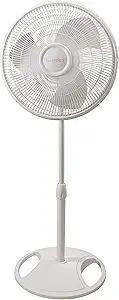 |
| Top Rated A top-rated pick with lots of positive feedback | DREO DR-HPF013 Pedestal Fan |  |
| Most Popular A crowd favorite that many people choose with confidence | DREO Tower Fan 307S |  |
| Best Seller A high-volume bestseller chosen again and again | Honeywell TurboForce HT-900 |  |
Levoit Windi Lift Tower Fan

| Number of Speeds | 5 |
|---|---|
| Noise Level | 28 db |
| Wattage | 36 watts |
| Speed | 23 feet_per_second |
| Special Features | Adjustable Height, Bladeless, Oscillating, Remote Controlled, Timer |
The Levoit Windi Lift is a bedroom-focused tower fan that delivers steady, adjustable airflow with a simple, user-friendly design. It raises from 36 to 47 inches so air can reach higher beds and can be converted into a compact 24-inch low-profile unit for floor-level cooling. VORTEXAir technology pushes airflow up to 23 ft/s while five speed settings, four modes, 90-degree oscillation and a 12-hour timer let you tailor circulation for sleep or daytime use. Noise can be as low as 28 dB, which makes it unobtrusive at night, and the included remote plus push-button controls keep operation straightforward. The fan uses an AC motor and about 36 watts, so it feels powerful without drawing much power, but being plastic-bodied means it is lightweight rather than heavy-duty. The bladeless column is safer around kids and pets and easy to clean compared with blade fans. If you want a quiet, height-adjustable bedroom fan with flexible controls and reliable airflow, this model covers those bases well.
Best for: Buyers who want a quiet, easy-to-use bedroom fan that can reach higher beds and offers simple remote control and adjustable height for flexible placement.
Less Ideal for: Those seeking a heavy-duty, metal-built fan or integrated smart-home features should consider other options.
- Height adjusts from 36 to 47 inches and converts to a 24-inch low profile for versatile placement
- Quiet operation down to 28 dB suitable for bedrooms
- Five speeds, four modes, 90° oscillation and 12-hour timer for customizable comfort
- Bladeless design is safer and easier to clean and includes a remote for convenient control
- Plastic construction may feel less premium and could be less durable than metal alternatives
- No smart home connectivity or app control for remote scheduling
Verdict: A quiet, height-adjustable tower fan that delivers bedroom-friendly airflow and easy remote operation.
Curve Curio 52" Ceiling Fan with Light

| Power Source | DC |
|---|---|
| Light Source | LED |
| Brightness | 2550 lm |
| Number of Light Sources | 1 |
| Control Method | App, Remote |
This 52-inch Curve Curio ceiling fan pairs a quiet DC motor with a dimmable LED light and multiple control options for everyday bedroom use. It is typically ceiling-mounted in master bedrooms or living rooms where both airflow and lighting are needed; the fan offers forward and reverse rotation for seasonal circulation and six speed settings accessed via remote or app. The integrated LED delivers up to 2550 lumens and uses an E26 bulb base while the lamp ring supports infinite dimming through the app or remote, letting you dial in bright task lighting or soft ambient glow. Practical details include a semi-flush mount profile that suits standard ceilings, wood-finish blades in a two-tone look, and a compact receiver designed to sit in the canopy. Expect efficient, low-noise operation from the DC motor and convenient scheduling with the timer feature, but note the fixture is indoor-only and not water resistant, so it is not suited for damp locations. Installation can be straightforward with the included instructions and remote, though canopy space requires careful receiver placement.
Best for: Buyers who prioritize steady performance and quiet, efficient cooling in a master bedroom and want flexible control over both fan speed and room lighting.
Less Ideal for: Those needing a damp-rated or outdoor-capable fan, or buyers who require ultra-low-profile fixtures for very low ceilings.
- Quiet, energy-efficient DC motor for consistent airflow with lower power draw
- Integrated dimmable LED delivering up to 2550 lumens for versatile bedroom lighting
- App and remote control plus timer make speed and light adjustments convenient from anywhere in the room
- Reversible blades provide year-round circulation benefits
- Semi-flush mount profile fits standard ceiling heights and keeps the fixture close to the ceiling
- Not rated for damp or outdoor use so unsuitable for bathrooms or covered porches
- Requires careful receiver placement in the canopy during installation due to compact fit
- Uses an E26 bulb base which may require bulb selection to match the integrated LED output
Verdict: Choose this fan if you want a quiet, energy-efficient 52-inch ceiling fan with strong LED illumination and flexible app or remote control for a master bedroom.
Honeywell QuietSet HYF260

| Number of Speeds | 5 |
|---|---|
| Noise Level | 46 db |
| Wattage | 1500 watts |
| Air Flow Capacity | 253 cubic meter per hour |
| Control Method | Remote, Touch |
The Honeywell QuietSet HYF260 is a freestanding oscillating tower fan built for steady whole-room cooling and flexible control. It offers five distinct speed settings accessed via touch panel or the included remote, plus oscillation to move air across a room and auto-dim panel lights for nighttime use. The unit is lightweight plastic and designed for indoor use in bedrooms and living rooms; its motorized airflow rating and 1500-watt electrical spec deliver noticeable circulation while the QuietSet tuning keeps sound low enough for sleeping. Typical use is as a supplement to A/C or as a primary circulation fan in spaces where focused, adjustable airflow is needed. Practical benefits include easy placement, simple controls, and an effective blend of power and quiet for overnight use. Important limitations are the plastic construction which is basic compared with higher-end metal or aero-designed towers and the fan relies on a conventional corded power connection rather than battery or smart home integration.
Best for: Buyers who prioritize strong, quiet airflow and straightforward controls for regular room cooling and improved air circulation will appreciate this fan.
Less Ideal for: If you need smart home integration, battery portability, or a premium metal build, this model is not the best choice.
- Five speed settings and oscillation provide flexible whole-room airflow.
- Remote and touch controls make adjustments convenient from across the room.
- Auto-dim panel lights reduce nighttime disturbance.
- Designed for bedrooms and living rooms with straightforward freestanding setup.
- Plastic construction feels basic compared with premium tower fans.
- No smart home connectivity or battery operation for portable use.
Verdict: Choose the QuietSet HYF260 when you want a dependable, quiet tower fan that delivers strong adjustable whole-room airflow with easy remote control.
Lasko 2520 Oscillating Pedestal Fan

| Blade Diameter | 16 inches |
|---|---|
| Number of Speeds | 3 |
| Power Source | Corded Electric |
| Motor Type | AC |
| Wattage | 91 watts |
The Lasko 2520 is a straightforward pedestal fan built to move air in bedrooms and living spaces without fuss. It offers three quiet speed settings and widespread oscillation so you can choose a gentle nighttime breeze or stronger airflow for hot evenings, and the tilt-back head plus adjustable height (up to 47 inches) help direct air where you need it. Assembly is tool-free and the unit is lightweight for easy repositioning. The fan uses a durable AC motor and plastic blades and housing, and includes safety features such as Blue Plug fault protection and ETL listing. Expect effective spot cooling and reliable operation for everyday use, though control options are manual only and there is no remote, timer, or advanced quiet mode found on higher-end models. For a master bedroom, it delivers solid circulation at a modest cost but lacks the refined low-noise engineering and extra convenience features of premium bedroom fans.
Best for: Buyers seeking an affordable, no-frills bedroom fan that provides reliable circulation and simple controls for nightly comfort.
Less Ideal for: Anyone who prioritizes ultra-quiet operation, smart features, or remote/timer convenience should consider higher-end or feature-rich bedroom fans instead.
- Three quiet speed settings for customizable airflow
- Adjustable height and tilt-back head to aim air where needed
- Tool-free assembly and lightweight design for easy setup and repositioning
- ETL listing and Blue Plug safety feature for electrical fault protection
- No remote control, timer, or advanced quiet/night mode
- Plastic construction may feel less premium than metal fans
Verdict: A budget-friendly pedestal fan that delivers dependable airflow and basic safety features, making it a practical choice for cooling a master bedroom without extra bells or whistles.
DREO DR-HPF013 Pedestal Fan

| Power Source | Corded Electric |
|---|---|
| Number of Speeds | 8 |
| Noise Level | 28.2 db |
| Air Flow Capacity | 1000 cfm |
| Motor Type | Brushless |
The DREO DR-HPF013 is a tall pedestal air circulator built to move a lot of air quietly across a bedroom or living space. It uses a brushless DC motor and a three-blade fan to deliver up to 1000 CFM and claims effective airflow up to 90 feet, while offering 8 speed settings, a reachable 8-hour timer, and a remote plus touch controls for everyday convenience. The head tilts 105 degrees and the unit oscillates 90 degrees horizontally so you can direct airflow toward a bed, seating area, or up toward the ceiling for circulation. Practical touches include a detachable front and rear grill for cleaning, a mute function for beeps, and an aroma pad for light scenting. At 36 watts it runs efficiently and its reported noise floor is low enough for bedroom use. Expect assembly and occasional cleaning of the plastic housing and grille, and note the vertical oscillation is manual rather than motorized, which reduces automation but simplifies the mechanism for long-term reliability.
Best for: Buyers wanting a reliable, low-maintenance bedroom fan that prioritizes steady, powerful airflow and quiet operation for overnight use.
Less Ideal for: If you need fully motorized 3D oscillation or a metal-clad, premium-feel design, this plastic-bodied fan is not the best match.
- Brushless DC motor for efficient, long-running operation
- High airflow (1000 CFM) and long reach for whole-room circulation
- Multiple controls: remote and top touch panel plus 8 speed levels and timer
- Detachable grille and blade for easier cleaning and maintenance
- Low reported noise level suitable for bedroom sleep use
- Vertical tilt is manual rather than powered which limits automated vertical oscillation
- Made of plastic which may feel less premium than metal alternatives
Verdict: Choose the DREO DR-HPF013 when you want a quiet, energy-efficient pedestal fan that reliably circulates whole-room air for a master bedroom.
DREO Tower Fan 307S

| Power Source | Corded Electric |
|---|---|
| Noise Level | 25 db |
| Wattage | 42 watts |
| Air Flow Capacity | 978 cfm |
| Motor Type | AC |
The DREO Tower Fan 307S is a standing tower fan built to move a lot of air while staying quiet enough for bedroom use. It delivers high airflow (listed at 978 cfm) with 90° oscillation and multiple modes so you can switch between Normal, Natural, Sleep, and Auto; controls include app, voice, remote, touch panel, and a physical remote for quick adjustments. The fan is designed for continuous indoor use and includes an 8-hour timer and sleep mode to minimize noise overnight, while the removable rear grille and impeller make cleaning straightforward. Practical benefits include wide room coverage, flexible smart control that integrates with voice assistants and a phone app, and built-in safety features such as a fused plug and circuit protection. Limitations are that the spec sheet lists an AC motor and a modest 42-watt power draw, so it may not match the peak efficiency or ultra-low-power idling of premium brushless DC models, and some advanced features depend on using the app or smart home setup.
Best for: Buyers who prioritize quiet, whole-room cooling and want smart control options and timers for a master bedroom, backed by many user reviews for reliability.
Less Ideal for: If you need the absolute lowest power draw or the highest-precision fan speed steps for specialized cooling zones, look at dedicated DC-motor or variable-speed models instead.
- High reported airflow for broad bedroom coverage
- Multiple control methods: app, voice, remote, touch and buttons
- Quiet operation and dedicated sleep mode suitable for night use
- Removable rear grille and impeller for easier cleaning
- 90° oscillation and timer for scheduled, whole-room circulation
- Uses an AC motor which may be less energy-efficient than some DC-motor competitors
- Only four listed speed/power levels despite marketing of additional speed settings in copy
Verdict: A strong, quiet smart tower fan for master bedrooms that combines broad airflow and flexible app/voice control for overnight comfort.
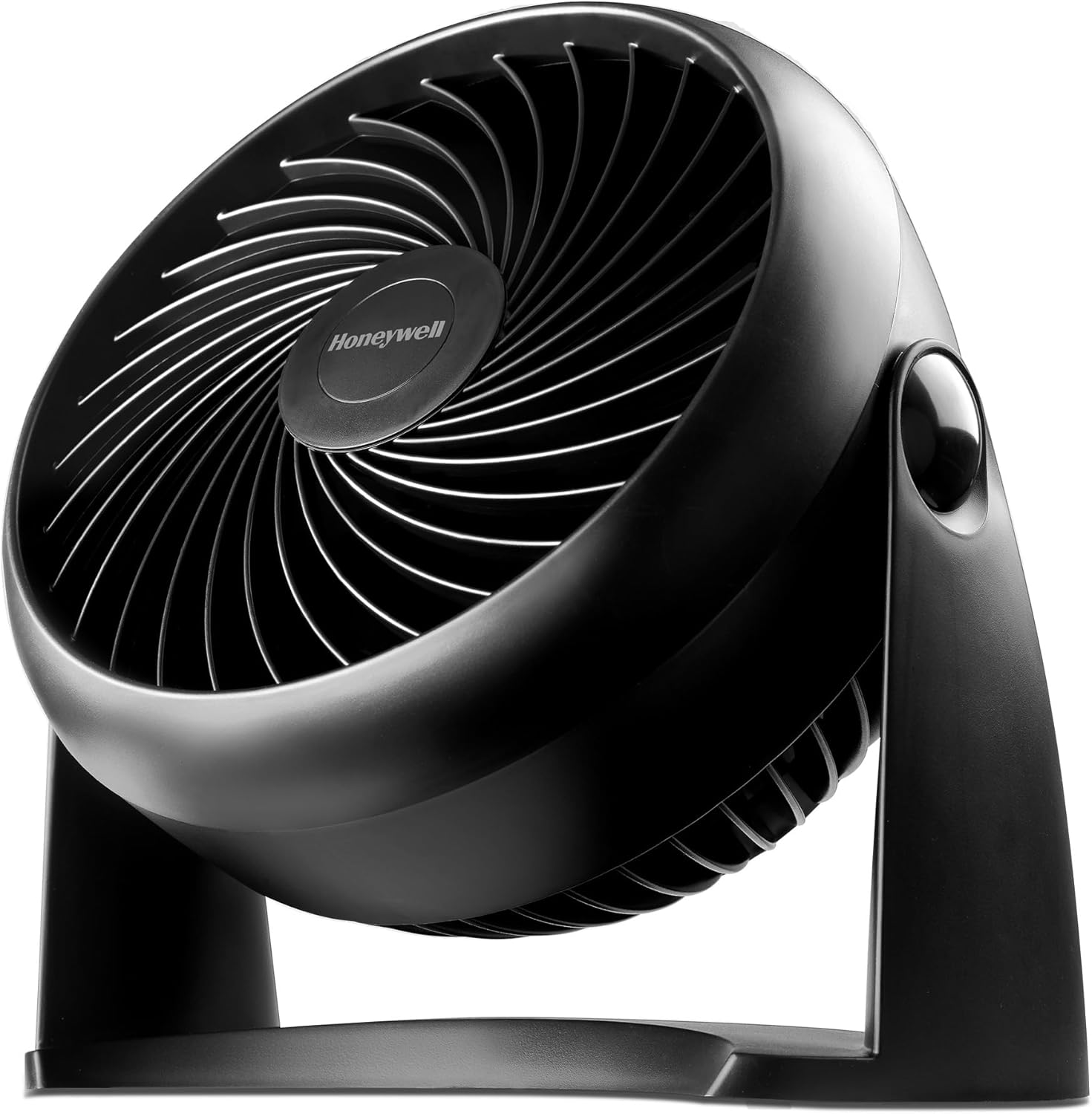
Honeywell TurboForce HT-900
| Number of Speeds | 3 |
|---|---|
| Air Flow Capacity | 185 cfm |
| Wattage | 35 watts |
| Motor Type | brushless |
| Installation Type | Tabletop or Wall Mount |
The Honeywell TurboForce HT-900 is a compact tabletop air circulator intended for personal cooling in bedrooms and small to medium rooms. It uses an aerodynamic turbo design and a brushless motor to push up to 185 cfm of airflow and offers three speeds controlled by simple push buttons. The head pivots 90 degrees so you can direct the breeze where you need it, and the lightweight plastic housing lets you carry or wall-mount the fan if you want. In everyday use it delivers strong targeted airflow for a desk, nightstand, or small bedroom and is quiet enough for sleep at lower settings. Practical benefits include energy-efficient operation at 35 watts and easy, no-frills controls that require little setup. Limitations are its small size and single-direction airflow, so it is not intended to cool large rooms or replace an air conditioner for whole-room comfort, and the plastic construction is basic compared with higher-end metal or premium models.
Best for: Buyers who prioritize reliable, simple cooling for a bedside, desk, or small master bedroom and prefer a low-risk, easy-to-use appliance over advanced features.
Less Ideal for: People seeking whole-room cooling for a large master bedroom or those who want premium materials, multi-directional airflow, or advanced controls like timers and remote operation.
- Strong targeted airflow up to 185 cfm for effective personal cooling
- Compact, lightweight design that works on a table or mounted on a wall
- Three easy push-button speeds and 90-degree head pivot for simple directional control
- Brushless motor with modest 35-watt power draw for energy-efficient operation
- Small footprint and single-direction output limit effectiveness in large bedrooms
- All-plastic construction feels basic compared with premium fans
Verdict: A dependable, compact fan that delivers strong, energy-efficient personal cooling for a master bedroom nightstand or desk.
Choosing the Right Fan for Master Bedroom: Key Factors to Consider
Noise Level
How loud a fan is at different speeds directly affects sleep quality in a master bedroom. Fans with low decibel ratings on their night or low settings help maintain deep sleep and prevent wake-ups. Pay attention to both idle hum and the character of the sound; steady white-noise can be less disruptive than intermittent rattles or motor whine.
Noise also matters for couples where one partner is sensitive to sound or for open-plan suites where the fan may be heard in adjacent areas. Look for models with explicit quiet modes, brushless motors, or acoustic cushioning that reduce vibration transmitted through floors and mounts.
Airflow Coverage
Master bedrooms are often larger than standard bedrooms, so a fan must move enough air to reach all sleeping and sitting areas. Consider the fan's stated airflow or recommended room size and match it to your master-bedroom square footage and ceiling height. A fan that can oscillate or be aimed will help distribute airflow more evenly across the room.
Airflow matters for both cooling comfort and for assisting HVAC circulation. A fan that produces higher CFM or has adjustable louvers can create a comfortable breeze without needing to run at maximum speed, which helps keep noise and energy use down.
Speed Range & Control
A broad, usable speed range allows you to tailor airflow from a gentle night breeze to stronger circulation during the day. Smooth transitions between speeds, rather than abrupt jumps, make it easier to find a comfortable setting. Reliable control options such as remote controls, wall switches, timers, and smart integrations add convenience and help maintain the right setting without getting up in the night.
Ease of use also includes intuitive labeling and tactile feedback for manual controls, and memory functions that restore preferred sleep settings after power interruptions. Consider whether you want programmable schedules or simple one-touch quiet modes for bedtime.
Energy Efficiency
Because fans in master bedrooms are often used for many hours, overnight efficiency matters for ongoing energy costs. Look for motors and designs that provide good airflow per watt so the fan can run longer at lower energy draw. Some fans offer eco or low-power modes that maintain sufficient airflow for sleep while minimizing draw.
Energy efficiency is also relevant if the fan is used to supplement HVAC operation; a more efficient fan can reduce the need for lower thermostat settings and save on overall energy use.
Installation & Placement
How and where a fan is installed affects both performance and convenience. Ceiling fans require appropriate ceiling height and secure mounting, while tower or pedestal fans need stable placement and unobstructed airflow paths. Ease of installation or setup can save time and ensure the fan functions as intended in a master bedroom layout.
Also consider maintenance access for cleaning blades or filters and whether the fan's footprint interferes with furniture placement. If you plan on wall- or ceiling-mounted controls, confirm wiring or mounting requirements in advance.
Build Quality & Maintenance
A well-constructed fan reduces vibration, lasts longer, and requires less frequent servicing. Durable motors, balanced blades, and corrosion-resistant finishes matter for sustained quiet operation, especially in humid climates or coastal homes. Check for accessible cleaning procedures and replaceable parts such as filters or remote batteries.
Maintenance also includes how easy it is to clean dust from blades or grilles and whether the fan has features like washable filters or tool-free disassembly that simplify upkeep over years of use.
Choosing the Right Size and Mounting
Match the fan type and size to your room dimensions and ceiling height. For low ceilings, a low-profile ceiling fan or an oscillating tower fan positioned near the bed can provide effective airflow without creating headroom issues. Rooms with high ceilings may benefit from fans with longer downrods or stronger airflow to push air down to the occupied zone.
Consider whether you prefer a ceiling-mounted solution for whole-room circulation or a portable pedestal or tower fan for targeted airflow. Each mounting choice changes how air moves around furniture and bedding, so think about typical sleeping positions and where airflow is most desirable.
- Measure floor area and ceiling height before choosing fan size
- Use oscillation or adjustable louvers to widen airflow coverage
- Factor in furniture placement to avoid blocked airflow paths
Controls and Automation for Nighttime Use
Night-focused controls can make a big difference in convenience and comfort. Look for fans with quiet night modes, dimmable displays, timers, or sleep schedules so you can reduce speed automatically after you fall asleep. Remote control and app-based control let you make adjustments without getting out of bed.
If you use a smart home ecosystem, prioritize fans that integrate with common automation platforms so you can schedule evening routines or link the fan to temperature or motion sensors. Simpler mechanical or wall-mounted controls are still effective when they have a clear, easy-to-reach layout and memory functions.
- Prefer fans with timers or programmable schedules
- Remote or app control reduces nighttime disruption
- Look for memory recall of last used setting after power loss
Placement Tips for Best Sleep Comfort
Position the fan to create a gentle cross-breeze that flows across the bed rather than blasting directly at a sleeper. For ceiling fans, center placement with appropriate blade size generally works best. For portable fans, aim them at a slight angle to avoid direct, concentrated airflow on one person.
Avoid placing fans where they will circulate noise from hallway doors, HVAC vents, or external sources. Small adjustments in angle and height can often improve perceived comfort while allowing you to run the fan at a lower, quieter speed.
- Aim airflow across the bed for even cooling
- Use oscillation to reduce direct drafts on sleepers
- Minimize reflected noise by avoiding hard surfaces near the fan
Maintenance and Longevity Advice
Regular cleaning keeps airflow optimal and prevents motor strain. Dust accumulation on blades or grilles reduces efficiency and can increase noise. Follow manufacturer guidance for safe disassembly and use a soft brush or low-suction vacuum to remove dust on a schedule that matches your environment.
Check mounting hardware and vibration isolators periodically. Tighten loose fasteners and replace worn rubber grommets or brackets to prevent growing noise issues. If a fan's motor shows signs of overheating or persistent unusual sounds, stop use and have it inspected to avoid damage.
- Clean blades and grilles every few months or more often in dusty homes
- Inspect mounts and fasteners annually
- Replace easily worn parts promptly to avoid noise and performance loss
Design and Aesthetics for Master Bedrooms
A fan in a master bedroom often contributes to the room's overall look, so consider finishes, blade styles, and lighting options. Low-profile designs and subtle colorways blend with many decor styles, while integrated dimmable lights can eliminate the need for additional fixtures. Choose a design that complements your bedroom without dominating the visual space.
Think about how visible controls will be and whether you'll prefer a unit that hides grilles or uses minimalist interfaces. Small design choices can make the fan feel like an intentional part of the bedroom, not just a functional appliance.
- Match finish and style to bedroom decor
- Consider integrated lighting if you want fewer fixtures
- Choose discreet controls for a cleaner look
How We Chose the Best Fan for Master Bedroom
We shortlisted fans that meet the specific needs of master bedrooms by applying filters focused on sleep-friendly performance and real-world usability. Primary evaluation criteria included measured or manufacturer-reported noise at common speeds, usable airflow coverage for typical master-bedroom square footage, and speed range flexibility for sleeping and daytime use. We also considered ease of installation or placement, control options and automation, energy efficiency for overnight operation, and build quality for reliable long-term use. We excluded units designed only for small, personal spaces or purely decorative ceiling fixtures without meaningful airflow. We also set aside products that lacked clear speed/noise specifications or that relied solely on niche accessories to achieve quiet operation. The resulting list favors fans that deliver consistent airflow, maintain low noise on sleep-focused settings, and offer practical controls and energy characteristics you can verify before buying.
Our full evaluation process is outlined in our review methodology.
FAQ
What fan noise level is acceptable for a master bedroom?
Acceptable noise depends on personal sensitivity, but many people find settings under 40 dB comfortable for sleep. Steady, low-frequency white noise is often less disruptive than intermittent sounds, so look for models that advertise quiet or night modes and provide measured decibel data.
Is a ceiling fan better than a tower or pedestal fan for a master bedroom?
Ceiling fans generally circulate air throughout the entire room, which is good for whole-room comfort. Tower or pedestal fans are better for targeted airflow and can be moved. The best choice depends on room layout, ceiling height, and whether you need portable airflow control.
How high should a ceiling fan be for optimal performance?
For most bedrooms, the fan blades should sit about 8 to 9 feet above the floor for safe, effective airflow. If ceilings are higher, a longer downrod helps position the fan to move air into the occupied zone. Low-profile fans are preferable for ceilings under 8 feet.
Can running a fan all night increase energy bills significantly?
Fans use much less energy than air conditioners, so running a fan overnight typically has a modest energy impact. Energy use depends on motor efficiency and speed setting, so choosing a fan with good airflow-per-watt performance reduces overnight energy draw.
How often should I clean my bedroom fan?
Clean blades and grilles every few months or more often if your home accumulates dust quickly. Regular cleaning preserves airflow and keeps the motor from working harder, which helps maintain low noise and prolongs service life.
Final Verdict
When choosing a fan for a master bedroom, prioritize low noise on sleep settings, sufficient airflow coverage for the room size, and controls that let you adjust quietly without getting up. Balance energy efficiency with airflow so you can run the fan overnight without excessive power draw. Finally, factor in mounting, maintenance needs, and the fan's design to ensure it fits the room physically and visually. Consider the tradeoffs between whole-room circulation from ceiling mounts and targeted, flexible airflow from portable units. Focus on the criteria above to pick a fan that keeps your master bedroom comfortable night after night.