
Note: This article contains affiliate links. If you click on these links and make a purchase, we may earn a small commission at no extra cost to you. This helps support our research and content. Read our full affiliate disclosure here.
If you fillet fish at home, a reliably sharp blade makes the job faster, safer, and produces cleaner cuts that preserve meat texture. A Fish Fillet Knife Sharpener designed for thin, flexible fillet blades helps you maintain a consistent bevel and avoids over-grinding delicate steel. This guide covers seven shortlisted sharpeners that suit home anglers and kitchen users who want precise edge geometry and easy maintenance. Below we explain the evaluation criteria used, what matters when choosing a sharpener for fillet knives, and practical tips to keep blades ready for every catch or fillet session.
Top Picks at a Glance
| Best Overall The best all-around choice for most situations | Work Sharp MK2 Knife Sharpener |  |
| Best Quality Built to a higher standard if you want something more solid | Work Sharp Ken Onion Elite Mk2 | 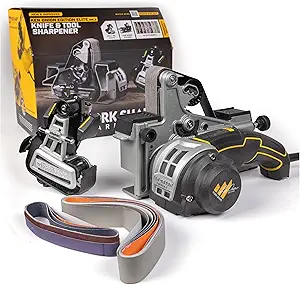 |
| Best Value The sweet spot between price and what you get | AccuSharp Knife Sharpener ACCU-001C |  |
| Best Budget The cheapest option that still gets the job done reliably | Gambler Fillet Knife Sharpener |  |
| Top Rated A top-rated pick with lots of positive feedback | Smith's 4" Diamond Combination Sharpener |  |
| Most Popular A crowd favorite that many people choose with confidence | KITCHELLENCE 3-Stage Knife Sharpener |  |
| Best Seller A high-volume bestseller chosen again and again | Sharp Pebble 1000/6000 Whetstone |  |
Work Sharp MK2 Knife Sharpener

| Included Components | Abrasive Belts, Knife Sharpener |
|---|---|
| Material Type | Plastic |
| Grit Type | Medium |
The Work Sharp MK2 is an electric sharpening system that uses flexible abrasive belts and an adjustable guide to restore edges on kitchen knives, fillet and pocket knives, serrated blades, scissors, axes and other tools. It runs at two speeds so you can use a gentler setting for finishing blades or a higher setting for heavier grinding on lawnmower blades and axes. The conforming belts make it easy to follow a blade profile, which helps when thinning and polishing a fillet knife edge for smoother fish cuts. Setup is straightforward and the integrated edge guide keeps a consistent angle from heel to tip, reducing the skill required versus stones. Limitations include reliance on consumable belts that must be replaced over time and the unit is bulkier and louder than manual sharpeners, so it is less portable for field use. For home cooks who want quick, repeatable resharpening and hobbyists who also sharpen garden and workshop tools, the MK2 covers a broad range well.
Best for: Buyers who want a fast, user-friendly sharpener that can service kitchen fillet knives and a variety of outdoor and workshop tools with consistent, repeatable results.
Less Ideal for: If you need an ultralight, silent field sharpener or prefer traditional whetstone technique for hands-on edge control, this electric unit is not the best fit.
- Flexible abrasive belts conform to curved and narrow blades for consistent contact along the edge
- Two-speed motor provides control for light honing or heavier material removal
- Edge guide supports consistent sharpening angle from heel to tip
- Works on a wide range of edges including serrated blades, scissors, axes and fillet knives
- Includes replacement abrasive belts in the package contents
- Requires replacement belts over time which adds ongoing cost
- Larger and louder than handheld or manual sharpeners, limiting portability
Verdict: Choose the Work Sharp MK2 when you want a versatile, two-speed electric sharpener that quickly restores and profiles fillet knives and many other edged tools with consistent results.
Work Sharp Ken Onion Elite Mk2

| Brand Name | WORK SHARP |
|---|---|
| Item Type Name | Knife Sharpener |
| Material Type | Aluminum |
| Grit Type | Extra Fine |
| Manufacturer Warranty Description | 3 Year Warranty |
The Work Sharp Ken Onion Elite Mk2 is a benchtop electric sharpening system built for precise, repeatable edges and heavier grinding tasks. It uses a guided sharpening cassette for consistent bevels on kitchen and fillet knives and a blade grinding attachment with wider belts when you need faster material removal or custom edge profiles. The unit is typically used on a bench for regular maintenance, quick touch-ups, and for reshaping or thinning edges before honing. Practical benefits include a controlled angle system that reduces user guesswork, multiple belt options for progression from coarse removal to extra-fine finishing, and a compact aluminum housing that keeps the motor stable during use. Limitations are that it is a dedicated powered system rather than a handheld strop or stone, so it requires a work surface and some setup, and the motorized belts remove metal quickly which calls for care to avoid over-grinding delicate fillet blades. For someone focused on high-performance edges and repeatability, this machine speeds up sharpening while giving fine control over the result.
Best for: A performance-focused home cook or angler who wants repeatable, razor-sharp edges and efficient reprofiling for fillet and kitchen knives.
Less Ideal for: People who need a lightweight, portable field sharpener or prefer purely manual waterstone stropping workflows should look elsewhere.
- Guided sharpening cassette provides repeatable, consistent bevel angles for fillet and kitchen knives
- Blade grinding attachment and wider belts allow faster metal removal and profile shaping
- Multiple grit belts available for progression from coarse shaping to extra-fine finishing
- Solid aluminum body and benchtop design keep the tool stable during sharpening
- Designed with input from Ken Onion and calibrated for consistent performance
- Requires a bench or stable surface and is less convenient than a pocket or benchstone for field sharpening
- Power-driven belts remove material quickly, which can over-thin thin fillet blades if used without care
Verdict: Choose the Ken Onion Elite Mk2 when you want a benchtop system that delivers fast, repeatable, high-performance edges for fillet and kitchen knives.
AccuSharp Knife Sharpener ACCU-001C

| Material Type | Acrylonitrile Butadiene Styrene |
|---|---|
| Grit Type | Coarse |
| Included Components | Sharpener |
The AccuSharp ACCU-001C is a simple pull-through knife sharpener designed for quick edge restoration on a wide range of blades, including straight and serrated kitchen and fillet knives. You use it by placing the blade in the V-shaped carbide sharpening slot and drawing it through a few times while the ergonomic handle and full-length guard keep your fingers clear. The diamond-honed tungsten carbide blades give a fast, coarse edge that takes most dull knives sharp in seconds, and the reversible blades extend usable life. Its plastic ABS body is lightweight and dishwasher-safe for easy cleaning, and the compact shape makes it handy to keep near the prep area or in a tackle box for field use. Limitations are that the built-in carbide stage is coarse rather than fine, so it removes material quickly and will not produce a polished razor finish without follow-up stropping or honing, and it is not a guided-angle stone system for precision blade re-profiling.
Best for: Buyers who want a no-fuss, fast way to keep fillet and kitchen knives serviceable between professional hones and who prioritize speed and convenience over razor-polish finishing.
Less Ideal for: Users seeking a fine finishing stage or those who need precise angle control for professional knife re-profiling should choose stones or guided sharpening systems instead.
- Very fast sharpening that can restore a usable edge in about ten seconds
- Diamond-honed tungsten carbide blades that are reversible for longer life
- Ergonomic handle and full-length finger guard for safer, one-handed use
- Compact, lightweight construction that is easy to store or carry
- Dishwasher-safe ABS body for straightforward cleaning
- Only provides a coarse sharpening stage and does not produce a refined, polished edge
- Not suitable for precise angle control or professional re-profiling of blades
Verdict: A fast, portable pull-through sharpener that quickly restores usable edges on fillet and kitchen knives for buyers who value speed and convenience.
Gambler Fillet Knife Sharpener

| Material Type | Ceramic, Tungsten Carbide |
|---|---|
| Grit Type | Coarse/Fine |
| Number of Items | 1 |
This Gambler fillet knife sharpener is a small, portable tool built for anglers who need quick, effective edge maintenance at the dock, in a boat, or at camp. It pairs a tungsten carbide coarse stage for reshaping dull edges with a ceramic fine stage for honing and polishing, and the textured TPR dual-grip gives a secure hold whether you use it handheld or braced on a tabletop. The unit includes a 9" lanyard hole so you can clip it to gear for easy access, and its low weight makes it unobtrusive in a tackle box. Performance is what you would expect from a simple two-stage sharpener: fast edge restoration with the carbide and a decent, durable finish from the ceramic. It is not a precision sharpening system for restoring severely damaged blades to factory bevels, but for routine touch-ups and keeping fillet and pocket knives working during a day of fishing it is practical, inexpensive, and easy to use.
Best for: Anglers and outdoorsmen who want an affordable, grab-and-go sharpener for routine blade touch-ups while fishing or camping.
Less Ideal for: Users who need a precision sharpening setup for restoring heavily damaged blades or achieving factory-edge geometry should choose a bench or guided system instead.
- Two-stage sharpening with tungsten carbide and ceramic covers coarse re-profiling and fine honing
- Textured TPR dual-grip offers secure control for handheld or tabletop use
- Compact and lightweight design fits in a tackle box and includes a lanyard hole for easy carry
- Simple, fast sharpening suitable for routine field touch-ups
- Not designed for full blade restoration or precise bevel correction
- Very small tool may be awkward for very large knives
Verdict: A compact, low-cost two-stage sharpener that keeps fillet and pocket knives adequately sharp on the water for routine use.
Smith's 4" Diamond Combination Sharpener

| Material Type | Synthetic |
|---|---|
| Grit Type | Coarse,Fine Grit |
| Included Components | 1 item |
The Smith's 4" Diamond Combination Sharpener is a compact handheld stone designed for quick two-stage sharpening in the field or workshop. It pairs a coarse diamond surface for reshaping dull or nicked edges with a fine diamond surface to refine and polish the cutting edge, and each side includes a micro-tool pad and groove for fish hooks and pointed tools. The interrupted surface design traps metal filings to speed sharpening, and the removable stone stores inside the rubber-grip handle for safe, compact transport. A thumb guard and soft grip handle improve control when working on narrow fillet blades. Because it is diamond-based, it cuts fast on stainless and harder steels without needing oil or water, making it convenient for anglers preparing fillet knives on the go. The unit is small and not a substitute for a full bench stone when restoring severely damaged blades, but for routine edge maintenance and quick field touch-ups it delivers reliable, repeatable results.
Best for: Anglers and outdoorspeople who need a dependable, portable sharpener for routine fillet-knife touch-ups and quick edge maintenance away from the kitchen.
Less Ideal for: Users who need to fully re-profile very dull or chipped blades or who prefer a larger bench stone for workshop-level sharpening.
- Two-sided diamond surfaces provide coarse reshaping and fine honing in one compact tool
- Micro-tool pad and sharpening groove handle fish hooks and pointed tools
- Interrupted surface design collects filings to maintain sharpening speed
- Detachable stone stores inside the rubber handle for protected, portable storage
- Small 4" stone is less efficient for flattening or re-profiling heavily damaged blades
Verdict: A reliable, pocketable diamond two-stage sharpener built for quick fillet-knife touch-ups and field use.
KITCHELLENCE 3-Stage Knife Sharpener
| Brand Name | KITCHELLENCE |
|---|---|
| Unit Count | 1 Count |
| Material Type | Plastic |
| Included Components | Yes |
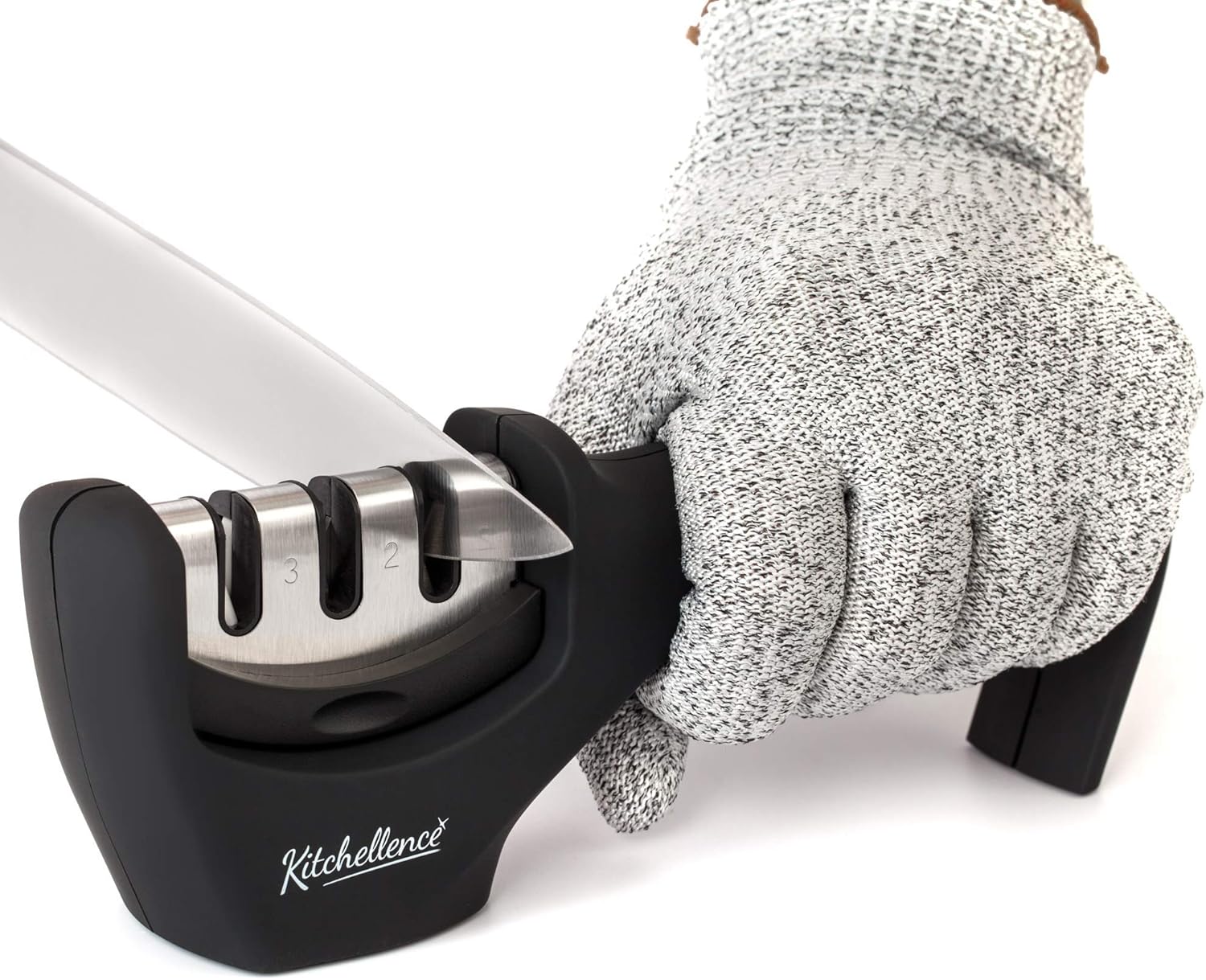
This compact 3-stage sharpener repairs, sharpens, and polishes blades using a diamond rod in the first stage, a coarse second slot to re-form the edge, and a fine third slot to hone and finish. It is used by placing the handle on a flat surface and drawing the blade through each slot a few times; the ergonomic handle and non-slip base help keep the tool stable during use. The included cut-resistant glove increases safety for routine maintenance. Constructed from ABS plastic, the unit is lightweight and sized to sit on a countertop or store in a drawer, and it works well for household cooking knives that need quick restoration rather than professional reprofiling. Limitations include dependence on manual technique for consistent results and no stropping mechanism for advanced edge refinement, so very damaged or high-end specialty blades may need professional sharpening or a different tool.
Best for: Buyers who value proven customer feedback and want a safe, easy-to-use home sharpener for everyday kitchen knives, with an emphasis on straightforward, repeatable maintenance.
Less Ideal for: Professional chefs or owners of high-end specialty fillet knives that require precise reprofiling or stropping should consider a bench stone or professional service instead.
- Three-stage system (repair, sharpen, polish) covers basic edge restoration steps
- Diamond sharpening rod in stage one for effective repair of damaged edges
- Ergonomic handle and non-slip base for stable, one-handed operation
- Includes cut-resistant glove to reduce risk during sharpening
- Manual pull-through design can produce inconsistent results without proper technique
- Construction is plastic rather than metal, which may feel less durable for heavy use
Verdict: A simple, safety-minded 3-stage sharpener that reliably refreshes everyday fillet and kitchen knives for home cooks.
Sharp Pebble 1000/6000 Whetstone

| Grit | 1000/6000 |
|---|---|
| Material Type | Corundum |
| No Oil Required | Yes |
The Sharp Pebble 1000/6000 whetstone is a water-based, dual-grit sharpening stone sold as a complete kit for home use. It uses a 1000-grit face to repair dull or nicked edges and a 6000-grit face to polish a razor finish, and it comes with a bamboo non-slip base and an angle guide that helps lock blade position for consistent results. The stone is made from corundum and requires soaking or wetting with water rather than oil, which keeps setup and cleanup simple. In practice the angle guide and stable base make the kit approachable for beginners while still giving experienced users fine control for finishing. The manufacturer emphasizes a flatter, longer-lasting composition compared with cheaper stones, and the kit includes instructions and an ebook to shorten the learning curve. It will not replace shop-grade flattening tools if you flatten very worn stones frequently, and you will still need to practice technique for the quickest, most consistent edge, but this set covers the essential steps for fillet and kitchen knives with reliable, professional-grade results.
Best for: Buyers who want a low-risk, easy-to-learn sharpening system that reliably restores and polishes fillet and kitchen knives at home without professional services.
Less Ideal for: Sharpeners who regularly work on heavily damaged blades or who need shop-level flattening and resurfacing tools should consider more comprehensive pro setups.
- Dual 1000/6000 grits cover edge repair and final polishing for a razor finish
- Included angle guide simplifies consistent sharpening for beginners
- Bamboo non-slip base keeps the stone stable during use
- Water-based use avoids messy oils and simplifies cleanup
- No flattening stone included for restoring heavily worn or dished stones
Verdict: A beginner-friendly dual-grit whetstone kit that makes professional-quality edge repair and polishing accessible at home.
Choosing the Right Fish Fillet Knife Sharpener: Key Factors to Consider
Angle Control and Adjustability
Fillet knives require a low, consistent sharpening angle to achieve a keen, flexible edge. Adjustable angle guides let you match the original bevel or dial in a shallower angle for finer slicing. Reproducible angle settings matter because inconsistent angles can create weak spots that fail when slicing through skin or near bones.
Look for micro-adjustments or preset stops that hold the abrasive at the same orientation with each pass. For flexible blades, a controlled low angle preserves the blade geometry while avoiding overheating and excessive material removal.
Abrasive Types and Grit Progression
Different abrasives cut and polish steel in unique ways. Coarser grits repair chips and reshape edges, while medium and fine grits refine and polish to restore slicing performance. Systems that provide a clear grit progression or easily swappable stones let you move from repair to a polished edge in a few steps.
Wetstones, ceramic rods, and diamond plates each have pros and cons: diamonds cut fast and are low maintenance, ceramics can produce a fine finish, and waterstones often give superior polish but need flattening and care. Choose a system whose abrasive progression matches how aggressively you need to restore an edge.
Blade Support and Stability
Fillet blades are thin and flexible, so the sharpening method must support the knife without forcing unnatural flex that alters the bevel. Supports, clamps, or guides that secure the blade reduce the chance of uneven wear and accidental rounding.
Stable contact during each stroke yields consistent bevel geometry. If you plan to sharpen outdoors after a catch, consider systems that clamp securely and tolerate uneven surfaces without losing alignment.
Corrosion Resistance and Wet-Use Durability
Sharpeners used around fish and in marine conditions face moisture and salt exposure. Corrosion-resistant housings, stainless fasteners, and nonrusting abrasives extend service life and keep mechanisms smooth.
Components that trap water or degrade quickly add maintenance overhead. Prefer materials and finishes designed for damp environments, and look for replaceable parts in case an abrasive or clamp needs swapping after heavy use.
Ease of Learning and Repeatability
Not every angler or home cook is a sharpening expert. Tools with simple, repeatable procedures reduce the learning curve and help you get a reliably sharp edge quickly. Clear angle guides, marked grit progression, and straightforward clamping systems let novices achieve consistent results.
Repeatability also saves time: if you can reproduce the same edge in successive sessions, blades stay sharper longer and require less aggressive reshaping.
Portability and Storage
If you sharpen at the dock or in the field, size and weight matter. Compact kits that pack into a small case or that mount quickly to a small work surface let you maintain blades near the water. Larger benchtop systems may offer better control but are less convenient for travel.
Consider how you intend to use the sharpener and choose a form factor that matches your workflow, whether that is a lightweight kit for trips or a stable bench system for routine home maintenance.
When to Resharpen a Fillet Blade
A fillet knife needs attention as soon as you notice decreased slicing performance, increased tearing, or a dull feel through skin. Small nicks from bones or grit can quickly degrade a thin edge, so frequent light touch-ups are better than infrequent heavy regrinds.
Routine stropping or fine abrasive passes after a few uses will keep the bevel in shape and reduce the need for coarse sharpening later. If you use the same knife for scaling or heavy tasks, plan for more frequent maintenance.
- Test sharpness by slicing paper or gently running the blade along the edge with light pressure.
- Address chips immediately with appropriate coarse abrasives to avoid enlarging damage.
- Finish with a fine abrasive or strop to restore a polished cutting face.
Field Vs Kitchen Sharpening: Pros and Cons
Field kits prioritize portability and speed. They typically include compact guides and durable abrasives that tolerate quick touch-ups on a boat or dock. These kits trade some precision for convenience but are invaluable when you need to restore a usable edge away from home.
Bench or kitchen systems offer finer control and better abrasive progression, enabling a polished, long-lasting edge. They require more space and time but yield superior edge finish and repeatability for home users who want a professional result.
- Field kits: lightweight, quick setup, less precise angle control.
- Kitchen systems: stable platform, better grit progression, more consistent polish.
Maintaining Your Sharpener
Regular maintenance keeps a sharpener functioning and accurate. Flush away metal particles, dry components after wet use, and apply light lubrication to moving parts when recommended. Replace worn abrasives to preserve cutting efficiency.
For waterstones and similar flattening-prone media, periodically flatten the stone to keep an even surface. Store systems in a dry place and inspect clamps and guides for wear that could affect alignment.
- Rinse and dry abrasives after use; avoid prolonged salt exposure.
- Check clamps and guide surfaces for nicks or deformation.
- Replace consumables on a schedule based on frequency of use.
Safety Tips While Sharpening
Always secure the knife and keep your fingers away from the cutting edge during strokes. Use controlled motions and consistent pressure to avoid slips that can cause injury. If the sharpener requires two-handed operation, position the non-dominant hand on the guide, not the blade.
Wear cut-resistant gloves if you are new to manual sharpening methods. Ensure your work surface is stable and free of clutter before starting.
- Work slowly and check the edge frequently instead of applying heavy pressure.
- Use protective gloves for beginners or when handling very thin blades.
- Keep children and pets away from the sharpening area.
Stropping and Polishing for a Razor Finish
After using coarser abrasives, finishing with a strop or fine polishing medium brings the edge to its sharpest state. Stropping aligns burrs and removes microscopic hooks that cause tearing, producing smoother cuts through delicate fish flesh.
A final leather strop with polishing compound or a very fine ceramic hone can dramatically improve slicing performance and edge longevity. Use light, consistent strokes and maintain the same angle used during sharpening to preserve the bevel.
- Strop after finishing grit to remove burrs.
- Use light pressure and consistent angle on each pass.
- Regular stropping between filleting sessions extends time between full sharpenings.
How We Chose the Best Fish Fillet Knife Sharpener
We prioritized tools that produce a thin, consistent bevel without removing excessive metal, since fillet knives rely on a fine edge and flexible spine. We evaluated sharpening geometry control and the ability to maintain a low-angle edge appropriate for fillet blades. Ease of use was assessed for both field and kitchen environments, focusing on straightforward setup, reliable guides, and intuitive operation. Durability and materials matter for repeated use in wet conditions, so we looked for corrosion-resistant components and replaceable abrasives. Versatility was considered for users who may occasionally sharpen related knives, but machines that damage narrow blades were excluded. We also checked abrasive range and grit progression to ensure users can go from chip repair to polishing without switching systems. Excluded from consideration were devices intended only for thick or serrated blades, multi-blade grinders that lack angle control, and tools that require advanced skill with unsupported fillet blades. The final picks balance edge precision, repeatable angle control, corrosion resistance, abrasive quality, and user-friendly setup.
Our full evaluation process is outlined in our review methodology.
FAQ
How often should I sharpen a fillet knife?
It depends on frequency and tasks. For regular filleting, a quick strop or fine-pass after every few uses keeps the edge performing, while a full sharpening is usually needed after several months of heavy use or when chips appear.
Can I use the same angle as other kitchen knives?
Fillet knives generally use a lower angle than heavy-duty kitchen knives to achieve a finer slicing edge. Match the angle to the blade geometry rather than a one-size-fits-all setting to preserve flexibility and slicing ability.
Is stropping necessary after sharpening?
Stropping is recommended for the best slicing performance because it removes the burr and polishes the edge. It is a quick step that significantly improves cut quality and helps the edge last longer between major sharpening sessions.
What abrasive type is best for field sharpening?
Diamond abrasives and ceramic rods are often preferred in the field because they cut quickly, resist clogging, and tolerate exposure to the elements. They require less maintenance than waterstones and are good for rapid touch-ups.
Can sharpening harm a flexible fillet blade?
Improper technique can round or over-thin a flexible blade. Using a system that supports the blade and provides accurate angle control reduces the risk. Avoid excessive pressure and coarse abrasives unless repairing chips.
Final Verdict
Choose a sharpener that matches how and where you use your fillet knives. Prioritize reliable angle control and abrasives that offer a practical grit progression for repair through polishing. If you need portability, select a compact kit designed for wet conditions; if you sharpen at home, a stable bench system with fine finishing options will produce the best edge. Balance durability, ease of use, and the ability to reproduce the same angle on each pass. By focusing on those tradeoffs you will maintain sharper, safer fillet blades and reduce the frequency of major regrinds.