
Note: This article contains affiliate links. If you click on these links and make a purchase, we may earn a small commission at no extra cost to you. This helps support our research and content. Read our full affiliate disclosure here.
If you store a modest wine collection and want cellar-style conditions without a built-in installation, a freestanding wine cooler can deliver steady temperatures and vibration-free storage. Choosing the right unit matters because inconsistent cooling or poor shelving can shorten a wine's aging window and affect flavor over time. This guide shortlists the top freestanding wine coolers for home use and evaluates each on the features that matter for bottle health and everyday convenience. Read on to see options optimized for temperature accuracy, storage layout, and noise performance, followed by practical buying guidance.
Top Picks at a Glance
| Best Overall The best all-around choice for most situations | Antarctic Star 36 Bottle Wine Cooler |  |
| Best Quality Built to a higher standard if you want something more solid | FoMup FM24WS Wine Cooler |  |
| Best Value The sweet spot between price and what you get | BODEGA Wine Cooler JC-82 |  |
| Best Budget The cheapest option that still gets the job done reliably | YDOOLNG 23L Wine Cooler |  |
| Top Rated A top-rated pick with lots of positive feedback | Ivation 18-Bottle Wine Cooler |  |
| Most Popular A crowd favorite that many people choose with confidence | Antarctic Star Beverage Refrigerator 1.7 Cu.Ft | 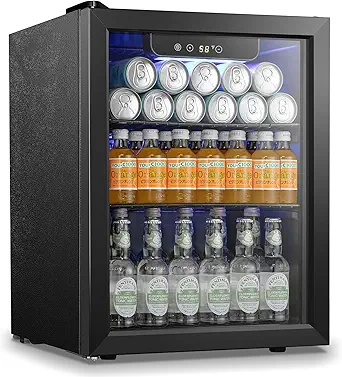 |
| Best Seller A high-volume bestseller chosen again and again | EUHOMY 3.2 Cu Ft Wine Cooler |  |
Antarctic Star 36 Bottle Wine Cooler

| Capacity | 4.4 cubic feet |
|---|---|
| Bottle Capacity | 36 bottles |
| Temperature Range | 32°F-61°F |
| Cooling Method | Compressor |
| Number Of Shelves | 4 |
This Antarctic Star 36 Bottle Wine Cooler is a compact freestanding unit intended for home wine storage and beverage chilling. It uses a compressor cooling system with an inverter and rotary scroll compressor to hold temperatures between 32°F and 61°F, so it can chill cans or store bottles at a stable serving or aging temperature. The unit has four wire shelves, a reinforced glass door with an airtight seal, interior blue LED lighting, and adjustable leveling legs for placement on an even surface. In practice it is relatively quiet and built for countertop or freestanding installation rather than built-in use, and the manual defrost system means occasional maintenance to remove frost. Practical benefits include straightforward temperature control for both wine and general beverages, horizontal racking that saves space, and a visible glass door that showcases the collection. Limitations are the manual defrosting and compact capacity that may not suit larger collections, and the glossy finish and glass door mean it should be kept out of direct sunlight to protect wines.
Best for: Buyers who want a compact, display-ready freestanding cooler that keeps bottles and beverages at consistent temperatures without complicated controls.
Less Ideal for: Collectors who need a large-capacity cellar, those seeking built-in installation, or buyers who want a frost-free automatic-defrost unit.
- Compressor cooling with inverter and rotary_scroll compressor for steady temperatures
- Wide temperature range (32°F–61°F) suitable for chilling cans and storing wines
- Reinforced glass door with airtight seal and interior LED lighting for display
- Adjustable leveling legs and freestanding design make placement flexible
- Manual defrost requires occasional maintenance
- Capacity and countertop/frеestanding orientation may be small for serious collectors
Verdict: A compact freestanding cooler that reliably stores up to 36 bottles at selectable temperatures while showcasing them behind a sealed glass door.
FoMup FM24WS Wine Cooler

| Cooling Method | Compressor |
|---|---|
| Temperature Range | 40-65°F |
| Number Of Shelves | 14 |
| Installation Type | Freestanding |
| Defrost System Type | Frost Free |
This FoMup FM24WS is a tall, freestanding wine cooler built to hold an extensive collection while keeping bottles at consistent service temperatures. It uses a compressor plus dual fans to cool quickly and circulate air, a digital touch control that sets temperatures between 40 and 65°F and a memory function that restores settings after a power loss. The unit offers 14 sliding-rail shelves for easier access, a reversible door and a keyed lock for security, and soft blue LED lighting for visibility without harsh heat. Practical benefits include large capacity for long-term storage or entertaining, adjustable shelving to accommodate larger formats, and an ultra-quiet compressor that suits home or light commercial use. Important limitations are its heavyweight and sizeable footprint, which require planning for delivery and placement, and the listing notes a 12-month support period rather than an extended factory warranty. Buyers should also allow the cabinet to sit 24 hours before first start to avoid installation issues.
Best for: Buyers who prioritize performance and capacity for long-term wine storage or frequent entertaining and want fast, even cooling in a freestanding cabinet.
Less Ideal for: People looking for a compact, lightweight unit for limited spaces or those who need long factory warranties and extended service plans.
- Very large bottle capacity suitable for extensive collections
- Compressor cooling with dual fans for fast, even temperature control
- Digital touch temperature control with memory function after power loss
- Sliding rail shelves and adjustable layout for easy access and larger bottles
- Reversible door and keyed lock add installation flexibility and security
- Large size and heavy weight make placement and moving more difficult
- Warranty coverage is limited to 12 months
Verdict: Choose the FoMup FM24WS when you need a high-capacity, performance-focused freestanding wine cooler with fast, even compressor cooling.
BODEGA Wine Cooler JC-82

| Capacity | 3.02 cubic feet |
|---|---|
| Size | 28 Bottle |
| Temperature Range | 41°F-64°F |
| Cooling Method | Compressor |
| Defrost System Type | Automatic |
The BODEGA JC-82 is a compact freestanding wine cooler that uses a compressor and an internal fan to hold bottles at a selectable temperature between 41°F and 64°F. It is typically used in a kitchen, home bar, office, or bedroom to keep a small collection ready to serve. The unit includes seven removable wire shelves, a double-paned glass door with UV protection, touch digital controls and soft white LED interior lighting for easy viewing. Practical benefits include faster, more stable cooling than thermoelectric models, automatic defrost to reduce maintenance, and a built-in memory chip that restores settings after power interruptions. At about 3.02 cubic feet capacity the JC-82 fits up to 28 bottles while remaining compact enough for freestanding placement. Trade-offs are typical for this class: it requires compressor operation so it will produce some background noise and needs clearance for ventilation, and shelving is wire rather than solid wood racks favored by collectors seeking a display look.
Best for: Buyers who want a space-efficient, practical freestanding cooler that prioritizes stable, compressor-driven temperature control for a modest bottle collection.
Less Ideal for: Collectors seeking a silent, ultra-low-vibration cellar or a high-end display unit with wooden display racks should look at higher-end models.
- Compressor cooling and built-in fan for faster, more consistent temperatures than thermoelectric designs
- Digital touch control with 41°F–64°F range suitable for many wine styles
- Double-paned UV-protected glass door helps reduce light damage
- Seven removable shelves let you configure storage and access
- Automatic defrost and memory chip restore settings after power interruptions
- Compressor operation produces background noise and needs airflow clearance
- Wire shelves and matte finish are utilitarian rather than premium display features
Verdict: A compact, no-frills compressor wine cooler that delivers reliable temperature control for practical buyers with a small to medium bottle collection.
YDOOLNG 23L Wine Cooler

| Capacity | 23 liters |
|---|---|
| Cooling Method | Compressor |
| Power | 55W |
| Voltage | 110 volts |
| Defrost System Type | Automatic |
This compact YDOOLNG wine cooler is a budget-focused freestanding unit that uses a compressor system and a digital LED display to maintain cellar-style temperatures for short-term bottle storage. It is typically used on a countertop or small floor space to chill and store everyday reds, whites, or sparkling wines; the touch controls make it simple to set temperatures in the roughly 46 to 64 F range. The unit includes five shelves and racks that are arranged to fit standard bottles and an internal blue LED so you can check bottles without opening the door. Construction mixes HIPS, cold-rolled steel, and double-pane tempered glass for basic durability and some UV protection. Expect quick cooling from the 55W compressor and an air-cooled fan system, but note this is a small fridge designed for freestanding placement only and not for built-in or recessed installs. For buyers prioritizing price and a small footprint, it delivers sensible performance though the short warranty and modest energy rating reflect its budget positioning.
Best for: Buyers who need an inexpensive, small-footprint freestanding cooler for everyday bottles and who prioritize straightforward controls and quick chilling over premium features.
Less Ideal for: Collectors who need long-term cellar conditions, large capacity, or a built-in installation should consider larger or higher-end models instead.
- Compact freestanding design fits small kitchens or apartments
- Digital LED display with touch controls for easy temperature setting
- Compressor cooling and internal fan offer relatively fast, even cooling
- Double-layer tempered glass door reduces UV exposure and includes an internal LED light
- 1 Star BEE energy rating indicates modest energy efficiency
- Only a three-month warranty limits long-term protection
Verdict: A low-cost, compact freestanding wine cooler that gives quick, controllable cooling for everyday bottles when space and budget are the priorities.
Ivation 18-Bottle Wine Cooler

| Capacity | 1.8 cubic feet |
|---|---|
| Bottle Capacity | 18 Bottle |
| Temperature Range | 41°F–64°F |
| Cooling Method | Compressor |
| Defrost System Type | Automatic |
The Ivation 18-Bottle Wine Cooler is a compact freestanding unit that uses a compressor and internal fan to keep temperatures steady between 41°F and 64°F, making it suitable for storing reds, whites, and sparkling wines. It typically sits on the floor or a countertop and is configured as a single-zone cooler with six wire racks that are removable to fit different bottle sizes. Notable features include a double-paned thermopane glass door that reduces UV exposure, a digital touch display with lock, soft LED interior lighting, and automatic defrost for low-maintenance operation. The compressor design and inverter help the cooler maintain set temperatures even when ambient room temperature fluctuates, which is valuable for long-term storage and reliability-focused buyers. Trade-offs are its single-zone layout, which does not allow separate temperatures for whites and reds, and modest capacity, which limits it to small collections or secondary storage. Energy consumption is moderate and the unit is intended as a dedicated wine fridge rather than a full-size cellar.
Best for: Buyers who prioritize a reliable, temperature-stable freestanding cooler for a small collection or secondary wine storage and want a low-maintenance unit with clear digital controls.
Less Ideal for: Collectors who need a large-capacity or dual-zone cellar for storing multiple wine types at different temperatures should consider larger or dual-zone models instead.
- Compressor cooling with internal fan for stable, consistent temperatures
- Double-paned thermopane glass door that helps block UV and insulates the interior
- Digital touch controls with lock and clear LCD for easy temperature management
- Removable wire racks accommodate different bottle sizes and simplify loading
- Single-zone design cannot maintain different temperatures for whites and reds
- Limited 18-bottle capacity may be too small for larger collections
Verdict: Choose this Ivation cooler when you want a compact, compressor-driven freestanding unit that keeps a small wine collection at stable, reliable temperatures.
Antarctic Star Beverage Refrigerator 1.7 Cu.Ft

| Capacity | 1.7 cubic feet |
|---|---|
| Temperature Range | 40°F-61°F |
| Cooling Method | Compressor |
| Number of Shelves | 2 |
| Door Type | Double-pane tempered glass |
This Antarctic Star mini beverage fridge is a compact freestanding cooler aimed at keeping drinks chilled without taking up much space. It offers 1.7 cubic feet of capacity with two adjustable glass shelves and a reversible tempered glass door that lets you see contents at a glance. Temperature is set via an easy digital control and ranges from 40°F to 61°F, while a quiet compressor and interior blue LED light make it suitable for bedrooms, offices, or bars. Practical features include a keyed lock, manual defrost, and a tight double-pane seal that helps maintain consistent temperatures. Important limitations: the unit is intended for beverages only and is not suitable for storing fresh food, and its small footprint restricts larger bottles or bulk storage. Buyers should also expect basic manual defrosting rather than an automatic system. For water bottle use, the adjustable shelving helps accommodate different shapes, but very tall bottles may require shelf removal.
Best for: Buyers who want a quiet, space-saving drink cooler for desks, small kitchens, or personal bars and value visible storage and adjustable shelving for bottles and cans.
Less Ideal for: People needing a multiuse mini fridge for fresh food or those who regularly store many tall bottles or bulk beverages should look for larger-capacity units.
- Compact 1.7 cu ft capacity fits on counters or under small counters
- Digital thermostat with 40°F–61°F range for accurate drink chilling
- Adjustable glass shelves allow flexible bottle and can arrangements
- Tempered double-pane glass door with interior LED for visibility and insulation
- Quiet compressor operation suitable for bedrooms and offices
- Not designed for fresh food storage, only beverages
- Manual defrost requires occasional user maintenance
- Limited interior height may not fit very tall water bottles with shelves in place
Verdict: A quiet, compact beverage cooler with digital control and adjustable shelving ideal for chilled water bottles and cans in small spaces.
EUHOMY 3.2 Cu Ft Wine Cooler

| Capacity | 3.2 cubic feet |
|---|---|
| Temperature range | 41°F to 64°F |
| Cooling method | Compressor |
| Number of shelves | 6 |
| Voltage | 115 volts |
The EUHOMY 3.2 cu ft wine cooler is a compact freestanding unit aimed at storing and displaying a modest bottle collection. It uses a compressor cooling system with a digital touchscreen that lets you set temperatures between 41 and 64 F, so you can store reds, whites, and sparkling wines at appropriate serving temperatures. Interior LED lighting, double-pane glass and adjustable shelves make it easy to arrange bottles and show labels, while reversible door and leveling legs simplify placement in a kitchen, bar or office. The cooler is designed for relatively quiet, low-vibration operation to protect sediment and aromas. Practical limitations include a 25-bottle capacity that suits small collections but will not replace a full cellar, and manual defrost means occasional upkeep. Energy usage is listed, so expect measurable operating cost versus larger or more efficient models. For buyers who want a straightforward, appliance-style cooler that fits under counters or stands alone, this is a sensible compact option.
Best for: Buyers who want a reliable, easy-to-use freestanding cooler to store and display a small to medium wine collection with minimal fuss and predictable temperature control.
Less Ideal for: Collectors who need long-term cellaring space for dozens of bottles or buyers seeking a completely maintenance-free, frostless design.
- Compressor cooling for steady, low-vibration temperature control
- Digital touchscreen with 41–64 F range for precise storage
- Adjustable shelves and a mix of rack types to fit different bottle arrangements
- Double-layer thermopane glass and internal LED light that protect labels and presentation
- Reversible door and leveling legs for flexible placement
- Manual defrost requires occasional maintenance
- Capacity limited to about 25 standard bottles, not suitable for large collections
Verdict: A compact, appliance-style freestanding cooler that delivers steady compressor cooling and easy temperature control for small household wine collections.
Choosing the Right Freestanding Wine Cooler: Key Factors to Consider
Temperature Range and Accuracy
A wine cooler should reach and maintain the specific temperatures appropriate for the styles you keep. Red wines typically store warmer than whites, and long-term aging needs a slightly cooler, stable environment. Look for clear temperature setpoints and manufacturer specs for variance. Small fluctuations can accelerate aging or dull aromas.
Accuracy matters more than a broad advertised range. A unit that claims a wide span but cannot hold a chosen temperature within one to two degrees will not protect bottles over time. When selecting a freestanding cooler, consider whether a single zone suffices or if a two-zone unit is necessary for mixed collections.
Storage Capacity and Shelf Design
Capacity is not just a bottle count number. Shelf spacing, rack style, and how bottles fit on each shelf determine usable storage. Wide-shouldered or large-format bottles need more depth and adjustable shelving.
Shelves that slide or pull out make loading and organizing easier and reduce the risk of knocking corks. Wooden racks are gentle on bottles but can absorb moisture; metal or wire racks are durable but should include protective coatings to prevent chipping. Verify usable interior height and shelf adjustability before buying.
Vibration and Noise Management
Excess vibration can disturb sediment in older bottles, potentially altering flavor. Compressors are the most common source of vibration; look for units designed with vibration-dampening mounts or inverter-style compressors that run more smoothly.
Noise level matters when the cooler sits near living spaces. Manufacturer-decibel figures are a useful baseline, but real-world quiet operation depends on installation surface and proximity to sit areas. Prioritize units with documented low vibration and quieter operation if the cooler will be in a kitchen, living room, or open-plan area.
Door Type and Sealing
A tight door seal preserves temperature and humidity levels inside the unit. Double-pane tempered glass doors provide insulation and let you view your collection without opening the cooler frequently. Reversible doors increase placement flexibility, but check that the hinge design maintains a consistent seal.
Some doors include UV protection to limit light exposure that can degrade wine. Also inspect the door gasket material and accessibility for replacement. A poorly sealed door forces the compressor to run more, reducing efficiency and potentially increasing wear.
Control Interface and Lighting
Intuitive controls help you set and monitor temperatures accurately. Digital thermostats with clear displays and fine temperature increments are preferable to analog dials for precision. Features like lockable controls prevent accidental changes in shared homes.
Interior lighting should illuminate without producing heat that affects the internal temperature. LED lighting is common because it remains cool and consumes little power. Consider whether you want adjustable brightness or a gentle night mode to reduce light exposure to wine.
Energy Use and Long-Term Costs
A freestanding wine cooler runs continuously, so energy efficiency influences operating costs and environmental impact. Compare energy consumption ratings and consider features that reduce runtime, such as better insulation, efficient compressors, and tight seals.
Higher-efficiency units may cost more upfront but can save on electricity over time. Also evaluate noise tradeoffs, as very efficient inverter compressors can be both quieter and less power-hungry, improving long-term value.
Single-Zone Vs Two-Zone Units
Decide whether you need one or two temperature zones based on the types of wine you store. Single-zone coolers are adequate if you primarily store one style, such as only reds or only whites. They provide a single, continuous environment that is easier to maintain and often less expensive to run.
Two-zone coolers let you set separate temperatures for reds and whites in the same cabinet. This is useful if you regularly store both styles and want ready-to-serve temperatures without moving bottles between units. Keep in mind that two-zone systems can be slightly more complex and may have smaller usable capacity in each zone.
- Single-zone: simpler controls, larger single storage area
- Two-zone: flexible serving temperatures, better for mixed collections
Placement and Ventilation Considerations
Freestanding coolers need clearance for ventilation and optimal compressor performance. Follow the manufacturer's recommended spacing at the back and sides to prevent overheating and shorten compressor life. Avoid installing the cooler in direct sunlight or inside a cabinet unless it is specifically designed for built-in conversion.
Level placement is critical for door operation and internal shelving function. Use adjustable feet to keep the unit steady on uneven floors. If the cooler will sit on a soft surface like carpet, ensure adequate airflow and consider placing it on a hard, level platform.
- Allow manufacturer-recommended clearance for airflow
- Avoid direct sunlight and high-humidity locations
- Keep the unit level for proper door sealing and shelf operation
Maintenance and Seasonal Care
Regular maintenance preserves performance. Clean the interior periodically with a soft cloth and mild solution, and remove dust from condenser coils or air intakes if accessible. Replace door gaskets that show wear to maintain an airtight seal.
If you plan to store wine long term and leave the cooler idle, follow recommended winterization steps. Some refrigerators need draining or compressor maintenance before long dormant periods. Check the user guidance for recommended service intervals.
- Clean coils and vents to maintain cooling efficiency
- Inspect and replace worn door gaskets
- Follow manufacturer guidance before long idle periods
Organizing Your Collection
Plan the layout to keep frequently accessed bottles at eye level or within easy reach. Use adjustable shelving to separate types, vintages, or bottles reserved for near-term drinking from long-term cellaring. Label shelves or use simple organizers to avoid shifting bottles when searching.
Consider rotating older bottles forward so they are consumed first and keep duplicates grouped for consistency. For long-term aging, maintain minimal movement and stable temperatures to preserve flavor development.
- Store frequently used bottles within easy reach
- Group similar bottles together and label shelves
- Minimize movement for long-term stored bottles
Humidification and Cork Health
Cork integrity is influenced by humidity. Extremely dry conditions can dry out corks and let air into bottles, while excessive humidity can affect labels and wooden racks. Most freestanding wine coolers maintain adequate humidity for short- to medium-term storage, but long-term cellars may require supplemental humidity control.
If your collection includes many older bottles with natural corks, monitor humidity levels and choose a cooler with good door sealing. Simple humidification strategies include placing a shallow water tray inside the unit if recommended by the manufacturer.
- Monitor humidity to protect corks and labels
- Supplement humidity only when manufacturer guidance allows
- Avoid placing coolers in overly damp rooms
How We Chose the Best Freestanding Wine Cooler
We focused on features that directly affect how well a freestanding wine cooler protects and presents bottles. Key evaluation criteria were temperature stability over daily cycles, storage flexibility including shelf type and bottle capacity, noise and vibration control to prevent sediment disruption, energy efficiency for typical household use, and build quality for long-term reliability. We also checked ease of use details such as digital controls, lighting, and door sealing, plus practical serviceability factors like filter access and warranty coverage. Units were excluded if they lacked adjustable temperature zones when multi-zone control was necessary for mixed collections, had poor thermal insulation, or used storage layouts that prevent standard bottle placement. The final selections emphasize measurable specs and real-world convenience rather than marketing claims, so buyers can match a cooler to how they store and drink wine.
Our full evaluation process is outlined in our review methodology.
FAQ
Can a freestanding wine cooler be used to age wine long term?
Freestanding coolers can support medium-term aging if they maintain stable temperature and humidity, but long-term aging benefits from a dedicated cellar environment with very consistent conditions. Evaluate the unit's temperature stability and door sealing before relying on it for extended cellaring.
How much clearance does a freestanding cooler need?
Clearance requirements vary by model, but most need a few inches at the back and sides for ventilation. Consult the unit's installation guidance and allow extra space for airflow to ensure efficient operation and longer compressor life.
Are compressor coolers better than thermoelectric units?
Compressor coolers generally achieve lower temperatures and better control for larger capacities. Thermoelectric units are quieter and can be sufficient for small collections in controlled ambient temperatures, but they struggle in hot rooms or with heavier loads.
What is the ideal temperature for mixed wine storage?
For mixed storage, a compromise temperature around 50 to 55 degrees Fahrenheit is common, but reds and whites have different optimums. If you want ready-to-serve temperatures for both types, consider a two-zone unit to set separate climate zones.
How often should I defrost or service my wine cooler?
Most modern units are frost-free or have automatic defrost, reducing maintenance. For models that do require manual defrost, follow the manufacturer schedule and clean the interior annually, along with inspecting door seals and vents for dust buildup.
Final Verdict
When choosing a freestanding wine cooler, prioritize temperature stability, appropriate capacity, and low vibration for the styles and quantity you keep. Decide whether single-zone simplicity or two-zone flexibility better matches your routine, and factor in shelf layout and door sealing for long-term bottle health. Balance energy efficiency and noise against storage needs to find a unit that fits your space and drinking habits. With these priorities in mind, you can confidently choose a freestanding cooler that protects bottles and simplifies cellar management.