
Note: This article contains affiliate links. If you click on these links and make a purchase, we may earn a small commission at no extra cost to you. This helps support our research and content. Read our full affiliate disclosure here.
If you want fresh citrus or small-batch juice without a bulky appliance, a hand juicer for home use can be a compact, reliable tool in your kitchen. The right manual juicer delivers efficient extraction, manageable pulp control, and easy cleanup so you can make juice quickly for one or two people without fuss. This guide covers seven shortlisted hand juicers for home use that stood out for real-world performance, ergonomics, and durability. We evaluated extraction efficiency, build quality, ease of cleaning, and how comfortable each option is for regular use. Read on to find the style and features that match your routine and countertop space.
Top Picks at a Glance
| Best Overall The best all-around choice for most situations | LEGLO Large Citrus Extractor |  |
| Best Quality Built to a higher standard if you want something more solid | Eurolux Cast Iron Juicer ELJ-5001B |  |
| Best Value The sweet spot between price and what you get | KENSINGTON LONDON Lemon Squeezer |  |
| Best Budget The cheapest option that still gets the job done reliably | ChefVille 4-in-1 Manual Juicer |  |
| Top Rated A top-rated pick with lots of positive feedback | OXO Good Grips 2-in-1 Citrus Juicer |  |
| Most Popular A crowd favorite that many people choose with confidence | Zulay Metal 2-in-1 Lemon Squeezer | 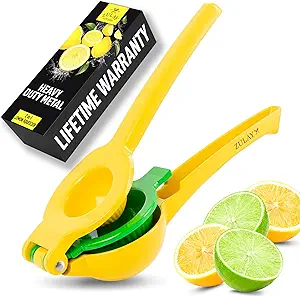 |
| Best Seller A high-volume bestseller chosen again and again | Zulay Cast Iron Juicer |  |
LEGLO Large Citrus Extractor

| Material | Aluminum |
|---|---|
| Special Features | Portable |
| Controller Type | Manual |
| Capacity | 1.3 pounds |
| Wattage | 300 watts |
The LEGLO Large Citrus Extractor is a heavy-duty handheld juicer built from uncoated aluminum that uses long handles and a deep bowl to extract juice from halves and wedges with minimal effort. It is used by placing fruit in the bowl and squeezing the long ergonomic handles together to press out juice and seeds; the pour spout channels juice into a glass or bowl. The solid aluminum construction gives the press rigidity and a sense of durability, and the deep 20 oz bowl handles larger citrus and pomegranate halves better than small squeeze-type models. Because it is manual there is no power needed and cleanup is straightforward; the listing notes it rinses quickly and is sold as dishwasher safe in some fields though brand text also advises hand wash and drying to protect the finish. Trade-offs include the weight and raw aluminum finish that may darken with dishwasher use and the requirement for two-handed pressing rather than a powered or electric option.
Best for: Home cooks who want a durable manual juicer that handles large citrus and occasional pomegranate use and who prioritize extraction power and simple, tool-style operation.
Less Ideal for: People who need a lightweight travel juicer, a compact single-handed squeezer, or an electric juicer for high-volume daily juicing should look elsewhere.
- Sturdy uncoated aluminum construction for heavy-duty pressing
- Deep 20 oz bowl accommodates large citrus and pomegranate halves
- Long-handle leverage reduces force needed to extract juice
- Pour spout directs juice for easy transfer
- Portable, manual design with no power required
- Raw aluminum finish can darken if put in dishwasher despite mixed care notes
- Heavier and bulkier than small handheld squeezers
Verdict: Buy this if you want a robust, tool-style manual juicer that handles large citrus easily and delivers strong leverage for efficient extraction.
Eurolux Cast Iron Juicer ELJ-5001B

| Capacity | 15 ounces |
|---|---|
| Material | Stainless Steel Cast Iron |
| Power Source | Manual |
| Special Features | Easy to Clean, Manual, Portable, Rust Resistant |
The Eurolux cast iron hand press is a commercial-style citrus juicer built for power and repeatable performance. You use it by placing halved fruit face-down in the stainless steel cup and pulling the long lever to extract juice with mechanical advantage, which makes squeezing large quantities much easier than handheld reamers. Key features include a cast iron frame for stability, removable parts that touch fruit for easier cleaning, a stainless steel collection cup, and suction feet to keep the unit steady on a countertop. In practice it produces high yield from oranges, lemons, and even pomegranate halves with minimal hand strain, and the heavy build means it does not rock during use. Trade-offs are its weight and footprint, which limit portability and make it less convenient if you need a compact or lightweight unit, and some users may find disassembly for dishwasher cleaning a bit fiddly compared with simple plastic presses.
Best for: Buyers who plan to juice frequently or in larger batches and prioritize durable, high-extraction performance over portability.
Less Ideal for: If you need a lightweight, compact juicer for occasional use or travel, a small handheld or electric countertop model would be a better fit.
- Commercial-grade cast iron frame provides stability for heavy, repeated use
- Long lever delivers strong mechanical advantage for high juice yield with less effort
- Removable stainless steel cup and fruit-contact parts allow easier cleaning
- Suction feet keep the press steady during operation
- Heavy and bulky compared with compact handheld juicers
- Takes up significant countertop space and is not ideal for travel
Verdict: Choose this heavy-duty manual press when you want commercial-style extraction and durability for frequent high-yield juicing at home.
KENSINGTON LONDON Lemon Squeezer

| Material | Stainless Steel |
|---|---|
| Power Source | Manual |
| Product Care Instructions | Dishwasher Safe |
| Capacity | 0.6 liters |
This stainless steel handheld citrus press uses a simple lever design to squeeze lemon, lime and small orange halves with minimal effort. In typical home use you halve the fruit, seat it in the cup and press the long ergonomic handles together to force juice through while the built-in straining keeps most seeds out. The 304 stainless construction and reinforced joints feel durable and the silicone non-slip grips make it comfortable for repeated use, which is helpful for cocktail prep, salad dressings or cooking. It is dishwasher safe so cleanup is quick, and the cup shape channels juice neatly into a glass or bowl. It is manual, so it delivers fast, quiet operation without power or setup but does require hand force for larger batches. The fixed press size is best for halves rather than whole fruit or very large citrus, but for everyday home juicing it reliably yields more juice than simpler squeezers and should hold up well over time.
Best for: Buyers who want a durable, no-frills tool that squeezes more juice than basic handheld models and prefers a low-maintenance, long-lasting kitchen gadget for everyday cooking and drinks.
Less Ideal for: People who need to juice large volumes frequently or want to extract juice from whole large citrus without repeated halving should consider an electric or larger commercial juicer instead.
- 304 stainless steel construction for durability and corrosion resistance
- Ergonomic long handles with silicone non-slip grips for easier pressing
- Built-in strainer reduces seeds and channels juice cleanly
- Dishwasher safe for easy cleanup
- Manual operation requires physical force for larger batches
Verdict: A tough, easy-to-use stainless steel manual press that reliably extracts more juice than basic squeezers for everyday home use.
ChefVille 4-in-1 Manual Juicer

| Capacity | 591 ml |
|---|---|
| Material | Polypropylene (PP) |
| Power Source | Manual |
| Special Features | Portable |
This ChefVille 4‑in‑1 manual juicer is a simple, budget-friendly tool for extracting juice from lemons, limes, oranges and other produce without electricity. It pairs two detachable reamers—a small 12‑tooth head for lemons and a 3‑claw head for larger fruit—with a 16.9 oz (591 ml) measuring cup and built‑in seed filter so you can squeeze directly into the cup and pour without extra tools. The side‑grip ergonomic design and anti‑slip silicone base keep the unit steady and make squeezing less awkward than some single‑hand press models, while the flip‑top and detachable handle make storage and pouring convenient. Made from food‑grade PP and labeled BPA‑free, it is easy to hand‑wash and durable enough for daily use, though heavy citrus or very fibrous produce will require firm pressure and some repetitive squeezing. The plastic construction limits heat resistance and longevity compared with metal presses, but for simple home juicing, cocktails, and cooking measurements this offers solid value for the price.
Best for: Buyers wanting an affordable, space‑saving manual juicer for everyday home use, simple cocktails, and cooking where convenience and measured yields matter more than heavy‑duty commercial performance.
Less Ideal for: Those who need a heavy‑duty, long‑lasting metal press for frequent large‑volume juicing or who prefer electric juicers for speed and minimal effort should look elsewhere.
- Large 16.9 oz (591 ml) measuring cup reduces trips to empty and lets you pour or measure directly
- Two reamer sizes for both small citrus and larger fruit increase juice extraction flexibility
- Built‑in seed filter and V‑shaped spout simplify pouring and reduce mess
- Lightweight, BPA‑free food‑grade PP construction with anti‑slip base is easy to clean and store
- All‑plastic construction is less durable and heat‑resistant than metal alternatives
- Detachable handle is for carrying and pouring only and not meant for squeezing heavy fruit
Verdict: A low‑cost, compact manual juicer that gives measured, no‑fuss citrus squeezing for home cooks who want convenience without spending much.
OXO Good Grips 2-in-1 Citrus Juicer

| Capacity | 350 ml |
|---|---|
| Power Source | Manual |
| Material | Plastic |
| Product Care Instructions | Dishwasher Safe |
The OXO Good Grips 2-in-1 Citrus Juicer is a simple, reliable hand juicer aimed at everyday kitchen tasks. It includes two snap-on reamers so you can juice small fruits like lemons and limes or larger fruits such as oranges and grapefruits, and the reamers nest for compact storage. The contoured, BPA-free body gives a comfortable grip while the clear measurement markings go up to 350 ml, making it easy to measure juice for recipes. A drip-free pour spout and removable reamers speed serving and cleanup, and all plastic parts are dishwasher safe. Because it is manual, it requires no power and is quiet, but it is best suited to small batches rather than high-volume juicing. The plastic construction keeps the unit lightweight and affordable, though users who prefer metal or industrial durability may want a heavier model. For home cooks seeking a straightforward, low-maintenance citrus juicer, this design delivers consistent, predictable results.
Best for: Buyers who prioritize a dependable, no-fuss kitchen tool for occasional to moderate home juicing and want easy cleanup and accurate measuring.
Less Ideal for: Those who need heavy‑duty, commercial‑scale juicing or prefer a metal, long-wearing construction should consider other options.
- Two reamer sizes for both small and large citrus
- Clear measurement markings up to 350 ml for easy measuring
- Drip-free pour spout reduces mess when transferring juice
- Removable reamers and dishwasher-safe plastic make cleaning quick
- Plastic construction may feel less durable than metal alternatives
- Not intended for high-volume or commercial juicing
Verdict: A straightforward, dependable manual juicer that makes small- to medium‑batch citrus juicing easy and low maintenance.
Zulay Metal 2-in-1 Lemon Squeezer

| Material | Aluminum |
|---|---|
| Power Source | Manual |
| Capacity | 0.5 liters |
| Product Care Instructions | Hand Wash Only |
This Zulay Metal 2-in-1 Lemon Squeezer is a simple, heavy-duty manual press made from aluminum that squeezes halves of lemons, limes, and small oranges without electricity. It pairs a shallow bowl with a hinged press so you can extract juice with minimal hand strain thanks to the ergonomic handle, and the perforated base keeps seeds and large pulp out of your glass. The tool is compact for drawer storage, straightforward to use—place a halved fruit in the bowl and press—and cleans quickly by hand or on the top rack of a dishwasher. Because it is manual and metal, it is durable and gives more extraction than small plastic reamers, but it does require two-handed pressing for very firm citrus and will not handle whole large oranges. The bright finish makes it easy to find in a drawer, and the stainless steel blade detail helps with cutting or positioning halves. For anyone wanting a long-lasting, low-tech juicer for cocktails, dressings, or a daily citrus squeeze, this is a practical, no-frills choice.
Best for: Buyers who rely on proven reviews and want a sturdy, low-tech citrus press for occasional to daily use in cocktails, dressings, and single-serving juice without the complexity of electric models.
Less Ideal for: People who need to juice large volumes or whole large oranges frequently or who prefer a hands-off electric juicer.
- Durable aluminum construction designed for long-term use
- Ergonomic handle reduces hand strain when pressing citrus
- Built-in seed-filter holes keep seeds and large pulp out of juice
- Compact, easy-to-store manual design with dishwasher-safe cleaning
- Manual operation can be tiring on very firm citrus or for large batches
- Not suitable for whole large oranges or high-volume juicing
Verdict: A sturdy, review-backed manual citrus press that reliably extracts juice for single servings and cocktail use without electricity.
Zulay Cast Iron Juicer

| Material | Cast Iron & Stainless Steel |
|---|---|
| Capacity | 0.6 liters |
| Power Source | Manual |
| Recommended Uses For Product | Citrus |
This Zulay cast iron juicer is a countertop lever press built for frequent home use and light commercial work. You place halved citrus in the 5-inch bowl, pull the long cast iron lever to press the fruit against a stainless steel strainer, and the juice flows into a cup while seeds are held back. The heavy cast iron construction and rubber feet give the press a stable, no-slip base and strong mechanical advantage so even thick-skinned oranges and grapefruits yield with minimal effort. Detachable strainers make cleaning and seed removal straightforward, though the unit is hand-wash only and the cast iron finish means you should avoid soaking or dishwasher cleaning. Its 0.6 liter capacity and substantial weight make it very steady during use but also less portable and more prominent on a smaller counter. If you want a durable, low-maintenance manual juicer that prioritizes yield and stability over compactness, this model delivers.
Best for: Buyers who want a reliable, long-lasting manual juicer that maximizes juice yield and stays firmly in place during frequent home use.
Less Ideal for: People seeking a lightweight, compact, or dishwasher-safe citrus tool, or those who need a juicer to store away after each use.
- Robust cast iron construction for long-term durability
- Lever design provides strong mechanical advantage for high juice yield with little effort
- Detachable stainless steel strainers keep seeds out and simplify cleaning
- Rubberized feet and heavy weight provide excellent stability during pressing
- Hand wash only and cast iron requires care to avoid rust or finish wear
- Heavy and bulky, so it takes significant counter space and is not very portable
Verdict: If you want a built-to-last manual press that extracts maximum citrus juice with minimal effort, this heavy-duty cast iron model is the top home-choice.
Choosing the Right Hand Juicer for Home Use: Key Factors to Consider
Extraction Efficiency
How effectively a hand juicer squeezes juice from fruit affects how much usable liquid you get and how much effort is required. Manual designs vary from simple reamers to lever-actuated presses; each converts hand force to juice differently. A more efficient juicer reduces the number of squeezes or rotations needed and leaves less juice in the pulp, which matters if you juice frequently or want the most yield from each piece of fruit.
Also consider how the extraction method handles different fruits. Citrus fruits like lemons and oranges respond well to reamers and hinged presses, while grapefruits may require larger capacity or stronger leverage. Efficiency affects the time you spend prepping and how often you need to replace fruit during a session.
Build Materials and Corrosion Resistance
Materials determine longevity and how a juicer stands up to acidic fruit over time. Stainless steel and cast aluminum parts resist corrosion and bending better than thin plastics. Food-contact surfaces should be nonreactive so citrus acids do not impart off flavors or degrade finishes.
Also evaluate seals, fasteners, and moving joints. Metal parts with solid rivets or machined pivots will usually last longer under repeated force than glued or brittle plastic components. If dishwasher cleaning is important, confirm that the materials and finishes are rated for dishwasher use to avoid premature wear.
Ease of Cleaning
Juicing produces sticky residues and bits of pulp that can lodge in tight crevices. A design that disassembles quickly into a few large pieces is easier to clean by hand or in the dishwasher. Smooth surfaces, minimal screens with accessible openings, and parts without hidden cavities reduce time spent scrubbing.
Consider whether filters or strainers are removable and how fine the mesh is. Finer mesh yields clearer juice but may trap pulp and require more effort to rinse. If you plan on frequent use, prioritize designs that balance juice clarity with straightforward cleaning.
Ergonomics and Hand Comfort
Manual juicers put direct physical load on your hands and wrists. Ergonomic handles, well-shaped reamers, and lever lengths that provide mechanical advantage make repeated juicing more comfortable. Evaluate grip texture and handle diameter; larger, cushioned grips distribute pressure and reduce strain.
If multiple family members will use the juicer or you juice larger fruits, a design that minimizes twisting or sustained squeezing will be more pleasant to use. Poor ergonomics can lead to shorter usage sessions or reluctance to use the device regularly.
Stability and Safety
A stable base and secure mounting reduce slipping and accidental spills during juicing. Non-slip feet or weighted bases help keep the unit steady on wet countertops. For hinge-style presses, a locked or guided motion prevents sudden shifts when you apply force.
Safety also includes how easy it is to secure the fruit and whether there are pinch points in moving parts. A design that keeps fingers away from crushing areas and offers predictable mechanical movement is preferable for home kitchens.
Pulp Control and Juice Clarity
Different users prefer varying levels of pulp in their juice. Some hand juicers offer adjustable strainers, removable filters, or coarse/fine mesh options to tune clarity. This flexibility affects how you plan to use the juice in drinks, baking, or cooking.
If you want clear juice for cocktails or beverages, prioritize finer filters. For smoothies or cooking where fiber is beneficial, a coarser screen or the option to skip filtering is more convenient. The ease of changing or cleaning filters is also important because frequent swaps can be tedious.
Types of Hand Juicers and How They Differ
Hand juicers come in several basic forms, each suited to different tasks. Reamer-style juicers are compact and ideal for quick citrus squeezing, while lever or press designs provide more mechanical advantage for larger fruits or higher volumes.
Press-style manual juicers typically require less wrist torque and can extract more juice from larger citrus with fewer repetitions. Reamers are simpler and take up less storage space, but they may be slower for frequent use. Consider which form matches your typical serving size and storage constraints.
- Reamer: compact, simple, best for quick single pieces of citrus
- Hinged press: more leverage, better for larger or frequent juicing
- Juice strainer combos: built-in filtration for one-step clarification
Countertop Footprint and Storage
If you have limited counter or cabinet space, choose a model with a small footprint or one that breaks down for nesting in drawers. Some manual presses have wide bases that sit on the counter but do not store compactly, while reamer models are typically stackable.
Think about how you will use the juicer day to day. If it will remain on the counter for daily use, stability and appearance may matter more. If it will be tucked away, look for lighter, smaller designs that are easy to retrieve and assemble.
- Keep-in-view for daily use: prioritize stability and wipe-clean surfaces
- Stashed away: choose compact or collapsible parts for easy storage
Maintenance Tips to Keep Your Juicer Working
Rinse or soak parts promptly after juicing to prevent sticky buildup and staining from citrus acids. Removing pulp and rinsing mesh filters immediately makes drying and final cleaning much easier.
Inspect moving joints periodically and tighten any fasteners that loosen with use. If parts are dishwasher-safe, place them on the top rack to extend their service life. For metal parts, dry thoroughly to avoid spotting or corrosion.
- Rinse immediately after use to avoid dried-on residue
- Disassemble removable parts for thorough cleaning
- Dry metal components completely to prevent spotting
Maximizing Juice Yield From Citrus
Bring fruit to room temperature and roll it firmly on the counter before juicing; this softens membranes and releases more juice. Cut fruit across the equator for more efficient pressure distribution on reamers and presses.
For lever presses, position the fruit properly so the press contacts the interior rather than slipping off the rind. Use steady, even pressure rather than quick jerks to extract juice without forcing excessive pulp into the filter.
- Roll and warm fruit before juicing
- Cut across the equator for better contact
- Apply steady pressure with lever presses for consistent extraction
Design Features That Make Daily Use Simpler
Look for splash guards, integrated measuring cups, or pour spouts that reduce mess during pouring. A comfortable drip path and wide pour lip can save time and cleanup.
Built-in pulp catchers and simple one-piece strainers reduce assembly and make the juicer less fussy to use. Small touches like molded handles or ergonomic thumb rests add up when you juice frequently.
- Splash guards minimize countertop cleanup
- Integrated measuring markings help with recipes
- One-piece strainers simplify assembly and rinsing
How We Chose the Best Hand Juicer for Home Use
We focused on features and real-world usability metrics that matter for hand juicers used in everyday home kitchens. Key evaluation areas included extraction efficiency to measure how much juice each model yields from common citrus fruits, build materials and durability for long-term use, and ergonomic design to reduce hand fatigue during repeated juicing. We also prioritized how easy each juicer is to clean, including whether parts are dishwasher-safe or have simple crevices. Stability and non-slip bases were considered because a steady juicer improves safety and extraction consistency. Finally, we checked capacity and whether the juicer integrates pulp control options for users who prefer clearer juice or more fiber. We excluded countertop electric juicers and press-style commercial tools from consideration because they do not fit the home-oriented manual use case. Entries were filtered out if they lacked clear material specifications, had poor user-servicing options, or showed recurring reports of structural failure. The remaining products were assessed against the same criteria so the list reflects practical tradeoffs for everyday home juicing.
Our full evaluation process is outlined in our review methodology.
FAQ
Can a hand juicer handle grapefruit and larger citrus?
Many hand juicers are designed for typical citrus sizes, but capacity varies. Lever or press-style manual juicers usually handle larger fruit better than small reamers. Check the stated cup capacity or bowl diameter to ensure the unit accommodates your biggest fruit.
Are hand juicers difficult to clean?
Cleaning difficulty depends on how many parts and how fine the strainer is. Models that break into a few large pieces and have smooth surfaces are easiest to clean. Removable filters that rinse clean or are dishwasher-safe speed up maintenance.
Will a hand juicer damage my countertops?
A stable base with non-slip feet reduces movement and protects surfaces. Some presses are best used on a cutting board or rubber mat to prevent scratching. Avoid using excessive force that could cause slipping on fragile surfaces.
How much juice can I expect per orange or lemon?
Yield depends on fruit size and ripeness. Room-temperature, well-rolled fruit yields more juice than cold fruit. Extraction efficiency also varies by juicer design, with press-style units often producing higher yields per piece than a simple reamer.
Is metal construction worth the extra weight?
Metal bodies and levers add durability and stability, which can improve extraction and lifespan. They may be heavier and take more storage space, but the increased robustness is beneficial if you juice frequently or apply more leverage.
Final Verdict
Choosing the right hand juicer for home use means balancing extraction performance, ease of cleaning, and how comfortable it is to operate regularly. If you juice small amounts occasionally, a compact reamer may be the simplest solution. For higher yields or frequent use, a lever or press design with solid materials and good ergonomics will save time and effort. Prioritize designs that fit your countertop and storage habits, resist corrosion, and make cleaning painless. Those tradeoffs will determine whether a manual juicer becomes a daily convenience or an occasional tool.