
Note: This article contains affiliate links. If you click on these links and make a purchase, we may earn a small commission at no extra cost to you. This helps support our research and content. Read our full affiliate disclosure here.
If you want a compact tool to tackle basic mending, quick alterations, and simple craft projects, a handheld sewing machine can be a smart choice. These lightweight machines fit in tight spaces, set up fast, and keep small jobs from ballooning into time-consuming tasks. Choosing the right handheld sewing machine for beginners matters because ease of threading, consistent stitch formation, and reliable feed are what turn a frustrating experience into a useful one. This guide shortlists the top handheld sewing machines for beginners and evaluates them on usability, stitch quality, and portability to help you pick the best fit for your needs. Read on for a look at what we tested and why each feature matters.
Top Picks at a Glance
| Best Overall The best all-around choice for most situations | TYGVM Handheld Sewing Machine FRJ-01 |  |
| Best Quality Built to a higher standard if you want something more solid | Vaspow Handheld Sewing Machine ZDML-6 |  |
| Best Value The sweet spot between price and what you get | TMANI Handheld Sewing Machine |  |
| Best Budget The cheapest option that still gets the job done reliably | ZMJY Mini Handheld Sewing Machine |  |
| Top Rated A top-rated pick with lots of positive feedback | MacMia Handheld Sewing Machine |  |
| Most Popular A crowd favorite that many people choose with confidence | SINGER Stitch Sew Quick |  |
| Best Seller A high-volume bestseller chosen again and again | Aureqilin Handheld Sewing Machine |  |
TYGVM Handheld Sewing Machine FRJ-01

| Power Source | ac / AA batteries (not included) |
|---|---|
| Included Components | Adapter, replacement needles, thread, accessories, instruction manual |
| Material | Premium Plastic, Stainless Steel |
| Number of Items | 1 |
This TYGVM handheld sewing machine is a lightweight, beginner-focused tool for mending, small craft projects, and quick alterations. It offers two sewing modes: automatic stitching for fast fixes and a foot-pedal option for more controlled, professional-style sewing. The unit supports double-thread stitching and claims to sew through fabrics up to about 3.5 mm thick, which makes it suitable for layered denim, costumes, and common household fabrics. Setup is minimal—threading and basic operation are straightforward—so new users can start repairing clothes or hemming without a steep learning curve. Power is flexible: it runs on AA batteries for cordless use or the included AC adapter for continuous work. Practical accessories like spare needles, thread, and a pedal are included, and the plastic body keeps the weight down for portability. Important limitations are its size and power, so it is best for light to medium repairs rather than heavy production sewing, and battery use requires buying AA cells separately.
Best for: Buyers wanting an easy-to-learn, portable sewing solution for home mending, travel, and beginner craft projects who value simplicity and flexibility over heavy-duty performance.
Less Ideal for: People who need a machine for sustained, high-volume sewing, industrial fabrics, or professional garment construction should consider a full-size domestic sewing machine instead.
- Two operating modes: automatic and foot-pedal control for flexibility between quick fixes and more precise sewing.
- Double-thread stitching capable of handling up to about 3.5 mm thick materials for stronger seams on repairs.
- Dual power options (AA battery or included AC adapter) let you use it cordlessly or plugged in as needed.
- Compact, lightweight design with included accessories (needles, thread, adapter) for immediate use.
- Not intended for heavy-duty or continuous professional sewing due to limited motor power and small form factor.
- Requires AA batteries for cordless use which are not included.
- Plastic construction may be less durable under heavy or prolonged use compared with full-size machines.
Verdict: A compact, beginner-friendly handheld machine that delivers portable double-thread repairs and simple sewing with both battery and AC power options.
Vaspow Handheld Sewing Machine ZDML-6

| Power Source | dc |
|---|---|
| Input Voltage | 1.5 volts_of_direct_current |
The Vaspow ZDML-6 is a compact handheld lockstitch machine built for fast repairs and simple everyday sewing tasks. It uses a genuine double-thread lockstitch so seams stay secure after washing, and the fixed 2.2–2.8mm stitch length and 330 SPM motor remove fiddly adjustments—just pick it up and sew. It runs on four AA batteries for cordless use or the included DC adapter for longer sessions, and the 5mm presser foot clearance handles folded hems and up to two layers of denim for typical mending. The unit ships pre-threaded with extra bobbins, needles, a threading tool, and a quick-start guide with a video walkthrough, which makes it friendly for beginners. Limitations include a proprietary bobbin format that requires manufacturer replacements and a lightweight plastic shell that favors portability over heavy-duty, long-term shop use. For routine home repairs, travel fixes, and quick garment adjustments the ZDML-6 is a practical, no-fuss option.
Best for: A buyer who wants a performance-minded, get-it-done handheld for frequent quick repairs and reliable lockstitch results without fuss or setup time.
Less Ideal for: People who need a heavy-duty machine for continuous high-volume sewing, professional garment construction, or who prefer standard bobbin compatibility.
- True double-thread lockstitch for durable seams
- Cordless operation via four AA batteries plus included DC adapter for home use
- Pre-threaded out of the box with spare bobbins, needles, and useful accessories
- 5mm presser foot clearance handles folded hems and up to two denim layers
- Fixed stitch length and speed eliminate setup and reduce user error
- Uses a proprietary bobbin that must be replaced through the manufacturer
- Plastic, lightweight construction is less durable than full-size machines
Verdict: If you want a simple, performance-focused handheld that delivers real lockstitch durability for fast home mending and travel repairs, the Vaspow ZDML-6 is a solid pick.
TMANI Handheld Sewing Machine

| Power Source | dc |
|---|---|
| Included Components | Handheld Sewing Machine |
| Material | Plastic |
This TMANI handheld sewing machine is a lightweight, portable tool for quick repairs, hemming, and simple craft work. It runs on 4 AA batteries and is intended for one-handed, push-button stitching that feeds fabric automatically, making it easy for beginners to use without a full-size machine. The unit comes as a complete kit with bobbins, needles, a needle threader, tape measure, and other small accessories so you can start mending right away. It handles a range of fabrics up to about 1.8 mm thick, so it can tackle everything from silks to denim for emergency fixes and on-the-spot hemming. Practical limitations are that it is a single-thread design, so you must secure seams by tying knots manually, and its compact plastic build is not suited to heavy continuous sewing or thick multilayer seams. For simple repairs, travel fixes, and quick DIY projects this machine is a convenient, easy-to-learn option that keeps basic mending tools in one small package.
Best for: Buyers who want a practical, grab-and-go mending tool for quick repairs, travel fixes, and simple DIY sewing without learning a full sewing machine.
Less Ideal for: Users who need a machine for frequent, heavy sewing, long seams, or professional garment construction should choose a full-size or stronger electric machine instead.
- Very portable and lightweight for travel or quick repairs
- Simple one-handed operation with automatic fabric feed ideal for beginners
- Includes a full starter kit of bobbins, needles, threader, and measuring tape
- Works on a variety of fabrics up to about 1.8 mm thickness
- Single-thread design requires manually tying off seams to secure stitches
- Plastic construction and battery power limit heavy or continuous sewing tasks
Verdict: A compact, beginner-friendly mending kit that delivers fast, portable repairs and easy one-handed stitching for everyday fixes.
ZMJY Mini Handheld Sewing Machine
| Power Source | USB / 4 x AA Batteries |
|---|---|
| Recommended Fabric Thickness | ≤ 1.8mm |
| Included Components | Needles, USB cable, fabric squares, user manual |
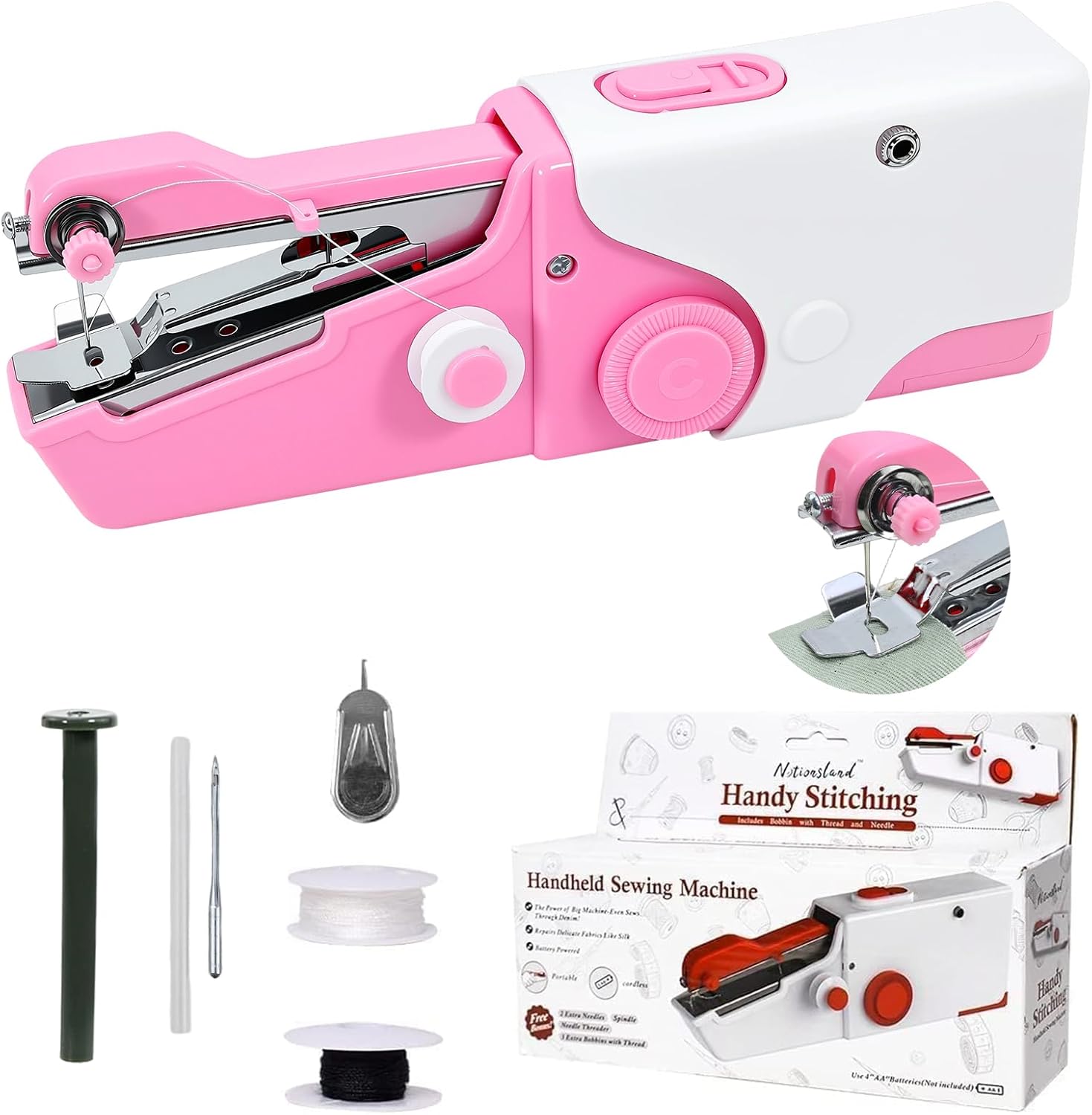
This mini handheld sewing machine is a lightweight, palm-sized tool for fast mending and basic crafting. It runs on either four AA batteries or the included USB cable, so you can use it cordlessly on the move or plugged in for longer sessions. Setup and threading are deliberately simple and the one-button operation lets novices start stitching hems, small tears, and fabric patches in seconds. The kit includes needles, pre-wound bobbins, fabric squares and simple accessories so beginners can practice immediately. Because the unit is built from plastic and meant for lightweight fabrics (up to about 1.8 mm thick), it handles cotton, silk and thin linens comfortably but will struggle with thicker materials, heavy denim, or layered seams. Stitch quality and control are fine for emergency repairs and small projects, but not a replacement for a full-size machine if you plan regular garment construction or heavy-duty alterations. For a very low-cost, portable fix-it tool and beginner learning kit, it is easy to recommend; experienced sewers will find its capabilities limited.
Best for: Buyers looking for an inexpensive, portable way to fix clothes and learn basic sewing skills will appreciate this machine for quick repairs, travel, and beginner practice.
Less Ideal for: People who need heavy-duty stitching, frequent garment construction, or professional-quality seams should choose a full-size sewing machine instead.
- Dual power options: USB cable or 4 AA batteries for cordless use
- Very simple threading and one-button operation suitable for beginners
- Includes a basic starter kit with needles, pre-wound bobbins and fabric patches
- Lightweight, ergonomic shape for quick repairs and travel
- Intended for lightweight fabrics only and not suitable for heavy or thick materials
- Plastic construction limits durability compared with full-size sewing machines
Verdict: A low-cost, portable starter sewing kit that makes quick repairs and beginner practice easy without the complexity of a full-size machine.
MacMia Handheld Sewing Machine

| Power Source | Battery Powered (4 AA) / Type-C charging |
|---|---|
| Included Components | threader, scissors, thimble, tape measure, seam ripper, 28 threads, 5 needles |
| Material | Plastic |
This MacMia handheld sewing machine is designed for quick repairs and simple craft projects, aimed squarely at beginners. It ships pre-threaded with practice fabric and a complete accessory kit so you can start stitching straight from the box, and it offers dual power via four AA batteries or Type-C charging for use at home or on the go. Two speed settings let you work slowly for delicate fabrics or faster for thicker materials, and the motor is rated to penetrate most everyday textiles. The unit is small and lightweight with an ergonomic grip and a hard-shell storage case, making it convenient for travel, mending, and small DIY projects. Important limitations are its palm-sized form and light plastic construction, which make it unsuitable for heavy-duty or continuous factory-style sewing and limit stitch width and advanced controls. For basic repairs and learning stitches, it is a dependable, ready-to-use option for novices.
Best for: Beginners who want a reliable, no-fuss machine for mending, travel repairs, and simple DIY projects and value immediate usability and portability.
Less Ideal for: Users who need a full-size sewing machine for continuous, heavy-duty sewing, large projects, or professional garment construction.
- Ready to use out of the box with factory pre-threading and practice fabric
- Dual power: runs on 4 AA batteries or Type-C charging for portability
- Two speed settings for delicate and heavier fabrics
- Comes with a comprehensive beginner accessory kit and hard-shell case
- Plastic, palm-sized construction not suited for heavy or continuous sewing
- Limited to basic stitch control and may struggle with very thick fabrics
Verdict: A beginner-focused, portable sewing solution that works right out of the box for fast repairs and simple projects.
SINGER Stitch Sew Quick

| Power Source | Battery Powered |
|---|---|
| Included Components | Machine, Bobbins, Needles, Threader |
| Number of Items | 1 |
The SINGER Stitch Sew Quick is a compact, battery-powered handheld mending tool for quick repairs to curtains, bedding, clothing, and light craft fabrics. It uses a single-thread feed and runs on four AA batteries (not included) or an optional adapter, and the package includes bobbins, needles, a thread spindle, and a needle threader so you can start small fixes right away. In practice it is best for lightweight materials and temporary hemming or basting — it lets you mend without removing garments or taking down drapes, and its cordless design makes it easy to work in place. Because it is a single-thread, mini unit it is not a substitute for a full sewing machine: stitches are basic and it can be fiddly with heavy fabrics like denim or thick wool. The lightweight plastic body and simple controls make it beginner-friendly, but expect to rethread or reload bobbins more often than with a standard machine. For quick, occasional repairs around the house this handheld is convenient and portable; for frequent or heavy-duty sewing stick with a standard machine.
Best for: Buyers who want a low-effort, portable tool for occasional spot repairs and value easy setup and visible social proof before committing to a larger machine.
Less Ideal for: Anyone needing durable, professional-grade seams, regular garment construction, or reliable performance on heavy fabrics should choose a full-size sewing machine instead.
- Truly cordless operation for mending in place without a table or outlet.
- Includes starter accessories (bobbins, needles, thread spindle, needle threader) so it is ready to use.
- Compact and lightweight for travel or storing in a sewing kit.
- Simple single-thread design that is easy for beginners to operate.
- Performs poorly on heavy or multiple-layer fabrics and is best suited to lightweight materials.
- Single-thread feed produces basic stitches that are not as durable as standard sewing machine stitches.
- Requires frequent battery changes or use of an adapter since batteries are not included.
Verdict: A handy, truly portable mending machine that lets beginners make fast, small repairs without a full sewing setup.
Aureqilin Handheld Sewing Machine

| Included Components | Handheld machine, USB cable, scissors, 112-piece kit |
|---|---|
| Unit Count | 112 Count |
| Material Type | Leather |
| Power Options | 4 AA batteries or USB cable |
This kit pairs a battery or USB-powered handheld sewing machine with a large 112-piece accessory set stored in an orange leather case. The compact machine is designed for quick household repairs and simple DIY projects on fabrics such as cotton, linen, and denim up to a shallow thickness; it runs from four AA batteries or the included USB cable for on-the-go fixes or plugged use at home. The accessory kit includes multiple threads, bobbins, needles, scissors, seam ripper, measuring tape, buttons, safety pins, and a spare needle so you have what you need for common mending tasks without hunting for extras. The unit promises quieter operation and tighter stitches than earlier micros, but it is intended for light-duty sewing—very thick materials or heavy layered seams may cause thread breakage. Setup and use are straightforward, making it approachable for beginners, though those wanting professional stitch quality or heavy-duty capability should consider a full-size machine instead.
Best for: Buyers who want a low-friction, ready-to-use kit for basic clothing repairs and small DIY projects and prefer a simple, portable solution they can use right away.
Less Ideal for: Users who routinely sew heavy fabrics, construct garments, or need precise, professional-quality stitching should choose a standard tabletop sewing machine instead.
- Includes a comprehensive 112-piece kit with threads, bobbins, needles, scissors and more for immediate repairs
- Dual power options: runs on 4 AA batteries or the included USB cable for flexibility
- Compact, portable design stored in a leather case for easy transport and tidy organization
- Simple operation geared to quick mending and beginner-friendly tasks
- Designed for light-duty sewing; thicker or multiple layered fabrics can cause thread breakage
- Not a replacement for a full-size sewing machine when you need professional stitch strength or advanced features
Verdict: This handheld sewing machine kit is a practical, beginner-friendly solution for quick mends and small projects when you want a compact, all-in-one repair set.
Choosing the Right Handheld Sewing Machine for Beginners: Key Factors to Consider
Ease of Setup and Threading
Beginner-friendly handheld machines should be quick to thread and simple to prepare for a seam. If threading paths are confusing or require fiddly steps, new users can become frustrated and avoid using the tool.
Look for clear threading diagrams, accessible needle positions, and straightforward bobbin or cartridge systems. A simple start-up routine reduces mistakes and saves time during small mends or learning sessions.
Stitch Quality and Tension Control
The machine must form even stitches that do not pucker the fabric or leave loose loops. Poor tension or inconsistent stitch formation makes repairs look unprofessional and can damage delicate materials.
Check whether the device maintains consistent stitch length and whether there are any basic tension adjustments. For beginners, predictable stitch output matters more than an extensive set of stitch patterns.
Power Source and Portability
Handheld machines are often chosen for portability, so battery life, rechargeability, and the option to plug into wall power matter. Short battery life interrupts projects and limits where you can work.
Consider how you will use the machine: occasional touch-ups at home, crafting on the go, or travel repairs. Machines with both battery and plug options, or long-lasting rechargeable batteries, offer the most flexibility.
Fabric Compatibility and Feed
Different handheld machines handle different fabric weights. A device that feeds smoothly through lightweight cotton may struggle on denim or layered seams.
Assess whether the feed mechanism grips the fabric well and whether the machine can handle typical beginner fabrics like cotton, knits, and light denim. Some handheld tools are strictly for lightweight repairs and will not perform on heavy materials.
Ergonomics and Control
Comfort and control are important for neat stitching. Poor ergonomics lead to shaky seams and hand fatigue during longer mending tasks.
Look for a comfortable grip, easy-to-reach controls, and a design that allows steady guidance of fabric. Features such as a small presser foot that holds fabric flat while stitching can make a big difference in results.
Included Accessories and Support
Accessories like extra needles, thread spools, small scissors, and different presser feet increase the usefulness of a handheld machine. For beginners, helpful extras reduce the need to shop for additional parts.
Also consider whether the manufacturer provides clear instructions and spare parts. A basic accessory kit helps you start sewing immediately and gives more flexibility for common repair tasks.
What Handheld Sewing Machines Do Best
Handheld sewing machines excel at small-scale tasks where a full-size machine would be overkill. They are ideal for quick hems, seam repairs, patching tears, and simple craft projects that do not require complex stitch patterns.
Their value lies in convenience and speed. For fabric emergencies, a handheld unit lets you make a functional repair fast without setting up a larger machine. They also work well in tight or awkward spaces where a traditional machine cannot fit.
- Quick clothing repairs and emergency hems
- Lightweight crafting and small quilting tasks
- Working in tight spaces and on irregular shapes
Common Limitations to Expect
Handheld machines trade capability for compactness. You should not expect the same stitch strength, customizable stitches, or heavy-duty handling that a full-size sewing machine provides. Layered denim, heavy canvas, and upholstery fabric can overwhelm many handheld units.
Additionally, stitch length and tension range are typically limited. For beginners, this is acceptable for basic work, but be realistic about the device's boundaries to avoid disappointment.
- Limited ability on heavy or multiple-layer fabrics
- Fewer stitch options and limited tension control
- Smaller throat space makes large projects awkward
Maintenance Tips to Keep a Handheld Machine Reliable
Regular, light maintenance extends the life of a handheld sewing machine. Clean lint and stray fibers from the feed area and around the needle after each use. Periodic light oiling of moving parts can prevent squeaks and keep the mechanism smooth.
Store the device in a dry place and remove batteries if you will not use the machine for extended periods. Replace needles when they show wear or bending to avoid skipped stitches and fabric damage.
- Wipe lint from the feed and needle area after use
- Oil moving parts sparingly when recommended by instructions
- Replace needles regularly and store batteries removed for long storage
Accessories That Make a Big Difference
A few well-chosen accessories improve capability and ease of use. Extra needles in different sizes help when switching between fabric weights. Small presser feet or clamps that hold fabric flat make sewing straighter seams.
Thread adapters, mini scissors, and a simple guidance ruler are also helpful. For beginners, having a compact accessory kit with clear labels reduces friction and encourages practice.
- Spare needles in multiple sizes
- Small presser foot or fabric clamps
- Thread adapters and mini cutting tools
Safety and Best Practices for Beginners
Operate the machine at a controlled speed and keep fingers clear of the needle path. Use a sturdy surface when working and secure loose fabric to prevent pulling or snagging. Always disconnect power or remove batteries before changing needles or performing maintenance.
Practice on scrap fabric to get comfortable with stitch formation and feed behavior before working on garments you care about. Simple repetition builds confidence and leads to better results.
- Work at a steady pace and keep fingers away from the needle
- Practice on scraps before important projects
- Disconnect power when servicing or changing needles
How We Chose the Best Handheld Sewing Machine for Beginners
We focused on what matters most to new users when selecting handheld sewing machines. Primary evaluation criteria included stitch reliability (consistent thread tension and even stitches), user friendliness (threading, bobbin setup, and intuitive controls), portability and power options (battery life, rechargeable options, and plug-in convenience), build quality and durability (material construction and mechanism robustness), and accessory support (included feet, needles, and adapters that increase versatility). We also considered performance on common beginner tasks such as hemming, light alterations, and quick repairs. Exclusions included full-size sewing machines, vintage hand-crank models, and single-purpose tools that cannot form a standard lockstitch. Our process filtered for machines that combine straightforward setup with predictable stitch results and a low learning curve. The products that made the list met multiple criteria across handling, stitch consistency, and practical accessories for beginners.
Our full evaluation process is outlined in our review methodology.
FAQ
Can handheld sewing machines handle denim or heavy fabrics?
Often they struggle with heavy fabrics and multiple layers. Some handheld machines manage light denim or single-layer heavier fabrics, but most are optimized for lightweight to medium-weight materials.
Are handheld machines suitable for learning to sew?
They can be a helpful starting point for basic seams and repairs because they are simple to use. However, they do not teach all techniques or offer the range of functions found on full-size machines.
How do handheld machines power on and off?
Many handheld models use AA batteries or rechargeable battery packs, and some also include an AC adapter option. Battery life varies, so consider how often you will use the device and whether a plug-in option is useful.
What maintenance does a handheld sewing machine need?
Routine maintenance includes cleaning lint from the feed and needle area, replacing bent needles, and light oiling of moving parts if the manual recommends it. Removing batteries for long-term storage helps preserve components.
Can I use regular sewing needles and thread in a handheld unit?
Usually yes, but needle size and thread weight compatibility depend on the specific machine. Check the instruction guidance and start with medium-weight thread and a universal needle when testing on scrap fabric.
Final Verdict
For beginners, prioritize machines that are straightforward to set up, maintain consistent stitches, and offer reliable power options. Expect tradeoffs: handheld units deliver portability and convenience at the cost of heavy-duty capability and advanced stitch control. Focus on ease of threading, a stable feed mechanism, and useful included accessories to get the best results for quick repairs and simple projects. With realistic expectations and basic maintenance, a handheld sewing machine can be a practical, confidence-building tool for new sewers.