
Note: This article contains affiliate links. If you click on these links and make a purchase, we may earn a small commission at no extra cost to you. This helps support our research and content. Read our full affiliate disclosure here.
If you work with leather at home or on small projects, a handheld sewing machine can speed repairs and let you stitch in tight spots that full-size machines cannot reach. Picking the right handheld sewing machine for leather matters because hide and thick synthetic leathers demand stronger needles, consistent stitch formation, and enough bite to pass through multiple layers without tearing or skipping stitches. This guide shortlists the top handheld sewing machines for leather and focuses on practical criteria like stitch strength, needle and thread compatibility, and ease of handling. Read on to see how we evaluated these compact machines and which features matter most for leatherwork.
Top Picks at a Glance
| Best Overall The best all-around choice for most situations | ColouredPeas Cobbler Hand Sewing Machine |  |
| Best Quality Built to a higher standard if you want something more solid | BEAMNOVA Leather Cobbler Sewing Machine |  |
| Best Value The sweet spot between price and what you get | Guoydir Handheld Bag Sewing Machine GK9 |  |
| Best Budget The cheapest option that still gets the job done reliably | ZMJY Mini Handheld Sewing Machine |  |
| Top Rated A top-rated pick with lots of positive feedback | Vaspow Handheld Sewing Machine ZDML-6 |  |
| Most Popular A crowd favorite that many people choose with confidence | SINGER Stitch Sew Quick |  |
ColouredPeas Cobbler Hand Sewing Machine

| Power Source | Manual |
|---|---|
| Material | Aluminum, Iron |
| Number of Items | 5 |
This manual cobbler sewing machine is built for small- to medium-scale leather and shoe repairs where portable, hand-powered stitching is preferred. It mounts on an aluminum tripod and uses a strengthened iron head with extra bearings for smoother operation compared with basic hand machines, and it is intended to be assembled from included instructions before use. Typical tasks include stitching soles, mending bags, and reinforcing seams on coats or quilts using nylon thread; the machine is hand-cranked so it does not need electricity and can be set up in a workshop or a market stall. The iron parts are treated with anti-rust oil but still require periodic lubrication of moving parts to keep operation quiet and efficient. Because it is hand-operated and handcrafted, you may see surface knocks and it will not be as cosmetically uniform as molded machines, but that does not affect function. This is a straightforward, durable option for someone who wants a traditional, mechanical cobbler tool rather than an electric industrial unit.
Best for: Hands-on crafters and small cobblers who value a rugged, manual sewing station for leather and shoe repairs and prefer a portable, non-electric tool they can maintain themselves.
Less Ideal for: Large volume or industrial shoe factories that need high-speed electric stitching machines or users who prefer a cosmetically flawless, molded appliance.
- Manual operation requires no electricity, useful for mobile or off-grid repair work
- Reinforced design with additional bearings for smoother, more durable operation
- Aluminum tripod provides a stable mounting platform while keeping the unit relatively portable
- Tested with leather at the factory, indicating practical readiness for leather repairs
- Iron parts can rust over time and need maintenance despite anti-rust coating
- Handcrafted finish may show knocks or imperfections compared with molded machines
Verdict: Choose this manual cobbler machine if you want a portable, mechanically robust tool for hands-on leather and shoe repairs without relying on power.
BEAMNOVA Leather Cobbler Sewing Machine
| Power Source | Hand Powered |
|---|---|
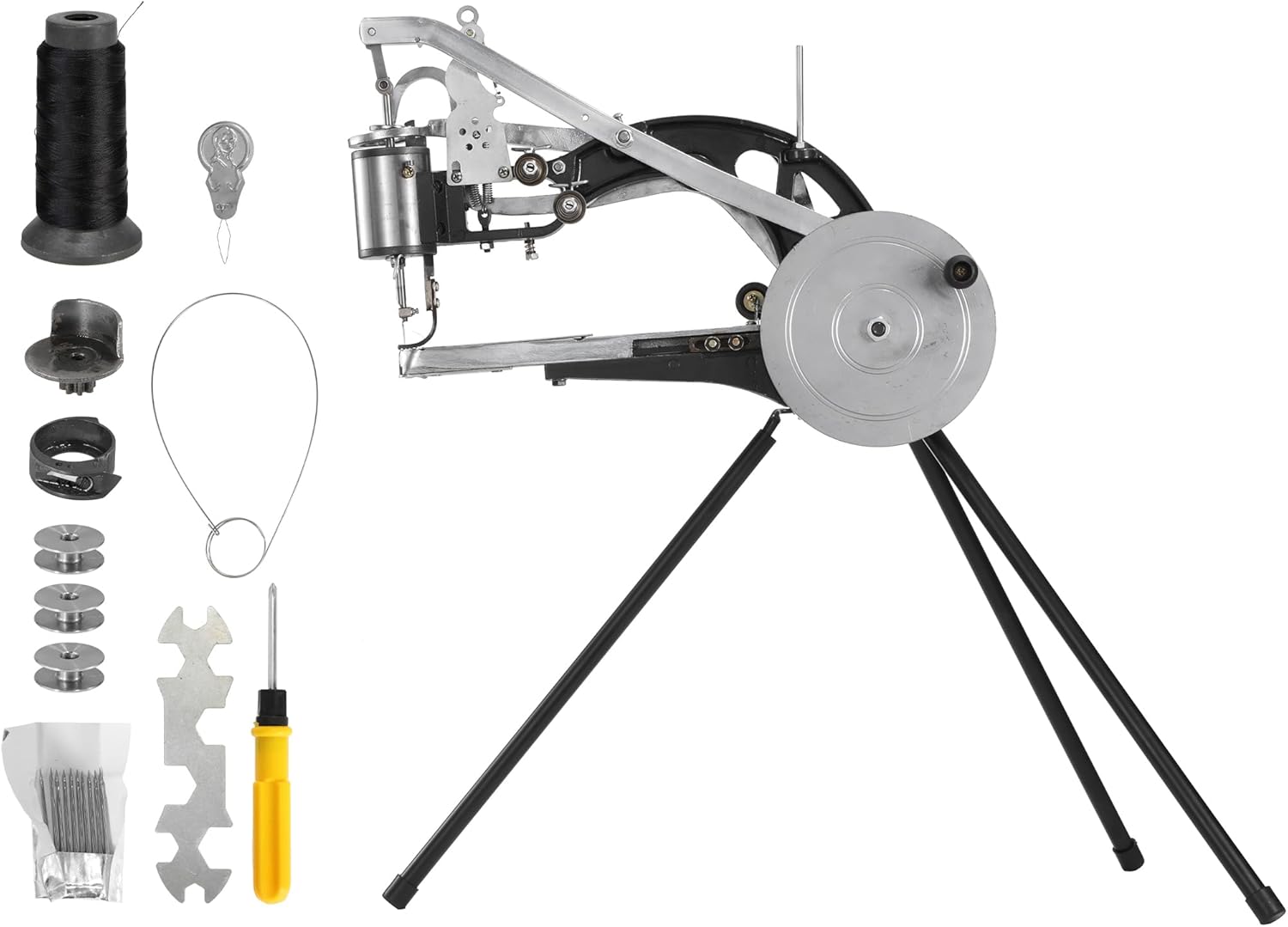
| Included Components | 10 needles, nylon coil |
| Material | Alloy Steel |
This hand-powered BEAMNOVA cobbler sewing machine is built for repairing shoes and stitching heavy materials where a tabletop machine cannot reach. It uses a manual turntable and foot crank to feed and rotate work, making it easy to sew curved or narrow areas like shoe uppers and bag corners. The upgraded metal body and aluminum-alloy support column reduce weight while keeping a durable frame, and the precision bobbin system is intended to produce tighter, more consistent stitches. The open arm and tripod stand let you place the machine on the floor and work on three-dimensional items without a bench, and the kit includes needles and a nylon coil to get started. Because it is hand powered, pace depends on operator skill and continuous long runs will be slower than motorized machines, and setup or adjustment may require patience for precise tension and needle selection. For someone focused on practical, heavy-duty stitching in small shops or as a portable cobbler tool, it offers a rugged, no-frills solution.
Best for: Craftspersons and small shop cobblers who prioritize robust, portable hand-stitching capability for leather repairs and bespoke shoe or bag work.
Less Ideal for: Users who need high-volume, continuous stitching or faster production speeds should choose a motorized industrial machine instead.
- Hand-powered design works without electricity and lets you control stitch speed precisely
- Open arm and 360-degree turntable allow sewing tight curves and three-dimensional parts
- Metal body and aluminum-alloy column provide durability with reduced weight
- Includes starter kit of needles and a nylon coil so you can begin sewing immediately
- Manual operation is slower and more physically demanding than motorized machines
- May require careful setup and needle selection to achieve consistent tension on very thick leather
Verdict: Choose this machine if you want a rugged, portable, hand-operated cobbler tool that handles leather and other thick materials without relying on electricity.
Guoydir Handheld Bag Sewing Machine GK9

| Power Source | ac |
|---|---|
| Input Voltage | 110 volts |
| Motor Power | 190W |
| Stitch Speed | 1800–2000 stitches/min |
The Guoydir GK9 is a handheld, AC-powered bag sewing machine built for fast, single-line chain stitching on heavy materials like burlap, woven sacks, kraft paper and leather. It ships ready to use with a pre-installed test thread and extra polyester thread rolls, so you can plug in and start sealing on-site. The unit delivers industrial-speed performance via a 190W motor that reaches 12,000 rpm and 1,800–2,000 stitches per minute while using 230# needles to penetrate thicker fabrics up to about 6 mm. Its metal construction and compact, one-hand design make it easy to carry around warehouses, farms, or shipping areas where portability and repeatable seams matter. Limitations include a single stitch style (chain stitch 101) and the need for specific needles and thread sizes, so it is not a drop-in replacement for household sewing tasks or for users who need diverse stitch patterns. For straightforward heavy-material sealing, though, it is a practical, worksite-ready tool.
Best for: Buyers who need a durable, portable machine to quickly seal sacks, leather patches, or heavy fabrics on-site and prioritize speed and reliability over decorative stitching.
Less Ideal for: People wanting a multi-function home sewing machine for garment work, decorative stitching, or light fabrics should look elsewhere.
- Ready to use out of the box with pre-installed thread and extra rolls
- High sewing speed (1800–2000 stitches/min) for fast, repetitive sealing
- Metal construction and compact handheld form factor for durability and portability
- Compatible with heavy-duty 230# needles and suitable for materials up to 6 mm thick
- Only supports single-line chain stitch (101) so stitch variety is limited
- Requires specific needle and thread size for proper operation
Verdict: If you need a rugged, ready-to-use handheld machine to quickly seal leather and other heavy materials on the job, the Guoydir GK9 delivers fast, portable industrial performance.
ZMJY Mini Handheld Sewing Machine
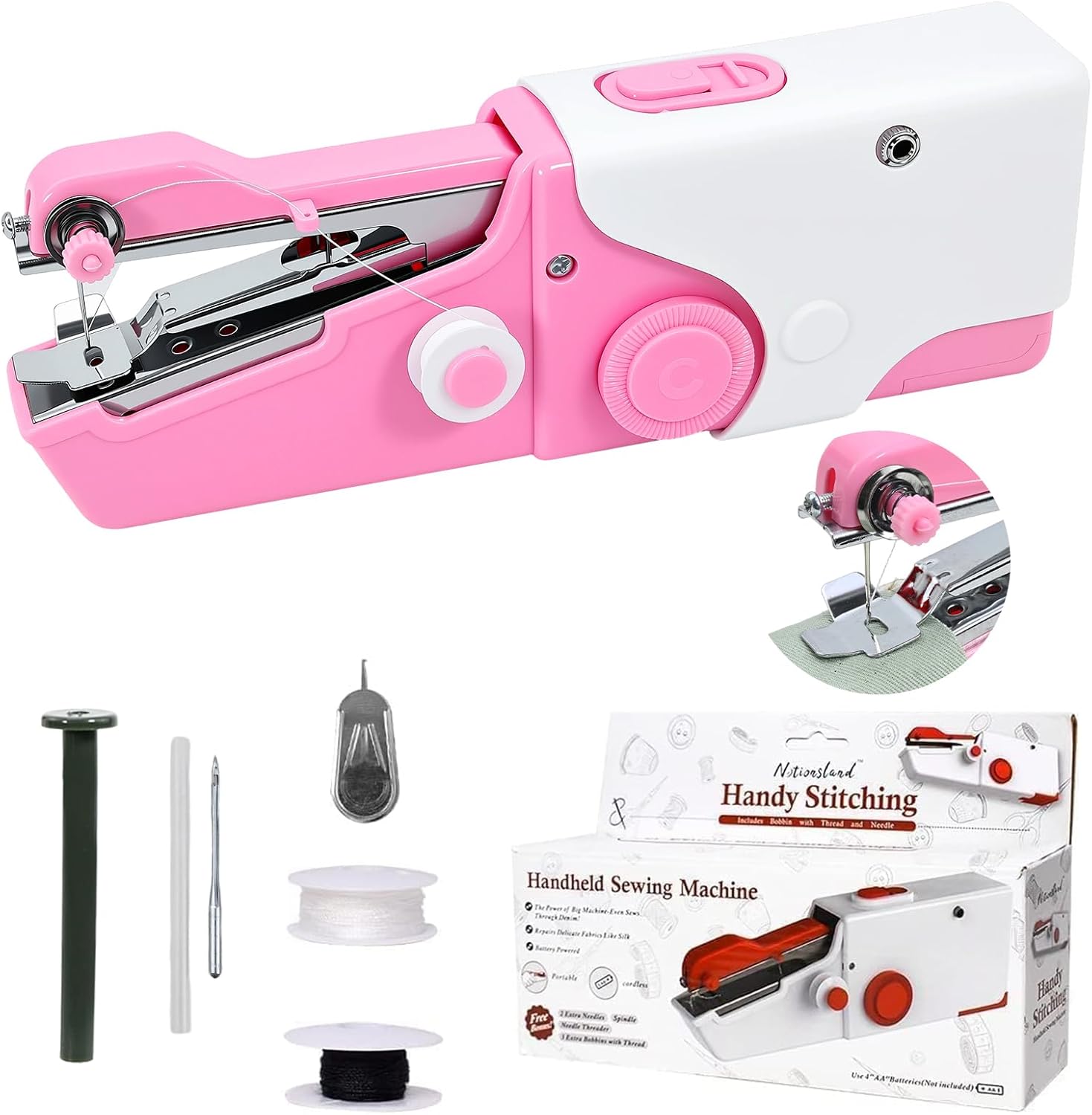
| Power Source | USB cable or 4 x AA batteries |
|---|---|
| Recommended Fabric Thickness | ≤ 1.8 mm |
| Included Components | Needle, USB cable, fabric squares, user manual |
This mini handheld sewing machine is a lightweight, pocketable tool for fast mending and basic craft work. It runs from four AA batteries or the included USB cable, has a simple one-button operation and comes with a starter kit of needles, pre-wound bobbins and fabric squares so you can begin repairs immediately. The ergonomic plastic body is easy to hold for short jobs and the unit excels at quick fixes like hems, loose buttons, toy repairs and simple DIY projects on thin fabrics. However, the manufacturer specifies it is suitable for lightweight materials up to about 1.8 mm thick, so it is not built for heavy fabrics or genuine leather; expect difficulty stitching multiple layers or thick seams and reduced stitch strength on dense materials. For casual users and beginners who need an ultra-portable emergency mender, this delivers convenience and low setup time, but it is not a replacement for a full-size or industrial machine when working with leather or heavy-duty textiles.
Best for: Buyers who want an inexpensive, extremely portable machine for emergency wardrobe fixes, travel, or simple beginner sewing projects and value low cost and ease of use.
Less Ideal for: Anyone planning to sew genuine leather, heavy fabrics, or multi-layer seams should choose a heavier-duty or industrial-capable sewing machine instead.
- Very portable with dual power via USB or AA batteries
- Simple one-button operation and easy threading for fast repairs
- Includes basic starter kit (needles, pre-wound bobbins, fabric squares)
- Lightweight ergonomic shape is comfortable for short mending tasks
- Rated for lightweight fabrics only (≤1.8 mm), not designed for leather or heavy seams
- Plastic construction limits durability for repeated heavy use
Verdict: If you need a cheap, grab-and-go mender for light fabrics and quick repairs, this mini handheld machine is a convenient starter option.
Vaspow Handheld Sewing Machine ZDML-6

| Power Source | dc |
|---|---|
| Input Voltage | 240 volts_of_alternating_current |
| Included Components | Power adapter, bobbins, needle, thread spools, tools |
The Vaspow ZDML-6 is a palm-sized lockstitch handheld machine intended for fast repairs and small craft tasks. It uses a true two-thread lockstitch with a lower bobbin, driven by a magnetic motor at about 330 stitches per minute, so repaired seams hold up better than single-thread handheld units. You can run it on four AA batteries for cordless convenience or use the included DC adapter for longer sessions, and the device ships with needles, bobbins, colored thread spools and basic tools to get started. Its molded resin shell and factory-locked stitch length simplify operation for beginners and reduce the chance of misadjustment, while a >5 mm foot clearance lets hems and two layers of standard denim pass under the needle. Important limits: stitch length cannot be changed, and the unit is designed for light-to-medium fabrics rather than heavy or thick leather, so expect binding or skipped stitches on dense leather or very heavy canvas. For straightforward home mending, travel fixes, and small DIY projects this machine is reliable and easy to use, but it is not a substitute for a full-size or industrial leather sewing machine.
Best for: Buyers who prioritize dependable, fuss-free mending and need a portable, ready-to-use handheld for everyday garments and light craft projects.
Less Ideal for: If you regularly sew thick leather, heavy canvas, or need variable stitch control for professional leatherwork, this device will be too limited.
- True lockstitch design with upper thread and lower bobbin for durable seams
- Cordless operation on 4 AA batteries plus included DC adapter for longer use
- Magnetic motor provides steady 330 SPM and resists bogging on medium seams
- Compact, impact-resistant resin body and pre-threaded setup make it beginner-friendly
- Comes with needles, multiple bobbins, thread spools and basic tools in the box
- Stitch length is factory-locked and cannot be adjusted
- Not intended for heavy leather or industrial-weight materials
Verdict: Choose the Vaspow ZDML-6 when you want a reliable, truly lockstitch handheld that makes fast, durable repairs on everyday fabrics with cordless convenience.
SINGER Stitch Sew Quick

| Power Source | Battery Powered |
|---|---|
| Included Components | Machine, Bobbins, Needles, Threader |
| Material | Plastic |
The SINGER Stitch Sew Quick is a cordless, single-thread handheld mending machine built for fast patching and temporary basting around the house. It runs on four AA batteries (not included) and ships with bobbins, needles, a thread spindle and a needle threader so you can start simple repairs immediately. In practical use it excels at lightweight fabrics, curtains, bedding and quick hems where portability and the ability to stitch without removing or moving large items matter. Because it is single-thread and compact, stitching is straightforward but not as strong or refined as a full-size machine, so expect visible hand-like stitches and limited control on very thick materials. The unit is easy to maneuver for spot fixes and travel, but users repairing heavy leather should be cautious since the device is optimized for lighter textiles. For fast, occasional mending and emergency fixes the Stitch Sew Quick delivers convenience; for heavy-duty or professional leatherwork you will need a purpose-built machine.
Best for: Buyers who want a portable, easy-to-use tool for quick household repairs and occasional mending and who value convenience and social-proof reliability when choosing a compact sewing solution.
Less Ideal for: People who need durable, professional-grade stitching for leather goods or frequent heavy fabric work should choose a heavier-duty or industrial sewing machine instead.
- Cordless, battery-powered design for easy, on-the-spot repairs
- Includes bobbins, needles, thread spindle and needle threader for immediate use
- Very compact and lightweight for portability and quick fixes
- Simple single-thread operation that is easy to learn
- Single-thread feed produces visible, less durable stitches compared with standard sewing machines
- Not designed for heavy or multiple layers of leather or very thick fabrics
- Requires four AA batteries or separate power adaptor which are not included
Verdict: Choose the Stitch Sew Quick for fast, portable fabric repairs when convenience and easy setup matter most.
Choosing the Right Handheld Sewing Machine for Leather: Key Factors to Consider
Stitch Strength and Consistency
Leather is dense and does not compress like woven fabric, so stitch formation must be solid to avoid skipped stitches or ripped holes. Evaluate machines on their ability to form tight, even stitches through single and multiple leather layers. Consistent stitch length reduces stress points around stitch holes and improves durability.
Also consider whether the machine allows stitch-length adjustment. Shorter stitches concentrate stress and are better for repairs, while slightly longer stitches can be beneficial for joining thicker panels without puckering.
Needle and Thread Compatibility
Home handheld machines vary in the needles and threads they accept. For leather, you need machines that take heavier-duty needles—such as leather needles or larger-diameter universal needles—and that allow thicker, bonded, or waxed thread. Check tension adjustability so you can balance thicker thread without pulling too tight across the hide.
If a machine uses an unusual bobbin or proprietary thread path that limits thicker thread use, it is less suitable for leather. Also confirm easy needle changes and availability of replacement needles that match leather sewing needs.
Material Feed and Grip
Feeding leather requires a firm grip and a reliable advancement method. Handheld machines should have a positive presser foot, clamp, or feed dog design that prevents slipping and allows controlled progress along seams. Poor feed design leads to uneven stitches and more manual effort when guiding heavy material.
Look for machines with a stable base plate or optional clamps that help keep the hide flat while you sew. For curved seams or hard-to-reach spots, the feeding mechanism should still let you maneuver the material without losing stitch quality.
Build Durability and Serviceability
Leather work puts higher loads on moving parts, so metal or reinforced internal components last longer than thin plastic gears. Evaluate how the machine is constructed, how accessible the internal parts are for cleaning, and whether common wear parts like needles, bobbins, or thread paths are easy to replace.
Serviceability matters when you use the machine regularly: simple disassembly, clear access to tension and drive components, and the availability of spare parts prolong useful life and keep performance consistent.
Ergonomics and Control
A handheld sewing tool must be comfortable and allow precise control, because leather work often requires steady hands and close visual alignment. Consider grip shape, weight distribution, trigger or speed controls, and how intuitive stitch-length or tension adjustments are while you work.
Comfortable controls reduce fatigue during longer repair jobs and improve accuracy on corners and decorative stitching. A machine that feels awkward or top-heavy will be harder to guide accurately on thick materials.
Power Source and Runtime
Handheld machines use different power types, such as battery, rechargeable, or mains power. For leather, consistent torque is more important than raw speed, and some battery-powered units may lose power under load. Check expected runtime under load and whether the unit sustains torque when sewing multiple layers.
If you plan to use the machine in a workshop near an outlet, a plug-in option avoids runtime limits. For field repairs or mobile use, prioritize rechargeable units with steady output and quick-charge options.
Preparing Leather for Handheld Sewing
Preparation helps achieve clean, durable seams when using a handheld machine. Start by marking stitch lines and, if needed, thinning the seam allowance with a skiving tool in the overlap area. Lightly tap or clamp layers together so the material does not shift during sewing.
Use the correct needle and thread combination before you begin. Pre-punching holes with a small awl or chisel for very thick hides can reduce stress on the machine and improve stitch alignment. Finally, practice on scrap pieces of the same leather to confirm tension and stitch length settings.
- Mark stitch lines with a nonpermanent pen or awl.
- Skive overlapping edges for flatter seams.
- Pre-punch holes for very thick or rigid hides.
- Test settings on scrap leather before final stitching.
Needles, Thread Types, and Tension Tips
Leather needles with a chisel or wedge point make a cleaner hole than standard needles and reduce tearing. Match needle size to leather thickness and choose threads designed for heavy-duty use, such as bonded nylon, polyester, or waxed linen, depending on the look you want.
Adjust tension incrementally and sew test rows to avoid over-tightening, which can cut through leather, or under-tightening, which leaves loose loops. Balanced tension ensures both top and bottom threads nest properly in the material.
- Use leather or heavy-duty needles sized for your hide thickness.
- Choose a bonded or waxed thread for durability and reduced fraying.
- Adjust tension slowly and test on scraps until you get even stitches.
Stitch Types and When to Use Them
Handheld machines commonly create lockstitches similar to standard home machines. For repairs and light-duty seams, a tight lockstitch is usually adequate. For decorative seams or areas needing extra strength, consider using a slightly longer stitch and reinforcing with overlapping rows or hand-backstitching where appropriate.
Keep in mind that some heavy-usage items, like load-bearing straps, may still require specialized saddle stitching performed by hand or with a heavy-duty machine. Use handheld models for repairs, small seams, and patches rather than structural leatherwork when safety is a concern.
- Lockstitches for general repairs and seams.
- Longer stitches for joining thick panels without puckering.
- Reinforce high-stress points with extra rows or hand stitching.
Maintenance for Reliable Leather Sewing
Leather dust and tiny fibers can build up and affect feed and tension components. Regularly clean the needle area, bobbin case, and feed mechanism after each heavy session. Lubricate moving parts per the manufacturer's guidance, using a light machine oil in small amounts to avoid staining leather.
Inspect needles frequently; a dull or bent needle causes skipped stitches and damage to the hide. Replace needles after noticeable wear or after sewing several thick layers to maintain stitch quality.
- Clean debris from the bobbin area and feed mechanism after use.
- Use minimal oil and wipe excess before sewing leather pieces.
- Replace needles regularly and check for burrs or bends.
When to Choose a Handheld Machine Versus Other Methods
Handheld machines excel at quick repairs, edge stitching in tight spots, and small upholstery or leathercraft tasks where portability and access are the primary concerns. They are often faster than hand sewing and more convenient than moving large workpieces to a table-mounted machine.
However, for extensive structural sewing or thick multi-layer straps meant to carry heavy loads, a purpose-built heavy-duty sewing machine or traditional hand-saddle stitching may be a safer long-term solution. Match the tool to the project's structural demands.
- Best for repairs, light upholstery, and small leathercraft projects.
- Not ideal for high-load structural seams or heavy multi-layer straps.
- Consider access and portability needs when choosing a handheld unit.
How We Chose the Best Handheld Sewing Machine for Leather
We focused on attributes that matter specifically to leather sewing rather than general portability. Primary evaluation criteria included stitch strength and consistency, meaning the machine must form reliable stitches through dense materials without frequent skipped stitches. We checked needle and thread compatibility to ensure the machines accept heavier needles and thicker threads commonly used for leatherwork. Build robustness and feeding mechanism were evaluated because leather requires steady material advancement and a strong presser foot or clamp to avoid slipping. Ease of use and control were measured by looking at hand ergonomics, stitch-length adjustment, and how approachable the setup is for non-industrial users. We also weighed portability and power options since handheld models vary between battery, plug-in, or rechargeable formats. We excluded lightweight novelty hand-sewing gadgets that lack the mechanical strength to penetrate leather or that advertise only fabric patching. Models missing clear support for heavier needles or with no stitch adjustment were not considered. The resulting shortlist reflects a balance of usable stitch quality on leather, durable construction, and straightforward controls that suit hobbyists and small repairs.
Our full evaluation process is outlined in our review methodology.
FAQ
Can a handheld sewing machine sew through multiple layers of leather?
Often yes for thin to medium-weight leathers if you use the correct needle and thread and the machine supports heavier needles. Very thick or stacked multi-layer seams may exceed the device's mechanical ability and require pre-punching or a heavier machine.
What needle should I use for leather with a handheld sewing machine?
A leather or heavy-duty needle with a wedge or chisel point is usually best. Match the needle size to the leather thickness and replace it if you notice burrs, skipped stitches, or increased resistance.
How do I prevent the leather from slipping while sewing with a handheld machine?
Clamp or tape the layers lightly and use a machine with a firm presser foot or base. Moving slowly and using guide marks helps maintain alignment. For very slippery or thin leathers, consider a thin stabilizer or backing while stitching.
Are battery-powered handheld machines powerful enough for leather?
They can be for light repairs and thin to medium leathers, but battery units vary in sustained torque under load. Rechargeable or mains-powered options generally provide steadier power for heavier tasks.
How often should I change needles when sewing leather?
Change needles more frequently than for fabric work. Replace a needle when it shows any signs of dullness, bending, or if stitch quality degrades. For routine leather projects, changing needles after several thick pieces is common.
Final Verdict
For leather repairs and small projects, prioritize machines that deliver consistent stitch strength, accept heavier needles and thread, and offer a reliable feeding mechanism. Balance portability with build durability and power type based on whether you will use the tool in the shop or on the move. By focusing on needle compatibility, material feed, and ergonomic control, you can choose a handheld sewing machine that handles most leather tasks confidently while understanding when a heavier machine or hand techniques are more appropriate.