
Note: This article contains affiliate links. If you click on these links and make a purchase, we may earn a small commission at no extra cost to you. This helps support our research and content. Read our full affiliate disclosure here.
If you want lower energy bills and gentler care for delicate clothes, a Heat Pump Dryer is one of the most practical upgrades you can make to your laundry routine. These machines use a closed-loop heat-recycling system to dry clothes at lower temperatures, which reduces shrinkage, protects fibers, and cuts electricity use compared with traditional electric dryers. Choosing the right model matters because features, drum capacity, and dryness sensors affect cycle times and how well different fabrics are treated. This guide covers our shortlist of the top Heat Pump Dryers for home laundry and explains the evaluation criteria we used. Read on for the factors that matter, practical guidance for installation and maintenance, and answers to common buyer questions before you pick a model.
Top Picks at a Glance
| Best Overall The best all-around choice for most situations | LG DLHC1455W Heat Pump Dryer |  |
| Best Quality Built to a higher standard if you want something more solid | LG WashTower WKHC152HWA | 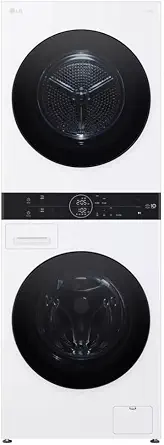 |
| Best Value The sweet spot between price and what you get | Samsung 4.0 cu ft Heat Pump Dryer |  |
| Best Budget The cheapest option that still gets the job done reliably | Smad Heat Pump Dryer DDF-100ALBMW(HP) |  |
| Top Rated A top-rated pick with lots of positive feedback | BLACK+DECKER Heat Pump Dryer BDFH44M |  |
| Most Popular A crowd favorite that many people choose with confidence | Techomey Heat Pump Dryer HDF-100ALBMU |  |
LG DLHC1455W Heat Pump Dryer

| Capacity | 4.2 cubic feet |
|---|---|
| Form Factor | Top Load |
| Door Orientation | Reversible |
| Specification Met | CSA |
The LG DLHC1455W is a compact ventless heat pump dryer designed for small spaces that still need generous drum capacity. It uses Dual Inverter Heat Pump technology to recycle moisture and reduce energy use compared with conventional condenser dryers, and Sensor Dry helps adjust run time based on load moisture for better fabric care. The 4.2 cu ft drum fits a reasonable household load while the ventless design lets you install it stacked or in closets where venting is not feasible. Built-in Wi‑Fi and the ThinQ app allow remote monitoring and cycle control, and the unit offers 14 preset dryer programs to handle different fabrics and drying needs. Trade-offs include a higher upfront complexity compared with basic condenser dryers and the typical longer cycle times associated with heat pump drying, but the energy savings and gentle drying make it a strong choice for buyers prioritizing efficiency and fabric care in tight laundry spaces.
Best for: Buyers who need a space-saving dryer that prioritizes energy efficiency and gentle fabric care and want the convenience of smart controls for remote monitoring.
Less Ideal for: People who need the fastest possible dry times or who prefer the simplest, lowest-cost mechanical dryers without smart features.
- Dual Inverter Heat Pump recycles moisture for more energy-efficient drying than condenser models
- Ventless design allows installation in closets or stacked setups without external venting
- 4.2 cu ft capacity in a 24-inch footprint balances space savings with usable load size
- Wi‑Fi smart control via LG ThinQ for remote monitoring and cycle management
- Sensor Dry and 14 preset programs provide tailored cycles for fabric care
- Heat pump dryers generally run longer cycles than conventional vented units
- More complex technology may require more expensive repairs than basic dryers
Verdict: This compact ventless heat pump dryer is the best pick for buyers who want an energy-efficient, fabric-friendly dryer that fits tight laundry spaces and offers smart controls.
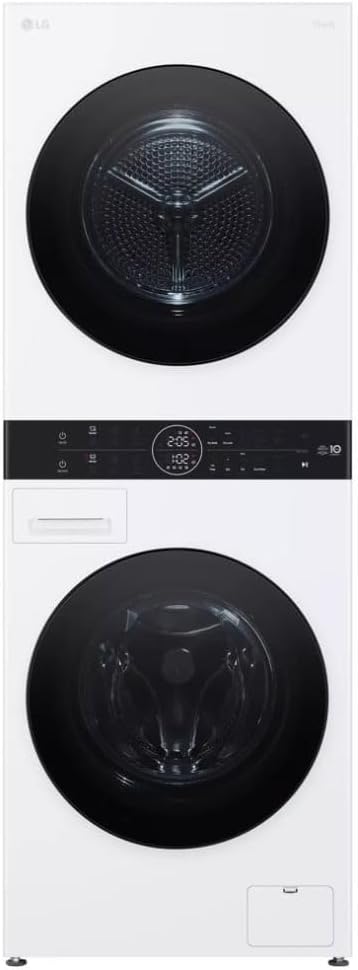
LG WashTower WKHC152HWA
| Washer capacity | 2.4 cu. ft. |
|---|---|
| Dryer capacity | 4.2 cu. ft. |
| Combined capacity | 6.6 cubic feet |
| Voltage | 240 volts |
| Annual energy consumption | 180 kilowatt hours per year |
The LG WashTower WKHC152HWA pairs a front-load washer with a ventless Dual Inverter Heat Pump dryer in a single 24-inch vertical cabinet aimed at saving space without sacrificing performance. You control both machines from the center console and via the ThinQ app for remote monitoring and cycle starts. The washer offers AI auto-dosing and standard cycles while the heat pump dryer uses sensor dry and steam options to reduce over-drying and refresh garments using lower-temperature airflow, which is gentler on fabrics and more energy efficient. As a ventless heat pump unit it installs where external venting is impractical, and its ENERGY STAR rating and modest annual energy consumption make it a strong choice for buyers prioritizing efficient drying. Expect slower cycle times compared with conventional vented dryers and a higher upfront cost for heat pump technology, but better long-term efficiency and gentler fabric care. The stacked, integrated design makes it straightforward for apartment or small-space laundry setups where performance and energy use matter most.
Best for: Buyers who prioritize drying performance and fabric care but need an energy-efficient, space-saving laundry solution for apartments or tight laundry rooms.
Less Ideal for: People who need the fastest possible dry times or who can accommodate a traditional vented dryer setup with external venting.
- Space-saving stacked washer and ventless heat pump dryer in a single 24-inch unit
- Dual Inverter Heat Pump dryer for lower-temperature, energy-efficient drying
- AI auto-dosing washer dispenser reduces detergent guesswork
- Center Control layout and ThinQ Wi‑Fi support for convenient local and remote control
- ENERGY STAR certified with modest annual energy consumption
- Ventless heat pump drying typically has longer cycle times than vented dryers
- Heavier and larger than a single appliance which can complicate installation in very tight closets
Verdict: Choose this compact LG WashTower if you want a high-performance, energy-efficient heat pump dryer and washer in one space-saving unit.
Samsung 4.0 cu ft Heat Pump Dryer

| Capacity | 4 cubic feet |
|---|---|
| Form Factor | Front Load |
| Access Location | Front Load |
| Included Components | Heat Pump Dryer |
This Samsung 4.0 cu ft heat pump dryer is a ventless, energy-conscious clothes dryer that uses heat pump technology and sensor-based drying to reduce energy use and protect fabrics. It is typically installed in closets, apartments, or utility rooms where a vent is not available and is used like a conventional front-load dryer with familiar cycles. Notable features include the AI Smart Dial that learns and recommends cycles, Wi‑Fi control via the SmartThings app for remote start and end-cycle alerts, and Sensor Dry to optimize time and temperature to avoid overdrying. The heat pump design delivers gentler, lower-temperature drying and can lower operating costs compared with traditional vented electric dryers, but cycle times can be longer and initial cost and weight are higher. Its ventless setup simplifies placement but may require regular lint filter and condenser maintenance. For buyers who prioritize energy efficiency and flexible installation, it offers a modern, connected drying solution; those wanting the fastest possible cycles or the lowest upfront price should compare alternatives.
Best for: Buyers who want lower operating costs, flexible installation without a vent, and smart features that simplify regular laundry routines.
Less Ideal for: Those who need the fastest possible drying times or prefer the lowest upfront purchase price should consider other dryer types.
- Ventless heat pump design reduces energy use and allows installation without external venting
- AI Smart Dial learns preferences and simplifies cycle selection
- Wi‑Fi connectivity with SmartThings enables remote start and end‑of‑cycle alerts
- Sensor Dry adjusts time and temperature to prevent overdrying and protect garments
- Heat pump drying typically takes longer than conventional high‑heat vented cycles
- Heavier and more complex than basic dryers, which may complicate moves or setup
Verdict: Choose this dryer if you want a ventless, energy-efficient, smart-connected machine that protects clothes and fits where a vented dryer cannot.
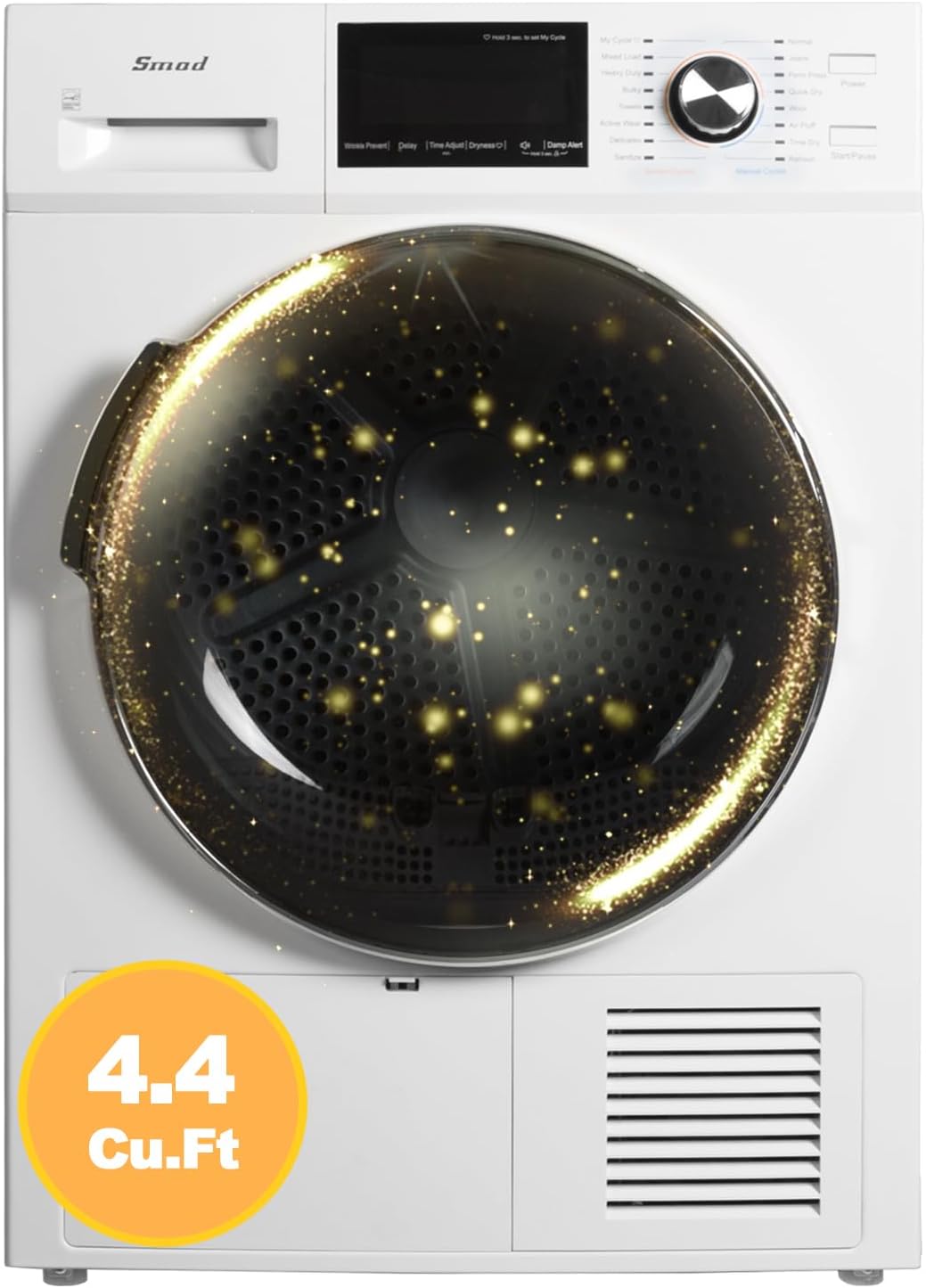
Smad Heat Pump Dryer DDF-100ALBMW(HP)
| Form Factor | Front Load |
|---|---|
| Capacity | 4.4 cubic feet |
| Access Location | Front Load |
| Included Components | power cable |
| Specification Met | UL |
The Smad DDF-100ALBMW(HP) is a ventless heat pump dryer built to save energy while handling everyday loads. It provides 4.4 cubic feet of capacity in a front-load cabinet and offers 16 preset drying programs accessed via an LED control panel and cycle status lights, so you can pick gentle or intensive cycles for different fabrics. Heat pump technology reduces power draw compared with conventional electric dryers and the unit includes wrinkle-care and sanitize options for fresher results. The dryer is stackable for tight laundry spaces and ships with a power cable for standard 120/240V installation. Expect practical, economy-focused performance: it dries without external venting and uses lower temperatures that are kinder to clothes but can lengthen cycle times compared with vented models. The controls and indicators make monitoring simple, though reported user feedback is limited. For buyers prioritizing lower operating costs and compact, ventless installation, this model delivers functional features in a modest footprint.
Best for: Buyers who need an energy-efficient, space-saving dryer and want lower operating costs over time while accepting longer cycle times.
Less Ideal for: Households that need very large single-load capacity or the fastest possible drying cycles should consider larger vented models instead.
- Ventless heat pump design lowers energy use compared with conventional electric dryers
- Multiple drying programs (16) for fabric-specific cycles
- Compact, stackable front-load form factor fits small laundry spaces
- LED display and cycle status lights simplify monitoring
- Smaller 4.4 cu ft capacity may require more frequent loads for larger households
- Heat pump drying uses lower temperatures so cycle times are typically longer than vented dryers
- Limited customer feedback available in listing to confirm long-term reliability
Verdict: Choose this compact ventless heat pump dryer if you prioritize lower energy use and a stackable footprint for small laundry spaces.
BLACK+DECKER Heat Pump Dryer BDFH44M

| Capacity | 4.4 cubic feet |
|---|---|
| Cycles | 16 cycles |
| Power | 240V/60Hz |
| Draining | Removable tank or drain hose |
| Certification | Energy Star certified |
This BLACK+DECKER heat pump dryer is a ventless front-load unit that uses a compressor-style heat pump to recirculate air and remove moisture into a removable tank or optional drain hose. It is designed for indoor installs where an exhaust to the outside is not possible and is Energy Star certified to use roughly 28% less energy than conventional electric dryers. The machine offers 16 cycle choices including Delicates, Bulky, Quick Dry, Sanitize, and a programmable My Cycle for repeat settings, plus sensor dry and LED controls. Practical benefits include gentler drying for fabrics, flexible placement since no vent is required, and an easy-to-empty water container or drain hookup. Expect longer drying times compared with vented dryers and a professional hardwired 240V installation requirement; the unit also recommends specific fill levels for best performance. For buyers wanting an efficient, fabric-friendly dryer that can be placed almost anywhere indoors, this model is a solid, practical option.
Best for: Buyers who prioritize reliable, energy-efficient drying and need a non-vented solution for apartments or utility rooms where outside exhaust is impractical.
Less Ideal for: Users who need very fast cycle times or who cannot accommodate a professional 240V hardwired electrical installation should consider other options.
- Heat pump technology reduces energy use compared with standard electric dryers
- Ventless design allows indoor installation without an outside exhaust
- Multiple cycles including My Cycle programmable setting for repeated preferences
- Sensor dry and LED controls simplify operation and help prevent over-drying
- Includes removable water tank and drain hose option for flexible moisture removal
- Generally longer drying times than vented dryers due to heat pump design
- Requires professional hardwired 240V installation and separate cord not included
Verdict: Choose this dryer if you want a reliable, energy-saving ventless heat pump that fits indoors and is gentler on clothes.
Techomey Heat Pump Dryer HDF-100ALBMU

| Capacity | 4.4 cubic feet |
|---|---|
| Form Factor | Front Load |
| Drying Cycles | 16 cycles |
This Techomey ventless heat pump dryer is built for apartments and small homes that need efficient, gentle drying without an external vent. It uses a heat pump system and smart sensor dry technology with 16 cycles to pause automatically when garments reach the target dryness, which helps protect delicates and high-grade fibers. The unit includes a removable water tank and lint and base filters; the tank must be emptied after each use or the program will pause, and regular lint cleaning is required. Energy use is lower than conventional electric dryers because the heat pump reuses heat, and the machine claims significant power savings and temperature control under 50°C to reduce fabric stress. At 4.4 cubic feet and a front-load, stackable design, it fits tight laundry spaces but requires a 4-prong power connection or an adapter for 3-prong outlets. Expect slower cycle times compared with vented high-heat dryers, and plan for routine maintenance of filters and the water tank.
Best for: Buyers who need a compact, energy-conscious dryer for an apartment or small laundry area and prioritize gentle drying for delicates and high-end fabrics while valuing space savings.
Less Ideal for: Users who need very fast, heavy-load drying or who cannot accommodate a 4-prong power connection without an adapter should consider other dryer types.
- Ventless heat pump design for use without external venting
- Smart sensor dry with 16 cycles to avoid overdrying delicate fabrics
- Compact, stackable front-load form factor for small spaces
- Removable water tank and accessible lint/base filters for maintenance
- Designed to control air temperature below 50°C for gentler drying and energy savings
- Requires emptying the water tank after each cycle or the program will pause
- Likely longer drying times than traditional vented electric dryers
Verdict: A compact, energy-saving ventless heat pump dryer that protects delicate fabrics and fits small, stackable laundry setups.
Choosing the Right Heat Pump Dryer: Key Factors to Consider
Energy Use and Long-Term Operating Cost
Heat pump dryers are chosen primarily for their lower energy consumption, so understanding measured cycle energy use matters. Look at the reported energy per cycle or seasonal energy rating where available. Lower cycle energy translates directly to lower monthly electricity costs, especially for households that run the dryer multiple times per week.
Keep in mind that efficiency varies with load size and program selection. Running partial loads or using high-heat programs can erode potential savings. Also consider how often you will use the dryer relative to other appliances; the more frequent the use, the more impactful efficiency differences become.
Fabric Care Features and Cycle Options
Gentle drying at lower temperatures is a main advantage of heat pump technology, but program design dictates real-world fabric protection. Seek models with low-temperature or "delicate" programs, adjustable time or dryness levels, and specific cycles for items like bedding or sportswear.
Accurate moisture sensors and adjustable dryness targets help prevent overdrying, which reduces shrinkage and fabric stress. If you frequently dry mixed loads or garments with different care requirements, the availability of customizable programs matters a lot for preserving clothing longevity.
Drying Speed and Consistency
Heat pump dryers typically run longer than conventional high-heat dryers because they use lower temperatures. Evaluate how the dryer performs across small and large loads. A model that maintains consistent drying times and even dryness levels without re-runs will be more convenient and can offset slower cycle times through reliability.
Check whether the dryer adapts cycle length based on sensor feedback and whether it prevents damp spots in dense fabrics or filling-heavy items. Consistency is especially important for households that dry mixed fabrics or bulky items like duvets.
Capacity, Fit, and Installation Needs
Choose a drum capacity that matches your typical load size. Larger drums handle bulky items and bedding more easily, but they also need more energy per cycle. Think about where the dryer will sit: front-loading units need clearance for the door and ventilation or condensation management. Some heat pump models are stackable with compatible washers, which can save space in small laundry areas.
Installation may require access to an electrical circuit of the right rating and clearance for airflow and maintenance access. Verify dimensions and expected hookups to avoid surprises at delivery time.
Noise Level and Vibration Management
Dryers that sit near living areas or on upper floors should be quiet and well-balanced. Look for models that report sound levels or advertise reduced vibration. Lower noise makes it easier to run cycles at night or while people are home without disturbance.
Vibration control also affects longevity and placement. A dryer that rocks or transmits vibration to adjacent walls can create ongoing annoyance, so stable mounting, good suspension, and anti-vibration design are practical considerations.
Maintenance, Filters, and Cleaning Access
Heat pump dryers require regular maintenance to sustain efficiency. That typically includes emptying a condensed water reservoir or ensuring the drain is clear, cleaning lint filters, and accessing the heat-exchanger or condenser for periodic cleaning. The ease of reaching these components affects how often owners will actually perform upkeep.
Consider models with accessible filters, clear indicator lights for required service, and straightforward condenser access. Lower-maintenance designs reduce the risk of efficiency loss and unexpected performance problems over time.
How Heat Pump Dryers Save Energy
Heat pump dryers recycle heat within a closed loop rather than venting it to the room. A refrigerant-based compressor transfers warmth from the exhaust air back into the drum, allowing drying at much lower ambient temperatures and reducing the amount of fresh electrical heat the unit must generate.
This design means the dryer can achieve similar dryness levels while using a fraction of the energy of conventional electric models. For many households, the energy savings accumulate over months and years, making heat pump dryers attractive for both environmental and operating-cost reasons.
- Lower operating temperatures reduce fabric stress and shrinkage
- Recycled heat cuts electricity consumption per cycle
- Longer cycle times are common but can be offset by reduced re-runs
Sizing Your Dryer for Household Needs
Select a drum capacity that matches your routine. Singles and couples often prefer smaller drums for quicker turnaround, while families or those who wash bedding regularly will want larger capacities to fit duvets and multiple loads without overfilling.
Remember that overpacking the drum reduces airflow and increases drying time. If you often dry bulky items, prioritize a model with extra drum space rather than relying on repeated partial loads.
- Match capacity to load frequency and typical item sizes
- Avoid overfilling to maintain airflow and sensor accuracy
Installation Tips and Space Considerations
Plan the dryer's placement with maintenance access and ventilation in mind. Heat pump dryers are typically ventless but need clearance for service access and to prevent heat buildup around the cabinet. Confirm electrical requirements and whether the model uses a removable water reservoir or a direct drain option.
If you intend to stack the dryer over a washer, verify stacking compatibility and allow for door swing and clearance. Proper leveling reduces vibration and noise, so adjust feet and use vibration pads where recommended.
- Check whether the dryer requires a dedicated circuit
- Confirm water drainage options if you prefer a plumbed drain over emptying a reservoir
Common Maintenance Tasks and Schedules
Routine care keeps a heat pump dryer efficient and prolongs its life. Clean the lint filter after every load to maintain airflow. Empty the condensate reservoir or verify the drain line monthly depending on usage. Inspect and clean the condenser or heat-exchange unit at intervals recommended by the manufacturer.
Watch for indicators such as longer cycle times, unusual noises, or reduced dryness, which often signal that filters or the condenser need attention. Simple, regular upkeep avoids performance degradation and costly repairs.
- Clean lint filter every cycle
- Empty condensate reservoir weekly with regular use or use direct drain when available
- Schedule condenser/heat-exchanger cleaning per manufacturer guidance
Dryer Programs and Smart Features That Matter
Modern Heat Pump Dryers offer a range of programs that influence how garments are treated. Useful features include sensor-based dryness levels, timed dry options, anti-crease cycles, and gentle or mixed-fabric settings. Some models include steam refresh or sanitizing routines that reduce odors and wrinkles without washing.
Connectivity features can provide cycle status and maintenance alerts. While smart features are not essential, they can improve convenience by notifying you when a cycle ends or when maintenance is required.
- Prioritize moisture-sensing and adjustable dryness settings
- Consider steam or refresh cycles for easy garment care
- Connectivity is helpful but secondary to core drying performance
How We Chose the Best Heat Pump Dryer
We evaluated Heat Pump Dryers using concrete, buyer-focused filters designed to reflect everyday home laundry needs. Key criteria included energy efficiency, measured as cycle energy consumption and heat-recovery effectiveness; fabric-care controls, including low-temperature program options and moisture-sensing accuracy; drying consistency across load sizes and fabric types; and convenience features such as drum capacity, cycle variety, and user interface clarity. Noise level and vibration control were considered for households where the dryer sits near living spaces. We also assessed maintenance demands, like lint access and condenser cleaning, since upkeep affects long-term performance and cost of ownership. Products were excluded if they lacked moisture-sensing controls, did not specify heat-pump-based drying technology, or omitted basic safety features. We favored models that combined verifiable efficiency data with practical drying programs and manageable maintenance. The scoring labels reflect these priorities so readers can quickly compare how each candidate performs on energy use, fabric care, drying speed and consistency, convenience, and upkeep.
Our full evaluation process is outlined in our review methodology.
FAQ
Are heat pump dryers better for delicate fabrics?
Often yes. Heat pump dryers use lower temperatures and controlled drying cycles, which reduces fiber stress and shrinkage. Choosing appropriate delicate or low-heat programs and relying on moisture-sensing prevents overdrying for fragile items.
Do I need a vent for a heat pump dryer?
No. Most heat pump dryers are ventless and condense moisture into a reservoir or drain. You still need space for airflow around the cabinet and access to empty the reservoir if a direct drain is not connected.
How often should I clean the condenser or heat exchanger?
Cleaning intervals vary, but inspecting and cleaning the condenser or heat-exchange panel every few months is a good practice for typical household use. More frequent cleaning may be necessary in high-use situations or if you notice longer cycle times.
Will a heat pump dryer take much longer than a traditional dryer?
Usually cycles are longer because drying at lower temperatures takes more time. However, accurate moisture sensors and well-designed programs can reduce total run time by avoiding re-runs. Weigh the tradeoff between slightly longer cycles and meaningful energy savings.
Can I stack a heat pump dryer on top of a front-load washer?
Often yes, provided the dryer and washer are listed as stackable and you follow the manufacturer guidelines for stacking kits and clearance. Ensure both machines fit the available space and that the stacked arrangement remains stable and level.
Final Verdict
Prioritize energy efficiency, moisture-sensing fabric care, and a drum size that matches your household habits when choosing a Heat Pump Dryer. Expect longer cycle times in exchange for lower operating costs and gentler treatment of clothes. Balance features like accessible maintenance, noise control, and relevant programs against capacity and installation constraints. Ultimately, choose the model that best matches how often you run the dryer, the types of loads you dry, and the maintenance effort you are willing to perform. That approach will give you the most reliable combination of energy savings and clothing care over time.