
Note: This article contains affiliate links. If you click on these links and make a purchase, we may earn a small commission at no extra cost to you. This helps support our research and content. Read our full affiliate disclosure here.
Picking a reliable dryer matters because a dependable appliance cuts repair headaches, lowers long-term costs, and keeps laundry routines predictable. You want a machine that dries consistently, resists frequent failures, and fits your household workload without surprise downtime. This guide highlights seven shortlisted, top-rated dryers chosen for reliability and practical durability. We evaluate them across real-world criteria like energy use, component quality, and serviceability to help you find a long-lasting dryer that matches your needs. Read on for the factors we prioritized and what to expect from the most dependable models.
Top Picks at a Glance
| Best Overall The best all-around choice for most situations | Samsung 7.5 cu ft Smart Electric Dryer |  |
| Best Quality Built to a higher standard if you want something more solid | Speed Queen DC5003WE Electric Dryer |  |
| Best Value The sweet spot between price and what you get | Dessiz 11lb Portable Dryer DTD10 |  |
| Best Budget The cheapest option that still gets the job done reliably | Feelfunn Portable Dryer 1.5 Cu.Ft |  |
| Top Rated A top-rated pick with lots of positive feedback | EUHOMY 3.5 Cu. Ft. Dryer CD-14 |  |
| Most Popular A crowd favorite that many people choose with confidence | EUHOMY Compact Laundry Dryer CD-13-O | 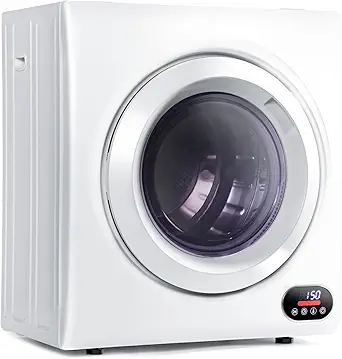 |
| Best Seller A high-volume bestseller chosen again and again | BLACK+DECKER 7.0 Cu. Ft. Dryer BLD67ME |  |
Samsung 7.5 cu ft Smart Electric Dryer

| Form Factor | Front Load |
|---|---|
| Capacity | 7.5 cubic feet |
| Door Orientation | Reversible |
| Specification Met | ADA |
This Samsung 7.5 cu ft Smart Electric Dryer is built for everyday family laundry with large-capacity drying, smart controls, and steam cycles that help sanitize and reduce wrinkles. Typical use centers on full-size loads—bedding, towels, and mixed garments—where the 7.5 cubic foot stainless-steel drum reduces the number of cycles per week. Wi‑Fi connectivity and the SmartThings app let you start and stop cycles remotely, get end-of-cycle alerts, and schedule runs to suit your routine. Sensor Dry adjusts time and temperature to avoid over-drying and save energy, while Steam Sanitize+ and Multi-Steam relax fabrics and target allergens, pollen, and dust mites for cleaner clothes. Practical benefits include fewer loads, a reversible door for flexible placement, and intuitive digital controls for straightforward operation. Important limitations are that sophisticated features require app setup and a reliable network, and its large footprint means it needs adequate space and proper venting. For balanced buyers who want capacity, smart features, and steam hygiene in one package, this dryer delivers dependable daily performance.
Best for: Buyers who want a reliable, full-capacity dryer that combines smart controls with steam cleaning for regular family laundry and fewer weekly loads.
Less Ideal for: People who need a compact or portable dryer for very small spaces or those who prefer a purely basic, non-networked unit.
- Large 7.5 cu ft stainless-steel drum handles full-size loads and bedding
- Wi‑Fi and SmartThings app allow remote start/stop, scheduling, and alerts
- Steam Sanitize+ and Multi-Steam reduce wrinkles and target allergens and bacteria
- Sensor Dry optimizes time and temperature to protect clothes and avoid over-drying
- Reversible door gives flexible installation options for tight laundry spaces
- Advanced features depend on app connectivity and a stable Wi‑Fi network
- Large physical footprint requires sufficient space and proper venting
Verdict: Choose this dryer if you want a large, smart-capable machine with steam sanitizing and sensor drying for dependable everyday performance.
Speed Queen DC5003WE Electric Dryer

| Form Factor | Front Load |
|---|---|
| Capacity | 7 cubic feet |
| Door Orientation | Reversible |
The Speed Queen DC5003WE is a straightforward, performance-focused electric dryer built for high-capacity household loads. Its 7 cubic foot front-load drum and galvanized cylinder handle large bedding and frequent use without feeling cramped, and the reversible door adds installation flexibility in tight laundry rooms. The control set and form factor prioritize durability and simple operation rather than smart features, so it is typically used by buyers who want predictable, heavy-duty drying cycles and reliable mechanical components. Practical benefits include a roomy drum for fewer cycles, a robust build that stands up to frequent use, and a design that fits standard 220V dryer hookups. Important limitations are the lack of connected features or advanced cycle customization and the unit's substantial physical weight, which can complicate delivery and installation in constrained spaces.
Best for: Buyers who prioritize dependable, heavy-duty drying performance and long-term durability over smart features, especially households that run frequent or bulky loads.
Less Ideal for: If you want Wi-Fi controls, app monitoring, or lots of specialty cycles for delicate fabrics, this model is not the best choice.
- Large 7 cu ft capacity reduces number of loads for bulky items
- Galvanized cylinder and alloy steel construction for long-term durability
- Reversible door for flexible placement in different laundry layouts
- Simple, performance-oriented design minimizes electronics that can fail
- No smart connectivity or advanced cycle programming
- Heavy unit may require professional delivery and installation
Verdict: Choose the Speed Queen DC5003WE when you need a no-frills, durable dryer built to handle large and frequent laundry loads reliably.
Dessiz 11lb Portable Dryer DTD10

| Capacity | 11 pounds |
|---|---|
| Power | 970W |
| Access Location | Front Load |
| Number of Drying Cycles | 4 |
This compact Dessiz dryer is a straightforward electric unit built for small spaces like apartments, RVs, and dorm rooms. It uses a 970W heater and a front-load stainless steel drum to dry up to about 11 pounds of wet laundry, though the manufacturer recommends loading no more than roughly 5 kg for faster results. Controls are simple: a knob-operated timer and multiple preset cycles (Fresh, Iron Dry, Regular, Heavy) that let you match drying time to fabric and load size. A clear door window and included exhaust pipe make venting and monitoring easy, and the unit is designed to run quietly at about 55 dB. Practical advantages are its small footprint, decent capacity for single-person households, and easy setup. Limitations include modest power compared with full-size machines, the need for a vent for best performance, and relatively long maximum cycle times for heavier loads. This dryer is best when you need a reliable, space-saving secondary or primary dryer for light-to-moderate loads rather than high-volume family laundry.
Best for: Buyers who need a compact, easy-to-use dryer that reliably handles light to moderate loads in small living spaces and prioritizes simplicity and space savings.
Less Ideal for: Large households or users who need fast, high-capacity drying for frequent heavy loads should choose a full-size dryer instead.
- Compact footprint fits apartments, dorms, and RVs
- Simple knob controls and clear door window for easy monitoring
- Includes exhaust pipe for vented operation
- Stainless steel drum is durable and suitable for regular use
- Requires venting for best drying performance
- Lower power than full-size dryers, so heavy loads take longer to dry
Verdict: A reliable, space-saving electric dryer that delivers practical drying for small households and limited spaces.
Feelfunn Portable Dryer 1.5 Cu.Ft

| Capacity | 1.5 cubic feet |
|---|---|
| Rated Power | 850W |
| Access Location | Front Load |
| Door Orientation | Left |
The Feelfunn 1.5 cu.ft portable dryer is a space-saving electric dryer designed for small loads such as underwear, baby clothes, and t-shirts. It uses an 850W heater that can reach up to 140°F and a forward/reverse tumbling action to reduce tangles and wrinkles while drying quickly for its size. Controls are simple rotary knobs with four preset drying modes so you can match fabric types without a complicated interface, and a transparent front door lets you monitor the cycle. The stainless steel drum and multi-layer lint filter add durability and help keep lint contained, and the unit can be wall-mounted to save floor space. Expect quieter operation suitable for apartments or dorms, but keep loads light — the manufacturer recommends limiting wet weight to about 10 pounds for efficient drying. Because it is a small-capacity, low-wattage dryer, full loads or heavy items like large towels will take much longer than with a full-size dryer.
Best for: Buyers seeking an affordable, compact dryer for seasonal or light daily loads in small living spaces who prioritize simplicity and space savings over large capacity.
Less Ideal for: Households that need to dry full-size loads, heavy towels, or frequent large laundry batches should choose a full-size dryer instead.
- Compact footprint and optional wall-mounting save space in small homes
- Simple knob controls and four drying modes make operation easy
- Stainless steel drum and multi-layer lint filter improve durability and lint management
- Quiet operation suitable for apartments, dorms, and RVs
- Small 1.5 cu.ft capacity limits load size and requires multiple cycles for larger laundry
- 850W power is lower than full-size dryers so heavy or wet items dry slowly
Verdict: A wallet-friendly, compact dryer that delivers reliable, quiet drying for light loads in small spaces.
EUHOMY 3.5 Cu. Ft. Dryer CD-14

| Capacity | 99.11 liters |
|---|---|
| Power | 1500W |
| Access Location | Front Load |
| Form Factor | Freestanding |
The EUHOMY CD-14 is a compact freestanding dryer built around a 3.5 cu ft stainless steel drum and a 1500W heater, designed to handle family-sized loads in smaller spaces. It offers Sensor Dry to detect moisture and automatically adjust heat time, a long-timer range up to 200 minutes, and an ECO mode that cycles cold then hot air for energy-conscious drying. The wide 105 degree door and knob controls make loading and program selection straightforward, and the stainless drum plus lint filter help reduce wear on clothes and lint buildup. Practical benefits include even tumbling for fewer wrinkles and the included exhaust hose and adjustable base for flexible placement on counters or floors. Expect standard portable-dryer limitations: it requires venting via the exhaust hose, uses longer cycles than full-size vented units, and at 1500W it is not as fast as high-power commercial models. For buyers who prioritize dependable drying and simple, sensor-driven operation in a compact footprint, this model delivers reliable day-to-day performance.
Best for: Buyers who need a dependable, compact dryer that handles family loads in apartments or small homes and value sensor-driven, consistent drying over speed.
Less Ideal for: People seeking the fastest possible drying or a truly ventless machine for closets or RVs should consider other options.
- Stainless steel drum for durability and even tumbling
- Sensor Dry mode that adjusts heating time based on moisture
- ECO mode for lower-energy drying cycles
- Wide 105° door opening for easier loading and unloading
- Requires exhaust venting which limits fully portable placement
- Longer cycle times compared with higher-power full-size dryers
Verdict: A reliable, sensor-equipped compact dryer that balances durable construction and energy-conscious cycles for everyday home use.
EUHOMY Compact Laundry Dryer CD-13-O

| Capacity | 3.5 cubic feet |
|---|---|
| Power | 1500 W |
| Form Factor | Front Load |
| Material Type | Stainless Steel |
| Specification Met | DOE, ETL |
The EUHOMY Compact Laundry Dryer is a front-load portable dryer designed for apartments, dorms, and small homes where a full-size unit is impractical. It uses up to 1500W to reach temperatures around 140°F and offers four modes via an LCD touch panel including strong, intelligent (auto-adjust), eco, and normal cycles. The stainless steel drum, 105° see-through door, and external outlet filter with triple-layer cotton filters make it straightforward to load, monitor, and maintain. In practice it handles mid-sized loads after spin-drying — the listing cites a wet load capacity around 26.4 lb — and the two-way flip/tumble action helps reduce tangling and wrinkles. Setup and moving are easier thanks to the built-in handle and compact footprint, and ETL/DOE listings indicate it meets common safety and efficiency checks. Downsides are typical for portable dryers: it is not a full replacement for a vented household dryer in terms of throughput and speed for very large families, and successful drying relies on using a high-speed spin cycle first to reduce moisture. Expect reasonable performance for regular small-load laundry but plan longer cycles for heavy or bulky items.
Best for: Buyers who prioritize a dependable, certified portable dryer for small living spaces and want straightforward controls plus visible progress monitoring.
Less Ideal for: Large households or users who need rapid turnaround on very heavy or bulky loads should choose a full-size vented or higher-capacity dryer instead.
- Large 3.5 cu ft stainless steel drum for a portable unit that accepts mid-sized loads
- LCD touch control with four drying modes including an automatic intelligent mode
- 105° see-through door with auto-stop for safe, easy loading and monitoring
- External multi-layer filter simplifies lint collection and cleaning
- ETL and DOE listed for verified safety and regulatory compliance
- Not as fast or high-capacity as a full-size vented dryer for large households
- Drying works best after a thorough spin-dry and may require longer cycles for heavy/bulky items
Verdict: A reliable, safety-certified portable dryer that delivers solid small-load performance and easy operation for apartment or dorm use.
BLACK+DECKER 7.0 Cu. Ft. Dryer BLD67ME

| Capacity | 6.7 cubic feet |
|---|---|
| Form Factor | Front Load |
| Power | 240V |
| Control Type | Dial with LED display |
The BLACK+DECKER BLD67ME is a full-size front-load electric dryer designed for straightforward, reliable home use. It offers a large 6.7 cubic foot capacity and a 240V electric connection intended for permanent installation by a qualified technician. Controls combine a dial for selecting one of five sensor or five manual dry cycles with an LED display that shows cycle status and time, and there are multiple temperature and dryness levels to handle everything from delicate items to bulky towels. Practical touches include a reversible front door, control lock and wrinkle care setting. Because this is a professional-install model it requires a separate UL-listed dryer cord or direct wiring and does not include venting accessories, so plan for installation costs and proper vent routing. The machine is built for indoor laundry rooms and can be configured to vent rear, bottom, or left with optional adapters, making it flexible for different layouts. For buyers who prioritize dependable, simple drying performance and an easy-to-use control layout, this dryer covers the essentials without extra smart features.
Best for: Buyers who want a straightforward, dependable full-size electric dryer and prefer a unit that focuses on core drying performance and simple controls over connected or novelty features.
Less Ideal for: People who need a plug-and-play 120V dryer, apartments without 240V hookups, or buyers who want Wi-Fi, app control, or bundled installation accessories.
- Large 6.7 cu ft capacity suitable for bulky loads and sheets
- Combination of 5 sensor and 5 manual cycles gives flexible drying control
- Digital LED display and dial make cycle selection and monitoring intuitive
- Reversible door and multiple venting configurations allow flexible placement
- Requires professional 240V installation and a separate UL-listed power cord or direct wiring
- No included venting adapter or installation hardware
- Lacks smart connectivity or advanced convenience features
Verdict: A no-frills, full-size electric dryer that prioritizes reliable drying performance and simple controls for buyers who value predictable, low-risk appliance choices.
Choosing the Right Reliable Dryer: Key Factors to Consider
Motor and Drive Train
The motor and drive train are central to a dryer's lifespan. A robust motor with a simple, well-supported belt and pulley arrangement reduces the chance of midlife failures. Direct-drive designs or motors with proven thermal protection are less likely to overheat under heavy loads.
When shopping, look for information about motor warranty coverage and any design notes about overload protection. A dryer with easily replaceable belts and accessible motor mounts lowers repair time and cost if a component does wear out.
Heating System Design
Heating elements, gas valves, or infrared systems are the parts most exposed to repeated thermal cycling, which causes wear. Systems that use quality heating elements, protected sensors, and well-calibrated thermostats tend to last longer and avoid false shutoffs or overheating.
Reliable heating also depends on consistent airflow. Units with redundant safety cutoffs and straightforward access to replace heating parts make long-term ownership simpler for both homeowners and technicians.
Airflow and Lint Management
Good airflow reduces drying time and prevents heat buildup that can stress internal components. A dryer that manages lint well will put less strain on the heating system and reduce fire risk. Look for effective lint-trap designs, easy-to-clean ducts, and clear pathways that avoid tight bends which trap fibers.
Periodic maintenance like cleaning the lint screen and ductwork is part of ensuring longevity. Choose models with intuitive lint access and service ports so routine tasks are quick and thorough.
Build Materials and Cabinet Construction
The materials used for the drum, bearings, and cabinet affect noise, vibration, and wear. Stainless or well-coated drums resist corrosion and pitting, while sealed bearing assemblies and quality rollers reduce wobble over time. Stiffer cabinet construction lowers vibration and prevents panel stress.
Evaluate how panels are joined and whether fasteners are standard types for easier repairs. Models with modular components and accessible mounting points simplify part replacement and extend useful life.
Controls and Electronics
Modern dryers often include electronic controls that add convenience but can be a reliability weak point. Simpler, well-sealed control interfaces with fewer failure-prone moving parts are generally more durable. When electronics are present, look for straightforward diagnostics and replaceable control modules.
Water- or moisture-resistant control housings and clear error codes help technicians quickly identify issues. Balance the need for advanced cycles with the potential long-term service implications of more complex control systems.
Maintenance Accessibility and Serviceability
A reliable dryer is easier to keep reliable. Accessibility to common service points such as the lint trap, blower housing, motor, and heating element shortens repair time and often reduces repair cost. Models designed for quick part swaps promote routine upkeep rather than lengthy shop visits.
Consider how panels are removed, whether parts are common sizes, and if filters or screens require specialty tools. The less invasive the maintenance, the more likely owners will perform it on schedule, which protects the dryer from premature failure.
How Cycle Selection Affects Longevity
Selecting the right drying cycle matters for both clothing care and appliance wear. High-heat, extended cycles speed drying but increase thermal stress on components like heating elements and thermostats. Lower-heat cycles with moisture-sensing termination reduce unnecessary runtime and can preserve internal parts.
Use moisture-sensing or auto-dry modes for mixed loads to avoid overdrying. Reserve high-heat settings for heavy items only when necessary, and consider shorter cycles for routine loads to cut cumulative run time.
- Moisture-sensing cycles reduce heat exposure by stopping when clothes are dry
- Air-dry or fluff cycles are gentler on fabrics and components
- Long, high-heat cycles should be used sparingly for bulky or heavy loads
Ventilation and Installation Best Practices
Proper installation and vent routing have a big impact on a dryer's reliability. Rigid or smooth-walled ducts with minimal bends improve airflow and reduce lint buildup. Avoid long, restrictive runs and ensure exterior vents seal well to prevent backflow and moisture intrusion.
Check vent connections periodically and clear lint from the dryer outlet. A poorly installed vent increases run time and stresses the heating system and motor, accelerating component wear.
- Use the shortest practical duct run with gentle bends
- Inspect and clean ducts at least annually
- Ensure exterior vent flaps operate freely and are clear of debris
Routine Maintenance That Pays Off
Small maintenance tasks keep a dryer running reliably for years. Clean the lint screen after every load, vacuum the drum and accessible openings periodically, and inspect seals and hoses for wear. Scheduling an annual deeper clean of the blower and heating area prevents hidden lint piles from accumulating.
Document basic checks like vent airflow and cycle times so you can spot gradual declines. Early detection of abnormal noises or extended drying times often indicates an easy fix rather than a major failure.
- Clean lint screen after every load
- Perform a deeper internal clean once a year
- Monitor cycle times and airflow as early warning signs
Matching Capacity to Household Needs
Choosing the right drum capacity reduces excessive wear from chronic overloading. Frequent overfilling forces the motor and bearings to work harder and can strain the drive system. For large families, prioritize higher-capacity drums; for singles or couples, a smaller drum often dries more efficiently with less strain.
Consider how often you run large loads and whether you regularly dry bulky items like comforters. Choosing capacity with a modest buffer prevents routine overloading and extends component life.
- Avoid regular overloading to protect motor and bearings
- Select capacity based on typical weekly laundry volume
- Remember bulky items require more space and air circulation
Energy Efficiency and Long-Term Operating Cost
Energy-efficient dryers reduce runtime and lower cumulative stress on heating elements and motors. Heat-pump or high-efficiency designs run longer at lower temperatures but can be gentler on components and clothing. Pay attention to cycle efficiency ratings and typical drying times under real loads rather than lab numbers alone.
An efficient dryer can have a higher upfront complexity but often yields lower operating strain and less frequent repairs when engineered for serviceability.
- Compare typical cycle times for real loads
- Lower operating temperatures generally reduce wear
- Factor operating cost into long-term reliability planning
How We Chose the Best Reliable Dryer
We focused exclusively on long-term dependability signals and user-facing durability when building this list. Our selection filtered for models with strong component design, easily serviceable parts, and consistent thermal management. We prioritized units that balance efficient drying cycles with gentle drum handling to reduce wear on clothing and hardware. Key evaluation criteria included motor and drive train robustness, drum and bearing construction, heating system durability, lint-management and airflow design, energy efficiency under typical loads, and ease of routine maintenance. Models with complex, fragile electronics or known airflow restrictions were de-emphasized unless they included clear engineering to mitigate those risks. We excluded specialty or compact units that are not representative of mainstream household dryers and any machines that trade long-term durability for novelty features. The result is a shortlist of seven dryers that score well on the measurable dimensions above and that are likely to provide years of trouble-free operation under normal home use.
Our full evaluation process is outlined in our review methodology.
FAQ
How often should I clean the dryer vent and ductwork?
Clean the lint screen after every load and inspect the vent path at least once a year. Homes with longer duct runs or heavy laundry use may need professional duct cleaning every 1 to 2 years to maintain airflow and reduce strain on the dryer.
Do energy-efficient dryers last as long as conventional models?
Energy-efficient designs can be just as durable when built with quality components. Some efficient units use different heat management strategies that reduce thermal stress, though their added complexity means serviceability and component accessibility remain important considerations.
What signs indicate a dryer is becoming unreliable?
Longer-than-normal drying times, unusual noises, intermittent heating, and error codes are early signs. Addressing these issues quickly—cleaning vents, checking sensors, or servicing components—often prevents a minor problem from becoming a major failure.
Is it better to repair or replace a dryer showing age-related problems?
It often depends on the specific failure and the appliance age. If a single, serviceable component like a belt or sensor is at fault and the dryer is otherwise in good condition, repair can be economical. Widespread component wear, repeated failures, or very old units may justify replacement to avoid ongoing repairs.
How does installation affect a dryer's reliability?
Correct installation is crucial. Proper vent routing, correct power or gas hookup, and level placement reduce stress on the motor and heating system. Poor venting in particular increases run times and accelerates component wear.
Final Verdict
When choosing a reliable dryer, prioritize core mechanical durability and airflow design over marginal feature sets. Focus on robust motors and drive trains, accessible heating components, and an installation that supports good ventilation. Expect tradeoffs between simplicity and convenience when electronics are involved, and favor models that make routine maintenance straightforward. Ultimately, match capacity and cycle selection to your household needs, keep venting clean, and perform basic upkeep. Those steps will give you the best chance of years of dependable performance from a dryer.