
Note: This article contains affiliate links. If you click on these links and make a purchase, we may earn a small commission at no extra cost to you. This helps support our research and content. Read our full affiliate disclosure here.
If you sew professionally or tackle frequent heavy materials, a heavy-duty sewing machine can save you time and headaches. Advanced sewers need reliable torque, consistent stitch formation, and enough features to handle layered denim, upholstery, and leather without bogging down. This guide shortlists the top heavy-duty sewing machines for advanced sewers and explains the practical tradeoffs between power, durability, and workflow efficiency. Below we present our top picks, followed by the evaluation criteria we used to choose them and the factors that matter most when buying a machine for demanding projects.
Top Picks at a Glance
| Best Overall The best all-around choice for most situations | Brother ST150HDH Strong & Tough |  |
| Best Quality Built to a higher standard if you want something more solid | Janome HD9 Black Edition |  |
| Best Value The sweet spot between price and what you get | Brother XR3774 Sewing Machine |  |
| Best Budget The cheapest option that still gets the job done reliably | SINGER Heavy Duty 4411 |  |
| Top Rated A top-rated pick with lots of positive feedback | Juki TL-2010Q Sewing & Quilting Machine |  |
| Most Popular A crowd favorite that many people choose with confidence | SINGER Heavy Duty 4423 |  |
Brother ST150HDH Strong & Tough

| Power Source | Corded Electric |
|---|---|
| Input Voltage | 120 volts |
| Included Components | sewing machine and accessories |
| Included Stitches | 50 built-in stitches |
The Brother ST150HDH is a heavy-duty, computerized home sewing machine built to handle everything from delicate silks to multiple layers of denim and leather. Its metal interior frame and longer 7-point feed dogs improve stability and fabric feeding, while the included walking foot and heavy-duty needles make sewing thick or multiple-layer projects much easier. The machine offers 50 built-in stitches and five auto-size buttonholes, all selected via an LCD screen and simple controls, plus variable speed, start/stop and needle up/down buttons for precise handling. Practical conveniences include an advanced automatic needle threader, drop-in bobbin with clear cover, automatic bobbin winder, free arm for cuffs and sleeves, and nine included sewing feet that cover common tasks like zipper insertion, blind hemming, and overcasting. Limitations are modest: it is a single-voltage US model and relatively heavy compared with lightweight travel machines, and advanced sewers wanting built-in embroidery or an extremely large workspace may prefer a different class of machine. For balanced sewists who want a reliable, durable machine that can grow with skill level, the ST150HDH is a solid performer.
Best for: A sewist who wants a durable, all-purpose heavy-duty machine that handles thick fabrics and layered projects while offering computerized controls and useful accessories for growing skill levels.
Less Ideal for: People who need built-in embroidery, multi-voltage international use, or a lightweight portable machine for frequent transport.
- Metal interior frame and 7-point feed dogs for stable, consistent fabric feeding at higher speeds
- Includes walking foot and heavyweight needles to handle multiple layers of denim, leather, and upholstery
- 50 built-in stitches plus 5 auto-size buttonholes give broad versatility for utility, decorative, and quilting work
- Computerized controls with LCD, variable speed, and needle up/down/start-stop for precise, user-friendly operation
- Advanced automatic needle threader and clear drop-in bobbin make setup and maintenance easier
- Single-voltage (120V) unit limited to US power without modification
- Heavier, bulkier design compared with portable or travel machines
Verdict: A rugged, computerized heavy-duty machine that balances durability and versatile stitch options for advanced home sewing and thick-fabric projects.
Janome HD9 Black Edition

| Power Source | Corded Electric |
|---|---|
| Input Voltage | 120 volts |
| Included Components | Wide extension table, foot controller, knee lifter, five bobbins, accessory kit |
| Material | Metal |
The Janome HD9 Black Edition is a purpose-built, heavy-duty straight-stitch machine that prioritizes speed, stability, and reliable feeding for demanding projects. It runs up to 1,600 stitches per minute and uses a die-cast aluminum body with eight enclosed ball bearings to minimize vibration during long runs, which keeps stitch quality consistent when piecing quilts or topstitching long seams. Practical features for advanced users include a jumbo side-loading bobbin for longer runs between changes, manual tension control, needle up/down memory, speed slider, extra-high presser foot lift, high presser-foot pressure, and an independent bobbin winder to keep production moving. The unit handles dense fabrics like denim, canvas, and leather better than consumer multi-function machines, thanks to industrial-style feeding and a vertical full-rotary hook. Its focus is straight-stitch performance rather than multiple stitch styles, so it is less suitable if you need decorative or utility stitch variety, and its size and weight reflect a production-oriented build that is not optimized for occasional hobby sewing or light portable use.
Best for: Advanced sewists and small-batch makers who prioritize production speed, consistent straight-stitch quality, and the ability to sew heavy materials without frequent interruptions.
Less Ideal for: Beginner hobbyists or casual sewists who want a lightweight, multi-stitch machine with many decorative stitch options or frequent portability.
- Very high top speed (up to 1,600 spm) for faster project completion
- Die-cast aluminum body and eight ball bearings reduce vibration and improve stitch consistency
- Jumbo side-loading bobbin holds more thread to reduce interruptions
- Features that aid precision and production: manual tension, needle up/down memory, speed slider, and independent bobbin winder
- Engineered to feed and sew thick or multiple-layer fabrics reliably
- Focused on straight-stitch performance so it lacks decorative stitch options
- Heavy and substantial footprint makes it less portable for casual users
Verdict: Buy this if you want a production-capable, heavy-duty straight-stitch machine that delivers high speed and dependable handling of thick fabrics.
Brother XR3774 Sewing Machine

| Built-in stitches | 37 |
|---|---|
| Buttonholes | 1 One-step auto-size |
| Power source | Corded Electric |
| Input voltage | 120 volts |
The Brother XR3774 is a mechanically controlled sewing and quilting machine that targets sewists who want dependable, no-frills performance. It offers 37 built-in stitches including utility, decorative, and quilting options plus a one-step auto-size buttonhole, making it useful for garment construction, home decor, and quilting. Practical features like an automatic needle threader and a jam-resistant top drop-in bobbin speed up setup and reduce frustration while the included wide extension table and free arm help handle larger quilts and cylindrical items such as sleeves. The machine ships with eight presser feet and accessories so you can start many common projects right away. As a mechanical model it lacks advanced computerized stitch editing, large stitch libraries, and embroidery functions that higher-end heavy-duty machines provide, and its 120V US-only design and primarily plastic housing mean it is not the most industrial option for continuous commercial use. That said, for hobbyists and advanced home sewers who value straightforward, durable mechanics and useful quilting helpers, the XR3774 is a practical, workhorse choice.
Best for: Buyers who want a reliable, mechanically simple machine that handles quilting and everyday sewing with useful built-in features and minimal fuss.
Less Ideal for: Users seeking computerized editing, large stitch libraries, embroidery capabilities, or an industrial-grade machine for high-volume commercial sewing should consider other options.
- 37 built-in stitches covering utility, decorative, and quilting needs
- Automatic needle threader and top drop-in bobbin for easier setup and fewer jams
- Wide extension table and free arm for quilting and sewing cylindrical pieces
- Includes eight presser feet and common accessories to start projects immediately
- Mechanical control limits advanced stitch editing and computerized features
- Not designed for continuous heavy commercial production
Verdict: If you need a dependable, easy-to-use sewing and quilting machine with practical features for home projects, the XR3774 delivers reliable mechanical performance and useful quilting support.
SINGER Heavy Duty 4411

| Stitch applications | 69 |
|---|---|
| Stitches per minute | 1,100 |
| Power source | Corded Electric |
| Included presser feet | 4 |
The SINGER Heavy Duty 4411 is a straightforward mechanical sewing machine built for hands-on work with tough materials like denim, canvas, and multiple fabric layers. It delivers up to 1,100 stitches per minute and offers 69 stitch applications, letting advanced users run through basic seams, stretch stitches, and decorative options without extra electronic bells. The metal interior frame and stainless steel bedplate give the unit stability for skip-free stitching, while the top drop-in bobbin and LED work light make long sessions easier. Included accessories such as four presser feet, bobbins, needles, and a seam ripper let you start sewing immediately. Expect a direct, no-frills user experience: stitch selection and adjustments are manual, which appeals to sewists who prefer tactile control but means there is no computerized stitch memory or automated features. The machine is relatively compact and solidly built, so it stands up to frequent use, though it lacks the expanded stitch set and conveniences found on more advanced computerized models.
Best for: Experienced sewists who need a reliable, rugged machine for heavy fabrics and prefer a tactile, manual machine over computerized models while keeping budget in mind.
Less Ideal for: Users who want extensive computerized stitch options, automated quilting features, or large built-in stitch libraries should look at higher-end electronic machines.
- Powerful motor capable of high-speed stitching ideal for thick fabrics
- Robust metal interior frame and stainless steel bedplate for stable, skip-free sewing
- Top drop-in bobbin with transparent cover for easy thread monitoring
- Includes essential accessories (presser feet, bobbins, needles) so you can start projects immediately
- Mechanical controls only with no computerized features or stitch memory
- Stitch set and convenience features are limited compared with higher-end models
Verdict: A budget-friendly, heavy-duty mechanical machine that gives advanced sewists dependable power and stability for thick fabrics without computerized complexity.
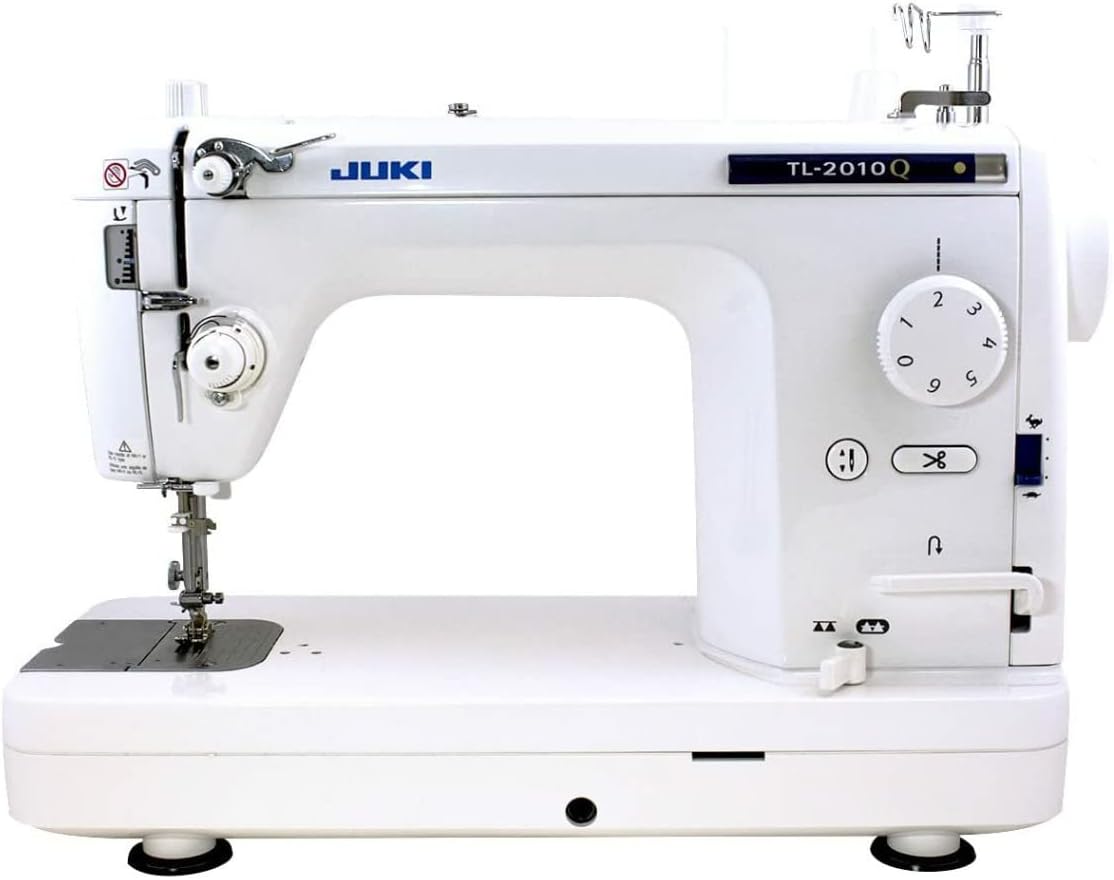
Juki TL-2010Q Sewing & Quilting Machine
| Model Number | TL-2010Q |
|---|---|
| Power Source | Electric |
| Material | Metal |
The Juki TL-2010Q is a purpose-built, high-speed straight-stitch machine aimed at quilters and serious sewists who need factory-quality, durable performance. It delivers fast, consistent straight stitches driven by a powerful motor and a rigid metal frame that keeps vibration low during long runs, which makes it well suited for large quilts and heavy fabrics. The extended throat and spacious work area simplify handling bulky projects, and features like automatic thread trimming, adjustable presser foot pressure, and a knee lifter add real workflow convenience. The machine is essentially a straight-stitch workhorse rather than a multi-stitch domestic model, so it excels at precision piecing, topstitching, and quilting but does not offer decorative or utility stitch variety. Its robust construction and manufacturer-backed electronics and head-unit warranties support long-term reliability, though buyers should plan for the machine's weight and single-stitch limitation when matching it to their sewing needs.
Best for: Advanced sewists and quilters who prioritize a durable, factory-quality straight-stitch machine for heavy use and large projects and who value long-term reliability over multi-stitch versatility.
Less Ideal for: Casual hobbyists or those who need a lightweight, portable machine or a wide variety of built-in stitch patterns and decorative options.
- Powerful motor and solid metal frame for consistent high-speed straight stitching
- Large throat space and extended arm for handling bulky quilts and large projects
- Automatic thread trimmer and knee lifter for hands-free, efficient workflow
- Adjustable presser foot pressure to accommodate a wide range of fabric thicknesses
- Only provides straight stitch functionality, no decorative or zigzag stitches
- Heavier, less portable machine due to robust metal construction
Verdict: Choose the Juki TL-2010Q if you want a heavy-duty, high-speed straight-stitch machine built for reliable, long-term quilting and professional sewing work.
SINGER Heavy Duty 4423

| Built-in stitches | 23 |
|---|---|
| Stitch applications | 97 |
| Max sewing speed | 1,100 stitches per minute |
| Power source | Corded Electric |
| Input voltage | 120 volts |
The SINGER Heavy Duty 4423 is a workhorse mechanical sewing machine built for frequent use and tougher materials. It packs a powerful motor that runs up to 1,100 stitches per minute and boosts piercing power for denim, canvas, and layered seams, while an internal metal frame and stainless steel bed plate keep stitching stable and skip-free. The machine offers 23 built-in stitches that translate into 97 stitch applications for basic, stretch, and decorative work, plus a one-step buttonhole and top drop-in bobbin for easier threading and visibility. Included presser feet and accessories cover common tasks such as zippers and button sewing, and LED lighting plus an automatic needle threader make setup and fine work less fiddly. Buyers should note this is a mechanical, corded machine without computerized stitch programming or advanced automation, so making precise stitch adjustments is manual work. The practical result is a durable, fast machine that trades advanced electronic features for raw speed and ruggedness, making it suited to heavy projects and high-volume sewing rather than feature-rich, automated convenience.
Best for: Experienced sewists and hobbyists who prioritize speed, durability, and reliable performance on heavy fabrics and frequent projects and who prefer a straightforward mechanical machine over computerized features.
Less Ideal for: Users who want touchscreen controls, programmable stitch sequences, or extensive automated embroidery-style features should consider a computerized model instead.
- Powerful motor with high top speed for fast sewing and better penetration of thick fabrics
- Heavy-duty metal interior frame and stainless steel bed plate for stable, skip-free stitching
- Wide range of stitch applications (23 built-in stitches yielding 97 applications) for versatile projects
- Top drop-in bobbin and automatic needle threader simplify threading and reduce interruptions
- Includes essential presser feet and accessories for common sewing tasks right out of the box
- Mechanical controls only, so stitch selection and fine adjustments are manual rather than computerized
- No built-in memory or computerized stitch editing for complex stitch customization
Verdict: Buy this if you need a fast, rugged sewing machine that can handle heavy fabrics and high-volume work without relying on computerized features.
Choosing the Right Heavy-Duty Sewing Machine for Advanced Sewers: Key Factors to Consider
Motor Power and Drive Type
A machine's motor power determines how well it handles thick fabrics and multiple layers. Higher torque reduces stalling and keeps stitch length consistent when pushing through denim, canvas, or leather.
Direct-drive brushless motors often offer smoother control and less vibration than older belt-driven systems, while clutch motors can provide extra low-end torque for hand-cranking styles. Consider how often you will sew heavy projects and whether you need a motor that supports continuous high-speed use without overheating.
Frame Construction and Chassis
Solid frame construction keeps the needle aligned and maintains stitch geometry under load. Metal chassis and heavy cast components resist flex when feeding dense fabric stacks, which preserves stitch quality and reduces skipped stitches.
Machines with a reinforced throat plate and a stable bed are easier to use for precision work like topstitching multiple layers or applying binding. If you plan frequent industrial-style tasks, prioritize units with minimal plastic in load-bearing parts and easy access for lubrication and adjustments.
Feed Mechanism and Presser Foot Pressure
How fabric moves through the machine is crucial for consistent results. A strong, adjustable presser foot and a reliable feed dog arrangement prevent fabric slip and uneven stitching on thick or slippery materials.
Look for machines with adjustable presser foot pressure and multiple presser foot options designed for heavy fabrics. A walking foot or compound feed system can be especially helpful for matching top and bottom fabric movement when sewing mismatched textures or heavy laminates.
Stitch Control and Thread Handling
Precise stitch length control and a solid tension system keep seams neat under stress. Advanced sewers need machines that can hold consistent tension with thicker threads and handle larger bobbins or industrial-style bobbin systems.
Check for fine-grain stitch length adjustments, a reliable tension assembly, and compatibility with heavy-duty needles and thicker topstitch threads. Efficient thread guides and a smooth path to the needle reduce breakage when using robust thread sizes.
Maintenance, Parts, and Serviceability
Frequent heavy use increases wear, so machines that are easy to maintain extend usable life. Accessible oiling points, replaceable feed dogs, and straightforward bobbin access simplify routine upkeep.
Consider the availability of replacement parts such as heavy presser feet, specialized needles, and durable bobbins. Machines designed with modular components and clear service manuals reduce downtime and make it easier to perform adjustments between projects.
Workspace Ergonomics and Workflow Features
Workspace design affects how comfortably and efficiently you can complete large projects. A larger throat space, an extended table option, and well-placed controls reduce strain and improve control when handling bulky items.
Useful workflow features include a clear speed governor, an easy-reach reverse lever, and convenient accessory storage. Advanced sewers often appreciate one-touch threading aids, LED lighting focused on the needle area, and foot controllers with adjustable responsiveness.
Why Heavy-Duty Machines Matter for Advanced Projects
For advanced sewing tasks, a heavy-duty machine is not just about raw power. It is about maintaining stitch integrity when working with challenging materials and complex assemblies. Machines built for heavy-duty use are engineered to keep the needle stable and feed materials evenly, which prevents skipped stitches and seam puckering on dense stacks.
Choosing a properly specified heavy-duty machine reduces rework and speeds up production. You will notice the difference in straight topstitching, cleaner edge finishes, and machines that keep running consistently during long sessions.
- Improved needle stability for long seams
- Better feed control on layered materials
- Less downtime from motor strain or skipped stitches
Essential Accessories for Heavy-Duty Sewing
The right accessories extend what your machine can do. Consider installing a walking foot for layered fabrics, using heavy-duty needles matched to thread size, and equipping an extended table for larger projects.
Additional accessories like high-capacity bobbins, specialized presser feet for topstitching, and screw-on or magnetic guides help you maintain consistent results across repetitive tasks.
- Walking foot or compound feed attachment
- Heavy-duty needles and thicker topstitch thread
- Extended work surface or quilting table
Common Modifications and Upgrades
Advanced sewers often modify machines to suit a specific workflow. Typical upgrades include replacing the standard foot with a roller or walking foot, swapping to a higher-torque motor, or upgrading the bobbin system for longer runs between changes.
When considering modifications, prioritize reversible changes that do not compromise the machine frame or warranty. Professional servicing to install major upgrades ensures alignment and reduces the risk of introducing new issues.
- Motor upgrades for continuous heavy work
- Aftermarket presser feet and needle plates
- Upgraded feed dogs or timing adjustments by a technician
Setting Up for Thick Materials
Preparation is key when starting a heavy-material project. Use the correct needle size, increase stitch length slightly to prevent bunching, and test on scraps that match the layers you plan to sew. Adjust presser foot pressure to allow the fabric to feed smoothly without compressing the layers.
Take time to set accurate tension and retest after adjusting thread or needle size. Small setup steps eliminate many common problems like skipped stitches or distorted seams when working with thick or coated materials.
- Select needle and thread combination that matches material
- Test stitch length and tension on representative scraps
- Adjust presser foot pressure and feed settings before starting
Performance Maintenance for High-Use Setups
High-use heavy-duty machines require a regular maintenance schedule. Clean lint and debris after each long session, lubricate according to the manual, and periodically check timing and needle plate alignment. Keeping spare needles and a simple tool kit on hand minimizes interruptions.
Record run-time patterns to spot when service is becoming necessary. Early intervention on feed problems or unusual vibrations prevents small issues from becoming major repairs and keeps production reliable.
- Daily cleaning and periodic lubrication
- Keep a spare needle and quick-access tool kit
- Monitor unusual noises or vibration as a sign for servicing
How We Chose the Best Heavy-Duty Sewing Machine for Advanced Sewers
We focused on attributes that matter to advanced users working with heavy or layered materials. Primary evaluation criteria included motor torque and drive system, stitch consistency and presser-foot capability, build quality and frame rigidity, and workflow features that improve productivity such as speed control and bobbin capacity. We also weighed serviceability factors like ease of maintenance, availability of heavy-duty needles and feet, and the quality of the feed mechanism. To keep the list practical, we excluded machines intended mainly for beginners or light domestic use, and we did not consider models without proven heavy-material performance. Units that lacked a sturdy metal frame, limited stitch-length control, or weak motor specifications were filtered out. The final selection favors machines that combine sustained power, robust construction, and features that support advanced techniques rather than beginner conveniences.
Our full evaluation process is outlined in our review methodology.
FAQ
Can a heavy-duty machine handle leather and upholstery?
Often yes. Many heavy-duty machines are designed to sew leather and upholstery, but success depends on using the correct needle, thread, and presser foot. Proper setup and a strong motor are key to consistent results.
How important is stitch length when sewing thick materials?
Stitch length is important. Increasing stitch length slightly for thick layers reduces fabric bunching and helps the machine advance material smoothly. Test settings on scrap material to find the best length.
Do heavy-duty machines require special maintenance?
They usually require more frequent maintenance due to heavier workloads. Regular cleaning, timely lubrication, and occasional professional servicing extend service life and maintain stitching performance.
Will upgrading the motor improve performance?
Upgrading to a motor with higher torque can improve performance on dense fabrics, but compatibility and proper installation matter. Professional installation is recommended for significant motor changes.
Are walking feet necessary for heavy fabrics?
Walking feet are often very helpful for layered or mismatched materials because they help feed all layers evenly. They are not always necessary but can significantly reduce feeding problems on tricky fabrics.
Final Verdict
For advanced sewers, prioritize machines that deliver steady torque, have a rigid frame, and offer precise stitch control. Tradeoffs usually come down to raw power versus portability and the degree of serviceability you need for heavy use. Focus on feed quality, presser foot options, and maintenance access when deciding. Choose a machine that matches the materials and volume of work you plan to do, and plan for routine maintenance to keep it performing reliably over time.