
Note: This article contains affiliate links. If you click on these links and make a purchase, we may earn a small commission at no extra cost to you. This helps support our research and content. Read our full affiliate disclosure here.
Buying a first sewing machine is about learning comfortably, not chasing advanced features. For beginners under $100, the priorities are straightforward controls, dependable stitch quality, and a durable, low-friction learning experience. You want a machine that makes hems, repairs, and simple projects feel achievable without a steep learning curve. This guide shortlists the top five beginner sewing machines in the under-$100 range and evaluates them by the core criteria a new sewer cares about: stitch consistency, ease of setup and use, build reliability, and included accessories. Read on to find the machine that matches your learning style and the kinds of projects you plan to tackle.
Top Picks at a Glance
| Best Quality Built to a higher standard if you want something more solid | American Home Dream AH700 |  |
| Best Value The sweet spot between price and what you get | CraftBud Mini Sewing Machine |  |
| Best Budget The cheapest option that still gets the job done reliably | MEGLE FHSM-505 Sewing Machine |  |
| Top Rated A top-rated pick with lots of positive feedback | Brother FB1757X Sewing Machine |  |
| Most Popular A crowd favorite that many people choose with confidence | Magicfly Mini Sewing Machine MF600 |  |
American Home Dream AH700

| Built-in stitches | 15 |
|---|---|
| Buttonhole | 4-step |
| Power Source | AC |
| Included components | 2 bobbins, 3 presser feet, foot pedal, needle set |
The American Home Dream AH700 is a lightweight, beginner-focused sewing machine that covers common home sewing tasks like mending, hemming, and simple garment alterations. It offers 15 built-in stitches with adjustable width and length plus a 4-step buttonhole, so you can switch between straight, blind hem, zigzag and decorative stitches for small projects. Practical touches include an automatic bobbin winder that stops when full, a removable flatbed for free-arm sewing, and three snap-on presser feet that handle buttonholes, darning and zigzag stitching. The built-in accessory storage and carry handle make it easy to move and keep supplies with the machine. Limitations are its basic feature set and modest power compared with higher-end machines, so heavy-duty fabrics or frequent large projects may expose its constraints, and the compact footprint reduces work area for bulky items. For casual beginners this machine makes learning stitches and finishing simple tasks straightforward and portable.
Best for: Buyers who want an affordable, easy-to-learn machine for mending, hemming, and light DIY garment work and who prioritize portability and straightforward controls while they build skills.
Less Ideal for: People who plan to sew heavy fabrics regularly, run a small sewing business, or need a large work surface for quilts and bulky projects should consider a more robust machine.
- 15 built-in stitches plus a 4-step buttonhole for versatile basic stitching
- Adjustable stitch length and tension dial for better stitch control
- Automatic bobbin winder and removable flatbed for free-arm sewing
- Lightweight with a carry handle and built-in accessory storage for portability
- Basic motor and construction that may struggle with heavy or frequent professional-level sewing
- Compact workspace limits handling of bulky or large projects
Verdict: A portable, beginner-friendly sewing machine that delivers the core stitches and features needed to learn sewing and handle everyday mending under $100.
CraftBud Mini Sewing Machine
| Power Source | Electric |
|---|---|
| Item Weight | 4.5 pounds |
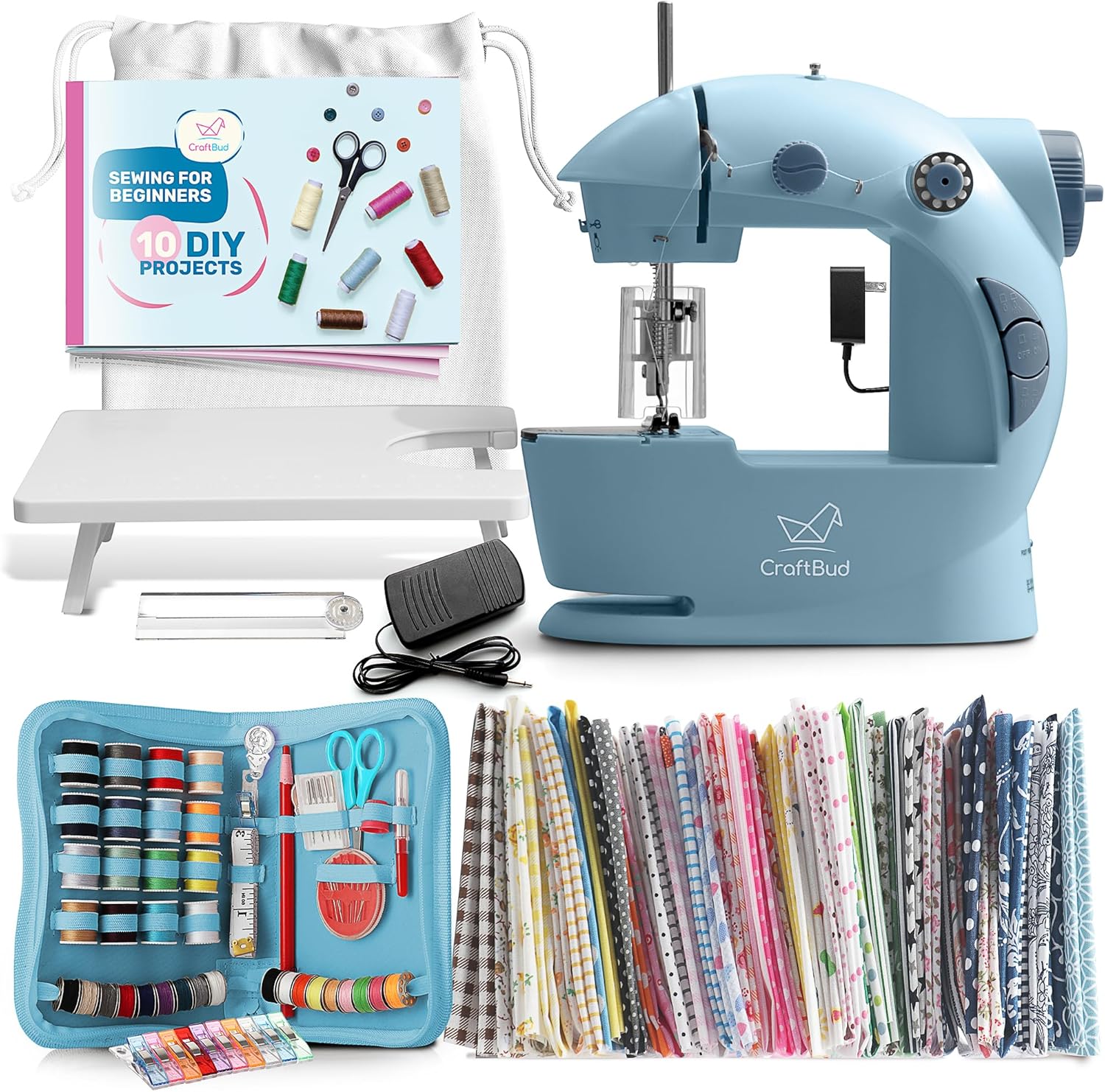
The CraftBud Mini Sewing Machine is a small, portable electric machine aimed at first-time sewists and kids, sold as a complete starter kit. It delivers basic straight and zigzag stitching, an adjustable speed with foot pedal control, a built-in light for working in low light, and a small extension table for slightly larger pieces. The included 122-piece accessory set—fabric squares, prethreaded bobbins, spare needles, multiple thread spools, clips, scissors, tape measure and a guide book—makes it ready to use out of the box for simple repairs, crafts and learning projects. The dual power option and lightweight design make it easy to move and store, and the guide book helps shorten the learning curve. Limitations are typical for a mini machine: it is best for lightweight fabrics and basic seams rather than heavy garments or high-volume sewing, and its compact build can feel less stable on thicker materials. As a budget starter package, it balances convenience and everything-you-need readiness against the restricted power and durability of a full-size machine.
Best for: Buyers who want a practical, all-in-one beginner sewing solution to learn basics, make small repairs and craft projects without investing in a full-size machine.
Less Ideal for: Experienced sewists, people who regularly sew denim, canvas or thick layers, or anyone needing a durable machine for daily heavy use should look at full-size models instead.
- Comes as a comprehensive starter kit with 122 accessories needed to begin sewing
- Adjustable speed with foot pedal and built-in light for easier control and visibility
- Portable, lightweight design with dual power option for use in multiple locations
- Small extension table expands workspace for slightly larger projects
- Not designed for heavy fabrics or high-volume sewing due to limited power and compact frame
Verdict: A ready-to-use, budget-friendly starter kit that gives newcomers the essential tools and a compact, easy-to-use sewing machine to learn and tackle light projects.
MEGLE FHSM-505 Sewing Machine

| Power Source | AC/DC |
|---|---|
| Input Voltage | 240 volts |
| Number of Stitches | 12 |
The MEGLE FHSM-505 is a small, budget-friendly sewing machine built for entry-level use and light home projects. It provides 12 stitch options including straight, decorative, overcast, and buttonhole stitches and can be operated with a foot pedal, a hand switch, or on batteries for portable use. Notable practical features include an LED work light, an automatic thread rewind, a built-in thread cutter, and a little hidden storage drawer for accessories. The machine is designed with simple controls: a rotary stitch selector, adjustable upper-thread tension, and a manual hand wheel for setup, which helps beginners avoid jams. Its compact, lightweight body and dual power modes make it convenient for small repairs, craft projects, and learning basic sewing techniques, but it is not intended for heavy fabrics or continuous high-volume sewing. Expect limited power and durability compared with larger home machines, and follow the manual carefully for threading and tension to reduce skipped stitches and breakages.
Best for: Someone learning to sew or needing an inexpensive, portable machine for light mending, craft projects, and practice sessions who prioritizes low cost and simplicity.
Less Ideal for: Users who routinely sew heavy denim, leather, or thick multi-layered fabrics or who need a high-powered machine for frequent long sewing sessions.
- Dual power options (AC adapter or 4 AA batteries) for portable use
- 12 built-in stitches plus forward and reverse sewing for basic projects
- Includes foot pedal and hand switch for flexible speed control
- LED light, thread cutter, and small accessory drawer improve usability
- Not designed for very thick or highly elastic fabrics
- Compact, lower-power motor may struggle with continuous heavy sewing
Verdict: A very affordable, portable beginner machine that covers basic stitches and small projects while keeping costs under $100.
Brother FB1757X Sewing Machine

| Built-in stitches | 17 |
|---|---|
| Buttonhole styles | 4 one-step auto-size |
| Power source | AC |
| Frame material | Metal |
The Brother FB1757X is a straightforward mechanical sewing machine aimed at beginners and casual sewers who want a reliable, no-frills tool. It offers 17 built-in stitches and four one-step auto-size buttonhole styles, a dial stitch selector, and a free arm for sleeves and pant legs. Practical touches include a jam-resistant drop-in bobbin with a clear cover, an LED work light for better visibility, and an included wide extension table for larger projects. The metal frame and tension control help the machine handle heavier fabrics such as denim and light leather, and the package includes common presser feet and spare bobbins so you can start sewing right away. Because it is mechanical rather than computerized, stitch selection is simple but lacks memory or programmable features, and advanced decorative or utility stitches are limited to the 17 built-in options. For basic garment repairs, home sewing projects, and learning to sew, this model delivers dependable performance in an approachable package.
Best for: Buyers who prioritize a dependable, easy-to-use machine for learning and everyday sewing will appreciate this model's simple controls and solid build.
Less Ideal for: If you want programmable stitch patterns, touchscreen controls, or a large decorative stitch library, a computerized machine would be a better choice.
- 17 built-in stitches plus 4 one-step auto-size buttonhole styles for common sewing tasks
- Jam-resistant drop-in bobbin with clear cover for easier thread monitoring and fewer interruptions
- Free arm and included wide extension table to handle sleeves and larger projects comfortably
- LED work light improves visibility for detailed or low-light sewing
- Durable metal frame and tension control let you sew heavier fabrics like denim
- Mechanical controls limit advanced customization compared with computerized models
- Limited stitch variety for users who want many decorative or specialty stitches
Verdict: A solid, reliability-first mechanical sewing machine that gives beginners the core features and build quality needed to learn and complete everyday sewing projects.
Magicfly Mini Sewing Machine MF600

| Power Source | Battery Powered |
|---|---|
| Model Number | MF600 |
| Item Type Name | Mini Portable Sewing Machine |
The Magicfly MF600 is a small, portable sewing machine designed for simple repairs and beginner projects. It runs on AC or battery power and can be operated by button or foot pedal, which makes it convenient for quick mending away from a dedicated sewing table. The unit offers two speed settings, a built-in light for working on darker fabrics, and a single fixed stitch suitable for hems, small alterations, and simple craft work. The included extension table, basic accessory kit (bobbins, needles, scissors, threader, tape measure, seam ripper, thimble) and storage bag make it ready to use out of the box and help with slightly larger pieces. Expect straightforward threading guidance and basic safety features like a finger guard, but also be aware this is a mini machine with a single stitch type and limited control over stitch length or reverse sewing, so it is not suited to heavy fabrics or advanced sewing techniques. For routine household fixes and learning the basics, it is a practical, compact choice that prioritizes portability and ease of use over advanced functionality.
Best for: Buyers wanting an inexpensive, easy-to-use machine to learn basic sewing and handle household mending, with portability and simple setup prioritized over advanced features.
Less Ideal for: People planning serious garment construction, quilting, or sewing heavy materials who need multiple stitch types, adjustable stitch length, and a more robust metal-frame machine.
- Dual power operation (AC or battery) for cordless use
- Two speed settings and foot pedal give control for beginners
- Includes extension table and a comprehensive beginner accessory kit
- Built-in light and finger guard improve usability and safety
- Only a single fixed stitch and no reverse function limits versatility
- Mini build and plastic construction make it unsuitable for heavy fabrics
Verdict: A compact, beginner-friendly mini machine that delivers portable, no-frills sewing and useful starter accessories for basic repairs and learning.
Choosing the Right Sewing Machine: Key Factors to Consider
Stitch Quality And Range
Stitch quality determines how professional and durable finished seams look. For beginners, consistent straight stitches and a reliable zigzag are the most important. Machines that maintain even tension across a range of lightweight and medium-weight fabrics reduce frustration and rework.
A modest stitch set that includes straight stitch, zigzag, a few decorative or utility stitches, and a basic buttonhole function covers the vast majority of starter projects. Avoid machines that list many decorative stitches if they sacrifice the fundamentals of consistent tension and stitch formation.
Simplicity Of Controls
Controls should be obvious and easy to operate without a manual-heavy learning curve. Large, clearly labeled dials or simple push-button selectors help you change stitch type and length quickly. A single dial for tension that is easy to understand reduces trial-and-error adjustments.
Beginner-focused machines that use mechanical controls are often preferable because they are predictable. If there are electronic features, they should not obscure basic functions like reverse stitching or stitch length control. Clear markings around dials and an intuitive layout speed up learning.
Threading And Bobbin Access
Fast, error-tolerant threading and straightforward bobbin replacement keep beginners sewing rather than troubleshooting. A clearly illustrated top-loading or front-loading bobbin compartment with accessible tension adjustments simplifies everyday use.
Auto-threading features can help beginners but are not essential if the machine offers a simple manual path and helpful guides. Consider how easy it is to reach the bobbin and whether the machine includes a clear threading diagram or color-coded paths to reduce mistakes.
Build Quality And Maintenance
For machines under $100, expect a mix of plastic and some metal parts. Evaluate whether components that receive stress, like the needle clamp, presser foot bar, and feed dogs, feel secure and well-aligned. A stable base reduces fabric shifting when you sew.
Maintenance should be simple: access to lint compartments, a basic oiling point if required, and replaceable needles. Machines that minimize the need for frequent adjustment or service provide a more forgiving learning experience.
Foot Accessories And Presser Foot Options
A useful accessory set expands what a beginner can accomplish without immediate upgrades. Standard presser feet such as all-purpose, zipper, blind hem, and buttonhole feet cover most starter tasks. Extra accessories like a seam ripper, spare needles, and bobbins help you get started right away.
Quality of included feet matters too. Metal feet tend to last longer than thin plastic versions and provide better pressure distribution on fabric. Consider which feet are included and whether common extras are available or easily retrofittable later.
Warranty, Support Materials, And Learning Resources
A basic warranty and clear user documentation reduce the risk of early failures causing long downtime. For beginners, an illustrated manual, quick-start guide, and access to video tutorials or customer support are highly valuable.
Look for machines that include straightforward troubleshooting tips and parts lists. Even low-cost machines that come with guided resources can accelerate learning and resolve common stumbling blocks without a repair visit.
Which Projects These Machines Handle Best
Beginner machines under $100 are best for garment repairs, simple clothing projects, home textiles like pillowcases and curtains, and lightweight craft work. They reliably handle woven cottons, quilting cotton, lightweight linen, and some polyester blends when correctly adjusted.
Heavier fabrics such as denim or multiple layers of heavy canvas often push these machines beyond their intended use. For projects that regularly involve thick seams, consider planning around staged stitching, using thinner needles, or limiting layers to what the machine can manage comfortably.
- Ideal: hems, mending, basic clothing alterations, craft projects
- Manageable with caution: lightweight quilts, simple bags with thin interfacing
- Avoid: heavy-duty upholstery, thick multiple-layer denim seams
Setting Up Your Sewing Space For Success
A stable table at elbow height, good lighting, and an unobstructed workspace make learning much easier. Keep a small organizer for frequently used tools like scissors, pins, seam ripper, and measuring tape. Place the machine on a non-slip mat to reduce movement during sewing.
Arrange a spool of thread and a few bobbins with commonly used thread colors so you can switch quickly. If you plan to follow video tutorials, position your device so you can see steps without reaching away from the machine.
- Table height: elbow level while seated
- Lighting: bright, shadow-free task light
- Storage: small tray or caddy for accessories
Basic Maintenance Every New Owner Should Do
Regularly remove lint from the feed dog and bobbin area and replace needles after several projects or when they show wear. Follow the manufacturer's simple maintenance steps like occasional oiling if recommended and ensure the machine is unplugged while performing routine cleaning.
Keep a small kit with spare needles, bobbins, and a soft brush. If tension starts acting up, try rethreading the machine and re-winding the bobbin before altering adjustments. Consistent minor maintenance prevents many common beginner frustrations.
- Clean lint after every few sewing sessions
- Replace needles regularly
- Store with a dust cover when not in use
Essential Troubleshooting Tips For Beginners
If stitches skip or look uneven, the most common fixes are rethreading top and bottom thread, replacing a bent or dull needle, and checking that the fabric is feeding evenly. Confirm the presser foot is down and the feed dogs are engaged for normal stitching.
For tension problems, rethread the machine and inspect the bobbin case for proper placement. If the machine jams, remove the fabric, cut the threads, and gently work the tangled thread out with a small brush rather than forcing the mechanism.
- Skips/uneven: rethread, replace needle, check presser foot
- Jams: remove fabric, clean bobbin area, gently extract lint
- Tension issues: check bobbin placement and thread paths
Tips For Advancing Beyond Beginner Projects
As confidence grows, experiment with different needle types and thread weights for varied fabrics. Practice using specialty presser feet like zipper or blind-hem feet to expand project types. Gradually introduce slightly heavier fabrics in controlled tests to learn the machine's limits.
Keep notes on which stitch length and tension settings worked for particular fabrics. This habit turns trial and error into a useful reference and speeds up future project setup.
- Try specialty feet to expand capabilities
- Document settings by fabric for repeatable results
- Scale complexity gradually to avoid frustration
How We Chose the Best Sewing Machine
We focused on entry-level sewing machines that support a new sewer's first year of practice without overwhelming complexity. Selection began with machines explicitly marketed for beginners and those priced to meet the under-$100 constraint. From that pool we applied practical editorial filters: simplicity of controls, stitch quality on common fabrics, mechanical reliability under light-to-moderate use, and clear owner-facing documentation. Evaluation emphasized measurable, product-specific attributes: stitch consistency across fabric weights, the range and usefulness of stitch options, ease of threading and bobbin replacement, and how straightforward maintenance and troubleshooting are for novices. We also considered the accessory set included and whether the machine supports common beginner tasks like straight stitching, zigzag, buttonholes, and basic hemming. We excluded advanced and heavy industrial machines, computerized models with steep learning curves, and machines that lack basic warranty or support documentation. The final picks balance real-world usability and durability for learners, not feature-heavy spec sheets.
Our full evaluation process is outlined in our review methodology.
FAQ
Can a beginner sewing machine under $100 handle quilting?
It can handle small quilting projects made from single-layer quilting cotton and light batting, but full-size quilts with many layers can strain these machines. Expect to work slowly and avoid thick bulk at seams.
How often should I change the needle on a beginner machine?
Change needles after several projects or immediately if the needle becomes bent or causes skipped stitches. A good rule is to replace needles every 6 to 8 hours of sewing or when starting a new fabric type.
Are auto-threading features necessary for beginners?
Auto-threaders are helpful but not essential. Clear manual threading paths and good diagrams often suffice and teach useful skills. Auto-threading saves time but should not be the only factor in choosing a machine.
What should I do if my new machine keeps jamming?
First rethread both the top thread and the bobbin, then check for lint in the bobbin area and remove it. Verify the bobbin is correctly seated and that you are using the recommended needle and thread. If problems persist, consult the manual troubleshooting section.
Do beginner machines require special electrical considerations?
Most entry-level machines operate on standard household power and use a foot pedal. Ensure the outlet is grounded and avoid using extension cords for long-term operation. Unplug the machine before cleaning or changing needles.
Final Verdict
For a beginner working with a budget under $100, prioritize machines that emphasize consistent stitch formation, intuitive controls, and easy access to the bobbin and threading paths. Expect some tradeoffs in power and advanced features, but a well-designed entry-level machine will support repairs, garments, and small craft projects reliably. Choose a machine that matches your most likely projects, values clear documentation and included accessories, and offers straightforward maintenance. That combination will help you learn faster and get useful, long-lasting results from your early sewing work.