
Note: This article contains affiliate links. If you click on these links and make a purchase, we may earn a small commission at no extra cost to you. This helps support our research and content. Read our full affiliate disclosure here.
Sewing thick, layered denim demands more than a basic home machine. You need a Heavy-Duty Sewing Machine for Denim that handles multiple fabric layers, feeds fabric consistently, and accepts stronger needles without stalling. Whether you are repairing jeans, making heavy bags, or constructing upholstery, the right machine reduces frustration and saves time. This guide shortlists the top Heavy-Duty Sewing Machines for Denim across practical use cases and evaluates each by motor strength, feed system, and stitch reliability. Read on to see the models that made the list and what to watch for when choosing a machine for heavy fabric work.
Top Picks at a Glance
| Best Overall The best all-around choice for most situations | Janome HD3000 Heavy-Duty Sewing Machine |  |
| Best Quality Built to a higher standard if you want something more solid | JUKI TL-2010Q Sewing Machine |  |
| Best Value The sweet spot between price and what you get | SINGER Heavy Duty 4423 |  |
| Best Budget The cheapest option that still gets the job done reliably | SINGER Heavy Duty 4411 |  |
| Top Rated A top-rated pick with lots of positive feedback | Brother HC1850 Sewing Machine |  |
| Best Seller A high-volume bestseller chosen again and again | VEVOR Industrial Lockstitch JK9808T |  |
Janome HD3000 Heavy-Duty Sewing Machine
| Model Number | HD3000 |
|---|---|
| Built-in Stitches | 18 |
| Power Source | Corded Electric |
| Included Components | Foot Control, Power Cord, Standard Accessories |
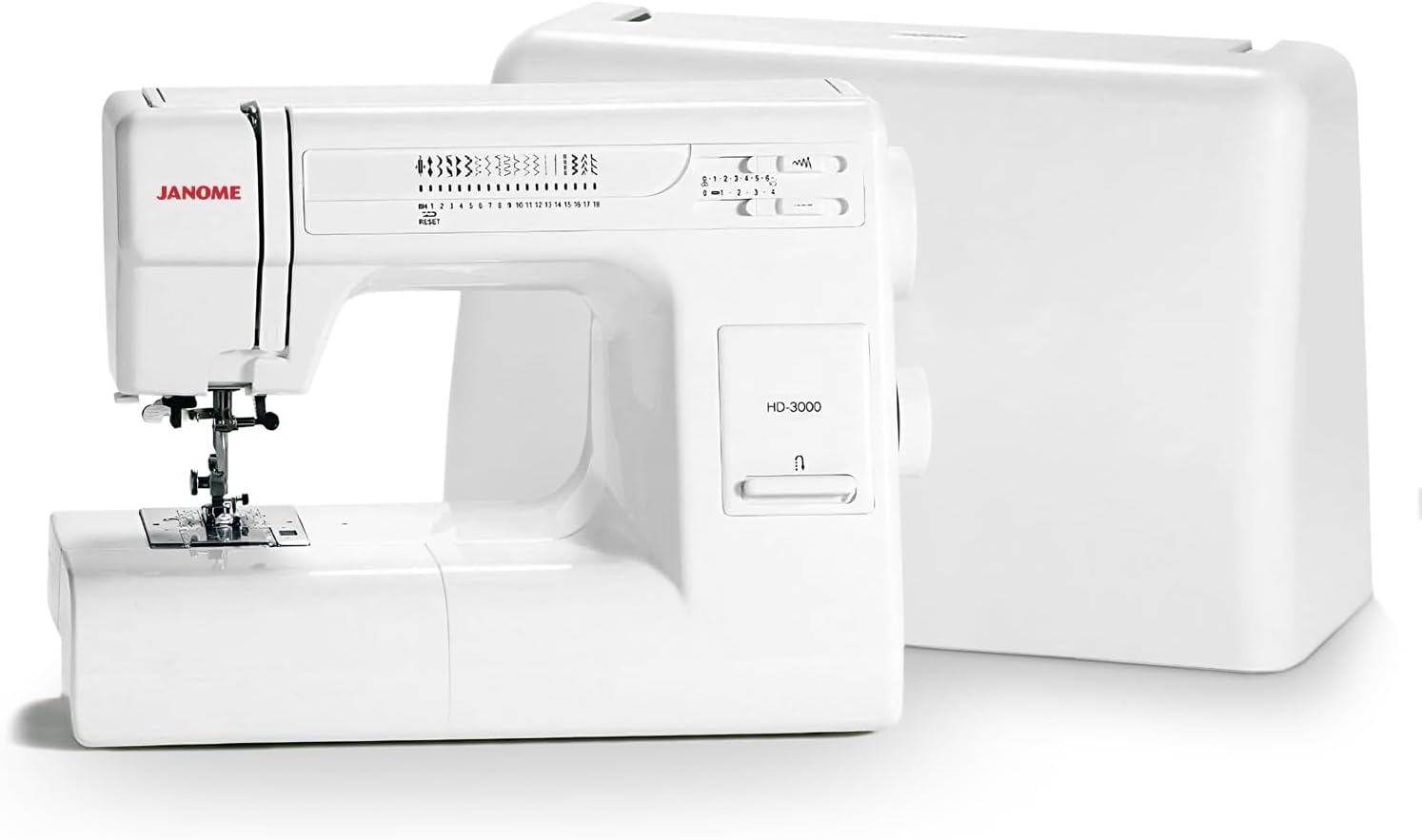
The Janome HD3000 is a mechanically driven heavy-duty sewing machine aimed at hobbyists who need reliable performance on both regular and thicker fabrics like denim. It offers 18 built-in stitches plus a one-step buttonhole, a built-in needle threader, snap-on presser feet, and a push-pull bobbin winder, all controlled with manual dials and levers. The extra-high presser foot and adjustable foot pressure help feed thicker layers, while the manual thread tension and reverse stitching give straightforward control for secure seams. Its metal/aluminum construction and included hard carrying case make it durable and portable for workshops or sewing classes. Limitations are its purely mechanical controls—no digital stitch preview or memory—and weight that reduces portability for frequent travel. For sewists who prefer hands-on, durable machines, the HD3000 delivers dependable straight and utility stitching on denim and canvas, but power sewers wanting computerized stitch customization will find it basic.
Best for: Practical sewists who want a rugged, no-frills machine that reliably handles denim and other dense fabrics for garment repairs, jeans projects, and home denim sewing.
Less Ideal for: Users who need computerized stitch patterns, programmable memory, or a lightweight travel machine should consider a different model.
- Sturdy metal/aluminum build suited to handle heavier fabrics.
- Extra-high presser foot and adjustable foot pressure improve feeding for thick layers.
- Built-in needle threader and snap-on presser feet speed setup and foot changes.
- Includes a hard carrying case and standard accessories for transport and storage.
- Mechanical-only controls with no digital stitch customization.
- Relatively heavy compared with lightweight portable machines.
Verdict: Choose the Janome HD3000 if you want a solid, mechanically simple heavy-duty machine that handles denim reliably without the complexity of computerized features.
JUKI TL-2010Q Sewing Machine
| Power Source | Treadle Powered |
|---|
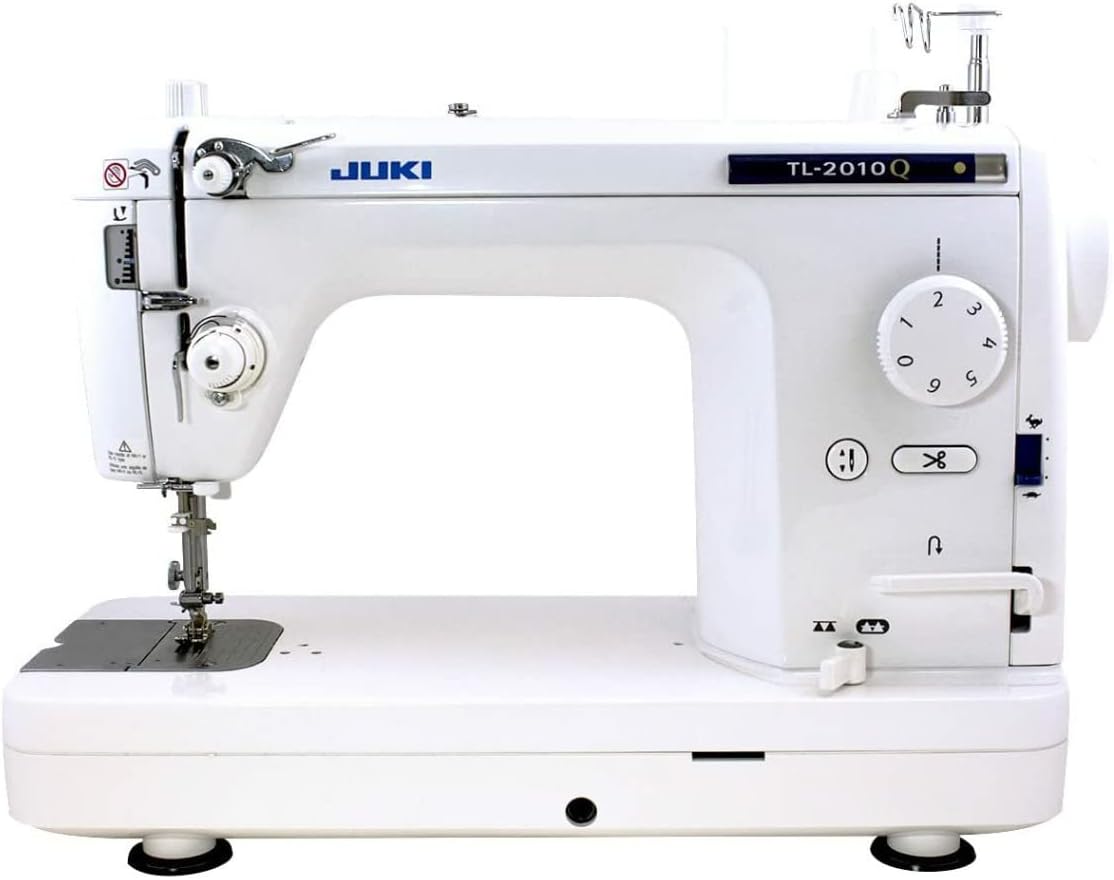
The JUKI TL-2010Q is a purpose-built, high-performance single-needle lockstitch machine designed for straight stitching and quilting and adaptable to tailoring and home decor work. It is typically used on a tabletop or mounted into a cabinet or quilting frame and includes a removable extension table for larger projects. Notable features include an automatic thread trimmer that trims needle and bobbin threads at the touch of a button, a knee lifter that raises the presser foot up to 12 mm for feeding thicker fabrics, and an automatic needle threader to speed setup. The machine's portable cast-aluminum build and carrying handle make it easy to move between workspaces. For heavy materials like denim, the high-performance motor and generous presser-foot lift let you feed multiple layers with less fuss, though a heavy-duty needle and appropriate feed/directional adjustments are still recommended for very thick seams. Controls are straightforward and the machine is aimed at sewists who need reliable straight stitching power rather than decorative stitch variety.
Best for: Sewists who prioritize reliable straight-stitch power and consistent feeding for heavy fabrics and large quilting or tailoring projects and who want a durable machine that performs under sustained use.
Less Ideal for: If you need many built-in decorative stitches, computerized patterning, or a machine specialized for industrial-scale leather and ultra-heavy materials, look at different, purpose-built models.
- High-performance single-needle lockstitch suited to straight stitching and quilting
- Automatic thread trimmer that trims needle and bobbin threads with one button press
- Knee lifter with up to 12 mm presser-foot lift for handling light to heavyweight fabrics
- Automatic needle threader speeds setup and reduces eyestrain
- Portable cast-aluminum construction with carrying handle and extension table for larger projects
- Limited to straight lockstitch functions rather than decorative stitch options
- Not explicitly marketed with a heavy-duty denim presser foot or factory-specified heavy-duty needle
Verdict: Buy this machine if you want a rugged, high-performance straight-stitch machine that handles multiple fabric layers and long quilting or tailoring sessions reliably.
SINGER Heavy Duty 4423

| Built-in stitches | 23 (97 applications) |
|---|---|
| Max sewing speed | 1,100 stitches/min |
| Power source | Corded Electric |
| Input voltage | 120 volts |
The SINGER Heavy Duty 4423 is a straightforward, no-frills mechanical sewing machine designed to handle everyday sewing and tougher materials like denim and canvas. It offers 23 built-in stitches that translate to 97 stitch applications, a 1,100 stitches-per-minute top speed, and a stronger motor for better penetration through thick seams. The machine uses a top drop-in bobbin for easy thread monitoring, an automatic needle threader to reduce setup frustration, and includes several presser feet and accessories to start common tasks. The stainless steel bed plate and interior metal frame improve fabric feed and stability when working through multiple layers. For practical users the 4423 delivers consistent stitch quality, fast sewing for longer seams, and enough accessories for mending, home decor, and garment work. Limitations are its mechanical control layout, which is less convenient than digital models for stitch selection, and the machine is relatively basic if you need many specialty stitches or computerized patterning.
Best for: Buyers who prioritize durable, high‑power performance for regular garment repairs, denim projects, and multi-layer sewing and who want a practical, reliable machine rather than advanced computerized features.
Less Ideal for: If you want a touchscreen or large built-in decorative stitch library for crafting complex embroidery-like designs, choose a computerized or embroidery-capable machine instead.
- Powerful motor and high top speed for sewing through heavy fabrics
- Heavy-duty interior metal frame and stainless steel bed plate for stability and smooth fabric feed
- Top drop-in bobbin and automatic needle threader simplify setup and reduce interruptions
- Includes a useful set of presser feet and accessories to start common sewing projects
- Mechanical controls and limited built-in stitch selection compared with computerized machines
- Not aimed at users who need extensive decorative or specialty stitch libraries
Verdict: The 4423 is the practical choice when you need a sturdy, high‑power machine that reliably sews denim and heavy fabrics without unnecessary bells and whistles.
SINGER Heavy Duty 4411

| Stitch applications | 69 |
|---|---|
| Built-in stitches | 11 |
| Stitch speed | Up to 1,100 stitches/min |
| Power source | Corded Electric |
The SINGER Heavy Duty 4411 is a straightforward mechanical sewing machine designed to tackle tough fabrics like denim, canvas, and layered projects while still working on lighter materials. It delivers up to 1,100 stitches per minute and offers 69 stitch applications including a 4-step buttonhole, which makes hemming, mending, and basic decorative work quick. The machine's heavy-duty interior metal frame and stainless steel bed plate reduce skipping and help the fabric feed smoothly, and the top drop-in bobbin with a clear cover lets you monitor thread easily. Included accessories such as multiple presser feet, bobbins, needles, and a seam ripper make it ready to use out of the box. Its mechanical controls keep operation simple and reliable, but advanced sewists used to computerized features or a wide variety of stitch settings may find the 11 built-in stitches limiting. The compact footprint and LED light help when working small spaces or detailed seams, and the motor power is the main reason many pick this model for denim work rather than lightweight hobby sewing alone.
Best for: Buyers who need a sturdy, no-frills machine that can handle heavy fabrics and regular mending without paying for advanced electronics.
Less Ideal for: If you want many decorative stitches, touchscreen controls, or advanced automation features, a computerized model would be a better fit.
- Powerful motor and metal interior frame for reliable stitching through denim and canvas
- High top speed (up to 1,100 SPM) to finish projects faster
- Top drop-in bobbin with transparent cover for easy thread monitoring
- Comes with key presser feet and accessories to start sewing immediately
- Limited number of built-in stitches compared with computerized machines
- Mechanical controls lack advanced stitch customization
Verdict: Choose the Singer 4411 when you want a budget-friendly, workhorse machine that reliably sews denim and other heavy fabrics.
Brother HC1850 Sewing Machine

| Built-in stitches | 185 |
|---|---|
| Power source | Corded Electric |
| Input voltage | 120 volts_of_alternating_current |
| Included feet | 8 |
The Brother HC1850 is a feature-packed computerized sewing and quilting machine built for regular home use and heavier fabrics like denim when paired with the right needle and settings. It offers 185 built-in stitches including 55 alphanumeric stitches, eight one-step auto-size buttonholes, and a backlit LCD for quick stitch selection. Practical features such as an advanced automatic needle threader, jam-resistant drop-in top bobbin, adjustable sewing speed, and a robust feed system make it straightforward to handle thicker seams and layers common in denim projects. The machine ships with a wide extension table, a spring-action quilting foot, and eight presser feet that support free-motion quilting and larger projects. It is lightweight and portable for classes or moving between workspaces, but it is intended for household 120V use rather than industrial continuous production. For sewers prioritizing reliable stitch quality and a broad stitch library for denim and quilted projects, the HC1850 balances usability and durability without the complexity of commercial machines.
Best for: Sewers who want a reliable, feature-rich home machine that handles quilting and heavier fabrics like denim for regular hobbyist or small-batch projects.
Less Ideal for: People needing a commercial-grade machine for continuous, high-volume denim production or industrial shop environments should choose an industrial model instead.
- Robust stitch selection with 185 built-in stitches including alphanumeric options
- Automatic needle threader and drop-in top bobbin reduce setup jams and downtime
- Strong feed system and spring-action quilting foot help manage thicker fabrics and multiple layers
- Includes wide extension table and eight presser feet for quilting and large projects
- Designed for home 120V use so not suited for continuous industrial workloads
- Not as heavy-duty as commercial or industrial sewing machines for sustained high-volume denim work
Verdict: A dependable, full-featured home sewing and quilting machine that can handle denim projects for hobbyists and small-batch makers seeking consistent stitch quality.
VEVOR Industrial Lockstitch JK9808T

| Power Source | ac |
|---|---|
| Included Components | Industrial Sewing Machine Set, User Manual |
| Material | Aluminum |
This VEVOR industrial lockstitch machine is built for heavy fabrics and production-style sewing. Driven by a 550W servo motor it can reach up to 5000 stitches per minute and is rated to handle as many as ten layers of denim, which makes it suitable for bags, tents, upholstery, and garment hems. The metal frame, automatic lubrication, oil window, and low-noise operation support longer sessions, while the LCD lets you set speed, needle up/down position, and soft start for controlled stitching. Practical touches include a widened worktable with adjustable height, LED work light, knee lifter for hands-free presser control, one-touch reverse, and automatic thread trimming to speed common tasks. Expect a sizable, workshop-style footprint and the need to set the machine on its included table; it is not a compact home machine. This model delivers production-capable performance at a lower cost than factory machines, making it a solid option if you want durable, precise stitching for heavy denim rather than a lightweight hobby machine.
Best for: Buyers who want a reliable, production-capable machine for heavy denim and thick materials and prioritize durability and controlled speed over portability.
Less Ideal for: If you need a small, portable, or occasional-use home sewing machine, this industrial table-mounted model is more than required and may be cumbersome.
- High-speed 5000 SPM capability for fast production sewing
- Designed to sew up to 10 layers of denim and other heavy materials
- Servo motor and LCD controls allow precise speed and needle position adjustments
- Workshop-oriented features: metal frame, automatic lubrication, oil window, and adjustable table height
- Convenience features like knee lifter, LED light, auto thread trimmer, and one-touch reverse
- Large, heavy setup requires a dedicated workspace and assembly on the table
- Not a compact or portable machine for casual home sewing
Verdict: A workshop-ready industrial lockstitch that delivers high-speed, durable stitching for heavy denim projects.
Choosing the Right Heavy-Duty Sewing Machine for Denim: Key Factors to Consider
Motor Power and Torque
Denim is a dense fabric that requires a motor with enough torque to push thick needles through multiple layers. A machine that lists higher torque or a stronger motor rating will resist bogging down when sewing seams, hems, or stacked layers. Variable speed control matters because it lets you slow down at thick points without losing driving force.
Insufficient motor power leads to skipped stitches, stalled needles, and excessive wear on the machine. For regular denim work, prioritize a machine described as heavy-duty or built with reinforced motor components.
Feed System and Presser Foot Pressure
A consistent feed system keeps fabric moving evenly under the needle and prevents shifting between layers. Look for machines with robust feed dogs, adjustable presser foot pressure, and the option for walking foot or differential feed if you plan to sew multiple layers or varied fabric types.
Adjustable presser foot pressure allows you to increase downward force when working with stiff denim and reduce it for lighter fabrics. A poor feed system causes uneven seams and puckering, which is especially noticeable on heavyweight fabrics.
Needle and Thread Compatibility
Heavy-duty denim work requires needles rated for thick fabric and the ability to use heavier thread options. Check that the machine accepts heavy-duty needle sizes and has a tension system that can be reliably adjusted for thicker thread. The bobbin case and shuttle must also accommodate heavier thread without jamming.
Using the correct needle and thread combination reduces skipped stitches and premature needle breakage. Machines that limit you to lightweight needles will struggle with denim tasks.
Stitch Quality Across Thicknesses
Stitch consistency is the result of balanced tension, a steady feed, and reliable needle penetration. When sewing from single-layer denim into multiple-layer seams, a machine should maintain even stitch length and avoid loose loops or tight puckers.
Poor stitch quality not only looks bad but weakens seams, causing premature failure of repairs or handmade items. Evaluate machines on stitch behavior at transition points where fabric thickness changes.
Construction and Long-Term Durability
A metal frame, metal internal components, and reinforced needle bar typically indicate a machine built for heavy use. Durable construction resists vibration and maintains alignment, which is critical when driving heavy needles through denim frequently.
Thin plastic housings or light internal parts are more likely to wear or deform under heavy loads. Prioritize machines with serviceable parts and straightforward maintenance access for longevity.
Ease of Use and Maintenance
Working with dense fabrics can be physically demanding; ergonomic controls, an easy-to-reach bobbin, and clear tension adjustments reduce frustration. Regular cleaning and lubrication access are important because lint build-up from denim quickly accumulates around the feed area and bobbin.
Simple threading paths, clearly marked tension dials, and accessible components for routine maintenance will keep a heavy-duty machine performing reliably over time.
Thread, Needle, and Bobbin Basics for Denim
Match the needle size and type to your denim weight. Universal and denim-specific needles in larger sizes reduce the risk of bending or breaking. Heavier thread, such as bonded nylon or thick polyester, creates stronger seams but may require tension adjustments.
Use bobbins and shuttle assemblies rated to handle thicker thread. When switching to heavy thread, test on scrap denim to fine-tune upper tension, bobbin tension, and stitch length before working on the final piece.
- Start with a denim needle one or two sizes larger than standard.
- Use polyester or bonded thread for high abrasion resistance.
- Test stitch length and tension on layered scraps before sewing the project.
Presser Feet and Accessories That Help
Certain presser feet and accessories make sewing denim easier. A walking foot helps feed multiple layers evenly, while a roller foot is useful for very stiff or coated denim. A heavy-duty zipper foot and topstitching foot make finishing seams neater.
Consider aftermarket or optional accessories that increase capability without modifying the machine. A strong magnetic seam guide or edge guide can also speed repetitive edge stitching on thick fabric.
- Walking foot for layered seams
- Topstitch and roller feet for heavy fabric handling
- Extra-long needles for thick stacks
Common Problems and Simple Fixes
Skipped stitches, broken needles, and uneven seams are typical problems when sewing denim. Often these issues are solved by changing to the correct needle size, adjusting tension, slowing the sewing speed, and increasing presser foot pressure.
If the machine stalls or sounds strained, stop sewing and check for thread jams, bent needles, or lint buildup. Regular cleaning and a check of the bobbin area usually resolve feeding problems before they cause damage.
- Use heavier needles to prevent bending and breaking
- Adjust tension and test stitch settings on scraps
- Clean lint and debris from the feed dog and bobbin area regularly
Workspace Setup for Heavy Sewing
Set up a stable table or work surface that supports the weight of large projects like jeans or bags. Good lighting and a comfortable chair at the right height reduce fatigue and improve control when guiding thick fabric through the machine.
Keep essential tools nearby, such as pliers for pulling needles through thick layers, clamps instead of pins for holding stacks, and a small brush for frequent lint removal. A solid, flat surface prevents the machine from rocking and preserves straight stitching lines.
- Use clamps or clips instead of pins on multiple layers
- Keep a pair of pliers handy for stubborn needle removal
- Light the workspace well to inspect stitch quality as you sew
How We Chose the Best Heavy-Duty Sewing Machine for Denim
We focused on features that directly affect sewing performance with dense, multi-layer denim. Primary evaluation criteria included motor torque and speed control to ensure the machine can drive thicker needles and multiple fabric plies; a robust feed system, such as a strong feed dog and presser foot pressure options, to prevent fabric slippage or uneven stitching; compatibility with heavy-duty needles and thicker thread to maintain stitch integrity; stitch quality and consistency across varying thicknesses to avoid skipped stitches; build construction and durability, including metal components in the needle bar and presser foot assembly; and usability features like adjustable presser foot pressure, knee lift or extra space for bulky projects, and simple tension adjustment. We excluded lightweight or purely decorative machines that lack the power or mechanical strength for consistent denim work. Machines were selected from models with documented heavy-fabric capability, clear mechanical specifications, and user-focused controls that make heavy sewing manageable. The picks favor practical durability and serviceability over cosmetic bells and whistles.
Our full evaluation process is outlined in our review methodology.
FAQ
Can I use a regular home sewing machine to sew denim?
You can sew some denim on a regular home machine, but results vary. Lightweight denim or single layers are usually manageable, while multiple layers and heavy denim benefit from a heavy-duty machine with stronger motor and sturdier feed.
What needle size is best for thick denim?
Needle choice depends on denim weight. For medium to heavy denim, start with denim or topstitch needles in larger sizes and test on scraps. Using the correct size reduces bending and skipped stitches.
How do I prevent skipped stitches when sewing through seams?
Use a sharp heavy-duty needle, increase presser foot pressure, slow your sewing speed at transition points, and test tension settings on layered scraps. A walking foot can also help maintain even feeding through thick seams.
Is a walking foot necessary for sewing denim?
A walking foot is not strictly necessary but can greatly improve feeding on multiple layers of denim. It reduces fabric shift and produces more even stitches for stacked seams and bulky projects.
How often should I clean a machine used for denim?
Machines used on denim should be cleaned more frequently because denim sheds lint. Wipe the feed area and bobbin case after several hours of heavy use and perform a deeper clean and lubrication according to the machine's maintenance schedule.
Final Verdict
Choosing the right heavy-duty sewing machine for denim comes down to balancing motor strength, a reliable feed system, and compatibility with heavier needles and thread. Prioritize a machine with robust construction and adjustable presser foot pressure if you will regularly sew multiple layers or thick seams. Expect tradeoffs between size, weight, and portability versus long-term durability. Focus on the performance dimensions detailed above to pick a machine that will handle denim projects consistently and require minimal repairs over time.