
Note: This article contains affiliate links. If you click on these links and make a purchase, we may earn a small commission at no extra cost to you. This helps support our research and content. Read our full affiliate disclosure here.
Picking the right heavy-duty sewing machine for home use matters if you plan to work with denim, canvas, upholstery, or if you sew often. A sturdier machine reduces skipped stitches, tolerates heavier threads, and lasts longer under frequent workloads. This guide presents five carefully shortlisted heavy-duty sewing machines for home use, chosen for robust construction, consistent stitch quality, and practical features that matter for home sewists. Below you will find clear evaluation points to compare options, plus buying guidance to help you match a machine to the kinds of projects you make most often.
Top Picks at a Glance
| Best Overall The best all-around choice for most situations | Janome JW8100 Sewing Machine |  |
| Best Quality Built to a higher standard if you want something more solid | JUKI TL-2010Q Sewing Machine |  |
| Best Value The sweet spot between price and what you get | SINGER Heavy Duty 4432 |  |
| Best Budget The cheapest option that still gets the job done reliably | FEIYUE FYe350 Sewing Machine |  |
| Best Seller A high-volume bestseller chosen again and again | SINGER Heavy Duty 4423 |  |
Janome JW8100 Sewing Machine

| Power Source | Corded Electric |
|---|---|
| Number of Stitches | 100 built-in stitches |
| Buttonholes | 7 one-step buttonholes |
| Feed Dog System | 7-piece feed dog system |
The Janome JW8100 is a feature-rich computerized sewing machine built to handle a wide range of home sewing and quilting projects. It offers 100 built-in stitches and seven one-step buttonholes selectable via a backlit LCD and intuitive buttons, and includes a start/stop button and speed control for foot-control-free sewing. Practical touches like a built-in needle threader, needle up/down, auto-declutch bobbin winder, jam-proof drop-in bobbin, and a 7-piece feed dog system help produce consistent stitch quality across cottons, knits, and layered fabrics. The bundled extra-wide extension table, even feed foot, and 1/4-inch quilting foot make larger projects and quilting seams easier to manage. The machine is corded electric and comes with a good accessory set including multiple presser feet and bobbins. Limitations include its 12-pound weight, which reduces portability, and while feature-packed, advanced professional users may want higher stitch width/length ranges or industrial sewing speeds for heavy production work. For hobbyists and serious home quilters it balances capability and convenience well.
Best for: Home sewists who want a versatile, quilting-ready machine that combines computerized controls with practical accessories for a wide range of projects.
Less Ideal for: Users needing a lightweight travel machine or industrial users requiring higher continuous production speeds should consider other options.
- Large stitch library with 100 built-in stitches and seven one-step buttonholes for design flexibility
- Backlit LCD, start/stop button and speed control for easy operation and footless sewing
- 7-piece feed dog system and even feed foot for smooth, consistent fabric feeding
- Includes extra-wide extension table and quilting feet to support larger projects and quilting tasks
- Heavier 12-pound unit limits portability for frequent transport
- Not aimed at industrial-level continuous heavy production work
Verdict: A versatile, quilting-capable computerized machine that delivers reliable stitch quality and user-friendly controls for serious home sewists.
JUKI TL-2010Q Sewing Machine
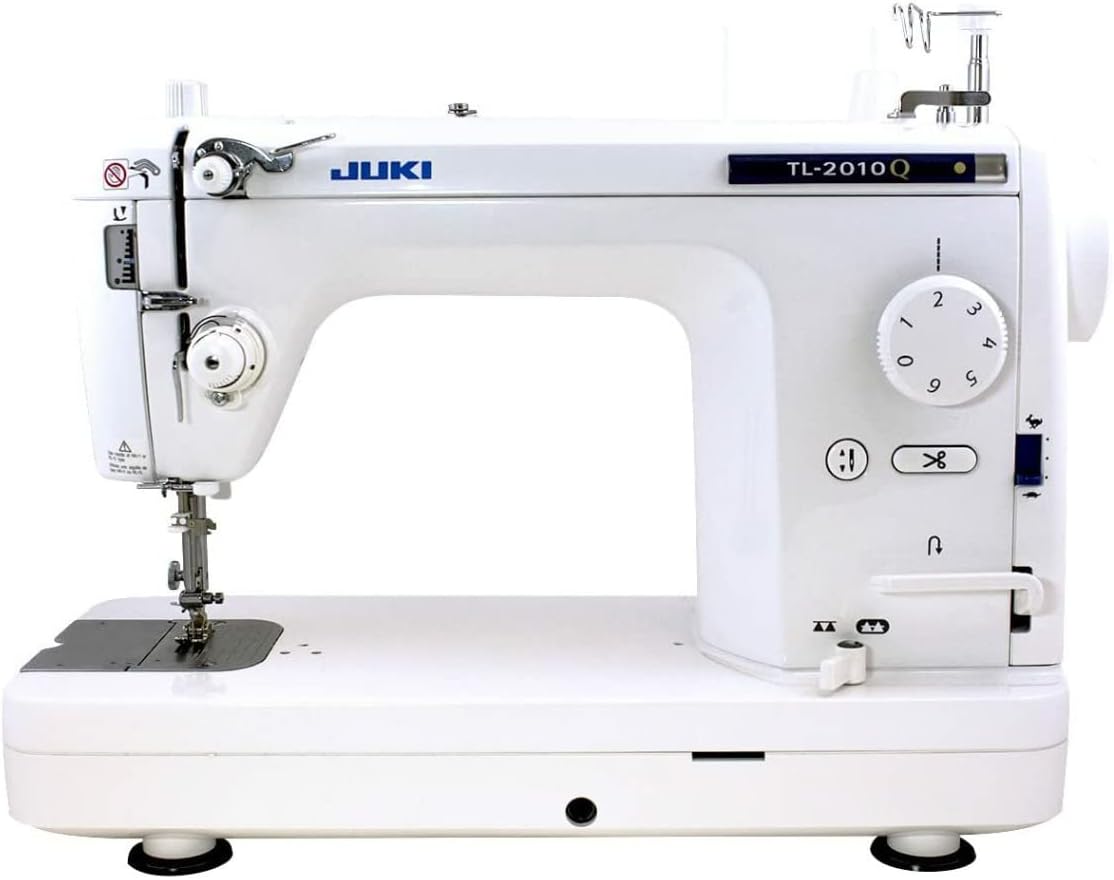
| Power Source | Treadle Powered |
|---|---|
| Material | Aluminum |
The JUKI TL-2010Q is built for serious home sewists who need a fast, reliable straight-stitch and quilting machine. It delivers industrial-style performance in a portable tabletop body, with an automatic thread trimmer that clips needle and bobbin threads by push-button and a knee lifter that raises the presser foot for managing thick seams and multiple layers. The automatic needle threader speeds setup and the machine's robust construction handles light to heavyweight fabrics, making it suitable for tailoring, home decor, and quilting. Practical benefits include a generous presser foot lift for bulky materials, portability with a carrying handle, and a clean lockstitch ideal for long seams. Limitations are that it is a single-needle, straight-stitch machine so you will need a different machine for decorative or stretch stitches, and advanced users may prefer more built-in stitch variety for certain garment work. For buyers who prioritize speed, stitch quality, and durability for heavy fabrics, this is a strong home workshop choice.
Best for: Home sewists and quilters who prioritize stitch speed, robust straight-stitch quality, and the ability to handle heavy or multiple-layer fabrics in a home workshop.
Less Ideal for: Casual crafters who want a wide range of decorative stitches or knit/stretch stitch capabilities, or buyers seeking an all-in-one beginner machine with many preset stitch patterns.
- Industrial-style straight-stitch performance suitable for heavy fabrics
- Automatic thread trimmer trims needle and bobbin threads with one button
- Knee lifter provides up to 12mm presser foot lift for thick seams
- Automatic needle threader reduces setup time and eye strain
- Portable tabletop design with carrying handle for easy transport
- Single-needle lockstitch only, no decorative or stretch stitch options
- Limited built-in stitch variety compared with multifunction household machines
Verdict: Choose the TL-2010Q when you need durable, industrial-grade straight-stitch performance at home for quilting and heavy fabrics.
SINGER Heavy Duty 4432

| Built-in Stitches | 32 |
|---|---|
| Stitch Applications | 110 |
| Top Drop-In Bobbin | Yes |
| Power Source | Corded Electric |
The SINGER Heavy Duty 4432 is a straightforward mechanical machine built to handle thick fabrics and everyday sewing projects. Its reinforced metal frame and powerful motor let the needle drive through denim, canvas, and multilayer seams more easily than a basic home machine, while an advertised top speed of 1,100 stitches per minute makes long seams faster to sew. Practical conveniences include a top drop-in bobbin with a clear cover for easy monitoring, a built-in needle threader, and a one-step buttonhole foot for consistent buttonholes. The package includes common presser feet and accessories so you can start sewing right away. Because it is mechanical rather than computerized, stitch selection and adjustments are simple but less precise than digital models, and it lacks automated pattern editing or memory. The unit is aimed at users who want reliable, robust performance for garments, repairs, and home-decor projects without a steep learning curve or extra software features.
Best for: Buyers who prioritize durable, no-nonsense performance for frequent mending, garment construction, or home-decor projects and want a machine that powers through heavy materials without complex electronics.
Less Ideal for: If you want a computerized machine with touchscreen menus, stitch memory, or extensive decorative stitch customization, look at feature-rich electronic models instead.
- Metal heavy-duty frame for greater stability and durability
- Powerful motor with high top speed for faster sewing and better penetration of thick fabrics
- Top drop-in bobbin with clear cover for easy threading and monitoring
- Includes useful presser feet and accessories to begin projects immediately
- Mechanical controls limit fine, programmable stitch customization compared with computerized machines
- Not targeted at users who need advanced decorative stitch programming or touchscreen controls
Verdict: Choose the SINGER 4432 when you want a rugged, high-speed mechanical machine that reliably handles thick fabrics and routine home sewing tasks.
FEIYUE FYe350 Sewing Machine

| Power Source | Corded Electric |
|---|---|
| Input Voltage | 120 volts |
| Built‑in Stitches | 23 |
| Included Components | Bobbins, needles, multiple presser feet |
The FEIYUE FYe350 is a full‑size home sewing machine built around an energy‑saving 100W servo motor and a metal interior frame that handles both delicate fabrics and heavier materials like denim and canvas. It offers 23 built‑in stitches, a one‑step buttonhole, adjustable presser foot pressure, and a drop‑in bobbin system, making it usable for garment repairs, home decor, and small craft projects. Practical features such as an automatic needle threader, dual LED lights, removable free arm, and an electronic stepless foot pedal make setup and control easier for beginners and hobbyists. The unit includes multiple presser feet, extra bobbins, needles, and basic tools so you can start sewing right away. Limitations to consider are its primarily mechanical control layout without an LCD for advanced stitch customization and a relatively heavy built form that is less convenient to move frequently despite the top handle. The machine also focuses on straightforward stitch options rather than extensive decorative or computerized features favored by advanced sewists.
Best for: Buyers who want a durable, no‑nonsense home sewing machine that can handle both everyday garments and heavier fabrics while keeping power use efficient and setup simple.
Less Ideal for: Sewers seeking a portable travel machine or those who want a highly computerized machine with dozens of decorative stitches and touchscreen controls should look elsewhere.
- Powerful 100W servo motor for consistent torque and the ability to sew thick fabrics
- Heavy‑duty interior metal frame for stable stitching and durability
- Automatic needle threader and drop‑in bobbin for faster setup and easier threading
- Includes a starter kit of presser feet, bobbins, needles, and tools to begin sewing immediately
- Adjustable presser foot pressure and one‑step buttonhole simplify varied fabric projects
- No computerized LCD or extensive stitch programming for advanced decorative work
- Heavier unit that is less ideal for frequent transport
Verdict: A sturdy, budget‑minded heavy‑duty home sewing machine that delivers reliable power and useful starter accessories for beginners and practical sewists.
SINGER Heavy Duty 4423

| Built-in stitches | 23 |
|---|---|
| Stitch applications | 97 |
| Max sewing speed | 1,100 stitches per minute |
| Power source | Corded Electric |
| Input voltage | 120 volts |
The SINGER Heavy Duty 4423 is built around a metal interior frame and a stronger motor to handle heavy fabrics like denim and canvas while still sewing lightweight materials with adjustable presser foot pressure. It offers 23 built-in stitches that produce 97 stitch applications, a top drop-in bobbin for easier thread monitoring, an automatic needle threader, LED work light, and a one-step buttonhole, making it suitable for garment repair, home decor, and simple quilting. The machine runs at up to 1,100 stitches per minute so projects go faster, and the included accessory set (z zipper, buttonhole, button-sewing and all-purpose feet plus bobbins, needles, seam ripper and more) covers common tasks out of the box. Expect a mostly mechanical experience without computerized stitch programming, and while the casing is plastic the heavy-duty interior gives stability; users who need advanced decorative stitch editing or extremely quiet motors may want a different model. For routine home sewing that includes heavy materials, the 4423 balances power, speed, and practical features well.
Best for: Home sewers who prioritize a reliable, hard-working machine that can tackle heavy fabrics and finish projects quickly while keeping setup and maintenance straightforward.
Less Ideal for: If you want advanced computerized stitch editing, ultra-quiet operation, or a full-metal exterior for a premium studio machine, look at higher-end models instead.
- Robust metal interior frame for stable, skip-free sewing
- Powerful motor with high speed (up to 1,100 SPM) for piercing thick seams
- Top drop-in bobbin and automatic needle threader simplify setup and maintenance
- Includes essential presser feet and accessories for common sewing tasks
- Adjustable presser foot pressure lets you handle both heavy and lightweight fabrics
- Mechanical feature set lacks computerized stitch customization
- Outer casing is plastic rather than full metal, which may feel less premium
Verdict: Buy the 4423 if you want a fast, factory-quality heavy-duty home machine that reliably handles thick fabrics and everyday sewing tasks.
Choosing the Right Heavy-Duty Sewing Machine for Home Use: Key Factors to Consider
Frame and Chassis Construction
A heavy-duty machine needs a rigid frame to resist flex under pressure. Metal chassis or reinforced internal frames reduce vibration and help maintain consistent needle alignment over time.
Stiffer construction directly affects stitch reliability when you sew multiple layers or use thicker threads. A flimsy plastic frame may save weight but will often lead to misaligned stitches, skipped stitches, and faster wear when used heavily at home.
Motor Type and Power
Motor power determines how easily a machine pushes a needle through dense or layered fabrics. Look for motors or drive systems specified for sustained work rather than occasional light use.
Higher torque at low speeds matters more than top speed for heavy fabrics. Machines with clutch or direct-drive motors tend to offer steadier torque, which helps when sewing seams through denim, canvas, or layered upholstery.
Needle Bar, Hook, and Bobbin Design
Durable needle bars and robust hook mechanisms make a big difference in long-term reliability. A metal shuttle or rotary hook and a solid needle bar resist bending and reduce the risk of timing issues.
Bobbin systems that are easy to access and less prone to jamming save time and frustration. For home heavy-duty use, prefer designs that allow quick bobbin changes, straightforward tension adjustments, and simple cleaning access.
Presser Foot Pressure and Feed System
Adjustable presser foot pressure helps you manage different fabric thicknesses. For thick or layered materials, the ability to raise the presser foot higher and increase pressure prevents slippage and uneven feeding.
A reliable feed dog system and the option for alternate feed modes or walking foot compatibility improve fabric handling. Strong, consistent feed reduces puckering and keeps seams straight when working with challenging textiles.
Stitch Options and Control
Even for heavy-duty tasks, having the right stitch selections and control matters. Straight stitch strength, reverse stitch capability, and variable stitch length are essential for constructing and reinforcing seams.
Simple, durable stitch selection mechanisms are preferable to complex electronic interfaces for heavy use. Physical dials or straightforward digital controls that tolerate frequent adjustments are often more durable in a heavy-use environment.
Maintenance, Accessibility, and Service
Heavy-duty sewing increases wear, so ease of maintenance is crucial. Machines with accessible oiling points, removable plates for lint cleaning, and clear access to the bobbin area reduce downtime.
Consider how easy it is to replace consumables like needles and presser feet and whether common parts are straightforward to source locally. Good serviceability extends the machine's usable life for home sewists who rely on regular projects.
Who Benefits Most From a Heavy-Duty Home Sewing Machine
If you regularly work with denim, canvas, leather, upholstery fabric, or multiple-layer garments, a heavy-duty sewing machine will save time and reduce frustration. Casual hobbyists who occasionally mend garments likely do not need the additional weight and power of a heavy-duty model.
Home sewists who sell finished goods, make outdoor gear, or routinely alter heavy textiles will see immediate gains in durability and stitch reliability. The investment pays off through fewer skipped stitches, less needle breakage, and consistently better seam strength.
- Frequent sewers working with thick fabrics
- People making heavy-use items like bags, upholstery, or denim garments
- Sewists who want longer service intervals and fewer repairs
Setting Up a Heavy-Duty Machine for Home Projects
Proper setup reduces a lot of common problems. Start by loading the correct heavy-duty needle and matching thread weight to the fabric. Tension will often need slight adjustment when switching between light and heavy materials.
Use a sturdy table or cabinet that keeps the machine steady, and check that the presser foot height and pressure are set for the specific project. Test on scrap layers that match your project thickness to confirm stitch formation and feed before working on the actual piece.
- Use appropriate heavy needles and bonded or upholstery threads
- Adjust presser foot pressure and stitch length for layered seams
- Test on scrap material before sewing the workpiece
Common Upgrades and Accessories for Heavy-Duty Sewing
A few well-chosen accessories increase a machine's usefulness for demanding tasks. Heavy-duty needles, walking feet, roller feet for vinyl and leather, and industrial-strength threads make a big difference in outcome and reliability.
Consider extra presser feet for specialized tasks and a robust extension table for large projects. Upgrading to stronger needles and reinforced bobbins reduces breakages and improves the finishing quality for thick seams.
- Walking foot or even-feed foot for multiple layers
- Roller foot for sticky materials like faux leather
- Large extension table for quilts and upholstery panels
Troubleshooting Heavy-Fabric Sewing Issues
Skipped stitches, bunching, and broken needles are usually tied to the needle, thread, or tension. Ensure the needle is appropriate for the fabric weight and that the thread is not too fine for the needle eye. Replacing needles regularly avoids many problems.
If the machine struggles to feed material, check presser foot pressure, clean the feed dog area, and confirm the bobbin is inserted correctly. Persistent timing issues, loud grinding noises, or repeated breaks suggest a service visit rather than continued home adjustments.
- Replace needles frequently when sewing heavy materials
- Clean lint and debris from the bobbin and feed dog area
- Adjust presser foot pressure and stitch length for better feeding
Workspace and Ergonomics for Frequent Sewing
Heavy-duty sewing often means longer sessions and heavier material handling. Plan a workspace with good lighting, a sturdy table, and a comfortable chair at the right height to reduce fatigue.
Organize commonly used tools within reach and keep spare needles, thread, and presser feet nearby. A small anti-fatigue mat and a task lamp with adjustable focus make longer projects less taxing on your body and your work quality.
- Use a stable, level surface that supports the machine weight
- Arrange tools and accessories for easy access
- Invest in adjustable lighting for precision work
How We Chose the Best Heavy-Duty Sewing Machine for Home Use
We focused on real-world durability, stitch quality under load, and practical usability as the core filters for selecting heavy-duty home sewing machines. Candidates had to demonstrate reinforced frames or metal components, reliable stitch formation with heavier threads and multiple fabric layers, and a motor or drive system rated to handle frequent use. We prioritized machines with adjustable presser foot pressure, a full metal needle bar and hook assembly, and a straight, reliable feed system to prevent fabric jams. Additional selection criteria included user-facing features that matter at home: intuitive stitch selection, accessible bobbin design, and straightforward maintenance points like easy oiling or access panels. We also considered accessory support such as heavy-duty presser feet and sturdier needles. Exclusions were machines designed solely for industrial production, models lacking sufficient metal reinforcement, and lightweight hobby machines that fail under repeated thick-fabric use. Our final picks reflect a balance of durable construction, consistent stitch performance, and everyday usability for serious home sewing projects.
Our full evaluation process is outlined in our review methodology.
FAQ
Do heavy-duty home machines require different needles?
Yes. Heavy-duty sewing typically requires stronger, larger needles designed for denim, leather, or upholstery. Using the correct needle size and type reduces skipped stitches and breakage and improves stitch formation on dense fabrics.
Can I use a heavy-duty machine for delicate fabrics?
Often. Many heavy-duty machines can handle delicate fabrics when you switch to a finer needle, lighter thread, and lower presser foot pressure. However, very delicate materials may still perform better on machines designed specifically for fine sewing.
How often should I service a heavy-duty sewing machine used at home?
Service frequency depends on use. For frequent heavy use, basic maintenance like cleaning and oiling should happen monthly, with a professional tune-up annually or when you notice issues such as timing problems or unusual noises.
Will a heavy-duty machine sew leather and vinyl?
Yes, many heavy-duty home machines can handle leather and vinyl with the right needle, thread, and presser foot. Use a roller foot to avoid sticking and a stronger needle and thread to prevent breaks and skipped stitches.
Is motor power the same as sewing speed?
No. Motor power refers to torque and the ability to drive a needle through thick materials, while sewing speed is how fast the machine cycles. For heavy fabrics, torque at lower speeds is more important than maximum stitches per minute.
Final Verdict
When choosing a heavy-duty sewing machine for home use, prioritize structural strength, motor torque, and a reliable feed system. Those elements determine whether a machine can handle dense fabrics and repeated projects without performance loss. Balance stitch control and maintenance accessibility with the specific materials you plan to sew, and prepare your workspace and accessories to match heavier tasks. Invest in the features that align with the work you do most often. That focus will yield a machine that performs consistently and lasts across many home projects.