
Note: This article contains affiliate links. If you click on these links and make a purchase, we may earn a small commission at no extra cost to you. This helps support our research and content. Read our full affiliate disclosure here.
If you work with canvas, denim, upholstery, leather, or other dense materials, a standard home sewing machine can struggle. A Heavy-Duty Sewing Machine for Thick Fabrics gives you stronger stitch formation, a more robust feed system, and higher presser-foot clearance so you can sew multiple layers without skipped stitches or broken needles. This guide gathers six top-performing heavy-duty sewing machines for thick fabrics that are suited to hobbyists and small-scale makers who need reliable long-stitch performance. Below we summarize how each machine performs on stitch strength, feeding, motor torque, and usability so you can quickly match features to the types of thick materials and projects you plan to tackle.
Top Picks at a Glance
| Best Overall The best all-around choice for most situations | Brother ST150HDH Strong & Tough |  |
| Best Quality Built to a higher standard if you want something more solid | JUKI TL-2010Q Sewing Machine |  |
| Best Value The sweet spot between price and what you get | Janome HD3000 Heavy-Duty Sewing Machine |  |
| Best Budget The cheapest option that still gets the job done reliably | SINGER Heavy Duty 4411 |  |
| Top Rated A top-rated pick with lots of positive feedback | Brother HC1850 Sewing & Quilting Machine |  |
| Most Popular A crowd favorite that many people choose with confidence | SINGER Heavy Duty 4423 |  |
Brother ST150HDH Strong & Tough

| Power Source | Corded Electric |
|---|---|
| Input Voltage | 120 volts |
| Included Sewing Feet | 9 |
| Built-in Stitches | 50 |
The Brother ST150HDH is a metal-framed, computerized sewing machine built to tackle everything from lightweight silks to multiple layers of denim, canvas, and leather. It offers 50 built-in stitches, five styles of one-step auto-size buttonholes, and an LCD that shows stitch selection, width, and length. Practical conveniences include an advanced automatic needle threader, drop-in top bobbin, start/stop and needle up/down controls, and a variable speed slider so you can control the pace when working on detailed or heavy projects. Longer 7-point feed dogs and an included walking foot help feed thick layers smoothly, while the clear-view bobbin and automatic bobbin winder simplify setup. The machine also includes nine presser feet for common tasks and a free arm for cuffs and sleeves. Trade-offs are that it is a sturdy, heavier desktop unit meant for a dedicated sewing area rather than very portable use, and it runs on 120V for U.S. outlets only. For sewists who need a reliable, capable machine for heavy fabrics and varied projects, the ST150HDH balances power and user-friendly computerized controls.
Best for: Someone who wants a durable, user-friendly machine that can handle heavy fabrics and a wide range of home sewing and quilting projects without stepping up to industrial equipment.
Less Ideal for: If you need a lightweight, highly portable machine for occasional mending or you work outside the U.S. on different voltages, this model is not the best fit.
- Metal interior frame improves stability for high-speed and heavy-fabric sewing
- 50 built-in stitches plus 5 auto-size buttonhole styles for versatile stitching
- Walking foot and 7-point feed dogs provide better feeding for thick or layered fabrics
- Advanced needle threader and drop-in bobbin make setup faster and reduce frustration
- Includes nine presser feet to cover common sewing tasks out of the box
- Relatively heavy and bulky compared with portable home machines
- Designed for 120V U.S. use only, so not suitable for other voltage regions
Verdict: Buy this if you want a sturdy, computerized home sewing machine that reliably handles heavy fabrics and layered projects.
JUKI TL-2010Q Sewing Machine
| Power Source | Treadle Powered |
|---|---|
| Material | Aluminum |
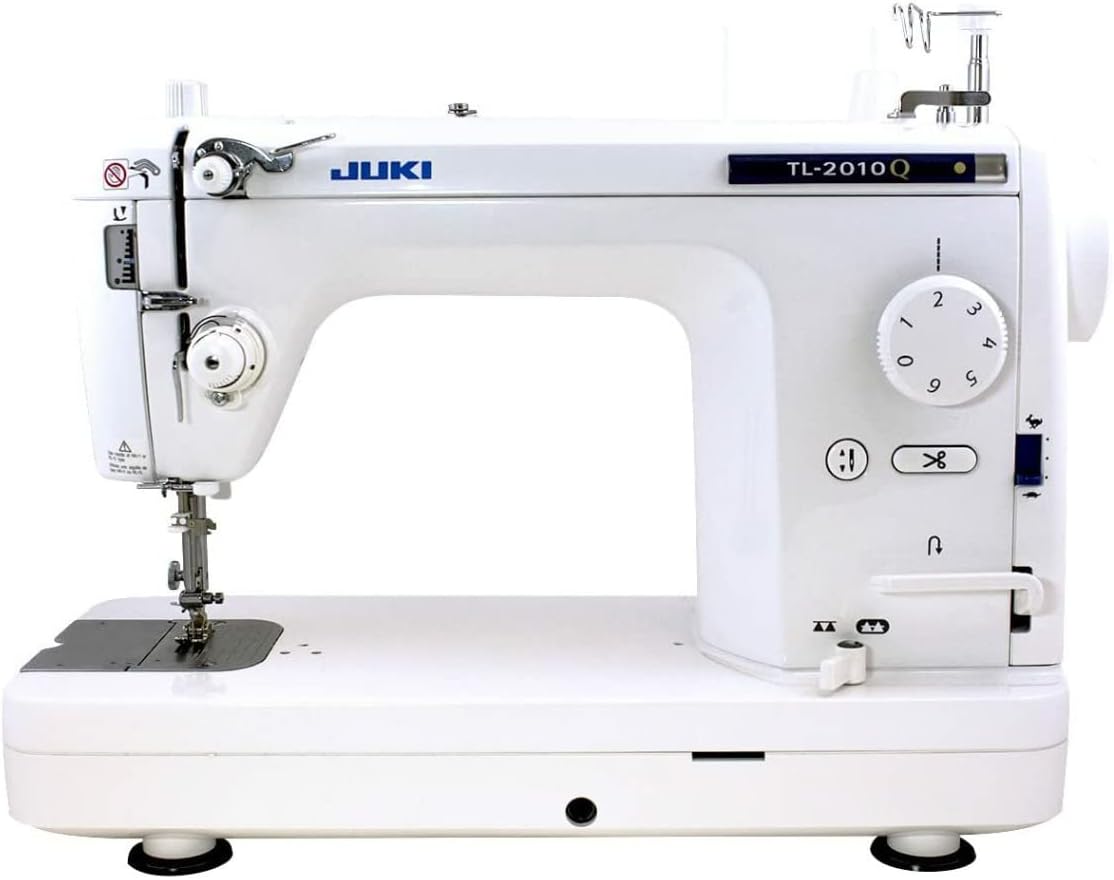
The JUKI TL-2010Q is built as a high-performance single-needle lockstitch machine for straight stitching and quilting and is often used for tailoring, heavy home-decor projects, and quilt piecing. It includes an automatic thread trimmer that clips both needle and bobbin threads with a push button, an automatic needle threader to speed setup, and a knee lifter that raises the presser foot up to 12 mm for feeding thicker layers. The machine is portable and can sit on a tabletop or be mounted in a cabinet or quilting frame, and the extended sewing area accessory helps when handling larger pieces. Practical benefits for heavy-duty work include the high presser-foot clearance and robust build that handle light to heavyweight materials more easily than typical consumer machines. Limitations are that it is a single-stitch, straight-stitch machine so decorative or zigzag stitches require different equipment or attachments, and buyers should confirm motor and power specifics if they need continuous long-run industrial usage.
Best for: Buyers who prioritize reliable straight stitching and strong feeding for thick fabrics and quilting, and who want time-saving conveniences like a thread trimmer and knee lifter for frequent heavy-project work.
Less Ideal for: Users who need built-in multi-stitch functions, zigzag or decorative stitches, or those seeking an industrial long-run production machine with detailed motor specs.
- Automatic thread trimmer trims needle and bobbin threads with one push for faster finishing.
- Knee lifter raises presser foot up to 12 mm to accommodate multiple fabric layers and heavier materials.
- Automatic needle threader reduces setup time and eye strain.
- Portable, tabletop design with a detachable extension table for larger projects.
- Only performs single-needle lockstitch straight stitching; no built-in zigzag or decorative stitch patterns.
- Specification list does not include motor power or stitch-per-minute rate, which matter for continuous heavy-duty production.
Verdict: Choose the JUKI TL-2010Q when you need a robust, portable straight-stitch machine with high presser-foot clearance and fast thread-trimming for heavy fabrics and quilting.
Janome HD3000 Heavy-Duty Sewing Machine
| Built-in stitches | 18 |
|---|---|
| Power source | Corded Electric |
| Included components | Foot Control, Power Cord, Standard Accessories |
| Case type | Hard carrying case |
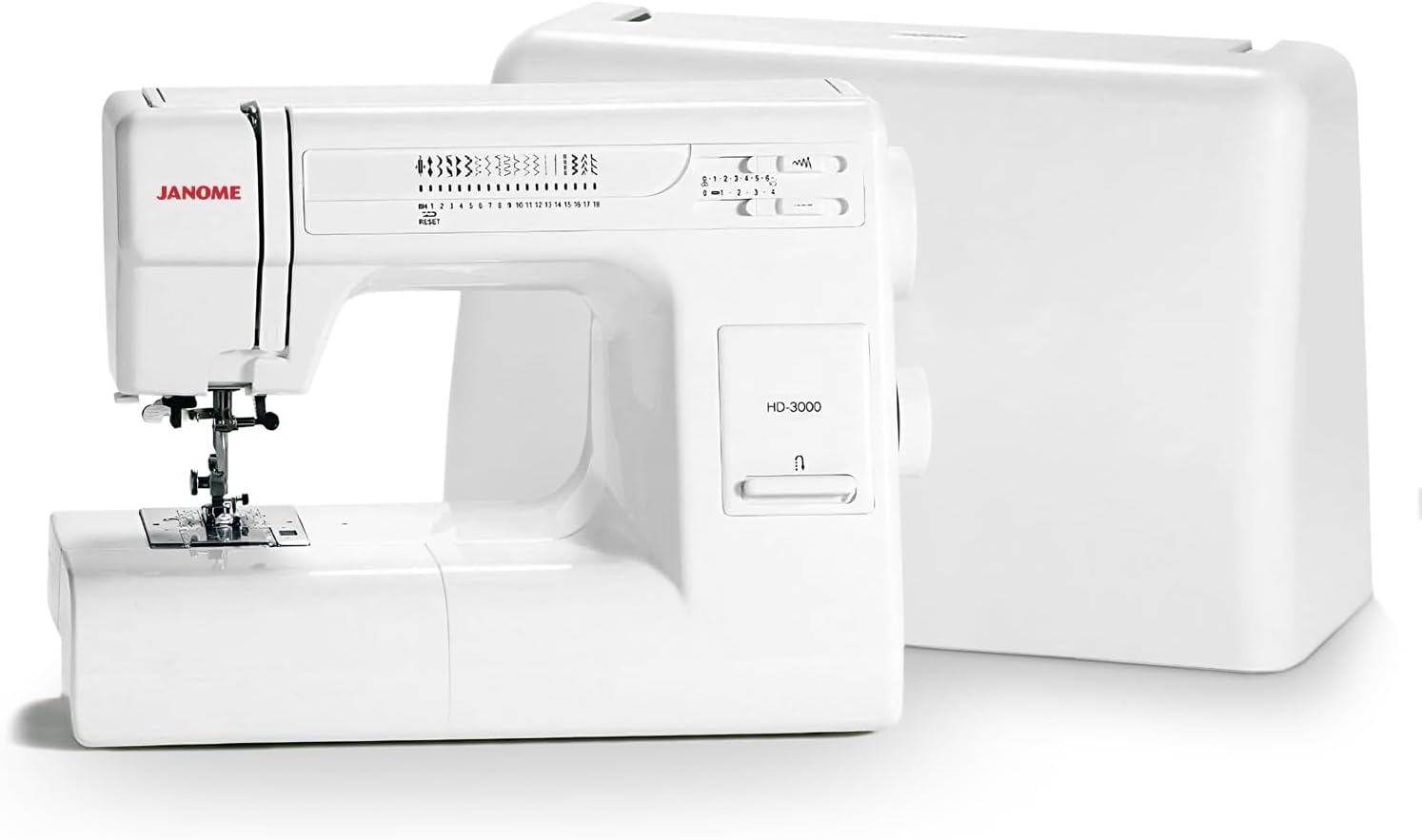
The Janome HD3000 is a straightforward, mechanically driven heavy-duty sewing machine aimed at hobbyists and small-shop users who need a robust, no-frills workhorse. It offers 18 built-in stitches including a one-step buttonhole, a reverse stitch lever, and a manual needle threader that speeds setup. The metal-aluminum components and extra-high presser foot make feeding thicker fabrics like denim, canvas, and layered upholstery easier than on lighter home machines, while the snap-on presser feet and push-pull bobbin winder keep routine tasks simple. The machine includes a hard carrying case for transport and a foot control for hands-free stitching. Because it is mechanical rather than computerized, adjustments such as thread tension and stitch length/width are manual, which gives experienced users direct control but means less automation for beginners. The HD3000 is durable and practical for projects that require consistent power and reliable straight and zigzag stitches, though you will not get advanced automated features like stitch memory or touchscreen controls.
Best for: Buyers who prioritize a durable, straightforward machine for regular heavy-fabric sewing and repairs and who prefer hands-on mechanical controls over computerized automation.
Less Ideal for: Those who want a beginner-friendly, automated machine with digital stitch selection, memory, or extensive decorative stitch libraries.
- Heavy-duty aluminum frame and parts handle thicker fabrics more reliably than lightweight machines
- 18 built-in stitches plus one-step buttonhole cover common tailoring and repair tasks
- Extra-high presser foot and strong feeding system improve handling of denim, canvas, and multiple layers
- Includes hard carrying case and basic accessories for transport and immediate use
- Fully mechanical controls require manual adjustment and lack computerized conveniences
- No advanced automation features such as stitch memory or programmable patterns
Verdict: A rugged, no-nonsense mechanical machine well suited for sewers who need reliable heavy-fabric performance rather than computerized features.
SINGER Heavy Duty 4411

| Power Source | Corded Electric |
|---|---|
| Built-In Stitches | 11 |
| Stitch Applications | 69 |
| Top Speed | 1,100 stitches/min |
The SINGER Heavy Duty 4411 is a straightforward mechanical sewing machine built around a powerful motor and a metal interior frame to tackle denim, canvas, and layered projects. It offers 11 built-in stitches with 69 stitch applications, a stainless steel bed plate for smooth fabric feed, a top drop-in bobbin with a clear cover to monitor thread, and LED lighting to help visibility around seams. Typical use cases are garment repairs, hemming jeans, simple home decor sewing, and working with heavier materials where skip-free, consistent stitching matters. Practical benefits include faster completion of projects thanks to its 1,100 stitches-per-minute top speed and reliable performance on thicker textiles without needing specialty models. Trade-offs are that the machine is mechanically basic compared with computerized models so stitch selection and adjustments are manual, and included accessories are limited to essential presser feet rather than an expansive accessory set. For buyers who need raw power and durability rather than advanced automation, this model delivers dependable results in everyday heavy-duty sewing tasks.
Best for: Buyers who need a budget-friendly, no-nonsense machine that reliably handles denim, canvas, and layered sewing projects without extra computerized features.
Less Ideal for: Sewers who prioritize extensive stitch customization, automated presets, or a large accessory ecosystem should consider a more feature-rich or computerized model instead.
- Robust metal interior frame for stable, skip-free sewing on thick fabrics
- High-speed motor up to 1,100 stitches per minute for faster project completion
- Top drop-in bobbin with transparent cover for easy thread monitoring
- Stainless steel bed plate promotes smooth fabric flow across seams
- Manual stitch selection and fewer convenience features compared with computerized machines
- Basic accessory set limited to essential presser feet
Verdict: Choose the SINGER 4411 if you want a durable, budget-friendly workhorse that delivers strong, high-speed performance on thick fabrics.
Brother HC1850 Sewing & Quilting Machine

| Built-in stitches | 185 |
|---|---|
| Power source | Corded Electric |
| Input voltage | 120 volts AC |
| Included feet | 8 |
The Brother HC1850 is a full-featured computerized sewing and quilting machine built for everyday sewing and heavier hobby projects. It provides 185 built-in stitches including alphanumeric stitches and eight one-step auto-size buttonholes, and it uses an advanced needle threader and jam-resistant top drop-in bobbin to speed setup. The machine includes a wide extension table, a spring-action quilting foot, and eight presser feet that make free-motion quilting, handling layers of batting, and working with medium-weight to heavier fabrics like denim and canvas more manageable. Variable speed control, start/stop and reverse buttons, and a backlit LCD simplify stitch selection and control for both beginners and experienced users. At roughly 10 pounds and with a carrying handle it is portable enough to take to classes, though some serious heavy-duty users may prefer a heavier industrial frame for constant thick-leather or multi-layer upholstery work. The HC1850 balances user-friendly features with solid feeding and stitch options, making it a dependable choice for home quilters and sewists tackling thicker fabrics on occasion.
Best for: Buyers who prioritize a reliable, feature-rich home sewing machine for quilting and regular work with medium to heavy hobby fabrics will appreciate this model's ease of use and consistent stitch performance.
Less Ideal for: If you need a dedicated industrial machine for continuous heavy-leather, upholstery, or commercial production work, this home-model unit is not the best fit.
- Large selection of 185 built-in stitches including alphanumeric options for decorative work
- Advanced automatic needle threader and jam-resistant top drop-in bobbin for easier setup
- Included wide extension table and spring-action quilting foot for handling larger quilts and layered fabric
- Variable speed control and backlit LCD for precise stitch selection and user-friendly operation
- Not a heavy industrial machine so may struggle with constant very thick leather or multiple heavy upholstery layers
- Designed for 120V US power only which limits use outside supported regions
Verdict: Choose the HC1850 when you want a dependable, user-friendly home sewing and quilting machine that reliably handles quilts and medium-to-heavy hobby fabrics.
SINGER Heavy Duty 4423

| Built-in stitches | 23 (97 applications) |
|---|---|
| Max sewing speed | 1,100 stitches per minute |
| Power source | Corded Electric |
| Bobbin style | Top Drop-In Bobbin |
| Included accessories | All-purpose, zipper, buttonhole, button sewing feet; needles; bobbins; dust cover |
The SINGER Heavy Duty 4423 is a straightforward mechanical sewing machine designed to tackle thick fabrics and everyday sewing tasks. It pairs a reinforced metal frame and stainless-steel bed plate with a more powerful motor that runs up to 1,100 stitches per minute, so it moves quickly through denim, canvas, and layered seams. The machine offers 23 built-in stitches that translate into 97 stitch applications for basic, stretch, and decorative work, plus a one-step buttonhole and a clear top drop-in bobbin for easier monitoring. Practical features like an automatic needle threader, LED work light, adjustable presser foot pressure, and an accessory tray with common presser feet make setup and ordinary projects painless. Because it is a mechanically controlled unit, there are no digital menus to learn and maintenance is largely user-servicable, but it lacks advanced computerized stitch customization and may be louder than lighter hobby machines when running at top speed. For sewists who need a rugged, fast machine for heavy materials, the 4423 is built to perform reliably without extra bells and whistles.
Best for: Buyers who prioritize reliable, high-speed performance on heavy fabrics and want a durable, no-frills machine that handles mending, home decor, and garment construction.
Less Ideal for: Sewers seeking touchscreen controls, advanced stitch programming, or ultra-quiet operation should consider computerized models instead.
- Heavy-duty metal interior frame and stainless-steel bed plate for stable, skip-free sewing on thick fabrics
- Powerful motor with up to 1,100 stitches per minute for faster project completion
- 23 built-in stitches (97 applications) plus a one-step buttonhole for versatile everyday use
- Automatic needle threader and LED light simplify setup and improve visibility
- Includes useful presser feet and accessories stored in the accessory tray
- Mechanical controls limit stitch customization compared with computerized machines
- Can be louder at high speed compared with lightweight hobby models
Verdict: If you need a rugged, fast machine that reliably powers through denim and multiple fabric layers, the SINGER 4423 delivers heavy-duty performance without complexity.
Choosing the Right Heavy-Duty Sewing Machine for Thick Fabrics: Key Factors to Consider
Stitch Strength and Needle Compatibility
Stitch strength matters because thick fabrics require higher needle penetration force and secure stitch formation to prevent skipped stitches. Look for machines that support heavier needle sizes and thicker thread types, and that offer robust tension adjustments to stabilize long stitches.
Needle compatibility is also important. The machine should allow use of industrial-style or heavy-duty needles and offer a needle plate and feed that tolerate larger needle sizes without excessive play. In practice, stronger stitch mechanics reduce seam failures on layered seams and make visible repair or reinforcement less frequent.
Feed Mechanism and Presser-Foot Clearance
A reliable feed mechanism prevents uneven feeding and fabric bunching when sewing multiple layers. Machines with a walking foot, adjustable presser foot pressure, or multi-feed systems give more positive fabric control across thick assemblies.
Presser-foot clearance determines how many layers you can pass through comfortably. Higher clearance or a removable/adjustable presser foot makes it easier to stuff bulky seams or install binding. Consider whether the machine accepts optional feet designed for heavy materials, as that will expand versatility.
Motor Power and Torque
Power is not just top speed; torque is what forces the needle through dense textiles. Look for models with higher torque ratings or motors marketed for heavy-duty textile work. Machines with direct-drive motors that deliver consistent low-speed torque are preferable for thick fabrics because they reduce the chance of stalling or needle breakage when starting or when holding the foot pedal.
Also check whether the motor supports sustained use. Projects with long seams or frequent starts and stops benefit from motors that maintain torque over time rather than only brief bursts of speed.
Build Quality and Frame Rigidity
A rigid frame keeps the needle and feed aligned under the stress of heavy materials. Metal chassis or reinforced housings damp vibration and prevent misalignment that causes skipped stitches or uneven tension. Durable gearing, metal internal components, and quality bearings translate to long-term reliability when sewing dense textiles.
Consider access for maintenance as well. Machines that offer easy access to lubrication points and replaceable mechanical parts will perform better over the long run in demanding applications.
Adjustability and User Controls
Precise control over stitch length, tension, and presser pressure makes adapting to various thick-fabric tasks much easier. A machine that lets you fine-tune these parameters helps tailor stitch formation to different material stacks, from single layers of leather to layered upholstery seams.
User-friendly controls, clear tension markings, and accessible bobbin systems speed setup and reduce downtime. If you plan to switch frequently between fabric types, look for intuitive control layouts and clearly documented adjustment ranges.
Best Thread and Needle Practices for Thick Materials
Using the right needle and thread combination prevents common failures like skipped stitches and broken needles. For canvas, denim, and leather, choose heavy-duty needles designed for tough materials and match them with bonded or thicker thread appropriate to the fabric's tensile needs.
Always test on a scrap sandwich that mirrors your project build-up. Adjust stitch length and tension after installing a heavier needle and thread. If the machine stalls or the stitch looks flattened, increase stitch length slightly and check that the feed dogs are engaging properly.
- Use 90/14 to 120/19 heavy-duty needles for thick textiles; sample first.
- Select bonded nylon or polyester thread for high-tension seams.
- Raise presser foot pressure for single thick layers; reduce for layered sandwiches to avoid crushing fabric.
Common Modifications and Optional Accessories
Certain accessories expand a heavy-duty machine's capability. Walking feet, roller feet, oversized bobbin cases, and high-clearance presser feet help with feeding and needle penetration. In some cases, aftermarket parts such as reinforced feed dogs or specialized needle plates can improve performance on specific materials.
When considering modifications, verify compatibility with the machine's needle plate and bobbin system. Some upgrades require basic mechanical competence to install correctly and may affect warranty terms.
- Walking foot for even feeding over slippery or layered fabrics.
- Roller foot to ease movement of sticky or glued surfaces.
- High-clearance presser foot for bulky seams and trims.
Maintenance Tips to Keep Heavy-Duty Machines Performing
Regular maintenance is essential for machines that regularly handle thick fabrics. Remove accumulated lint and debris from the bobbin area and feed dogs after each heavy session. Periodically check and tighten external screws and inspect belts or gearing for wear.
Lubricate according to the manufacturer's schedule and use recommended lubricants to maintain gear smoothness. Replace needles frequently during heavy use because dulled needles cause excessive heat and can damage both fabric and machine components.
- Clean bobbin area after heavy projects to prevent lint build-up.
- Change needles often and keep a stock of heavy-duty sizes.
- Follow recommended lubrication intervals and use proper oil.
Project Types That Demand a Heavy-Duty Machine
Heavy upholstery, leather bags, outdoor gear, canvas awnings, and multi-layer denim projects place high demands on seam strength and feed control. These projects often require specialized needles, longer stitch lengths for seam flexibility, and consistent torque when starting thick areas.
If you sew patched or layered items frequently, prioritize machines with strong feeding and the ability to accommodate thicker bobbins or heavy thread. For intermittent heavy work, a machine with easy setup and durable internals will balance capability with convenience.
- Upholstery and furniture repairs
- Leather goods and thick trim
- Canvas and outdoor equipment
Safety and Ergonomics for Heavy Sewing Tasks
Working with heavy fabrics is more physically demanding. Ensure your workspace supports the weight and size of bulky materials so you do not strain when guiding projects. Good lighting, a stable work surface, and an ergonomically positioned foot pedal reduce fatigue and improve stitch accuracy.
Wear appropriate safety gear when handling sharp heavy-duty needles and consider clamps or extra hands for large pieces. Keep hands clear of the needle area and use tools like stiletto or seam guides to keep fingers away from the needle when feeding thick layers.
- Use a stable table or dedicated sewing cabinet for large projects.
- Position lighting to reduce shadows over the work area.
- Use clamps or helpers to manage oversized fabric pieces safely.
How We Chose the Best Heavy-Duty Sewing Machine for Thick Fabrics
We shortlisted heavy-duty sewing machines that demonstrate mechanical durability and consistent stitch performance on dense materials. Selection focused on concrete, measurable attributes: stitch strength and consistency across multiple fabric types; feed system design and presser-foot clearance to handle layers without bunching; motor torque and recommended needle/needle-plate compatibility for penetrating heavy textiles; build materials and chassis rigidity that reduce vibration and maintain alignment; and user-facing adjustments such as stitch length, tension range, and accessible bobbin systems for faster setups. We excluded lightweight or purely decorative machines, compact travel models, and any unit lacking clear manufacturer guidance for heavy materials. We prioritized machines with documented specifications or technical features that support thick-fabric work rather than marketing claims. The final picks represent machines that balance raw power with user controls and practical maintenance needs, aligning with the scoring criteria used in our per-product scorecards.
Our full evaluation process is outlined in our review methodology.
FAQ
Can a heavy-duty home machine handle leather and upholstery?
Often, yes. Many heavy-duty home machines can sew thin to moderate leather and upholstery layers when fitted with the correct needle, thread, and presser foot. Very thick or multiple-layered upholstery may still require professional or industrial equipment.
How often should I change needles when sewing thick fabrics?
You should change needles more frequently than with lightweight fabrics. For heavy work, change needles after several hours of continuous sewing or sooner if you notice skipped stitches, shredding, or more force required to penetrate fabric.
Do I need a special motor for heavy sewing projects?
A motor with good low-speed torque is more important than top speed. Many heavy-duty machines have motors engineered for sustained torque; confirm torque characteristics and duty-cycle recommendations if you plan frequent heavy use.
What stitch length should I use on thick fabrics?
Thicker materials usually take longer stitch lengths to prevent bunching and to allow stitches to set properly. Start with a medium-long stitch and test on a scrap, then adjust for seam strength and appearance.
Is a walking foot necessary for heavy fabrics?
A walking foot is often very helpful for layered or slippery heavy fabrics because it feeds the top layer in sync with the bottom. It is not always required but is a useful accessory when you frequently sew thick multi-layer assemblies.
Final Verdict
When choosing a Heavy-Duty Sewing Machine for Thick Fabrics, prioritize stitch strength, feed control, and motor torque over top speed. A robust frame, adjustable presser-foot clearance, and clear user controls will reduce frustration and extend the life of both seams and machine. Balance the need for power with accessibility features that make setup and maintenance straightforward. Focus on the specific materials and project types you sew most often, and match machine features to those needs. That approach will guide you to a machine that reliably handles thick fabrics and delivers consistent seams over time.