
Note: This article contains affiliate links. If you click on these links and make a purchase, we may earn a small commission at no extra cost to you. This helps support our research and content. Read our full affiliate disclosure here.
If you are outfitting a kitchen, wet bar, or dedicated wine room and want professional-level climate control, choosing the right high-end built-in dual-zone wine cooler matters. These units let you store reds and whites at separate ideal temperatures, protect bottles from vibration and heat, and blend into cabinetry for a polished look. This guide shortlists the top high-end built-in dual-zone wine coolers across common installation scenarios and evaluates them on temperature accuracy, storage adaptability, airflow, and installation fit. Use the evaluation notes to match features with how you store and serve wine, whether you prioritize long-term aging or ready-to-serve convenience. Read on for the top picks and the decision factors that matter most for a built-in cellar solution.
Top Picks at a Glance
| Best Overall The best all-around choice for most situations | ORYMUSE Dual Zone Wine Fridge HXYC510B |  |
| Best Quality Built to a higher standard if you want something more solid | Allavino Reserva 67-Bottle Dual Zone |  |
| Best Value The sweet spot between price and what you get | Yeego 24 Inch Wine Fridge YG-WD24-A |  |
| Top Rated A top-rated pick with lots of positive feedback | Velieta 24 Inch Dual Zone Wine Cooler | 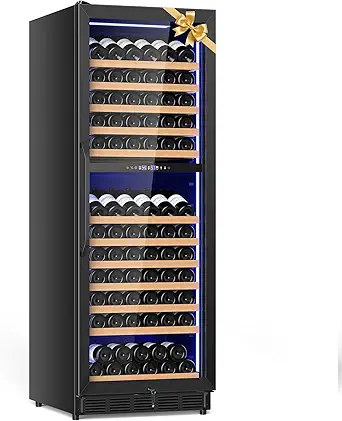 |
| Most Popular A crowd favorite that many people choose with confidence | Tylza Dual Zone Wine & Beverage Cooler |  |
| Best Seller A high-volume bestseller chosen again and again | Kalamera 24" Dual-Zone Wine Fridge |  |
ORYMUSE Dual Zone Wine Fridge HXYC510B

| Capacity | 16 cubic feet / 200 bottles |
|---|---|
| Cooling Method | Compressor |
| Number Of Shelves | 15 |
| Temperature Range (Upper) | 40-55°F (5-13°C) |
| Temperature Range (Lower) | 55-65°F (13-18°C) |
The ORYMUSE HXYC510B is a tall 24-inch dual-zone wine fridge designed to store large collections under stable conditions. It uses a rotary screw compressor and internal circulation fans to maintain separate upper and lower temperature ranges, so you can age reds and chill whites at different setpoints; controls include a temperature memory that restores settings after power loss. The cabinet holds up to 200 standard Bordeaux bottles on 15 beechwood shelves and presents them behind a double-layer tempered glass door with a keyed lock for security. It installs as built-in or sits freestanding and meets DOE and ETL specs, while rated features call out low noise and energy efficiency though annual consumption is listed at 258 kWh. Practical limits include its substantial height and large footprint, and it requires proper clearance and handling during installation; buyers should also expect the factory one-year warranty and to let the unit sit 24 hours before startup. For buyers who need large dual-zone capacity and display-ready styling, this model delivers solid temperature control and storage in a single appliance.
Best for: Buyers who want a high-capacity, display-oriented dual-zone cooler that balances temperature control, shelving quality, and installation flexibility for a growing wine collection.
Less Ideal for: If you need a compact countertop or low-height unit for tight spaces or prioritize the lowest possible energy use, this large freestanding/built-in refrigerator is not the best fit.
- True dual-zone cooling with adjustable ranges for upper and lower compartments.
- Compressor plus circulation fan system provides stable, even temperatures.
- High capacity holds up to 200 standard Bordeaux bottles on 15 beechwood shelves.
- Built-in or freestanding installation offers installation flexibility and a display-ready tempered glass door.
- Security lock and temperature memory protect collection during outages and from casual access.
- Large overall height and footprint require planning for cabinet cutout or floor space.
- Annual energy consumption (258 kWh) may be higher than smaller or more efficient units.
Verdict: Choose this ORYMUSE if you need a high-capacity dual-zone wine fridge that pairs robust compressor cooling and display styling for serious collectors.
Allavino Reserva 67-Bottle Dual Zone

| Capacity | 67 bottles |
|---|---|
| Height | 71.5 inches |
| Temperature range (upper zone) | 41-60 F |
| Temperature range (lower zone) | 45-64 F |
This Allavino Reserva dual-zone wine refrigerator is built for collectors who want precise temperature staging for both reds and whites in a relatively shallow cabinet. It provides two independently controlled zones with digital panels and Tru-Vino cooling to hold upper temperatures between 41 and 60 F and lower temperatures between 45 and 64 F, letting you age or serve different wines side by side. The FlexCount shelving and wood slats let you rearrange racks to fit mixed bottle sizes while protecting labels, and the tinted LowE glass plus a seamless black framed door help limit UV exposure and visible fingerprints. Its cooling system is tuned for low vibration and quiet operation, which matters for long-term storage. Because it is designed for built-in or freestanding use and is 71 inches tall, installation requires planning for floor-to-ceiling fit and professional leveling. The shallow depth is a plus where space is tight, but the unit is heavy and will likely need two people to move and set in place.
Best for: Collectors and serious home sommeliers who prioritize precise, quiet dual-zone temperature control and flexible shelving for a mixed wine collection in a built-in or shallow-depth footprint.
Less Ideal for: Casual buyers who need a compact countertop cooler or anyone who cannot accommodate a tall, heavy appliance or prefers a portable solution.
- Two independently controlled temperature zones for storing reds and whites at their ideal serving or aging temperatures
- FlexCount shelving with wood slats offers flexible layouts to maximize capacity and protect bottles
- Tru-Vino cooling delivers precise, low-vibration, and quiet operation suitable for long-term storage
- Tinted LowE glass and seamless framed door reduce UV exposure and resist visible fingerprints
- Shallow depth supports built-in flush installation where depth is limited
- Large and heavy cabinet requires careful planning and likely professional installation
- Temperature range in each zone is limited to the unit's specified bounds and may not cover extreme cellar needs
Verdict: Choose this Allavino if you need a high-capacity, performance-focused built-in dual-zone cooler that delivers precise, low-vibration temperature control and flexible shelving for a mixed collection.
Yeego 24 Inch Wine Fridge YG-WD24-A

| Capacity | 5.12 cubic feet |
|---|---|
| Size | 52 Bottles |
| Temperature range | 40-65°F (5-18°C) |
| Cooling Method | Compressor |
| Annual Energy Consumption | 194 kilowatt hours per year |
The Yeego 24-inch wine fridge is a compressor-cooled cabinet designed to hold roughly 52 standard bottles and work either built-in or freestanding. It uses a reciprocating compressor and 360-degree airflow to deliver steady cooling across the cabinet, with digital temperature control covering the listed 40 to 65°F range and a memory feature that restores settings after power loss. Five adjustable wooden shelves reduce vibration and make it easy to rearrange bottle layouts, while dual-layer tempered glass with a stainless steel frame helps block UV exposure. The front ventilation and leveling feet let you install it under a counter, and soft blue interior lighting improves visibility without harsh heat. Practical downsides are typical of compressor units of this size: the fridge requires space for ventilation and should sit upright for at least a day before first use, and its listed energy consumption is noticeable compared with thermoelectric alternatives. The controls and touch panel are straightforward, and user support from the brand is available if setup issues arise.
Best for: Buyers who prioritize consistent, cellar-style cooling and want a near-50-bottle capacity for a home bar or kitchen, while valuing adjustable shelving and a finished stainless glass look.
Less Ideal for: If you need a very low-energy or ultra-quiet countertop cooler for occasional use, or have strict space limits that prevent proper ventilation, choose a smaller thermoelectric or purpose-built compact unit instead.
- Compressor cooling with 360° airflow for consistent, fast temperature control
- Adjustable wooden shelves that minimize vibration and accommodate different bottle sizes
- Built-in capable front ventilation and leveling feet for stable under-counter installation
- Dual-pane tempered glass and stainless steel frame that reduce UV exposure and look finished
- Digital touch controls with power-failure memory for precise temperature management
- Higher annual energy consumption compared with small thermoelectric models
- Requires clearance and an upright rest period before first use for optimal compressor performance
Verdict: Choose this 24-inch compressor wine fridge when you need reliable, cellar-style cooling and flexible shelving for a roughly 50-bottle home collection.
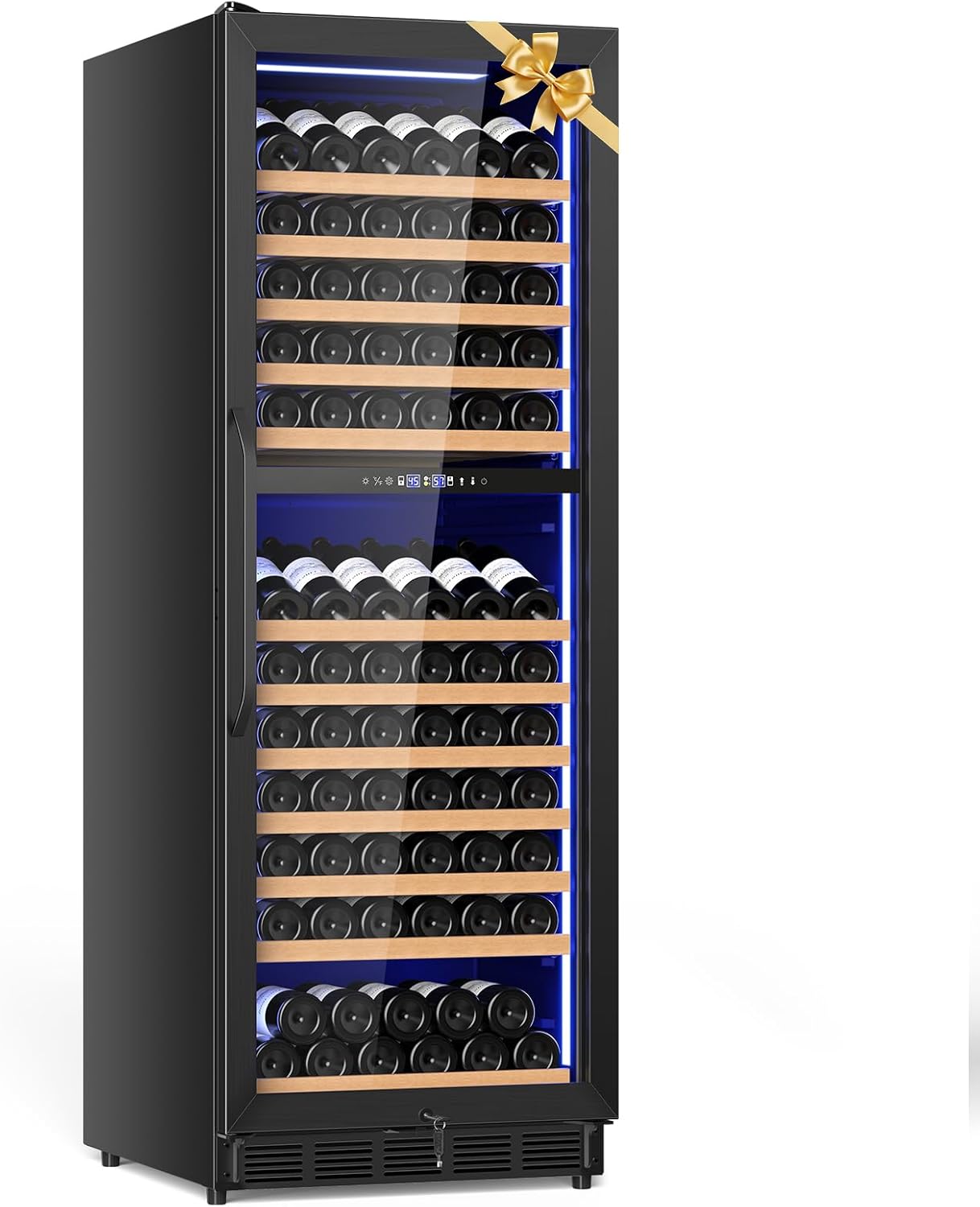
Velieta 24 Inch Dual Zone Wine Cooler
| Configuration | Freezerless |
|---|---|
| Cooling Method | Compressor |
| Number Of Shelves | 12 |
| Voltage | 115 volts |
| Power Source | Corded Electric |
This Velieta 24 Inch Dual Zone Wine Cooler is a compressor-driven fridge that splits the cabinet into two independently controlled temperature zones so you can store whites and reds at their ideal serving temperatures. It is built around a powerful, low-noise compressor and claims ±1°F accuracy, with an LED touchscreen control and blue interior lighting for display and preservation. The cabinet holds a very large collection on 12 beechwood shelves and two display shelves, and smooth slide rails make bottle access easier. Front ventilation and the option to install freestanding or built-in add installation flexibility, and the keyed lock helps prevent accidental changes. Practical drawbacks include its very large capacity and footprint, which require planning for placement and may be more than most home collectors need, and the product information does not list an energy efficiency certification. For collectors who want a spacious, quiet dual-zone cooler with display features, this is a capable option; buyers needing a smaller, more efficient undercounter solution should look elsewhere.
Best for: Buyers assembling or expanding a serious wine collection who prioritize precise dual-zone temperature control, quiet compressor performance, and a display-friendly cabinet.
Less Ideal for: Those needing a compact undercounter cooler or a small secondary fridge for occasional use should consider smaller, lower-capacity models instead.
- Independent dual temperature zones for storing whites and reds at different temperatures
- Large 13.5 cu ft capacity with 12 beechwood shelves and display shelves for extensive collections
- Quiet, compressor-based cooling with claimed ±1°F accuracy
- LED touchscreen controls, blue ambient lighting, and slide rails for easy access
- Front ventilation and freestanding or built-in installation flexibility
- Very large capacity and physical footprint may be excessive for casual collectors
- No listed energy efficiency certification in the product details
Verdict: Choose this Velieta dual-zone cooler if you need a spacious, quiet, and display-ready compressor wine refrigerator that keeps whites and reds at precise serving temperatures.
Tylza Dual Zone Wine & Beverage Cooler

| Capacity | 6.2 cubic feet |
|---|---|
| Installation Type | Built-In/Undercounter/Freestanding |
| Cooling Method | Compressor |
| Number of Doors | 2 |
| Voltage | 115 volts |
The Tylza TYBC200 is a 30-inch dual-zone wine and beverage cooler intended for undercounter or freestanding installation, with separate temperature ranges for wine and drinks and a claimed capacity of up to 29 bottles and 110 cans. It uses a rotary scroll compressor and inverter-style control to deliver fast, stable cooling while keeping noise below 38 dB, which makes it suitable for kitchens and entertaining areas where quiet operation matters. The unit has a touch control panel, white LED interior lighting, wood shelves, tempered glass French doors with magnetic soft-close seals, and a keyed lock for the lower door. Practical conveniences include automatic defrost cycles and front ventilation for built-in installs. Expect a large usable interior for mixed storage, good temperature separation between zones, and a modern look with stainless steel doors. Important limitations are the significant weight and depth that require planning for installation and the standard one-year warranty; energy consumption is noted and may matter to long-term running costs.
Best for: Buyers who prioritize a quiet, attractive dual-zone cooler that can be installed undercounter and want clear temperature control for both wine and beverages backed by many user reviews.
Less Ideal for: Shoppers who need extended factory support, a long warranty, or a shallower, lighter unit for tight cabinetry should consider alternatives.
- True dual-zone control with separate temperature ranges for wine and beverages
- Quiet compressor operation under 38 dB suitable for living spaces
- Built-in or freestanding installation with front ventilation for flexibility
- Touchscreen controls, LED lighting, and soft-close tempered glass doors for convenience and presentation
- Heavy and relatively deep, which may complicate built-in fitting or delivery
- Limited manufacturer warranty coverage at one year
Verdict: If you want a spacious, quiet dual-zone cooler that fits undercounter and keeps both wine and drinks at precise temperatures, this Tylza model is a strong built-in option.
Kalamera 24" Dual-Zone Wine Fridge

| Capacity | 5.3 cubic feet |
|---|---|
| Cooling Method | Compressor |
| Refrigerant | R-600A |
| Installation Type | Built-In |
| Number Of Shelves | 12 |
This Kalamera 24" dual-zone wine and beverage fridge is designed for under-counter installation or freestanding use and keeps wine and drinks at two independently controlled temperatures. The cabinet separates wine and beverage storage so you can set the left zone for wine (40 to 66°F) and the right zone for colder beverages (38 to 50°F), while a compressor-based cooling system aims to maintain stable temperatures with relatively low noise. The unit includes a mix of wooden and metal removable shelves to hold bottles and cans and a double-glass, UV-resistant door to reduce light exposure. Practical features include adjustable foot pads for leveling when built in and a power-off temperature memory that restores settings after an outage. Downsides are its fairly high annual energy consumption and substantial weight, which make installation and long-term running cost considerations for cautious buyers. The stainless steel door gives a clean built-in look but may show fingerprints in everyday use.
Best for: Buyers who want a built-in-capable cooler that keeps wine and drinks at separate, precise temperatures and prefer a conservative, durable appliance with practical features for home use.
Less Ideal for: People looking for an ultra-lightweight or extremely low-energy countertop cooler, or those who need a higher-capacity professional cellar-grade unit.
- True dual-zone controls for separate wine and beverage temperatures
- Built-in friendly design with stainless steel front and adjustable leveling feet
- Mix of wooden and metal movable shelves for flexible storage
- Double-glass UV-resistant door to protect wine from light
- Compressor cooling provides steady, low-noise operation
- Relatively high annual energy consumption compared with compact units
- Heavy unit that may require help for installation
Verdict: Choose this Kalamera if you need a built-in-style dual-zone cooler that reliably stores wine and colder beverages separately with a durable, appliance-grade design.
Choosing the Right High-End Built-In Dual-Zone Wine Cooler: Key Factors to Consider
Temperature Range and Accuracy
Temperature range determines whether a cooler can hit both cellar-level temperatures for long-term red aging and slightly warmer service temps for reds. Accuracy and stability matter because even small fluctuations accelerate aging or cause corks to dry. Look for units that report precise setpoints and minimal variance over 24 to 48 hours.
For dual-zone models, check both zones independently. The upper zone is often used for whites and rosés, while the lower zone is typically set colder for long-term red storage. Consider how easily you can set and monitor each zone and whether the controls allow incremental adjustments that match your preferred serving temps.
Zone Independence and Controls
True independence means each compartment maintains its own temperature without bleed-over. This matters when storing different wine styles that require distinct conditions at the same time. Electronic digital controls usually provide better precision and repeatability than mechanical dials.
Also evaluate whether the display and controls are accessible when the unit is installed under counter. Locking or child-safety options, programmable alarms for temperature excursions, and whether controls are user-replaceable or protected behind glass are practical details that affect daily use.
Storage Capacity and Shelf Design
Capacity is not just bottle count. It includes how shelves accommodate different bottle shapes, the ability to remove or reposition shelves, and whether the racks cradle bottles to reduce vibration contact. A high-end unit should handle standard 750 ml bottles comfortably and offer options for larger formats.
Shelf materials affect vibration dampening and aesthetics. Beech wood or rubberized racks often reduce rattling better than thin wire. Also consider how full the unit will be; underfilled coolers can experience more temperature swings than fully loaded ones, so capacity planning matters for performance.
Vibration, Noise, and Cooling Method
Mechanical vibration can disturb sediment in aged wines and affect delicate aging processes. Compressor-driven systems typically cool faster but can introduce more vibration unless engineered with isolation mounts. Thermoelectric coolers are quieter and low-vibration but may struggle to maintain low cellar temperatures in warm environments.
Noise level matters for installations near living areas. Look for decibel specifications and design notes about compressor isolation, anti-vibration shelving, or variable-speed fans that reduce acoustic output when the unit is near open-plan spaces.
Installation and Ventilation Needs
Built-in wine coolers require proper ventilation to avoid overheating and reduced lifespan. Some models are front-venting specifically for under-counter or column installations and permit flush mounting. Others require clearance on the top or rear and are better suited as freestanding units.
Check the electrical requirements, whether a 120 V outlet is sufficient, and if the unit needs dedicated circuits in certain jurisdictions. Consider door swing and whether reversible doors or right/left hinge options are available to fit your cabinetry layout.
Finish, Door Glass, and UV Protection
High-end finishes and glass options protect wine from light damage while matching cabinetry. Tinted or UV-protected glass reduces harmful wavelengths that can degrade wine, especially for long-term storage. Solid doors offer the best protection but limit visibility when selecting bottles.
Also think about handle style and finishes that coordinate with surrounding kitchen hardware. Custom panel-ready models allow a completely integrated look, whereas stainless steel trims provide a statement that is easier to maintain.
Planning a Built-In Installation
Measure the installation cavity and verify ventilation routes before purchasing. Front-venting units are the safest choice for true under-counter installs because they channel heat out the front rather than relying on space above the unit.
Account for door swing and clearance for full shelf extraction. If you plan to install a panel-ready model, confirm panel thickness and mounting points so the door seals properly and the cooling system is not impaired.
- Confirm front-vent or top-vent requirement
- Allow recommended clearance even for flush-mount designs
- Plan electrical access and avoid extension cords
Managing Mixed Storage Goals
Decide whether you need more long-term storage or short-term service readiness. Dual-zone units excel when you want both: a colder lower zone for aging reds and a slightly warmer upper zone for serving whites and rosés right away.
Organize bottles by zone purpose rather than by variety alone. Keep bottles you plan to serve soon in the service zone and relegated-aging stock where temperature and light exposure are most stable.
- Use lower zone for long-term aging
- Reserve upper zone for ready-to-serve bottles
- Rotate inventory to maintain stable thermal mass
Maintaining Your Wine Cooler
Regular cleaning and filter checks extend life and performance. Wipe interior surfaces with a mild detergent, vacuum vents to remove dust, and check door seals periodically for tightness.
Monitor temperatures with an independent thermometer during the first weeks to ensure stability. Address any persistent temperature drift promptly, since sustained deviations can harm stored bottles.
- Clean racks and interior twice a year
- Check seals and hinges for wear
- Keep vents dust-free to maintain airflow
Design and Aesthetics for High-End Kitchens
High-end built-in units often offer integrated panel options, minimal trims, and low-profile handles to blend with cabinetry. Decide whether you want the cooler to be a visual focal point or to disappear behind matching panels.
Consider interior lighting options that are gentle on bottles and help you find labels without opening the door frequently. Warm LED lighting reduces UV exposure compared with white or blue LEDs that can be harsher on wine.
- Choose panel-ready for seamless integration
- Prefer warm LED lighting for gentle illumination
- Match hardware finish to surrounding cabinetry
Common Installation Pitfalls to Avoid
Do not assume any built-in label guarantees proper fit. Dimensions, vent placement, and electrical needs vary. Verify every spec against your planned location to avoid last-minute returns or modifications.
Avoid placing the unit next to heat sources like ovens or direct sunlight. Even high-end coolers struggle when ambient temperatures are persistently high, which increases compressor runtime and can shorten component life.
- Measure twice before ordering
- Avoid adjacent heat sources
- Confirm ventilation path and clearances
How We Chose the Best High-End Built-In Dual-Zone Wine Cooler
We focused on criteria that matter for long-term wine storage and built-in installation performance. Temperature accuracy and stability were prioritized because consistent conditions are essential for aging and preserving wine character. Zone independence and range were evaluated to ensure red and white wines can be set to appropriate cellar or serving temperatures simultaneously. Vibration isolation and compressor or cooling system design were considered to minimize sediment disturbance and mechanical stress on corks. Storage flexibility looked at shelf layout, bottle capacity, and ability to handle various bottle sizes including magnums. Installation compatibility included flush-mount trim, ventilation requirements, and electrical needs for a clean built-in fit. Units excluded from consideration were those that lacked independent dual zones, were strictly freestanding with no built-in venting option, or had poor user feedback on temperature consistency. The final selection emphasizes measurable performance specs and practical design features that influence everyday use and long-term storage reliability. Each pick met minimum standards for cooling range, shelf versatility, and installation fit for built-in applications.
Our full evaluation process is outlined in our review methodology.
FAQ
Can a built-in dual-zone wine cooler be installed under a countertop?
Yes when the unit is specifically designed for built-in installation and has front ventilation. Confirm the model's venting requirements and allow the recommended clearance so the cooling system can reject heat without overheating.
How should I set temperatures for red and white wines?
Set the white zone between about 45 and 55 degrees Fahrenheit for most whites and rosés, and the red zone between about 55 and 65 degrees depending on whether you are aiming for serving temperature or cellar-level aging. Exact settings depend on how quickly you plan to drink the bottles.
Is vibration from the compressor a big concern for stored wine?
Vibration matters for long-term aging because it can disturb sediment and alter maturation. High-end units often include isolation mounts and anti-vibration shelving. If you plan extended cellaring, prefer units with documented vibration control measures.
Do built-in wine coolers need professional installation?
Many built-in models can be installed by a competent DIYer if you follow clearances and electrical codes, but professional installation ensures proper ventilation, secure mounting, and compliant electrical connections, which is especially important in permanent cabinetry.
How often should I clean and service the cooler?
Clean the interior and shelves at least twice a year and keep vents dust-free. Periodic service, such as checking refrigerant charge and fan operation, is advisable if you notice temperature drift or excessive noise.
Final Verdict
Prioritize consistent temperature control, true zone independence, and installation-friendly ventilation when choosing a high-end built-in dual-zone wine cooler. Balance storage capacity and shelf flexibility against the space you have and the types of bottles you store. Consider vibration control and noise performance if the unit sits near living areas. With attention to these tradeoffs, you can select a cooler that protects aging bottles while providing convenient serving temperatures for everyday enjoyment.