
Note: This article contains affiliate links. If you click on these links and make a purchase, we may earn a small commission at no extra cost to you. This helps support our research and content. Read our full affiliate disclosure here.
If you store collectible bottles or want cellar-level conditions in your kitchen, choosing the right high-end built-in wine cooler matters. A serious unit does more than look good under a counter. It holds steady temperatures, minimizes vibration, manages humidity, and fits cabinetry so your collection ages as intended. This guide outlines the top shortlisted high-end built-in wine coolers and explains the evaluation criteria we used, including temperature stability, installation fit, and long-term reliability. Read on for the factors that matter most when bringing cellar performance into a built-in form factor.
Top Picks at a Glance
| Best Overall The best all-around choice for most situations | Zephyr Brisas 24" Wine Fridge |  |
| Best Quality Built to a higher standard if you want something more solid | ZLINE Touchstone Dual Zone 24" Wine Cooler |  |
| Best Value The sweet spot between price and what you get | Ca'Lefort 24" Wine Fridge CLF-WS24 |  |
| Top Rated A top-rated pick with lots of positive feedback | Vushine 24" Wine Fridge JCD-508QE |  |
| Most Popular A crowd favorite that many people choose with confidence | Velieta 24-Inch Wine Cooler KMHJ510 |  |
| Best Seller A high-volume bestseller chosen again and again | Kalamera 24" Dual-Zone Wine Fridge |  |
Zephyr Brisas 24" Wine Fridge

| Capacity | 5.3 cubic feet |
|---|---|
| Number Of Shelves | 5 |
| Number of Sections | 2 |
| Cooling Method | Compressor |
| Defrost System Type | Frost Free |
The Zephyr Brisas 24" is a dual-zone undercounter wine fridge built to store reds and whites at separate temperatures, using a rotary scroll compressor and five wire shelves to accommodate roughly 45 standard 750 mL bottles. It is typically installed built-in or used freestanding in a home bar or kitchen and includes practical touches such as a reversible stainless steel framed glass door, blue LED interior lighting, a carbon air filter, and vibration dampening to protect sediment in older wines. Temperature control is marketed as PreciseTemp with active cooling for even temperatures across each zone, and the frost-free system reduces maintenance compared with manual-defrost units. Trade-offs include wire shelving instead of wood cradles preferred by some collectors and a compact 5.3 cu ft capacity that limits very large collections, plus the unit is relatively heavy for undercounter placement. For buyers wanting a high-end look with flexible dual-zone storage and undercounter fitment, the Brisas balances useful features and professional styling without moving into commercial price points.
Best for: Buyers who want a stylish undercounter dual-zone cooler that reliably stores a modest mixed collection of red and white wines while fitting a high-end kitchen aesthetic.
Less Ideal for: Serious collectors needing large capacity or display-style shelving should look at larger single-purpose cellars or models with wooden racks.
- Dual temperature zones let you store reds and whites at different set points
- Compressor cooling with vibration dampening preserves wine quality and provides consistent temperatures
- Reversible stainless steel glass door and blue LED lighting give a clean, built-in-ready appearance
- Carbon air filter and frost-free operation reduce odors and routine maintenance
- Wire shelves instead of wooden cradles may not suit collectors who prefer traditional presentation
- 5.3 cu ft capacity is modest and not ideal for very large collections
Verdict: A compact, built-in-ready dual-zone wine fridge that combines reliable compressor cooling and refined styling for buyers who need flexible storage for a modest home collection.
ZLINE Touchstone Dual Zone 24" Wine Cooler

| Capacity | 4.8 cubic feet |
|---|---|
| Bottle Capacity | 44 bottles |
| Zones | Dual temperature zones |
| Voltage | 120 volts |
| Annual Energy Consumption | 129 kwh |
This ZLINE Touchstone 24-inch dual-zone wine cooler is designed for built-in installation and aimed at buyers who want precise temperature control and a premium look. It splits the interior into two independently controlled zones that each reach 40°F to 65°F, uses a fan-assisted sealed cooling system with automatic defrosting, and adds a Super Cool mode for rapid chilling. The stainless steel interior, full-extension racks and adjustable shelving make loading and organizing Bordeaux-style bottles straightforward, while cool white LED lighting showcases the collection. The unit is fully wrapped stainless steel and rated for indoor or outdoor installation with anti-sweat protection, which increases placement flexibility. Expect solid performance and a flush, zero-clearance fit into cabinetry, but keep in mind it is a heavy, professional-style appliance intended for permanent installation and may require professional fitting and ventilation planning.
Best for: Buyers who prioritize precise temperature control and a high-quality built-in appearance for a substantial wine collection and who plan a permanent installation.
Less Ideal for: Someone seeking a lightweight, portable, or countertop cooler for occasional use or for very small wine collections.
- Dual independent temperature zones (40°F–65°F) for storing different wines at ideal serving temperatures
- Holds up to 44 Bordeaux-style 750 mL bottles on six stainless steel racks with adjustable shelving
- Fan-assisted sealed cooling with automatic defrosting and Super Cool mode for faster chilling
- Stainless steel interior and fully wrapped exterior enable built-in or outdoor installation with anti-sweat protection
- Touch controls and full-length cool white LED lighting for easy use and presentation
- Heavy and designed for permanent undercounter installation, limiting portability
- No listed energy efficiency rating despite 129 kWh annual consumption
Verdict: A high-performance built-in dual-zone cooler that delivers precise temperature control and premium stainless-steel construction for serious collectors.
Ca'Lefort 24" Wine Fridge CLF-WS24

| Capacity | 5.65 cubic feet |
|---|---|
| Bottle capacity | 61 Bottle |
| Temperature range | 40-65°F |
| Installation type | Built-in, Under Counter, Freestanding |
| Cooling method | Compressor (rotary scroll) |
The Ca'Lefort 24" Wine Fridge is a built-in undercounter cooler aimed at home collectors who want a reliable, mid-size storage unit. It uses a rotary scroll compressor with automatic defrost and front ventilation to maintain an adjustable 40 to 65°F range via a digital control panel, and the double-glazed stainless steel door with UV protection helps limit light exposure. Six removable sapele wood shelves make organizing standard 750ml bottles and a few larger-format bottles straightforward, and three-color LED lighting gives simple display options. Practical touches include power-failure memory, low-noise operation, and a front vent that allows true built-in installation. Expect solid temperature stability for everyday aging and serving, though the unit is single-zone so it is best when storing similar styles at one setpoint rather than both whites and reds at their ideal temps. The finish and door framing read as higher-end for the price range, but buyers who need dual-zone flexibility or a larger capacity should look elsewhere.
Best for: Buyers who want a reliable undercounter wine fridge that balances capacity, temperature control, and a refined look for a home bar or kitchen installation.
Less Ideal for: Collectors who need dual-zone control for storing whites and reds separately or those wanting very large long-term storage capacity.
- Holds up to 61 standard 750ml bottles, suitable for medium-sized collections
- Digital temperature control with 40–65°F range and power-failure memory
- Double-glazed stainless steel door with UV protection to reduce light exposure
- Front ventilation and built-in installation option fit undercounter spaces
- Removable wooden shelves that adjust for different bottle sizes
- Single-zone cooling limits storing whites and reds at different temperatures
- No lock included for security
Verdict: A well-rounded 24-inch undercounter wine fridge that delivers solid temperature stability and good capacity for home collectors who store one primary wine style.
Vushine 24" Wine Fridge JCD-508QE
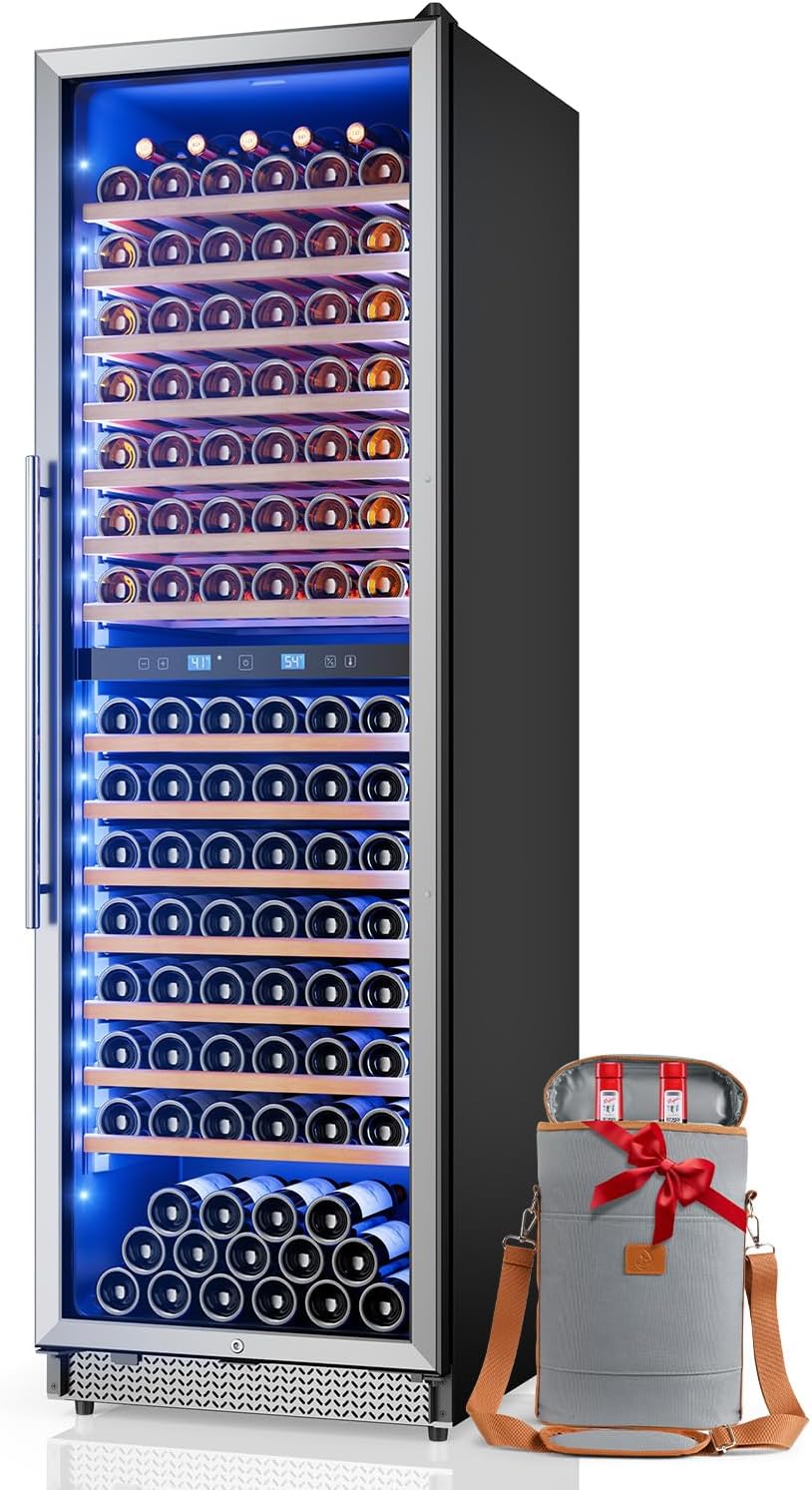
| Capacity | 177 bottles |
|---|---|
| Cooling Method | Compressor |
| Temperature Range Upper Zone | 41–54°F |
| Temperature Range Lower Zone | 54–64°F |
| Installation Type | Built-In or Freestanding |
This Vushine 24-inch wine fridge is a large-capacity compressor cooler that divides storage into two independently controlled temperature zones for storing whites and reds. In daily use it functions as a cellar replacement: digital touch controls let you set the upper zone to about 41–54°F and the lower to 54–64°F, while a double-layer glass door and internal fans aim to keep temperature stable across its 14 adjustable wood shelves. The unit is built for flexibility with a built-in or freestanding installation, a left-hinged glass door with stainless trim, and automatic defrost for low-maintenance operation. Performance-wise the compressor cooling and reported low-noise design make it suitable for places like a garage where steady cooling and quieter operation matter, and the fridge restores set temperatures after power interruptions. Trade-offs are its large footprint and weight, which require a dedicated space and careful leveling, and the 24-inch width may be taller than typical undercounter openings, so plan installation accordingly.
Best for: Buyers who prioritize reliable, consistent long-term wine storage in unconventional spaces like a garage and who need a large-capacity, compressor-cooled cellar alternative.
Less Ideal for: Anyone with limited floor-to-ceiling or undercounter clearance or those seeking a compact countertop wine cooler should look at smaller units instead.
- Very large 177-bottle capacity for extensive collections
- Independent dual zones for storing different wine types at optimal temperatures
- Compressor cooling with automatic defrost for consistent cellar-like temperatures
- Digital touch controls and memory of last set temperature after power loss
- Built-in or freestanding installation offers placement flexibility
- Substantial size and weight require planning for garage placement and installation
- Left-hand door orientation may limit placement options in some layouts
Verdict: Choose this Vushine if you need a reliable, garage-ready compressor wine cooler with large dual-zone capacity for stable long-term storage.
Velieta 24-Inch Wine Cooler KMHJ510

| Configuration | Freezerless |
|---|---|
| Cooling Method | Compressor |
| Defrost System Type | Automatic |
| Installation Type | Built-in/Freestanding |
| Lock Type | Key |
The Velieta 24-inch wine cooler is a compressor-based refrigerator designed to store a large collection with professional-style temperature control and a front-vent that allows either freestanding or built-in installation. It offers an upgraded large-capacity interior with two roomy shelves that can accommodate larger bottles such as Pinot or Champagne, a digital LED display for setting the temperature, and a keyed lock plus a carbon purification system to reduce odors. The unit emphasizes quiet operation with energy-efficient, low-vibration compressors and a sturdy door seal to help maintain consistent internal temperature. Practical benefits include flexible installation, simple digital controls, and features aimed at protecting and preserving bottles for long-term storage. Important limitations are that the listing mixes overall capacity figures (15.8 cu ft) with a much smaller stated refrigerator net capacity, so buyers should confirm exact bottle count for their needs, and the product does not list an energy efficiency rating or detailed vibration specs common on higher-end cellar units.
Best for: Buyers who value a quiet, professionally controlled cooler for a sizable wine collection and want built-in or freestanding flexibility while relying on multiple product features and reviews to confirm performance.
Less Ideal for: Collectors who need factory-rated energy efficiency, precise vibration specs, or guaranteed cellar-grade performance without independently verifying capacity and specs.
- Large internal capacity with removable shelves to fit larger bottles
- Compressor cooling with low-vibration, whisper-quiet operation
- Front-vent design supports built-in or freestanding installation
- Digital LED temperature display and professional temperature control
- Security lock and carbon purification system to protect and freshen stored bottles
- Listing provides inconsistent capacity numbers, requiring buyers to verify actual bottle capacity
- No official energy efficiency rating provided
Verdict: Choose this cooler if you want a large-capacity, quiet compressor wine refrigerator with flexible installation and protective features for an expanding collection.
Kalamera 24" Dual-Zone Wine Fridge

| Capacity | 5.3 cubic feet |
|---|---|
| Cooling Method | Compressor |
| Refrigerant | R-600A |
| Installation Type | Built-In |
| Number Of Shelves | 12 |
This Kalamera 24" dual-zone wine and beverage fridge is designed for under-counter installation or freestanding use and keeps wine and drinks at two independently controlled temperatures. The cabinet separates wine and beverage storage so you can set the left zone for wine (40 to 66°F) and the right zone for colder beverages (38 to 50°F), while a compressor-based cooling system aims to maintain stable temperatures with relatively low noise. The unit includes a mix of wooden and metal removable shelves to hold bottles and cans and a double-glass, UV-resistant door to reduce light exposure. Practical features include adjustable foot pads for leveling when built in and a power-off temperature memory that restores settings after an outage. Downsides are its fairly high annual energy consumption and substantial weight, which make installation and long-term running cost considerations for cautious buyers. The stainless steel door gives a clean built-in look but may show fingerprints in everyday use.
Best for: Buyers who want a built-in-capable cooler that keeps wine and drinks at separate, precise temperatures and prefer a conservative, durable appliance with practical features for home use.
Less Ideal for: People looking for an ultra-lightweight or extremely low-energy countertop cooler, or those who need a higher-capacity professional cellar-grade unit.
- True dual-zone controls for separate wine and beverage temperatures
- Built-in friendly design with stainless steel front and adjustable leveling feet
- Mix of wooden and metal movable shelves for flexible storage
- Double-glass UV-resistant door to protect wine from light
- Compressor cooling provides steady, low-noise operation
- Relatively high annual energy consumption compared with compact units
- Heavy unit that may require help for installation
Verdict: Choose this Kalamera if you need a built-in-style dual-zone cooler that reliably stores wine and colder beverages separately with a durable, appliance-grade design.
Choosing the Right High-End Built-In Wine Cooler: Key Factors to Consider
Temperature Control and Zoning
Consistent and accurate temperature control is the core function of a high-end built-in wine cooler. Look for units that hold a setpoint within a narrow margin across the entire interior rather than only near the thermostat. Dual-zone or multi-zone capability matters when you plan to store both red and white wines at their respective ideal ranges.
Zoning also affects how many bottles you can store at each temperature. If you frequently host or have a varied collection, choose a cooler with flexible zones or adjustable shelving to prevent repeated temperature changes when accessing bottles.
Vibration, Compressor Type, and Noise
Mechanical vibration can disturb sediment and subtly speed up chemical reactions in bottles, so low-vibration designs are important for serious collectors. Compressors isolated with mounts, linear or inverter compressors, and well-damped shelving reduce transmitted vibration. For open-plan kitchens, noise level is also a practical factor; quieter systems are less intrusive over long periods.
Check how the unit manages compressor cycling and whether fan placement minimizes airflow over bottles. A quieter unit with minimal vibration preserves both wine quality and the serenity of the room.
Installation Requirements and Ventilation
Built-in coolers must integrate with cabinetry and ventilation constraints. Some models need front ventilation to be fully enclosed in undersink or island installations, while others require rear or top clearance. Measure the opening and verify hinge swing, trim options, and whether the unit supports flush or framed inset installation.
Proper ventilation affects cooling performance and compressor life. Inadequate airflow forces the system to run harder, increasing noise and wear. Confirm ducting or venting needs before planning the cabinet layout to avoid post-installation compromises.
Capacity and Shelving Configuration
A high-end cooler should match both your current bottle count and projected growth. Consider how shelves accommodate standard Bordeaux bottles, wider Burgundy bottles, and a few larger-format bottles. Pull-out shelving, adjustable rails, and removable dividers let you mix and match storage without wasting space.
Count usable bottle positions rather than just advertised capacity. Shelving materials also matter for weight and vibration damping; wood or rubberized shelves tend to absorb vibration better than thin metal racks.
Door Design, Glass and UV Protection
Door construction affects insulation, light exposure, and aesthetics. Tinted or UV-protective glass reduces harmful light while still letting you view the collection. Solid doors offer better thermal insulation but make it harder to see stock without opening the unit. Consider hinge direction and reversible doors if cabinet layout requires a specific swing.
A tight seal and quality gasket are important for humidity control and long-term energy efficiency. Look for doors that close consistently and resist warping over time.
Serviceability and Long-term Durability
High-end built-in coolers are a long-term investment so consider ease of service and replacement parts availability. Durable compressors, corrosion-resistant interiors, and replaceable shelving components extend useful life. Check how accessible service panels and components are for routine maintenance.
Also evaluate finish options and materials that stand up to kitchen conditions. Stainless interiors and durable door finishes reduce staining and wear, lowering the chance of cosmetic or functional failures as the unit ages.
Planning the Cabinet Opening and Ventilation
Before ordering a built-in wine cooler, map the cabinet opening and ventilation path. Measure height, width, and depth precisely and account for toe-kick space and hinge clearance so the door can open fully without obstruction.
Decide whether the unit will use front-venting, rear-venting, or a vent plinth. Many high-end built-in units are designed for front ventilation so they can fit into fully enclosed cabinets. If front ventilation is not available, plan for adequate rear or top clearance and verify that overhead cabinetry will not trap heat.
- Measure internal cabinet depth plus trim and door thickness
- Confirm hinge swing and adjacent drawer clearance
- Allow ventilation clearance recommended by the manufacturer
How Zoning Affects Storage Strategy
Dual-zone coolers let you maintain separate setpoints for reds and whites. If you drink both frequently, set the cooler so whites are accessed at a higher temperature within their safe range and reds sit slightly warmer. Multi-zone setups can also create a short-term holding zone for bottles coming out of the main cellar.
Think in terms of bottle groups rather than individual bottles when planning zones. Reserve one zone for long-term aging at a steady setpoint and another for short-term chilled bottles to limit temperature disturbance to the aging stock.
- Use one zone for long-term aging, another for short-term access
- Avoid frequent setpoint changes that affect the entire cooler
Humidity Management and Cork Preservation
Humidity control is essential to preserve natural corks and prevent premature drying. Built-in coolers with moderate humidity help maintain a seal on corked bottles and limit air infiltration. If the cooler is too dry, consider using a passive humidity tray or placing a small water source in the unit to raise relative humidity slightly.
Avoid over-humidifying the interior which can invite mold or damage labels. Aim for a balanced humidity level that keeps corks supple without creating standing moisture on shelves or walls.
- Target moderate humidity to protect corks
- Use passive trays or built-in humidification features when necessary
Design and Aesthetic Considerations for Kitchens
High-end built-in wine coolers are both functional appliances and design elements. Choose finishes and door styles that coordinate with surrounding cabinetry. Integrated panels or stainless trim can help the unit blend in or stand out as a focal point.
Also consider door glass tint and shelving appearance. If you prefer a display piece, pick a cooler with attractive interior lighting that does not emit excessive heat or UV.
- Match finish to cabinetry for a seamless look
- Choose lighting that shows bottles without heating them
Maintenance Routines That Extend Lifespan
Regular cleaning, checking gaskets, and ensuring proper ventilation will prolong the life of a built-in cooler. Wipe spills promptly, clean dust from vents annually, and inspect door seals for wear. Replace shelving components if they show signs of corrosion or warping to maintain stable storage conditions.
Schedule professional service if you notice persistent temperature drift or unusual noise. Early attention to small issues prevents larger failures and helps preserve both the appliance and the wine collection.
- Clean vents and seals annually
- Address temperature drift promptly with professional service
How We Chose the Best High-End Built-In Wine Cooler
Our selection process focused on real-world cellar needs for high-end built-in wine coolers. We prioritized models that deliver precise temperature control and tight stability over time, since many fine wines are sensitive to even small temperature swings. Vibration damping and compressor design were another key filter because mechanical disturbance can accelerate sediment disruption and aging. We evaluated capacity planning and shelving flexibility so a cooler can hold mixed bottle sizes and adapt as a collection grows. Installation compatibility was assessed for flush or undercounter builds, ventilation options, and door hinge arrangements that affect where the unit can go in a kitchen. Long-term reliability and serviceability rounded out the criteria, including accessibility of components and expected durability of seals and finishes. We excluded low-performance countertop and freestanding units that lack proper ventilation or thermal mass required for long-term storage. The result is a focused list of models suited to collectors and high-end kitchens where fit, stability, and longevity matter most.
Our full evaluation process is outlined in our review methodology.
FAQ
What temperature should I set a built-in wine cooler to for aging?
For long-term aging, most collectors keep bottles around 55 degrees Fahrenheit. Slight variations depend on the wine style, but stable conditions near that midpoint reduce chemical stress and help corks remain effective.
Can I install a built-in wine cooler in an island cabinet?
Yes, but ventilation is the main consideration. Choose a front-venting model for fully enclosed island installations or ensure there is a planned path for rear or top airflow if the unit requires it. Verify clearance and hinge swing before installation.
How important is humidity control in a built-in cooler?
Moderate humidity is important to keep natural corks from drying out. Many built-in units maintain acceptable humidity passively, but extremely dry kitchens may need a simple humidity tray or built-in humidification to protect cork seals.
Are quieter compressors better for wine storage?
Quieter compressors are typically better because they often run more smoothly and with less vibration. Reduced vibration helps preserve sediment and limits agitation that can affect delicate aging processes.
How do I mix bottle sizes in a built-in cooler?
Use adjustable or removable shelving to create zones for wider bottles like Burgundies and larger formats. Plan the layout so standard bottles are grouped together and larger ones sit on reinforced or flat shelves to avoid crowding and uneven cooling.
Final Verdict
Prioritize temperature stability, proper ventilation, and vibration control when choosing a high-end built-in wine cooler. These factors most directly affect how well bottles age and how reliable the unit will be over years of service. Balance capacity and shelving flexibility with installation constraints to ensure the cooler fits both your collection and your kitchen. Focus on the functional tradeoffs that matter to cellar performance rather than cosmetic extras. With the right combination of stability, fit, and durability, you can add dependable cellar conditions to your high-end kitchen and protect your collection for the long term.