
Note: This article contains affiliate links. If you click on these links and make a purchase, we may earn a small commission at no extra cost to you. This helps support our research and content. Read our full affiliate disclosure here.
If you treat your bottle collection seriously, a high-end dual-zone wine cooler protects both short-term drinking stock and bottles set aside for aging. The right cooler keeps white and red sections at different, steady temperatures, reduces vibration, and manages humidity so labels and corks stay intact. This guide shortlists seven top-rated dual-zone wine coolers selected for cellar-minded buyers, with attention to temperature stability, usable capacity, and design that fits kitchen or dedicated cellar spaces. Below you will find the evaluation criteria we used and practical notes to help you choose the best cooler for your storage and entertaining needs.
Top Picks at a Glance
| Best Overall The best all-around choice for most situations | Whynter 92-Bottle Dual Zone Wine Refrigerator |  |
| Best Quality Built to a higher standard if you want something more solid | Allavino Reserva 67-Bottle Dual Zone |  |
| Best Value The sweet spot between price and what you get | Ivation 33-Bottle Dual Zone Wine Cooler |  |
| Best Budget The cheapest option that still gets the job done reliably | Bonnlo Dual-Zone Wine Cooler 33-Bottle |  |
| Top Rated A top-rated pick with lots of positive feedback | OYLUS 24" Dual-Zone Wine Fridge |  |
| Most Popular A crowd favorite that many people choose with confidence | Velieta 24-Inch Dual Zone Wine Cooler |  |
| Best Seller A high-volume bestseller chosen again and again | Kalamera 24" Dual-Zone Wine Fridge |  |
Whynter 92-Bottle Dual Zone Wine Refrigerator

| Capacity | 9.7 cubic feet (92 bottles) |
|---|---|
| Temperature range | 40F – 65F |
| Cooling method | Compressor |
| Shelves | 12 removable wooden flat slide out shelves |
| Installation type | Built-In or Freestanding |
The Whynter 92-Bottle Dual Zone Wine Refrigerator stores a substantial collection while letting you set two independent temperature zones for reds and whites between 40F and 65F. It uses a compressor cooling system with internal fan circulation to maintain consistent temperatures, and a digital touch display makes adjustments straightforward. The unit includes 12 removable wooden-faced slide-out shelves plus a display shelf for open or showcase bottles, and tempered double-pane glass offers UV protection while interior LED lighting helps view labels without adding heat. Practical features like a reversible door, cylinder lock, and automatic defrost make it easy to integrate into a home bar or built-in cabinetry. Expect a heavy, full-size appliance that consumes compressor-level power and requires room for installation and ventilation; it is not a quiet thermoelectric cooler and will use more energy than smaller units. For collectors who need distinct storage for red and white wines and value a polished stainless steel look, this model delivers dependable, adjustable cooling and useful storage capacity.
Best for: Collectors who want a high-capacity, polished dual-zone cooler that can be built in or freestanding and who prioritize precise temperature control and display-ready storage.
Less Ideal for: Buyers who need a compact, ultra-quiet, or highly energy-efficient cooler for small spaces or limited power budgets should consider smaller or different-style units.
- Dual-zone digital thermostat allowing independent temperature control for two wine types
- Large 92-bottle capacity with 12 removable slide-out shelves and a display shelf
- Compressor cooling with internal fan circulation for stable, even temperatures
- Tempered double-pane glass with UV protection and interior LED lighting for display
- High weight and full-size footprint require planning for placement and installation
- Not Energy Star rated, so higher energy use compared with some modern alternatives
Verdict: Choose this Whynter if you need a spacious, dual-zone compressor wine cooler that pairs precise temperature control with display-ready storage for a serious home collection.
Allavino Reserva 67-Bottle Dual Zone

| Capacity | 67 bottles |
|---|---|
| Temperature range upper zone | 41-60 degrees Fahrenheit |
| Temperature range lower zone | 45-64 degrees Fahrenheit |
| Cooling technology | Tru-Vino |
This Allavino Reserva dual-zone wine refrigerator is built for collectors who want precise, quiet temperature control and flexible storage without taking up excessive depth. It provides two independently controlled zones with a digital panel that lets you set the upper and lower compartments to different temperatures, plus Tru-Vino cooling that keeps vibrations low and operation whisper-quiet. The FlexCount shelving uses wood slats to cradle bottles and lets you rearrange rows to accommodate a mix of bottle sizes while the shallow-depth design helps fit the unit into tighter spaces. The sealed, black-framed LowE glass doors resist fingerprints and the adjustable LED lighting offers multiple colors and brightness levels that do not emit heat. Practical limitations are its large footprint and weight for moving or installation and the unit is clearly aimed at people who need high-capacity, cabinet-style storage rather than a compact countertop cooler. For buyers focused on performance and precise wine care, this model delivers reliable temperature stability and adaptable storage.
Best for: Serious collectors and enthusiasts who prioritize steady, low-vibration temperature control and flexible, high-capacity storage for both red and white wines.
Less Ideal for: Casual buyers looking for a compact countertop cooler or those who need a lightweight, easily moved appliance.
- Two independently controlled temperature zones for storing reds and whites at their ideal temperatures
- Tru-Vino cooling provides precise temperature control with low vibration and very quiet operation
- FlexCount wood-slat shelving offers flexible bottle arrangement and secure cradling
- Tinted LowE glass doors with black frame reduce UV exposure and resist visible fingerprints
- Customizable LED lighting with multiple color and brightness settings that produce no heat
- Large and heavy, which makes placement and installation more difficult
- Shallow depth optimizes fit but may limit storage of unusually large-format bottles
Verdict: Choose this Allavino if you want a high-capacity, performance-focused dual-zone cooler that delivers precise, low-vibration temperature control for a mixed wine collection.
Ivation 33-Bottle Dual Zone Wine Cooler

| Capacity | 3.2 cubic feet |
|---|---|
| Bottle Capacity | 33 bottles |
| Temperature Range (Upper) | 54 – 64°F |
| Temperature Range (Lower) | 41 – 57°F |
| Power | 115V, 65W |
The Ivation 33-Bottle Dual Zone Wine Cooler is a compact freestanding cellar designed to store both red and white wines at their ideal serving or short-term aging temperatures. Its compressor cooling system and inverter help maintain stable temperatures across two independently controlled zones (upper 54–64°F, lower 41–57°F), and a digital touch display makes adjustments straightforward. Wire shelves are removable to fit larger bottles and the double-paned UV-resistant glass door with airtight gasket protects wines from light and helps insulation. The unit runs quietly with low vibration to avoid disturbing sediment and includes an internal LED light and a keyed door lock for security. Practical downsides are the limited 3.2 cu ft capacity if you plan a large collection and the wired shelving rather than wooden shelves preferred by many collectors, but for the price it delivers solid temperature stability and useful features for mixed collections.
Best for: Buyers who prioritize temperature performance and stability for mixed red and white collections and want a reliable compressor unit that fits in a kitchen or apartment.
Less Ideal for: Those needing a high-capacity wine cellar or a premium display unit with wooden shelving and built-in custom racking should consider larger or higher-end models.
- Dual independent temperature zones for storing reds and whites at different temps
- Compressor cooling with inverter for stable, low-vibration operation
- UV-resistant double-paned glass door and airtight gasket to protect wine from light and maintain internal conditions
- Touch control digital display with LED interior light and a keyed door lock for convenience and security
- 3.2 cubic foot capacity may be small for larger collections
- Wire shelves instead of wooden or beech-style shelving preferred by some collectors
Verdict: If you want dependable compressor cooling and independent temperature control for a mixed red and white collection under $500, this Ivation cooler delivers strong performance in a compact freestanding package.
Bonnlo Dual-Zone Wine Cooler 33-Bottle

| Capacity | 33 bottles |
|---|---|
| Temperature range | 41–64°F |
| Cooling method | Compressor |
| Power | 115V, 95W |
| Defrost system type | Automatic |
This Bonnlo dual-zone wine cooler is a freestanding compressor refrigerator designed to keep reds and whites at separate, precise temperatures. Each zone is adjustable between 41 and 64°F via a digital LED touch display, and the compressor-driven cooling plus internal air circulation aims to avoid hot spots and cool new loads quickly. The unit holds up to 33 standard 750 ml bottles on removable shelves, offers a tempered glass door with stainless steel trim and a long handle, and includes adjustable feet and a broad 240° opening angle for easy access. In normal use it works well as a home or office display cooler: quiet operation makes it suitable for living areas and the interior LED light shows bottles without heat buildup. Expect typical compressor noise and the need to leave clearance for ventilation, and note that stated capacity can vary with oversize bottles. For buyers looking for a visually appealing, capable dual-zone chiller without professional cellar pricing, this model delivers core features and usable capacity, though it is not positioned as a luxury, ultra-precise conditioning cellar.
Best for: Buyers who want a capable, display-ready dual-zone wine cooler that balances capacity and practical features without paying for premium cellar-grade hardware.
Less Ideal for: Collectors seeking ultra-precise aging conditions or commercial-grade, temperature-stable cellars should choose a higher-end, humidity-controlled unit instead.
- Independent dual-zone temperature control (41–64°F) for storing reds and whites separately
- Compressor cooling with air circulation for faster, more even chilling
- Generous 33-bottle capacity with removable shelves for flexible storage
- Digital LED touch display and interior LED lighting for easy monitoring and access
- Compressor units can produce noticeable vibration or noise compared with thermoelectric coolers
- Actual capacity may be reduced by large-format bottles or nonstandard shapes
Verdict: This cooler is a solid midrange dual-zone choice that delivers practical temperature control and substantial 33-bottle capacity for buyers who want performance and display value without high-end cellar pricing.
OYLUS 24" Dual-Zone Wine Fridge
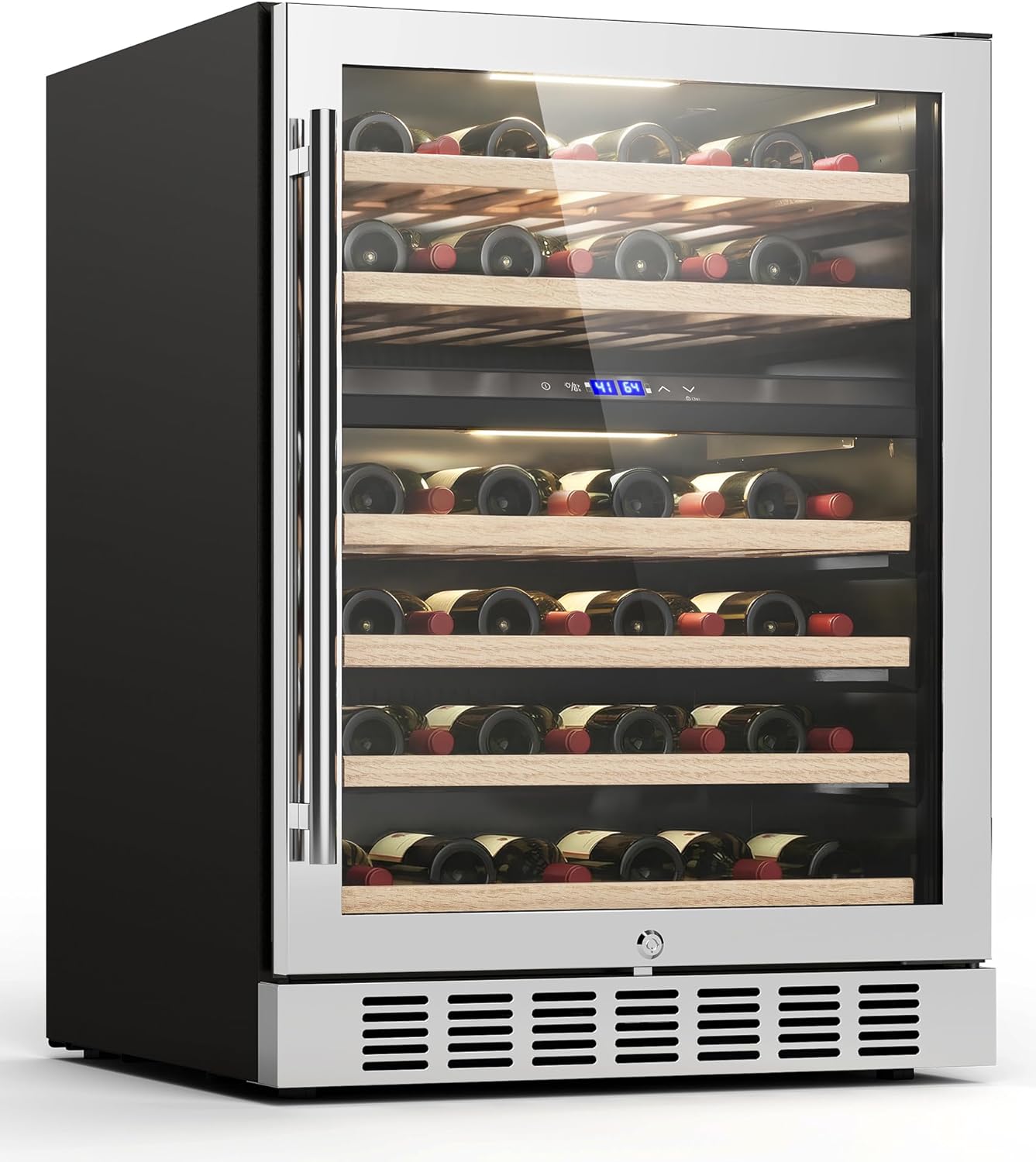
| Cooling Method | Compressor |
|---|---|
| Number Of Shelves | 6 |
| Voltage | 115 volts |
| Defrost System Type | Automatic |
| Specification Met | DOE, ETL |
This OYLUS 24" dual-zone wine fridge is built around a compressor cooling system that maintains independent upper and lower zones adjustable from 41 to 64°F, which makes it suitable for storing both whites and reds at their ideal serving or aging temperatures. It holds up to 46 standard 750ml bottles on six removable FSC-certified beechwood shelves and uses an auto-defrost cycle, front ventilation and a double-layer tempered glass door to reduce light and humidity stress on bottles. The LED control panel offers °F/°C switching, a screen lock and a temperature-memory function that restores settings after a power outage, and the unit is ETL and DOE certified for safety and efficiency. Practical benefits include flexible built-in or freestanding placement thanks to front ventilation and adjustable leveling feet, plus a UL-certified lock for child or unauthorized access. Expect a solid, quiet compressor operation and useful storage capacity, but note the listed annual energy number appears high and the unit is not lightweight for tight installations.
Best for: Buyers who prioritize reliable, cellar-like temperature control and sturdy, safety-focused construction for long-term wine storage and occasional built-in installation.
Less Ideal for: Buyers who need a lightweight, ultra-compact cooler for frequent relocation or who prioritize the lowest possible energy draw above consistent temperature performance.
- Independent dual-zone temperature control adjustable 41–64°F for tailored storage of different wines
- Compressor cooling with auto-defrost for steady temperatures and low-maintenance operation
- Six removable FSC-certified beechwood shelves that accommodate up to 46 standard 750ml bottles
- Double-layer tempered glass door that blocks UV and a UL-certified safety lock for secure storage
- Annual energy consumption value listed is relatively high compared with small wine coolers
- Unit weight and dimensions may make it difficult to move or fit in very tight spaces
Verdict: Choose this unit if you want a dependable, compressor-driven dual-zone cooler with secure, built-in-capable design for long-term wine preservation.
Velieta 24-Inch Dual Zone Wine Cooler
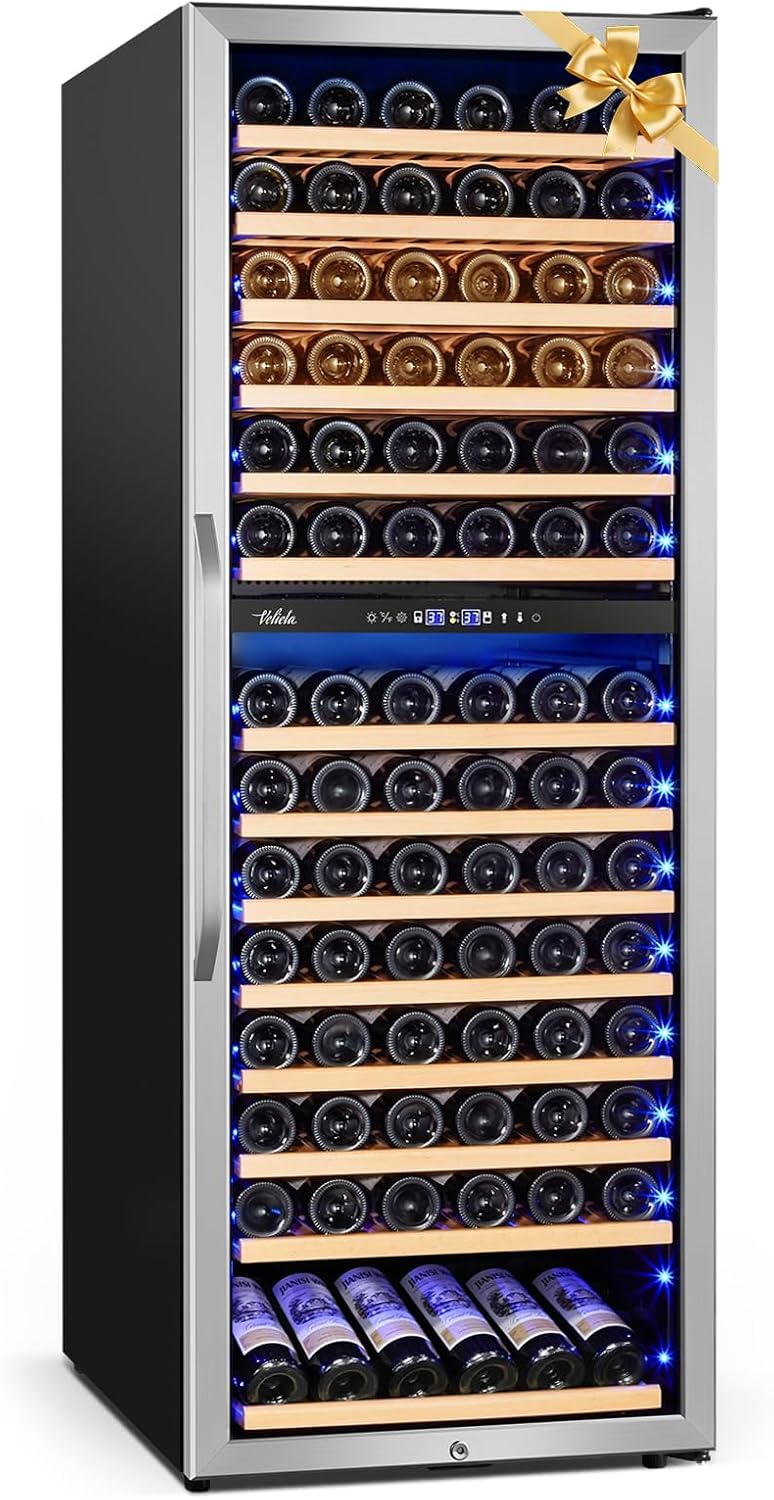
| Cooling Method | Compressor |
|---|---|
| Number Of Shelves | 14 |
| Number of Sections | 2 |
| Defrost System Type | Automatic |
| Capacity | 13.5 cubic feet |
This Velieta 24-inch dual-zone wine cooler is built for serious storage and controlled temperature management. It uses a compressor cooling system with two independently set zones so you can keep whites and reds at their ideal ranges (upper zone about 40 to 55 F, lower zone about 55 to 65 F). The cabinet offers a high bottle capacity with 14 wood and wire shelves and a lockable glass door with internal blue lighting that reduces UV exposure while making bottles easy to see. Controls are on an LED display and the unit includes automatic defrost, a temperature memory after power loss, and a sound reduction system intended to keep compressor noise low. In real-world garage use expect robust cooling performance and stable temperatures, though the compressor and size mean it is large and heavy and will need adequate ventilation and a dedicated circuit in some installations. The fridge is freestanding and matte stainless steel finished so it fits utility spaces, and removable shelves simplify reconfiguring for odd bottle shapes.
Best for: Buyers who prioritize consistent, professional-level temperature control and large capacity for long-term wine storage in a non-climate-controlled garage environment.
Less Ideal for: Not a good choice for buyers needing a compact, lightweight cooler for tight spaces or for occasional short-term chilling.
- True dual-zone compressor cooling for separate red and white storage
- Large internal capacity with 14 wood and wire shelves for many bottles
- LED digital controls with temperature memory after power loss
- Automatic defrost and sound reduction features for quieter, lower-maintenance operation
- Very large and heavy cabinet that requires sufficient floor space and ventilation
- Annual energy consumption is relatively high compared with small thermoelectric coolers
Verdict: Choose this unit if you need robust compressor cooling and large dual-zone capacity to store and protect a sizable wine collection in a garage setting.
Kalamera 24" Dual-Zone Wine Fridge

| Capacity | 5.3 cubic feet |
|---|---|
| Cooling Method | Compressor |
| Refrigerant | R-600A |
| Installation Type | Built-In |
| Number Of Shelves | 12 |
This Kalamera 24" dual-zone wine and beverage fridge is designed for under-counter installation or freestanding use and keeps wine and drinks at two independently controlled temperatures. The cabinet separates wine and beverage storage so you can set the left zone for wine (40 to 66°F) and the right zone for colder beverages (38 to 50°F), while a compressor-based cooling system aims to maintain stable temperatures with relatively low noise. The unit includes a mix of wooden and metal removable shelves to hold bottles and cans and a double-glass, UV-resistant door to reduce light exposure. Practical features include adjustable foot pads for leveling when built in and a power-off temperature memory that restores settings after an outage. Downsides are its fairly high annual energy consumption and substantial weight, which make installation and long-term running cost considerations for cautious buyers. The stainless steel door gives a clean built-in look but may show fingerprints in everyday use.
Best for: Buyers who want a built-in-capable cooler that keeps wine and drinks at separate, precise temperatures and prefer a conservative, durable appliance with practical features for home use.
Less Ideal for: People looking for an ultra-lightweight or extremely low-energy countertop cooler, or those who need a higher-capacity professional cellar-grade unit.
- True dual-zone controls for separate wine and beverage temperatures
- Built-in friendly design with stainless steel front and adjustable leveling feet
- Mix of wooden and metal movable shelves for flexible storage
- Double-glass UV-resistant door to protect wine from light
- Compressor cooling provides steady, low-noise operation
- Relatively high annual energy consumption compared with compact units
- Heavy unit that may require help for installation
Verdict: Choose this Kalamera if you need a built-in-style dual-zone cooler that reliably stores wine and colder beverages separately with a durable, appliance-grade design.
Choosing the Right High-End Dual-Zone Wine Cooler: Key Factors to Consider
Temperature Range and Stability
A high-end dual-zone wine cooler should offer a wide, accurate temperature range for storing reds and whites in their preferred environments. Stability matters more than lowest or highest setpoints. Fluctuations of even a few degrees accelerate chemical changes in wine. Look for tight control tolerances, reliable thermostats, and good compressor or thermoelectric systems that keep temperatures steady during door openings and when ambient room temperatures vary.
Consistent internal temperature also supports long-term aging. If you plan to cellar bottles for years, precise control and minimal swing between highs and lows are essential to preserving flavor development and preventing premature oxidation.
Independent Zone Control
True dual-zone operation means each compartment has autonomous controls, sensors, and air flow management so cooling one zone does not impact the other. This is important when you want to serve chilled whites from the top while keeping reds at higher cellar temperatures below. Independent digital controls with clear displays and the ability to set different hold temperatures are signs of a better system.
Also consider whether the zones share a compressor or have separate cooling circuits. Shared systems can work well if engineered properly, but fully independent circuits give the tightest separation and reduce the risk of cross-zone interference during heavy use.
Bottle Capacity and Rack Design
Usable capacity is more than a maximum bottle count. High-end coolers should provide flexible racking to accommodate Bordeaux, Burgundy, and larger-format bottles without wasting space. Look for sliding or pull-out shelves that allow access to bottles without disturbing adjacent rows. Shelf depth and clearance determine how many standard bottles fit versus how often you need to reconfigure.
Think about your collection mix now and in a few years. A cooler that looks roomy on paper can perform poorly if its fixed racks force awkward stacking of nonstandard bottles.
Vibration, Light, and Humidity Control
Excess vibration and bright interior lighting harm long-term bottle aging. High-end models minimize vibration through quality compressors, rubber mounts, or inverter-driven motors. Interior LEDs are preferable when they are low-heat and switchable, so you can preserve bottles without exposing them to continuous light.
Humidity control is also relevant for cork integrity. While most wine coolers do not actively humidify, good insulation and tight door seals help retain ambient cellar humidity. If you need strict humidity management, plan for supplementary solutions or a dedicated cellar environment.
Door Design and Installation Fit
Door sealing, glass quality, and whether the unit is designated for built-in or freestanding installation affect long-term performance. Tinted, UV-filtering glass protects bottles from light, while robust gaskets reduce air exchange. For built-in installations, check ventilation requirements so the unit can discharge heat properly without overheating.
Consider the door swing, handle ergonomics, and whether the unit offers reversible doors. These practical aspects affect how easily you access bottles during gatherings and whether the cooler fits into your intended kitchen or utility space.
Sizing Your Cellar Needs
Estimate how many bottles you actively rotate versus how many you want to age. For frequent entertainers, prioritize easy access shelves and a modest usable capacity so bottles can be retrieved without rearranging the entire cooler. For longer-term storage, choose a larger capacity with stable low-temperature performance.
Measure intended placement carefully. Width, depth, and ventilation clearance determine whether a cooler works as a built-in undercounter appliance or must remain freestanding. Think about future collection growth when choosing capacity so you avoid an early upgrade.
- Account for tall bottles and sparkling formats when assessing usable depth.
- Leave recommended clearance for heat exhaust if installing in cabinetry.
- Choose pull-out shelves for heavy use and frequent access.
Energy Use and Operational Noise
High-end coolers can be efficient, but power draw varies with cooling system and insulation. Consider yearly energy consumption if the unit will run in a warm room or a frequently opened area. Better insulation and inverter compressors usually reduce energy use over time.
Noise level is crucial if the cooler is in a kitchen or living area. Look for units with low-decibel operation and vibration dampening. Placement away from sleeping areas is ideal for units that run more frequently.
- Inverter compressors tend to be quieter and more efficient.
- Thermoelectric units are quieter but may struggle with larger capacities.
Installation and Ventilation Requirements
Built-in models require front-venting designs so heat can escape without extra cabinet clearance. Confirm specifications before planning an undercounter installation. Freestanding units need space behind for airflow, which affects where you can place the cooler in a kitchen or utility room.
Leveling is important for door alignment and rack operation. Many high-end units include adjustable feet or leveling legs. Also verify electrical requirements and whether the circuit you intend to use can handle the compressor's start-up load.
- Front-venting is essential for true undercounter fit.
- Allow space for the door to open fully and for bottle removal.
Maintenance and Long-Term Care
Routine maintenance keeps performance stable. Clean door gaskets periodically, replace filters if present, and verify that shelves slide smoothly. Drain pans and condensate channels should be checked to prevent mold or odors.
If storing wine for several years, periodically monitor temperature logs if the unit supports them. Keep the cooler away from heat sources and direct sunlight to reduce compressor workload and maintain setpoint stability.
- Wipe seals and glass with gentle cleaners to avoid damaging gaskets.
- Inspect shelving hardware each season for wear or looseness.
Serving Temperatures and How to Use Zones
Use the colder zone for whites, rosés, and sparkling wines that benefit from lower serving temperatures. Set the warmer zone to typical cellar temperatures for reds. If you host frequently, configure one zone a few degrees above serving temperature so bottles are ready when needed.
For mixed gatherings, consider alternating shelf assignments so chilled bottles are immediately accessible without opening the long-term storage zone repeatedly.
- Keep serving bottles near the front for quick access.
- Avoid changing long-term storage temperatures frequently to protect aging wine.
How We Chose the Best High-End Dual-Zone Wine Cooler
We focused on attributes that matter for collectors and serious home users who need predictable, long-term storage and everyday serving flexibility. Our selection criteria included temperature stability, measured by the unit's ability to hold setpoints within a tight range; zoning independence, ensuring the two compartments operate truly separately for different wine types; usable capacity and shelving flexibility for mixed bottle sizes; vibration control and interior lighting choices to prevent premature aging; and build quality including insulation and compressor quality for consistent performance. We excluded entry-level single-zone units, products lacking independent controls between compartments, and designs with limited shelving or poor access that reduce practical storage. We also filtered out units with noisy operation or weak insulation that struggle in typical home environments. The remaining coolers were judged on the concrete dimensions above plus ergonomics like door seals and rack access to reflect real-world cellar use.
Our full evaluation process is outlined in our review methodology.
FAQ
Can I use a dual-zone cooler for long-term aging?
Often you can, provided the unit maintains consistent temperatures and low vibration. For long-term cellaring, prioritize models with tight temperature control and good insulation. Avoid frequently opening the cooler or changing setpoints.
How cold should each zone be set?
Generally set the colder zone between 45 and 50°F for whites and sparkling wines, and the warmer zone between 55 and 65°F for reds depending on style. Exact choices depend on personal taste and the wines you store.
Do built-in coolers need special ventilation?
Yes. Built-in units must manage heat through front-venting or specified clearance so the compressor can reject heat without overheating the cabinet. Follow the manufacturer's ventilation instructions for safe operation.
Are compressor coolers better than thermoelectric?
Compressor-based systems generally offer stronger cooling and better performance for larger capacities or warm ambient rooms. Thermoelectric units tend to be quieter and suitable for smaller loads, but they may struggle to maintain tight control in hotter environments.
How important is UV-filtered glass?
UV-filtered or tinted glass reduces light exposure that can degrade wine over time. If your cooler will be placed in bright areas, choose a model with quality glass and the option to turn interior lights off to minimize light impact.
Final Verdict
Prioritize temperature stability and true zoning when choosing a high-end dual-zone wine cooler. Usable capacity and rack versatility determine how comfortably your collection fits and how often you need to reconfigure bottles. Balance low-vibration design and good insulation against installation constraints like ventilation and access. Decide whether your main need is serving flexibility or long-term aging, then select a cooler that emphasizes the matching strengths. Focusing on the concrete criteria discussed here will help you choose a unit that preserves bottles and performs reliably for years.