
Note: This article contains affiliate links. If you click on these links and make a purchase, we may earn a small commission at no extra cost to you. This helps support our research and content. Read our full affiliate disclosure here.
Investing in a high-end freestanding dual-zone wine cooler matters if you collect bottles with different serving temperatures or need a showpiece for entertaining. The right unit preserves wine by maintaining stable, separate climates for reds and whites while also minimizing vibration and UV exposure. This guide shortlists five top models chosen for accurate temperature control, usable capacity, and build quality, so you can find a unit that fits your space and storage goals. Below we explain the evaluation criteria, what to expect from premium features, and practical tradeoffs to help you pick the best cooler for everyday use.
Top Picks at a Glance
| Best Overall The best all-around choice for most situations | Wine Enthusiast 32-Bottle Dual Zone Cooler | 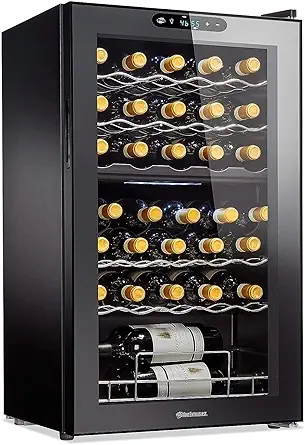 |
| Best Quality Built to a higher standard if you want something more solid | BODEGA 30-Inch Dual Zone Wine & Beverage Cooler |  |
| Best Value The sweet spot between price and what you get | FoMup 24" Dual Zone Wine Fridge |  |
| Top Rated A top-rated pick with lots of positive feedback | Honeywell 24 Inch Dual Zone Wine Cooler |  |
| Most Popular A crowd favorite that many people choose with confidence | Velieta 24-Inch Dual Zone Wine Cooler |  |
Wine Enthusiast 32-Bottle Dual Zone Cooler

| Capacity | 32 Bottles |
|---|---|
| Cooling Method | Compressor |
| Number of Sections | 2 |
| Number Of Shelves | 5 |
| Energy Rating | Energy Star |
This Wine Enthusiast 32-bottle dual-zone cooler uses a MAX compressor to provide stable, efficient cooling for long-term wine storage and everyday serving. Split into two independently controlled zones, it lets you keep reds and whites at different temperatures or match both zones for larger collections. The unit has five chrome wire shelves plus a display shelf to organize and present bottles, a lockable glass door, and an easy-to-read digital touchscreen with LED lighting for visibility. Compressor cooling keeps temperature swings smaller than thermoelectric designs and the cooler runs about as quietly as a library at 40 dB, although you may hear routine thermostat and defrost sounds. Practical limitations include a right-hinged non-reversible door and shelves that are removable but not adjustable, which restricts flexibility for odd-sized bottles. The cooler is Energy Star rated and designed as a compact freestanding fridge for kitchens, home bars, or bedrooms where a larger built-in cellar is not available.
Best for: Buyers who want a reliable, roomy freestanding dual-zone cooler that balances presentation and performance for an at-home collection and prefer compressor cooling over quieter but less powerful alternatives.
Less Ideal for: Collectors seeking museum-grade, ultra-precise cellar control or those who need a reversible-door unit for a tight installation should consider other models.
- True compressor cooling for more stable temperatures and longer compressor life compared with thermoelectric units
- Dual-zone controls let you store reds and whites at separate setpoints or use a uniform temperature
- Digital touchscreen and LED lighting make temperature adjustment and bottle visibility straightforward
- Lockable glass door and sturdy chrome wire racks provide secure, presentable storage
- Compact freestanding design fits kitchens, bars, or small spaces while holding a sizable 32-bottle collection
- Shelves are removable but not adjustable, limiting accommodation of larger or odd-shaped bottles
- Door is not reversible, restricting placement options in some rooms
- Temperature can vary by about ±5°F when the compressor cycles, so exact cellar precision is limited
Verdict: Choose this Wine Enthusiast dual-zone cooler if you want a compact freestanding unit that pairs compressor reliability with flexible dual-temperature storage for a sizable home collection.
BODEGA 30-Inch Dual Zone Wine & Beverage Cooler

| Configuration | Dual zone wine cooler & two beverage drawers |
|---|---|
| Cooling Method | Compressor |
| Number Of Shelves | 20 |
| Voltage | 115 volts |
| Refrigerant | R-600A |
This BODEGA 30-inch dual-zone cooler pairs a compressor-driven refrigeration system with 20 wooden and wire shelves plus two full-extension stainless steel drawers to handle both bottles and cans. It is typically used as a freestanding or built-in unit in kitchens, bars, or commercial spaces to store red and white wines at separate temperatures while keeping beverages chilled in the drawer section. Notable features include a wide usable capacity (listed at 120 standard bottles and 234 cans), touch digital controls with LED display, double-glazed tempered glass doors, and an internal fan for even cooling. The compressor is described as quiet and energy efficient, which supports steady temperatures and low vibration for long-term wine storage. Practical benefits are large organized capacity, flexible installation with front ventilation, and removable shelving for custom layouts. Important limitations are the unit's large physical footprint and the need to confirm exact installation clearances; the listing also notes a one-year warranty only, so buyers prioritizing extended factory-quality support may want to verify service options.
Best for: Buyers who need a high-capacity, performance-focused dual-zone cooler for dedicated wine and beverage storage and who prioritize steady compressor cooling and low vibration over compact size.
Less Ideal for: Anyone with limited space, a tight installation footprint, or who prefers a smaller countertop or undercounter wine fridge should consider more compact models instead.
- True dual-zone design lets you store wine and chilled beverages at different temperatures.
- Compressor cooling with internal fan offers consistent, low-vibration temperature control.
- Large capacity with 20 shelves and full-extension drawers for organized storage.
- Double-layer tempered glass doors and LED display provide visibility and simple digital control.
- Built-in or freestanding installation with front ventilation increases placement flexibility.
- Very large unit requires substantial floor and cabinet space and professional planning for built-in installs.
- Manufacturer warranty period is limited to one year as listed.
Verdict: If you need a large, performance-oriented dual-zone cooler that keeps wines and drinks at separate, stable temperatures, this 30-inch BODEGA model delivers ample capacity and reliable compressor cooling.
FoMup 24" Dual Zone Wine Fridge

| Capacity | 180 Bottles |
|---|---|
| Cooling Method | Compressor |
| Temperature Zones | Dual independent zones (top 40–55°F, bottom 55–65°F) |
| Number Of Shelves | 14 |
| Annual Energy Consumption | 240 kilowatt hours per year |
The FoMup 24" Dual Zone Wine Fridge is a tall freestanding cooler aimed at serious collectors who need separate climates for whites and reds. It provides two independently controlled zones (top 40–55°F, bottom 55–65°F) driven by a compressor and dual fans to keep temperatures stable and circulate air. The unit uses sliding wood-and-wire shelves to protect bottle labels and make accessing bottles easier, and a reversible tempered glass door with a lock adds flexibility and security for built-in or freestanding placement. In practice the fridge offers large capacity for standard 750 ml Bordeaux bottles, quiet operation for home use, and a low-energy compressor system. Setup requires leaving the unit idle for 24 hours before starting, and the stainless door and matte finish give it a professional appearance. Trade-offs include its substantial footprint and weight that make moving or fitting it into tight spaces difficult, and annual energy consumption is higher than compact models, so it suits buyers prioritizing capacity and dual-zone control over compactness or ultra-low energy use.
Best for: Buyers who prioritize maximum capacity and separate temperature control for mixed wine collections and who plan a permanent location where a full-height freestanding unit fits.
Less Ideal for: If you need a compact, lightweight cooler for occasional use or tight spaces, this full-height, heavy unit is not a good choice.
- True dual temperature zones for storing whites and reds at their ideal ranges
- Large 180-bottle capacity with sliding rails for easy access and label protection
- Compressor cooling with dual fans for even, low-noise temperature distribution
- Reversible tempered glass door and key lock for flexible placement and security
- Adjustable shelves and feet let you tailor storage and level the unit on uneven floors
- Very heavy and large, which limits placement and makes installation challenging
- Higher annual energy consumption compared with smaller wine coolers
Verdict: Choose this FoMup if you need a high-capacity, dual-zone freestanding wine fridge that keeps whites and reds at ideal temperatures with easy-access sliding shelves.
Honeywell 24 Inch Dual Zone Wine Cooler

| Configuration | Compact Side-by-Side |
|---|---|
| Number of Doors | 2 |
| Number Of Shelves | 9 |
| Defrost System Type | Frost Free |
| Capacity | 120 liters |
This Honeywell 24-inch dual-zone wine cooler is built as a practical freestanding cellar for storing both red and white wines at separate temperatures. It uses a compressor cooling system with an electronic digital thermostat that lets you set temperatures from 40°F to 65°F, and the double-paned thermopane glass helps insulate the cabinet and protect bottles from UV exposure. The unit organizes bottles and cans across six wooden slide-out wine racks plus three slide-out can shelves, and soft interior LED lighting makes it easy to find bottles without warming the interior. Adjustable legs and a frost-free defrost system simplify placement and maintenance, and the fridge is described as energy efficient and low noise for everyday use. The main limitations are its medium 120-liter capacity, which is modest for collectors, and its 24-inch footprint may be too wide for tight built-in spaces despite being listed as built-in install type.
Best for: Buyers who prioritize a dependable, compressor-cooled dual-zone fridge that protects bottles from light and keeps separate temperature zones for everyday wine storage.
Less Ideal for: Those needing large cellar capacity or a true narrow built-in unit for tight cabinetry should look for larger or specifically built-in models.
- Dual-zone compressor with digital thermostat supports separate temperature control for reds and whites
- UV-resistant double-paned glass protects wine and improves insulation
- Slide-out wooden racks and can shelves provide organized, accessible storage
- Frost-free operation plus adjustable leveling legs reduce maintenance and ease installation
- Soft interior LED lighting and low-noise operation suitable for home placement
- 120-liter capacity is modest for serious collectors
- Listed as built-in but 24-inch width may limit true inset installation in tighter cabinets
Verdict: A reliable, compressor-powered dual-zone wine cooler that protects bottles and keeps two temperature zones for everyday home collectors.
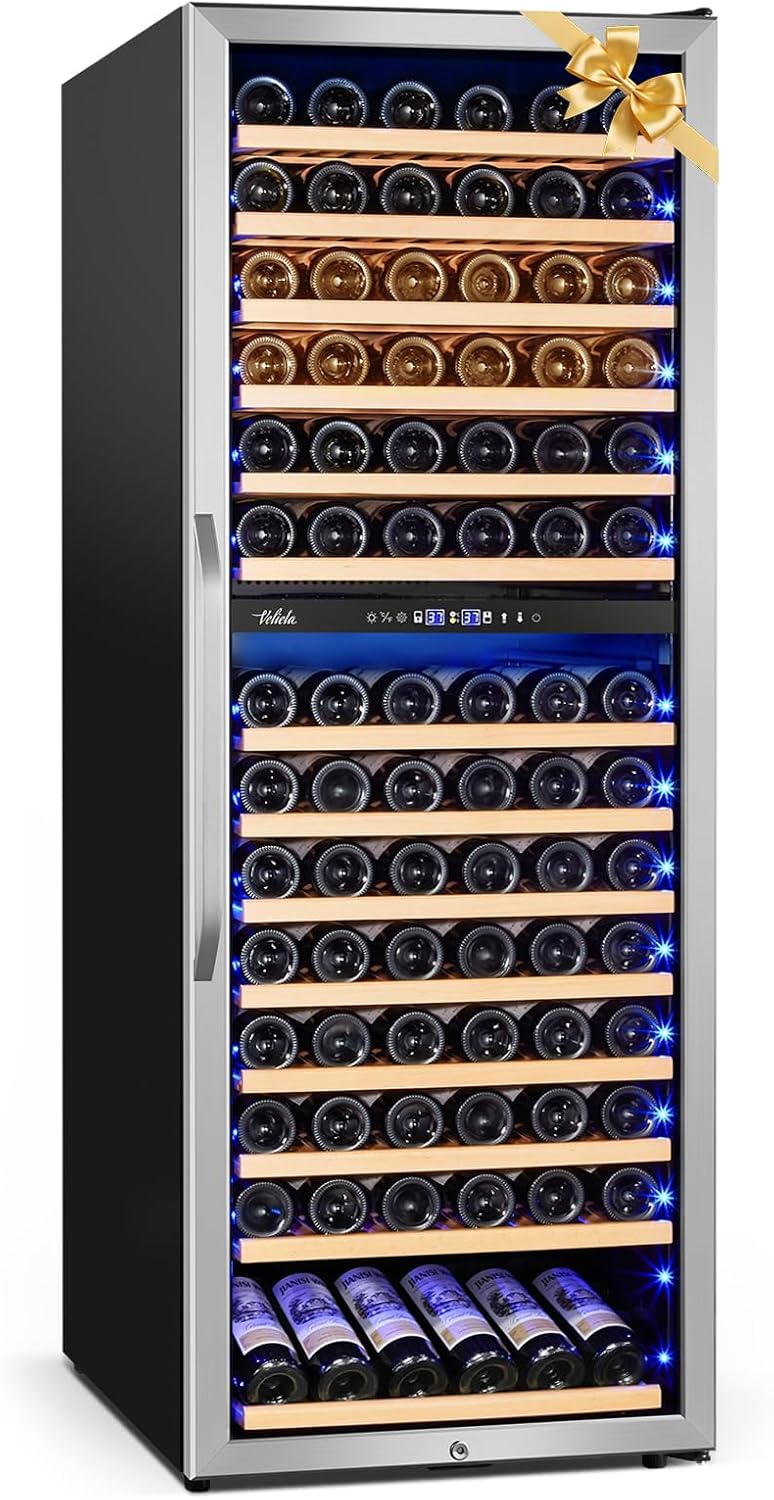
Velieta 24-Inch Dual Zone Wine Cooler
| Cooling Method | Compressor |
|---|---|
| Number Of Shelves | 14 |
| Number of Sections | 2 |
| Defrost System Type | Automatic |
| Capacity | 13.5 cubic feet |
This Velieta 24-inch dual-zone wine cooler is built for serious storage and controlled temperature management. It uses a compressor cooling system with two independently set zones so you can keep whites and reds at their ideal ranges (upper zone about 40 to 55 F, lower zone about 55 to 65 F). The cabinet offers a high bottle capacity with 14 wood and wire shelves and a lockable glass door with internal blue lighting that reduces UV exposure while making bottles easy to see. Controls are on an LED display and the unit includes automatic defrost, a temperature memory after power loss, and a sound reduction system intended to keep compressor noise low. In real-world garage use expect robust cooling performance and stable temperatures, though the compressor and size mean it is large and heavy and will need adequate ventilation and a dedicated circuit in some installations. The fridge is freestanding and matte stainless steel finished so it fits utility spaces, and removable shelves simplify reconfiguring for odd bottle shapes.
Best for: Buyers who prioritize consistent, professional-level temperature control and large capacity for long-term wine storage in a non-climate-controlled garage environment.
Less Ideal for: Not a good choice for buyers needing a compact, lightweight cooler for tight spaces or for occasional short-term chilling.
- True dual-zone compressor cooling for separate red and white storage
- Large internal capacity with 14 wood and wire shelves for many bottles
- LED digital controls with temperature memory after power loss
- Automatic defrost and sound reduction features for quieter, lower-maintenance operation
- Very large and heavy cabinet that requires sufficient floor space and ventilation
- Annual energy consumption is relatively high compared with small thermoelectric coolers
Verdict: Choose this unit if you need robust compressor cooling and large dual-zone capacity to store and protect a sizable wine collection in a garage setting.
Choosing the Right High-End Freestanding Dual-Zone Wine Cooler: Key Factors to Consider
Temperature Zoning and Range
Dual-zone capability matters because red and white wines have different ideal serving temperatures. Look for distinct setpoints for each zone with enough range to store sparkling, white, and red wines comfortably. A broad, overlapping range lets you dedicate one zone to long-term cellaring and the other to short-term serving.
Reliable digital readouts and independent controls prevent accidental cross-contamination of temperatures. When zones are well insulated from each other, setting one for 45 to 55 degrees Fahrenheit and the other for 55 to 65 Fahrenheit is easier to maintain without interference.
Capacity and Shelf Configuration
Advertised bottle counts can be misleading because bottle shapes vary. Consider usable capacity—how many standard Bordeaux or Burgundy bottles the cooler actually holds—plus whether shelves are adjustable or removable to accommodate large-format bottles or magnums.
Shelving materials and their roll-out or glide design influence accessibility and the risk of jostling bottles. Wooden or beech shelves can cushion corks, while metal racks often maximize space. Think about how you will rotate stock and whether the cooler's layout supports both frequent access and long-term storage.
Vibration Control and Noise
Excess vibration can disturb sediment in older bottles and speed chemical reactions that degrade wine. Premium freestanding models use vibration-dampening compressors, anti-vibration mounts, or brushless motors to limit movement. Check reported vibration performance and whether racks include cushioning or rubber mounts.
Noise is also a practical concern for kitchens, open-plan rooms, or media areas. High-end units tend to run quieter, but consider measured decibel levels at typical operating conditions and placement options to minimize audible disruption.
Glass, UV Protection, and Door Seals
Exposure to light, especially UV, can prematurely age wine. Tinted or UV-filtering glass helps protect bottles while still providing display appeal. A tight door seal and quality gasket maintain consistent internal humidity and temperature, preventing dry corks or thermal leakage.
Consider whether the unit has a lockable door if security or child safety is a concern. Also check how easily gaskets can be cleaned or replaced and whether the door hinge orientation fits your space.
Controls, Monitoring, and Convenience Features
Intuitive controls and clear displays reduce the chance of accidental temperature changes. Digital touch panels or dedicated control knobs should offer fine-grain adjustments and lockout features. Select models include interior lights with adjustable brightness, alarm indicators for temperature faults, and soft-close doors for gentler handling.
Some high-end units also offer remote monitoring or app integration. Decide if remote alerts and logging matter to you, or if a reliable local display and alarm are sufficient.
Placement and Ventilation Needs
Freestanding wine coolers require adequate airflow clearance around the cabinet to dissipate heat. Follow manufacturer guidelines for minimum spacing at the rear and sides to prevent compressor overheating and to maintain temperature performance.
Avoid installing the unit in direct sunlight or in rooms with large temperature swings, such as unconditioned garages. If you plan to place the cooler under a counter, confirm it is designed for built-in or under-counter use; many freestanding units need more ventilation than built-in models.
- Leave recommended clearance to ensure efficient cooling.
- Keep unit away from heat sources and direct sunlight.
- Place on a level surface to keep shelves aligned and reduce vibration.
Organizing Mixed Collections
When storing both reds and whites, use the separate zones strategically. Keep long-term cellared bottles in the cooler zone with the more stable, slightly lower temperature and use the other zone for bottles you plan to drink within weeks or months.
Label shelves or use a simple inventory system to track older bottles. Store bottles horizontally to keep corks moist and reduce oxygen ingress.
- Use the upper zone for service-ready whites and the lower for cellared reds, or vice versa depending on your model's layout.
- Reserve a few shelves for travel or oversized bottles by removing racks as needed.
Energy Use and Long-Term Running Costs
High-end coolers are often better insulated and use more efficient compressors, which can reduce electricity consumption over time. Check energy ratings if available, but also consider practical usage patterns such as door openings and ambient room temperature.
Consistent temperature management typically reduces energy spikes. Positioning the cooler in a moderate-temperature room and minimizing frequent door openings will help maintain efficiency and lower operating costs.
- Monitor usage during the first month to estimate typical energy draw.
- Keep door openings brief and plan bottle selection in advance to avoid repeated access.
Maintenance and Serviceability
Regular maintenance keeps a wine cooler performing well. Clean shelves and interior surfaces periodically, check and clean door gaskets, and ensure ventilation grilles are free of dust. Replace light bulbs with manufacturer-compatible types if needed.
Consider how easy it is to access service panels and whether common parts, such as shelves or gaskets, are user-replaceable. Units with modular interiors simplify repairs and reduce downtime if a component needs replacing.
- Defrost or clean interior as directed to prevent mold or odor buildup.
- Inspect seals annually and replace if cracked or brittle.
Design and Aesthetic Fit
High-end freestanding coolers often serve as visual centerpieces as well as functional appliances. Choose finishes and door styles that complement nearby cabinetry and room decor. Glass-front doors offer an elegant display but balance that against light protection needs.
Consider handle style and hinge placement to ensure the unit integrates smoothly into traffic patterns and does not obstruct nearby cabinetry or walkways.
- Match finish and handle design with kitchen hardware for a cohesive look.
- Account for door swing clearance when planning installation location.
How We Chose the Best High-End Freestanding Dual-Zone Wine Cooler
We focused on features that directly affect how well a freestanding dual-zone wine cooler preserves and presents wine. Key evaluation criteria included temperature accuracy and stability, which determines how reliably each zone maintains set points over time; storage capacity and shelf layout, since usable bottle count and shelf adjustability affect real-world storage; vibration and noise levels, because mechanical disturbance and sound matter in living areas; build quality and insulation, which influence long-term thermal performance and energy use; and user controls and display clarity, covering how easy it is to set and monitor zone temperatures. We also considered refrigeration type and compressor reliability as part of thermal performance. Units that lacked separate, independently controlled zones, had poor insulation or flimsy shelving, or failed to provide clear temperature readouts were excluded. Our selections emphasize performance for wine preservation, practical storage configurations, and durable materials suited to long-term home use.
Our full evaluation process is outlined in our review methodology.
FAQ
Can a dual-zone cooler store both sparkling and still wines?
Often yes. Dual-zone coolers with a wide temperature range can accommodate sparkling wines in the colder zone and still whites or reds in the warmer zone. Confirm each zone's minimum temperature before storing sparkling bottles.
How much ventilation clearance does a freestanding unit need?
It usually depends on the model, but freestanding units typically require several inches of clearance at the rear and sides. Check the unit's installation guide and allow space for airflow to prevent overheating and ensure consistent temperatures.
Is vibration really a problem for wine storage?
Vibration can affect older or long-cellared wines by disturbing sediment and accelerating chemical reactions. Many high-end units include vibration mitigation features; if you plan long-term cellaring, prioritize models that specifically address vibration control.
Should I worry about humidity inside the cooler?
Moderate humidity helps keep corks from drying out. Most freestanding coolers maintain acceptable humidity levels for short- to medium-term storage, but if you need optimal long-term cellaring conditions, monitor humidity and consider supplemental measures if levels are consistently low.
Can I stack bottles of different shapes in the same shelf?
You can, but bottle shapes affect how efficiently space is used. Adjustable or removable shelves provide flexibility to accommodate varying bottle sizes. For mixed collections, plan shelf placement to avoid wasted space and to prevent bottles from touching or rolling.
Final Verdict
When choosing a high-end freestanding dual-zone wine cooler, prioritize temperature accuracy and stable zoning first, then consider usable capacity, vibration control, and door insulation. Think about where you will place the unit and how often you will access bottles, since ventilation, noise, and shelving layout affect daily use. Balancing preservation performance with convenience and aesthetics will help you pick a cooler that meets both cellaring and service needs. Focus on the criteria outlined here to narrow options and choose with confidence.