
Note: This article contains affiliate links. If you click on these links and make a purchase, we may earn a small commission at no extra cost to you. This helps support our research and content. Read our full affiliate disclosure here.
If you care about maximum juice yield, nutrient preservation, and quiet operation, choosing the right high-end slow masticating juicer matters. These machines use low-speed augers to extract juice gently, which can result in less foam, reduced oxidation, and longer-lasting refrigerated juice. For home users who regularly juice greens, fruits, and harder roots, an investment in a well-built slow masticating juicer pays off through higher long-term performance and easier cleaning. This guide shortlists the top high-end slow masticating juicers currently available and explains the practical differences that matter for everyday use. We evaluated options across extraction efficiency, build quality, ease of cleaning, and versatility so you can pick the machine that fits your routine. Read on for what to expect and how to match features to your needs.
Top Picks at a Glance
| Best Overall The best all-around choice for most situations | Tribest Greenstar GSE-5000 Elite |  |
| Best Quality Built to a higher standard if you want something more solid | Kuvings AUTO10 Cold Press Juicer |  |
| Best Value The sweet spot between price and what you get | Omega NC900HDC Juicer |  |
| Best Budget The cheapest option that still gets the job done reliably | MEGAWISE Pro Slow Masticating Juicer |  |
| Top Rated A top-rated pick with lots of positive feedback | Hurom H80 Slow Juicer |  |
| Most Popular A crowd favorite that many people choose with confidence | EanOruus 3-in-1 Masticating Juicer E-18 |  |
| Best Seller A high-volume bestseller chosen again and again | Ninja NeverClog Cold Press Juicer JC151 |  |
Tribest Greenstar GSE-5000 Elite

| Maximum Power | 135 watts |
|---|---|
| Power Source | Corded Electric |
| Voltage | 120 |
| Number of Speeds | 1 |
The Greenstar GSE-5000 Elite is a heavyweight cold-press juicer built around stainless steel twin gears that crush and homogenize produce at low RPM for higher yields and less oxidation. It is typically used for daily juicing of fruits, hard vegetables, leafy greens, and tougher items like wheatgrass, and its homogenizing accessories expand use to nut butters, sorbets, sauces, and pasta with optional nozzles. Notable features include magnetic and bioceramic technology, a pressure-adjusting outlet knob for consistency control, and a safety interlock that prevents operation when the hood is open. Practical benefits are outstanding extraction of greens and long-run batching capability, plus a comprehensive accessory set including fine and coarse screens and a glass pitcher. Important limitations are its manual assembly and hand-wash parts which require time to clean, and the unit is relatively heavy and countertop-dominant so it favors committed juicers with space and patience rather than casual users seeking quick cleanup.
Best for: Buyers who want a high-end, durable juicer that prioritizes nutrient retention and high yields and are committed to regular juicing and cleaning routines.
Less Ideal for: If you need a compact, lightweight appliance or want minimal cleanup and occasional use, this model is not a good fit.
- Twin stainless-steel gears for high juice yield and efficient extraction of leafy greens
- Magnetic and bioceramic tech stabilizes juice and supports long run cycles
- Versatile: includes homogenizing accessories for nut butters, sorbets, and more
- Pressure-adjusting outlet knob gives control over consistency and feed variety
- Requires hand washing and disassembly which adds cleaning time
- Large and heavy design takes significant countertop space
Verdict: Choose the Greenstar GSE-5000 Elite when you want top-tier cold-press extraction and versatility for serious, nutrition-focused juicing.
Kuvings AUTO10 Cold Press Juicer

| Capacity | 3 liters |
|---|---|
| Wattage | 240 watts |
| Power Source | Corded Electric |
| Special Features | Portable |
The Kuvings AUTO10 is a high-end slow masticating juicer built for performance and convenience. It uses a 240W motor and upgraded auger running at about 50 RPM to extract juice slowly, which yields silky, low-pulp results and preserves more nutrients compared with centrifugal machines. Its Auto-Cut double-crushing blade and self-feeding hands-free design let you load whole fruits and vegetables with minimal prep, making it useful for batch juicing or family-sized servings into the large 100 oz (3 L) container. The unit is engineered for continuous runs up to 30 minutes and is relatively quiet for its power class, so it fits in busy kitchens. Cleanup is simplified by the reduced parts count and included cleaning tools, though the machine is relatively heavy and takes counter space. This model favors throughput and extraction efficiency over compactness, so buyers should expect a premium, substantial appliance rather than a lightweight countertop gadget.
Best for: Buyers who prioritize maximum yield, nutrient retention, and hands-off batch juicing will appreciate this unit for daily high-volume use and performance-focused home juicing.
Less Ideal for: If you need a compact, lightweight, or budget-oriented juicer for occasional single servings, this heavy, high-capacity model is not the best fit.
- High extraction efficiency with low pulp thanks to a slow 50 RPM auger and upgraded auger design
- Hands-free auto-cut and self-feeding system lets you process whole fruits and vegetables with minimal prep
- Large 100 oz (3 L) capacity suitable for batch juicing or family servings
- 240W motor provides sustained power for up to 30 minutes and handles hard produce quietly
- Simplified parts and included cleaning tools make post-use cleanup faster than many slow juicers
- Substantial size and weight make it less portable and require significant counter or storage space
- Premium positioning means a higher cost of ownership compared with basic models
Verdict: Choose the AUTO10 if you want a high-capacity, performance-focused cold press juicer that delivers superior extraction and hands-free convenience for regular batch juicing.
Omega NC900HDC Juicer

| Wattage | 150 watts |
|---|---|
| Power Source | Corded Electric |
| Voltage | 120 volts |
| Number of Speeds | 1 |
The Omega NC900HDC is a low-speed, dual-stage masticating juicer designed for buyers who want nutrient-rich cold-pressed juice and a versatile kitchen tool. It runs at about 80 RPM with 150 watts of power and an adjustable end cap with multiple pressure settings to optimize extraction from fruits, vegetables, leafy greens and wheatgrass. The unit handles continuous juicing thanks to automatic pulp ejection and a large feed tray, and removable parts rinse clean by hand. Beyond juice, the NC900HDC doubles as a nutrition system that can make nut butters, soy milk, baby food, pasta and grind spices when you swap attachments. Its slow speed reduces heat and oxidation so juice stores longer and preserves enzymes, and the gear-reduction motor provides strong torque for tough produce while staying relatively quiet. Expect a bit of weight and some setup for attachments, and parts are hand-wash only, so cleaning takes a little time compared with centrifugal models. For someone focused on maximum yield and nutrient preservation, this is a practical, high-performing slow juicer.
Best for: Buyers who prioritize maximum nutrient retention, high juice yield, and multi-function kitchen capability over minimal cleanup time.
Less Ideal for: People seeking the fastest, lightest countertop juicer or those who need fully dishwasher-safe parts should consider simpler centrifugal or compact models instead.
- Low 80 RPM masticating action preserves enzymes and reduces oxidation
- Dual-stage extraction and adjustable end cap increase juice yield from leafy greens and tough produce
- Versatile attachments let the unit make nut butters, soy milk, baby food, pasta and grind spices
- Automatic pulp ejection and large feed tray support continuous batch juicing
- Removable parts require hand washing rather than dishwasher cleaning
- Relatively heavy and takes counter space compared with compact juicers
Verdict: Choose the NC900HDC if you want a durable, high-yield slow juicer that maximizes nutrients and doubles as a versatile nutrition system.
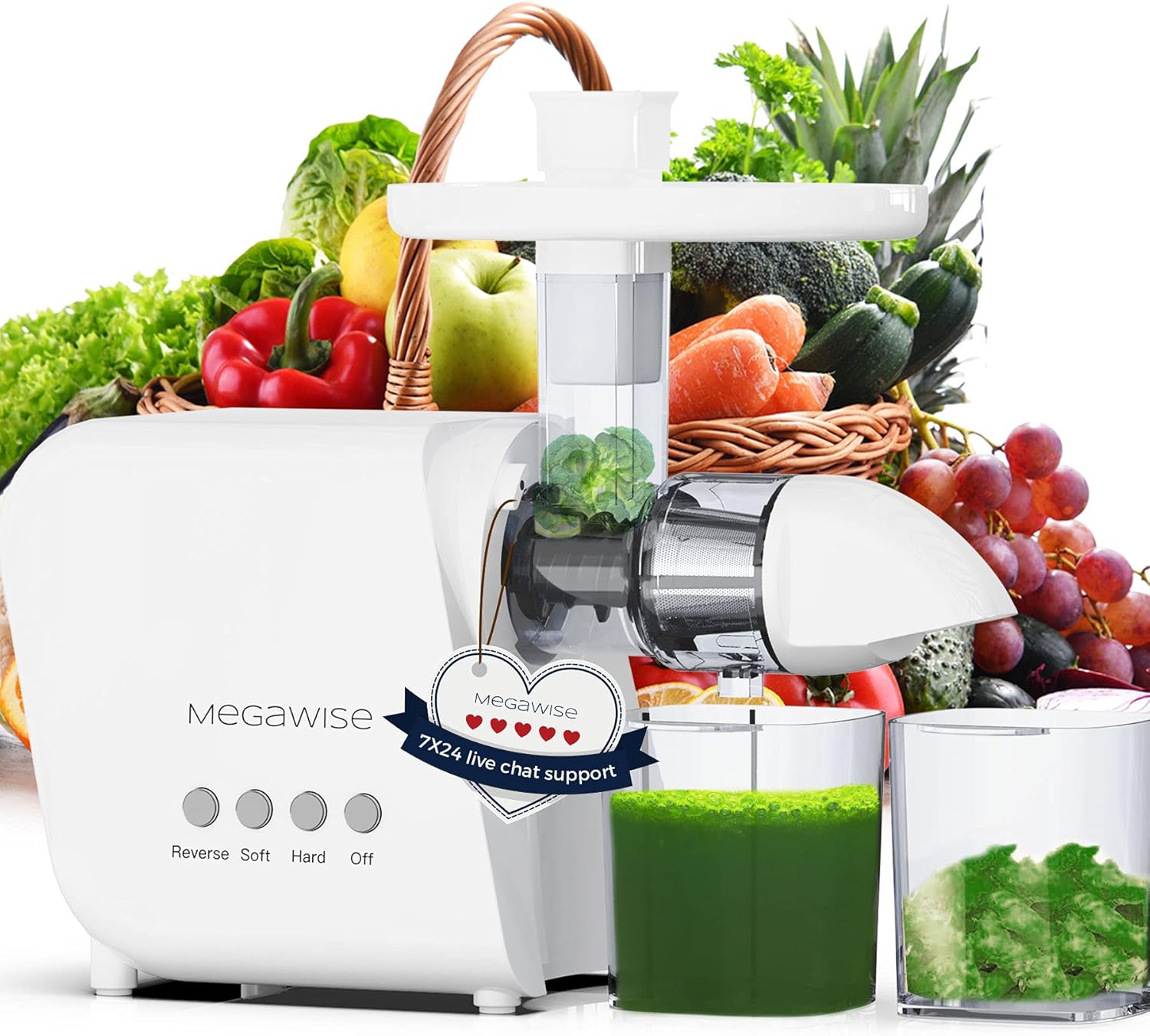
MEGAWISE Pro Slow Masticating Juicer
| Wattage | 150 |
|---|---|
| Power Source | Corded Electric |
| Voltage | 120 |
| Number of Speeds | 2 |
| Capacity | 2 liters |
The MEGAWISE Pro is a compact single-auger juicer built for extracting a high percentage of juice from fruits, vegetables, and nuts at low speed. It uses a 9-segment spiral and slow crushing action to reduce foam and heat, with two speed settings tuned for soft and hard produce so you can switch between gentler extraction and more aggressive squeezing. In practice it delivers a very dry pulp and claims up to 95% yield, making it efficient for stretching produce budgets and reducing waste. The plastic body and titanium blade keep weight down and the unit is reasonably quiet during operation, while the larger chute accepts bigger pieces to speed prep. Parts are dishwasher-safe for easier cleanup, though the smaller capacity and plastic construction make it less suited to continuous heavy commercial use. For buyers comparing high-end slow juicers, this model offers many of the same cold-press benefits at a more modest build and price point.
Best for: Buyers who want the nutritional and yield advantages of a cold-press juicer while keeping purchase cost reasonable and still expecting reliable daily home use.
Less Ideal for: Those seeking a heavy-duty, professional-grade metal juicer for continuous commercial use or users who prioritize a premium all-metal finish.
- High juice yield with 9-segment spiral for efficient extraction
- Two speed settings for soft and hard produce
- Quiet operation compared with centrifugal juicers
- Dishwasher-safe parts and included cleaning brush simplify cleanup
- Plastic exterior and lighter construction feel less premium than metal-bodied high-end units
- 2-liter capacity may limit long continuous juicing sessions
Verdict: If you want most of the nutritional and yield benefits of a high-end cold-press juicer without the top-tier price, this MEGAWISE Pro is a cost-conscious, efficient choice.
Hurom H80 Slow Juicer

| Capacity | 2.2 liters |
|---|---|
| Special Features | Slow Juicer |
| Product Care Instructions | Dishwasher Safe |
The Hurom H80 is a high-end slow masticating juicer built for steady, low-speed extraction of juice from whole fruits and vegetables. It uses a 50 RPM auger and a self-feeding hopper to gently press produce, which helps preserve nutrients and yields juice with less foam and separation. Cleanup is simpler than many masticating machines because most removable components — chamber, hopper, fine and coarse strainers, juice and pulp containers — are rated dishwasher-safe for the top rack, and a new Fit & Clean pulp bar reduces stuck pulp. The unit is relatively quiet in use and includes both fine and coarse strainers for clearer juice or higher-yield, pulpy results. Expect a substantial, well-built appliance that can handle regular home juicing sessions, but note it is heavier and larger than compact centrifugal models and a few small parts still require hand washing. Overall it is geared toward reliable daily use where juice quality and ease of cleaning matter more than minimal countertop footprint.
Best for: Buyers who prioritize consistent, high-quality juice extraction and want a robust, easy-to-clean slow juicer they can use frequently without fuss.
Less Ideal for: People who need the smallest, lightest appliance for occasional use or who prefer the speed and footprint of a centrifugal juicer.
- Low 50 RPM masticating action preserves nutrients and reduces foam
- Most removable parts are dishwasher-safe for easy cleanup
- Self-feeding hopper and included fine and coarse strainers give flexible juicing options
- Quiet operation suitable for morning or shared living spaces
- Heavier and larger than compact centrifugal juicers, so it needs dedicated counter or storage space
- Some non-dishwasher components still require hand washing
Verdict: Choose the Hurom H80 if you want a reliable, high-quality slow juicer that prioritizes nutrient-preserving extraction and easier cleanup for regular home use.
EanOruus 3-in-1 Masticating Juicer E-18

| Maximum Power | 250 watts |
|---|---|
| Wattage | 250 watts |
| Power Source | ac |
| Voltage | 110 volts |
| Capacity | 100 fluid ounces |
The EanOruus E-18 is a single-auger masticating juicer built for high-volume home use and multi-function kitchen tasks. It extracts juice slowly with a high-torque 250W AC motor designed to handle fibrous produce, and its 6.5-inch extra-wide chute and 100oz hopper greatly reduce prep and refills for batch juicing. Two interchangeable strainers let you switch between juice and sorbet production, and the unit can also be used to make nut milk. Practical touches include auto-reverse and overheat protection to clear jams and protect the motor, plus mostly detachable parts for easier cleaning. The machine is relatively heavy and sized for countertop use, and its plastic components and hand-wash care instructions mean extra maintenance compared with fully stainless designs. For buyers focused on consistent yields and quiet operation, this model delivers high capacity and useful versatility, but those wanting minimal cleanup or all-metal construction may prefer other premium options.
Best for: Buyers who prioritize high-yield, quiet cold-press extraction and bulk or family-sized juicing sessions and who value product reliability backed by many reviews.
Less Ideal for: Someone seeking a compact, travel-friendly juicer or who prefers full-metal, dishwasher-safe components for minimal maintenance should look elsewhere.
- Extra-large 100oz hopper and 6.5-inch wide chute cut prep time and allow batch juicing.
- 250W AC brushless motor provides steady, quiet, high-torque extraction for fibrous produce.
- 3-in-1 functionality with juice, nut milk, and sorbet strainers increases versatility.
- Auto-reverse and overheat protection reduce jams and protect the motor during heavy use.
- Most removable parts are detachable to simplify rinsing and cleaning.
- Several major parts are plastic and require hand washing rather than dishwasher-safe cleaning.
- At about 12 pounds with large footprint, it is less portable and needs dedicated counter space.
Verdict: Choose the EanOruus E-18 when you want a quiet, high-capacity slow juicer that handles whole fruit batches and also makes nut milk and sorbet.
Ninja NeverClog Cold Press Juicer JC151

| Maximum Power | 150 watts |
|---|---|
| Number of Speeds | 2 |
| Capacity | 24 fluid ounces |
| Power Source | Corded Electric |
The Ninja NeverClog JC151 is a slow masticating juicer designed to extract juice from fibrous fruits and vegetables without frequent clogging. Its 150-watt high-torque auger runs at low speed to press produce gently, which helps retain nutrients and reduce foam while delivering steady yields from ingredients like celery, kale, carrots, and apples. Two one-touch programs (Start/Stop and Reverse) plus interchangeable pulp filters let you choose less pulp for a smoother drink or more pulp for thicker, fiber-forward juices, and the reverse function helps clear jams. A 24 oz juice jug and 36 oz pulp container make it easy to batch-produce juice for multiple servings, and dishwasher-safe parts simplify cleanup. Practical additions include an anti-drip lever to avoid spills and a compact footprint that fits on typical countertops. Its limitations are a moderately powered 150W motor compared with some high-end masticators and a primarily plastic build in areas that contact produce, so users seeking heavy commercial use or fully metal construction may prefer a more robust professional model.
Best for: Buyers who want reliable, easy-to-use cold-press juicing at home with minimal clogging and straightforward controls, and who prioritize convenience and consistent day-to-day performance.
Less Ideal for: Commercial users or home buyers who need the highest throughput or prefer fully metal, professional-grade components should consider a heavier duty masticating juicer instead.
- High-torque 150W motor designed for smooth cold-press extraction of fibrous produce.
- Two interchangeable pulp filters for control over juice texture and fiber content.
- Large 24 oz juice jug and 36 oz pulp container suitable for batch juicing.
- Dishwasher-safe juice-contact parts for easier cleanup than many centrifugal models.
- Reverse program and NeverClog design help reduce jams during use.
- 150W power is lower than some premium commercial masticating juicers, which may affect throughput for heavy use.
- Significant use of plastic in juice-contact components rather than full-metal construction.
Verdict: A user-friendly cold-press juicer that minimizes clogging and delivers controlled, batch-friendly extraction for everyday home juicing.
Choosing the Right High-End Slow Masticating Juicer: Key Factors to Consider
Extraction Efficiency and Yield
Extraction efficiency determines how much juice you get from a given amount of produce. Higher yield lowers the cost per glass and reduces the frequency of shopping for fresh ingredients. Machines with well-matched auger geometry and slow rotational speed press fibers more thoroughly, leaving drier pulp and more juice.
When assessing efficiency, consider tests or manufacturer guidance about yield differences for leafy greens versus hard vegetables. Yield also affects cleanup volume and how often you must restock produce, so it is a direct contributor to the daily convenience of juicing.
Nutrient Retention and Oxidation
Low-speed masticating action minimizes heat and aeration during extraction, which helps preserve heat-sensitive vitamins and reduces oxidative browning. For people who juice ahead of time or prefer refrigerated juice that keeps for a day or more, lower oxidation rates are important.
Look for design elements that limit air intake during juicing and avoid high RPMs that can generate heat. How long juice remains vibrant and flavorful in the fridge will depend on the machine's extraction method and how well it minimizes exposure to oxygen.
Build Quality and Durability
High-end juicers should be built from durable materials that stand up to regular use. Solid housings, metal gearing or reinforced plastics, and quality seals reduce wobble and stress on the motor, extending service life. Durable components also mean fewer replacements and lower long-term maintenance hassle.
Consider warranty terms, serviceability of key parts, and whether critical components are easily replaceable. A sturdier unit may cost more up front but will deliver a better total cost of ownership if you juice frequently.
Ease of Cleaning and Maintenance
Cleaning is a major factor in whether you will use a juicer daily. Units with simple assembly, wide feed chutes that reduce pre-cutting, and parts that rinse clean quickly make regular juicing sustainable. Dishwasher-safe components can help, but quick manual cleaning and included brushes are often more practical for daily use.
Maintenance also covers how often seals or screens need replacement and how accessible the manufacturer makes consumable parts. Machines that require time-consuming disassembly or special tools will discourage frequent use.
Motor Torque and Reliability
Masticating juicers rely on steady low-speed torque to crush and press fibers without stalling. Higher torque motors handle a wider range of produce, from soft berries to dense roots, without bogging down. Reliable motor design reduces the risk of overheating and ensures consistent performance over time.
Check for features like overload protection, slow start, and stable gearbox construction. A unit that maintains torque under load will produce more consistent juice and put less stress on mechanical parts.
Versatility and Accessory Support
Versatility determines how many different foods you can juice well. Some high-end masticating units offer attachments or modes for making nut milks, sorbets, or baby food in addition to juice. Broad capability increases the machine's value if you plan to use it for multiple kitchen tasks.
Consider whether the core design works well across leafy greens, soft fruits, and hard roots without frequent jamming or flavor carryover. Also factor in whether necessary accessories are included or readily available as optional upgrades.
How Slow Masticating Juicers Protect Nutrients
Slow masticating juicers extract juice by crushing and pressing produce at low speeds, which reduces heat buildup and limits the amount of air mixed into the juice. Lower temperatures and less oxygen contact help preserve heat-sensitive vitamins and enzymes, so your refrigerated juice can taste fresher for longer.
This method is especially beneficial for leafy greens and soft fruits that lose nutrients quickly when exposed to high-speed centrifugal forces. If you buy juice in advance, choosing a machine designed to minimize oxidation will extend usable storage time and improve flavor retention.
- Low RPMs reduce heat generation
- Minimal aeration limits oxidation
- Better for leafy greens and fresh-pressed produce
Practical Tips for Daily Juicing
Prep produce in batch-friendly ways to cut down on morning prep time. Trim and store greens in airtight containers and pre-chop hard roots to fit the feed chute if the machine has a narrow opening. A dedicated produce drawer or labeled containers helps keep your workflow efficient.
Clean the juicer immediately after use when possible. Rinse removable parts right away and use the included brushes to clear screens before pulp dries. Running a quick water-and-scrub cycle prevents buildup and reduces the need for deep cleans.
- Pre-chop dense roots for narrow chutes
- Rinse parts right after juicing
- Use included brushes and a dedicated drying area
Managing Pulp and Storage
Dryer pulp indicates efficient extraction and reduces wasted produce. Use the drier pulp in compost, baking, or savory recipes to get more value from the same ingredients. If pulp is noticeably wet, it may signal incomplete extraction and would affect overall yield and cost efficiency.
For juice storage, keep containers airtight and cold. Even with low-oxidation extraction, refrigerate juice promptly and consume within the recommended timeframe for freshness. Some users freeze single-serve portions if they make large batches less frequently.
- Drier pulp equals higher yield
- Repurpose pulp for cooking or compost
- Refrigerate juice immediately in airtight containers
Noise, Counter Footprint, and Kitchen Fit
High-end slow masticating juicers are generally quieter than centrifugal models, but they still occupy counter space and storage room. Consider where you will operate and store the unit, and measure available clearance for assembly and cleaning.
Noise level matters if you juice early mornings while others are sleeping. Check manufacturer noise specifications if quiet operation is a priority, and choose a unit with stable feet and compact footprint to avoid vibration and counter damage.
- Quieter operation than centrifugal models
- Measure countertop space for setup and cleaning
- Stable feet reduce vibration and noise
When to Consider Additional Attachments
Some slow masticating juicers accept optional attachments that expand functionality, such as grinding nuts for milk or making sorbets and sauces. Decide whether you need these extras up front, because including them in your purchase can change how often you use the machine and what maintenance it requires.
If you want a multi-use appliance, prioritize units whose attachments are easy to swap and clean. For strictly juicing-focused buyers, a simpler configuration with fewer removable pieces will usually be faster to maintain.
- Attachments increase versatility but add cleaning steps
- Choose easily swappable and serviceable accessories
- Weigh multiuse benefits versus daily cleaning burden
How We Chose the Best High-End Slow Masticating Juicer
We evaluated machines on criteria that directly affect everyday juicing performance and ownership experience. Key evaluation dimensions included extraction efficiency and yield, since higher yield reduces produce waste and lowers running cost per glass; nutrient retention and oxidation rates, which influence how long juice stays fresh; build quality and materials, which determine durability and long-term reliability for regular use; ease of cleaning and maintenance, because time-consuming teardown discourages daily juicing; and versatility, measured by the range of produce each model handles well, from leafy greens to hard roots. Our process prioritized machines with documented design features that reduce oxidation, robust motor and gearing for consistent low-speed torque, and serviceable parts that are dishwasher-safe or quick to rinse. We excluded low-cost, hobbyist units with flimsy components or limited warranty coverage that are unlikely to survive heavy weekly use. Models that required extensive accessory purchases to perform basic juicing were also filtered out. The result is a focused set of high-end slow masticating juicers that meet the practical needs of committed home juicers.
Our full evaluation process is outlined in our review methodology.
FAQ
How long does juice from a slow masticating juicer stay fresh?
Juice from a low-speed masticating juicer usually stays fresh longer than centrifugal juice, often up to 48 to 72 hours when refrigerated in airtight containers. Actual shelf life depends on the produce used and how well oxidation was minimized during extraction.
Are high-end masticating juicers worth the investment?
For regular juicers who prioritize yield, nutrient retention, and durability, high-end units usually deliver better long-term value through higher extraction efficiency and more robust construction. If you juice infrequently, a simpler unit may be sufficient.
Can I juice leafy greens and hard roots with the same machine?
Most slow masticating juicers can handle both leafy greens and harder roots because of their steady low-speed torque. However, performance varies, and machines with stronger torque and optimized auger design typically process a wider range of produce more efficiently.
How difficult is cleanup for high-end slow juicers?
Cleanup difficulty varies by design. High-end models often include removable parts that are easier to rinse or brush clean, and some components may be dishwasher-safe. Quick rinses immediately after use greatly reduce cleaning time.
Will a high-end juicer produce less foam?
Slow masticating action generally produces less foam than high-speed centrifugal juicers because it mixes in less air during extraction. Less foam improves juice texture and can help with longer refrigerated storage.
Final Verdict
Choosing a high-end slow masticating juicer comes down to balancing extraction efficiency, nutrient preservation, and daily convenience. Prioritize machines that deliver consistently dry pulp and steady torque if you juice a variety of produce, and favor designs with straightforward cleaning routines if you plan to use the juicer frequently. Decide which tradeoffs matter most: maximum yield and longevity versus a smaller footprint or additional attachment options. Focusing on the core criteria outlined here will help you confidently select a high-end slow masticating juicer that fits your routine and gives the best results for your produce choices.