
Note: This article contains affiliate links. If you click on these links and make a purchase, we may earn a small commission at no extra cost to you. This helps support our research and content. Read our full affiliate disclosure here.
If you want consistently cleaner, better-tasting water and fewer filter changes, a high-end water filter can make a noticeable difference for your household. These systems prioritize thorough contaminant removal, higher flow rates, and longer filter life compared with basic units. Choosing the right high-end water filter affects everyday tasks from cooking and drinking to appliance longevity. This guide highlights seven shortlisted, top-performing high-end water filters and explains the criteria we used to evaluate them. You will find clear buying factors and practical guidance to match a system to your home's needs before you dive into the product recommendations.
Top Picks at a Glance
| Best Overall The best all-around choice for most situations | Bluevua ROPOT-UV Countertop RO |  |
| Best Quality Built to a higher standard if you want something more solid | Waterdrop G3P800 RO System |  |
| Best Value The sweet spot between price and what you get | APEC Water ROES-PH75 |  |
| Best Budget The cheapest option that still gets the job done reliably | Waterdrop WD-10UA Under-Sink Filter | 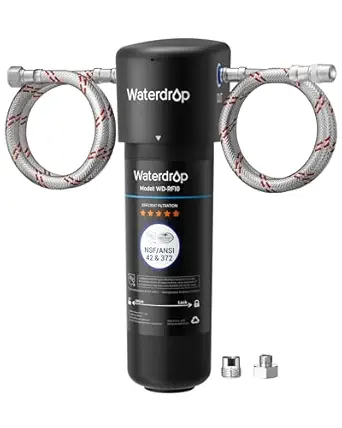 |
| Top Rated A top-rated pick with lots of positive feedback | iSpring RCC7AK-BN Reverse Osmosis System |  |
| Most Popular A crowd favorite that many people choose with confidence | Big Berkey 2.25-Gallon Water Filter |  |
| Best Seller A high-volume bestseller chosen again and again | DREO RO Water Filter 113 |  |
Bluevua ROPOT-UV Countertop RO

| Purification Method | Reverse Osmosis |
|---|---|
| Power Source | Corded Electric |
| Capacity | 1700 ml |
| Maximum Flow Rate | 0.26 liters per minute |
| Filter Life Cycle | 12 months |
The Bluevua ROPOT-UV is a countertop reverse osmosis system designed to deliver near-bottled water without plumbing. You fill the unit, plug in the adapter and the 6-stage filtration sequence—including a 0.0001 μm RO membrane, UV sterilization and a remineralization stage—reduces TDS and contaminants while restoring minerals for taste. It includes a built-in TDS meter and an LCD filter-life display, so you can monitor water quality and know when to replace cartridges. The high-borosilicate glass carafe avoids plastic contact and makes the unit feel premium. It runs on corded power with a power-saving standby mode and claims a 2:1 pure-to-drain ratio to conserve water relative to typical RO waste. Expect straightforward daily use for drinking and cooking water, occasional filter changes (12 to 24 months depending on the element), and periodic cleaning; the unit is portable so it fits kitchens without countertop plumbing. The main compromises are the modest flow rate and the need for replacement filters and occasional maintenance, which is typical for RO systems of this class.
Best for: Buyers who want near-bottled, high-purity drinking water without installing under-sink plumbing and who value an easy-to-monitor, premium-feeling countertop system.
Less Ideal for: People who need high daily dispensing volume or very fast faucet-style flow for large households should consider a plumbed or higher-flow option instead.
- Comprehensive 6-stage filtration including RO membrane and UV for strong contaminant reduction
- Built-in TDS meter and LCD filter-life display for easy water-quality and maintenance monitoring
- High-borosilicate glass carafe avoids plastic contact and looks premium
- Portable countertop design requires no installation and runs from a standard outlet
- Claims improved water efficiency with a 2:1 pure-to-drain ratio and power-saving standby mode
- Maximum flow rate is relatively low at 0.26 L/min, so filling large containers takes time
- Unit requires periodic filter replacements and occasional cleaning to maintain performance
Verdict: If you want a high-end countertop RO that delivers bottled-quality water with UV protection and easy monitoring without plumbing, the Bluevua ROPOT-UV is a strong plug-and-play choice.
Waterdrop G3P800 RO System

| Purification Method | Reverse Osmosis |
|---|---|
| Flow Rate | 800 GPD |
| Filtration Stages | 10-stage |
| Pure to Drain Ratio | 3:1 |
| Certifications | NSF/ANSI 42,53,58,372 |
The Waterdrop G3P800 is a tankless under-sink reverse osmosis system built for high flow and frequent use. It uses a 10-stage filtration train including RO membrane, carbon block, and PP cotton to remove chlorine, heavy metals, PFAS, fluoride and other contaminants, and its NSF/ANSI 42, 53, 58 and 372 certifications back up those claims. The unit is tankless so it fits neatly under most sinks and provides continuous output at a rated 800 gallons per day, producing a cup of filtered water in around five seconds and a 3:1 pure-to-drain ratio. A smart LED faucet reports TDS and water quality at a glance, and the front-pull filter design makes replacements quick without repositioning the chassis. Expect steady high flow ideal for large households or light commercial use, but plan for a corded power connection and routine filter changes per the manufacturer schedule. Installation requires drilling for the faucet and drain connection and may be best handled by someone comfortable with under-sink plumbing.
Best for: Buyers who prioritize raw output and verified contaminant reduction for a busy household or light commercial setting and want a compact, tankless system with live water-quality feedback.
Less Ideal for: People seeking a completely passive, non-powered filter or those who cannot accommodate drilling a faucet hole or prefer a simple pitcher-style solution.
- Very high flow capacity (800 GPD) suitable for large households or frequent dispensing
- 10-stage filtration with RO membrane plus carbon and PP prefilter for broad contaminant reduction
- NSF/ANSI 42, 53, 58 and 372 certifications for verified performance and lead-free materials
- Tankless design saves under-sink space and provides on-demand water without waiting
- Smart LED faucet displays TDS and basic water-quality info and simplifies monitoring
- Requires a corded power connection so countertop placement and power access matter
- Installation needs drilling and some plumbing skill for faucet and drain hookup
Verdict: If you need high-throughput, certified RO performance in a compact, tankless under-sink system with real-time TDS feedback, the G3P800 delivers.
APEC Water ROES-PH75

| Filtration stages | 6-Stage |
|---|---|
| Daily output | 75 GPD |
| Purification method | Reverse Osmosis |
| Operating pressure range | 40-85 psi |
| Supported TDS maximum | 2000 ppm |
The APEC Water ROES-PH75 is a 6-stage under-sink reverse osmosis system designed to deliver high-capacity purified drinking water and mild alkalinity enhancement. It installs under the sink and uses water pressure to push tap water through prefilters, an RO membrane, and a mineral pH stage that adds calcium for improved taste. The system is WQA certified and rated to reduce a broad list of contaminants including chlorine, VOCs, fluoride, arsenic, lead, and other dissolved solids up to 99%. With a 75 gallons-per-day output and included storage tank and faucet, it supplies steady filtered water for a household without requiring electrical power. Maintenance involves replacing the prefilters and membrane on the manufacturer schedule, and performance depends on feed pressure and incoming water quality. The unit is engineered with polypropylene components and comes with the necessary tubing, adapters, and wrenches, but it requires basic under-sink plumbing work to install and periodic filter purchases to sustain quality.
Best for: Buyers who want a high-capacity, long-term under-sink RO system that prioritizes comprehensive contaminant removal and better-tasting, slightly alkaline drinking water for daily household use.
Less Ideal for: People who need a portable or no-install countertop solution or those unwilling to perform periodic filter maintenance and replacements.
- High 75 GPD output suitable for most households
- Six-stage filtration with RO membrane removes a wide range of contaminants
- Includes storage tank, dedicated faucet, and installation hardware
- WQA certification and added calcium stage for improved taste and alkalinity
- Requires under-sink installation and basic plumbing skills
- Filter and membrane replacements are periodic ongoing costs
Verdict: Choose the ROES-PH75 if you want a high-capacity, certified under-sink RO system that delivers broad contaminant removal plus mineralized, better-tasting water.
Waterdrop WD-10UA Under-Sink Filter

| Purification Method | Activated Carbon |
|---|---|
| Maximum Flow Rate | 2.5 gpm |
| Filter Life Cycle | 1 years |
| Supported Water TDS Level Maximum (PPM) | 700 |
| Other Special Features | NSF/ANSI 42&372; PFAS and lead reduction |
The Waterdrop WD-10UA is an under-sink activated-carbon filtration system designed for municipal cold tap water use. It installs directly to standard 3/8" or 1/2" cold-water feeds using push-to-connect fittings and a twist-and-lock cartridge, so setup is straightforward and replacement cartridges are quick to swap. The filter targets chlorine, lead, PFAS/PFOA/PFOS, and common taste and odor issues while retaining beneficial dissolved minerals, making it suitable for drinking, cooking, and appliance feeds. Waterdrop rates the cartridge for about 12 months of service and reports a tested flow rate that keeps water delivery practical for kitchen use. Practical strengths include compact packaging that fits under most sinks and compatibility with RVs and offices. Limitations are that it is intended only for cold, municipal water—it is not suitable for well water or hot lines—and its purification relies on activated carbon, so it will not provide ultra-fine particle or microbial removal that some higher-end multi-stage systems offer.
Best for: Buyers who want an affordable, easy-to-install under-sink system that improves tap water taste and reduces common contaminants without complex plumbing changes.
Less Ideal for: Homes on well water, users needing microbial or ultrafiltration-level protection, or buyers seeking a multi-stage, whole-house purification solution.
- NSF/ANSI 42 certified for chlorine and taste reduction
- Quick twist-and-lock cartridge and push-to-connect fittings for fast installation and replacement
- Compact under-sink footprint that fits standard cabinetry and works in RVs or offices
- Rated for up to 12 months of service on municipal cold water
- Designed only for cold, municipal water so not suitable for well or hot water applications
- Uses activated carbon filtration only, which does not remove bacteria or the finest particulates
Verdict: Choose the WD-10UA if you want a budget-friendly, compact under-sink filter that reliably improves taste and reduces chlorine, lead, and PFAS on municipal cold water.
iSpring RCC7AK-BN Reverse Osmosis System

| Purification Method | Reverse Osmosis, Alkaline, Activated Carbon, Carbon block |
|---|---|
| Power Source | No Power Needed |
| Maximum Flow Rate | 284 liters_per_day |
| Supported Water TDS Level Maximum (PPM) | 750 |
| Filter Life Cycle | 6 months |
The iSpring RCC7AK-BN is an under-sink 6-stage reverse osmosis system that removes a wide range of contaminants and adds minerals back for a balanced pH. It is typically installed under the kitchen sink and feeds a dedicated brushed-nickel faucet and optionally a fridge ice maker; push-to-connect fittings and color-coded tubing make it friendly to DIY installers and iSpring provides videos and support. Notable features include an NSF/ANSI 58 certified full system, a transparent first-stage housing for easy visual inspection, and a patent-pending alkaline stage that restores minerals and raises pH. Because it is mechanical and requires no electricity, it works reliably during power outages and has a 75 gallon per day rated output with a 3/8 or 1/2 convertible feed adapter for flexible plumbing hookups. Important limitations are the need for periodic filter replacements on a 6-month cycle for some stages and the usual RO wastewater ratio and tank refill delay when drawing larger volumes at once.
Best for: Buyers who prioritize consistent, tested contaminant removal and want a durable, serviceable under-sink system that restores minerals for better-tasting water and long-term reliability.
Less Ideal for: People who need instantaneous large-volume dispensing without a storage tank or who prefer zero-waste filtration methods should consider alternative technologies.
- Full-system NSF/ANSI 58 certification for validated contaminant reduction
- Six-stage filtration including RO membrane plus alkaline remineralization
- Transparent sediment housing for easy visual checks
- No electricity required so it functions during outages
- Convertible feed water adapter compatible with common plumbing fittings
- Requires routine filter and membrane replacements on a recommended schedule
- Typical RO systems produce wastewater and have slower tank refill rates
Verdict: Choose the RCC7AK-BN when you want a proven, NSF-certified under-sink RO system that delivers reliably clean, mineral-balanced drinking water without needing electricity.
Big Berkey 2.25-Gallon Water Filter

| Capacity | 2.25 gallons |
|---|---|
| Purification Method | Black Berkey proprietary filter media |
| Filter Elements Included | 2 Black Berkey Elements |
| Chamber Construction | AISI 304 Stainless Steel |
| Maximum Flow Rate | 0.03 gpm |
The Big Berkey 2.25-gallon system is a gravity-fed countertop purifier built from polished AISI 304 stainless steel and designed to deliver drinking water without power or installation. You fill the top chamber and water passes through two Black Berkey BB9-2 elements into the lower chamber, then dispense from the included spigot; the pair of original Black Berkey elements are independently tested to reduce over 200 common contaminants and are rated to treat about 6,000 gallons before replacement is recommended. Its compact footprint and 2.25-gallon capacity make it practical for small households or offices, and expansion to four elements is possible if you need faster flow. The unit's low maximum flow rate means filling large containers is slow, and it does not remove certain chemical-specific contaminants unless you add optional PF-2 elements for fluoride and arsenic reduction. Maintenance is straightforward but requires periodic priming and eventual filter replacement based on water quality. For buyers focused on durable, electricity-free filtration and long-lived filter life, the Big Berkey is a proven option; if you need rapid delivery or certified removal of specific contaminants out of the box, plan for accessories or a different solution.
Best for: Buyers who prioritize proven contaminant reduction, durable build quality, and a low-maintenance, electricity-free countertop purifier backed by strong user trust and testing.
Less Ideal for: Users who need fast high-volume dispensing, certified out-of-the-box removal for fluoride/arsenic, or an under-sink plumbed system integrated with existing plumbing should consider other options.
- Gravity-fed design requires no electricity or plumbing for easy countertop use
- Authentic Black Berkey BB9-2 elements are third-party tested to reduce 200+ contaminants
- Durable AISI 304 stainless steel construction that resists corrosion and looks finished on a counter
- Expandable filter capacity (can add up to 4 elements) for higher throughput or tougher source water
- Long-lived filter life—each pair is rated up to ~6,000 gallons before recommended replacement
- Maximum flow rate is low, so dispensing and refilling large volumes can be slow
- Does not include specialized PF-2 fluoride/arsenic elements; those must be purchased separately if needed
Verdict: A durable, electricity-free countertop purifier with long-lived Black Berkey filters ideal for buyers who want proven contaminant reduction and low ongoing fuss.
DREO RO Water Filter 113

| Purification Method | Reverse Osmosis |
|---|---|
| Capacity | 5 liters |
| Other Special Features | Built In TDS Meter, Change Filter Indicator, Touch Control |
| Pure to Drain Rate | 3:1 |
The DREO RO Water Filter 113 is a plug-in countertop reverse osmosis system designed to give near-bottle-quality water without hard installation. It uses a 7-stage RO filter with a 3:1 pure-to-drain ratio and an integrated TDS meter so you can monitor raw and purified water in real time, while a change-filter indicator and twist-to-install cartridges simplify maintenance. The unit includes a 5 L reservoir and two autofill pitchers so one is ready to use while the other refills, and an auto-flush self-cleaning routine helps keep internal tubing fresh. Practical benefits include no-plumbing setup, straightforward filter replacement, and a compact footprint that fits on counters or small desks. Limitations to consider are the 3:1 drain ratio (better than older RO units but still wastes water compared with non-RO filters), the need to replace filters after the rated capacity, and the countertop footprint that still occupies some space compared with small pitchers or under-sink systems.
Best for: Buyers who prioritize reliable, high-quality drinking water with clear performance indicators and prefer a no-plumbing, easy-to-maintain countertop solution.
Less Ideal for: People who need the most water-efficient or lowest-footprint solution or those who prefer an under-sink installation hidden from view.
- 7-stage reverse osmosis filtration tested to remove a wide range of contaminants
- Built-in real-time TDS meter and filter-life indicator for easy monitoring
- Auto-fill dual-pitcher system keeps filtered water available while refilling
- Self-cleaning auto-flush reduces biofilm buildup and maintenance effort
- Produces wastewater at a 3:1 pure-to-drain ratio, which uses more water than non-RO options
- Requires periodic filter replacement after the rated capacity is reached
Verdict: Choose this DREO countertop RO if you want a high‑performance, install‑free purifier with real‑time TDS monitoring and convenient autofill pitchers for consistently great drinking water.
Choosing the Right High-End Water Filter: Key Factors to Consider
Contaminant Removal Spectrum
Different high-end water filters target different contaminants. Some focus on broad chemical and heavy metal reduction while others are optimized for microbiological safety or specific compounds such as lead, chlorine byproducts, PFAS, or volatile organic compounds.
Understanding which contaminants matter where you live or in your water source is essential. Ask for independent test reports or certification data to confirm a filter's removal rates for the contaminants you care about. A broader removal spectrum usually means more media stages or specialty cartridges, which can increase complexity and cost.
Filter Lifespan And Replacement Cadence
High-end systems often justify their price with longer-lasting cartridges, but lifespan varies widely with water quality and household usage. Lifespan is typically rated in gallons or months; both figures matter because heavy sediment or high contaminant loads can reduce service life.
Consider the real-world replacement cadence and availability of replacement cartridges. Longer intervals between changes reduce annual maintenance time and expense, but check whether older cartridges are still effective at the end of their rated life and how easy it is to monitor remaining capacity.
Flow Rate And Household Compatibility
A high-end filter must deliver usable flow at typical household pressures, especially if it serves multiple fixtures or a whole house. Systems with low flow rates can create frustration or require additional storage tanks, while undersized units may struggle during simultaneous hot-water use or irrigation.
Match system flow specifications to your household peak demand. Where a system supports multiple outlets, look for stated peak and continuous flow rates, and consider whether the design will keep pressure steady during routine use.
Installation Complexity And Maintenance Requirements
Some premium filters are designed for straightforward DIY installation, while others require professional plumbing work. Ease of access for cartridge changes, the availability of quick-change mechanisms, and clear maintenance instructions all reduce the ongoing hassle of ownership.
Evaluate whether you are comfortable with the expected maintenance tasks such as cartridge swaps, periodic sanitizing, or flushing. Systems that lock cartridges behind tool-required housings or require specialized service can increase lifetime costs and downtime.
Materials, Build Quality, And Corrosion Resistance
High-end units should use durable materials that resist corrosion and chemical degradation, since they operate in constant contact with water. Stainless steel, high-grade polymers, and reliable seals extend service life and reduce the chance of leaks.
Inspect the quality of inlet and outlet fittings, mounting hardware, and the presence of replaceable seals. Better materials often raise initial cost but lower the risk of premature failure and the need for emergency repairs.
Certification And Test Data Transparency
Look for systems that publish third-party test results or certifications for specific contaminant reductions. Certifications from recognized labs or standards bodies provide measurable evidence that the system performs as claimed.
Transparency around test conditions, challenge concentrations, and flow rates helps you compare systems objectively. Without published data, performance claims are harder to verify and may not reflect real-world conditions.
Types Of High-End Filtration Technologies
High-end filters use a mix of technologies to achieve broad contaminant removal. Common approaches include multi-stage activated carbon for organics and taste control, reverse osmosis for dissolved solids, ion exchange for hardness or specific ions, and specialized media for PFAS or heavy metals. Some systems combine these methods in staged arrangements to balance contaminant removal with flow and filter life.
- Activated carbon: removes chlorine, taste, and many organics
- Reverse osmosis: reduces dissolved solids and many inorganic contaminants
- Ion exchange: targets hardness and specific charged ions
- Specialty media: designed for PFAS, lead, or manganese removal
Where To Install A High-End System In Your Home
Placement depends on intended use. Point-of-use units mounted under a kitchen sink focus on drinking and cooking water and are compact. Countertop high-end units prioritize convenience but may have lower capacity. Whole-house high-end systems treat all water entering the home to protect appliances and plumbing but require larger footprint and plumbing integration.
- Point-of-use: best for drinking and cooking water
- Whole-house: protects appliances and delivers uniform quality to all taps
- Dedicated faucet: provides a visible, separate tap for treated water
Monitoring Performance And When To Replace Cartridges
Good systems offer clear indicators for remaining capacity, whether meter-based, time-based, or pressure-differential alerts. Regularly monitoring flow and taste is also practical: a steady drop in flow or a return of off-tastes are signs a cartridge needs replacement. For systems without meters, track usage against the rated gallon life and plan replacements proactively to avoid performance lapses.
- Use flow or time tracking to estimate life
- Watch for taste or odor changes
- Pressure drops can indicate clogging or end-of-life
Maintenance Tips To Extend System Life
Follow recommended flushing and sanitizing schedules to prevent biofilm accumulation in housings. Use only the specified replacement cartridges and seals from the system to maintain certified performance and leak resistance. Keep spare seals and a replacement cartridge on hand to minimize downtime when a scheduled change is due.
- Sanitize housings per manufacturer guidance
- Replace seals whenever you change cartridges
- Store spare parts in a dry, labeled container
Matching Filter Capacity To Household Usage
Estimate your household daily water use for drinking and cooking to pick a system with an appropriate rated capacity. If a filter supports multiple fixtures or is a whole-house model, consider peak simultaneous use and add headroom so the system does not reach end-of-life prematurely under heavy use. Choosing slightly higher capacity than current needs reduces the frequency of replacements and helps maintain consistent flow and contaminant removal over time. For variable usage patterns, favor systems with easy cartridge swaps and clear capacity indicators.
- Calculate average daily filtered water consumption
- Add buffer for guests or increased use
- Choose higher-capacity cartridges for lower replacement frequency
How We Chose the Best High-End Water Filter
We shortlisted systems that deliver durable, high-capacity filtration and reliable contaminant reduction while remaining practical for household use. Our selection filters favored products with independently verified contaminant removal data, long filter life ratings, and clear serviceability. We prioritized systems designed for steady flow at typical household pressures and those that minimize frequent maintenance. Criteria we emphasized include contaminant removal performance across common and emerging contaminants, filter lifespan and replacement cadence, system flow rate and pressure retention, installation and maintenance complexity, and build quality including corrosion-resistant components. We excluded underperforming budget units, novelty cartridges without test data, and systems that require frequent proprietary service visits. In short, the list favors high-end designs that balance lab-grade filtration with real-world usability, durability, and manageable upkeep so buyers can expect measurable water-quality improvements without excessive maintenance burdens.
Our full evaluation process is outlined in our review methodology.
FAQ
How do I know which contaminants my high-end filter should remove?
Start with a water quality report from your utility or a lab test of your tap water. The report identifies the most common contaminants in your supply. Choose systems with verified removal for those specific contaminants, and prioritize certifications or independent test results when possible.
Are high-end filters difficult to install?
Installation difficulty varies. Point-of-use units are often suitable for DIY with basic plumbing skills, while whole-house or integrated systems may need a plumber. Check the product's installation requirements and whether quick-change cartridges are available to simplify maintenance.
How often do high-end filter cartridges need replacing?
Replacement frequency depends on water quality and use. Many high-end cartridges are rated for several thousand gallons or several months of typical household use. Monitor flow, taste, and any built-in life indicators to determine the right replacement schedule for your situation.
Can a high-end filter remove PFAS and other emerging contaminants?
Some high-end systems use specialized media or combination approaches that reduce PFAS and similar emerging contaminants. Look for independent test data that specifically measures removal of the contaminants you care about, because not all systems are effective for every compound.
Will a high-end filter affect water pressure in my home?
Any inline filtration can affect pressure to some degree, especially as cartridges load with particles. High-end systems designed for household use specify expected flow and pressure retention. If pressure is a concern, choose a system with higher flow ratings or add a booster or storage tank where appropriate.
Final Verdict
Choosing the right high-end water filter means balancing contaminant removal, usable flow, and manageable maintenance. Prioritize verified removal for the specific contaminants in your water, adequate capacity for household demand, and durable materials that resist leaks and corrosion. A well-chosen system will deliver noticeably better-tasting and safer water with fewer service interruptions. Focus on long filter life, clear monitoring, and a maintenance pattern you can realistically support to make the most of a high-end investment.