
Note: This article contains affiliate links. If you click on these links and make a purchase, we may earn a small commission at no extra cost to you. This helps support our research and content. Read our full affiliate disclosure here.
If you work with leather regularly, whether for saddlery, upholstery, or small-batch leather goods, the right industrial sewing machine makes the difference between neat, lasting seams and frustrating rework. Leather demands higher stitch force, specialized needles, and consistent feeding to avoid skipped stitches or surface damage. This guide shortlists the top industrial sewing machines for leather, focusing on models built to handle thick hides and extended workshop use. We evaluated machines for stitch strength, motor reliability, material feeding, maintenance needs, and operator ergonomics. Read on for a practical breakdown of what matters and which features to prioritize.
Top Picks at a Glance
| Best Quality Built to a higher standard if you want something more solid | JUKI DNU-1541S Industrial Sewing Machine |  |
| Best Value The sweet spot between price and what you get | Consew 206RB-5 Walking Foot |  |
| Best Budget The cheapest option that still gets the job done reliably | Guoydir Bag Sewing Machine GK9 |  |
| Top Rated A top-rated pick with lots of positive feedback | Yamata FY810 Post Bed Sewing Machine |  |
| Best Seller A high-volume bestseller chosen again and again | VEVOR Lockstitch Sewing Machine JK9808 |  |
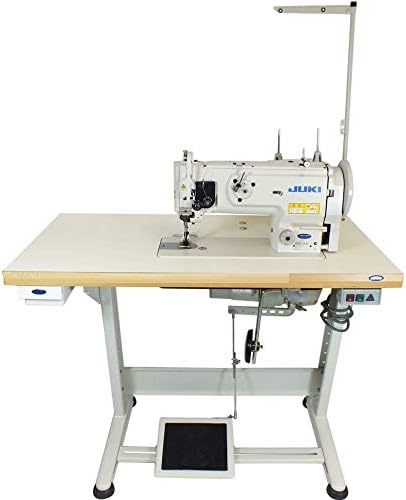
JUKI DNU-1541S Industrial Sewing Machine
| Power Source | Corded Electric |
|---|---|
| Input Voltage | 110 volts_of_alternating_current |
| Speed, Max (S.P.M.) | 2500 |
The JUKI DNU-1541S is a workhorse industrial lockstitch machine designed for sewing leather, vinyl, upholstery and canvas. It uses a unison-feed (walking foot/needle feed) to move thick or multilayered materials evenly and a large horizontal double-capacity hook to handle big threads and long runs without frequent bobbin changes. The included electronic DC servo motor provides quiet, efficient operation and adjustable speed up to 2500 S.P.M., while the machine head comes with practical accessories such as a bobbin winder, knee lifter, thread stand and oil pan. Typical use cases include auto and furniture upholstery, bags and heavy outdoor gear where durable, consistent stitches are required. Expect robust metal construction and factory-style features targeted at production or serious shop use, though the unit is heavy and may require professional setup and a dedicated table cutout. Also note assembly and professional installation are recommended for optimal alignment and maintenance.
Best for: Buyers who need a production-capable industrial machine for heavy materials and prioritize stitch consistency and high throughput in upholstery, leather goods, or canvas work.
Less Ideal for: Hobbyists or occasional home sewers looking for a lightweight, portable or entry-level machine should consider simpler consumer models instead.
- Unison-feed mechanism for smooth handling of thick and layered materials
- High maximum stitch speed (up to 2500 S.P.M.) for production work
- Double-capacity horizontal hook reduces bobbin changes during long runs
- Includes servo motor and common shop accessories for ready-to-run installation
- Built for heavy materials such as leather, vinyl, canvas and upholstery
- Heavy, bulky unit that needs a proper industrial table and likely professional installation
- Not a consumer-level, plug-and-play machine so setup and maintenance require experience
Verdict: Choose the JUKI DNU-1541S when you need a durable, high-speed industrial machine that reliably handles leather and other heavy materials for production sewing.
Consew 206RB-5 Walking Foot

| Brand Name | CONSEW |
|---|---|
| Model Number | 206RB-5 |
| Power Source | Corded Electric |
| Material | Leather |
The Consew 206RB-5 is an industrial walking-foot machine built to handle leather, upholstery, canvas, and similar heavy materials; it ships as a complete package with the machine head, servo motor, tabletop, stand, and necessary hardware. The compound feed (walking foot) and adjustable walking motion height give very even material feeding for multi-layer and slippery materials, while a long maximum stitch length and high presser-foot lift make it easier to work over thick seams and bulky goods. The included servo motor provides quieter, more controllable stitching than older clutch motors, and the large bobbin and locking stitch length regulator help keep production consistent. Buyers should expect a workshop installation step since table assembly is required and the unit is a substantial, permanently sited machine. This model focuses on durability and reliable feeding rather than portable convenience, so it performs best in upholstery, marine, automotive leatherwork, and canvas fabrication environments.
Best for: Shop owners and serious hobbyists who need a durable, production-capable machine for leather, upholstery, and canvas work and prioritize reliable feeding and long-term uptime.
Less Ideal for: If you need a lightweight, portable machine for occasional domestic projects or frequent reconfiguration of your workspace, choose a smaller portable or tabletop model instead.
- Walking foot compound feed ensures even feeding of multiple thick layers
- High presser-foot lift and long stitch length accommodate bulky seams
- Comes as a complete kit with table, stand, and servo motor
- Large bobbin and locking stitch length regulator support consistent production
- Heavy and permanently sited, not suitable for portable use
- Table assembly required before first use
Verdict: Buy the Consew 206RB-5 if you need a factory-quality, walking-foot industrial machine that reliably handles leather and heavy upholstery work in a shop setting.
Guoydir Bag Sewing Machine GK9

| Power Source | ac |
|---|---|
| Input Voltage | 110 volts |
| Motor Power | 190W |
| Stitch Speed | 1800–2000 stitches/min |
This handheld Guoydir GK9 is a purpose-built bag sewing machine for on-site industrial tasks like sealing burlap, sandbags, kraft paper and leather sacks. It plugs into 110V power and uses a 190W motor that runs up to about 2,000 stitches per minute with 230# needles and single-line chain stitching, so you get very fast, consistent seams for repetitive sealing work. The unit ships ready to run with a test thread and extra polyester thread rolls and includes spare parts, which helps reduce downtime in a warehouse or farm setting. Its metal body and 12,000 r/min motor make it durable for frequent use, and the handheld design keeps the tool portable for mobile operations. Limits are that this is not a household sewing machine replacement and it handles straight chain stitches only, so it will not perform decorative or multi-stitch garment work. For buyers needing a rugged, quick bag closer for industrial leather or sack sealing, this is a practical, ready-to-use option.
Best for: Buyers needing a budget-friendly, portable bag closer for frequent sealing of leather sacks, burlap, and shipping bags in warehouses, farms, or shipping operations.
Less Ideal for: People who want a multipurpose garment or home sewing machine or who need decorative, multi-stitch capabilities.
- High stitching speed up to 1,800–2,000 stitches per minute for fast sealing
- Built-in motor rated 190W and 12,000 r/min for industrial-level performance
- Ships ready to use with pre-installed thread, extra thread rolls, and spare parts
- Portable metal handheld design suited to on-site and mobile work
- Limited to single-line chain stitching so not suitable for garment or decorative sewing
- Requires 230# needles and specific thread, which may need separate sourcing
Verdict: If you need a compact, ready-to-use industrial bag closer for leather and sack sealing on a budget, the Guoydir GK9 delivers fast, durable chain stitching in a portable package.
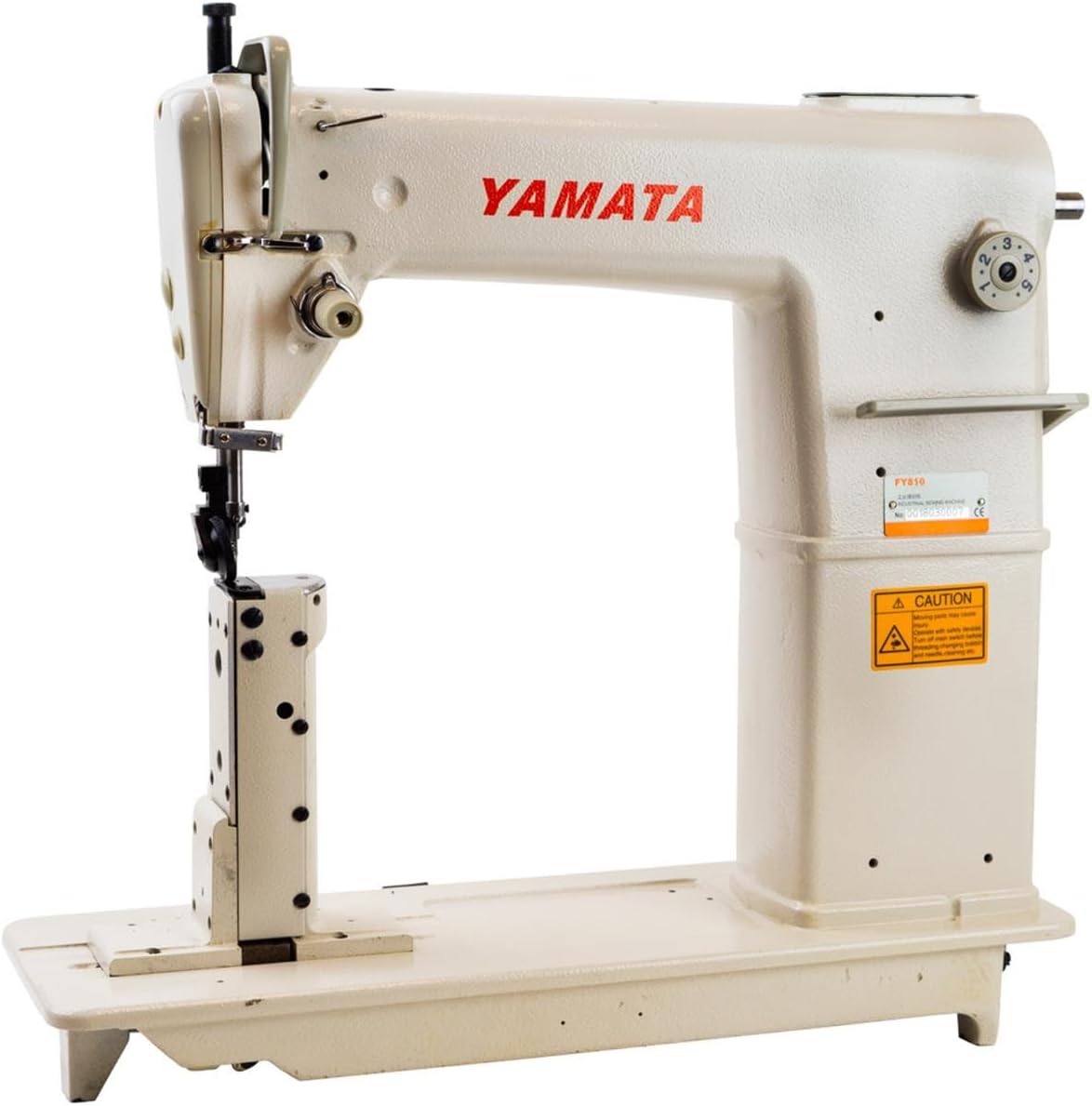
Yamata FY810 Post Bed Sewing Machine
| Power Source | Electric |
|---|---|
| Speed, Max (S.P.M.) | 3000 |
| Number of Needles | 1 |
| Stitch Length | 5 mm |
The Yamata FY810 is a drop-feed, single-needle post bed sewing machine built for stitching leather, vinyl, canvas, and other coated materials common in shoe, bag, and upholstery work. It ships as a knockdown package that includes a machine head, table top, plastic legs, drawer, servo motor, LED light, belt, and hardware, and it requires professional assembly. The machine offers a 3,000 S.P.M. top speed, reverse feed, a roller presser foot for turning tight curves, and a vertical axis hook with a 5 mm stitch length capacity, which makes it useful for detailed curved work and vamping on shoes. Practical benefits include the high speed for production tasks, a post bed that improves access for three-dimensional pieces, and a servo motor that gives consistent, controllable stitching. Expect a learning curve during setup and the need for professional assembly and tuning; the included plastic legs and knockdown format mean additional installation time before it is shop-ready. For buyers who need a durable factory-style machine for heavy materials, the FY810 delivers robust, production-oriented capability.
Best for: Buyers who prioritize dependable, production-capable equipment for leatherwork and need a factory-style post bed machine for shoes, bags, and upholstery projects.
Less Ideal for: Hobbyists who want a ready-to-run home machine with minimal setup or users who need a lightweight portable sewing machine for casual repairs.
- Post bed design gives excellent access for sewing shoes, bags, and other three-dimensional pieces
- Up to 3,000 stitches per minute for high-production sewing
- Roller presser foot and drop feed allow turning tight curves and working with thick leather
- Includes servo motor and LED light for controllable speed and better visibility
- Ships knockdown and requires professional assembly and setup
- Plastic legs may be less durable than a heavy-duty metal stand for continuous industrial use
Verdict: A production-ready post bed machine that brings factory-style speed and control to leather and shoe sewing for reliability-focused workshops.
VEVOR Lockstitch Sewing Machine JK9808

| Power Source | ac |
|---|---|
| Material | Aluminum |
| Included Components | Industrial Sewing Machine Set, User Manual |
| Item Weight | 130.1 pounds |
The VEVOR JK9808 is a commercial lockstitch machine built to handle heavy materials like denim, canvas, and leather for workshop use. Driven by a 550W servo motor it claims up to 5,000 stitches per minute, and practical features include an LCD panel for speed and needle position, soft-start, one-touch reverse stitching, an adjustable knee lifter and presser-foot lift, and automatic lubrication for longer run times. The included table has an LED work light, widened surface, storage drawer, an oil window for maintenance checks, and adjustable height to fit common workstations. Noise is kept at or below about 80 dB, so it runs quieter than traditional belt-driven industrial machines. Important limitations are its heavy, bulky setup and the need for basic mechanical familiarity to perform maintenance and adjustments; the unit is aimed at a workshop rather than casual home sewing. For leather work it offers the power and presser-foot control needed for multiple layers, but expect to pair it with appropriate heavy needles and threads and to set up properly for thick seams.
Best for: Buyers who want a durable, production-capable industrial sewing machine for heavy materials and value precise electronic controls and a stable worktable in a workshop setting.
Less Ideal for: Casual sewists who need a portable or compact machine or buyers who prefer a plug-and-play domestic model without mechanical setup and maintenance.
- High-speed servo motor capable of up to 5,000 SPM for fast production
- Metal frame with automatic lubrication for durable, workshop-grade use
- LCD controls and soft-start allow precise adjustment of speed and needle position
- Widened table, LED light, and adjustable height improve handling of large or heavy workpieces
- Designed to sew through thick materials including multiple layers of denim and leather
- Large and heavy setup intended for a dedicated workspace rather than occasional home use
- Requires some mechanical knowledge for maintenance, tuning, and use with heavy leather projects
Verdict: Choose the VEVOR JK9808 when you need a robust, high-speed industrial lockstitch machine built to handle leather and other heavy fabrics in a workshop environment.
Choosing the Right Industrial Sewing Machine for Leather: Key Factors to Consider
Needle Penetration Power
Leather is dense and resists needle entry more than woven or knitted textiles. Needle penetration power describes the machine's ability to drive a heavy needle and thick thread cleanly through one or more layers of hide. Machines with insufficient penetration will produce skipped stitches, broken needles, or ragged holes that weaken the seam.
When evaluating penetration power, look at specified needle sizes the machine accepts and any manufacturer data on penetration force or recommended maximum leather thickness. Consider whether the machine supports larger, tapered leather needles and heavier threads without requiring aftermarket modifications. Higher penetration power reduces the need for manual compression or pre-punching and improves throughput on thicker materials.
Motor Torque and Speed Consistency
Motor torque determines whether the machine can maintain stitch length and speed when the needle meets resistance from thick leather. A high-peak-power motor with stable torque at low RPMs is preferable for sewing heavy hides because it prevents the machine from bogging down or stalling under load.
Also consider how the motor performs across the speed range. Production work often requires sustained operation at moderate speeds rather than bursts at maximum RPM. Consistent torque and reliable cooling reduce thermal wear and downtime. If you anticipate long sewing sessions, prioritize machines designed for continuous-duty service rather than intermittent hobby use.
Material Feeding System and Presser Foot Design
Effective feeding prevents slippage, marking, or uneven stitches on leather. Look for walking foot, compound feed, or specially shaped presser feet that distribute pressure evenly and advance both layers in sync. Feed dog height, placement, and adjustability affect how well the machine handles thick or slick leathers.
Presser foot pressure should be adjustable and robust enough to handle stacked layers without crushing the leather. Some machines offer interchangeable feet or an alternative walking foot accessory for patchwork and topstitching. The right feeding system reduces the need for clamps or jigs and improves stitch consistency on seams, edges, and curved sections.
Thread and Needle Compatibility
Leatherwork commonly uses heavier threads and specialized needles. Confirm the maximum thread weight the machine's tension and take-up system can handle, and that the needle bar and throat plate accept larger-diameter needles and allow proper clearance. Tension assemblies designed for fine threads may struggle with heavier waxed or bonded threads unless they are adjustable for higher tension ranges.
Also consider bobbin capacity and shuttle type because heavy thread can consume bobbin wind quickly and affect production efficiency. A machine that accommodates larger bobbins or vertical-axis shuttles can reduce bobbin changes and maintain consistent stitch formation with heavier materials.
Serviceability and Parts Availability
Industrial machines see high use and occasional hard knocks. Easy access to replaceable parts, a clear maintenance routine, and a robust supply chain for needles, bobbins, and service components will keep a machine productive. Machines that require specialized tools or lengthy factory service for routine tasks increase downtime and total ownership cost.
Check whether common wear parts like feed dogs, presser feet, and timing belts are user-replaceable. Evaluate how straightforward routine maintenance is, including lubrication points and timing adjustments. Better serviceability translates to faster repairs and longer useful life in a workshop environment.
Operator Controls and Ergonomics
Comfortable ergonomics and intuitive controls matter when you sew leather for hours. Consider needle position controls, speed governors or variable-speed pedals, and easy-to-reach adjustments for presser foot pressure and stitch length. Good lighting at the work area and an open throat plate for visibility help with precise topstitching and alignment.
Ergonomic setup also includes table integration, knee lifter options, and the overall working height. Controls that allow micro-adjustments enable consistent results on complex pieces and reduce operator fatigue, improving consistency and throughput in production tasks.
Types of Industrial Feed Systems and When to Use Them
Feed systems determine how leather moves under the needle. The most common industrial options for leatherwork are walking foot feed, compound feed, and needle feed. Walking foot systems lift and advance the presser foot in sync with the feed dogs, which is helpful for topstitching and seams where you need even movement across layers.
Needle feed machines move the needle with the material and can reduce stretching on single-layer topstitching, while compound feed combines motions for very consistent layer-to-layer control. Choose a feed type based on the specific tasks you perform: walking foot for bulky seams and layered pieces, needle feed for delicate topstitching, and compound feed for high-consistency production work.
- Walking foot: Best for layered seams and bulky materials
- Needle feed: Good for reducing shift on single-layer topstitching
- Compound feed: Optimal for consistent production stitching across varied thicknesses
Needle and Thread Choices for Durable Leather Seams
Select needles designed for leather with a wedge or chisel point that parts the leather fibers instead of punching a round hole. Match needle size to leather thickness and the thread weight you plan to use. Heavier threads require larger needle eyes and appropriate tension settings to form clean, strong stitches.
Waxed and bonded threads are common for leather because they resist abrasion and wick less moisture. Ensure the machine's tension assembly and bobbin system can handle heavier thread gauges and that bobbin capacity fits your production rhythm to avoid frequent stops for reloading.
- Use wedge-point leather needles for clean penetration
- Match needle size and thread weight to leather thickness
- Consider larger bobbins or vertical shuttles for heavy threads
Setting Up Your Workstation for Leather Sewing
A stable table, proper lighting, and an adjustable machine height make a big difference when sewing leather. The workspace should allow you to manage heavy pieces and clamp or support them without bending or overstressing the machine. A dedicated table with integrated motor mount and a full-size working surface helps keep large hides flat.
Organize consumables like needles, bobbins, and spare presser feet within arm's reach. Consider a knee lifter or electronic control for the presser foot to free your hands during alignment. A small set of bench tools for pre-punching, edge finishing, and leather conditioning will speed workflow and improve stitch outcomes.
- Use a sturdy table with ample surface area
- Keep consumables and tools organized and accessible
- Add knee lifter or electronic presser control for hands-free operation
Maintenance Practices to Maximize Uptime
Regular cleaning and lubrication tailored to leatherwork will preserve machine performance. Leather dust and residue can accumulate in feed dogs and shuttle areas, so schedule daily brush-outs and periodic deeper cleanings. Use manufacturer-recommended lubricants and follow specified intervals for oiling moving parts.
Monitor wear items such as feed dogs, presser feet, and needle bars. Replace needles frequently when sewing abrasive or thick leather to avoid burrs and irregular stitches. Keep a small stock of critical parts to minimize downtime and train operators on basic timing and tension checks to catch issues before they interrupt production.
- Brush and clean feed areas daily
- Use recommended lubricants and follow oiling schedule
- Stock common wear parts and train operators on quick checks
Safety Considerations When Sewing Thick Leather
Sewing leather increases needle stress and the risk of breakage. Use proper guards and eye protection when working with heavy materials, and ensure the machine's needle guard and presser foot are correctly installed. Maintain a safe distance between hands and the needle path and use clamps or stoppers to hold large pieces rather than forcing them through the throat.
Check electrical systems and motor mounts regularly because continuous heavy-duty use can heat components. Incorporate regular breaks in production schedules to allow the motor to cool if the application involves long continuous runs at high torque. Proper training on handling thick hides and powering down the machine for maintenance reduces injury risk and equipment damage.
- Use needle guards and eye protection
- Secure large pieces with clamps instead of forcing them
- Monitor motor and electrical components during extended runs
How We Chose the Best Industrial Sewing Machine for Leather
We focused on the technical and practical criteria that determine success when sewing leather in a production or serious hobby setting. Key evaluation criteria included stitch force and penetration ability, which affects whether a machine can consistently pass needles through multiple leather layers and heavy thread. We assessed motor power and torque at sewing speeds to ensure machines maintain consistent stitch length under load. Material feeding and presser foot design were evaluated because reliable feeding prevents surface marking and skipped stitches on slick or stiff leather. Durability and serviceability were considered to estimate long-term uptime and ease of repairs. Operator ergonomics and control options were included for productivity and precision during repetitive work. We excluded light domestic machines and multi-use hobby units that lack the mechanical strength or service parts common to industrial equipment. Machines that required extensive aftermarket modification to handle leather were not considered. Our selection emphasizes out-of-the-box capability, parts availability, and clear specifications for motor torque, needle size range, and feed system suitability for leatherwork.
Our full evaluation process is outlined in our review methodology.
FAQ
Can a standard industrial sewing machine handle multiple layers of leather?
Often it can, but it depends on the machine's penetration power, needle size capacity, and feed system. Machines with walking foot or compound feed and higher torque motors are better suited for stacked layers. Verify the needle range and recommended maximum thickness in the specifications before attempting multi-layer seams.
What needle type should I use for topstitching leather?
Wedge or chisel-point leather needles are typically best because they slice the hide fibers rather than punching a round hole, which produces cleaner stitches. Choose needle sizes according to leather thickness and the thread weight you plan to use.
How often should I replace needles when sewing leather?
Needles should be replaced frequently, often after a few hours of heavy leather work, because thicker hides and abrasive finishes dull needles faster. Replace needles immediately if you notice skipped stitches, burrs, or visible wear.
Is a walking foot necessary for leatherwork?
A walking foot is highly useful for layered seams and thick materials because it moves the top layer in sync with the feed dogs. It is not strictly required for all leather tasks, but it greatly reduces material shift and improves stitch consistency on bulky seams.
What maintenance does an industrial leather sewing setup need?
Regular cleaning of feed dogs and shuttle areas, routine lubrication per manufacturer guidelines, and frequent inspection of needles and presser feet are essential. Keep a small inventory of wear parts and perform timing and tension checks to maintain consistent stitch quality.
Final Verdict
When choosing an industrial sewing machine for leather, prioritize needle penetration power, motor torque, and a feeding system suited to the tasks you perform. Thread and needle compatibility, along with serviceability and operator ergonomics, are practical considerations that determine long-term productivity. Balance the need for heavy-duty capability with maintenance requirements and workspace ergonomics. Focus on the features that match your typical leather thickness and production cadence to select a machine that will deliver reliable, professional seams for years.