
Note: This article contains affiliate links. If you click on these links and make a purchase, we may earn a small commission at no extra cost to you. This helps support our research and content. Read our full affiliate disclosure here.
If you work with thick fabrics, dense foam, or layered upholstery assemblies, the machine you pick makes the difference between a durable seam and frequent rework. An industrial sewing machine for upholstery is built to handle heavy threads, large needles, and constant use without overheating or skipping stitches. This guide presents seven shortlisted machines built for upholstery tasks, focusing on the real-world traits that matter for professionals and serious hobbyists. We evaluated machines for stitch strength, motor and feed power, serviceability, and duty-cycle reliability. Read on to see the factors we used to choose these options and the practical considerations that will help you match a machine to your workspace and workload.
Top Picks at a Glance
| Best Overall The best all-around choice for most situations | CONSEW P1206RB Walking Foot |  |
| Best Quality Built to a higher standard if you want something more solid | JUKI DNU-1541S Industrial Sewing Machine |  |
| Best Value The sweet spot between price and what you get | Yamata FY810 Post Bed Sewing Machine |  |
| Best Budget The cheapest option that still gets the job done reliably | Gbonklong Industrial Sewing Machine |  |
| Top Rated A top-rated pick with lots of positive feedback | JUKI TL-2010Q Sewing Machine |  |
| Most Popular A crowd favorite that many people choose with confidence | VEVOR Industrial Lockstitch JK9808 |  |
| Best Seller A high-volume bestseller chosen again and again | VEVOR Industrial Lockstitch JK9808T |  |
CONSEW P1206RB Walking Foot

| Power Source | AC |
|---|---|
| Material | Alloy Steel |
| Needle | 135 x 17 |
| Stitch Length, Max | 3.6 s.p.i. (7 mm) |
The CONSEW P1206RB is a purpose-built industrial lockstitch machine for upholstery, leather, marine canvas and other heavy materials. It pairs a walking foot and needle feed with a robust alloy-steel build and an oil pump lubrication system, which keeps long production runs running smoothly and helps feed thick, layered fabrics evenly. Typical use is on a dedicated table with the drop feed engaged for heavy panels or with the walking foot for multi-layer seams; the machine supports adjustable upper thread tension, a side-loaded bobbin and an adjustable stitch regulator for repeatable results. Practical benefits include a high recommended operating speed (up to 3000 S.P.M. depending on material), generous presser foot lift for bulky goods and a large horizontal-axis hook for reliable stitch formation. The unit ships unassembled in multiple boxes and is a workshop-grade installation rather than a plug-and-play home appliance, so setup and space are important considerations. It is well suited for upholstery shops and serious hobbyists but requires a proper table and motor installation and routine maintenance to perform at its best.
Best for: Upholstery shops and serious DIYers who need a durable, production-capable lockstitch machine for heavy materials and consistent multi-layer feeding.
Less Ideal for: Casual sewists, crafters, or users wanting a lightweight, portable machine for occasional projects should consider smaller domestic machines instead.
- Walking foot and needle feed work together to feed multiple fabric layers evenly
- Built-in oil pump system provides continuous lubrication for long production runs
- High maximum speed (up to 3000 S.P.M. depending on material) for efficient sewing
- Adjustable stitch regulator and upper thread tension for precise stitch control
- Ships unassembled in three boxes and requires a dedicated table and installation
- Not intended for casual home sewing or portable use
Verdict: Choose the CONSEW P1206RB when you need a workshop-grade walking-foot lockstitch machine built for heavy upholstery and sustained production.
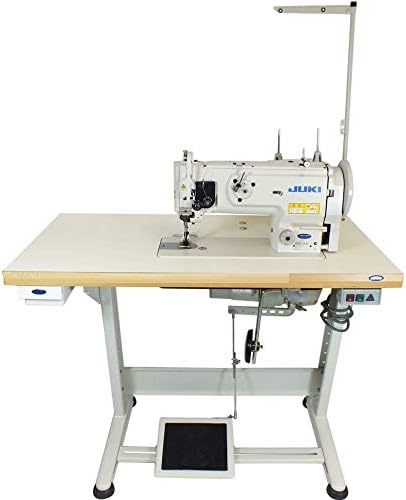
JUKI DNU-1541S Industrial Sewing Machine
| Power Source | Corded Electric |
|---|---|
| Input Voltage | 110 volts |
| Speed, Max (S.P.M.) | 2500 |
The JUKI DNU-1541S is a purpose-built industrial lockstitch machine designed for upholstery and other heavy materials, delivered with a sewing table and a quiet DC servo motor. It uses a unison-feed walking foot and a double-capacity hook to handle leather, vinyl, canvas and layered upholstery with controlled material feeding and a maximum speed around 2,500 SPM. The machine includes practical accessories such as a bobbin winder, knee lifter, thread stand and lamp, and the horizontal large hook loads from the side for faster bobbin changes. The servo motor provides stepless speed control and energy-saving operation compared with clutch motors, making it easier to start and stop during detailed work. Expect a robust metal build suitable for continuous workshop use, though the unit is heavy and professional assembly or setup may be required for optimal tuning. This is a workhorse suited to production or advanced hobby upholstery where reliable feeding, high stitch length and durable components matter most.
Best for: Someone needing a durable, production-capable machine for upholstery, leatherwork, or heavy fabric projects who prioritizes reliable feeding and long-run sewing performance.
Less Ideal for: Casual sewers or occasional hobbyists who need a lightweight, portable machine with simple setup and minimal maintenance.
- Unison-feed walking foot for consistent feeding of heavy and layered materials
- Double-capacity hook reduces bobbin changes and supports long runs
- Included servo motor offers quiet, energy-saving stepless speed control
- Comes with table and practical accessories like knee lifter and bobbin winder
- Designed to handle leather, vinyl, canvas and upholstery fabrics
- Very heavy and may require professional assembly or shop installation
- No built-in vacuum or advanced automation features for specialized production lines
Verdict: Buy this JUKI if you need a rugged, production-ready machine that reliably feeds and stitches upholstery and other heavy materials.
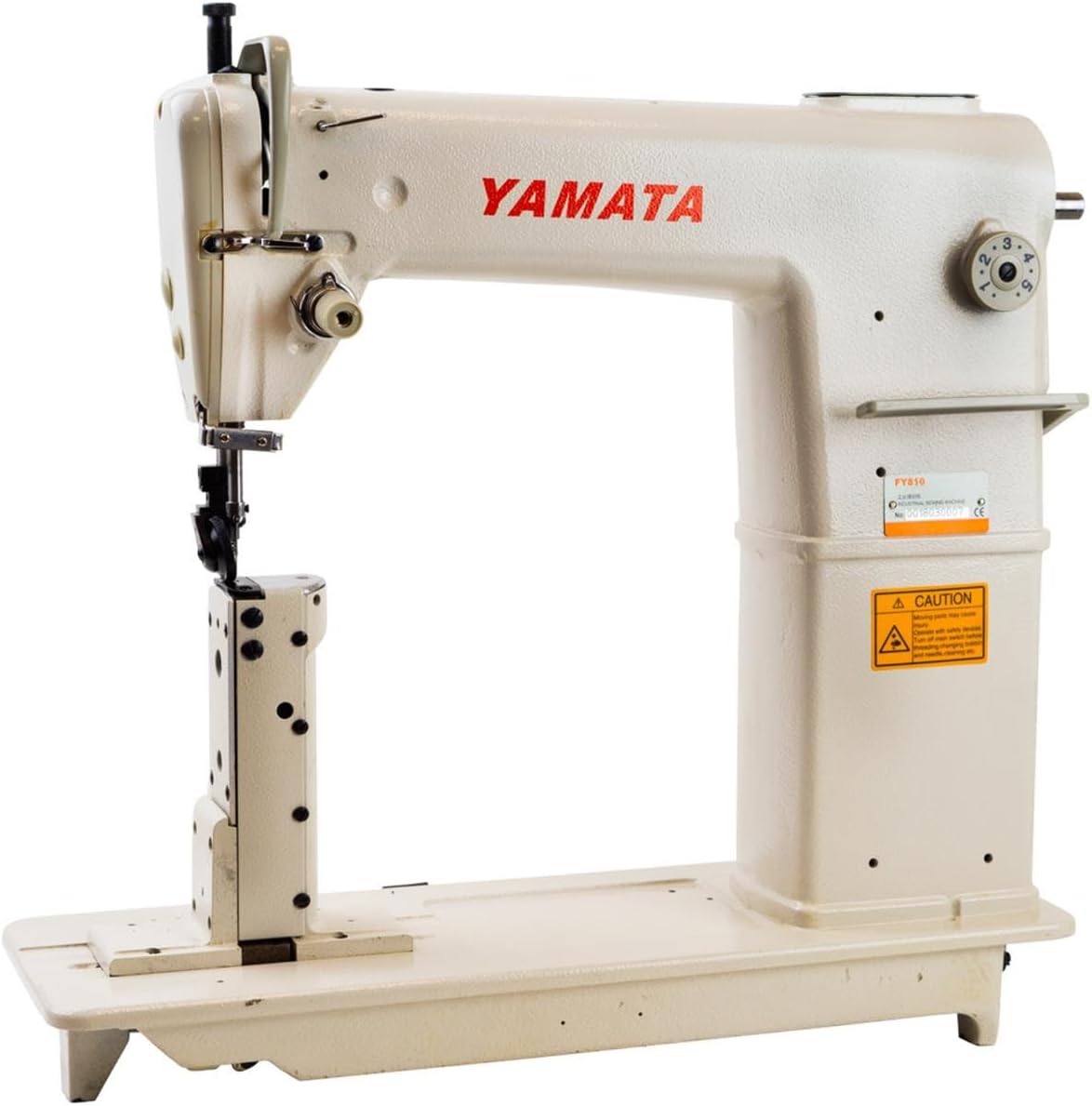
Yamata FY810 Post Bed Sewing Machine
| Power Source | Electric |
|---|---|
| Speed, Max (S.P.M.) | 3000 |
| Number of Needles | 1 (Single) |
| Clearance Under Presser Foot | 15/64" (6mm) |
| Post Height | 7" (178mm) |
The Yamata FY810 is a drop-feed post bed industrial sewing machine built for detailed leather, shoe, and upholstery work. It ships as a complete knockdown package that includes the machine head, table top, plastic legs, servo motor, LED light, drawer and hardware, and is intended for professional assembly. The single-needle lockstitch head uses a vertical-axis hook and drop-feed mechanism to handle light through heavy-weight materials such as leather, vinyl, canvas and coated fabrics, with a top speed of about 3000 S.P.M. Notable features for upholstery use are the post-bed configuration for shaping around work, a roller presser foot for tight curves, a 7-inch post height and 6mm clearance under the presser foot. Practical limitations are that professional assembly is required, the package lists plastic legs rather than heavy steel stands, and the work surface is compact so very large panels will need staging. For upholsterers who need a focused, high-speed post-bed machine for detailed seams on thick materials, the FY810 delivers industrial sewing capability in a ready-to-install kit.
Best for: Practical shops and independent upholsterers who prioritize a compact, high-speed post-bed machine that can tackle leather, canvas and coated materials for detailed or shaped sewing tasks.
Less Ideal for: Large-scale production shops that need wide flatbed work surfaces or buyers wanting a fully assembled, heavy-steel workstation out of the box.
- Post-bed design suited to sewing around three-dimensional shapes and shoe or bag components
- Includes servo motor and LED light for controllable speed and better visibility
- High maximum speed (3000 S.P.M.) for production pace
- Roller presser foot and drop-feed mechanism handle tight curves and heavy materials
- Work surface is relatively small for very large upholstery panels
- Package uses plastic legs rather than heavier steel support
Verdict: Choose the FY810 when you need a focused, high-speed post-bed machine for detailed upholstery and leatherwork in a compact, workshop-ready package.
Gbonklong Industrial Sewing Machine

| Power Source | AC |
|---|---|
| Input Voltage | 110 volts |
This Gbonklong industrial sewing machine is a bare sewing head built from iron and alloy steel for upholstery and vinyl work, intended for use with a separate motor and table. It offers adjustable stitch length, a reversing rod for backstitching, thread gripper adjustment, and a knee lifter for presser foot control, which together support continuous, production-style sewing. The listing notes a 550W pure copper motor spec and up to 3500 stitches per minute when paired with an appropriate motor, though the motor and table are excluded so buyers must arrange compatible parts and mounting. Practical benefits include a sturdy metal construction for abrasion resistance, relatively quiet operation claimed at 30 dB, and basic controls that let you tune stitch tightness and length for heavy fabrics. The main limitations are the need to supply a motor, drive system, and table, and some assembly and setup are required before use in a workshop environment. For budget-focused upholstery shops this machine delivers industrial-grade components at a low entry cost if you already have or can source the missing motor and table.
Best for: Budget-minded upholstery shops or hobbyists who can supply or already own a motor and mounting table and want a heavy-duty sewing head for vinyl, leather, and upholstery work.
Less Ideal for: Casual sewers or first-time buyers who expect a complete, ready-to-run sewing machine out of the box or who cannot install a separate motor and table.
- Sturdy iron and alloy-steel construction built for heavy fabrics
- Adjustable stitch length and thread gripper for tuning stitch quality
- Includes reversing rod and knee lifter for professional control
- Quiet operation claimed around 30 dB suitable for busy shops
- Sold without motor and table so additional purchases and setup are required
- Not a plug-and-play machine for buyers without workshop experience
Verdict: If you need a low-cost, rugged industrial sewing head for upholstery and can provide your own motor and table, this gives industrial construction and adjustable controls without a high upfront machine price.
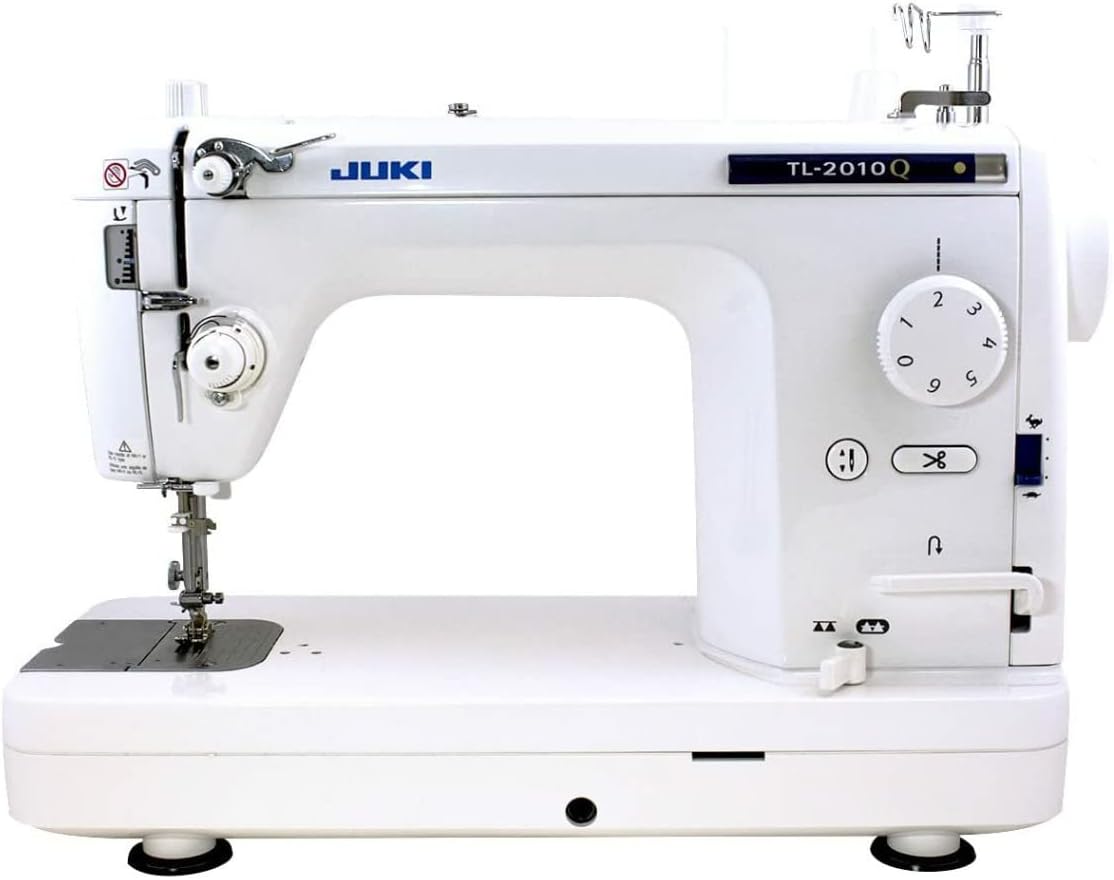
JUKI TL-2010Q Sewing Machine
| Brand Name | JUKI |
|---|---|
| Model Number | TL-2010Q |
| Material | Aluminum |
The JUKI TL-2010Q is a straight-stitch, high-speed semi-industrial machine built to handle upholstery, quilting, and other heavy fabrics. It delivers consistent, factory-quality straight stitches at production speeds and uses a robust aluminum body and heavy-duty motor to power through thick layers and dense seams. Typical use cases include sewing upholstery seams, topstitching leather or vinyl, and intensive quilting where stitch consistency and material feed matter most. Notable features are the industrial-style needle bar and presser foot system, a large working surface for bulky projects, and a simplified control layout that favors durability over frills. Practical benefits include reliable stitch formation, superior fabric feeding, and a build that tolerates frequent, long sewing sessions. Limitations are the single straight-stitch design—no zigzag or decorative stitches—and a steeper learning curve for users migrating from domestic multi-stitch machines. It is a workhorse choice when straight, strong seams and long-term reliability are the priority.
Best for: Buyers who prioritize long-term reliability and need a machine that produces strong, consistent straight seams for upholstery and heavy fabrics in a home or small-shop setting.
Less Ideal for: Anyone who needs a multi-function hobby machine with built-in decorative stitches, automated stitch patterns, or casual sewists who rarely work with heavy materials.
- Built like a semi-industrial machine with a sturdy aluminum body for heavy-duty use
- Consistent, factory-quality straight stitches suitable for upholstery and quilting
- Large working area that accommodates bulky projects and layers
- Robust motor and feed system designed for frequent, long sewing sessions
- Only offers straight-stitch functionality, no built-in zigzag or decorative stitches
- May require adjustment and practice for users used to domestic multi-stitch machines
Verdict: Choose the JUKI TL-2010Q when you need a reliable, semi-industrial straight-stitch machine that consistently handles upholstery and heavy fabrics.
VEVOR Industrial Lockstitch JK9808

| Power | 550W servo motor |
|---|---|
| Max speed | 5000 SPM |
| Power source | AC |
| Suitable materials | Cotton, silk, denim, leather, canvas |
The VEVOR JK9808 is a metal‑framed industrial lockstitch machine supplied with a stand and workspace accessories for upholstery and other heavy sewing tasks. Driven by a 550W servo motor it claims up to 5000 stitches per minute and can handle as many as 10 layers of denim or similar thick materials, which makes it suitable for dense fabrics like canvas, leather, and upholstery foams. The machine includes an LCD panel to set speed, needle up/down, and soft start, plus a knee lifter, manual presser lift, LED work light, widened table and a storage drawer that ease long sessions. Auto lubrication and an oil window simplify maintenance and the unit is built for continuous shop use with relatively low noise. Expect a large, heavy package and a need for a dedicated workspace and basic setup knowledge; noise and vibration can still be noticeable under high load and it requires correct threading and occasional tuning to keep stitch quality consistent on thick layered seams.
Best for: Small shops or experienced hobbyists who need a rugged, production-oriented machine that can handle upholstery and other heavy fabrics without professional industrial service contracts.
Less Ideal for: Casual sewers, occasional hobbyists, or users with limited space or mechanical experience who prefer plug‑and‑play domestic machines.
- High-speed 5000 SPM capability for fast production work
- Servo motor with LCD controls for precise speed and needle position adjustments
- Sturdy metal frame, auto lubrication, and oil window for shop‑grade durability
- Accessories like knee lifter, LED light, widened table and storage drawer improve workflow
- Can sew through heavy materials including denim, leather, canvas and multiple layers
- Large and heavy unit requiring a dedicated workspace and setup
- High-speed operation and heavy‑material sewing may need user tuning to maintain consistent stitch quality
Verdict: Buy this if you need a shop‑level, high‑speed lockstitch machine built to tackle upholstery and other heavy, multi‑layer fabrics.
VEVOR Industrial Lockstitch JK9808T

| Power Source | ac |
|---|---|
| Material | Aluminum |
| Included Components | Industrial Sewing Machine Set, User Manual |
The VEVOR JK9808T is a heavy-duty lockstitch machine built for high-volume and upholstery-style tasks. Driven by a 550W servo motor it claims up to 5000 stitches per minute and can handle multiple layers of denim, leather, and canvas, so it can power through thick upholstery seams that portable machines struggle with. The metal frame, automatic lubrication, and LED work light support long sessions and easier maintenance, while the LCD lets you set sewing speed, needle up/down, and soft-start for finer control. Practical extras like a knee lifter, manual presser lift, widened table, storage drawer, and automatic thread trimmer speed up workflow when stitching large panels. Noise is kept under 80 dB, but the unit is a full-sized industrial setup that needs a stable work area and basic mechanical familiarity for adjustments and oiling. For buyers prioritizing durability and consistent heavy-fabric performance, this is a capable, straightforward industrial machine; casual or occasional home sewers should expect a steeper setup and learning curve.
Best for: Buyers seeking a durable, production-capable machine for upholstery or other heavy-fabric work who prefer a factory-style, reliable solution for regular use.
Less Ideal for: People who only sew occasionally or need a compact, plug-and-play home machine should consider simpler domestic models instead.
- High-speed servo motor rated up to 5000 SPM for fast production
- Sturdy metal body with automatic lubrication designed for heavy fabrics
- LCD controls for speed and needle position provide precise adjustments
- Built-in knee lifter, widened table, and storage drawer improve workflow
- Large, heavy industrial unit that requires a dedicated table area and basic mechanical setup
- May be overpowered and more complex than necessary for casual or light home sewing
Verdict: Choose the VEVOR JK9808T when you need a rugged, production-focused lockstitch machine built to handle upholstery and other heavy fabrics reliably.
Choosing the Right Industrial Sewing Machine for Upholstery: Key Factors to Consider
Needle Penetration and Stitch Strength
Upholstery materials are thick and often layered, so needle penetration is central to a successful seam. Machines with strong needle penetration minimize skipped stitches and needle bending, producing consistent stitch formation through dense fabrics and foam. Consider the maximum needle size and the machine's throat plate clearance to ensure the needle and presser foot can handle the material stack you plan to sew.
Stitch strength also depends on compatible thread size and tension capacity. Machines that can accept heavy upholstery thread and provide robust tension control will produce seams that resist pullout and abrasion over time.
Feed Mechanism and Material Handling
A reliable feed system prevents material slippage, gathers, and uneven seams during long panels or repetitive parts. For upholstery work, look for walking foot or compound feed systems that move the top and bottom layers together, and consider machines with adjustable presser foot pressure to accommodate varying thicknesses.
Ease of guiding large pieces and the machine's throat depth matter for maneuvering sofas, cushions, and automotive panels. A larger throat and a stable feed will reduce the need for manual pulling and re-seaming, improving throughput and seam quality.
Motor Type and Duty Cycle
Industrial upholstery sewing often requires long runs and heavy use, so motor type and duty cycle are important. High-torque motors or gearbox drives deliver steady power at low speeds for penetration and for working with thick layers. Servo motors add energy efficiency and adjustable speed control, which is useful for detailed work and for reducing noise and heat.
Consider the rated duty cycle and cooling features. Machines built for continuous operation will have components and housings designed to dissipate heat and resist wear, lowering the risk of unexpected downtime during production runs.
Presser Foot Options and Accessories
The right presser foot makes handling specific upholstery tasks much easier. Specialized feet for piping, topstitching, zipper insertion, and edge binding help produce neater finishes and speed up repetitive tasks. Check that the machine accepts standard presser foot attachments or has an available accessory ecosystem tailored to upholstery.
Adjustable presser foot pressure and interchangeable feed dogs expand the range of materials you can work with. Accessories that simplify bulk handling, like extended tables or clamps, can also improve safety and accuracy when sewing large components.
Serviceability and Parts Availability
Minimizing downtime is essential for production-oriented upholstery work. Machines that offer easy access to oiling points, straightforward belt or hook removal, and clear parts diagrams reduce service time. Shop for models with commonly available consumables such as needles, bobbins, and timing components to keep maintenance predictable.
Also consider the availability of local technical support or repair centers. A robust service network shortens repair lead times and often means technicians are familiar with the particular quirks of heavy-duty sewing machines.
Stitch Adjustability and Tension Control
Upholstery projects often call for different stitch lengths, thread tensions, and topstitch patterns. Machines with precise stitch-length dials, easy-to-set tension assemblies, and clear markings let you repeat settings across multiple parts. Consistent tension and stitch length help maintain clean appearance and seam durability, especially when working with visible topstitching or decorative seams.
Look for machines that allow quick, repeatable adjustments so you can switch tasks without lengthy recalibration between runs.
Table and Workspace Setup for Upholstery Machines
Proper table height, a sturdy frame, and the right work surface are essential when installing an industrial upholstery machine. Large panels and bulky cushions require a stable, flat surface that supports material weight without sagging. Consider a table with an integrated machine recess so the needle plate is flush with the work surface to reduce catching and facilitate smooth feeding.
Lighting and workspace layout also impact accuracy. Place task lighting over the needle area and leave ample surface space to support finished seams and long runs.
- Choose a table rated for the machine's weight and intended workload.
- Install a knee lift or foot lift if frequent presser-foot raising is required.
- Plan cord and motor placement to keep belts and electronics accessible for maintenance.
Thread, Needle, and Bobbin Choices for Durable Seams
Selecting the proper thread weight and needle type is a small step that has a big effect on seam longevity. For upholstery, use heavy-duty polyester or bonded nylon thread that resists abrasion and UV when applicable. Match the thread to a needle designed for thick fabrics and heavy threads to avoid skipped stitches and thread breakage.
Bobbins and bobbin cases should be compatible with the machine's tensioning system. Using the correct bobbin size and material reduces vibration and irregular stitch formation.
- Keep a range of needle sizes and types on hand for different materials.
- Use thread suited to the environmental exposure and mechanical stress of the finished furniture.
- Replace bobbins that show wear or imbalance to prevent stitching issues.
Safety and Ergonomics in Upholstery Sewing
Industrial machines can be heavy and operate for long periods, so user ergonomics and safety are critical. Set the table and seating so operators maintain a neutral posture to reduce fatigue. Use guards where needles and moving parts are exposed, and ensure emergency stops or clutch systems are accessible.
Training operators on safe material handling and on how to disengage the drive for threading or maintenance reduces the risk of injury. Regularly inspect belts, wiring, and motor mounts for wear to prevent mechanical failures that could cause harm.
- Provide anti-fatigue mats and adjustable chairs for long shifts.
- Install physical guards and clearly labeled controls.
- Schedule routine safety checks focused on wear parts and electrical integrity.
Common Upholstery Stitch Types and When to Use Them
Different stitch types serve different structural and aesthetic roles in upholstery. A straight lockstitch is the workhorse for seams that need to be strong and unobtrusive, while topstitching with heavier thread highlights edges and secures facings. Chain stitches may be used in certain applications where stretch or removability is needed, though they are less common for high-stress seams.
Choose stitch length and thread size based on the fabric and the seam's load. Shorter stitch lengths increase seam strength in stressed areas, while longer stitches may be acceptable for decorative topstitching.
- Use lockstitch for primary seam construction.
- Select topstitch options for visible or decorative seams.
- Adjust stitch length for balancing strength and fabric perforation.
Setting Up for Thick or Layered Materials
When sewing layered upholstery, take time to set up the machine for consistent feeding and stitch formation. Increase presser foot pressure where appropriate, and use tape or temporary clamping to keep layers aligned. Slow, steady feeding improves penetration and reduces the chance of fabric shifting.
Test on representative material stacks before committing to production pieces to dial in tension, stitch length, and feed settings. Small adjustments can prevent costly mistakes on large panels.
- Test stitch samples on material stacks matching the final assembly.
- Adjust tension and stitch length incrementally and document successful settings.
- Use adhesive aids only when compatible with the sewing process to avoid gumming hook areas.
How We Chose the Best Industrial Sewing Machine for Upholstery
We selected machines that are designed specifically for upholstery tasks and for continuous, heavy use. Our editorial filters prioritized machines with robust needle penetration capability, high-torque motor options or gearbox drive systems, and feed mechanisms that manage thick or multiple-layer materials without bunching. We also looked for machines with commercially oriented stitch control and stitch-length consistency, because consistent seam geometry matters for upholstery fit and longevity. Durability and serviceability were core filters. We favored machines with accessible maintenance points, replaceable wear components, and available technical documentation. Electrical and safety features, such as reliable wiring and integrated clutch or servo drive options, were considered to ensure suitability for commercial environments. We excluded machines intended only for light sewing, decorative work, or domestic use. We did not include specialty leather-only units unless they also offered the stitch length and feed system needed for upholstery. The final list reflects machines that balance stitch power, consistent feeding, serviceability, and long duty cycles—the dimensions we weighed when scoring each model.
Our full evaluation process is outlined in our review methodology.
FAQ
What motor type is best for heavy upholstery work?
High-torque motors or gearbox-driven heads are often best for heavy upholstery because they deliver steady power at low speeds for needle penetration. Servo motors provide good speed control and better energy efficiency, which can be useful where variable speed and quieter operation are desired.
How do I choose the right needle and thread for upholstery fabrics?
Match needle size and point type to the fabric stack and thread weight. Heavy polyester or bonded nylon threads paired with strong, larger-gauge needles reduce skipped stitches and increase seam durability. Always test on a sample stack before sewing a production piece.
Can I use an upholstery industrial machine for other heavy materials?
Often yes. A machine built for upholstery typically handles thick textiles and layered assemblies and can work for canvas, heavy vinyl, and some leather applications. Confirm the needle, thread, and presser foot compatibility for each material to ensure reliable stitching.
How important is machine maintenance for uptime?
Very important. Regular oiling, timely replacement of wear parts, and routine inspections prevent performance degradation and reduce downtime. Machines designed for industrial upholstery usually offer accessible maintenance points to simplify these tasks.
What workspace features improve sewing large upholstery pieces?
A large, stable table with integrated machine mounting and ample surface area to support long panels makes handling easier. Good lighting, an uncluttered workspace, and accessories like clamps or roller supports also help produce more accurate seams with less operator strain.
Final Verdict
Selecting an industrial sewing machine for upholstery means balancing needle penetration, feed reliability, and long-term durability. Prioritize machines that offer robust motor or gearbox drive options, dependable feed systems, and easy access for maintenance. Match presser foot options and stitch adjustability to your typical materials to avoid repeated setup changes. Focus on the duty-cycle rating and the availability of service resources when you need repairs. Choosing a machine that aligns with the scale and type of upholstery work you do will minimize rework and downtime and deliver consistent, long-lasting seams.