
Note: This article contains affiliate links. If you click on these links and make a purchase, we may earn a small commission at no extra cost to you. This helps support our research and content. Read our full affiliate disclosure here.
If you sew thick materials or run long production sessions, choosing the right industrial tabletop sewing machine matters. The correct unit reduces downtime, produces consistent stitches through heavy fabrics, and stands up to daily commercial use. This guide gathers the top shortlisted industrial tabletop sewing machines suited to workshop or light-factory settings and explains the mechanics and features that separate steady performers from occasional hobby tools. Below you will find concise evaluations and a breakdown of the practical criteria we used to select these picks, including stitch speed, motor reliability, and serviceability.
Top Picks at a Glance
| Best Overall The best all-around choice for most situations | CONSEW P1206RB Walking Foot Sewing Machine |  |
| Best Quality Built to a higher standard if you want something more solid | JUKI DDL-8700H Straight Stitch Machine |  |
| Best Value The sweet spot between price and what you get | JACK F6 Industrial Sewing Machine |  |
| Best Budget The cheapest option that still gets the job done reliably | VEVOR Industrial Lockstitch JK9808 |  |
| Top Rated A top-rated pick with lots of positive feedback | JUKI DDL-8700-H Sewing Machine |  |
| Most Popular A crowd favorite that many people choose with confidence | Consew 206RB-5 Walking Foot |  |
| Best Seller A high-volume bestseller chosen again and again | VEVOR Industrial Lockstitch JK9808T |  |
CONSEW P1206RB Walking Foot Sewing Machine

| Power Source | AC |
|---|---|
| Speed, Max. (S.P.M.) | 3000 |
| Presser Foot Lift | By Hand 5/16" (8 mm) / By Knee 5/8" (16 mm) |
The CONSEW P1206RB is a dedicated industrial lockstitch machine built for upholstery, leather, marine and canvas work where durable, reliable seams are required. It uses a walking foot and drop feed with needle feed to move thick or layered materials evenly, and an oil pump system with adjustable flow supports continuous production without frequent manual oiling. Typical use cases are furniture upholstery, automotive interiors, tarps and heavy bags where the machine handles heavyweight fabrics and coated materials. The machine reaches high speeds (up to 3000 S.P.M. depending on material and thread), offers a large needle bar stroke and adjustable presser foot lift for thick stacks, and includes a reverse function and locking stitch regulator for consistent stitch control. It ships in three unassembled boxes and requires a table and installation, so expect some setup time and space requirements. This is a workhorse-grade unit that focuses on durability and stitch performance rather than consumer conveniences like compactness or plug-and-play assembly.
Best for: Buyers who need a robust, factory-quality industrial machine for frequent upholstery, leather, canvas or heavy-gauge sewing and prioritize stitch consistency and uptime over compactness.
Less Ideal for: Hobby sewers, occasional users, or anyone needing a lightweight portable machine or a plug-and-play table-top solution in a small workspace.
- Walking foot and needle feed for reliable material feed on heavy or layered fabrics
- Oil pump lubrication with adjustable flow for continuous industrial use
- High maximum speed up to 3000 S.P.M. for productive stitching when matched to thread and material
- Adjustable presser foot lift and locking stitch regulator for handling thick stacks and consistent stitch quality
- Delivered unassembled in three boxes and requires table installation and setup
- Large and heavy unit not suited to small workspaces or portable use
Verdict: Choose the P1206RB when you need a durable, production-ready walking-foot machine that handles heavy upholstery and canvas work with factory-style lubrication and high-speed capability.
JUKI DDL-8700H Straight Stitch Machine

| Model Number | DDL-8700H |
|---|---|
| Power Source | Corded Electric |
| Max Sewing Speed | 5500 stitches/minute |
| Max Stitch Length | 5 mm |
The JUKI DDL-8700H is a high-speed straight-stitch industrial machine intended for medium to heavy materials and production-style sewing. It is built as a machine head with a separate servo motor and tabletop that arrive unassembled in three boxes, so setup requires mechanical assembly and basic workshop access. The unit reaches up to 5,500 stitches per minute with a maximum stitch length of 5 mm and accepts DB x 1 needles in a wide size range, which makes it effective for fast hemming, seaming, and repetitive stitching on thick fabrics. The package includes a table, legs, drawer and common accessories, though a walking foot is not included. Practical benefits are durable construction suited to long runs, a large working arm clearance for bulky projects, and a corded servo drive for consistent speed control. Important downsides are the required assembly and absence of some industrial extras like a walking foot, which means additional parts or service may be needed for specialized heavy-material tasks.
Best for: Buyers who prioritize production speed and durable performance for medium to heavy materials and who can handle or arrange professional assembly and setup.
Less Ideal for: Hobbyists without workspace or those wanting a fully assembled, ready-to-run domestic machine with all specialty feet included.
- Very high maximum sewing speed (up to 5,500 SPM) for fast production work
- Accepts a broad needle range (DB X 1 sizes 9–24) for varied material thicknesses
- Includes table, legs and basic accessories so the unit is ready for workshop installation
- Large arm space accommodates bulky items like quilts and heavy panels
- Shipments arrive unassembled in three boxes and require mechanical assembly
- Walking foot mechanism is not included and must be sourced separately
Verdict: Choose the DDL-8700H if you need a factory-grade, high-speed straight-stitch machine built for heavy-duty, production-style sewing.
JACK F6 Industrial Sewing Machine

| Stitch type | Single-needle lockstitch (301) |
|---|---|
| Max speed | 5,000 SPM |
| Needle system | DB×1 (#11–#18) |
| Power source | Corded Electric |
| Input voltage | 110 volts of alternating current |
The JACK F6 is a no-frills industrial single-needle lockstitch machine built for steady production on light to medium-weight fabrics. It pairs a belt-free direct-drive head with an integrated servo motor that can run up to 5,000 SPM, which reduces vibration, noise, and energy use compared with older belt systems. The package includes the machine head, industrial tabletop, stand, motor, and basic accessories, and ships disassembled for simple on-site assembly. Useful shop-oriented touches include automatic lubrication, drop feed, precise stitch-tension control, a built-in LED work light, and a head-mounted control panel with needle up/down and speed adjustment. Practical limitations are the focus on straight lockstitch only and the need to mount and wire the motor at setup, so it is best for workshops prepared to install and maintain industrial equipment rather than casual home sewers. For production environments needing a robust, energy-efficient lockstitch station, the F6 delivers reliable, factory-style performance without excess complexity.
Best for: Small factories, tailoring shops, and serious home studios that prioritize reliable, energy-efficient lockstitch production and want a ready workstation they can set up for steady throughput.
Less Ideal for: Hobby sewers who need multifunction sewing (zigzag, decorative stitches) or buyers who want a fully assembled, plug-and-play consumer machine.
- Direct-drive design with integrated servo motor for up to 5,000 SPM, lowering vibration and noise.
- Includes complete workstation: machine head, table, stand, motor, and accessories for immediate shop setup.
- Automatic lubrication and precise tension control for consistent seams and reduced routine maintenance.
- Built-in LED and simple head-mounted controls for easy needle positioning and speed changes.
- Limited to single-needle lockstitch functionality, so not suitable for specialty stitches or heavy industrial seams.
- Ships disassembled and requires basic assembly and motor connection before use.
Verdict: Choose the JACK F6 when you need a durable, energy-efficient factory-style lockstitch workstation that delivers high-speed, consistent seams for production sewing.
VEVOR Industrial Lockstitch JK9808

| Power Source | ac |
|---|---|
| Max Stitch Speed | 5000 SPM |
| Table Height Adjust | 22.4–29.1 in |
| Material Compatibility | cotton, silk, denim, leather, canvas |
The VEVOR JK9808 is a tabletop industrial lockstitch machine packaged as a complete workstation for small shops and hobbyists who need pro-level capability on a budget. It uses a servo motor to reach up to 5,000 stitches per minute and is rated to sew through as many as 10 layers of denim, so it handles heavy fabrics like denim, canvas, and leather. Practical touches include an LCD panel for speed and needle position, a 0.5 in knee lifter so both hands stay on the work, an LED task light, widened table surface with adjustable height, and an oil window with automatic lubrication for maintenance. The machine emphasizes durability with a metal body and low-noise operation under 80 dB, but it is large and heavy and requires a dedicated workspace and proper setup. For budget-conscious buyers it delivers many industrial features that normally cost more, although buyers should plan for space and occasional setup or tuning for thicker materials.
Best for: Buyers who need an affordable industrial-grade lockstitch machine for frequent sewing of heavy fabrics and small production runs, and who can dedicate a stable workspace and time to set it up.
Less Ideal for: If you need a lightweight, portable machine for occasional home sewing or you have very limited workshop space, a smaller domestic machine would be a better fit.
- High maximum stitch speed (up to 5,000 SPM) for fast production
- Can sew through heavy materials up to 10 layers of denim
- Servo motor with soft start and precise LCD speed/needle controls
- Workstation features: widened table, adjustable table height, LED light, and storage drawer
- Metal frame with automatic lubrication for durable, quieter operation (≤80 dB)
- Large and heavy unit requires a dedicated workspace and handling
- Setup and tuning may be needed for optimal stitching on very thick or specialty materials
Verdict: If you want industrial sewing performance on a budget, this VEVOR workstation delivers high-speed, heavy-fabric capability with practical controls and a durable metal build.
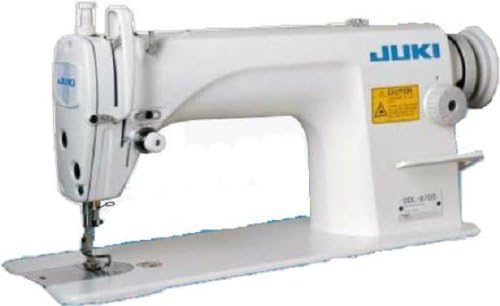
JUKI DDL-8700-H Sewing Machine
| Power Source | Corded Electric |
|---|---|
| Input Voltage | 110 volts_of_alternating_current |
The JUKI DDL-8700-H is a professional single-needle lockstitch machine built for heavy materials and continuous workshop use. It ships as a kit with a tabletop, heavy-duty legs, an electronic DC servo motor and basic accessories so you can set up a production-style sewing station. The machine offers automatic lubrication of the rotary hook, adjustable reverse feed and a reported top sewing speed suited to high-throughput tasks, while the robust metal construction and full rotary hook support reliable stitch formation on thicker fabrics. Practical benefits include included extras such as a bobbin winder, knee lifter, spare needles and bobbins, and a powerful servo motor that gives precise speed control and quieter operation versus older clutch motors. Important limitations are that assembly is required and this specific model is not a walking-foot machine, so it may need different presser foot handling or auxiliary feeding for some layered or particularly slippery materials. Also the listing indicates factory-supplied setup parts rather than shop assembly, so buyers should plan for professional installation if they want immediate, optimized production use.
Best for: Buyers who prioritize a dependable, production-ready tabletop machine for heavy materials and steady workshop throughput and who are prepared to assemble or professionally install their workstation.
Less Ideal for: Hobby sewists who want a plug-and-play home machine or projects that require a walking-foot feeder for bulky layered fabrics.
- Designed for heavy-material, continuous use with a full rotary hook and automatic lubrication
- Includes a table, heavy-duty legs and a servo motor for a complete production-style station
- Comes with useful accessories: bobbin winder, knee lifter, extra needles and bobbins
- Servo motor offers precise speed control and quieter operation than older clutch motors
- Arrives unassembled and may require professional assembly for optimal setup
- Not equipped with a walking foot, which can make feeding very thick or multiple-layer materials harder without additional attachments
Verdict: Choose the JUKI DDL-8700-H when you need a rugged, factory-quality tabletop lockstitch machine built for reliable, high-volume heavy-material sewing.
Consew 206RB-5 Walking Foot

| Model Number | 206RB-5 |
|---|---|
| Power Source | Corded Electric |
| Included Components | Machine head, servo motor, tabletop, stand, hardware |
| Max Stitch Length | 10 mm |
The Consew 206RB-5 is a compound-feed walking foot industrial sewing machine built to handle thick materials like leather, upholstery, canvas, and tarpaulins. It ships as a complete workstation with the machine head, servo motor, tabletop, stand, and necessary hardware, and is intended for bench-style installation in a small workshop or production area. Notable features include a triple feed/walking foot for even material transport, an extra-long maximum stitch length (up to 10 mm), high presser foot lift for bulky work, and a large bobbin for longer runs between changes. The servo motor offers smoother speed control and better energy efficiency than clutch motors, and the included table makes it ready for immediate use after assembly. Limitations to consider are its industrial weight and footprint that require a dedicated work area, a learning curve for setup and maintenance, and limited built-in automation compared with production-line machines. Instructional videos from the manufacturer help bridge the learning gap for new users.
Best for: Buyers who need a reliable, professional-grade tabletop machine for frequent upholstery, leather, or canvas work and who prioritize consistent heavy-material feeding and a ready-to-run workstation.
Less Ideal for: Hobbyists or casual sewers who lack a permanent workspace or need a lightweight, portable machine should consider smaller domestic models instead.
- Compound walking foot (triple feed) for consistent feeding of heavy or layered materials
- Extra-long max stitch length (10 mm) and high foot lift for bulky materials
- Includes servo motor and tabletop so the machine is ready to install
- Large bobbin reduces frequency of thread changes for production work
- Heavy, requiring a dedicated sturdy table or stand and likely assistance to move
- Tabletop footprint and machine weight make it unsuitable for occasional light sewing setups
Verdict: Choose the Consew 206RB-5 when you need a durable, bench-ready industrial sewing machine that reliably handles thick upholstery, leather, and canvas.
VEVOR Industrial Lockstitch JK9808T

| Power Source | ac |
|---|---|
| Motor Power | 550W |
| Top Speed | 5000 SPM |
| Material | Aluminum |
The VEVOR JK9808T is a tabletop industrial lockstitch machine built for heavy-duty sewing tasks like denim, leather, canvas, and multiple-layer garments. Driven by a 550W servo motor it claims up to 5000 stitches per minute and includes practical shop features such as an LCD for speed and needle position, automatic thread trimming, one-touch reverse, and automatic lubrication for continuous use. The kit ships with a widened worktable, adjustable-height table stand, LED task light, knee lifter and manual presser lift for quicker fabric handling, and an oil window for simple maintenance. In real-world use this looks suited to small production runs, upholstery repairs, and hobbyists stepping up to industrial projects thanks to its metal frame and low-noise design. Expect a learning curve setting speeds and fine-tuning stitches and occasional maintenance typical of industrial machines, and its size and weight mean it needs a dedicated workspace. For buyers who want factory-style performance without a full production setup, it offers a lot of capability for the money.
Best for: Buyers seeking a reliable, production-capable tabletop machine for heavy fabrics who prioritize durable construction and precise speed control over portability.
Less Ideal for: Casual or occasional home sewers who need a lightweight, portable machine or who prefer plug-and-play simplicity with minimal setup and maintenance.
- High top speed (up to 5000 SPM) driven by a 550W servo motor for fast stitching
- Metal body with automatic lubrication designed for continuous, heavy-duty use
- LCD controls for sewing speed and needle position provide precise adjustments
- Auto thread trimmer, one-touch reverse, knee lifter, and LED light improve workflow
- Widened table and adjustable table height accommodate larger fabrics and comfort
- Large and heavy unit requires a dedicated workspace and setup
- Industrial machines need periodic maintenance and setup know-how for best results
Verdict: Choose this machine when you need a durable, high-speed tabletop industrial lockstitch that handles heavy fabrics with factory-style controls and features.
Choosing the Right Industrial Tabletop Sewing Machine: Key Factors to Consider
Motor Power and Maximum Stitch Speed
Motor power determines how easily a machine penetrates thick materials and how well it sustains long runs without overheating. Higher-rated motors and appropriate gearing let you maintain fast stitch rates on leather, denim, canvas, and multiple layers.
Maximum stitch speed matters for throughput in commercial settings but should be balanced with user control. Extremely high top speeds can increase thread breakage and fabric handling errors if the feed system and operator control do not match the motor capability.
Build Materials and Frame Rigidity
A rigid metal frame and high-quality castings reduce vibration and keep needle alignment stable under heavy loads. This improves stitch consistency and extends the life of internal components.
Check for metal gear trains, hardened shafts, and reinforced needle bars. Machines that skimp on internal robustness may perform acceptably at first but can develop timing and tolerance issues under continuous, heavy use.
Presser Foot, Feed Mechanism, and Fabric Control
The presser foot and feed system determine how well the machine advances multiple layers or slippery materials. Walking feet, compound feed, and adjustable presser pressure expand the range of fabrics you can sew cleanly.
Look for machines with presser lift clearance to accommodate thick stacks and for feed dogs designed for consistent material advance. A weak or poorly designed feed can cause skipped stitches, puckering, or irregular seam allowance when working with heavy materials.
Stitch Options and Adjustability
Industrial tabletop sewing machines are often task-focused, but adjustability remains important. Ability to fine-tune stitch length, tension, and presser pressure helps match stitch formation to thread and fabric choices.
Consider whether the machine supports different needle sizes and thread tensions, and whether stitch length adjustments are smooth and secure. Machines with limited adjustment force operators into workarounds that reduce efficiency and stitch quality.
Ease of Maintenance and Parts Accessibility
Routine maintenance keeps an industrial machine running for years. Machines designed for easy access to bobbin cases, oil ports, and gear covers reduce service time and lower repair costs.
Availability of replacement parts, clear lubrication points, and straightforward timing adjustments are important. Avoid designs that require disassembly to reach common wear items or that hide service points behind complex covers.
Noise, Vibration, and Operator Comfort
Noise and vibration levels impact operator fatigue and workshop conditions, especially during long runs. Machines with balanced drives and vibration-damping frames reduce fatigue and help maintain consistent stitch quality.
Consider the ergonomics of the tabletop layout, placement of controls, and how easily the operator can guide heavy workpieces. Comfortable machines promote speed and accuracy over extended shifts.
Common Industrial Tabletop Configurations
Industrial tabletop sewing machines come in several configurations optimized for different tasks. A single-needle straight stitch machine is the workhorse for heavy seams, while compound-feed units combine needle and feed mechanisms to move thick or difficult fabrics more reliably.
Cylinder-bed and post-bed options exist for sewing around tubes, bags, or hard-to-reach shapes, but many buyers will prefer a flatbed table-top machine for general-purpose heavy sewing because it offers a stable work surface and simpler material support.
- Single-needle straight stitch: simple, strong seams for most heavy materials.
- Compound-feed: improved material advance for thick or layered fabrics.
- Cylinder/post-bed: specialized shapes and tubular work.
Setting Up a Tabletop Machine for Heavy Fabrics
Proper setup matters as much as the machine. Use coarse needles and heavy-duty thread suited to the material. Match needle size and point type to fabric: ball points for knits, cutting points for leather and vinyl. Adjust tension incrementally and test on representative material before starting a run.
Raise presser foot pressure for multiple thin layers and lower it for very thick stacks to avoid compressing layers. Position a sturdy table with a large throat space to support long seams and add a work-holding jig or clamps for consistent seam allowances on repetitive jobs.
- Choose needle and thread to match material.
- Test tensions and stitch length on scrap material.
- Use a stable table and work supports for long seams.
Common Maintenance Tasks to Extend Lifespan
Regular maintenance keeps industrial tabletop machines reliable. Clear lint and debris from the feed area and bobbin case daily when running heavy materials. Follow the manufacturer lubrication schedule for oiling gears and bearings; lack of lubrication is a leading cause of premature wear.
Periodically check timing and needle-bar alignment, and replace needles frequently to avoid skipped stitches and fabric damage. Keep a small parts kit with common wear items such as needles, bobbins, belts, and presser feet to minimize downtime.
- Daily lint removal and surface cleaning.
- Scheduled oiling of specified points.
- Routine needle and bobbin checks; replace as needed.
Safety and Workshop Considerations
Industrial machines run at higher speeds and may use exposed belts and pulleys. Ensure guards are in place, keep loose clothing and long hair secured, and provide operator training on safe start-up and emergency stop procedures.
Plan for proper ventilation and lighting where heavy fabrics or adhesives are used. Also consider vibration isolation for the table to prevent noise transfer and to protect neighboring workstations from excessive movement.
- Use guards and follow lockout procedures for maintenance.
- Secure loose clothing and tie back hair.
- Provide adequate lighting and ventilation.
When to Choose a Specialized Drive or Table Add-On
Some jobs benefit from specialized drives, such as servo motors for precise speed control or clutch drives for simple high-speed operation. Servo drives offer better energy efficiency, quieter operation, and programmable speed control, while clutch motors are straightforward and robust for continuous runs.
Tabletop add-ons like extended throat plates, integrated work supports, and external thread stands can improve handling for large projects. Choose add-ons that match your workflow rather than trying to adapt a standard machine to an unplanned task.
- Servo motors for precision and variable speed control.
- Clutch drives for simple, high-throughput use.
- Add-ons: extended tables, thread stands, and jigs.
How We Chose the Best Industrial Tabletop Sewing Machine
We focused on attributes that predict real-world reliability and productivity in commercial or heavy-hobby environments. Key evaluation criteria included motor power and maximum stitch speed for throughput; build durability and frame rigidity to ensure consistent stitch quality through heavy or layered materials; presser foot and feed system design for fabric control and versatility; stitch quality and adjustability to handle different thread weights and fabric types; ease of maintenance and parts availability to minimize downtime; and noise and vibration levels where workshop comfort matters. We excluded small domestic consumer machines and models designed solely for light craft use. Units lacking basic commercial-grade components such as industrial motors, metal gear trains, or serviceable lubrication points were not considered. Our selection prioritized machines with documented mechanical features and common-sense serviceability that suit frequent use, not occasional hobby sewing.
Our full evaluation process is outlined in our review methodology.
FAQ
How fast should an industrial tabletop sewing machine be for production work?
It depends on the material and operator skill. Many production settings use machines rated for several thousand stitches per minute, but practical speed is lower for thick materials. Prioritize a motor that can sustain target speeds without overheating and pair it with a feed system that controls fabric reliably.
Can industrial tabletop machines sew heavy leather and multiple layers?
Yes. Machines designed for heavy-duty work have stronger motors, rigid frames, and compatible feed systems that handle thick leather and stacked materials. Proper needle selection and adjusted presser pressure are also essential for good results.
What maintenance schedule keeps these machines running well?
Daily cleaning of the feed area and bobbin case, routine oiling at manufacturer-specified points, and periodic inspection of timing and needle alignment are typical. Replace needles and consumables regularly to avoid skipped stitches and fabric damage.
Are servo motors worth the extra cost for tabletop industrial machines?
Often yes for shops needing precise speed control, quieter operation, or better energy efficiency. For straightforward high-volume sewing where simplicity and low upfront cost matter more, a traditional clutch motor may suffice.
How important is parts availability and serviceability?
Very important. Easy access to common replacement parts, straightforward lubrication points, and clear adjustment procedures reduce downtime and repair costs. Machines that require complex disassembly for routine service increase long-term operating disruption.
Final Verdict
Focus on the features that match how you will use the machine. Prioritize motor power and a capable feed system for heavy materials, and insist on a rigid frame and accessible maintenance points if you expect frequent use. Balance top stitch speed against fabric control and operator comfort to avoid productivity losses from thread breaks or poor stitch quality. Your final choice should reflect the materials you sew most often, the volume of work, and how much routine servicing you can support. With those priorities in mind, you can select an industrial tabletop sewing machine that delivers reliable, consistent performance over the long run.