
Note: This article contains affiliate links. If you click on these links and make a purchase, we may earn a small commission at no extra cost to you. This helps support our research and content. Read our full affiliate disclosure here.
Working with canvas changes the rules for standard home sewing. Canvas is thick, fibrous, and unforgiving of skipped stitches or poor thread tension, so choosing a sewing machine that can handle dense layers and heavy thread makes the difference between a finished project and frustration. This guide highlights the top shortlisted sewing machines for canvas, selected for reliable stitch strength, robust feeding, and presser-foot flexibility. You will find options suited to frequent heavy use, occasional upholstery repairs, and DIY outdoor gear projects. Below we summarize how we evaluated each machine and what to expect from capable canvas-capable models, then present the top picks to match different user priorities.
Top Picks at a Glance
| Best Overall The best all-around choice for most situations | Janome HD5000 Heavy-Duty Sewing Machine |  |
| Best Quality Built to a higher standard if you want something more solid | Juki TL-2010Q Sewing Machine |  |
| Best Value The sweet spot between price and what you get | SINGER Heavy Duty 4411 |  |
| Best Budget The cheapest option that still gets the job done reliably | Verdanika Beginner Sewing Machine 505 |  |
| Top Rated A top-rated pick with lots of positive feedback | Brother HC1850 Sewing Machine |  |
| Most Popular A crowd favorite that many people choose with confidence | SINGER Heavy Duty 4423 |  |
| Best Seller A high-volume bestseller chosen again and again | Brother XM2701 Sewing Machine |  |
Janome HD5000 Heavy-Duty Sewing Machine

| Power Source | Corded Electric |
|---|---|
| Model Number | HD5000 |
| Included Components | ZigZag Foot, Hemmer Foot, Rolled Hem Foot, Overcast Foot, Satin Stitch Foot, Zipper Foot, Automatic Buttonhole Foot, Assorted Needle Set, Bobbins |
| Top Speed | 860 stitches per minute |
The Janome HD5000 is a straightforward, heavy‑duty mechanical sewing machine aimed at beginners who need a rugged, no‑frills workhorse. It uses dial controls and a metal frame to deliver stable stitching and a top speed of 860 stitches per minute controlled by a responsive foot pedal. The five‑piece feed dog system, extra‑high presser foot lift, and drop‑feed capability make it well suited for sewing canvas, denim, upholstery, and layered materials, while the built‑in needle threader and simple stitch length/width dials keep setup and learning easy. The machine is portable for a full‑size unit and ships with seven accessory feet including an automatic buttonhole foot, bobbins, quilting guide, and a hard cover for storage. Tradeoffs are its purely mechanical control layout with fewer automated stitch options and the roughly 19 lb weight that is portable but heavier than lightweight home models. For someone who wants a durable, practical machine that can chew through canvas and everyday projects, the HD5000 delivers reliable performance without complexity.
Best for: Buyers who want a durable, easy‑to‑use sewing machine that can reliably handle canvas, denim, and upholstery while remaining approachable for new sewers.
Less Ideal for: If you need a lightweight travel machine or advanced computerized stitch programming, this mechanically focused full‑size unit is not the best choice.
- Heavy‑duty aluminum frame provides stability for thick fabrics like canvas and denim
- Five‑piece feed dog and extra‑high presser foot lift make feeding bulky, layered materials easier
- Includes multiple accessory feet and quilting guide for versatile projects
- Built‑in automatic needle threader and simple dials reduce setup time for beginners
- Mechanical dial controls limit advanced automatic stitch options
- At about 19 pounds it is heavier than compact beginner machines
Verdict: Choose the Janome HD5000 if you need a sturdy, beginner‑friendly machine that can confidently sew canvas and other heavy fabrics without fuss.
Juki TL-2010Q Sewing Machine
| Power Source | Treadle Powered |
|---|---|
| Material | Aluminum |
| Model Number | MO-735 |
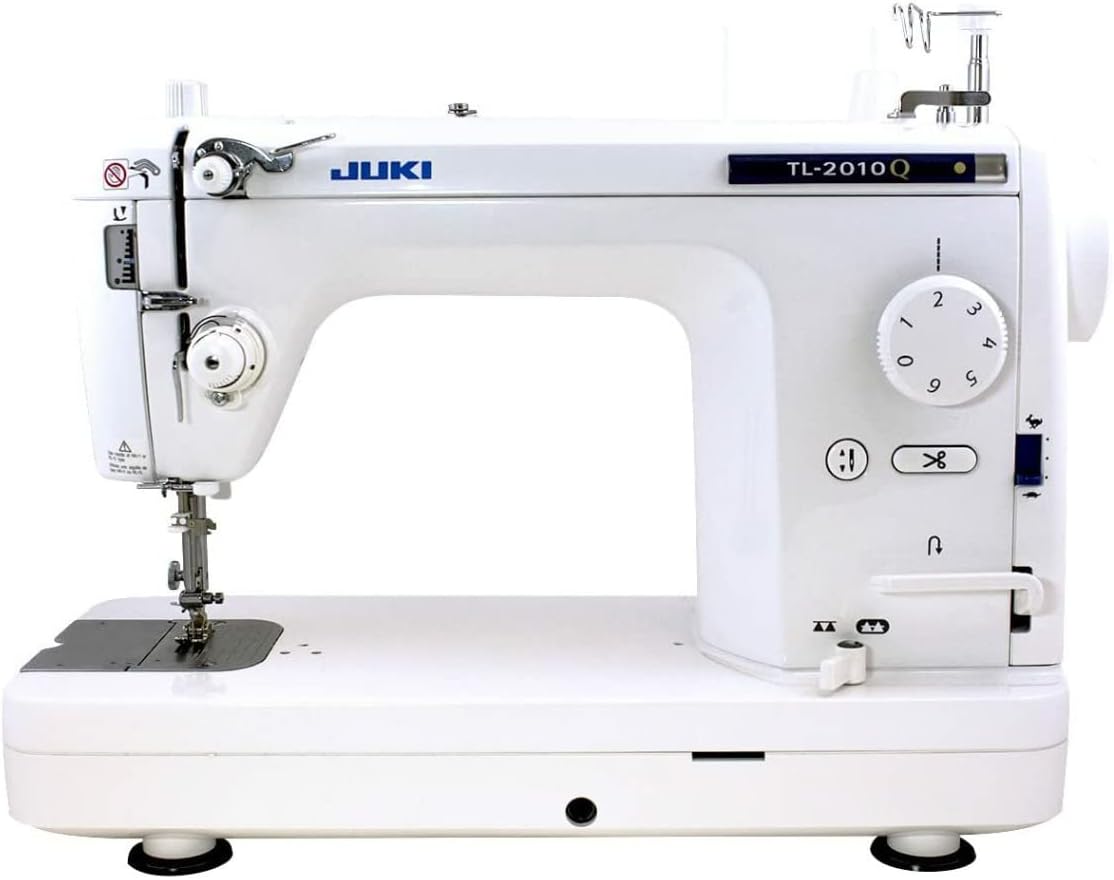
The Juki TL-2010Q is a purpose-built, performance-focused straight-stitch sewing and quilting machine that works well for heavy fabrics like canvas when used with appropriate needles and settings. It delivers a strong, consistent lockstitch and includes an automatic thread trimmer and an automatic needle threader that speed setup and reduce interruptions. The knee lifter lets you raise the presser foot up to 12 mm, which helps feed thick layers and bulky seams, and the unit is portable with a built-in handle so you can move it between a table top or quilting frame. Its construction emphasizes durability and precise feed, making it suited for long runs and multiple layers. Limitations are that it is a single-needle straight-stitch machine only, so you will need specialty feet, heavy-duty needles, and possibly a walking foot or roller foot for optimal canvas handling, and there is no built-in zigzag or decorative stitch capability for finishing edges.
Best for: Buyers who prioritize stitch strength and reliable straight-line performance for projects like canvas bags, tarps, or upholstery and want a durable machine that can run long stitches consistently.
Less Ideal for: Users who need a multi-stitch or decorative-capable machine, beginners wanting an all-in-one hobby machine, or those who do not want to buy additional heavy-duty accessories.
- Powerful, consistent single-needle lockstitch suited for straight seams in heavy fabrics
- Automatic thread trimmer and needle threader speed workflow and reduce setup time
- Knee lifter with 12 mm lift helps feed thick layers and bulky seams
- Portable design with built-in handle allows table or frame use
- Limited to straight lockstitch only, no zigzag or decorative stitches
- Requires heavy-duty needles, specialty feet, or accessories for best results on very heavy canvas
Verdict: Choose the Juki TL-2010Q if you need a rugged, high-performance straight-stitch machine that reliably handles heavy fabrics and long runs of canvas.
SINGER Heavy Duty 4411

| Built-in stitches | 11 |
|---|---|
| Stitch applications | 69 |
| Maximum speed | 1,100 stitches per minute |
| Power source | Corded Electric |
The SINGER Heavy Duty 4411 is a straightforward mechanical sewing machine built for tough fabrics like denim, canvas, and layered projects. It delivers high-speed stitching (up to 1,100 spm) and claims 50% more motor power than standard entry machines, which helps drive needles through heavy material without bogging down. The metal interior frame and stainless steel bed plate add stability and smoother fabric feed, while the top drop-in bobbin with a clear cover simplifies thread monitoring. It includes four presser feet and basic accessories to get started, and adjustable presser foot pressure makes it usable on lighter fabrics too. Notable limits are its mechanical control layout and modest stitch selection compared with computerized models, so fine decorative work or frequent stitch programming is less convenient. Also the LED light and basic features are practical but not advanced for high-end tailoring. For hands-on users who prioritize durability and straightforward performance on canvas and similar heavy materials, this is a practical, workhorse option.
Best for: Buyers who want a no-nonsense, durable machine that reliably handles canvas, denim, and other heavy fabrics for repairs, home projects, or small upholstery tasks.
Less Ideal for: If you need many decorative stitches, automatic programming, or advanced tailoring features, a computerized or specialty machine would be a better choice.
- Powerful motor suitable for thick fabrics like canvas and denim
- Heavy-duty metal interior frame for stable, skip-free stitching
- High top speed (up to 1,100 stitches per minute) for faster project completion
- Top drop-in bobbin with transparent cover for easy thread monitoring
- Includes essential presser feet and starter accessories out of the box
- Limited built-in stitch options and no computerized controls for advanced patterning
- Basic feature set lacks some conveniences found on higher-end machines
Verdict: Choose the SINGER 4411 when you need a rugged, high-speed mechanical machine that reliably sews canvas and other heavy fabrics.
Verdanika Beginner Sewing Machine 505

| Built-in stitches | 12 |
|---|---|
| Speed control | 2-Speed |
| Power source | AC |
| Included components | thread spools, scissors, needle kit |
The Verdanika 505 is a lightweight, entry-level sewing machine aimed at basic mending, small projects, and travel use. It offers 12 built-in stitches, two-speed control, and both foot-pedal and button operation, which makes it easy for novices to learn stitch selection and speed management. The unit ships with starter accessories—thread spools, scissors, and a needle kit—so you can begin simple projects right away. Its AC power option and portable footprint mean it is convenient to move and store, but the manufacturer warns it struggles with very thin, stretchy, or extremely heavy fabrics without special handling. For heavier materials like canvas, expect to add stabilizers, use a suitable needle, and work slowly; the compact motor and light construction are not optimized for continuous heavy-duty sewing. The machine is best for occasional repairs, craft pieces, and beginners practicing basic techniques rather than for intensive canvas work or professional use.
Best for: Buyers on a tight budget who need an easy-to-use machine for mending, small craft projects, and learning basic sewing techniques and who value portability and a complete starter kit.
Less Ideal for: People who plan to sew canvas regularly, tackle heavy upholstery, or need a durable, high-torque machine for thick, repeated seams should choose a heavy-duty or professional model instead.
- Simple to use with clear stitch guides and two-speed control for learners
- Comes with basic starter kit (thread spools, scissors, needle kit) to begin projects immediately
- Compact and lightweight for easy storage and travel
- Dual operation with foot pedal or button switch for flexible control
- Not intended for heavy, continuous canvas sewing or thick multi-layer seams
- May require adding paper or stabilizer under very thin or stretchy fabrics to avoid issues
Verdict: A very affordable, portable starter machine that gets beginners sewing quickly but is not a heavy-duty solution for regular canvas work.
Brother HC1850 Sewing Machine

| Built-in stitches | 185 |
|---|---|
| Power source | Corded Electric |
| Input voltage | 120 volts AC |
The Brother HC1850 is a feature-packed computerized sewing and quilting machine aimed at hobbyists who need a reliable, versatile machine for a wide range of fabric projects. It offers 185 built-in stitches, a backlit LCD for quick stitch selection, an automatic needle threader, and a jam-resistant drop-in top bobbin that simplify setup and keep stitching consistent. The machine includes eight presser feet, a detachable wide extension table and a spring-action quilting foot for free-motion quilting, making it useful for both garment work and larger projects. Its feed system and variable speed control help it handle medium-weight fabrics and layered materials such as heavy quilting cotton and denim when paired with appropriate needles. The HC1850 is lightweight and portable, so it is easy to move to classes or workspaces, and the included accessory pouch contains basic tools to get started. It is designed for 120V use only and is not intended for industrial heavy-duty continuous production, so extremely thick multi-layer canvas or upholstery work may require a heavier industrial machine.
Best for: Sewers who prioritize a dependable, well-featured home machine for quilting, garments, and frequent medium-weight fabric work and who want a machine that is easy to set up and maintain.
Less Ideal for: People who regularly sew very heavy-duty materials or run long, continuous production should consider a dedicated heavy-duty or industrial machine instead.
- Large selection of 185 built-in stitches including alphanumeric stitches and multiple buttonhole styles
- Automatic needle threader and top-loading jam-resistant bobbin for easier setup and consistent stitching
- Includes wide extension table and spring-action quilting foot for quilting and larger projects
- Variable speed control and strong feed system that handle medium-weight fabrics reliably
- Designed for home use on 120V so not intended for continuous heavy industrial sewing
- May struggle with very thick multi-layer canvas or upholstery without specialty needles or a heavier-duty machine
Verdict: A reliable, full-featured home sewing and quilting machine that handles medium-weight fabrics and quilting projects with ease.
SINGER Heavy Duty 4423

| Built-in stitches | 23 |
|---|---|
| Stitch applications | 97 |
| Max sewing speed | 1,100 stitches per minute |
| Power source | Corded Electric |
| Input voltage | 120 volts |
The SINGER Heavy Duty 4423 is built to handle heavier fabrics and frequent use while still being straightforward for hobbyists. It pairs a stronger motor and an extra-high sewing speed (up to 1,100 stitches per minute) with a metal interior frame and stainless steel bed plate, so it feeds thick layers like denim and canvas more reliably than many entry-level machines. The top drop-in bobbin and automatic needle threader simplify setup, and the included presser feet and accessories cover common tasks like zippers and buttonholes. Practical benefits include faster project completion on dense seams, stable skip-free stitching from the metal frame, and bright LED lighting for better visibility. Limitations are that it is a mechanical rather than computerized machine so stitch selection and fine adjustments are manual, and the machine is heavier and less portable than compact models. Expect basic maintenance and occasional manual tension adjustments when working with specialty threads or very heavy upholstery materials.
Best for: Sewists who plan to work with canvas, denim, or other heavy fabrics and want a robust, no-nonsense machine that reliably powers through thick seams and multiple layers.
Less Ideal for: If you need advanced computerized stitch programming, fine automatic tensioning, or an ultra-light portable machine, this heavy-duty mechanical model is not the best fit.
- Powerful motor and high max stitch speed for faster sewing through thick fabrics
- Heavy-duty metal interior frame and stainless steel bed plate for stable, skip-free stitching
- Top drop-in bobbin and automatic needle threader simplify threading and reduce interruptions
- Includes several useful presser feet and accessories for common tasks like zippers and buttonholes
- Mechanical controls limit precision compared with computerized models
- Heavier, less portable design
Verdict: Choose the Singer 4423 when you need a sturdy, high-speed machine that reliably sews canvas and other heavy fabrics.
Brother XM2701 Sewing Machine

| Built-in stitches | 27 |
|---|---|
| Included feet | 6 quick-change presser feet |
| Power source | Corded Electric |
| Input voltage | 120 volts |
The Brother XM2701 is a straightforward mechanical sewing machine aimed at beginners and home sewers who need a reliable everyday machine. It offers 27 built-in stitches including straight, zigzag, blind hem, decorative, and a one-step automatic buttonhole, and comes with six quick-change presser feet for common tasks like zippers and hemming. Practical features such as an automatic needle threader, jam-resistant drop-in top bobbin, automatic bobbin winder, and built-in LED make setup and routine sewing less frustrating. The free arm helps with cuffs and sleeves, and the dial controls for stitch selection, length, and width keep operation simple. For heavier materials like canvas, the XM2701 can handle mid-weight to some thicker fabrics with the right needle and slow steady feed, but it is primarily a light- to mid-weight machine so very heavy canvas or prolonged thick-layer stitching may stress the motor or require specialized equipment. Overall it is an affordable, no-frills machine that reduces common beginner hassles while offering enough versatility for basic canvas projects and general home sewing.
Best for: Buyers who want a dependable, easy-to-use machine for home projects and occasional heavier work with cautious, low-risk expectations.
Less Ideal for: People who plan to sew heavy-duty canvas regularly, run long upholstery projects, or need an industrial-strength machine for continuous thick-layer stitching.
- Beginner-friendly features like automatic needle threader and jam-resistant drop-in bobbin.
- Includes 27 built-in stitches and a one-step auto-size buttonhole for versatile sewing.
- Six quick-change presser feet cover common tasks (zipper, blind hem, button sewing).
- Built-in LED and simple dial controls make setup and stitch changes easy.
- Not designed for heavy-duty, continuous sewing on very thick or multi-layered canvas.
- Mechanical drive and lightweight motor may slow or struggle on industrial-weight fabrics.
Verdict: A reliable, beginner-focused sewing machine that handles everyday sewing and light to moderate canvas work without complexity.
Choosing the Right Sewing Machine for Canvas: Key Factors to Consider
Stitch Strength and Stitch Options
Canvas requires strong, consistent stitches that do not skip or pull out when under tension. Look for machines that offer reinforced straight stitches and adjustable stitch length so you can lengthen stitches for heavy layers and shorten them for finer seams.
Multiple stitch options such as backstitch, bartack, or triple-stitch settings add reinforcement points on high-stress seams. Machines that maintain tension stability under load reduce the need for constant readjustment and produce more professional, durable seams.
Feeding Mechanism and Presser-Foot Clearance
How well a machine moves thick, textured canvas is a major determinant of project success. A robust feed system, whether a strong drop feed or walking foot, prevents fabric slippage and layer shifting. Presser-foot clearance and an adjustable presser foot pressure let you work with multiple layers, webbing, or laminated canvas without crushing the material.
Also consider whether the machine accepts specialized feet like walking feet, edge guides, and roller feet, since these accessories improve control on bulky or coated canvas.
Motor Power and Speed Control
Sewing canvas needs motor torque more than raw top speed. A motor with good low-end torque sustains stitch performance through thick seams and heavy thread. Variable speed control, including a reliable foot pedal response, allows precise slow stitching through pinch points and strong acceleration when feed is steady.
Machines with underpowered motors can stall or strain, which increases wear on components and can lead to skipped stitches or broken needles.
Needles, Thread, and Bobbin Capacity
Canvas typically requires heavy-duty needles and thicker thread. Confirm that a machine accepts heavy-gauge needles and has a bobbin system that accommodates heavier thread or larger-capacity bobbins. Easy needle changes and clear guidance on compatible needle sizes save time and prevent damage.
A bobbin case that resists bunching and a top-loading or front-loading system that is simple to thread are useful when working with dense thread types and repeated thick seams.
Durability and Serviceability
Frequent canvas sewing places mechanical stress on a machine. Look for durable metal frames, quality feed dogs, and accessible components for routine cleaning and lubrication. Machines designed with replaceable parts and a clear service path will last longer under heavy workloads.
Also consider availability of user-accessible maintenance points, such as removable throat plates and straightforward tension assemblies, so you can clear lint and reestablish correct tension quickly.
Workroom Ergonomics and Setup
Sewing canvas often involves large panels and repetitive heavy stitching, so ergonomics matter. A roomy working area, good lighting around the needle, and an easy-to-read tension and stitch-length interface reduce operator fatigue and mistakes.
Consider whether the machine can be mounted on a table for larger projects and whether it supports optional accessories like extension tables, larger spools, and external thread stands that make extended canvas work more efficient.
Why Canvas Is Different Than Regular Fabric
Canvas is dense and often woven from heavier yarns or treated with coatings. Those characteristics create more resistance against needles and feed dogs than typical garment fabrics. Because of that, machines designed for standard sewing may struggle to pierce and transport canvas consistently.
Expect to use heavier needles, stronger thread, and slower stitching speeds when working with canvas. Reinforced seams and the right presser-foot selection help prevent skipped stitches and premature needle wear.
- Higher needle stress compared with cotton or synthetics
- Greater friction requiring stronger feed action
- Possible surface coatings that affect needle selection
Accessories That Improve Canvas Sewing
A few key accessories make heavy-fabric work much easier. A walking foot or even a compound feed accessory helps move layers evenly, reducing puckering and misaligned seams. Roller or Teflon feet are useful when sewing coated canvas to prevent sticking.
Edge guides, seam guides, and heavier-duty needles and thread stands increase accuracy and reduce thread breakage. An extension table or flatbed workspace is valuable for large panels or upholstery pieces.
- Walking foot for even feeding
- Roller or Teflon foot for coated surfaces
- Edge guide and extension table for larger projects
Common Setup Tips for Better Results
Always match needle size and type to the canvas weight and the thread thickness. Start with a larger needle and heavier thread than you would for clothing and test on scrap layers to dial in tension and stitch length.
Use slower stitching speeds when approaching thick seams or hardware, and consider hand cranking through dense areas to avoid skipped stitches or broken needles. Regularly clean lint and inspect the feed dogs to maintain smooth fabric movement.
- Test settings on scrap pieces before committing
- Slow speed and hand-feed through dense areas
- Check needle and bobbin condition frequently
Common Projects and Recommended Techniques
Typical canvas projects include outdoor gear, bags, awnings, and upholstery patches. For bags and gear, use reinforced bartacks or box stitches at stress points and consider layering webbing for handles. For upholstery, use longer stitch length and heavy-duty thread to allow for the thicker, compressed seams.
For coated or waterproof canvas, select needles designed for coated materials and consider using sticky-point techniques like clips instead of pins to avoid surface damage. Finish edges with binding or overcasting to prevent fraying under heavy use.
- Use reinforced stitches at hardware attachment points
- Prefer clips over pins on coated canvas
- Finish raw edges to reduce fraying
When to Consider Professional or Industrial Options
If you routinely stitch multiple layers of heavy canvas, webbing, leather, or add hardware like grommets, an industrial-level head or a dedicated heavy-duty machine provides the torque and long-term durability needed. These options typically offer larger hook systems and higher-duty components suited to daily heavy use.
For occasional hobbyists or DIYers, a heavy-duty domestic machine that accepts heavier needles and has a powerful motor may be sufficient. Assess frequency and project scale before deciding to move to a workshop-grade machine.
- Choose industrial heads for daily heavy production
- Domestic heavy-duty machines suit hobby and occasional professional work
- Match machine capability to project frequency and complexity
How We Chose the Best Sewing Machine for Canvas
We focused on attributes that matter when sewing canvas and other heavy fabrics. Primary evaluation criteria included stitch strength under load, which measures whether a machine maintains consistent straight and zigzag stitches when feeding thick seams. Feeding performance and presser-foot range were inspected for how well machines move layered canvas without skipped stitches or fabric jams. Motor torque and speed control were used to judge whether a machine can handle multiple layers and heavy thread without bogging down. Needle and bobbin system compatibility was checked to ensure machines accept heavier needles and industrial-style bobbins or have equivalent capacity. Ease of setup and routine maintenance was considered because heavy-fabric sewing often requires tension tweaks, timely lubrication, and accessible service parts. We excluded machines designed strictly for lightweight fabrics or purely decorative craft use. Machines that lacked clear capability for heavy-thread needles, low-torque motors, or limited presser-foot clearance were removed from consideration. The list favors machines that balance durability and user control rather than those that rely solely on high speed.
Our full evaluation process is outlined in our review methodology.
FAQ
What needle size should I use for canvas?
Needle size depends on canvas weight and thread thickness. Often you will move up several sizes from garment needles; sizes in the heavy-duty range are typically recommended. Always test on scrap canvas to confirm stitch formation and adjust size as needed.
Can a regular home sewing machine handle canvas?
Some home machines labeled heavy-duty can handle canvas if they have adequate motor torque, a compatible needle system, and adjustable presser-foot pressure. Machines without those features may struggle or wear prematurely when used on thick canvas regularly.
Do I need a walking foot for canvas?
A walking foot is very helpful for layered canvas because it feeds the top and bottom layers evenly, reducing shifting and puckering. It is not strictly required for every canvas project but is recommended for large panels or multi-layer seams.
How do I prevent skipped stitches on canvas?
Use the correct needle type and size, reduce stitch speed in dense areas, and test tension on scrap material. Maintaining a clean feed dog area and using a presser foot suited to the canvas surface also cuts down on skipped stitches.
What thread is best for canvas projects?
Strong, heavy-duty thread such as bonded nylon or polyester is commonly used for canvas. The exact choice depends on exposure to elements and desired appearance; test thread with needle and bobbin on scraps to ensure consistent stitch formation.
Final Verdict
Prioritize machines that combine strong stitch formation, a dependable feeding system, and enough motor torque for layered canvas work. Balance presser-foot versatility and needle/bobbin compatibility with the level of use you expect. For occasional projects, a robust domestic heavy-duty machine may suffice; for frequent, demanding work, choose a model built for heavy workloads. Focus on the specific tradeoffs between speed and control, and pick the machine that matches your project scale and maintenance willingness.