
Note: This article contains affiliate links. If you click on these links and make a purchase, we may earn a small commission at no extra cost to you. This helps support our research and content. Read our full affiliate disclosure here.
If you sew heavy fabrics, leather, or multiple layers regularly, the right Industrial Walking Foot Sewing Machine makes the difference between tidy, durable seams and repeated rework. You need a machine that feeds thick materials evenly, delivers a strong consistent stitch, and stands up to long production runs. This guide shortlists the top picks in the category and evaluates them on the practical attributes that matter to everyday use. We'll focus on stitch integrity, feed performance, motor and build reliability, and how easy each machine is to maintain. Read on to see the machines that best match different workshop needs and workload levels.
Top Picks at a Glance
| Best Overall The best all-around choice for most situations | JUKI DU-1181 Walking Foot Machine |  |
| Best Quality Built to a higher standard if you want something more solid | JUKI DNU-1541S Walking-Foot Machine |  |
| Best Budget The cheapest option that still gets the job done reliably | VEVOR Industrial Lockstitch JK9808 |  |
| Top Rated A top-rated pick with lots of positive feedback | Consew 206RB-5 Walking Foot |  |
| Most Popular A crowd favorite that many people choose with confidence | VEVOR Industrial Lockstitch JK9808T |  |
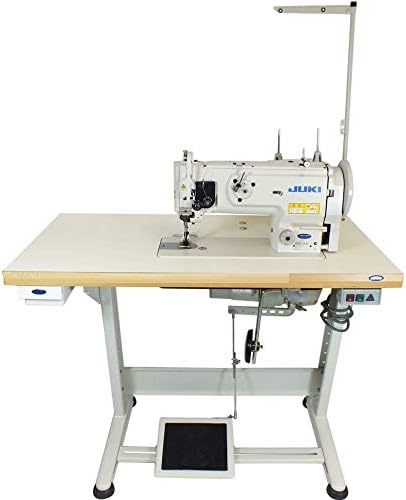
JUKI DU-1181 Walking Foot Machine

| Model Number | DU-1181 |
|---|---|
| Power Source | Corded Electric |
| Max. sewing speed | 2,000 RPM |
| Max. stitch length | 9MM |
The JUKI DU-1181 is a factory-style single-needle, top-and-bottom feed walking-foot machine built for heavy or multilayer materials and continuous industrial use. It ships as a complete knockdown table package with a 3/4 HP DC servo motor, drawer, belt, lamp and basic tools, so you get a ready-to-run bench setup after assembly. The machine uses a double-capacity hook and an automatic lubrication system to improve uptime and reduce maintenance, and adjustable feed cams let you fine-tune top and bottom feeding for stubborn fabrics. Practical benefits include smooth feeding of thick or layered sections, a long stitch capability (up to 9mm) and a knee-operated presser foot lift for hands-free handling. Limits to consider are the requirement for assembly and setup, the need for a workshop-level power supply and ventilation, and that the unit is a single-needle lockstitch machine so it is not suited to decorative or serger-type seams. Expect a robust, purpose-built industrial machine rather than a lightweight hobby unit.
Best for: Buyers seeking a durable, production-capable walking-foot machine for regular work on heavy fabrics who want a near-complete bench setup ready for shop use after assembly.
Less Ideal for: Casual sewists, hobbyists, or anyone needing portable or multi-needle/decorative machines should consider lighter or different-purpose models instead.
- Complete knockdown table package with servo motor and accessories for quick shop setup
- Top-and-bottom walking feed yields consistent seams on heavy or multilayer materials
- Automatic lubrication improves maintainability and running life
- Adjustable feed cams and 9mm max stitch length give flexibility for thick materials
- Knee-operated presser foot lift allows hands-free fabric positioning
- Assembly and initial setup require mechanical skill or professional help
- Heavy, workshop-oriented machine not portable for casual users
Verdict: A robust, shop-ready walking-foot lockstitch machine that delivers consistent feeding and heavy-duty performance for small production and industrial sewing tasks.
JUKI DNU-1541S Walking-Foot Machine
| Speed, Max (S.P.M.) | 2500 |
|---|---|
| Power Source | Corded Electric |
| Input Voltage | 110 volts of alternating current |
| Needle | 135 x 17 and 135 x 16 for leather |
The JUKI DNU-1541S is a purpose-built industrial walking-foot lockstitch machine for sewing leather, vinyl, canvas and other coated or heavy materials. It uses a unison feed (walking foot and needle feed) and a large horizontal-axis double-capacity hook to handle thicker stacks and long seams, and it ships with a 3/4 HP electronic DC servo motor, table, lamp and basic accessories. Typical use is upholstery, automotive and marine covers, bags and heavy apparel where consistent feed and high stitch durability matter; the machine reaches up to 2500 S.P.M. and supports heavier needles for leather. The included servo motor provides quieter operation and more controllable speed than clutch motors, while the double-capacity hook reduces bobbin changes on long runs. Buyers should note the unit is heavy and may require professional assembly and setup, and specialized needles and maintenance are needed for leatherwork. The machine is solidly built for production-oriented users who prioritize reliable feeding and high throughput over portability or consumer conveniences.
Best for: Buyers who need a production-capable, heavy-duty machine for upholstery, leatherwork or marine and automotive covers and who prioritize consistent feed and high stitch throughput.
Less Ideal for: Hobbyists who need a portable or lightweight home machine or casual sewers who do not work regularly with heavy or coated fabrics.
- Unison-feed walking foot for consistent feeding of light to very heavy materials
- Double-capacity horizontal hook reduces bobbin changes during long seams
- Includes a 3/4 HP electronic DC servo motor for quieter, controllable speed
- Supplied with table and essential accessories for immediate workshop setup
- Designed for heavy-duty applications like upholstery, marine and leather goods
- Machine is very heavy and may require professional assembly and installation
- Requires industrial needles, bobbins and periodic maintenance not typical of home machines
Verdict: A workhorse walking-foot industrial machine built for high-throughput leather, upholstery and heavy-material sewing where consistent feed and durability are the top priorities.
VEVOR Industrial Lockstitch JK9808

| Power Source | ac |
|---|---|
| Material | Aluminum |
| Included Components | Industrial Sewing Machine Set, User Manual |
| Brand Name | VEVOR |
The VEVOR JK9808 is a floor‑standing lockstitch sewing machine kit built for heavy use in small shops and home production. Driven by a 550W servo motor it claims up to 5000 stitches per minute and is designed to handle thick stacks — the listing says it can sew through up to 10 layers of denim. Controls are accessible on an LCD panel for speed, needle up/down and soft start, and useful shop features include a knee lifter, manual presser lift, LED work light, widened table and an oil window for maintenance. The metal frame, automatic lubrication and noise rating under 80 dB point to durable, quieter operation than belt‑drive machines. On the other hand this is a large, heavy unit that needs a dedicated workspace and basic setup; you should expect some assembly and initial tuning. For budget buyers it offers industrial capability and many convenience extras bundled with the table, but it is bulkier and more hands‑on than a simple tabletop machine.
Best for: Small‑shop owners or makers looking for an affordable industrial lockstitch machine that can handle heavy fabrics and higher production speeds while including a complete table setup.
Less Ideal for: Hobbyists needing a compact, portable machine or users who want a ready‑to‑run plug‑and‑play unit without mechanical setup and workshop space.
- High production speed with up to 5000 stitches per minute for faster output
- Servo motor provides precise speed control and soft start for smoother sewing
- Sturdy metal frame with automatic lubrication for durable, long‑term use
- Includes practical shop features like knee lifter, widened table, LED light and oil window
- Large and heavy unit that requires a dedicated table space and setup
- May need initial tuning and mechanical familiarity for best stitch quality
Verdict: A budget‑minded industrial sewing package that delivers heavy‑duty lockstitch performance and shop‑ready features for small production environments.
Consew 206RB-5 Walking Foot

| Brand Name | CONSEW |
|---|---|
| Model Number | 206RB-5 |
| Material | Leather |
| Power Source | Corded Electric |
The Consew 206RB-5 is a commercial-grade walking foot sewing machine designed for upholstery, leatherwork, and other heavy materials. It uses a triple-feed system and a single needle to advance thick layers steadily, which reduces shifting and skipped stitches when sewing multiple plies or dense fabrics. The machine ships with a table and motor assembled, so it is ready for shop use with minimal setup, and its corded-electric power source provides continuous operation for long jobs. Practical benefits include dependable fabric feeding for consistent stitch quality and a build aimed at sustained, high-volume use. Limitations are typical for industrial units: it is large, loud compared with home machines, and specialized for straight stitching tasks rather than decorative or multi-function sewing. Expect routine maintenance like lubrication and occasional timing checks to keep it running at peak reliability.
Best for: Buyers who need a dependable, workshop-ready machine for upholstery, leather, or other heavy materials and prioritize consistent feed and long-term uptime.
Less Ideal for: Hobby sewists who need a compact, quiet, multi-stitch home machine or anyone who requires decorative or zigzag stitching features.
- Triple-feed walking mechanism for steady, accurate feeding of heavy fabrics
- Built for continuous, high-volume workshop use with a corded motor
- Ships with table and motor assembled for quick installation
- Specialized single-needle design limits stitch types to straight or utility stitches
- Larger and louder than consumer machines, requiring a dedicated workspace
Verdict: Choose the Consew 206RB-5 when you need a rugged, workshop-ready walking foot machine built for reliable heavy-material sewing.
VEVOR Industrial Lockstitch JK9808T

| Power Source | ac |
|---|---|
| Material | Aluminum |
| Model Number | JK9808T |
The VEVOR JK9808T is a commercial lockstitch machine built for heavy work and repetitive production use. Driven by a 550W servo motor it claims up to 5000 stitches per minute and is sized to handle thick materials including up to 10 layers of denim; the metal frame, automatic lubrication, and low‑noise design support continuous operation. Controls are accessible on an LCD for speed, needle up/down, and soft start, while practical touches like a 0.5 in knee lifter, one‑touch reverse, automatic thread trimming, LED work light, and a widened table make feeding large panels and long seams easier. The included table has adjustable height and storage, and the oil window helps with routine maintenance. Expect a machine oriented to workshops and light manufacturing rather than hobby sewing: it is heavy and takes space, and learning the control set and maintenance needs is part of using a production unit. For buyers who need durable, high‑speed lockstitch performance on heavy fabrics, this model delivers clear production features; for occasional home sewing it is likely more machine than necessary.
Best for: Buyers setting up a small production line or busy workshop who prioritize durable, high‑speed lockstitch performance and want a ready‑to‑run sewing station for heavy fabrics.
Less Ideal for: Casual home sewers, occasional hobbyists, or anyone needing a compact portable machine should look for lighter, simpler consumer models instead.
- 550W servo motor supporting up to 5000 stitches per minute for high productivity
- Metal frame with automatic lubrication designed for continuous, heavy‑duty use
- LCD controls for speed, needle position, and soft start give fine control
- Practical operator features including knee lifter, auto thread trimmer, LED light, and widened table
- Large, heavy footprint requires a dedicated workspace and setup
- Designed for production use so it may be overkill for casual or small hobby projects
Verdict: Choose this VEVOR if you need a rugged, high‑speed lockstitch workstation built for heavy fabrics and steady production use.
Choosing the Right Industrial Walking Foot Sewing Machine: Key Factors to Consider
Stitch Strength and Needle Options
Stitch strength determines whether seams hold under tension and repeated use. For heavy materials you should look for machines that support heavier needle types and thicker thread sizes. A strong, consistent lockstitch or double-stitch mechanism reduces the chance of skipped stitches and weak spots.
Needle change flexibility matters because different materials require different needle geometries and sizes. Being able to swap in heavier needles and use commercial-grade threads ensures the seam will endure when subjected to stress or abrasion.
Walking-Foot Feed Performance
The walking foot coordinates with the needle and feed dogs to move multiple layers or slick materials evenly. Effective synchronization reduces slippage, puckering, and uneven seam allowance, which is especially important when working with upholstery, leather, or laminated fabrics.
Check for adjustable presser pressure and reliable timing between the walking foot and feed dogs. Machines with fine adjustment let you dial in feed behavior for different thicknesses, improving stitch quality across a range of materials.
Motor Power and Heat Management
Motor power affects the machine's ability to penetrate thick stacks and maintain stitching speed without bogging down. Higher-torque motors handle dense seams more reliably, while inadequate power can cause skipped stitches or stalled operation.
Heat management and duty-cycle ratings matter for frequent or continuous use. Machines intended for light, intermittent sewing may overheat under production workloads, so look for motors and housings designed for extended operation and with accessible cooling or recommended service intervals.
Frame Construction and Vibration Control
A rigid frame keeps needle alignment true and reduces wear on internal parts. Heavy-gauge metal frames resist flex that would otherwise cause inconsistent stitch length or timing drift over time. Reduced vibration also lowers operator fatigue during long sewing sessions.
Consider how the machine mounts to a table and whether it includes vibration-dampening features. A well-built frame paired with secure mounting improves stitch uniformity and prolongs mechanical life.
Maintenance, Parts, and Serviceability
Routine maintenance is essential for heavy-use sewing machines. Easy access to lubrication points, replaceable feed components, and common spare parts simplify upkeep and reduce downtime. Machines designed with straightforward disassembly speed routine tasks like timing checks and belt replacement.
Availability of parts and clear service instructions affect long-term ownership costs. Prefer designs that use standardized consumables and have a track record of repairability to keep workshop interruptions to a minimum.
Presser Foot and Accessory Compatibility
The ability to fit different presser feet and accessories increases a machine's versatility. Specialized feet for walking, hemming, piping, or heavy-duty guiding can expand what you sew without needing multiple machines.
Accessory compatibility also means you can adapt to specific tasks like topstitching thick seams or adding reinforcement. Check the range of supported feet and whether adapters or aftermarket parts are available for specialized work.
When to Choose an Industrial Walking Foot Machine
Choose an industrial walking foot sewing machine when you regularly work with heavy textiles, leather, vinyl, canvas, or multiple layered assemblies. These machines are engineered to advance difficult materials evenly and produce durable lockstitches under load.
They are also appropriate for light production shops where uptime and consistent stitch quality matter. If your projects include upholstery, outdoor gear, heavy garments, or automotive interiors, the walking-foot design reduces material shifting and makes high-quality seams achievable with fewer passes.
- Ideal for leather, canvas, and laminated fabrics
- Built for higher throughput and longer runs
- Helps prevent puckering and skipped stitches on thick stacks
Setting Up for Thick Materials
Preparation is key when sewing thick materials. Use a table or work surface that supports the fabric and prevents it from hanging and pulling at the feed. Set presser pressure to a higher setting if the machine allows it and choose a walking foot with adequate lift for bulky seams.
Select heavier needles and appropriate thread weight for penetration and tensile strength. Test stitch settings on sample scraps at the intended seam thickness to confirm tension, stitch length, and feed behavior before working on the finished piece.
- Support material with a flat work surface to prevent sag
- Raise presser foot pressure for dense stacks
- Use needles and thread sized for the material thickness
Noise, Comfort, and Shop Ergonomics
Industrial machines often run louder and produce more vibration than domestic units. Positioning, isolation mounts, or dampening pads can reduce transmitted vibration to the workbench and improve comfort for long sessions. Operator height and chair ergonomics matter because heavy sewing often requires sustained attention and steady hands.
Consider where the machine will be installed and whether the workspace needs sound absorption or additional ventilation for the motor. Good lighting focused on the needle area also reduces eye strain and improves stitch accuracy.
- Use vibration isolation pads to reduce bench shake
- Adjust operator seating and table height for comfort
- Provide focused lighting for precise needle work
Consumables and Long-Term Running Costs
Heavy-duty sewing involves recurring expenses for needles, thread, belts, and occasionally feed components. Choosing a machine that uses standardized, widely available consumables can ease sourcing and control costs. Longer-lasting components and accessible service points reduce the frequency of professional repairs.
Factor in the ease of replacing wear items and whether the machine requires special tools or professional service for routine tasks. A design that minimizes downtime and simplifies part replacement lowers total operating cost over years of use.
- Prefer machines with standard consumable sizes
- Check ease of belt and feed-component replacement
- Plan for regular maintenance intervals to avoid surprises
Common Modifications and Workshop Upgrades
Many workshops add accessories such as larger-capacity thread stands, dedicated table tops, or edge guides to increase productivity. Upgrading to heavier-duty bobbin cases or adding external thread tension mechanisms can improve consistency on challenging threads and materials.
When modifying a setup, ensure that any accessory is compatible with the walking-foot mechanism and does not interfere with needle timing or fabric feed. Proper installation and occasional re-timing after major changes keep stitch quality consistent.
- Add external thread stands for large cones
- Use tailored tables for flat, stable working surfaces
- Install edge guides or jigs for repeatable seams
How We Chose the Best Industrial Walking Foot Sewing Machine
We focused on attributes that affect real-world heavy-duty sewing performance. Primary evaluation criteria were stitch strength and consistency, which determines seam durability on leather, canvas, and multilayer fabric. Feed performance and walking-foot synchronization were next, since even material advancement prevents puckering and skipped stitches. Motor power and duty-cycle capability were assessed to ensure machines can maintain speed under load without overheating. Build quality and frame rigidity were included to reduce vibration and preserve needle alignment over extended use. Finally, serviceability and parts availability were considered because regular maintenance and occasional repairs are part of owning a production-capable machine. Items were excluded if they were designed primarily for light domestic sewing or lacked a genuine walking-foot feed mechanism. We prioritized machines with clear specification transparency and proven mechanical designs suited to continuous heavy use. The listed dimensions and scores reflect those focused evaluation axes rather than commodity features.
Our full evaluation process is outlined in our review methodology.
FAQ
Can an industrial walking foot machine sew leather and vinyl reliably?
Yes. Industrial walking foot machines are designed to feed dense and slippery materials evenly. Use the correct needle and thread sizes and test settings on scraps to ensure consistent penetration and stitch formation.
How often should I service an industrial walking foot machine used daily?
Service frequency depends on usage intensity, but daily light cleaning and weekly lubrication are common for daily-use machines. Schedule professional maintenance and timing checks every few months if the machine runs heavy production.
Do I need a special table or stand for these machines?
A sturdy, flat table sized to support wide fabrics is recommended. Many industrial machines perform best when mounted in a purpose-built table that reduces vibration and keeps the work surface level with the needle area.
What thread and needle sizes work best for heavy-duty seams?
Use heavy-duty or upholstery needles sized for the material thickness and thread rated for tensile strength. Match needle eye and groove size to the thread to prevent shredding and ensure smooth feed through the fabric.
Will a more powerful motor always solve skipped stitch problems?
Not always. While insufficient torque can cause skipped stitches under load, skipped stitches can also stem from timing issues, incorrect needle selection, damaged feed components, or tension settings. Diagnose holistically rather than relying only on motor power.
Final Verdict
When selecting an Industrial Walking Foot Sewing Machine prioritize stitch integrity, feed reliability, and motor capability for the materials you plan to sew. A rigid frame and easy service access reduce downtime and keep seams consistent over long runs. Balance the need for power with features that aid precise feed control and maintenance. Focus on machines that match your workload: heavier motors and sturdier frames for continuous production, and adjustable feed and presser settings for varied projects. That approach will help you choose a machine that delivers durable, even stitching and stands up to regular heavy use.