
Note: This article contains affiliate links. If you click on these links and make a purchase, we may earn a small commission at no extra cost to you. This helps support our research and content. Read our full affiliate disclosure here.
Choosing a juicer for all fruits and vegetables means balancing extraction efficiency, nutrient retention, and everyday usability. The wrong unit can leave you frustrated with wasted pulp, clogged parts, or time-consuming cleanup. This guide shortlists the top options built to handle soft fruits, leafy greens, and hard root vegetables without compromising yield or convenience. We evaluated candidates for real-world kitchen use and selected models that deliver reliable extraction, practical feeding and cleaning features, and durable construction. Read on for an overview of how these picks perform and the criteria we used to vet them.
Top Picks at a Glance
| Best Overall The best all-around choice for most situations | Ninja NeverClog Cold Press Juicer JC151 |  |
| Best Quality Built to a higher standard if you want something more solid | Omega Premium Masticating Juicer NC900HRD19 |  |
| Best Value The sweet spot between price and what you get | NutriBullet Juicer NBJ50100 |  |
| Best Budget The cheapest option that still gets the job done reliably | GDOR Centrifugal Juicer GS378 |  |
| Top Rated A top-rated pick with lots of positive feedback | Breville Juice Fountain Plus JE98XL |  |
| Most Popular A crowd favorite that many people choose with confidence | Hamilton Beach Big Mouth Juicer 67601A |  |
| Best Seller A high-volume bestseller chosen again and again | EanOruus 3-in-1 Masticating Juicer E-18 |  |
Ninja NeverClog Cold Press Juicer JC151

| Maximum Power | 150 watts |
|---|---|
| Number of Speeds | 2 |
| Power Source | Corded Electric |
| Capacity | 24 fluid ounces |
The Ninja NeverClog JC151 is a masticating cold press juicer designed to handle fibrous fruits and vegetables with a low-speed, high-torque auger that reduces clogging and foam. It runs two one-touch programs, including a reverse function to clear jams, and offers two interchangeable pulp filters so you can choose less pulp for smoother juices or more pulp for thicker, fiber-forward drinks. The unit ships with a 24 oz juice jug and a 36 oz pulp container, letting you make larger batches without stopping, and the built-in anti-drip lever helps avoid drips when pouring. Assembly is straightforward and most juice-contact parts are dishwasher safe, which keeps cleanup simpler than many centrifugal models. On the practical side the 150-watt motor is strong for a slow juicer but not intended for continuous industrial use, and the footprint and weight make it more of a dedicated countertop appliance than a portable option. For everyday home juicing—greens, root vegetables, and fruit blends—it balances yield, control, and ease of use well.
Best for: Buyers who want a reliable, easy-to-use cold press juicer that handles leafy greens and tough roots and who value adjustable pulp control and larger batch capacity for regular home juicing.
Less Ideal for: People who need a lightweight, ultra-compact unit for occasional single servings or users seeking a commercial-grade juicer for nonstop, heavy-duty use.
- High-torque 150W auger handles fibrous ingredients with reduced clogging
- Two interchangeable pulp filters let you control juice texture
- Large 24 oz juice jug and 36 oz pulp container for bigger batches
- Built-in anti-drip lever and dishwasher-safe juice-contact parts simplify use and cleanup
- 150W motor is strong for home use but not suited for heavy continuous commercial duty
- Relatively heavy and takes counter space, so not ideal for very small kitchens
Verdict: A practical cold press juicer for home users who want solid yield and customizable pulp control for a wide range of fruits and vegetables.
Omega Premium Masticating Juicer NC900HRD19
| Wattage | 150 watts |
|---|---|
| RPM | 80 RPM |
| Power Source | Corded Electric |
| Capacity | 0.9 liters |
| Number of Speeds | 1 |
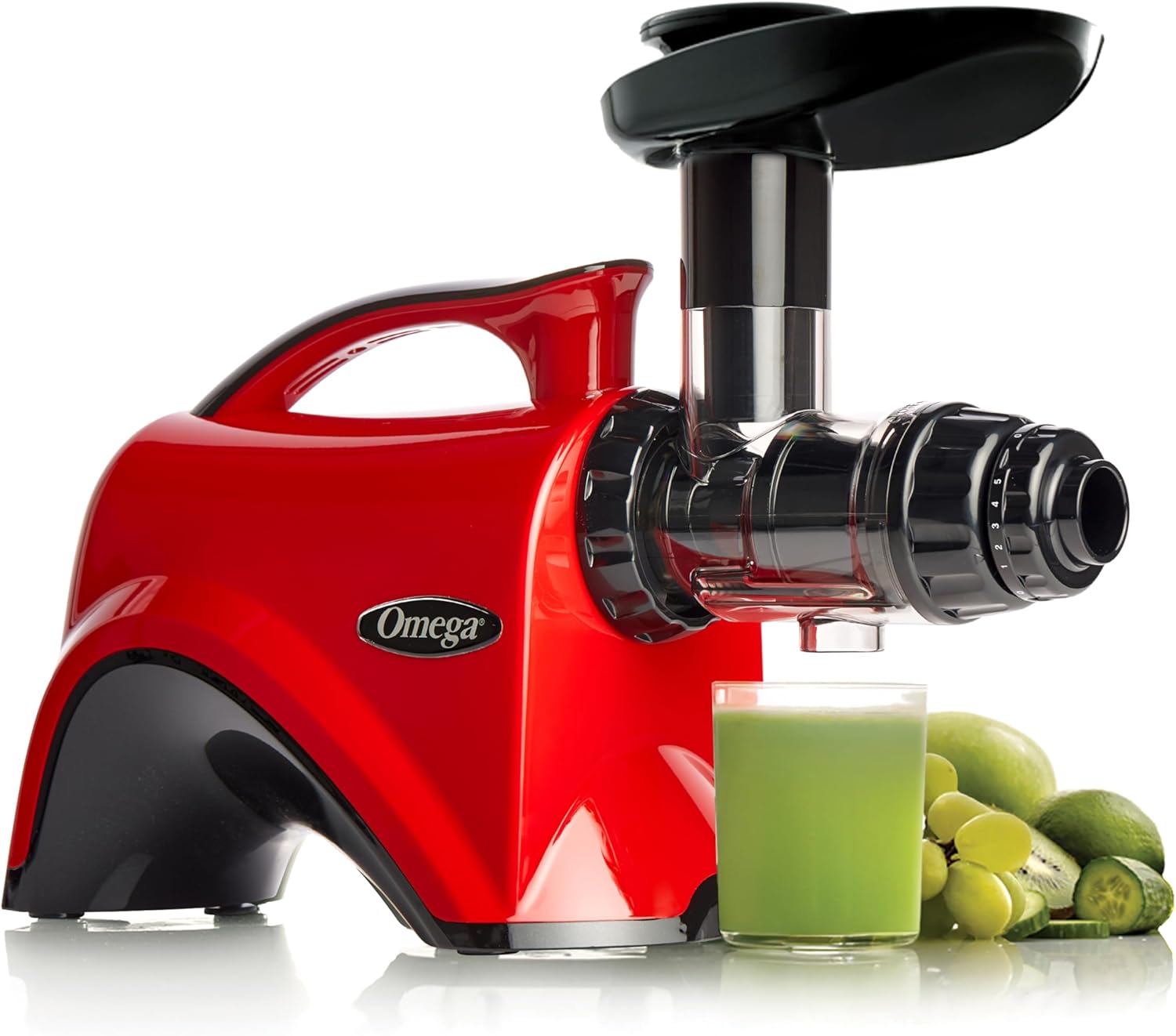
The Omega Premium Masticating Juicer is a single-auger, cold-press style machine built for high-yield extraction from fruits, vegetables, leafy greens and wheatgrass while also functioning as a small nutrition system for nut milks, baby food and sorbets. It runs at a low 80 RPM with a 150-watt motor, which minimizes heat and oxidation to preserve enzymes and flavor; the auger and dual-stage extraction squeeze produce thoroughly, and automatic pulp ejection lets you run continuous batches. The unit includes multiple nozzles and a homogenizing cone so you can make nut butters, pasta shapes and other foods beyond juice. Practical benefits include a larger feed chute than some Omega models to reduce prep time and a 0.9-liter capacity for reasonable batch sizes. Expect hand-wash care for most parts and a heavier footprint on the counter. The powerful 15-year motor warranty underlines long-term durability, making this a good fit for regular juicing and multi-function kitchen use rather than quick, occasional single-serving presses.
Best for: Buyers who prioritize maximum juice yield, nutrient preservation and multi-function kitchen capabilities for regular juicing and food prep.
Less Ideal for: If you need a compact, lightweight machine for occasional single servings or want a dishwasher-safe, low-maintenance model, this is not the best fit.
- Slow 80 RPM masticating action preserves enzymes and reduces oxidation
- Dual-stage auger extraction and automatic pulp ejection increase juice yield and allow continuous juicing
- Includes multiple nozzles and homogenizing cone for nut milks, baby food and other non-juice tasks
- Larger feed chute cuts down on prep time compared with smaller models
- Long 15-year motor coverage indicates strong durability
- Requires hand washing for most components which adds cleanup time
- Relatively heavy and takes up counter space
Verdict: Choose this Omega if you want a durable, performance-focused cold-press juicer that maximizes yield and also doubles as a nutrition system for nut milks and soft-food prep.
NutriBullet Juicer NBJ50100

| Maximum Power | 800 watts |
|---|---|
| Number of Speeds | 2 |
| Capacity | 1.5 liters |
| Power Source | Corded Electric |
| Controller Type | Button |
The NutriBullet Juicer is a user-friendly centrifugal machine designed for quick home juicing of a wide range of fruits and vegetables. Its 3-inch feed chute lets you juice whole apples, carrots and other produce with minimal prep, while the 800W motor and two-speed control handle both soft and hard items. Juice collects in a 27-ounce sealing pitcher with a no-drip spout and froth separator so you can pour or store juice for up to 48 hours, and the large pulp basin reduces trips to the trash when juicing several items. Removable parts including the stainless steel sieve, pulp basin and pitcher are dishwasher-safe which simplifies cleanup. Expect typical centrifugal juicer outcomes: fast throughput and bright juices but with more foam and less fiber retention than slow masticating models. It is a solid choice if you prioritize speed, easy prep, and straightforward maintenance over maximum nutrient extraction or very long-term storage.
Best for: Buyers who want fast, low-effort juicing that minimizes prep and cleanup so they can make fresh juice on busy mornings or batch small quantities for the week.
Less Ideal for: Those whose priority is maximum juice yield, minimal oxidation, or commercial-scale juicing should consider a slow masticating or higher-capacity machine instead.
- 3" wide feed chute accepts whole fruits and vegetables to cut prep time
- 800W motor with two speeds handles soft and hard produce reliably
- Large 1.5L pulp basin reduces interruptions when juicing multiple items
- Sealing 27oz pitcher with no-drip spout and froth separator for easy pouring and short-term storage
- Dishwasher-safe removable parts and included cleaning brush simplify cleanup
- As a centrifugal juicer it produces more foam and leaves more pulp than slow masticating units
- Not designed for long-term cold storage beyond the sealed pitcher’s 48-hour guidance
Verdict: Choose this NutriBullet Juicer if you want fast, no-fuss home juicing with a wide feed chute and easy cleanup.
GDOR Centrifugal Juicer GS378
| Maximum Power | 800 watts |
|---|---|
| Number of Speeds | 2 |
| Power Source | ac |
| Voltage | 120 volts |
| Special Features | Built in Froth Separator, Overheat Protection |
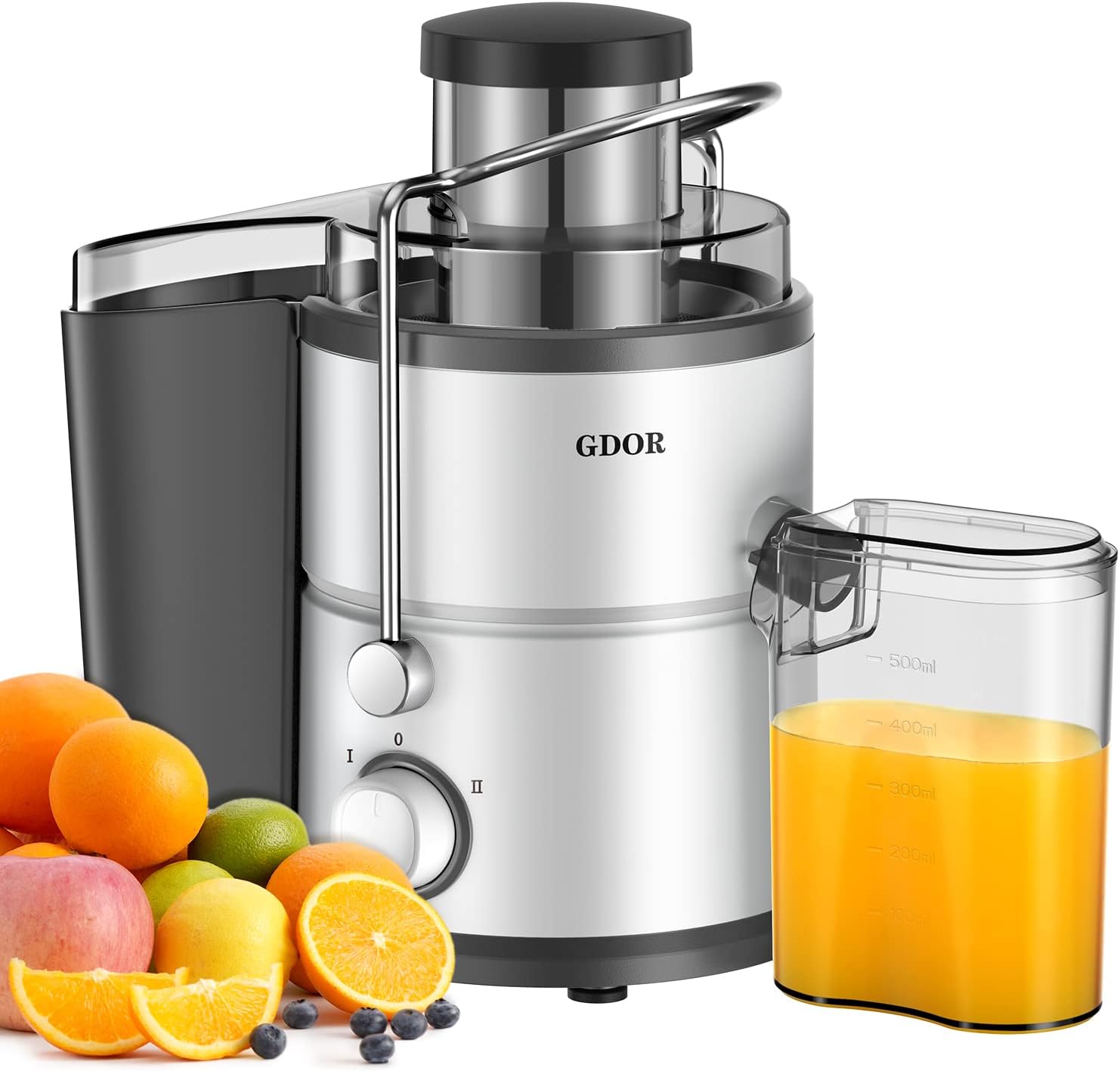
The GDOR GS378 is a budget-friendly centrifugal juicer aimed at quick everyday juicing of fruits and vegetables. Its 800W motor and two-speed knob let you switch between softer produce at the low setting and harder produce at the high setting, while the 3-inch feed chute reduces prep by accepting many whole fruits. A supplied 17 oz juice jug with a foam separator helps reduce froth and countertop mess with the anti-drip spout, and safety features such as a locking arm, micro-switch protection, and overheat cutoff make operation straightforward and safe. The unit is mainly plastic with stainless-steel blades and is designed for easy cleaning; removable parts are dishwasher-safe and a brush is included. Limitations include a relatively small juice capacity and the typical higher-speed centrifugal extraction that leaves more pulp than slow masticating models, so it favors speed over maximum yield. For buyers who want fast, simple juices without a large upfront cost, this delivers practical performance in a compact package.
Best for: Buyers wanting an affordable, fast juicer that handles a mix of fruits and vegetables with minimal prep and simple everyday use.
Less Ideal for: People who prioritize maximum juice yield, very large batches, or the quiet, slow-extraction results of masticating juicers should consider other styles.
- 800W motor with dual-speed control for soft and hard produce
- 3-inch wide feed chute reduces chopping and speeds prep
- Built-in foam separator and anti-drip spout for cleaner pours
- Multiple safety features including locking arm and overheat protection
- Removable parts are dishwasher-safe and a cleaning brush is included
- Centrifugal extraction leaves more pulp and yields less juice than slow masticating juicers
- 17 oz juice jug and overall capacity are modest for larger batches
Verdict: A cost-conscious, fast centrifugal juicer that speeds prep with a wide chute and dual speeds, making it a practical choice for everyday mixed-fruit-and-vegetable juicing.
Breville Juice Fountain Plus JE98XL

| Wattage | 850 watts |
|---|---|
| Number of Speeds | 2 |
| Power Source | Corded Electric |
| Capacity | 1 liters |
The Breville Juice Fountain Plus JE98XL is a straightforward centrifugal juicer intended for fast, everyday juicing. It uses an 850 watt motor with two speed settings so you can run softer produce on low and harder ingredients on high, and the 3-inch feed chute reduces prep by accommodating many whole fruits. A titanium-reinforced disc and stainless steel micro-mesh filter aim to increase extraction, and the included 35.2 fl oz jug with integrated froth separator makes pouring easier with less foam. Cleanup is simplified by a detachable pulp container and dishwasher-safe parts, and the cord-wrap under the base helps with storage. Because it is a centrifugal design, it juices quickly but produces more foam and a coarser pulp than slow masticating models, and it may not preserve the same level of enzymes for long-term storage. For someone who wants reliable, fast daily juice from a broad range of produce, this model delivers consistent performance, though users seeking maximum yield and minimum oxidation might prefer a slow-press alternative.
Best for: Buyers who prioritize dependable, quick juicing of a wide variety of fruits and vegetables and want a low-fuss appliance that works reliably every day.
Less Ideal for: People who need the highest juice yield, lowest oxidation, or prefer cold-press extraction for long-term storage should consider a slow masticating juicer instead.
- Extra-wide 3-inch chute reduces prep time by allowing larger pieces or whole fruits
- 850W motor with two speeds handles both soft and hard produce
- Titanium-reinforced disc and stainless steel micro-mesh filter for better extraction than basic centrifugals
- Built-in froth separator in the juice jug for less foam when pouring
- Dishwasher-safe parts and detachable pulp container simplify cleaning and storage
- Centrifugal design yields coarser pulp and more oxidation than slow masticating juicers
- Not optimized for maximum long-term juice preservation or highest possible yield
Verdict: Choose this juicer if you want a fast, reliable centrifugal machine that handles whole fruits and everyday juicing with minimal prep and easy cleanup.
Hamilton Beach Big Mouth Juicer 67601A

| Maximum Power | 800 watts |
|---|---|
| Power Source | Corded Electric |
| Number of Speeds | 1 |
| Material | Plastic, Stainless Steel |
| Capacity | 5 pounds |
The Hamilton Beach Big Mouth Juicer 67601A is a centrifugal extractor built for fast, everyday juicing of both hard and soft produce. Its 800W motor and stainless steel strainer spin produce quickly to separate juice from pulp, while the 3-inch feed chute accepts whole apples, bunches of celery, and similarly sized items so you spend less time pre-cutting. Users will appreciate the large pulp bin for longer sessions and the included cleaning brush plus dishwasher-safe removable parts for easier cleanup. The single-speed, knob-controlled operation keeps the machine simple to use, and the plastic and stainless construction feels practical for regular kitchen use. Expect higher yield and fast results, though centrifugal juicing is not as gentle on leafy greens or as noise-quiet as slower masticating models, and it does not come with a juice cup or foam separator. Safety features include motor overload protection that pauses operation if the unit overheats. For buyers who want reliable, speedy juicing of everyday fruits and many vegetables, this is a straightforward, well-supported option.
Best for: Buyers who rely on social proof and want a dependable, well-reviewed machine for fast daily juicing of common fruits and vegetables and who value easy cleanup and a trusted brand.
Less Ideal for: Those seeking the quietest unit, maximum extraction from leafy greens, or a cold-press style juicer should look at slow masticating models instead.
- Extra-large 3-inch feed chute reduces prep time by fitting whole fruits and vegetables
- 800W motor designed to extract juice efficiently from hard and soft produce
- Removable parts are dishwasher safe and include a cleaning brush for easier cleanup
- Large pulp bin handles longer juicing sessions without frequent emptying
- Stainless steel strainer and blade for durable, food-contact components
- Single-speed centrifugal design is less efficient with leafy greens compared with slow juicers
- Centrifugal juicers tend to be louder during operation
- No juice cup included with the unit
Verdict: A fast, easy-to-use centrifugal juicer with a large feed chute and strong motor that reliably handles whole fruits and everyday vegetables.
EanOruus 3-in-1 Masticating Juicer E-18

| Capacity | 100 fluid ounces |
|---|---|
| Maximum Power | 250 watts |
| Power Source | ac |
| Voltage | 110 volts |
The EanOruus E-18 is a single-auger masticating juicer designed for home users who want juice, nut milk and frozen fruit sorbet from one machine. It uses a 250 W AC motor and an auto-reversing auger to process whole fruits and vegetables through a 6.5-inch wide chute into a 100 oz hopper, which reduces the need for frequent refilling during batch runs. Interchangeable strainers let you switch between juice and sorbet or make nut milk, and the brush and detachable pulp outlet simplify cleaning of removable parts. The manufacturer highlights overheat protection and a whisper-quiet brushless-style motor for daily use and heavy fibrous produce. Expect slower extraction than centrifugal machines but generally higher yield and drier pulp, and note the unit is relatively heavy and requires hand washing of parts. For cautious buyers the built-in safety features and simple controls make operation straightforward, though those wanting dishwasher-safe convenience or a lighter, travel-friendly juicer should look elsewhere.
Best for: Buyers who prioritize reliable, low-foam extraction, high yield from whole fruits and a machine with safety features and straightforward operation for regular home juicing.
Less Ideal for: People who need a lightweight, travelable juicer or want all removable parts dishwasher-safe for hands-off cleanup.
- Large 6.5-inch feed chute accepts whole fruits to cut prep time
- 100 oz hopper for extended batch juicing or family-sized output
- 250 W AC motor with auto-reverse and overheat protection for consistent, heavy-duty extraction
- Interchangeable strainers for juice, sorbet and nut milk add versatility
- Removable parts require hand washing rather than dishwasher-safe cleaning
- Relatively heavy unit that is less portable than compact models
Verdict: Choose the EanOruus E-18 if you want a versatile, high-capacity masticating juicer that reliably handles whole fruits and also makes nut milk and sorbet.
Choosing the Right Juicer for All Fruits and Vegetables: Key Factors to Consider
Juice Yield and Nutrient Retention
Yield determines how much usable juice you extract from the same amount of produce and directly affects operating cost per glass. Machines that press slowly or use twin-stage extraction often produce drier pulp and higher yield, while high-speed models can oxidize juice faster, which reduces freshness.
Nutrient retention matters for leafy greens and delicate fruits where heat and oxidation degrade vitamins. Consider the extraction method and whether the design minimizes heat buildup and airflow exposure during juicing.
Versatility Across Produce Types
A true all-fruits-and-vegetables juicer handles soft berries, fibrous greens, and hard roots without forcing you to pre-cut excessively. Look for wide chutes and feed designs that accept whole or halved items, plus gearing or auger systems that process stringy or leafy material smoothly.
Versatility also means the machine can switch between produce types without repeated clogging or manual disentangling of pulp. Machines that allow variable speed or have different attachment geometries can adapt to a wider roster of ingredients.
Ease of Cleaning and Maintenance
Frequent cleanup is the main barrier to daily juicing. Removable parts that rinse clean under running water or are dishwasher-safe save time and encourage regular use. Complex internal screens or small crevices can trap pulp and require brushes or soaking to clean properly.
Maintenance also involves replacing worn gaskets or screens. Check how accessible service parts are and whether the design keeps replacement work simple to extend the lifespan of the appliance.
Durability and Construction
Durable materials and solid assembly reduce the chance of breakdowns from fibrous loads or repeated use. Metal gears, reinforced housings, and impact-resistant plastics withstand the strains of hard roots and dense produce better than thin plastics.
Consider warranty terms and the expected lifetime of wearable parts like screens and seals. A rebuildable or serviceable design is preferable for long-term ownership.
Counter Footprint and Noise
Kitchen space and household tolerance for noise shape what model fits you. Wide or tall units require clear counter or cabinet space, while compact models may fit smaller kitchens but sacrifice throughput or feed size.
Noise matters if you plan to juice early in the morning or while others are sleeping. Slower masticating designs are usually quieter than fast centrifugal units, so balance sound level against throughput needs.
Safety Features and Usability
Safety features like locking mechanisms, automatic shutoff on jams, and non-slip bases prevent mishaps during operation. Clear controls and straightforward assembly reduce the learning curve for new users and promote consistent use.
Usability also includes accessory storage, included cleaning tools, and whether the unit requires specific operating steps for different produce types. Practical touches often make daily juicing more convenient and less error-prone.
Masticating Versus Centrifugal: Which Suits Your Routine
Masticating juicers operate at low speed and crush produce to extract juice. They typically preserve nutrients better and produce drier pulp, which translates to higher yield from leafy greens and wheatgrass. These units are often quieter and better for users who prioritize nutrient retention and frequent juicing of vegetables.
Centrifugal machines spin at high speed and are faster for quick juices from firmer fruits and roots. They are convenient for rushed mornings but can introduce more air and heat into the juice, which shortens shelf life and may lower nutrient quality. Consider your typical ingredients and time constraints when choosing between the two styles.
- Masticating: better for greens, higher yield, slower operation
- Centrifugal: faster, simpler for hard fruits and quick prep, potentially more foam
Preparing Produce Efficiently
Prep affects both yield and the longevity of your machine. Hard roots should be cut into consistent sizes so the feed mechanism can process them without strain. Remove large pits and thick skins that could damage blades or cause unpleasant flavors.
Group ingredients by texture when juicing to avoid clogs. For example, run hard vegetables first, then follow with softer fruits or leafy greens. This order helps maintain steady throughput and reduces the need for manual clearing.
- Cut hard items to uniform pieces to reduce strain
- Alternate textures to keep the feed path clear
- Remove pits and very tough peels before juicing
Maintaining Your Juicer for Longevity
Regular cleaning immediately after use prevents pulp buildup and staining. Rinse removable parts promptly and use the provided brushes to clear fine screens. Periodically inspect seals and screens for wear and replace them as needed to maintain efficiency.
Store your juicer in a dry place and avoid using abrasive cleaners that can degrade plastic components. If the machine sits unused for long periods, run a quick water-only cycle before juicing to clear any residual dust.
- Rinse parts right away to prevent drying and sticking
- Use gently abrasive brushes for screens, not metal tools
- Replace worn gaskets and seals to prevent leaks
Maximizing Yield From Leafy Greens
Leafy greens like kale and spinach are nutritionally dense but present a challenge for some juicers. To maximize yield, chop leaves into shorter lengths and pack them with firmer items so the feed consistently pushes material through the auger or blade.
Cold-press styles generally outperform fast-spinning models on greens. If you regularly juice large volumes of leafy vegetables, prioritize machines and accessories specifically designed for green extraction.
- Chop leaves into shorter segments for smoother processing
- Mix greens with denser produce to improve feed consistency
- Choose slow-extraction designs for frequent green juicing
Storage and Shelf Life of Fresh Juice
Freshly extracted juice oxidizes quickly. Store juice in airtight glass containers in the coldest part of the refrigerator to slow degradation. Consume green juices within 24 to 48 hours for best flavor and nutrient retention, and expect citrus- and root-based juices to hold slightly longer.
If you plan to make juice in batches, consider models that minimize air incorporation during extraction. Less foam and oxygen exposure extend usable shelf life by reducing the rate of oxidation.
- Use airtight glass bottles and chill immediately
- Fill containers to minimize headspace and oxidation
- Label bottles with extraction date for safe use
How We Chose the Best Juicer for All Fruits and Vegetables
We prioritized real-world extraction performance and everyday usability when narrowing the field. Primary criteria included juice yield and nutrient retention, which determine how much usable juice you get from fruits and vegetables and how well vitamins and enzymes are preserved. We also measured mechanical versatility, meaning the ability to process leafy greens, soft berries, and hard roots without frequent jams or excessive prep. Ease of cleaning and maintenance was another decisive factor because regular cleanup drives how often people actually use a juicer. Durability and build quality were considered to ensure components withstand fibrous produce and frequent use. Noise level and counter footprint were evaluated for practical kitchen fit, and safety features such as automatic shutoff or locking mechanisms were required for inclusion. We excluded compact single-purpose citrus presses and lightweight smoothie blenders that do not deliver high juice yield from fibrous vegetables. Units with poor customer service histories or clearly inadequate construction were also dismissed. The final selection reflects machines that balance extraction, versatility, upkeep, and long-term reliability.
Our full evaluation process is outlined in our review methodology.
FAQ
Can one juicer reliably handle both leafy greens and hard roots?
Often, yes. Machines designed for broad versatility use low-speed augers or two-stage extraction to handle both textures. Look for units advertised as suitable for greens and roots and check for features that reduce clogging when switching produce types.
How often should I clean the juicer after use?
You should rinse removable parts immediately after each use and perform a more thorough clean with brushes or warm soapy water daily if you juice regularly. Prompt cleaning prevents pulp from drying and makes deep cleaning easier.
Does a higher juice yield mean better nutrient retention?
Not always. Higher yield means more liquid extracted, but nutrient retention depends on extraction method and heat exposure. Slow, cold-press extraction tends to preserve nutrients better than high-speed spinning that introduces heat and oxygen.
Will juicing create a lot of food waste?
Juicing produces pulp that is lower in moisture and fiber after extraction, but this pulp can be repurposed in baking, composting, or soups. Choosing a higher-yield machine reduces the mass of leftover pulp per serving.
What safety features should I look for in a juicer?
Look for secure locking lids, non-slip bases, and automatic shutoff or overload protection to prevent motor strain. Safety interlocks that prevent operation until parts are properly assembled reduce the risk of accidental contact.
Final Verdict
When choosing a juicer for all fruits and vegetables, prioritize extraction method and ease of cleaning because these two factors most affect daily usability and juice quality. If you frequently juice leafy greens, favor slow-extraction designs that yield drier pulp and preserve nutrients. For quick breakfasts with hard fruits and roots, faster machines trade some longevity and nutrient retention for speed. Balance countertop space, noise tolerance, and maintenance needs against your typical ingredients. Focusing on versatility, serviceability, and realistic kitchen use will help you select a unit that stays in regular rotation and delivers consistent results.