
Note: This article contains affiliate links. If you click on these links and make a purchase, we may earn a small commission at no extra cost to you. This helps support our research and content. Read our full affiliate disclosure here.
If you plan to make carrot and beet juices regularly, the right juicer can mean the difference between a nutritious daily habit and a messy chore. Juicers designed for hard root vegetables focus on efficient fiber separation, consistent yield, and manageable cleanup so you get more liquid and less waste from each batch. This guide spotlights seven shortlisted juicers optimized for carrots and beets, and explains the performance and usability differences that matter for home juicing. Below you will find our evaluation criteria and quick notes to help you decide which type of juicer fits your routine and kitchen.
Top Picks at a Glance
| Best Overall The best all-around choice for most situations | Breville Juice Fountain Plus JE98XL |  |
| Best Quality Built to a higher standard if you want something more solid | NAMA J2 Cold Press Juicer |  |
| Best Value The sweet spot between price and what you get | Hamilton Beach Big Mouth Juicer 67601A |  |
| Best Budget The cheapest option that still gets the job done reliably | HOUSNAT Centrifugal Juicer AMR516 |  |
| Top Rated A top-rated pick with lots of positive feedback | ECOSELF Cold Press Juicer |  |
| Most Popular A crowd favorite that many people choose with confidence | QCen Centrifugal Juicer KS-501 | 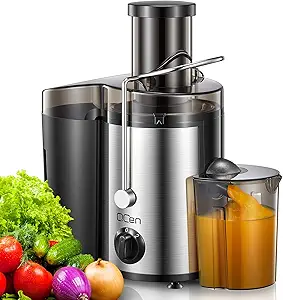 |
| Best Seller A high-volume bestseller chosen again and again | EanOruus 3-in-1 Cold Press Juicer E-18 |  |
Breville Juice Fountain Plus JE98XL

| Power | 850 watts |
|---|---|
| Feed Chute | 3 inch extra-wide |
| Speeds | 2 |
| Power Source | Corded Electric |
The Breville Juice Fountain Plus JE98XL is a straightforward centrifugal juicer built for fast everyday use. It uses an 850 watt motor and a titanium-reinforced disc with a stainless steel micro-mesh filter basket to extract juice from firm produce like carrots and beets, and the three-inch wide chute reduces prep time by allowing many fruits and vegetables to go in whole. Two speeds let you run softer leafy items at low speed and dense roots at high speed, while the included 35.2 fl oz juice jug with integrated froth separator makes pouring cleaner. Cleanup is simplified by a detachable pulp container and dishwasher-safe parts, and the cord stores under the base to keep the counter tidy. Expect centrifugal-style juice that is quick but a bit frothier and slightly less nutrient-dense than slow masticating models, and the noise and pulp yield reflect typical high-speed operation. For home cooks who want fast, reliable juice from carrots and beets without complex setup, this is a solid, easy-to-use choice.
Best for: Buyers who want fast, dependable juice from carrots, beets, and other hard produce with minimal prep and easy cleanup.
Less Ideal for: People seeking the highest possible juice yield, quiet operation, or cold-pressed nutrient retention should consider a slow masticating juicer instead.
- 850W motor and reinforced cutting disc for efficient extraction from hard roots
- 3-inch extra-wide chute reduces prep time by accommodating larger pieces
- Two-speed control tailored for both leafy greens and dense vegetables
- Built-in froth separator and 35.2 fl oz juice jug for cleaner pours
- Dishwasher-safe removable parts and cord storage for easier cleanup and storage
- Centrifugal design produces more froth and slightly lower nutrient retention than masticating juicers
- Louder operation compared with slow juicers during high-speed use
Verdict: Fast and user-friendly, this Breville centrifugal juicer is a practical pick for anyone who wants quick, reliable juice from carrots and beets with minimal prep.
NAMA J2 Cold Press Juicer

| Wattage | 200 watts |
|---|---|
| Power Source | Corded Electric |
| Number of Speeds | 1 |
| Capacity | 30 fluid ounces |
The NAMA J2 is a slow, single-auger cold press juicer built for steady, high-yield extraction of fruits and vegetables. It uses a 200 W motor running around 50 RPM to gently crush and press produce, which helps preserve nutrients and reduce foam and heat. The wide self-feeding hopper accepts larger pieces so you can load a full recipe and step away while the unit processes ingredients hands-free, making it useful for batch juicing carrots, beets, and leafy greens. Its included strainers and juice/pulp containers let you separate pulp efficiently, and the stainless steel and Tritan parts rinse clean quickly with the supplied brush and quick-release design. At 30 fl oz capacity it handles moderate batches without constant emptying. Limitations include a single fixed speed and a relatively modest 200 W motor, so very tough roots can require pre-cutting and slower throughput than high-power or twin-gear models. Hand wash care is required for parts rather than dishwasher-safe components.
Best for: Buyers who prioritize maximum juice yield and nutrient preservation when juicing hard roots and leafy greens and who want a hands-free, batch-friendly workflow.
Less Ideal for: If you need the fastest possible extraction or a heavy-duty commercial unit for continuous large-volume juicing, this compact single-speed home juicer is not the best choice.
- Self-feeding wide hopper lets you load full recipes for hands-free juicing
- Low 50 RPM masticating action preserves nutrients and minimizes heat
- Includes juice and pulp containers plus strainers for efficient separation
- Quick-release parts and cleaning brush make rinsing and scrubbing straightforward
- Only one speed and a 200 W motor limit throughput on very hard produce
- Parts require hand washing rather than dishwasher cleaning
Verdict: Choose the NAMA J2 when you want a hands-free cold-press juicer that maximizes yield and preserves nutrients for carrots, beets, and greens.
Hamilton Beach Big Mouth Juicer 67601A

| Maximum Power | 800 watts |
|---|---|
| Power Source | Corded Electric |
| Number of Speeds | 1 |
| Material | Plastic, Stainless Steel |
| Capacity | 5 pounds |
The Hamilton Beach Big Mouth Juicer is a straightforward centrifugal extractor built for fast, everyday juicing. Its 3-inch feed chute lets you feed whole apples, bunches of celery, or large carrot pieces without extensive prep, and the 800 watt motor spins a stainless steel strainer basket to separate juice from pulp quickly. Typical use is simple: insert produce, push it through the chute, and collect juice in a cup while pulp collects in the large bin. Removable parts are dishwasher safe and a cleaning brush is included, which helps cut cleanup time after juicing dense roots like carrots or beets. The unit has one speed and a knob controller, so it is easy to operate but offers limited control for delicate leafy greens. It also has motor overload protection to prevent damage if the unit is stressed. For people who want a fast, no-fuss juicer that handles hard produce efficiently, this model delivers solid yield and easy maintenance, though it lacks slow-juicer benefits like higher nutrient retention or quieter operation.
Best for: Buyers who prioritize speed and minimal prep when juicing hard vegetables like carrots and beets and want easy cleanup for frequent use.
Less Ideal for: If you need a quiet machine, want maximum nutrient retention from leafy greens, or prefer variable-speed control, consider a slow masticating model instead.
- Large 3-inch feed chute reduces prep time by fitting whole or large pieces of produce
- Powerful 800W motor extracts juice from hard roots like carrots and beets efficiently
- Removable, dishwasher-safe parts and included cleaning brush make cleanup easier
- Generous pulp bin lets you run multiple fruits or vegetables before emptying
- Single speed control limits gentle processing of delicate leafy greens
- Centrifugal design is louder and may produce more foam than slow masticating juicers
Verdict: A fast, easy-to-clean centrifugal juicer built to handle carrots and beets with minimal prep, making it a practical choice for everyday juicing.
HOUSNAT Centrifugal Juicer AMR516

| Maximum Power | 400 watts |
|---|---|
| Number of Speeds | 3 |
| Power Source | Corded Electric |
| Capacity | 450 ml |
The HOUSNAT AMR516 is a budget-friendly centrifugal juicer designed for quick daily use with whole fruits and vegetables. It uses a 400W motor (advertised max 800W) and a 65mm wide feed chute so you can juice apples, carrots, beets and similar produce with minimal chopping. Three speed settings plus a pulse let you match the speed to soft or hard ingredients, and the stainless steel filter and blades aim for drier pulp and higher nutrient yield. Detachable BPA-free parts are top-rack dishwasher safe and the kit includes a pulp collector, juicer jug and cleaning brush to reduce cleanup time. For regular light to moderate juicing the machine performs well, but as a centrifugal design it will produce more foam and slightly less fiber retention than slow masticating machines, and heavy daily commercial use could stress the motor. The safety arm, anti-slip feet and anti-drip spout are practical touches, and the included recipe book helps beginners get started.
Best for: Someone looking for an affordable, easy-to-use juicer to make fresh carrot and beet juices several times per week and who values fast extraction and simple cleanup.
Less Ideal for: If you need the maximum juice yield, minimal foam, or plan heavy daily commercial juicing, a slow masticating or commercial-grade juicer would be a better fit.
- 65mm wide feed chute reduces prep and fits many whole fruits and large pieces
- Three speed settings plus pulse let you adjust for soft or hard produce
- Stainless steel filter and blades designed for higher juice yield and drier pulp
- Detachable BPA-free parts are top-rack dishwasher safe and include a cleaning brush
- Centrifugal design produces more foam and may extract slightly fewer nutrients than slow juicers
- Recommended for light to moderate use rather than heavy commercial workloads
Verdict: A practical, budget-friendly centrifugal juicer that makes fast carrot and beet juices with minimal prep and easy cleanup.
ECOSELF Cold Press Juicer

| Special Features | 3-in-1 juice, nut milk, sorbet; 3 filters; 6.0" feed chute |
|---|---|
| Wattage | 350 watts |
| Voltage | 120 volts |
| Material | ABS |
| Capacity | 6.3 pounds |
The ECOSELF Cold Press Juicer is a slow masticating machine built for steady, everyday use and family batches. It uses a low-speed, high-torque motor and an all-metal gearbox to gently crush and press produce, which improves yield and preserves flavor when juicing dense root vegetables like carrots and beets. The 6.0-inch feed chute and large feeding chamber reduce prep time by allowing bigger pieces or whole fruits, and the included pusher helps move firmer produce into the auger. Three interchangeable filters let you switch between smooth juice, pulpy juice, and a blank basket for sorbets or nut milk. Cleanup is simplified by a straightforward locking design and a small number of parts that rinse quickly under running water. Important considerations: it is a slow-press unit so juicing takes longer than centrifugal models, and the machine's capacity and components are geared toward home use rather than commercial throughput. For home cooks who prioritize consistent extraction and quieter operation, it performs reliably on carrots and beets.
Best for: Buyers who want a dependable, quiet cold-press juicer that consistently extracts juice from hard root vegetables and supports regular family-size batches.
Less Ideal for: People who need very fast juicing or commercial-level throughput should consider higher-capacity centrifugal or commercial juicers instead.
- Low-speed extraction with high-torque motor preserves nutrients and increases juice yield from hard roots
- Large 6.0-inch feed chute reduces prep time for carrots and beets
- All-metal gearbox and quiet motor improve durability and reduce vibration during regular use
- Three filter options let you choose smooth juice, pulpier juice, or make sorbets and nut milk
- Simple locking design and few parts make assembly and rinsing fast
- Slower throughput than centrifugal juicers, so large batches take more time
- Designed for home capacity rather than heavy commercial use
Verdict: A reliable, quiet cold-press juicer built to extract high yields from carrots and beets for home and family use.
QCen Centrifugal Juicer KS-501

| Maximum Power | 500 watts |
|---|---|
| Number of Speeds | 2 |
| Power Source | Corded Electric |
| Capacity | 3 liters |
| Voltage | 120 volts |
The QCen KS-501 is a compact centrifugal juicer built for quick kitchen juicing of fruits and firm vegetables. It uses a 500W motor and two-speed settings so you can choose lower RPMs for soft fruits and higher RPMs for harder produce like carrots and beets. The 3-inch wide feed chute reduces chopping and speeds up prep, while the safety lock arm and overload protection add basic safeguards during use. Detachable parts and stainless steel materials make it straightforward to rinse and reassemble, though the manufacturer recommends hand washing. Practical strengths are fast extraction and ease of use for daily juices, but as a centrifugal model it will produce more foam and slightly drier pulp compared with slow masticating machines and may not retain as many nutrients for long-term storage. For short sessions and frequent fresh juice, its power and feed-chute size deliver reliable performance, but expect the usual centrifugal tradeoffs in yield and foam.
Best for: Buyers who prioritize fast, frequent fresh juices from both soft fruits and hard root vegetables and who want a straightforward machine with safety features and minimal prep.
Less Ideal for: People seeking the highest possible juice yield and longest nutrient retention for stored juice should consider a slow masticating juicer instead.
- 500W motor provides enough power to handle hard root vegetables like carrots and beets
- 3-inch wide feed chute reduces chopping and speeds up prep
- Two-speed control adapts to soft or hard produce
- Safety lock arm and overload protection improve user safety during operation
- Detachable stainless steel parts are easy to rinse and reassemble
- As a centrifugal juicer it creates more foam and typically yields less juice than slow masticating models
- Manufacturer recommends hand washing which adds cleanup time
Verdict: A practical, safety-minded centrifugal juicer that delivers quick extraction from carrots and beets with a large feed chute and usable power for everyday juicing.
EanOruus 3-in-1 Cold Press Juicer E-18

| Capacity | 100 fluid ounces |
|---|---|
| Wattage | 250 watts |
| Power Source | ac |
| Voltage | 110 volts |
The EanOruus E-18 is a single-auger cold press juicer designed for heavy kitchen use and batch juicing. It accepts large whole produce through a 6.5-inch chute and feeds into a 100 oz hopper so you can process multiple carrots or beets with minimal prep, while the slow masticating action and high-torque AC motor prioritize yield and nutrient retention. Two strainers let you switch between juice extraction and sorbet or nut milk making, and features like auto-reverse and overheat protection reduce clogging and motor stress during tough runs. Most parts are removable for hand washing, though the unit is fairly large and needs countertop space and occasional disassembly for cleaning. The 250 W motor is robust for fibrous root vegetables, but the juicer is not dishwasher-safe and its plastic components mean buyers should handle parts carefully to avoid wear over time. For buyers who want quiet, high-yield juicing of carrots and beets and occasional plant-based milk or sorbet, this model delivers consistent performance.
Best for: Buyers who prioritize reliable, high-yield cold-press extraction for carrots, beets, and other fibrous produce and who prefer quieter, batch-capable machines with simple clog-prevention features.
Less Ideal for: Those who need an ultra-compact or fully dishwasher-safe juicer or who only want quick single-servings from soft fruits will be better served by smaller centrifugal or compact models.
- Extra-large 100 oz hopper reduces refilling for batch juicing
- 6.5-inch wide chute accepts whole fruits and large vegetables to cut prep time
- High-torque 250 W AC motor provides steady, quiet masticating power for fibrous produce
- Auto-reverse and overheat protection help prevent jams and protect the motor
- Includes juice and sorbet/nut milk strainers for versatile use
- Hand wash only; parts are not dishwasher-safe
- Relatively large and heavier than countertop centrifugal juicers
Verdict: A roomy, quiet masticating juicer built for batch juicing of carrots and beets with high yield and clog-fighting features.
Choosing the Right Juicer for Carrots and Beets: Key Factors to Consider
Extraction Efficiency and Yield
How much juice you get from the same weight of carrots or beets directly affects cost per serving and preparation time. Machines that use slow auger or twin-gear designs typically compress and shear fibrous roots more completely, producing drier pulp and higher liquid yield. Higher extraction efficiency also concentrates nutrients and reduces waste, which matters if you juice frequently.
When evaluating yield, consider whether the unit leaves visibly wet pulp and whether the manufacturer describes extraction percentage. Efficient extraction often requires a balance of pressure and rotation speed tailored for hard vegetables.
Clogging Risk and Feeding Throughput
Carrots and beets are dense and stringy; some juicers handle them continuously while others block or require frequent stop-starts to clear jammed material. A wider feed chute and aggressive feed design let you process larger pieces with fewer interruptions, but can increase the chance of clogging if the internal screens are narrow.
Look for models with anti-clog geometry, reverse functions, or auger profiles designed to move pulp forward. Throughput affects how practical a juicer is for batch tasks such as prepping several servings at once.
Ease of Cleaning and Daily Maintenance
If you plan to juice carrots and beets multiple times per week, cleanup is a major consideration. Parts that come apart easily and are dishwasher-safe save time and make regular use sustainable. Screens with accessible edges, removable pulp traps, and few small crevices reduce scrubbing.
Also check for available cleaning tools like brushes sized to the screen and auger. Units that trap pulp in hard-to-reach areas will deter frequent use, so ease of cleaning influences long-term satisfaction more than peak extraction numbers.
Pulp Dryness and Nutrient Retention
Drier pulp generally indicates better mechanical extraction of juice and nutrients. For nutrient-sensitive users, the method of extraction can also influence oxidation and heat exposure. Cold-press or low-speed designs tend to introduce less heat and air, helping preserve heat-sensitive enzymes and vitamins compared with high-speed centrifugal systems.
If you plan to store juice, lower oxidation rates and minimal foam are additional benefits of gentler extraction methods when working with carrots and beets.
Build Quality and Long-Term Durability
Durability becomes important when processing hard vegetables frequently. Look for sturdy housings, reinforced augers, and quality motor bearings. Metal or high-strength plastics in wear areas extend service life and reduce the chance of component deformation under load.
Warranty terms and availability of replacement parts are also practical indicators of expected longevity. Machines designed for heavier duty use will stand up better to repeated batches of root vegetables.
Noise, Heat Management, and User Comfort
Some extraction systems run quietly and keep motor temperature low during extended use, while others produce significant noise and heat. If you juice early in the morning or in an open kitchen, noise level matters for household comfort. Effective heat management prevents thermal cutouts during batch juicing of multiple beets and carrots.
Consider motor cooling features, duty cycle ratings, and whether the unit offers variable speed or reverse to manage stubborn pieces without overworking the motor.
Centrifugal Vs Cold-Press for Roots
There are two common mechanical approaches: high-speed centrifugal shredding and low-speed cold-press (masticating or twin-gear) extraction. For hard roots, low-speed designs usually produce higher yields and drier pulp, while centrifugal units are faster for single servings but can leave wetter pulp and more foam.
If you prioritize nutrient retention and quieter operation, cold-press styles are often better suited for frequent carrot and beet juicing. Centrifugal units can still be useful if speed is the main priority and you accept slightly lower extraction efficiency.
- Cold-press: higher yield, less foam, quieter
- Centrifugal: faster, simpler, potentially wetter pulp
Preparing Carrots and Beets for Best Results
Trim ends and remove tough or woody cores as needed. Cut produce into sizes that match the chute or feeding tube to avoid overloading and to reduce the need for reverse or jam-clearing cycles. Peel beets if their skins are dirty or waxy; carrots can generally be rinsed and scrubbed without peeling.
Consistency of feed size helps the machine maintain steady throughput. Hard, frozen, or overly fibrous pieces increase strain on the motor and can reduce extraction efficiency.
- Rinse and scrub instead of heavy peeling to preserve nutrients
- Cut to recommended feed lengths for smoother processing
Managing Pulp and Juice Storage
Expect dry pulp from high-efficiency extractors. You can repurpose pulp into baked goods, soups, or compost. For juice storage, minimize air exposure and chill quickly to slow oxidation. Fresh carrot and beet juices oxidize and degrade in flavor and nutrients over hours, so plan servings accordingly.
Some units separate pulp into large bins that are easy to empty and rinse. Choose a configuration that fits the volume you plan to process to avoid frequent interruptions.
- Store juice in airtight containers and refrigerate immediately
- Repurpose pulp to reduce waste and maximize value
Countertop Footprint and Kitchen Integration
Consider where the juicer will live in your kitchen. Larger cold-press or twin-gear machines take more counter space but often handle larger batches without clogging. Compact centrifugal models are easier to store but may require more frequent cleaning sessions.
Evaluate cord length, weight for moving, and whether the unit's footprint fits your preparation area to avoid relocation each use.
- Measure storage space and counter placement before choosing
- Think about routine access to sink and dishwasher for cleaning
Safety and Warranty Considerations
Safety features such as locking lids, non-slip feet, and thermal cutoffs protect users during heavy use. Ensure the unit has clear user instructions for disassembly, cleaning, and safe feeding. Some brands provide motor protection to prevent damage from jams or overloading.
Warranty coverage and availability of replacement screens or augers are practical factors for long-term ownership. Check that common wear components are replaceable if you expect high-frequency juicing.
- Prefer units with thermal protection and secure lid locks
- Confirm availability of replacement parts and clear warranty terms
How We Chose the Best Juicer for Carrots and Beets
We prioritized machines that handle hard, fibrous root vegetables reliably while keeping cleanup and maintenance realistic for daily use. Our selection filters focused on extraction efficiency, tested as consistent juice yield from carrots and beets without excessive pulping, and on mechanical design choices that reduce clogging and make throughput steady. We also prioritized ease of disassembly and dishwasher-safe components because regular root-vegetable juicing demands frequent cleaning. Durability of critical wear parts and warranty coverage were considered to estimate service life under frequent use. Noise and motor thermal management were evaluated to ensure machines can run long enough to process multiple beets and carrots in one session. We excluded specialized citrus-only or leafy-only extractors and compact single-use appliances that are not intended for regular root-vegetable processing. The final picks reflect machines that balance yield, cleanup, throughput, and long-term reliability for carrot and beet juicing.
Our full evaluation process is outlined in our review methodology.
FAQ
Can I juice whole carrots and beets or do they need to be chopped?
It depends on the feed chute size and design. Many machines can accept long carrots whole, but denser beets often benefit from being halved or quartered to avoid jams. Cutting to the recommended size improves throughput and reduces stress on the motor.
Which juicer type gives the driest pulp for roots?
Low-speed cold-press styles typically extract more liquid and leave drier pulp than high-speed centrifugal units. Twin-gear and auger-based designs are most effective at compressing fibrous root vegetables.
How often should I clean the juicer if I use it daily for carrots and beets?
Ideally clean after each use to prevent buildup and staining from beet pigments. Disassemble removable parts, rinse pulp traps immediately, and use a brush on fine screens. Regular cleaning preserves performance and reduces odor or residue buildup.
Will juicing beets stain my machine or countertops?
Beet juice is strongly pigmented and can stain porous surfaces and some plastics if left wet. Wipe spills promptly, rinse parts soon after use, and consider using neutral-colored or stainless components where possible to minimize visible staining.
Is it better to peel beets before juicing?
Peeling is optional. If the beet skin is clean and you prefer maximum nutrients, rinsing and scrubbing may suffice. Peel if the skin is damaged, dirty, or waxed to avoid off flavors and reduce grit in the juice.
Final Verdict
Prioritize extraction efficiency and ease of cleaning when choosing a juicer for carrots and beets. If you plan frequent root-vegetable juicing, favor low-speed or twin-gear designs that yield drier pulp and manage oxidation, and verify that parts are easy to disassemble and replace. Balance throughput needs, counter footprint, and warranty support to match how much juice you will make and how often. With those tradeoffs in mind, you can select a machine that delivers reliable performance and practical upkeep for regular carrot and beet juicing.