
Note: This article contains affiliate links. If you click on these links and make a purchase, we may earn a small commission at no extra cost to you. This helps support our research and content. Read our full affiliate disclosure here.
If you drink vegetable juice regularly, picking the right juicer for carrots and celery changes how often you actually make juice. Carrots are dense and fibrous while celery is stringy and watery, so machines that handle both well make extraction faster, reduce waste, and leave you with clearer juice and less pulp to manage. This guide highlights seven shortlisted juicers that perform consistently with hard root vegetables and long stalky greens. We evaluated each option for extraction efficiency, cleanup, and durability so you can choose a model that matches your routine and kitchen habits. Read on to see which features matter most and which tradeoffs to expect before the product list.
Top Picks at a Glance
| Best Overall The best all-around choice for most situations | Ninja NeverClog Cold Press Juicer JC151 |  |
| Best Quality Built to a higher standard if you want something more solid | Kuvings AUTO10 Cold Press Juicer |  |
| Best Value The sweet spot between price and what you get | AMZCHEF Cold Press Juicer 1902B |  |
| Best Budget The cheapest option that still gets the job done reliably | QCen Centrifugal Juicer KS-501 | 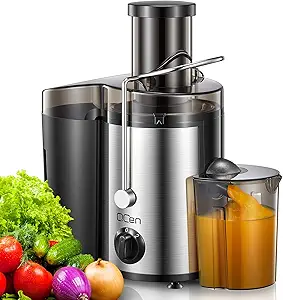 |
| Top Rated A top-rated pick with lots of positive feedback | ECOSELF Cold Press Juicer |  |
| Most Popular A crowd favorite that many people choose with confidence | Hamilton Beach Big Mouth Juicer 67601A |  |
| Best Seller A high-volume bestseller chosen again and again | Juilist Centrifugal Juicer AMR526 |  |
Ninja NeverClog Cold Press Juicer JC151

| Maximum Power | 150 watts |
|---|---|
| Number of Speeds | 2 |
| Power Source | Corded Electric |
| Capacity | 24 fluid ounces |
The Ninja NeverClog JC151 is a cold-press masticating juicer built to handle fibrous ingredients like carrots and celery without frequent clogging. Its 150-watt high-torque motor turns a slow auger to extract juice with less foam and better nutrient preservation than centrifugal models, and the included interchangeable pulp filters let you pick a smoother yield or a thicker, fiber-forward juice. Setup and everyday use are straightforward thanks to two one-touch programs including a reverse mode to clear jams, a built-in anti-drip lever to reduce mess when pausing, and generous containers that let you make larger batches without constant emptying. Cleanup is easier than many slow juicers because juice-contact parts are dishwasher safe and the design emphasizes simple assembly. The trade-offs are a slower processing speed than fast centrifugal machines and a moderate footprint on the counter, but for anyone prioritizing yield and gentle extraction from celery, carrots, and leafy greens, this model delivers reliable performance and practical features for regular use.
Best for: Buyers who want a reliable cold-press juicer that consistently handles tough, fibrous ingredients for regular carrot, celery, and green juices while prioritizing yield and easy pulp control.
Less Ideal for: People who need very fast single-serve juices or who must minimize countertop footprint should consider a compact centrifugal model instead.
- High-torque 150W auger extracts juice efficiently from fibrous produce like carrots and celery
- Two interchangeable pulp filters let you choose less pulp or more pulp for texture control
- Reverse program helps clear jams and improves continuous juicing
- Large 24 oz juice jug and 36 oz pulp container reduce the need to stop and empty during batch juicing
- Dishwasher-safe juice-contact parts simplify cleanup
- Slower extraction speed compared with centrifugal juicers
- Takes more counter space than very compact models
Verdict: Choose the Ninja JC151 if you want a slow cold-press juicer that reliably handles carrots, celery, and other fibrous produce with strong extraction and easy pulp control.
Kuvings AUTO10 Cold Press Juicer

| Power source | Corded Electric |
|---|---|
| Wattage | 240 watts |
| Capacity | 3 liters |
| Maximum power | 240 watts |
The Kuvings AUTO10 is a slow masticating juicer built for high-capacity, low-pulp juicing of whole fruits and vegetables. Its 240W motor and upgraded auger run at about 50 RPM to gently press produce, which preserves nutrients and yields silky juice with less foam and pulp—especially useful for fibrous items like carrots and celery. The Auto-Cut double-crushing blade and self-feeding mechanism let you drop in whole produce without extensive prep, making it practical for batch juicing for a household or meal prep. Cleaning is simplified with fewer parts and included tools, and the unit is rated for continuous runs up to 30 minutes so it can handle larger sessions. Expect the machine to be heavier and more substantial than compact juicers, and its 100 oz capacity and hands-free workflow are optimized for frequent use rather than occasional single servings. Noise is low for its class, and material choices (acrylic housing, plastic blade) keep maintenance straightforward.
Best for: Buyers who want high-performance, nutrient-preserving juice from hard, fibrous produce and who plan to make large batches or juice frequently for a household or meal prep routine.
Less Ideal for: If you only make occasional single servings or need an ultra-compact, lightweight countertop appliance, a smaller centrifugal or compact masticating model will be a better fit.
- High juice yield with low pulp thanks to slow 50 RPM masticating action
- Auto-Cut double-crushing blade and self-feeding design reduce prep time for whole carrots and celery
- Large 100 oz (3 L) capacity suitable for batch juicing or family-sized servings
- Quiet 240W motor capable of continuous 30-minute runs for heavy use
- Simplified parts and included cleaning tools make cleanup faster after big sessions
- Relatively heavy and substantial footprint compared with compact centrifugal juicers
- Uses plastic blade material rather than metal, which may concern some buyers
Verdict: Choose the AUTO10 if you need a hands-free, high-yield cold press juicer that excels at extracting silky, low-pulp juice from carrots, celery, and other fibrous produce.
AMZCHEF Cold Press Juicer 1902B

| Special Features | Auto-Reversing, Easy to Clean, Overheat Protection, Whole Fruit Processing |
|---|---|
| Wattage | 300 watts |
| Maximum Power | 350 watts |
| Power Source | Electric |
| Material | Stainless Steel |
This AMZCHEF 1902B masticating juicer is built to extract high yields from whole fruits and vegetables with minimal prep thanks to its 5.4-inch oversized feed chute and single auger design. It runs quietly on a heavy-duty motor and uses an enlarged spiral auger plus triple strainers to separate juice from dry pulp, which makes it good for fibrous produce like carrots and celery. The mostly stainless steel build and upgraded stainless blade suggest durability for regular home use, and features such as auto-reverse and overheat protection reduce the chance of jams and motor strain. Detachable parts and simple one-button operation make it straightforward to disassemble and rinse after juicing, though hand washing is required for the components. Limits to note are moderate wattage (300 watts listed) so expect slower extraction than high-power centrifugal models, and careful loading is still recommended even with the wide chute to avoid forcing ingredients. For someone who wants efficient, quiet cold-pressed juice from hard vegetables with less chopping, this model is a practical choice.
Best for: Buyers who want a practical, low-noise cold-press juicer that handles hard, fibrous produce with minimal chopping and prioritizes high juice yield and durability for regular home use.
Less Ideal for: Those who need the fastest extraction for very large batches or prefer dishwasher-safe components should consider other options.
- 5.4-inch oversized feed chute accepts whole apples, carrots, oranges and celery to reduce prep time
- Enlarged spiral auger and triple strainers produce high juice yield with dry pulp separation
- Stainless steel blade and body for durable, heavy-use performance
- Quiet heavy-duty motor with overheat protection and auto-reverse to handle jams
- Detachable parts and simple one-button operation for quicker cleaning and assembly
- Hand wash only for parts rather than dishwasher-safe cleaning
- 300 watts nominal power may mean slower processing for large volumes compared with higher-wattage juicers
Verdict: If you want quiet, efficient cold-pressed juice from carrots and celery with minimal prep, this stainless-steel masticating juicer delivers high yield and reliable everyday performance.
QCen Centrifugal Juicer KS-501

| Maximum Power | 500 watts |
|---|---|
| Number of Speeds | 2 |
| Power Source | Corded Electric |
| Voltage | 120 volts |
| Capacity | 3 liters |
The QCen KS-501 is a budget-friendly centrifugal juicer built for quick everyday juicing of fruits and firmer vegetables like carrots and celery. Its 500W motor and two-speed control (low for soft fruit, high for harder produce) let you process carrots and similar vegetables at the higher setting for better extraction, while the 3-inch feed chute reduces prep time by fitting larger pieces. The stainless steel blade and filter basket handle fibrous produce, and the safety lock arm plus overload protection improve user confidence during use. Detachable parts make cleanup straightforward, though the unit is hand-wash only so expect some rinsing and scrubbing after juicing. Because it is a centrifugal design, you will get faster juice but more foam and slightly less yield compared with slower masticating models. The compact footprint and simple button controls keep operation easy, making this a practical choice if you want fast carrot and celery juice without a large investment.
Best for: Buyers who want a low-cost, fast juicer for regular carrot and celery juices and prefer a simple, no-frills machine that minimizes prep time.
Less Ideal for: Those who prioritize maximum yield, minimal foam, or nutrient preservation from slow cold-press juicing should consider a masticating model instead.
- 500W motor with two speeds for both soft and hard produce
- 3-inch wide feed chute reduces chopping and saves prep time
- Stainless steel blade and filter suited for fibrous vegetables
- Safety lock arm and overload protection add user safety
- Detachable parts simplify cleaning and maintenance
- Centrifugal design yields more foam and slightly lower extraction than slow juicers
- Requires hand washing of parts rather than dishwasher-safe components
Verdict: If you want fast, affordable daily juicing of carrots and celery with minimal prep, this 500W centrifugal juicer delivers good performance for the price.
ECOSELF Cold Press Juicer

| Special Features | Easy to Clean; High Juice Yield; Reverse Function; Self Feeding; Wide Feed Chute |
|---|---|
| Material | Acrylonitrile Butadiene Styrene (ABS) |
The ECOSELF Cold Press Juicer is a single-auger masticating machine built for daily fruit, vegetable, and leafy-green juicing. Its wide feed chute and self-feeding design let you drop in larger pieces and run the unit hands-free, which speeds up prep for carrots and celery. The slow, cold-press extraction minimizes heat and oxidation to preserve enzymes and produce a smoother, low-pulp juice while the reverse function helps clear clogs without disassembly. Assembly and cleaning are straightforward thanks to an integrated hopper, filter, and included brush, and a simple rotary knob keeps operation intuitive. The motor is described as high power and low noise, and the manufacturer claims very high juice yield to reduce waste. Expect the juicer to work best for routine home use where consistent, gentle extraction matters more than speed; heavy commercial use or very large batches may require a more industrial model. The unit is plastic-bodied ABS construction, so buyers wanting metal or premium finishes should note the material choice.
Best for: Home cooks who prioritize reliable, nutrient-preserving cold-press extraction for regular carrot and celery juices and want a low-fuss, hands-free setup for morning routines.
Less Ideal for: Commercial users or buyers needing a heavy-duty machine for very large batches or shoppers seeking premium metal finishes and heavier build materials.
- Wide feed chute with self-feeding design reduces prep time for carrots and celery
- Slow masticating extraction preserves nutrients and produces smoother, low-pulp juice
- Reverse function clears jams without full disassembly
- Easy assembly and included brush make daily cleaning manageable
- ABS plastic construction rather than metal may feel less durable to some buyers
- Not intended for heavy commercial or high-volume professional use
Verdict: Choose this juicer if you want a reliable, hands-free cold-press machine that maximizes juice yield from carrots and celery while keeping daily use and cleaning simple.
Hamilton Beach Big Mouth Juicer 67601A

| Maximum Power | 800 watts |
|---|---|
| Power Source | Corded Electric |
| Number of Speeds | 1 |
| Material | Plastic, Stainless Steel |
The Hamilton Beach Big Mouth Juicer is a centrifugal extractor built for fast everyday juicing, especially useful for harder produce like carrots and celery. Its 3" feed chute accepts whole apples, celery stalks, and many other pieces with minimal prep, speeding up morning routines. The 800 watt motor spins a stainless steel strainer to pull juice quickly and send pulp into a large pulp bin, so you get higher yield from hard and soft items in seconds. Cleanup is straightforward because the lid, pulp bin, and other removable parts are dishwasher safe and a cleaning brush is included. The single-speed knob makes operation simple but limits speed control for delicate leafy greens, which may produce more foam. The unit also has motor overload protection to prevent damage from heavy loads. Overall, it is a practical, no-frills machine that prioritizes speed and convenience over slow cold-press extraction.
Best for: Buyers who want fast, low-effort juicing of carrots, celery, and whole fruits and value proven performance and strong user feedback when choosing a reliable everyday juicer.
Less Ideal for: Those seeking cold-press extraction for maximum nutrient retention or users who want adjustable speed settings for very leafy or soft produce should consider a masticating juicer instead.
- Extra-large 3" feed chute reduces pre-cutting and speeds prep
- 800 watt motor delivers strong extraction for hard produce
- Removable parts are dishwasher safe for easier cleanup
- Includes cleaning brush and a large pulp bin for continuous juicing
- Single speed operation limits control for delicate leafy greens
- Centrifugal design can introduce more foam and less nutrient retention than slow juicers
Verdict: A fast, easy-to-use centrifugal juicer that makes quick work of carrots and celery with minimal prep thanks to its extra-large feed chute and strong motor.
Juilist Centrifugal Juicer AMR526

| Maximum Power | 800 watts |
|---|---|
| Wattage | 400 watts |
| Feed Chute | 3" |
| Number of Speeds | 3 |
| Capacity | 400 ml |
The Juilist AMR526 is a centrifugal countertop juicer built for fast everyday juicing of fruits and many vegetables. It uses a high-speed motor (400W nominal, 800W max burst) and a 3" wide feed chute so you can process larger pieces with less prep, while three speed settings let you match torque to soft or harder produce. The stainless steel cutting disc and micro-mesh filter aim to improve juice yield, and included brush and dishwasher-safe parts make cleanup straightforward. Safety features such as a double lock arm, non-slip base, and overheat protection reduce risk during use. For carrots and celery the higher speed settings and sharp filter will produce quick cups of juice, though as a centrifugal model it will leave more pulp and slightly less liquid than a slow masticating juicer and can be louder. The unit is compact enough for small counters but has a modest 400 ml jug capacity, so plan for multiple batches for larger servings.
Best for: Buyers who want a reliable, easy-to-use juicer for daily fruit and vegetable juices and prefer simple controls, visible operation, and straightforward cleanup.
Less Ideal for: If you prioritize maximum juice yield, very low noise, or single-pass extraction for large volumes, a slow masticating model or commercial juicer would be a better fit.
- 3" wide feed chute reduces prep by allowing larger pieces
- Three speed settings for soft and hard produce including a pulse/high option
- Stainless steel cutting disc and micro-mesh filter for improved juice yield
- Dishwasher-safe accessories and cleaning brush simplify cleanup
- Built-in safety features include double lock arm and overheat protection
- Centrifugal design leaves more pulp and extracts less juice than slow masticating juicers
- 400 ml capacity requires multiple runs for larger quantities
Verdict: A user-friendly, safety-minded centrifugal juicer that delivers fast, no-fuss juice for carrots and celery when you value speed and easy cleanup over maximum yield.
Choosing the Right Juicer for Carrots and Celery: Key Factors to Consider
Extraction Yield
Yield determines how much juice you get from the same amount of produce. For carrots, which are dense and produce relatively little free liquid, a juicer with strong mechanical pressure or slow cold-press extraction usually squeezes more juice from the fiber. For celery, yield is often limited by how effectively the machine separates liquid from stringy strands.
Higher yield lowers ongoing produce costs and reduces waste volume. When comparing models, look for reported yield figures or user feedback about dry pulp. Machines that leave noticeably damp pulp typically lower effective yield and require more shopping for vegetables over time.
Ease of Cleaning
If you plan to juice daily, cleanup time is a key factor in whether the habit sticks. Juicers with few parts, wide openings, and components that rinse clean quickly reduce the friction of after-use chores. Fine mesh filters and screens catch pulp but can trap fibers; look for designs that allow simple access or brushes to clear them.
Dishwasher-safe parts are convenient but check which components actually go in the dishwasher and how sensitive seals and gaskets are to high heat. A device that demands lengthy soaking or fiddly scraping will discourage regular use.
Feed-Chute & Throughput
Chute size and feed design affect how much prep is required and how quickly you can process carrots and celery. A wide chute or a long throat that can accommodate full celery stalks minimizes trimming. For carrots, a larger chute reduces the need to pre-cut roots into small pieces, saving prep time.
Throughput is also tied to motor capacity and design. If you want to make multiple servings quickly, choose a machine rated for continuous use or with a high-capacity feed system to avoid frequent stops and starts.
Juice Clarity and Oxidation
Clarity and oxidation determine the flavor and shelf life of your juice. Fast-spinning centrifugal devices can introduce more air, producing foamy juice that browns faster. Cold-press or masticating designs usually yield clearer juice with less foam and slower oxidation, preserving brightness and taste for a longer window.
Think about how soon you plan to drink or store the juice. If you need juice that lasts a day or more in the fridge, prioritize machines that produce less foam and lower oxidation.
Motor Reliability and Duty Cycle
The motor is the component under the most stress during juicing sessions. Motors with higher duty-cycle ratings or thermal protection systems handle long runs without overheating. For regular use with tough produce like carrots, a reliable motor means fewer interruptions and a longer lifespan for the machine.
Consider whether the manufacturer specifies continuous-run time limits and whether replacement parts or service instructions are accessible. A warranty that covers motor failure adds assurance for everyday use.
Cold-Press Versus Fast-Spinning Centrifugal
Two common extraction styles handle carrots and celery differently. Cold-press or masticating juicers slowly crush and press produce, typically yielding drier pulp, clearer juice, and less oxidation. Fast-spinning centrifugal units cut produce at high speed and separate juice by force, which is quicker but can create more foam and slightly more oxidation.
If you prioritize maximum yield and longer-lasting juice, a slow cold-press machine is usually the better choice. If you need speed and quick single servings, a centrifugal unit might suit your routine better.
- Cold-press: higher yield, less foam, better nutrient retention over short storage.
- Centrifugal: faster throughput, simpler for occasional use, usually easier to fit under cabinets.
Preparing Carrots and Celery Efficiently
Prep work affects both yield and the amount of time you spend at the counter. For carrots, trimming tops and slicing into lengths that match the chute reduces jamming and helps the machine maintain steady throughput. Thicker carrots may need to be quartered for some chutes.
With celery, removing any discolored or woody ends and feeding stalks in manageable bundles prevents long strings from wrapping in the mechanism. If your chosen juicer accepts long stalks, you can save prep time and reduce waste.
- Cut carrots to fit the feed chute to avoid overworking the motor.
- Bundle celery stalks rather than stuffing single strands, which can clog small openings.
Pulp Management and Uses for Leftovers
Pulp volume and dryness vary by extraction method. Drier pulp is easier to compost or repurpose because it contains less trapped liquid and is less likely to spoil quickly. Softer, wetter pulp can still be useful in baking, soups, or as an ingredient in veggie patties but may require moisture adjustments.
If minimizing waste matters, prioritize models that consistently eject dry pulp. Also consider whether the juicer's pulp container is easy to empty and has a seal that prevents leaks during collection.
- Dry pulp is preferred for composting and storage.
- Wet pulp works well in baking and cooking but needs prompt use or refrigeration.
Noise, Footprint, and Kitchen Fit
Noise levels vary substantially between slow masticating units and high-speed centrifugal machines. If you juice early in the morning, quieter operation reduces disturbances. Similarly, footprint and storage affect whether a machine fits on your counter or requires cabinet space.
Consider how often you will leave the juicer out versus stowing it. Heavier or wider machines may be more stable during use but take up more storage room.
- Masticating machines are typically quieter but larger and heavier.
- Centrifugal machines are often compact but louder during extraction.
Safety and Maintenance Tips
Always follow basic safety precautions such as unplugging before disassembly and ensuring all locking mechanisms are fully engaged during use. Sharp cutting assemblies and spinning parts require care when cleaning and reassembling.
Regularly inspect seals and gaskets for wear and replace them if they become brittle. Lubrication is rarely required for modern juicers, but consult the manual for recommended maintenance intervals to keep performance consistent.
- Unplug and wait for moving parts to stop before opening the machine.
- Replace worn seals to prevent leaks and contamination.
How We Chose the Best Juicer for Carrots and Celery
We focused on criteria that directly affect everyday vegetable juicing for carrots and celery. First, extraction efficiency was a priority because these two vegetables have very different fiber and moisture profiles; machines that produce higher yield and drier pulp were favored. Second, ease of cleaning was essential since regular juicing requires tools that are quick to disassemble and rinse. Third, feed-chute design and throughput mattered because carrots require steady feeding and celery benefits from a chute that accepts long stalks or allows sensible trimming. Fourth, motor reliability and thermal protection were considered to ensure consistent performance during repeated use. Fifth, juice quality and oxidation control were examined, with attention to whether a machine produces clearer juice versus foamy, rapidly oxidizing output. We excluded single-purpose citrus extractors and handheld centrifugal devices designed only for occasional use. We also filtered out models with limited serviceability or poor parts availability. The shortlist reflects units that meet minimum build quality standards and score well across extraction, cleanup, usable throughput, and juice clarity.
Our full evaluation process is outlined in our review methodology.
FAQ
Which type of juicer is best for both carrots and celery?
Masticating or cold-press juicers are often best because they extract more juice from dense carrots while handling long, stringy celery with less oxidation and foam. Centrifugal machines can be faster but may yield slightly less juice and more foam.
How should I prep carrots and celery before juicing?
Trim ends and remove blemishes. Cut carrots to a length that fits your feed chute and bundle celery stalks if the chute is narrow. Minimal prep reduces jams and improves throughput.
Can I juice a mix of carrots and celery together?
Yes. Juicing them together balances sweetness and freshness. Alternate feeding harder carrots with celery stalks to help push fibrous material through the machine and maintain steady flow.
How long does juice last in the refrigerator?
It depends on the extraction method and storage. Cold-press juice typically stays fresher for up to 48 hours when kept cold in a sealed container, while fast-spun juice may oxidize faster and is best consumed within 24 hours.
Why does my juicer clog when juicing celery?
Clogs often occur when long celery strings wrap around the cutter or when the feed chute is overloaded. Bundle stalks, trim fibrous ends, and feed more slowly to reduce wrapping and jams.
Final Verdict
When choosing a juicer for carrots and celery, prioritize extraction yield and ease of cleaning because these two factors most affect ongoing convenience and cost. Decide whether you value speed or juice quality: fast-spinning units are convenient for quick servings while cold-press machines generally produce higher yield, clearer juice, and slower oxidation. Consider feed-chute size and motor duty cycle to match the volume and frequency of juicing you expect. Balancing these tradeoffs will help you pick a reliable machine that fits your kitchen habits. Focus on the combination of yield, cleanup time, and durability to choose confidently.