
Note: This article contains affiliate links. If you click on these links and make a purchase, we may earn a small commission at no extra cost to you. This helps support our research and content. Read our full affiliate disclosure here.
If you rely on celery juice for daily health routines or recipes, the right juicer makes a big difference in yield, fiber control, and cleanup time. Choosing a juicer that handles fibrous stalks without clogging or wasting produce helps you get more juice per bunch and reduces prep work. This guide shortlists the top juicers for celery based on extraction efficiency, ease of cleaning, and durability for frequent use. Read on to see which types and features matter most and why these picks made the list.
Top Picks at a Glance
| Best Overall The best all-around choice for most situations | Ninja NeverClog Cold Press Juicer JC151 |  |
| Best Quality Built to a higher standard if you want something more solid | Hurom H70 Slow Juicer |  |
| Best Value The sweet spot between price and what you get | AMZCHEF Cold Press Juicer 1902B |  |
| Best Budget The cheapest option that still gets the job done reliably | Juilist Centrifugal Juicer AMR526 |  |
| Top Rated A top-rated pick with lots of positive feedback | anybear Cold Press Juicer SJ054C |  |
| Most Popular A crowd favorite that many people choose with confidence | Hamilton Beach Big Mouth Juicer |  |
| Best Seller A high-volume bestseller chosen again and again | EanOruus E-18 Masticating Juicer |  |
Ninja NeverClog Cold Press Juicer JC151

| Maximum Power | 150 watts |
|---|---|
| Number of Speeds | 2 |
| Capacity | 24 fluid ounces |
| Power Source | Corded Electric |
The Ninja NeverClog JC151 is a masticating cold-press juicer built to handle fibrous produce like celery, kale, and carrots without frequent clogging. Its 150-watt high-torque motor and auger extract juice at low speed to preserve nutrients and reduce foam, while two interchangeable pulp filters let you dial in texture from smooth to pulpy. One-touch Start/Stop plus a Reverse function help clear jams and improve extraction during tougher runs. The set includes a 24 oz juice jug and a 36 oz pulp container so you can make larger batches for meal prep, and most juice-contact parts are dishwasher safe for easier cleanup. Practical touches such as an anti-drip lever and compact countertop footprint keep daily use tidy and convenient. Limitations are its modest motor wattage compared with commercial slow juicers and the single-speed design, which means very heavy-duty professional use may be slower, but for home users focused on regular celery and green juices it offers good yield and straightforward maintenance.
Best for: Home users who want reliable, everyday cold-pressed juices from fibrous produce like celery and greens and value easy cleanup and simple controls.
Less Ideal for: People who need a commercial-grade juicer for very high-volume or continuous daily use should look at heavier-duty machines instead.
- High-torque 150W auger designed to power through fibrous ingredients like celery and leafy greens
- Two interchangeable pulp filters for controlling juice texture from smooth to pulpy
- Large 24 oz juice jug and 36 oz pulp container let you make bigger batches without frequent emptying
- Dishwasher-safe juice-contact parts and easy assembly simplify cleanup
- Reverse function and one-touch controls reduce jams and improve extraction efficiency
- 150W motor and single-speed operation can be slower than higher-power or multi-speed slow juicers
- Not built for heavy commercial use or continuous high-volume juicing
Verdict: If you want a countertop cold-press juicer that reliably handles celery and leafy greens with easy cleanup and good batch capacity, this Ninja JC151 is a practical choice.
Hurom H70 Slow Juicer

| Wattage | 150 watts |
|---|---|
| Power Source | Corded Electric |
| Material | Plastic |
| Special Features | Easy to Clean |
| Recommended Uses For Product | Juicing fruits and vegetables |
The Hurom H70 is a slow masticating juicer built to extract maximum juice with minimal fuss. It uses a low-speed auger and a strainer-free Easy Clean chamber to separate pulp during juicing, which reduces clogging and lets you rinse parts quickly after use. The large self-feeding hopper accepts bigger pieces so you can process apples, celery, carrots, and leafy greens with less prep, while the front-facing gauge helps you monitor juice volume as you work. At 150 watts it runs quietly and the two-part auger system is intended to boost yield and deliver smooth, low-pulp juice that stores for up to several days. Trade-offs include a predominantly plastic construction and the need to hand-wash components rather than run them in a dishwasher, and the unit is fairly tall for countertop storage. For someone focused on high juice yield from tough fibrous produce like celery, the H70 balances performance and cleanup better than many centrifugal models.
Best for: Buyers who prioritize extracting maximum juice from fibrous produce and want a quiet, high-yield juicer that minimizes cleaning hassle.
Less Ideal for: Those who need a metal-bodied, heavy-duty commercial machine or who prefer dishwasher-safe parts for simpler cleanup.
- Strainer-free Easy Clean chamber for faster rinsing and less buildup
- Large self-feeding hopper reduces chopping and speeds prep
- Low-speed auger design produces higher yield and smoother, low-pulp juice
- Quiet operation suitable for morning use
- Main body and components are plastic rather than metal
- Parts require hand washing and are not dishwasher-safe
Verdict: Choose the H70 when you want a quiet, high-yield cold-press juicer that handles celery and other fibrous produce with minimal prep and easy cleanup.
AMZCHEF Cold Press Juicer 1902B

| Wattage | 300 watts |
|---|---|
| Maximum Power | 350 watts |
| Power Source | Electric |
| Voltage | 120 volts |
| Capacity | 5 pounds |
The AMZCHEF 1902B is a single-auger cold press juicer built to handle whole fruits and vegetables with minimal prep thanks to its oversized 5.4" feed chute. It runs on a quiet heavy-duty motor and a copper core that resists stalling when processing fibrous produce like celery or carrots, while the enlarged spiral auger and triple-strainer setup aim to maximize juice yield and leave dry pulp. Assembly is straightforward and detachable parts make rinsing and quick hand-washing practical after use. Useful features include auto-reverse for unclogging, overheat protection, and a stainless steel blade and body for durability. Expect slower, gentler extraction than centrifugal machines, which preserves nutrients and reduces foam but means longer run times for large batches. Hand-wash only parts and a moderately bulky footprint require countertop space and a little extra cleanup effort compared with compact juicers.
Best for: Buyers who prioritize efficient, high-yield cold-pressed juice and want to minimize chopping and clogging when juicing fibrous produce like celery while favoring durability over ultra-fast cycles.
Less Ideal for: People who need very fast, single-serve juices with minimal cleaning or those with very limited countertop space should consider more compact centrifugal models instead.
- 5.4-inch wide feed chute accepts whole stalks and many whole fruits to cut prep time
- Upgraded spiral auger and triple strainers for higher juice yield and drier pulp
- Quiet heavy-duty motor with copper core reduces stalling on fibrous produce
- Auto-reverse and overheat protection help prevent jams and extend motor life
- Mostly stainless steel construction improves durability and longevity
- Detachable parts are hand-wash only which adds dishwashing time
- Slower extraction speed than centrifugal juicers, so larger batches take longer
Verdict: For celery and other fibrous produce this juicer delivers high juice yield with minimal prep thanks to its wide chute and powerful slow-extraction auger.
Juilist Centrifugal Juicer AMR526

| Maximum Power | 800 watts |
|---|---|
| Wattage | 400 watts |
| Feed Chute | 3" |
| Number of Speeds | 3 |
| Material | Stainless Steel |
The Juilist centrifugal juicer AMR526 is a compact, budget-minded juicer built for fast, everyday juicing. It uses a high-speed motor (400W nominal, 800W max) and a 3" wide feed chute to accept larger pieces and reduce prep time, while three speed settings let you match speed to ingredient hardness. Assembly and cleanup are straightforward: the filter, pulp container and included brush are dishwasher safe and the visible window makes it easy to monitor extraction. Safety features include a double lock arm and automatic overheat protection, and the stainless steel cutter and micro-mesh filter aim to boost yield. For fibrous produce like celery, the high RPM design will extract juice quickly, though centrifugal juicers tend to produce drier pulp and slightly more foam than slow masticating models. The unit is compact enough for small counters but its high-speed operation can be louder and less gentle on leafy greens. For buyers prioritizing speed and an inexpensive, easy-to-clean machine, this delivers solid performance with expected centrifugal juicer compromises.
Best for: Buyers who want a fast, affordable countertop juicer that is easy to use and clean and who prioritize speed and convenience over the gentlest extraction.
Less Ideal for: Those seeking the highest dry-pulp yield, minimal foam, or the quietest operation for frequent leafy or celery juicing should consider a slow masticating juicer instead.
- 3" wide feed chute reduces chopping and speeds prep
- Three speed settings let you tailor extraction for soft or hard produce
- Dishwasher-safe parts and included brush simplify cleanup
- Visible window and safety lock arm make operation easy and secure
- Centrifugal high-speed design can produce more foam and drier pulp than slow juicers
- Can be louder during operation compared with masticating juicers
Verdict: A fast, inexpensive centrifugal juicer that saves prep time with a wide chute and easy cleanup, making it a practical pick for budget-focused celery juicers.
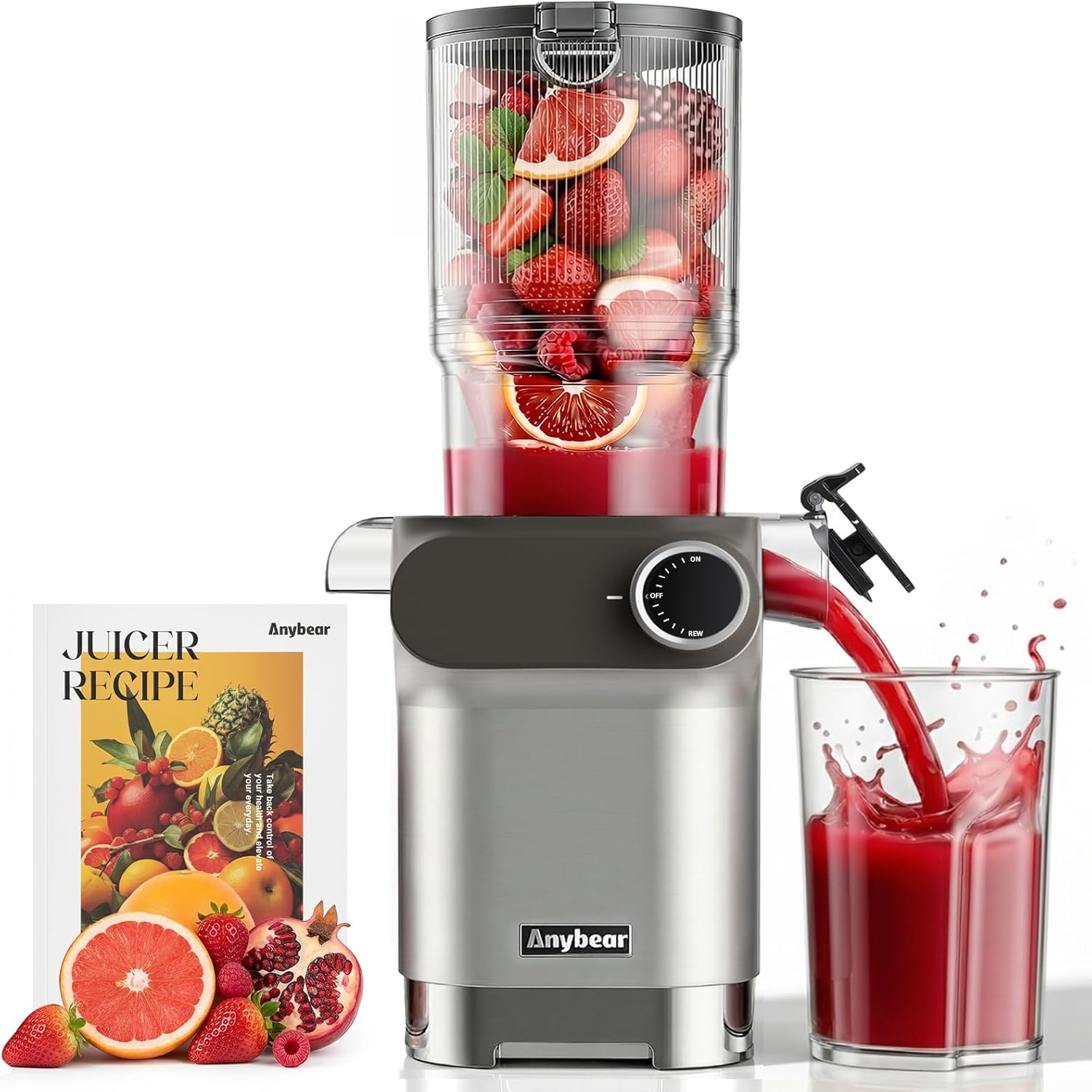
anybear Cold Press Juicer SJ054C
| Maximum Power | 200 watts |
|---|---|
| Wattage | 200 watts |
| Voltage | 110 volts |
| Special Features | Easy to Clean |
The anybear Cold Press Juicer SJ054C is a slow, single‑auger masticating juicer built for steady, low‑speed extraction of fruits and vegetables. It uses a 200W motor and a high‑torque auger turning at about 65 RPM to crush and press produce, which reduces oxidation and preserves flavor and nutrients. The 4.3‑inch feed chute accepts larger pieces so you can juice bigger items with less prep, and the Tritan feed components and stainless steel filter are marketed as food‑grade and easy to rinse. Setup and teardown are straightforward with a simple three‑step disassembly and the included brush helps clean the one‑piece filter. Practical benefits include higher juice yield for fibrous greens like celery and quieter operation compared with centrifugal machines. Limitations are typical for slow juicers: extraction takes longer than high‑speed models and hand washing is required instead of dishwasher cleaning. If you need fast batch output or fully dishwasherable parts, this model may not match those priorities.
Best for: Buyers who prioritize consistent, reliable cold‑press extraction and want a juicer that preserves flavor and maximizes yield for fibrous produce like celery.
Less Ideal for: Not a great fit for users who need rapid, high‑volume juicing or prefer fully dishwasher‑safe components for cleanup.
- High‑torque 200W motor and 65 RPM auger for efficient, low‑oxidation extraction.
- Wide 4.3-inch feed chute reduces chopping and speeds prep.
- Tritan and stainless steel contact parts for food‑grade durability.
- Simple disassembly and one‑piece filter make rinsing and cleaning faster.
- Requires hand washing; parts are not dishwasher safe.
- Slower extraction speed compared with centrifugal juicers, so larger batches take more time.
Verdict: Choose this juicer if you want a dependable, low‑speed masticating machine that maximizes juice yield and freshness from celery and other fibrous greens.
Hamilton Beach Big Mouth Juicer

| Maximum Power | 800 watts |
|---|---|
| Number of Speeds | 1 |
| Power Source | Corded Electric |
| Material | Plastic, Stainless Steel |
| Capacity | 5 pounds |
The Hamilton Beach Big Mouth Juicer is a centrifugal extractor built for speed and simple daily use. Its 3-inch feed chute accepts whole apples, stalks of celery, and similar produce so you can skip much of the prep work, and the 800W motor tackles hard and soft fruits to maximize yield. Juice passes through a stainless steel strainer basket while pulp collects in a large bin, and the removable parts are dishwasher safe for easier cleanup. The unit includes a cleaning brush and has motor overload protection to pause operation if it overheats. As a centrifugal model it produces juice quickly but introduces more foam and slightly less retention of nutrients compared with slow masticating machines, and it has a single speed so you cannot fine-tune extraction for leafy greens. For everyday users who want fast celery and fruit juices with minimal fuss, this juicer delivers dependable performance; buyers who prioritize the quietest operation or highest nutrient yield may prefer a slow press alternative.
Best for: Buyers who want fast, low-effort celery and mixed fruit juices and value user reviews and a proven, reliable appliance over specialty slow-press machines.
Less Ideal for: Those who need the quietest machine, the highest retention of nutrients from leafy greens, or precise speed control should consider a masticating juicer instead.
- 3-inch feed chute lets you juice whole fruits and celery with less prep
- 800W motor designed to extract juice efficiently from hard and soft produce
- Removable parts are dishwasher safe for easier cleanup
- Includes cleaning brush and a large pulp bin to reduce interruptions
- Stainless steel strainer and blade for durable contact with produce
- Centrifugal design is noisier and may produce more foam than slow press juicers
- Single-speed operation limits control when juicing leafy greens like celery
Verdict: If you want quick, no-fuss celery and fruit juice with minimal prep, this centrifugal juicer is a dependable, high-yield everyday choice.
EanOruus E-18 Masticating Juicer

| Maximum Power | 250 watts |
|---|---|
| Power Source | ac |
| Voltage | 110 volts |
| Capacity | 100 fluid ounces |
| Special Features | Auto-Reversing, Overheat Protection, Whole Fruit Processing |
The EanOruus E-18 is a single-auger masticating juicer designed for heavy home use and batch prep. It accepts large whole produce through a 6.5-inch feed chute into a 100 oz hopper so you can load multiple stalks of celery or whole apples with minimal prep, and the slow auger preserves juice and reduces foam. The unit includes two strainers for juice and sorbet and a nut-milk option, letting you make cold-press juice, creamy nut milk, or frozen fruit sorbet from the same machine. An AC brushless motor with auto-reverse and overheat protection handles fibrous vegetables and helps prevent jams, while detachable parts and a removable pulp outlet simplify cleaning. Expect quieter operation than centrifugal juicers and high yield on leafy produce like celery, though hand washing is required for removable parts and the plastic auger and components mean careful cleaning to avoid wear. The E-18 is built for families or meal preppers who want large batches and versatility rather than a compact countertop appliance.
Best for: Buyers who prioritize low-prep, high-volume cold-pressed juice and want a quiet, versatile machine that can handle fibrous vegetables like celery and also make nut milk or sorbet.
Less Ideal for: People seeking the smallest, most compact countertop juicer or those who want fully dishwasher-safe parts should look elsewhere.
- 6.5-inch extra-wide chute accepts whole fruits and long stalks like celery to reduce prep time
- 100 oz hopper supports large batches for families or meal prep
- Includes interchangeable strainers for juice, sorbet, and nut milk for multi-use versatility
- AC brushless motor with auto-reverse and overheat protection handles fibrous produce and helps avoid jams
- Detachable pulp outlet and removable parts make cleaning and emptying more convenient than fixed-hopper designs
- Removable parts require hand washing rather than dishwasher-safe convenience
- Major components are plastic which may show wear faster than metal alternatives
Verdict: Choose the EanOruus E-18 if you want a quiet, high-capacity cold-press juicer that handles celery and large batches with minimal prep.
Choosing the Right Juicer for Celery: Key Factors to Consider
Extraction Efficiency
High extraction efficiency matters because celery is fibrous and can trap water in the pulp. A juicer that separates liquid cleanly from fiber reduces waste and means fewer bunches are needed to reach your target volume. Efficient extraction also shortens run time and reduces motor strain when making multiple batches.
When assessing efficiency, consider the extraction method. Cold-press or slow-gear extraction generally yields more liquid from celery than high-speed centrifugal methods. Efficient screens and augers that shear and press rather than just spin produce better yield and drier pulp.
Clog Resistance and Feed Design
Celery stalks are long and stringy, which can cause jams if the feed chute or auger design does not handle elongated pieces well. A juicer with a wide or vertical feed, a strong auger, or an anti-clog mechanism will run longer between interventions.
Look for models that accept larger pieces or that have well-shaped inlets to guide celery into the cutting or crushing zone. Clog resistance matters for convenience; fewer interruptions mean faster juice prep and a more consistent user experience.
Ease of Cleaning and Maintenance
Daily celery juicing becomes a hassle if the machine is hard to dismantle or has many small crevices where fibrous pulp accumulates. Units with fewer parts, intuitive assembly, and dishwasher-safe components reduce cleanup time and encourage regular use.
Consider whether brushes or special tools are included and how easy it is to rinse the filter and auger. Removable pulp containers with smooth interiors help emptying and rinsing, while sealed bearings and accessible seals lower the chance of breakdown during cleaning.
Build Quality and Motor Durability
Frequent juicing puts sustained load on the motor and moving parts. Machines built with robust materials, metal gearing or high-strength plastics, and good thermal protection last longer under regular celery juicing duties. Durable seals, corrosion-resistant screens, and reinforced augers reduce the chance of component failure.
Assess warranty coverage and serviceability when possible. A well-built unit may cost more up front but often yields a lower total cost of ownership through longer lifespan and fewer replacement parts.
Pulp Texture and Juice Clarity
Different extraction systems produce different pulp textures and juice clarity. If you prefer smoother, clearer juice, choose a juicer that separates fine particles more effectively. For some recipes or personal preferences, a small amount of pulp is acceptable or even desirable.
Consider how much fiber you want retained in the beverage versus discarded with the pulp. Finer filtration can remove more solids but may reduce throughput and require more frequent cleaning of the filter.
Noise Level and Kitchen Footprint
Noise can be a practical concern for early-morning juicing or shared living spaces. High-speed centrifugal machines generally run louder than slow-gear or masticating types. If noise matters, prioritize units engineered for lower decibel operation and with stable bases that reduce vibration.
Footprint and storage are also important. Compact machines or those with cord storage fit better in small kitchens. Consider whether the juicer will stay on the counter for daily use or be stored between sessions, and choose a size accordingly.
Cold-Press Vs Centrifugal for Celery
Understanding the extraction method helps set realistic expectations. Cold-press or slow-gear juicers compress and grind fibrous stalks, often yielding more liquid and producing drier pulp. Centrifugal machines cut and spin produce at high speed, which can be faster but may leave wetter pulp with more wasted juice.
If you prioritize maximum yield and nutrient retention from celery, slow extraction tends to be the better option. For occasional juicing or when speed is the priority, centrifugal models may still be acceptable, but expect lower efficiency and possibly more foam.
- Cold-press: higher yield, drier pulp, quieter but slower
- Centrifugal: faster, potentially louder, often wetter pulp
Prep Tips to Reduce Clogs
Simple prep steps can prevent jams and improve throughput. Trim tough bases and wide leaves only as necessary, then cut stalks into lengths that match the feed chute. For vertical or wide chutes, cutting into 3- to 4-inch pieces is often sufficient; for narrow tubes, shorter segments help.
If your juicer tends to tangle strings, alternate celery with harder produce like carrots or a small piece of apple to help push fibrous bits through. Running a little water through the feed or using a built-in pusher gently can also minimize jams without overworking the motor.
- Cut stalks to match the chute length
- Alternate with firmer produce to clear fibers
- Avoid overfilling the feed tube
Cleaning Workflow for Daily Use
Establish a quick cleaning routine to keep celery juicing sustainable. Rinse major components immediately after use to prevent dried pulp buildup. Soak filters briefly if pulp has stuck, then use a brush to clear mesh or grooves before a full rinse.
Choose units with removable parts that click together without tools and that tolerate a dishwasher for less hands-on time. Keep a cleaning brush and a small towel near the juicing station to speed the process.
- Rinse immediately to prevent drying
- Soak and brush fine-mesh filters
- Store removable parts dry to prevent odors
Managing Pulp and Composting
Celery pulp is fibrous but compostable. If you juice regularly, consider a dedicated compost bin or a pulp-collection strategy to avoid countertop clutter. Dry pulp left in the machine can harden and become difficult to remove over time.
Some users repurpose pulp in soups, stocks, or baked goods to reduce waste. If you plan to reuse pulp, choose a juicer that produces a texture suited to your intended culinary reuse, rather than very fine or overly dry pulp that may be less versatile.
- Empty pulp container after each session
- Use pulp in stocks or compost to reduce waste
- Clean container to avoid lingering odors
Small Kitchen Considerations
If counter space is limited, consider a compact or vertical unit with a small footprint. Balance size with performance; very small machines may struggle with throughput or require more prep. Models with quick-disassembly features are easier to store when not in use.
Also think about cord management and where you will park the juicer between uses. A unit that is easy to move but stable during operation reduces the chance of spills or accidents in tight spaces.
- Choose compact designs for limited counters
- Prioritize stability to limit vibration
- Check storage and cord length before purchase
How We Chose the Best Juicer for Celery
We evaluated models specifically for celery juicing with a focus on objective, repeatable criteria that matter to regular users. Primary evaluation criteria included extraction efficiency, measured by how much juice a model yields from fibrous stalks without leaving excessive moisture in the pulp. We also assessed clog resistance and feeding design to determine how reliably a machine handles long, stringy celery stalks with minimal jamming. Ease of cleaning was a second major factor since celery juice is often made daily; units with fewer parts, dishwasher-safe components, or quick-rinse designs scored higher. We examined build quality and motor durability expectations for frequent use, prioritizing robust materials and cooling designs that tolerate extended runs. Noise and vibration were considered because quieter operation is preferable for morning routines. We excluded machines that are not suitable for fibrous produce or that require excessive trimming of stalks to operate. Manual citrus-only or single-purpose machines were also removed. The final selections balance extraction performance, maintenance, and everyday durability for celery-focused juicing.
Our full evaluation process is outlined in our review methodology.
FAQ
Is a slow masticating juicer necessary for celery?
Not strictly necessary, but slow masticating juicers usually extract more juice from celery and leave drier pulp. If yield and nutrient retention are priorities, slow extraction is often the better choice.
How much prep does celery need before juicing?
Prep is minimal: trim any discolored ends and cut stalks to a length that fits your feed chute. Narrow chutes require shorter pieces to avoid jamming, while wide chutes accept longer sections.
Can I juice celery every day without damaging the juicer?
Daily use is fine if the juicer is designed for frequent operation and has good motor cooling and build quality. Regular cleaning and avoiding overloading the machine help prevent premature wear.
What should I do if celery strings keep clogging the machine?
Try cutting stalks shorter, alternating with firmer produce, or using the pusher in short bursts. If clogs persist, choose a model with better clog resistance or a wider feed chute.
Is pulp from celery usable in recipes or compost?
Yes. Celery pulp is fibrous but suitable for composting, stocks, or blending into recipes. Its texture may vary by extraction method, so adjust culinary uses accordingly.
Final Verdict
Prioritize extraction efficiency, clog resistance, and ease of cleaning when choosing a juicer for celery. Those three tradeoffs determine how much juice you get, how often you must intervene while juicing, and whether the routine fits your daily schedule. Consider motor durability and noise if you juice frequently or in shared living spaces. Decide whether yield or speed matters more to you and pick a machine with the appropriate extraction method and feed design. With the right priorities, you can get consistent, high-yield celery juice without excessive prep or cleanup.