
Note: This article contains affiliate links. If you click on these links and make a purchase, we may earn a small commission at no extra cost to you. This helps support our research and content. Read our full affiliate disclosure here.
If you drink fresh-squeezed orange or grapefruit juice regularly, the right juicer for citrus makes a big difference in yield, cleanup time, and countertop convenience. You want something that extracts maximum juice from firm and soft citrus, minimizes pulp where you want it reduced, and is simple to take apart and wash. This guide shortlists the top options for citrus juicing, each selected for real-world kitchen use and daily reliability. Below we explain the criteria used to evaluate models and highlight factors that will affect which juicer fits your routine best.
Top Picks at a Glance
| Best Overall The best all-around choice for most situations | Breville Citrus Press BCP600SIL |  |
| Best Quality Built to a higher standard if you want something more solid | Hurom H70 Slow Juicer |  |
| Best Value The sweet spot between price and what you get | Cuisinart Pulp Control CCJ-500P1 | 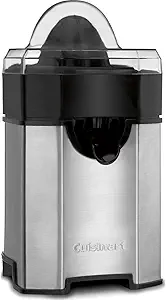 |
| Best Budget The cheapest option that still gets the job done reliably | Elite Gourmet Citrus Juicer ETS623 |  |
| Top Rated A top-rated pick with lots of positive feedback | Zulay Metal 2-in-1 Lemon Squeezer | 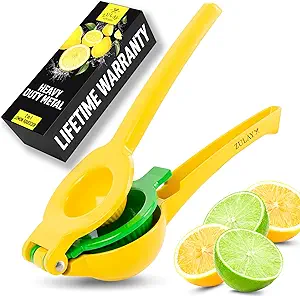 |
| Most Popular A crowd favorite that many people choose with confidence | BLACK+DECKER Citrus Juicer CJ625 |  |
| Best Seller A high-volume bestseller chosen again and again | EanOruus 3-in-1 Cold Press Juicer E-18 |  |
Breville Citrus Press BCP600SIL

| Power | 110 Watts |
|---|---|
| Voltage | 110 to 120 Volts |
| Warranty | 1 Year Limited Product Warranty |
The Breville Citrus Press is a motorized countertop juicer that simplifies making fresh citrus juice from limes up to large grapefruits. It uses a single, finned juicing cone and a fruit dome to grip and press fruit, while a triple-hinged arm and dual-switch safety system prevent the cone from spinning until proper pressure is applied. A drip-stop spout controls pours and reduces mess, and removable parts including the cone, collector, filter, and dome are dishwasher safe for easy cleanup. With 110 watts of power the unit is quick and easy to use for daily breakfast or cocktail prep, and the one-size cone plus juice dome mean you do not need to swap attachments between fruits. The main limitations are that it is focused only on citrus so it will not process whole fruits or vegetables, and the design is simple rather than feature-rich compared with multi-function juicers. For anyone who wants fast, no-fuss fresh citrus juice with easy cleaning, this delivers reliable results.
Best for: Buyers who want a dedicated, easy-to-use citrus juicer that quickly produces fresh juice with minimal setup and cleanup for regular home use.
Less Ideal for: People who need a multi-purpose juicer for whole fruits, vegetables, or smoothie prep should consider a different machine.
- Motorized operation makes juicing faster and less effortful than manual presses
- One-size-fits-all finned cone and fruit dome extract juice from small limes to large grapefruits
- Triple-hinged arm and dual-switch safety prevent accidental operation and ensure consistent pressure
- Drip-stop spout reduces countertop mess when pouring
- Multiple removable parts are dishwasher safe for easy cleanup
- Designed only for citrus so it cannot handle non-citrus fruits or vegetables
- Relatively simple feature set compared with multi-function or centrifugal juicers
Verdict: Choose this Breville Citrus Press if you want a fast, motorized, and easy-to-clean machine that reliably squeezes fresh juice from any size citrus.
Hurom H70 Slow Juicer

| Wattage | 150 watts |
|---|---|
| Power Source | Corded Electric |
| Material | Plastic |
| Special Features | Easy to Clean |
The Hurom H70 is a slow masticating juicer built around a strainer-free Easy Clean chamber and a large self-feeding hopper to reduce prep. It uses a low-speed auger to cold-press produce, producing high-yield, low-pulp juice while minimizing heat and oxidation so juice stays fresher longer. The wide inlet accepts larger pieces and the two-part auger/filter system separates pulp without a mesh screen, making parts quick to detach and rinse — the brand claims assembly and cleanup take under a minute. At 150 watts and a quiet slow-rotation operation, it handles leafy greens, apples, and harder citrus reasonably well, delivering smooth texture and good extraction. Trade-offs include a primarily plastic construction and a relatively compact juice capacity, so it suits daily home use rather than high-volume commercial pressing. For citrus specifically, its slow-squeeze action extracts flavorful juice with reduced bitterness, though dedicated citrus press models may be slightly faster for large batches.
Best for: Buyers who prioritize juice yield and smooth, low-oxidation citrus and vegetable juice and want an easy-to-clean, countertop-friendly slow juicer for daily home use.
Less Ideal for: Those who need very fast, high-volume citrus output or a heavy-duty metal commercial machine should consider a purpose-built citrus press or larger commercial juicer instead.
- Strainer-free Easy Clean chamber that reduces mesh buildup and speeds cleanup
- Large self-feeding hopper reduces chopping and allows continuous feeding
- Slow masticating auger yields higher extraction and smoother, low-pulp juice
- Quiet operation and energy-efficient 150-watt motor suitable for regular home use
- Mainly plastic construction may feel less durable than metal-bodied units
- Smaller juice capacity and slower throughput compared with centrifugal or commercial citrus presses
Verdict: Choose the Hurom H70 if you want a compact cold-press juicer that maximizes yield and produces smooth, low-pulp citrus juice while staying easy to clean.
Cuisinart Pulp Control CCJ-500P1

| Power Source | Corded Electric |
|---|---|
| Voltage | 110 |
| Number of Speeds | 3 |
| Capacity | 12 ounces |
The Cuisinart Pulp Control CCJ-500P1 is a countertop electric citrus juicer designed to handle everything from limes to grapefruits. It uses an auto-reversing universal juicer cone and a final-spin feature to extract more juice, and the adjustable reamer offers three pulp settings for low, medium, or high pulp preference. Juice flows through an extra-long snap-up spout that helps prevent drips and fits taller glasses, while most removable parts are dishwasher safe for easy cleanup. The unit is straightforward to use: press halved fruit onto the reamer and let the cone do the work with minimal effort. Practical limitations include a modest 12-ounce capacity jug that requires frequent emptying for batch juicing and a relatively low maximum power rating compared with heavy-duty extractors, so it is best suited to daily citrus tasks rather than high-volume commercial use. For home cooks wanting efficient, easy-to-clean citrus juicing with simple pulp control, this model covers the essentials well.
Best for: Buyers who want a reliable, easy-to-use countertop citrus juicer for regular home use and who prioritize efficient extraction and simple cleanup.
Less Ideal for: Those who need to process large volumes of fruit at once or require a heavy-duty juicer for commercial or high-frequency batch juicing.
- Auto-reversing universal cone and final-spin feature increase juice extraction from citrus
- Adjustable 3-setting pulp control to match texture preference
- Dishwasher-safe removable parts simplify cleanup
- Extra-long snap-up spout reduces drips and accommodates taller glasses
- Small 12-ounce capacity carafe requires frequent emptying during larger batches
- Lower advertised power compared with heavy-duty juicers limits continuous commercial use
Verdict: A compact, easy-to-clean citrus juicer that maximizes juice extraction with simple pulp control, ideal for everyday home citrus use.
Elite Gourmet Citrus Juicer ETS623

| Maximum Power | 40 watts |
|---|---|
| Power Source | Corded Electric |
| Capacity | 24 oz |
| Special Features | Quiet Motor |
The Elite Gourmet ETS623 is a small, budget-friendly electric citrus juicer designed for quick home juicing of oranges, lemons, limes, and grapefruit. It uses a 40-watt motor and an auto-reversing reamer that spins in both directions to improve extraction while you press fruit onto the cone, and the 24-ounce pitcher collects about 2 to 3 servings at once. A built-in pulp and seed filter and an easy-pour spout make serving straightforward, and detachable parts are top-rack dishwasher safe for easier cleanup. The juicer is compact and meant for countertop use in small kitchens, dorms, or RVs, and its manual push-down operation keeps it simple to use. Limitations include modest power compared with larger or commercial machines and hand-wash recommended for longest life despite dishwasher-safe claims, so heavy daily use may show wear sooner. For its price and size it gives reliable, no-frills fresh citrus juice with minimal fuss.
Best for: Buyers looking for an affordable, simple countertop citrus juicer to make fresh juice occasionally in small kitchens or apartments.
Less Ideal for: People who need heavy-duty or commercial-level juicing capacity or those who want a high-volume, high-power machine for daily large batches.
- Auto-reversing reamer for improved juice extraction
- Compact footprint suitable for small kitchens and RVs
- 24 oz container with easy-pour spout and integrated pulp/seed filter
- Detachable parts are top-rack dishwasher safe for faster cleanup
- 40-watt motor is modest compared with higher-power models
- Manufacturer recommends hand washing for longest product life
Verdict: A wallet-friendly, compact citrus juicer that delivers better extraction than basic models thanks to its auto-reversing reamer.
Zulay Metal 2-in-1 Lemon Squeezer

| Material | Aluminum |
|---|---|
| Power Source | Manual |
| Capacity | 0.5 liters |
| Special Features | Ergonomic Handle |
This Zulay Metal 2-in-1 Lemon Squeezer is a simple, reliable manual juicer that extracts juice from halves of lemons, limes, and small oranges with minimal effort. You place a halved fruit in the bowl and press the ergonomic handle to force juice through a perforated cone that keeps seeds and most pulp out of your glass. Its aluminum construction and heavy-duty bowls give the tool a sturdy feel and steady leverage for frequent use, while the food-grade finish and stainless-steel blade material mean it resists corrosion in a normal kitchen environment. The compact, manual design makes it quick to use and easy to store without electricity or batteries, and it cleans quickly by hand or in the dishwasher. Limitations to consider are its size, which is optimized for smaller citrus and not whole large oranges, and the manual operation that requires wrist strength for larger volumes of juice. For everyday citrus squeezing where durability and no-fuss performance matter, this squeezer gets the job done.
Best for: Buyers who prioritize a dependable, no-electronics citrus tool for regular kitchen use and want a durable press that lasts without complicated maintenance.
Less Ideal for: People who need to juice large volumes quickly or who want an electric juicer that handles whole large oranges and automated processing.
- Sturdy aluminum construction provides solid leverage and long-term durability
- Ergonomic handle reduces hand strain during repeated use
- Perforated cone filters seeds and most pulp for cleaner juice
- Compact manual design requires no power and stores easily
- Sized for halves and small citrus, not ideal for whole large oranges
- Manual pressing can be tiring if you need to juice large quantities
Verdict: A rugged, no-frills manual citrus press that delivers reliable, seed-free juice for everyday use.
BLACK+DECKER Citrus Juicer CJ625

| Special Features | Auto-Reversing |
|---|---|
| Wattage | 150 watts |
| Power Source | Corded Electric |
| Voltage | 120 volts |
| Blade Material | Stainless Steel |
The BLACK+DECKER CJ625 is a straightforward countertop citrus juicer designed to make quick work of lemons, limes, oranges, and grapefruits. It uses auto-reversing reamer cones and a stirrer to extract more juice with each press, and includes small and large cones to fit different fruit sizes. Juice collects in a clear, pitcher-style container with measurement markings and a drip-free spout, so you can juice directly for recipes or pour to serve. Adjustable pulp control and a removable pulp basket let you choose mouthfeel and simplify cleanup, and most parts are dishwasher safe. The motor is intended for frequent home use but the listed wattage and plastic construction mean it is best for everyday juicing rather than heavy commercial work. If you want an easy-to-store, easy-to-clean machine that maximizes juice from each half-fruit and keeps seeds out, this model delivers; buyers wanting metal construction or pro-grade throughput should look elsewhere.
Best for: Buyers who want a reliable, easy-to-use home citrus juicer that extracts well and is simple to clean, and who value peer-reviewed performance and predictable results.
Less Ideal for: People needing a heavy-duty, stainless steel commercial juicer or those who plan to juice very large volumes every day.
- Auto-reversing cones increase juice extraction compared with manual reamers
- Includes small and large cones for different fruit sizes
- Clear pitcher with measurement markings and drip-free spout makes juicing for recipes simple
- Adjustable pulp control and removable pulp basket let you control texture and ease cleanup
- Most removable parts are dishwasher safe for easy maintenance
- Plastic construction may feel less durable than metal-bodied models
- Not intended for heavy commercial or continuous high-volume juicing
Verdict: A compact, easy-to-clean citrus juicer that maximizes yield with auto-reversing cones, ideal for home users who prioritize dependable performance.
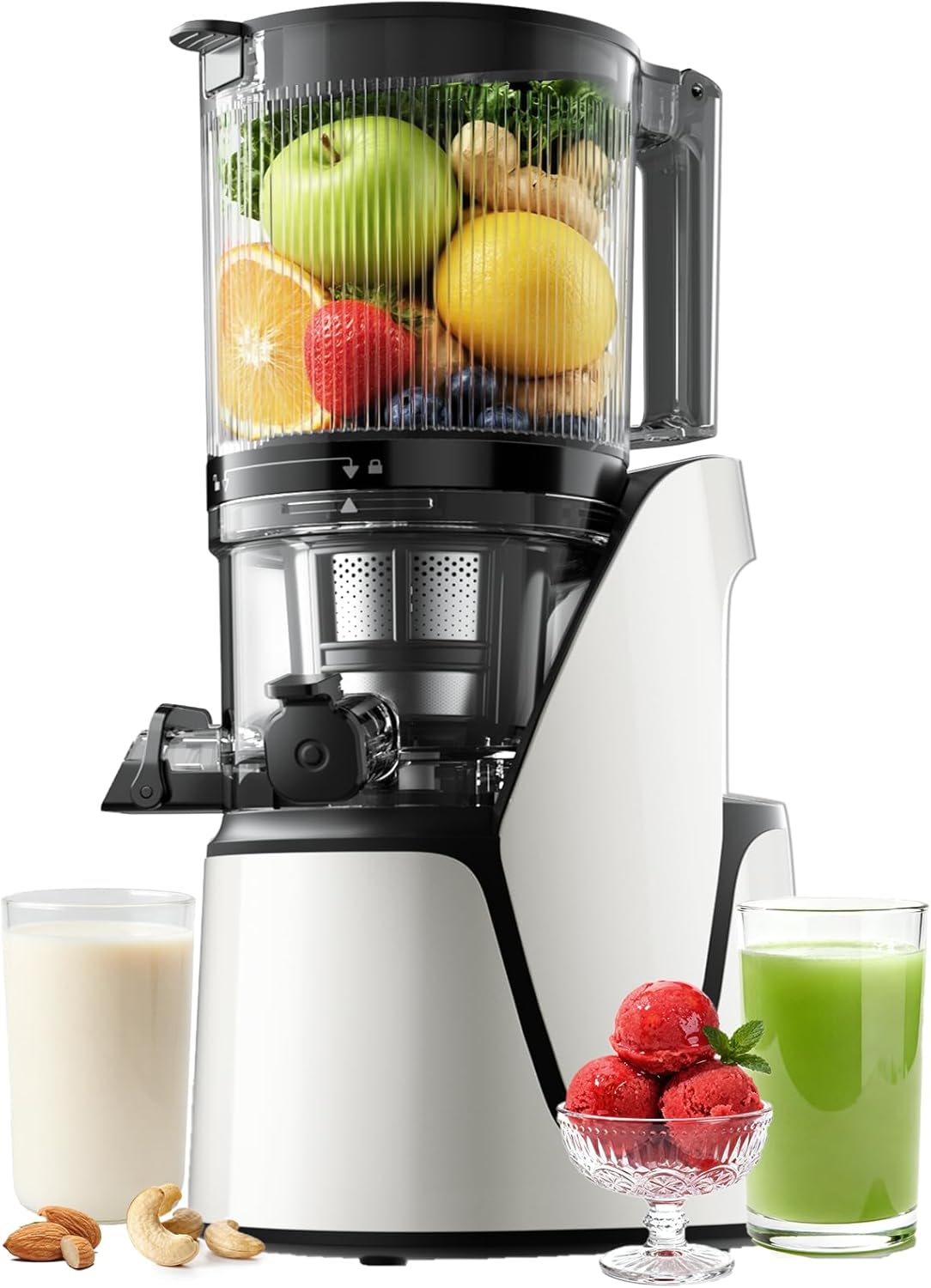
EanOruus 3-in-1 Cold Press Juicer E-18
| Capacity | 100 fluid ounces |
|---|---|
| Maximum Power | 250 watts |
| Power Source | AC |
| Voltage | 110 volts |
The EanOruus E-18 is a masticating single-auger juicer designed for everyday home use and batch prep. It accepts whole fruit through a 6.5-inch chute into a 100 oz hopper so you can load large apples, oranges, or several citrus at once and run longer jobs with fewer refills. The unit uses a 250 W AC brushless motor with auto-reverse and overheat protection to handle fibrous produce quietly while maintaining steady, low-speed extraction aimed at higher juice yield and nutrient retention. Two interchangeable strainers expand its use beyond juice to nut milk and frozen-fruit sorbet, and most removable parts wash by hand for straightforward cleanup. Important trade-offs are its plastic components and hand-wash care, and its relatively large footprint and weight compared with compact citrus-only presses. For buyers focused on reliable, low-speed extraction and the option to make other foods, the E-18 delivers versatile performance; if you only want a tiny, countertop citrus press you may prefer a simpler dedicated model.
Best for: A cautious buyer who wants a reliable, low-speed juicer that can handle whole fruits and batch citrus runs while offering extra functions like nut milk and sorbet.
Less Ideal for: Someone who only needs a small, simple countertop citrus squeezer or who wants fully dishwasher-safe components.
- Extra-large 100 oz hopper reduces refilling during batch juicing
- 6.5-inch wide chute accepts whole fruits to cut prep time
- Low-speed single-auger design preserves nutrients and increases yield
- Auto-reversing and overheat protection improve reliability and motor safety
- Most parts are plastic and require hand washing
- Larger and heavier than compact citrus-only presses
Verdict: Choose the EanOruus E-18 if you want a quiet, batch-capable cold-press juicer that handles whole citrus and adds nut milk and sorbet versatility.
Choosing the Right Juicer for Citrus: Key Factors to Consider
Extraction Efficiency
How completely the machine squeezes liquid from citrus halves affects how much actual juice you get per fruit. Higher extraction efficiency lowers the number of oranges, lemons, or grapefruits you need to buy and reduces prep time. Efficiency depends on the reamer shape, head size, and whether the unit uses mechanical leverage or electric rotation.
For frequent juicers, small differences in yield add up. Consider models with larger reamer diameters or adjustable pressure mechanisms if you want every last drop without double-squeezing by hand.
Ease of Cleaning
Citrus juice is acidic and sticky, so parts that are quick to disassemble and safe for the dishwasher save time and prevent sticky buildup. Look for units with a small number of parts, smooth surfaces, and no hard-to-reach crevices where pulp can lodge.
Materials matter too: dishwasher-safe BPA-free plastics and stainless steel resist staining and odor retention. If you plan to juice daily, prioritize designs that let you rinse components quickly or toss them in the top rack.
Pulp and Seed Management
Different users prefer different textures: some want fully strained juice while others like a bit of pulp. Effective pulp filters and seed traps let you control mouthfeel without extra strainers. Good pulp management also prevents clogged spouts and reduces splatter.
Inspect how fine the included filters are and whether multiple strainer options are offered. A well-designed seed trap also avoids bits of peel or seeds ending up in the finished juice, which matters for both taste and blender use.
Size and Countertop Footprint
Where you store the juicer and how often you will use it should guide the size you choose. Compact manual reamers or small electric citrus juicers fit easily on crowded countertops and tuck into cabinets, while larger models may offer improved capacity but require more space.
Think about vertical clearance if you store appliances under cabinets. If you have limited storage, choose a model that disassembles into flat pieces or one that is light enough to move between a cabinet and counter.
Power, Noise, and Durability
For electric citrus juicers, motor strength governs how easily the machine handles large or fibrous fruit without stalling. A reliably built motor reduces the chance of overheating under repeated use. Noise level is also a consideration for morning routines when others might be sleeping.
Look for models with clear duty cycle guidance and motors rated for regular home use. durable construction, metal gears, or reinforced plastics typically outlast cheaper designs and maintain consistent performance.
Ease of Use and Ergonomics
A user-friendly juicer makes the process faster and safer. Features like non-slip bases, ergonomic handles, clear on/off controls, and responsive reamer engagement reduce effort during juicing. For manual options, comfortable grips and leverage mechanisms make a noticeable difference in strain on wrists.
Also consider pour spout design and whether juice collects in a separate pitcher or dispenses directly into a glass. A spill-free pouring experience and visible volume markings can help during daily use and recipe preparation.
Manual Vs Electric Citrus Juicers
Manual reamers and lever-based juicers suit occasional juicing or users who prefer a low-tech, quiet approach. They are often more compact, easier to clean, and give plenty of control over pressure and pulp. Manual options require more physical effort but are reliable and lightweight.
Electric citrus juicers speed up the process and are better for larger families or anyone who juices frequently. They automate the extraction motion and usually offer consistent yields with less effort. Consider motor power, duty cycle, and noise when choosing an electric unit.
- Manual: quieter, simpler, easier to store
- Electric: faster, consistent extraction, better for frequent use
Tips for Getting More Juice From Citrus
Room-temperature fruit yields more juice than fruit straight from the refrigerator. Let citrus sit at room temperature for 20 to 30 minutes or roll it firmly on the counter to break down membranes before juicing.
Cut fruit across the equator rather than pole-to-pole to expose more juice-filled vesicles to the reamer. For larger citrus, press down with moderate, steady force and rotate to extract thoroughly without overworking the reamer.
- Roll fruit before cutting to soften pulp
- Cut across the middle for best exposure
- Apply steady pressure; avoid jerky motions
Maintaining Your Citrus Juicer
Rinse parts immediately after use to prevent dried citrus residue and odors. For deeper cleaning, remove strainers and reamers and wash with warm soapy water or place dishwasher-safe parts on the top rack. Wipe motor housings and bases with a damp cloth and avoid submerging electrical components.
Inspect seals and strainers periodically for wear. Replacing worn rubber gaskets or a shredded filter early prevents leaks and keeps extraction efficient. Store components dry and assembled loosely to prevent mold or trapped moisture.
- Rinse promptly after juicing
- Dishwasher-safe parts go on top rack
- Keep electrical base dry and wipe clean
Using Citrus Juice in Everyday Cooking
Freshly squeezed citrus juice brightens dressings, marinades, and baked goods more than bottled alternatives. Its acidity also helps balance flavors in sauces and can be used to finish cooked vegetables or seafood. If you plan to use juice for cooking, small measuring pitchers with volume markings help portion accurately.
When storing freshly squeezed juice, keep it refrigerated in an airtight container and use within a few days for best flavor. For longer storage, freeze portions in ice cube trays and transfer cubes to a sealed bag for recipe-ready servings.
- Use fresh juice for dressings and marinades
- Refrigerate in airtight containers for short-term storage
- Freeze in portions for later use
Safety and Common Mistakes
Avoid applying excessive force that could crack plastic components or stress the motor in electric units. Secure the base on a non-slip surface before juicing and ensure parts are aligned to prevent jamming. Keep fingers clear of reamer edges during operation.
Do not run an electric juicer without the reamer or strainer in place. This can cause splashing and may damage the motor. For manual juicers, avoid twisting motions that put strain on wrists if you have joint issues; consider a lever model to reduce hand stress.
- Secure base and align parts before use
- Do not operate electric units without reamer in place
- Use lever designs to reduce wrist strain when needed
How We Chose the Best Juicer for Citrus
We focused on attributes that matter specifically when squeezing citrus at home. First, extraction efficiency was a key filter: devices that consistently produce high juice yield from standard citrus sizes ranked higher. Next, we prioritized ease of cleaning and simple disassembly because citrus juice is sticky and frequent washups become a major pain point. Build quality and stability were considered to ensure safe, slip-resistant operation under repeated use. We also evaluated pulp control and strain options so users could tailor texture without additional steps. Noise level and motor durability were included for electrically driven models to reflect everyday comfort and longevity. We excluded multi-fruit or heavy-duty commercial extractors that are overbuilt for home citrus use and devices that lack clear maintenance instructions. Models with flimsy parts or poor user feedback on durability were filtered out. The final list emphasizes practical kitchen performance: juice yield, cleaning time, parts quality, pulp management, and operational consistency.
Our full evaluation process is outlined in our review methodology.
FAQ
Can I juice grapefruit and oranges with the same juicer?
Usually yes. Most citrus juicers accommodate a range of citrus sizes. Check that the reamer or cone size is large enough for grapefruit and that the strainers can handle the increased pulp and membranes.
How often should I clean the juicer parts?
Rinse parts after every use and wash strainers and reamers daily if you juice frequently. Dishwasher-safe parts can go on the top rack, but motor housings and bases should only be wiped with a damp cloth.
Is a manual juicer better for taste than an electric one?
Taste differences are usually minimal and depend more on fruit ripeness and extraction thoroughness than on whether the unit is manual or electric. Manual juicers give more control over pulp level, which can affect texture and perceived flavor.
What maintenance extends the life of a citrus juicer?
Regular cleaning, drying parts before storage, and replacing worn seals or strainers when they show damage prolong lifespan. For electric units, avoid continuous heavy duty cycles that exceed the recommended run time.
Can I put all juicer parts in the dishwasher?
Not always. Many strainers and plastic components are top-rack dishwasher safe, but delicate filters or rubber seals may warp. Check the care instructions and hand-wash parts that are not explicitly rated for dishwasher use.
Final Verdict
Choose a juicer for citrus by prioritizing extraction efficiency and ease of cleaning for the best day-to-day experience. If you juice occasionally and value compact storage, a manual or small electric model will suit you. For frequent juicing, prioritize motor reliability, larger reamer sizes, and robust pulp control options. Balance space, noise tolerance, and maintenance needs to pick the style that fits your routine, and you will get consistently fresh, high-yield citrus juice at home.