
Note: This article contains affiliate links. If you click on these links and make a purchase, we may earn a small commission at no extra cost to you. This helps support our research and content. Read our full affiliate disclosure here.
If you like smoothies, frozen cocktails, or fruit-based desserts, using the right juicer for frozen fruit makes a big difference in texture and yield. Frozen fruit is denser and colder than fresh produce, so not every juicer handles it without clogging, excessive pulp, or long processing times. This guide covers the top shortlisted juicers built for frozen fruit, focusing on machines that deliver strong extraction, handle icy textures, and are straightforward to clean. Below you will find our top picks, plus the criteria we used to evaluate them and practical advice for getting the best results from frozen fruit. Use the evaluation notes to match a model to your routine and cleanup tolerance.
Top Picks at a Glance
| Best Overall The best all-around choice for most situations | TUUMIIST Cold Press Juicer TM880SJ |  |
| Best Quality Built to a higher standard if you want something more solid | Hurom H70 Slow Juicer |  |
| Best Value The sweet spot between price and what you get | SMALLHOO 3-in-1 Juicer TM-1080SJ |  |
| Best Budget The cheapest option that still gets the job done reliably | GDOR Centrifugal Juicer GS378 |  |
| Top Rated A top-rated pick with lots of positive feedback | anybear Cold Press Juicer SJ054C |  |
| Most Popular A crowd favorite that many people choose with confidence | Breville Juice Fountain Plus JE98XL |  |
| Best Seller A high-volume bestseller chosen again and again | EanOruus 3-in-1 Cold Press Juicer E-18 |  |
TUUMIIST Cold Press Juicer TM880SJ

| Capacity | 3 liters |
|---|---|
| Maximum Power | 350 watts |
| Wattage | 300 |
| Number of Speeds | 60 |
The TUUMIIST TM880SJ is a slow masticating juicer built to handle whole fruits and vegetables without extensive pre-cutting thanks to a 6.5-inch wide feed chute and a large 100 oz hopper. It operates at low speed to maximize juice yield and preserve nutrients, and the metal-free filter mesh and auto-reverse reduce jamming when processing fibrous or frozen pieces. The smart touch control offers dedicated modes for juice, nut milk, and sorbet so you can switch between cold-pressed juice, creamy plant milk, and blended-frozen desserts without extra machines. Practical benefits include high reported yield with dry pulp, dishwasher-safe parts for easier cleanup, and a whisper-quiet motor for early-morning use. Important limitations are that ultrahard frozen blocks or large frozen fruits may still need some thawing or breaking up before feeding, and the unit is relatively heavy and takes some counter space. For users who want a versatile, nutrient-preserving juicer that also makes nut milk and sorbet, this model covers multiple bases in one appliance.
Best for: Home cooks who want one machine that reliably makes cold-pressed juice, nut milk, and sorbet with minimal prep and high yield for everyday use.
Less Ideal for: People who need a compact travel-friendly unit or plan to process large frozen blocks frequently without pre-thawing should look for a dedicated high-power blender or specialized frozen-fruit appliance.
- Large 6.5-inch feed chute and 100 oz hopper reduce pre-cutting and allow batch processing
- Cold-press masticating design preserves nutrients and yields dry pulp
- 3-in-1 modes (juice, nut milk, sorbet) add versatility without extra appliances
- Auto-reverse and metal-free filter mesh minimize jams when processing fibrous produce
- Dishwasher-safe parts and simple 3-piece assembly speed cleanup
- May require thawing or chopping of very hard frozen fruit before feeding
- Relatively heavy and requires significant countertop space
- Power spec listing is inconsistent (300–350W) which may affect expectations for very dense processing
Verdict: Choose this juicer if you want a versatile cold-press machine that handles whole produce and also makes nut milk and sorbet with high juice yield.
Hurom H70 Slow Juicer

| Wattage | 150 watts |
|---|---|
| Power Source | Corded Electric |
| Material | Plastic |
| Special Features | Easy to Clean |
The Hurom H70 is a single-auger cold-press juicer that focuses on extracting maximum juice with minimal pulp while keeping cleanup simple. It uses a strainer-free Easy Clean chamber and a two-part auger system that separates pulp naturally, so parts detach and rinse quickly compared with mesh-filter machines. The wide self-feeding hopper accepts larger pieces and can feed produce while running, which cuts prep time for apples, carrots, and other firm fruits. Running at low speed and modest wattage, it operates quietly and preserves flavor and nutrients, and the front-facing gauge lets you monitor juice volume without opening the unit. Because it is a masticating machine, it handles softer ingredients and frozen fruit blends better than high-speed centrifugal models, producing smoother texture and higher yield, though very large amounts of frozen fruit may need brief thawing or chopping to feed reliably. Materials are mostly plastic and the unit is intended for hand wash care. For buyers prioritizing juice quality, quiet operation, and easy maintenance, the H70 delivers a practical balance of performance and convenience.
Best for: A buyer who wants high-quality cold-pressed juice with minimal prep and cleanup and prioritizes yield, quiet operation, and smooth texture for fresh and frozen-fruit blends.
Less Ideal for: Someone who needs a heavy-duty commercial machine, prefers glass or metal construction, or wants a fully dishwasher-safe appliance.
- Strainer-free Easy Clean chamber that detaches for fast rinsing and less scrubbing.
- Large self-feeding hopper reduces chopping and allows continuous feeding.
- Low-speed masticating action yields more juice with smoother texture and quieter operation.
- Front-facing gauge for easy monitoring of juice level during extraction.
- Mostly plastic construction and hand-wash-only parts may feel less premium and require careful care.
- May need thawing or smaller pieces when juicing large amounts of frozen fruit to avoid feeding jams.
Verdict: Choose the H70 if you want a quiet, high-yield cold-press juicer that minimizes prep and cleanup while delivering smooth juice from fresh and frozen fruit blends.
SMALLHOO 3-in-1 Juicer TM-1080SJ

| Maximum Power | 350 watts |
|---|---|
| Number of Speeds | 60 |
| Power Source | electric |
| Voltage | 120 volts_of_alternating_current |
| Special Features | Metal-Free Filter Mesh, Overheat Protection, Whole Fruit Processing |
The SMALLHOO TM-1080SJ is a single-auger masticating juicer designed for multi-purpose kitchen use including cold-press juice, soaked nut milk, and fruit sorbet from frozen fruit. It accepts large pieces through a 7" feed chute and a 120 oz hopper for bigger batches, and the low-speed 60 RPM extraction aims to maximize yield while leaving very dry pulp. Notable features include a metal-free filter mesh to simplify cleaning, a reverse function to clear jams, and overheat protection for safer operation. The stainless steel construction and dishwasher-safe detachable parts make maintenance straightforward, though delicate internal parts still benefit from careful hand washing. Power is modest at 350 watts, so expect slower processing than high-RPM centrifugal models, but also quieter operation and gentler handling of frozen fruit and nuts. Limitations are the lower throughput speed and the need to pre-soak nuts for nut milk; extremely hard or large frozen chunks may require brief thawing or cutting. For making sorbet from frozen fruit and daily cold-pressed juice, it delivers strong yield and easy cleanup for routine home use.
Best for: Home cooks who prioritize efficient use of time and consistent high-yield results from frozen fruit and produce, and who value easy cleanup and quieter operation for regular batch juicing.
Less Ideal for: Users who need very fast single-serving juices or who expect to process very large volumes continuously for commercial use should consider a higher-power or centrifugal model instead.
- Large 7" feed chute and 120 oz hopper reduce prep and allow larger batches
- 60 RPM cold-press extraction yields high juice output with dry pulp
- Dishwasher-safe detachable parts and metal-free filter mesh simplify cleaning
- Reverse function and overheat protection reduce jams and improve safety
- 350W motor processes slowly compared with high-speed centrifugal juicers
- Requires pre-soaking nuts and occasional thawing of large frozen pieces
Verdict: Choose this juicer if you want a quiet, high-yield cold-press machine that handles frozen fruit and batch juice with minimal prep and easy cleanup.
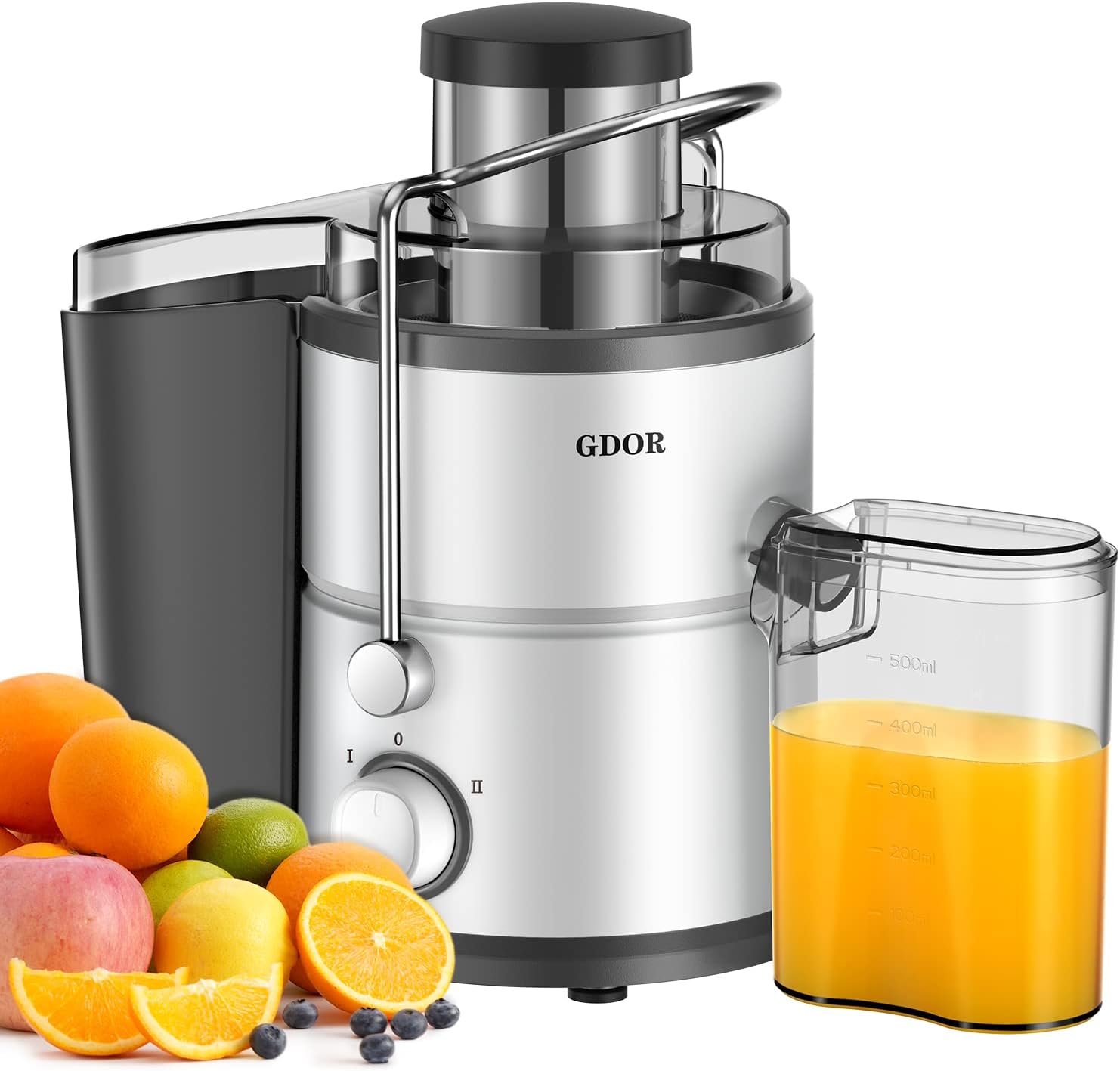
GDOR Centrifugal Juicer GS378
| Maximum Power | 800 watts |
|---|---|
| Number of Speeds | 2 |
| Feed Chute Width | 3 inches |
| Voltage | 120 volts |
The GDOR Centrifugal Juicer GS378 is a budget-friendly centrifugal machine built for quick everyday juicing. It uses an 800W motor and a dual-speed knob so you can choose a lower setting for soft produce and a higher setting for harder fruits and vegetables; the wide 3-inch feed chute reduces prep by letting you juice many pieces without slicing. For frozen fruit specifically this style of centrifugal juicer can process thawed, softer frozen fruit blends but may struggle with solid frozen chunks or fully frozen blocks, so plan to thaw or chop before juicing. The included juice jug with a foam separator and anti-drip spout keeps counters cleaner, and safety features like a locking arm, micro switch protection, non-slip feet, and auto shutoff for overheating add durability and peace of mind. Many removable parts are dishwasher-safe and a cleaning brush is provided, which helps keep cleanup simple. Expect faster yields and pulpier juice typical of centrifugal designs, and be aware it will not extract as thoroughly from fibrous or leafy blends as a slow masticating model.
Best for: Buyers looking for an affordable, fast juicer to make everyday fruit and vegetable juices with minimal prep and easy cleanup, especially those prioritizing value over maximum extraction efficiency.
Less Ideal for: People who want to process fully frozen blocks straight from the freezer, or users seeking the highest possible yield from leafy greens and fibrous produce.
- 800W motor with two speeds for handling soft and harder produce
- 3-inch wide feed chute reduces prep time by accommodating larger pieces
- Built-in foam separator and anti-drip spout keep pours neater
- Multiple safety features including locking arm and overheat protection
- Removable parts are dishwasher-safe and a cleaning brush is included
- Centrifugal design yields more pulp and lower extraction from fibrous or leafy items compared with slow juicers
- Not suitable for juicing fully frozen chunks without thawing or chopping
Verdict: If you want a low-cost, fast centrifugal juicer that minimizes prep with a wide chute and basic safety features, the GDOR GS378 is a practical choice for everyday juices when frozen fruit is thawed first.
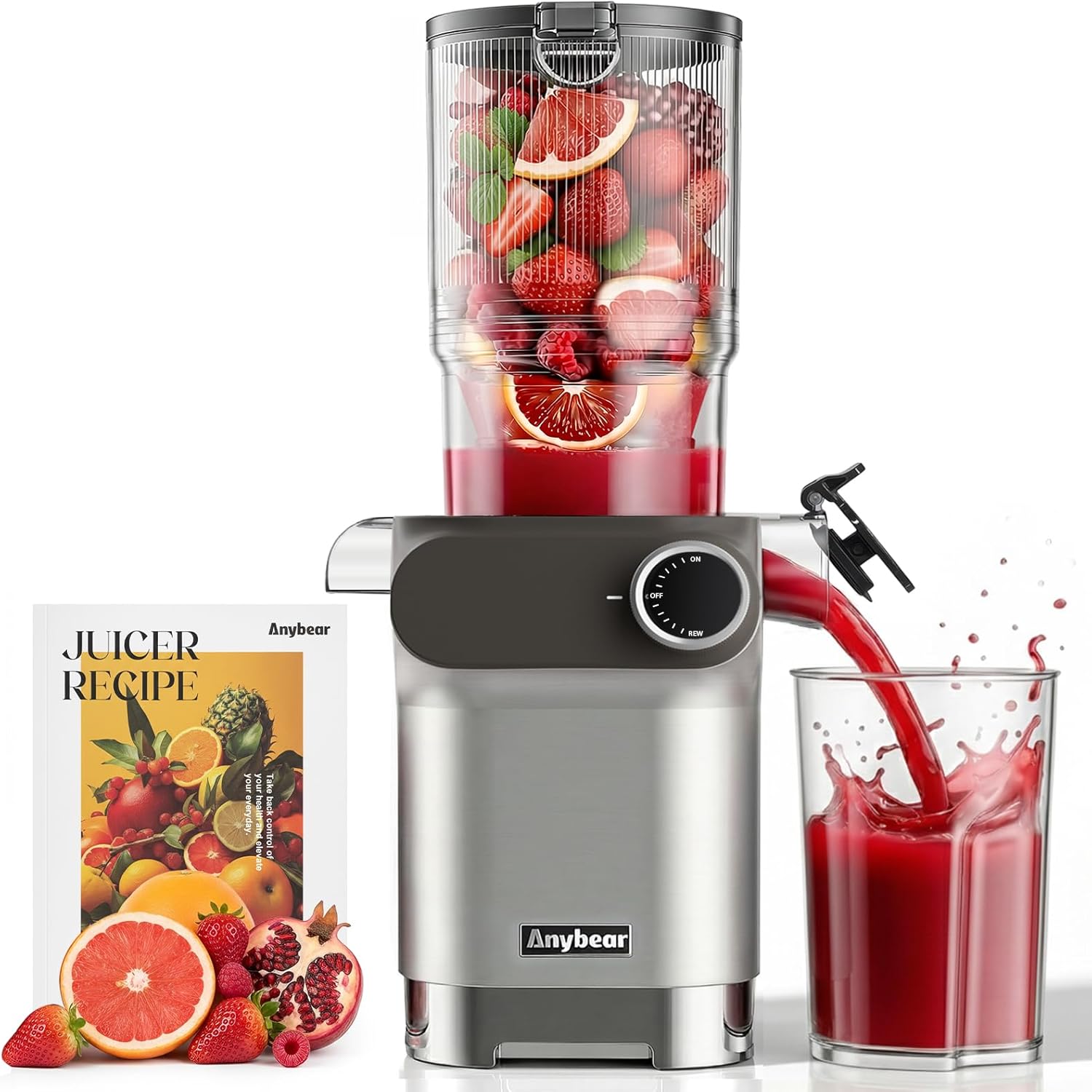
anybear Cold Press Juicer SJ054C
| Maximum Power | 200 watts |
|---|---|
| Wattage | 200 watts |
| Voltage | 110 volts |
| Special Features | Easy to Clean |
The anybear Cold Press Juicer is a slow, single-auger machine built to extract juice gently at low speeds using a 200W high-torque motor. It is typically used for leafy greens, fibrous vegetables, and whole fruit where preserving flavor and minimizing oxidation matters; the 65 RPM extraction and claimed high yield make it suitable for frequent juicing sessions. The 4.3-inch feed chute accepts larger pieces so you spend less time pre-cutting produce, and the Tritan feed parts plus a one-piece stainless steel filter simplify rinsing and basic cleanup. Practical benefits include strong cold-press extraction for clearer juice, reduced foam and oxidation, and a compact footprint for countertop use. Important limitations are that it is a masticating single-auger unit so it is slower than centrifugal models when processing frozen fruit without thawing, and hand-wash care is required for some parts. The unit also emphasizes yield and gentle extraction over blitzing frozen chunks, so plan to thaw or chop frozen fruit before juicing for best results.
Best for: Buyers who prioritize consistent, factory-quality cold-press extraction and want a reliable machine that preserves juice flavor and yield for regular fresh juicing.
Less Ideal for: If you plan to frequently juice solid frozen fruit directly or need very fast batch throughput, look at high-speed centrifugal or machines specifically rated for frozen produce instead.
- Low-speed masticating design preserves flavor and reduces oxidation
- 4.3-inch wide feed chute reduces prep time for fresh produce
- 200W high-torque motor provides steady, consistent extraction
- One-piece stainless steel filter and included brush make rinsing faster
- Not intended for processing solid frozen chunks without thawing or pre-cutting
- Requires hand washing for some components
Verdict: Choose this slow masticating juicer if you want reliable, low-speed cold-press extraction that maximizes fresh juice flavor and yield.
Breville Juice Fountain Plus JE98XL

| Power | 850 watts |
|---|---|
| Feed chute | 3-inch extra wide |
| Number of speeds | 2 |
| Capacity (juice jug) | 35.2 fl oz |
The Breville Juice Fountain Plus JE98XL is a straightforward centrifugal juicer built for fast daily juicing. It uses an 850W motor and a titanium-reinforced disc with a stainless steel micro-mesh filter to extract juice from fruits and vegetables, and the 3 inch extra-wide feed chute reduces prep by handling many whole pieces. Two speed settings let you choose lower speed for soft or leafy items and high speed for denser produce. The included 35.2 fl oz juice jug has an integrated froth separator to reduce foam in the glass, and the detachable pulp container plus dishwasher-safe parts make cleanup manageable. Practical limits are those common to centrifugal machines: it operates quickly but tends to produce thinner juice and more foam than slow masticating models, and it is not optimized for grinding ice or processing frozen fruit into smoothies. For buyers focused on fast countertop juicing of fresh produce with minimal prep, it delivers reliable performance and straightforward controls.
Best for: Buyers who value fast, low-prep juicing of fresh fruits and vegetables and who rely on proven customer feedback to pick a reliable, easy-to-use machine.
Less Ideal for: Anyone wanting to make smoothies from frozen fruit, crush ice, or prioritize maximum nutrient retention and thicker juice from a slow masticating extractor should consider other types of machines.
- Extra-wide 3-inch chute reduces prep time by allowing larger pieces or whole small fruits
- 850W motor provides quick, efficient extraction for most fresh produce
- Titanium-reinforced disc and stainless steel micro-mesh basket for improved juice yield
- Integrated froth separator in the juice jug yields less foam when pouring
- Detachable pulp container and dishwasher-safe parts simplify cleaning and storage
- Centrifugal design produces thinner juice with more foam compared with slow masticating juicers
- Not intended for crushing ice or reliably processing frozen fruit into blended smoothies
Verdict: Choose this if you want a fast, easy-to-use centrifugal juicer that reduces prep with a wide chute and delivers dependable daily juice extraction.
EanOruus 3-in-1 Cold Press Juicer E-18

| Capacity | 100 fluid ounces |
|---|---|
| Feed Chute | 6.5-inch |
| Wattage | 250 watts |
| Power Source | ac |
| Voltage | 110 volts |
The EanOruus 3-in-1 Cold Press Juicer is a single-auger, low-speed machine designed to extract juice, make nut milk, and produce frozen fruit sorbet using two interchangeable strainers. It accepts whole fruits through a 6.5-inch feed chute and holds up to 100 ounces in the hopper, so you can load larger batches and reduce trips to refill when making multiple servings or frozen-fruit blends. A 250-watt AC motor with auto-reverse and overheat protection keeps the auger moving through tough, fibrous ingredients while the slow masticating action helps preserve nutrients and yields less foam. Removable parts and a detachable pulp outlet simplify cleaning, though the manual-care recommendation is hand wash only. For frozen fruit sorbets, the included sorbet strainer and the machine's heavy-duty motor make it possible to process thawed or partially frozen fruit into smooth results, but fully rock-solid frozen blocks should be softened first. At 12.1 pounds and with polycarbonate components, it feels substantial without being industrial, and the premium gray finish fits modern kitchens. The unit is a practical choice for steady, low-speed juicing and frozen fruit recipes if you want reliable yields and simple maintenance.
Best for: Buyers who want a dependable, low-speed juicer that can handle regular batch juicing and make frozen-fruit sorbets without complex setup and who prioritize consistent yields and motor protection.
Less Ideal for: If you need a unit that processes fully frozen blocks straight from the freezer or you want all parts dishwasher-safe, consider other models designed for heavy frozen-duty or with dishwasher-cleanable components.
- Extra-wide 6.5-inch chute reduces prep time by allowing large whole fruits to be added without chopping
- 100 oz hopper supports batch juicing or multi-serving sorbet runs without frequent refills
- Auto-reverse and overheat protection protect the motor and reduce jams with fibrous or frozen-thaw fruit
- Dedicated sorbet strainer and robust AC motor enable smooth frozen-fruit sorbets and nut milks
- Hand-wash-only removable parts require more effort than dishwasher-safe alternatives
- Not intended for completely solid frozen blocks; fruit should be thawed or softened before processing
Verdict: Choose this juicer if you want a reliable masticating machine that handles large batches and turns thawed frozen fruit into smooth sorbets with consistent results.
Choosing the Right Juicer for Frozen Fruit: Key Factors to Consider
Extraction Efficiency
How well a juicer extracts liquid from frozen fruit directly affects yield and texture. Frozen fruit is denser and contains less free water than fresh produce, so machines that squeeze or press more thoroughly will produce smoother, less pulpy juice or purée. Higher extraction reduces waste and yields more usable liquid per cup of frozen fruit.
Extraction efficiency also affects how many passes you must run the same batch through the machine. A unit that leaves large wet clumps behind will force extra processing steps and can overwork the motor. Consider juicers with mechanisms designed to manage cold, fibrous material efficiently.
Motor Power and Torque
Motor power matters more with frozen fruit than with soft fresh fruit. Cold, partly frozen pieces create additional resistance as blades, augers, or pressing plates work to break down cellular structure. A motor with sufficient torque reduces stalling and keeps throughput steady.
Look for machines rated to handle tougher loads or with explicit mentions of high-torque designs. Over-specifying slightly for your typical frozen loads helps maintain speed and reduces stress on components during repeated use.
Feed Path and Hopper Design
The feed path geometry determines whether frozen pieces pass smoothly into the cutting or pressing mechanism. Wider chutes reduce the need to pre-cut or thaw fruit, while narrow openings can cause jams when icy chunks collide. A well-designed hopper also controls how fruit is fed so the machine can process consistently without repeated stoppages.
Some designs include guides or tamper tools that let you manage frozen pieces safely. Consider how much prep you are willing to do: a wide-feed chute minimizes prep, but a secure feeding system that prevents large jams is critical for safe, continuous operation.
Ease of Cleaning
Frozen fruit leaves sticky, sugary residue that can cake onto screens, augers, or blades as it thaws. Simple, tool-free disassembly and dishwasher-safe parts reduce the time and friction of cleanup. Screens with fewer small crevices or parts that rinse clean quickly will be more pleasant to maintain after frozen-fruit use.
Cleaning also affects long-term performance. Residue left on mechanical surfaces can accelerate wear or harbor mold if not removed promptly, so prioritize units where routine teardown and cleaning are straightforward.
Durability and Materials
Materials that tolerate cold temperatures and repeated mechanical stress are important for frozen-fruit work. Metal augers, reinforced plastics, and stainless components resist chipping and distortion from hard or icy pieces. Durable seals and bearings also help a machine maintain performance over years of heavier-than-normal loads.
Consider warranty coverage and the quality of replacement parts if you plan to process frozen fruit frequently. Robust materials and construction mean fewer service issues and a longer service life when handling tougher ingredients.
Throughput and Batch Size
How much frozen fruit you plan to process at once influences which juicer fits your routine. Higher-throughput models let you process larger batches without thawing, which is helpful for meal prep or entertaining. Smaller units may work well for occasional single-servings but can overheat or require multiple batches if pushed hard.
Throughput also ties back to motor cooling and duty cycle. Machines designed for steady, larger-volume runs will sustain performance without overheating, whereas lightweight units can slow down under repeated heavy loads.
Preparing Frozen Fruit for Best Results
To get the smoothest extraction from frozen fruit, use small, uniform pieces rather than large solid chunks. If fruit is in large blocks, briefly thaw until the exterior softens enough to break apart by hand. For individually quick frozen berries, a direct feed is often fine, but very hard, icy pieces benefit from a short, 5 to 10 minute thaw at room temperature.
Cold fruit that is slightly tacky will pass more easily through most feed paths and will place less sudden stress on blades or augers. Avoid fully thawing until you are ready to process, because that can increase slush and clog screens.
- Cut or break large frozen blocks into thumb-sized pieces.
- Let very hard pieces sit 5 to 10 minutes to loosen edges.
- Keep frozen fruit cold until just before feeding to avoid sticky residue buildup.
Techniques to Reduce Pulp and Improve Texture
Many buyers want a smooth, near-pulp-free result from frozen fruit. One method is to alternate frozen pieces with small amounts of softer, higher-moisture fruit or a splash of liquid to help the machine maintain flow. Pulsing in short bursts instead of continuous feeding can also reduce packing and clogging in some mechanisms.
You can also strain the finished output through a fine sieve if a completely smooth texture is essential, but that adds a cleanup step. Recipe choice matters too: blending frozen fruit into smoothies often tolerates more pulp, whereas icy cocktails or clear juices benefit from firmer extraction and straining.
- Alternate frozen pieces with softer fruit or a little liquid.
- Use short pulses to avoid packing in the feed path.
- Strain output for extra-smooth textures when necessary.
Maintenance Tips After Processing Frozen Fruit
Prompt cleaning is the single best maintenance step. Sticky sugars from fruit will set as parts warm and dry, so rinse or soak removable parts immediately after use. Where possible, disassemble screens and augers and rinse under warm water to remove lodged particles.
Inspect seals and bearings periodically for sugar buildup and lubricate or replace parts per the manufacturer's maintenance guidance. Storing a juicer with slightly damp parts increases the risk of mold, so ensure everything is dry before reassembly and storage.
- Rinse parts immediately after use to prevent residue buildup.
- Soak stubborn screens briefly in warm water before scrubbing.
- Dry parts completely before storing to prevent mold.
Matching a Juicer to Your Frozen-Fruit Routine
Think about how often and how much frozen fruit you will process. If you routinely prepare large batches for smoothies or cocktails, choose a higher-capacity machine with a robust motor and roomy hopper. For occasional single-serve use, a more compact unit could be adequate if it explicitly handles frozen textures.
Also weigh cleanup time against throughput. A high-capacity model that yields quickly but has many small parts may suit batch prep. Conversely, a simpler machine with fewer components will be faster to clean after intermittent use.
- High-volume users should prioritize torque and larger hoppers.
- Occasional users can favor simpler teardown and faster cleanup.
- Balance throughput needs against maintenance time.
Common Misconceptions About Juicing Frozen Fruit
A common belief is that you must always thaw frozen fruit completely before juicing. In practice, small, evenly sized frozen pieces or slightly softened fruit process well in many designs. Full thawing can create slushy textures and more mess, so partial thawing is often the better compromise.
Another misconception is that sharper blades or faster speeds always yield smoother results. For frozen fruit, torque and consistent pressure often matter more than rpm. High speed without control can pulverize seeds or pith into unwanted particles, increasing pulp and reducing clarity.
- Partial thawing is often preferable to full thawing.
- Torque and feed design matter more than top speed for texture control.
- Excessive speed can increase unwanted pulp and seed breakup.
How We Chose the Best Juicer for Frozen Fruit
We evaluated models that are well suited to processing frozen fruit by applying category-specific performance and usability filters. Primary criteria included extraction efficiency with frozen textures, motor power and torque under heavy load, and feed-path design for handling small frozen pieces without frequent jams. We also tested durability factors such as build quality and materials that tolerate cold and occasional ice contact. Ease of cleaning and the availability of removable parts that can be rinsed or dishwasher-safe were essential because frozen fruit increases sticky, pulpy residue. Noise and vibration under heavy loads were considered to reflect real-world kitchen use. We excluded machines designed only for leafy greens or citrus that lack the feed geometry or torque to process frozen pieces. We also excluded compact countertop models that explicitly warn against ice or frozen produce. Our final picks balance mechanical robustness with practical cleanup and consistent extraction for frozen fruit preparations.
Our full evaluation process is outlined in our review methodology.
FAQ
Can I put frozen fruit straight into any juicer?
Often depends on the machine. Many juicers can handle small frozen pieces, but models with low torque or narrow feed paths may jam or stall. It is safer to use small pieces and consult the operator guidance for frozen produce compatibility.
Do I need to thaw frozen fruit before juicing?
Not always. Slightly softening very hard chunks for 5 to 10 minutes reduces stress on the motor and feed path. Full thawing can increase slush and clog screens, so partial thawing is usually the best approach.
How do I prevent excessive pulp when juicing frozen fruit?
Use small, uniform pieces, alternate with softer fruit or a splash of liquid, and consider short pulses rather than continuous feeding. Straining the final output will remove remaining pulp if a very smooth texture is required.
Will frozen fruit damage the juicer?
Frozen fruit can increase mechanical stress, especially if run in large hard chunks. Damage is more likely in low-torque or lightweight units. Protect the machine by breaking up large blocks and avoiding prolonged runs without breaks.
What parts need extra cleaning after using frozen fruit?
Screens, augers, blades, and any narrow channels are most likely to trap sugary residue. Rinse or soak removable parts immediately and use a soft brush to clear screens before they dry to make cleaning easier.
Final Verdict
Choosing the right juicer for frozen fruit comes down to balancing extraction performance, motor torque, and how much cleanup you are willing to do. Prioritize units with strong torque and a feed path that accommodates small frozen pieces if you plan to process frequently. If you value minimal teardown time, favor models with simpler, dishwasher-safe components. Accept the tradeoff between throughput and maintenance: higher-capacity machines speed batch work but may require more cleaning. With the right combination of extraction efficiency and easy maintenance, you can get smooth, consistent results from frozen fruit without excessive hassle.