
Note: This article contains affiliate links. If you click on these links and make a purchase, we may earn a small commission at no extra cost to you. This helps support our research and content. Read our full affiliate disclosure here.
If you drink leafy green juices regularly, the right juicer makes the difference between a pulpy, wasteful mess and a smooth, nutrient-dense glass. A juicer for green leaves must handle fibrous spinach, kale, and chard while extracting maximum liquid and leaving dry pulp. This guide shortlists the top options designed for leafy greens and evaluates them on extraction efficiency, clog resistance, ease of cleaning, and build quality. Whether you want quick weekday juicing or a dedicated machine for regular green blends, the picks below are the leading choices in the category and have been vetted for green-leaf performance. Read on to see the factors we used to evaluate leafy extraction so you can pick the model that fits your routine and kitchen setup.
Top Picks at a Glance
| Best Overall The best all-around choice for most situations | Omega Cold Press Juicer J8006HDBLK |  |
| Best Quality Built to a higher standard if you want something more solid | Tribest Greenstar GSE-5000 Elite |  |
| Best Value The sweet spot between price and what you get | TUUMIIST Cold Press Juicer TM-780SJ | 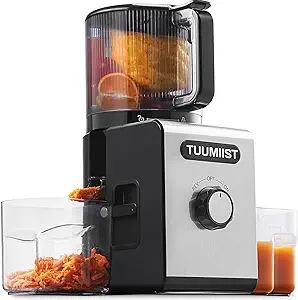 |
| Best Budget The cheapest option that still gets the job done reliably | QCen Juicer Machine KS-501 | 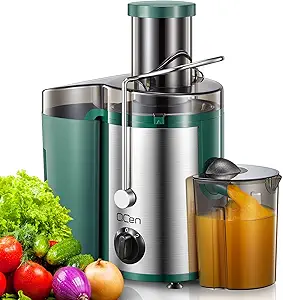 |
| Top Rated A top-rated pick with lots of positive feedback | NAMA J2 Cold Press Juicer |  |
| Most Popular A crowd favorite that many people choose with confidence | Ninja NeverClog Cold Press Juicer JC151 |  |
| Best Seller A high-volume bestseller chosen again and again | Juilist Centrifugal Juicer AMR526 |  |
Omega Cold Press Juicer J8006HDBLK

| Wattage | 200 watts |
|---|---|
| Maximum Power | 200 watts |
| Power Source | Corded Electric |
| Number of Speeds | 1 |
The Omega J8006HDBLK is a triple-stage, low-speed (80 RPM) masticating juicer built to extract maximum juice and nutrients from leafy greens and other produce while running quietly. Its single 200-watt motor and adjustable end cap let you optimize extraction for tough greens, wheatgrass, and softer fruits, and the slow cold-press action reduces heat and oxidation so juice stays fresher longer. Beyond juicing it doubles as a nutrition system for nut butters, baby food, pasta and sorbets thanks to included homogenizing cone and additional nozzles. Removable parts are dishwasher-safe or easy to rinse, which helps cleanup after fibrous green batches. The unit is heavier and larger than compact centrifugal models and operates at one fixed speed, so it is not the best choice if you want very fast production or multi-speed control, but for anyone prioritizing nutrient yield from leafy greens the J8006HDBLK is a practical, quiet option with versatile attachments.
Best for: Buyers who want the best nutrient and juice yield from leafy greens and wheatgrass and value quiet, low-speed extraction and multi-function capability.
Less Ideal for: Those who need very fast batch throughput, compact portable units, or multiple speed controls should consider other styles of juicers.
- Triple-stage masticating auger maximizes juice yield from leafy greens and wheatgrass.
- Low 80 RPM speed minimizes heat buildup and oxidation to preserve nutrients.
- Includes attachments that expand use to nut butters, baby food, pasta and sorbets.
- Removable parts are top-rack dishwasher safe for easier cleanup.
- Single fixed speed limits throughput compared with multi-speed or centrifugal juicers.
- Relatively large and heavy footprint may be cumbersome for small kitchens.
Verdict: Choose the Omega J8006HDBLK if you prioritize quiet, high-yield cold-press extraction of leafy greens and want a versatile nutrition system beyond just juicing.
Tribest Greenstar GSE-5000 Elite

| Maximum Power | 135 watts |
|---|---|
| Power Source | Corded Electric |
| Voltage | 120 |
| Number of Speeds | 1 |
| Capacity | 2 kg |
The Tribest Greenstar GSE-5000 Elite is a heavyweight cold-press juicer built for serious green juice fans and high-volume use. Its stainless steel twin gears run slowly to crush and homogenize leafy greens, herbs, and fibrous vegetables, which helps extract more juice and preserve enzymes and vitamins. The unit includes fine and coarse screens plus homogenizing attachments, so you can make juice, nut butters, sorbets, sauces, and even pasta with optional nozzles. Magnetic and bioceramic technology and an adjustable outlet knob give more control over pressure and consistency while a safety switch prevents operation when the hood is off. It is a durable, manual-design countertop machine that needs hand washing of parts and takes more bench space than compact centrifugal models. Expect longer prep and cleaning time compared with fast juicers, but the result is higher yield and better-quality green juices for batches and nutrition-focused routines.
Best for: Buyers who prioritize maximum green-juice yield and nutrient retention and are comfortable with a hands-on, slightly slower juicing routine will appreciate this machine.
Less Ideal for: If you want very quick single-serving juices, minimal cleanup, or a compact travel-friendly unit, this is not the best fit.
- Twin stainless steel gears extract high yields from leafy greens and fibrous produce
- Designed for cold-pressing to preserve enzymes and vitamins for fresher-tasting juice
- Includes fine and coarse screens plus homogenizing accessories for versatile use beyond juicing
- Adjustable outlet knob and safety switch give control and safe operation
- Durable stainless steel construction and US-based support
- Requires hand washing and more involved cleaning than centrifugal juicers
- Larger and heavier footprint that needs dedicated counter or storage space
- Higher initial complexity and slower processing speed compared with quick high-speed models
Verdict: Choose the Greenstar GSE-5000 Elite when your priority is top juice yield and nutrient-preserving cold-press performance for leafy greens and tough produce.
TUUMIIST Cold Press Juicer TM-780SJ

| Special Features | 3-in-1 Versatility Juicer, No Mesh Filter, Overheat Protection, Whole Fruit Processing |
|---|---|
| Wattage | 350 watts |
| Power Source | Corded Electric |
| Number of Speeds | 60 |
| Capacity | 3 liters |
The TUUMIIST TM-780SJ is a single-auger cold press juicer built for hands-free batch juicing and versatile results like juice, nut milk, and sorbet. It accepts whole fruit through a 6.5-inch feed chute and a 100 oz hopper so you can load larger items with minimal prep, then the slow 60 RPM auger and 350 W motor extract juice gently to reduce heat and oxidation. The included smart strainer eliminates mesh swaps for different recipes, and the quick-release design plus a cleaning brush aims to keep washup straightforward. For leafy greens and other fibrous produce, the slow masticating action typically yields higher juice extraction and preserves nutrients compared with fast centrifugal models. Practical limits include a moderate motor rating that may be slower for very tough leafy batches and a mostly plastic assembly that needs regular cleaning to avoid buildup. The unit offers overheat protection and a simple knob control for straightforward operation, making it a practical choice for someone who wants efficient green juicing without a lot of fiddly parts.
Best for: Buyers who prioritize efficient, low-prep green juicing and want a versatile machine that handles whole fruits and leafy vegetables with minimal fiddling.
Less Ideal for: If you need the fastest possible extraction for very large daily volumes or a heavy-duty commercial unit, look at more powerful or commercial-grade models instead.
- Large 6.5-inch feed chute and 100 oz hopper reduce prep and allow batch juicing
- Slow 60 RPM single-augur extraction preserves nutrients and boosts yield for leafy greens
- 3-in-1 strainer lets you make juice, nut milk, or sorbet without swapping filters
- Quick-release parts and included brush simplify cleaning
- 350 W motor can feel slow with very tough or high-volume leafy batches
- Some components are plastic and require regular disassembly to prevent buildup
Verdict: A practical, low-prep cold press juicer that maximizes yield from leafy greens and whole fruits while keeping cleaning and operation simple.
QCen Juicer Machine KS-501

| Maximum Power | 500 watts |
|---|---|
| Number of Speeds | 2 |
| Power Source | Corded Electric |
| Voltage | 120 volts |
The QCen KS-501 is a budget-friendly centrifugal juicer that uses a 500W motor and a 3-inch wide feed chute to process whole or large pieces of fruit and many vegetables quickly. It offers two speeds — a lower setting for soft fruit and a higher setting for harder produce — and a safety locking arm plus overload protection to prevent operation during misassembly or overheating. Detachable parts and stainless steel construction make cleanup straightforward for a centrifugal model, though fine mesh basket removal requires a firm pull. In practice this unit delivers fast juice from apples, oranges, and carrots, but like most centrifugal machines it struggles to fully extract juice from leafy greens and very fibrous produce compared with masticating models. Run times should be kept to under five minutes to avoid the thermal cutoff, and hand-wash care is recommended for parts. For buyers prioritizing speed, simple controls, and a low price, the KS-501 is a solid entry-level choice, but those seeking maximum yield from leafy greens should expect lower efficiency than slow juicers.
Best for: Buyers on a tight budget who want fast, simple fresh juice from common fruits and firmer vegetables and value quick prep and easy cleanup over maximum green-leaf yield.
Less Ideal for: People whose primary goal is extracting high yields from leafy greens or wheatgrass should choose a slow masticating juicer instead.
- Powerful 500W motor for fast extraction
- 3-inch wide feed chute reduces prep and fits large produce
- Two speed settings for soft and hard fruits and vegetables
- Safety locking arm and overload protection reduce misuse risk
- Detachable stainless steel parts simplify cleaning for a centrifugal unit
- Less efficient at extracting juice from leafy greens compared with masticating juicers
- Should not run continuously for more than five minutes due to thermal cut-off
Verdict: A low-cost, fast centrifugal juicer good for everyday fruit and hard-vegetable juicing but not the best choice for leafy green extraction.
NAMA J2 Cold Press Juicer

| Maximum Power | 200 watts |
|---|---|
| Wattage | 200 watts |
| Power Source | Corded Electric |
| Number of Speeds | 1 |
| Capacity | 30 fluid ounces |
The NAMA J2 is a slow, single-auger cold press juicer built for hands-free, high-yield extraction of fruits and vegetables. Its wide self-feeding hopper lets you load a full recipe and walk away while the 200 W motor spins at about 50 RPM to gently crush and press produce, which helps preserve nutrients and pull more juice from leafy greens. The unit includes a coarse strainer and juice/pulp containers and is designed for quiet operation during regular daily use. Cleanup is simplified with quick-release parts, a spinning brush, and mostly hand-washable Tritan and stainless steel components. Practical limits are its single speed and modest 30 fl oz capacity, so very large batches require multiple cycles, and hand washing is necessary for parts care. For buyers who prioritize steady, nutrient-preserving extraction of leafy greens and want a mostly hands-off workflow, the J2 delivers reliable, efficient performance in a compact footprint.
Best for: Buyers who want a dependable, low-heat juicer that consistently extracts high yields from leafy greens with minimal monitoring and quiet operation.
Less Ideal for: Those who need variable speed control, large single-batch capacity, or prefer dishwasher-safe components for faster cleanup.
- Self-feeding wide hopper enables hands-free loading of recipes
- Slow 50 RPM masticating action maximizes juice yield from leafy greens
- Quiet 200 W motor suitable for daily countertop use
- Quick-release parts and included cleaning brush make maintenance easier
- Single speed limits control for delicate or tougher ingredients
- 30 fl oz capacity means larger batches require repeated runs
Verdict: Choose the NAMA J2 if you want a quiet, hands-free cold press juicer that reliably squeezes the most juice from leafy greens for daily use.
Ninja NeverClog Cold Press Juicer JC151

| Maximum Power | 150 watts |
|---|---|
| Number of Speeds | 2 |
| Capacity | 24 fluid ounces |
| Included Components | 24 oz jug, 36 oz pulp container, 2 pulp filters, auger |
The Ninja NeverClog JC151 is a slow masticating juicer designed to handle fibrous fruits and leafy greens with a high-torque 150-watt auger and a NeverClog cold press system that minimizes jams. It includes two interchangeable pulp filters so you can dial in texture from smoother green juice to thicker, fiber-rich blends, and the larger 24 oz juice jug and 36 oz pulp container make it convenient for batch or family-sized servings. One-touch controls with a reverse function help clear occasional clogs and improve extraction, while the anti-drip lever and dishwasher-safe juice-contact parts keep use and cleanup tidy. In practice the JC151 shines with tough greens like kale, celery, and wheatgrass where slow extraction preserves nutrients and reduces foam compared with centrifugal units. The motor is modestly powered compared with commercial models, so extremely heavy continuous use or hard root vegetables may need short breaks, but for daily green juice routines it offers reliable yield and easy maintenance.
Best for: Buyers who prioritize reliable green-leaf extraction and want a countertop cold press juicer that handles fibrous ingredients with simple controls and easy cleanup.
Less Ideal for: Those needing a heavy-duty commercial juicer for continuous high-volume pressing or users who want the fastest, high-speed centrifugal extraction.
- High-torque 150W auger designed to extract juice from fibrous greens with less clogging
- Two interchangeable pulp filters let you choose less or more pulp for texture control
- Larger 24 oz juice jug and 36 oz pulp container support batch juicing without frequent emptying
- Reverse program and anti-drip lever reduce jams and spills during use
- Juice-contact parts are dishwasher safe for easier cleanup
- 150W motor is not as powerful as commercial masticating units for nonstop heavy-duty use
- May require short pauses with very hard root vegetables or large batches to avoid motor strain
Verdict: Choose the Ninja JC151 if you want a countertop cold press juicer that reliably handles leafy greens and fibrous produce while offering easy pulp control and cleanup.
Juilist Centrifugal Juicer AMR526

| Maximum Power | 800 watts |
|---|---|
| Wattage | 400 watts |
| Special Features | 3" Wide Mouth, 3-Speed Functions, Easy to Clean |
| Material | Stainless Steel |
| Capacity | 400 ml |
The Juilist centrifugal juicer is a countertop high-speed machine designed to quickly extract juice from common fruits and vegetables. It accepts whole or large-cut produce through a 3" wide feed chute, uses a stainless steel cutting disc and micro-mesh filter, and offers three speeds plus a pulse setting to match soft, firm, or hard ingredients. The unit emphasizes fast operation and easy cleanup with dishwasher-safe accessories and a included cleaning brush, while safety features include a double lock arm, non-slip base, and automatic overheat protection. In practice it is best for everyday juices, smoothies bases, and mixed fruit or vegetable blends; note that the manufacturer cautions against very hard items and frozen produce. As a centrifugal model it processes leafy greens and low-juice, fibrous vegetables less efficiently than slow masticating juicers, so expect lower yields with kale or wheatgrass and more pulp in the cup. For buyers wanting quick, simple juicing with minimal prep and easy maintenance, this machine is a sensible, no-frills choice.
Best for: Buyers who want a fast, easy-to-use countertop juicer that minimizes prep and cleanup and who prioritize reliable, straightforward performance over maximizing yields from leafy greens.
Less Ideal for: Those who need maximum juice yield from leafy greens, wheatgrass, or very fibrous produce should consider a slow masticating juicer instead.
- 3" wide feed chute reduces chopping and speeds prep
- Three speed settings plus pulse let you match speed to ingredient texture
- Stainless steel cutting disc and micro-mesh filter for durable extraction parts
- Dishwasher-safe accessories and included brush make cleanup straightforward
- Centrifugal design yields lower extraction efficiency for leafy greens and fibrous vegetables
- Not recommended for very hard produce or frozen items
Verdict: A fast, easy-clean centrifugal juicer that suits cautious buyers who want simple, reliable juicing without extensive prep.
Choosing the Right Juicer for Green Leaves: Key Factors to Consider
Leaf Extraction Efficiency
How much liquid a machine squeezes from leafy greens determines how much produce you need to buy and how nutrient-dense your juice will be. Machines that compress and shear leaves rather than just spinning or chopping tend to yield drier pulp and higher liquid output. For green-heavy recipes, prioritize models with demonstrated ability to turn spinach and kale into compact, dry pulp.
Higher extraction efficiency also reduces waste and overall prep time because you will use fewer bundles of greens per serving. If you plan to juice frequently, this factor has a direct impact on running cost and the convenience of regular green juicing.
Clog Resistance and Feed Design
Leafy greens can mat together and block feed chutes, so a design that prevents packing is essential. Wide feed chutes can help, but feed geometry, auger shape, and the presence of cutting or splitting features matter more for greens. Some machines include pre-chop systems or specially shaped augers to separate leaves before pressing.
Clog resistance affects how often you need to stop and clear the machine during a session. Choose a unit built to handle consecutive leafy batches if you plan to prepare larger quantities or mix greens with softer fruits.
Ease of Cleaning and Maintenance
Juicing leafy greens tends to produce sticky, fibrous residue that can be time-consuming to remove. Removable parts that are dishwasher-safe or have smooth, nonstick surfaces cut cleaning time significantly. Simpler assemblies with fewer crevices minimize trapped pulp and bacterial buildup.
Consider how often you will juice. If you intend to use a juicer daily, an easy-to-clean model is more likely to stay in regular use. Also check whether replacement parts like strainers or brushes are easy to access should they wear over time.
Motor Torque and Low-Speed Performance
Leafy greens respond best to low-speed, high-torque extraction that gently crushes and presses plant cells rather than shredding them at high RPM. Motors with strong torque at low speed reduce the chance of jams and produce less heat, which helps preserve heat-sensitive nutrients and enzymes.
If you plan to process tough greens or dense vegetable bundles, prioritize units with proven low-RPM torque and thermal protection to avoid motor burnout during extended use.
Build Quality and Kitchen Fit
Durable materials, secure fittings, and stable bases all influence how a juicer performs in everyday use. Heavy or well-braced units vibrate less and are less likely to shift when processing dense batches. Food-safe materials and corrosion-resistant screens extend lifespan and maintain juice taste.
Also consider the machine's footprint and storage needs. If counter space is limited, look for designs that balance performance with a compact footprint or easy disassembly for cabinet storage.
Why Low-Speed Masticating Action Works Best
Masticating juicers operate at low speeds and crush plant cells gradually, which is particularly effective for extracting juice from thin, fibrous leaves. This slow extraction minimizes heat build-up and oxidation, helping preserve flavor and fragile nutrients often lost with high-speed centrifugal machines.
For leafy greens, gentle masticating action also reduces the tendency for fibers to wrap around cutting assemblies, which lowers the frequency of jams and makes continuous juicing sessions more practical.
- Low RPMs reduce heat and preserve enzymes
- Crushing action yields drier pulp from greens
- Less fiber-wrapping and fewer stoppages
Prep Tips to Improve Leafy Yield
Simple prep steps can significantly improve extraction performance. Loosely bundle leaves or layer greens with a small amount of softer fruit to help the machine pull leaves through the auger smoothly. Avoid overpacking the feed chute; thin, steady feeds tend to produce the best results.
If a juicer has a pre-chop or shredding screen, use it for very leafy batches. That small extra step can prevent leaf mats that reduce throughput and increase pulp moisture.
- Layer greens with a bit of cucumber or apple for smoother feeding
- Feed in thin streams rather than large clumps
- Trim tough stems from kale or chard for less fibrous pulp
Maintaining Performance Over Time
Regular cleaning after each use prevents residue buildup that can hamper performance and encourage odors. Rinse removable parts promptly and run a short water-only cycle if your machine supports it to clear remaining fibers. Inspect strainers and augers for wear; small deformations can reduce extraction efficiency.
Store the juicer assembled or partially assembled depending on space, but ensure all components are dry to prevent mold. Periodic deep cleaning with a soft brush and mild detergent restores flow through fine meshes without damaging delicate screens.
- Rinse immediately after juicing to prevent pulp drying
- Use manufacturer-recommended brushes for strainers
- Perform monthly checks of seals and gaskets
Noise, Footprint, and Kitchen Practicalities
Noise level and counter footprint influence how and when you will use the juicer. Low-speed masticating units are often quieter than centrifugal types, making early-morning juicing less disruptive. Consider where you will store the machine and how easy it is to assemble for daily use.
If you have a small kitchen, prioritize a compact design or a model with easily detachable parts that can be stored in a cabinet. Also consider whether the unit drains into an integrated pitcher or requires separate containers.
- Low-speed models tend to be quieter for morning use
- Compact designs fit small kitchens better
- Integrated pitchers reduce counter clutter
Common Mistakes New Buyers Make
Expecting every juicer to handle greens equally is a common misstep. Some machines excel with hard fruits but perform poorly with leafy batches, producing wet, pulpy output. Make sure the model you consider is designed or specified for high leafy content.
Ignoring cleaning complexity can doom a juicer to disuse. If assembly and cleaning feel like a chore, you are less likely to maintain a daily routine, which defeats the purpose of having a machine for quick green juices.
- Do not assume high speed equals better extraction for greens
- Check dishwasher compatibility if cleaning time matters
- Look for units with clear, detachable strainers to simplify upkeep
How We Chose the Best Juicer for Green Leaves
We prioritized features that directly affect leafy-green extraction and day-to-day usability. Primary evaluation criteria included extraction efficiency for leafy greens, clog resistance and feed design, ease of cleaning and disassembly, motor durability and torque at low RPMs, and overall build quality and material safety. We favored machines that consistently produced drier pulp from spinach, kale, and similar greens, since that indicates better nutrient and liquid yield. We excluded high-speed centrifugal juicers that are primarily designed for hard fruits and that consistently leave wet pulp with leafy batches. We also filtered out units with difficult-to-clean assemblies or those that lacked low-speed torque needed to process fibrous greens without frequent jams. Finally, we considered noise and counter footprint for practical home use. The result is a list of juicers that balance leafy extraction performance with real-world convenience and long-term reliability.
Our full evaluation process is outlined in our review methodology.
FAQ
Can I juice only leafy greens without adding fruit or vegetables?
Yes, but pure leafy batches can be prone to feeding issues and lower flow. Many users add a small amount of cucumber, apple, or celery to help the machine pull leaves through the auger more smoothly and to improve overall yield.
How dry should the pulp be after juicing greens?
For leafy greens, good extraction typically leaves pulp that is noticeably drier and clumped rather than sodden. Very wet pulp usually indicates the machine is not extracting efficiently and you may get lower juice yield.
Is it better to chop stems from kale and chard before juicing?
Trimming large, woody stems can help because thick stems sometimes cause packing or increased fiber in the pulp. Thin, tender stems are usually fine and can add nutrients without causing problems.
Will juicing greens destroy nutrients?
Juicing does remove fiber, but low-speed extraction reduces heat and oxidation, which helps preserve many heat-sensitive vitamins and enzymes. To maximize nutrient retention, consume juice soon after making it and store any leftovers refrigerated and sealed.
How often should I deep-clean my juicer if I juice daily?
If you juice every day, a quick rinse after each use and a deeper clean with brushes and detergent weekly is a good routine. Monthly inspections of seals and strainers help catch wear before it affects extraction.
Final Verdict
Choosing the right juicer for green leaves means focusing on extraction efficiency, low-speed torque, and ease of cleaning. Prioritize machines that produce dry pulp from leafy batches and that resist clogging through smart feed and auger design. Balance performance with the practicalities of noise, footprint, and maintenance so you will actually use the juicer regularly. Ultimately, pick the unit that matches how often you will juice and how much prep and cleaning you are willing to do. That approach ensures the juicer becomes a reliable part of your routine rather than an occasional gadget.