
Note: This article contains affiliate links. If you click on these links and make a purchase, we may earn a small commission at no extra cost to you. This helps support our research and content. Read our full affiliate disclosure here.
If you run or staff a juice bar, a commercial-grade juicer is central to speed, yield, and consistency during peak service. The right machine reduces prep time, minimizes downtime for cleaning, and extracts the most drinkable juice from produce without sacrificing texture or flavor. This guide presents seven shortlisted juicers chosen specifically for juice bar use, with attention to throughput, robustness, and serviceability. Below you will find concise profiles of each top pick and an explanation of the criteria we used to evaluate them, so you can match a machine to your daily volumes and maintenance capacity.
Top Picks at a Glance
| Best Overall The best all-around choice for most situations | Canoly C16 Cold Press Juicer |  |
| Best Quality Built to a higher standard if you want something more solid | Waring Pulp Eject Juice Extractor |  |
| Best Value The sweet spot between price and what you get | Eurolux Electric Citrus Juicer ELCJ-1600SN |  |
| Best Budget The cheapest option that still gets the job done reliably | Chef'n FreshForce Lemon Squeezer |  |
| Top Rated A top-rated pick with lots of positive feedback | Ninja NeverClog Cold Press Juicer JC151 |  |
| Most Popular A crowd favorite that many people choose with confidence | Zulay Metal 2-in-1 Lemon Squeezer | 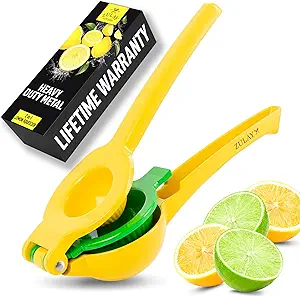 |
| Best Seller A high-volume bestseller chosen again and again | Elite Gourmet Citrus Juicer ETS623 |  |
Canoly C16 Cold Press Juicer

| Maximum Power | 250 watts |
|---|---|
| Wattage | 250 watts |
| Power Source | ac |
| Number of Speeds | 45 |
| Capacity | 2.65 liters |
The Canoly C16 is a single-auger cold press juicer built for frequent home and small commercial use where quiet operation and versatility matter. It processes whole fruit and large produce with a 6-inch feed chute and a powerful 250W brushless AC motor that is engineered to run quietly while extracting high yields from hard vegetables and nuts. The machine includes three strainers for regular juice, sorbet, and nut milk so you can switch between cold-pressed juice, frozen-fruit sorbets, and creamy plant milks without adding extra appliances. Practical touches include an auto-reverse to clear clogs, tool-free disassembly, dishwasher-safe polycarbonate parts, and a large hopper for batch work. Trade-offs are that the unit is fairly heavy and sized for countertop use, and some users will prefer a metal auger or commercial-grade continuous-feed system for heavy daily juice-bar throughput. For balanced buyers who want quiet, multi-function cold pressing with easy cleanup, the C16 hits the mark; for high-volume professional juicing you may need a tougher commercial model.
Best for: Buyers who want a quiet, versatile cold-press machine that handles whole produce and multiple recipes for home or light commercial prep and value easy cleaning and multi-function capability.
Less Ideal for: Operators needing heavy-duty, true commercial continuous-feed juicers for nonstop, high-volume juice-bar service should choose a dedicated commercial model instead.
- 6-inch extra-wide feed chute reduces prep and accepts whole fruit
- Brushless 250W AC motor designed for quiet, efficient extraction
- Three strainers let you make juice, sorbet, and nut milk with one machine
- Auto-reverse and large hopper help prevent and clear clogs during batches
- Tool-free disassembly and dishwasher-safe parts make cleanup fast
- Relatively heavy and large for limited countertop space
- Not a commercial continuous-feed juicer for very high daily throughput
Verdict: A quiet, versatile cold-press juicer that handles whole produce and makes juice, sorbet, and nut milk for balanced home or light commercial use.
Waring Pulp Eject Juice Extractor

| Maximum Power | 1.2 hp |
|---|---|
| Wattage | 1000 watts |
| Voltage | 120 volts |
| Number of Speeds | 1 |
| Capacity | 12 quarts |
The Waring Pulp Eject Juice Extractor is a commercial-grade centrifugal juicer built for high-volume juice production in bars and juice shops. It uses a 1.2 HP brushless induction motor running at 3,600 RPM and a wide 3.15-inch feed chute to process whole fruits and vegetables quickly, which cuts prep time during busy service. The stainless-steel filter basket and shredder disc are designed to maximize yield while the large 12-quart pulp container reduces how often staff need to stop and empty pulp. Durable die-cast metal housing and a manual thermal protection button support continuous operation, and the single-speed on/off control keeps operation simple. Practical limitations include the centrifugal design, which favors speed over cold-press yield and can produce more foam and heat than slow juicers, and the unit is bulky and intended for commercial spaces rather than small backbars. For operators who need fast throughput and robust build quality, this machine delivers dependable, professional performance.
Best for: Operators who prioritize fast throughput and durable construction for a busy juice bar or commercial beverage program and need a machine that can run for extended periods.
Less Ideal for: Small-scale home users or businesses that prioritize maximum cold-press yield and minimal foam should consider slow masticating models instead.
- Powerful 1.2 HP brushless induction motor for continuous commercial use
- Wide 3.15-inch feed chute accepts whole fruits to reduce prep time
- Stainless-steel filter basket and shredder disc improve juice yield
- Large 12-quart pulp container supports extended operation between emptying
- Centrifugal design yields more foam and heat than slow masticating juicers
- Large footprint and weight make it better suited to commercial kitchens than small spaces
Verdict: Choose this Waring extractor when you need a tough, high-throughput centrifugal juicer built to handle continuous service in a juice bar or commercial setting.
Eurolux Electric Citrus Juicer ELCJ-1600SN

| Wattage | 120 watts |
|---|---|
| Power Source | Corded Electric |
| Material | Stainless Steel |
| Special Features | Auto-Reversing, Overheat Protection |
The Eurolux ELCJ-1600SN is a corded electric citrus juicer built around a stainless steel body, an integrated seed-and-pulp filter, and a one-touch soft-grip handle that starts and stops juicing automatically. It is designed for straightforward extraction of oranges, lemons, limes, and similar fruit without swapping cones thanks to a single, versatile reamer. The motor runs quietly while delivering the branded 120 watts of power and includes auto-reversing and overheat protection for longer life during repeated cycles. Removable components are dishwasher-safe which speeds cleanup between batches, and the stainless-steel construction gives it a more durable, professional look on a counter. Limitations are its single-cone design which may be slower than multi-cone commercial units for very high-volume service, and the 120-watt motor, while efficient, is less powerful than heavy-duty commercial machines used in busy juice bars. For small-scale commercial spots or high-efficiency home kitchens that value durability and easy maintenance, it balances performance and practicality well.
Best for: Buyers who want a durable, easy-to-clean citrus juicer that reliably produces seed-free juice for small-scale commercial service or high-use home kitchens and value straightforward operation and low maintenance.
Less Ideal for: Not the best choice for high-volume juice bars that need continuous, heavy-duty extraction or faster throughput from multi-cone commercial juicers.
- Stainless steel construction for durability and professional appearance.
- Integrated stainless steel filter produces seed-free juice.
- One-touch automatic operation with soft-grip handle for easy, repeatable use.
- Dishwasher-safe removable parts for quick cleaning.
- Built-in safety features including auto-reversing and overheat protection.
- Single cone design may not extract as quickly as dedicated multi-size commercial reamers.
- 120-watt motor is modest compared with heavy-duty commercial juicers.
Verdict: A robust, easy-to-clean stainless steel citrus juicer that delivers reliable, seed-free extraction and simple one-touch operation ideal for small-scale commercial use.
Chef'n FreshForce Lemon Squeezer

| Capacity | 0.8 liters |
|---|---|
| Material | Plastic |
| Blade Material | Stainless Steel |
| Power Source | hand_powered |
The Chef'n FreshForce Lemon Squeezer is a compact manual press built for quickly juicing lemons and other small citrus without an electric juicer. Its patented dual-gear mechanism increases leverage, delivering noticeably more juice per half fruit while reducing hand effort, and the stainless steel basket and nylon body make it durable for frequent use. You use it by halving a lemon, placing the fruit in the basket, and pressing the two handles together to extract juice while pulp and seeds are contained. The non-slip ergonomic handles and dishwasher-safe construction make cleanup and repeated use straightforward. It is limited by capacity and speed compared with countertop or commercial citrus presses, so it is best for small batches, recipe prep, or bar service where a few fruits are needed at a time rather than continuous high-volume juicing. For kitchens or bars that need a reliable, low-cost manual tool for occasional lemon and lime extraction, this is a practical, easy-to-store choice.
Best for: Buyers looking for an inexpensive, durable manual tool to quickly juice lemons and limes for recipes, cocktails, or small-scale bar service where occasional fresh juice is needed.
Less Ideal for: Commercial juice bars or high-volume operations that require continuous rapid extraction and larger throughput should choose a powered or commercial citrus press instead.
- Dual-gear mechanism yields up to 20% more juice with less hand strain
- Stainless steel basket and nylon construction for everyday durability
- Ergonomic, non-slip handles that are comfortable during repeated use
- Top-rack dishwasher safe for easy cleanup
- Manual operation is slow and impractical for high-volume juice bar production
Verdict: A budget-friendly, durable manual squeezer that maximizes juice from lemons with minimal hand effort, ideal for small-scale prep and bar use.
Ninja NeverClog Cold Press Juicer JC151

| Maximum Power | 150 watts |
|---|---|
| Number of Speeds | 2 |
| Capacity | 24 fluid ounces |
| Included Components | (24 oz juice jug, 36 oz pulp container, 2 pulp filters, motor base with auger) |
The Ninja NeverClog JC151 is a masticating cold-press juicer designed to handle fibrous fruits and vegetables using a 150-watt high-torque auger and an anti-clog system. It runs two one-touch programs, including a reverse function to clear jams, and ships with two interchangeable pulp filters so you can choose smoother or thicker juice. The unit includes a 24 oz juice jug and a 36 oz pulp container, which lets you make larger batches without frequent emptying, and its compact footprint fits on most counters. Cleanup is straightforward since all juice-contact parts are dishwasher safe, and the simple button controls make operation intuitive for staff. For heavier commercial use at a juice bar the motor and build are modest compared with professional-grade machines, so expect slower throughput for continuous peak-hour demands; this model excels at reliable, clog-resistant home or light-commercial prep rather than nonstop high-volume production.
Best for: Buyers seeking a dependable, clog-resistant cold-press juicer that can handle fibrous produce and make larger home or light-commercial batches with minimal fuss.
Less Ideal for: Operators needing high-throughput continuous performance during peak juice bar hours should consider true commercial juicers built for nonstop heavy use.
- NeverClog cold-press design and reverse function reduce jams when processing fibrous ingredients
- Two interchangeable pulp filters let you control juice texture from smooth to fiber-rich
- Larger 24 oz juice jug and 36 oz pulp container reduce interruptions for bigger batches
- Dishwasher-safe juice-contact parts simplify cleanup after shifts
- 150W motor and slow masticating speed limit throughput compared with commercial-grade juicers
- Not engineered for continuous heavy-duty, high-volume juice bar use
Verdict: Choose the Ninja JC151 when you want a reliable, clog-resistant cold-press juicer that produces larger batches and is easy to maintain for home or light commercial service.
Zulay Metal 2-in-1 Lemon Squeezer

| Material | Aluminum |
|---|---|
| Blade Material | Stainless Steel |
| Power Source | Manual |
| Capacity | 0.5 liters |
The Zulay Metal 2-in-1 Lemon Squeezer is a handheld citrus press built for quick single-serve juicing tasks. You place a halved lemon, lime, or small orange in the bowl and press the long ergonomic handles together to force juice through the perforated bowl, which keeps seeds and large pulp out of the liquid. Its stamped aluminum construction and stainless steel blade area give it a solid, heavy-duty feel and the design is compact enough to store in a drawer or bring to a bar service. Because it is fully manual it requires no power and produces juice on demand with minimal cleanup — it is hand-wash only per the manufacturer but the simple shape rinses clean quickly. The main limitations are that it handles small fruit halves only and is intended for low-volume use, so it is not suited to continuous high-throughput commercial juicing typical of busy juice bars. For home kitchens, cocktail stations, or light countertop prep it delivers dependable, seed-free extraction in seconds.
Best for: Buyers who prioritize a proven, highly rated manual tool and want a sturdy, no-frills citrus press for home bars, cocktail service, or occasional juice prep where reliability and user reviews matter.
Less Ideal for: Operations that need to process large batches or continuous high-volume citrus for a juice bar should choose a commercial electric press instead.
- Simple, durable aluminum construction for consistent leverage and extraction
- Ergonomic long handles reduce hand fatigue during repeated presses
- Perforated bowl filters seeds and most pulp for cleaner juice
- Compact, no-power manual design that stores easily and works anywhere
- Designed for single fruit halves and low-volume tasks rather than continuous commercial use
- Manufacturer recommends hand washing which may slow cleanup compared with dishwasher-safe options
Verdict: A compact, well-reviewed manual citrus press that reliably extracts seed-free juice for low-volume bar and home use.
Elite Gourmet Citrus Juicer ETS623

| Maximum Power | 40 watts |
|---|---|
| Power Source | Corded Electric |
| Voltage | 120 |
| Capacity | 24 oz |
The Elite Gourmet ETS623 is a small electric citrus juicer built for quick, everyday squeezing of oranges, lemons, limes and grapefruit. It uses a 40‑watt motor with an auto-reversing reamer that spins in both directions to pull more juice from halved fruit while you press down, and the integrated pulp and seed filter yields smoother juice. The 24 oz container and easy‑pour spout let you make a few servings at once and serve directly from the unit, and removable parts are dishwasher‑safe on the top rack for faster cleanup. Construction is stainless steel with BPA‑free components and ETL listing for safety. Because it is a compact, low‑power appliance, it is best for light to moderate daily use rather than continuous commercial throughput, and its manual push‑down control limits hands‑free operation for high‑volume juicing. Hand washing is recommended to preserve longevity despite dishwasher‑safe labeling.
Best for: Buyers who prioritize a reliable, safe countertop citrus juicer for household or light‑duty small-business prep and who prefer simple, low‑risk appliances that are easy to clean and store.
Less Ideal for: Not a good fit for high‑volume juice bars or commercial kitchens that need continuous, high‑throughput extraction or fully automated operation.
- Auto-reversing reamer for improved juice extraction
- 40‑watt motor offers stronger performance than typical 25W household models
- 24 oz container with easy‑pour spout and integrated pulp/seed filter for convenient serving
- Detachable parts are top‑rack dishwasher safe for quicker cleanup
- Stainless steel construction with BPA‑free parts and ETL safety listing
- Not designed for continuous commercial or heavy duty use
- Manual push‑down operation reduces throughput compared with automatic feed systems
- Manufacturer recommends hand washing for longest life despite dishwasher-safe claim
Verdict: A compact, safety‑focused citrus juicer that delivers improved extraction for small batches and easy cleanup, ideal for risk‑averse buyers needing reliable light-duty juicing.
Choosing the Right Juicer for Juice Bars: Key Factors to Consider
Throughput and Extraction Yield
How many pounds or kilos of fruit and vegetables a machine can process per hour directly affects productivity and staffing needs. Juice bars with heavy traffic need machines that sustain continuous operation without overheating or frequent feeding. Higher extraction yield lowers raw produce cost because you get more liquid per pound, which improves margins over time.
Consider both peak throughput and sustained throughput. Some machines can handle short bursts of high volume but slow down or require pauses to cool. Also check whether the machine is optimized for leafy greens, hard roots, or both, since yield varies by produce type.
Durability and Commercial Build
Commercial juice bars demand equipment built from heavier materials and commercial-grade components. Stainless-steel housings, robust motor housings, and hardened cutting or grinding surfaces increase longevity under continuous use. Durable units resist warping, corrosion, and premature wear that can cause downtime.
Look for machines with clear commercial ratings, warranties that reflect professional use, and solid user feedback about longevity in busy environments. A more rugged unit can cost more initially but reduces replacement and repair frequency over its service life.
Ease of Cleaning and Sanitation
Regular cleaning is essential for food safety and to maintain consistent flavor and throughput. Machines that disassemble quickly and have dishwasher-safe or easily rinsed parts cut cleaning time. Smooth internal surfaces and minimal crevices reduce trapped pulp and microbial risk.
Also consider how often components must be removed and whether tools are required. Juice bars typically need fast-change parts between shifts, so systems designed for quick field sanitation help maintain continuous service and lower labor costs.
Operator Ergonomics and Feed Design
Feed-hopper size, chute orientation, and the level of manual feeding versus continuous-feed design affect staff fatigue and speed. A generous hopper or wide chute that accepts halved fruit reduces prep time. Comfortable handle placement and straightforward controls speed staff training and reduce user error.
Evaluate how much prep is required before feeding produce and whether the machine's workflow fits the bar layout. Ergonomic design reduces repetitive stress on staff and keeps service smooth during long shifts.
Serviceability and Parts Availability
Downtime costs money in a busy juice bar. Machines that are easy to service with readily available replacement parts and straightforward diagnostics get back into service faster. Check for coloration on commonly replaced wear parts, such as gaskets, screens, and cutting assemblies, and whether they are user-replaceable.
Also consider vendor or third-party support networks and whether common repairs can be done on-site with simple tools. Machines designed with modular components tend to be less expensive to repair over time.
Noise, Vibration, and Location Constraints
Noise and vibration matter in tight retail spaces where customer experience is a priority. High-speed centrifugal units can be louder and create more vibration than slower masticating or hydraulic-style systems. Excessive vibration also accelerates wear on fasteners and bearings.
Assess whether the bar layout isolates noisy equipment, and whether anti-vibration mounts or decoupling pads are necessary. Choosing a quieter, lower-vibration machine may improve the customer environment and reduce long-term maintenance.
Commercial Vs. High-End Countertop Machines
Not all machines labeled 'commercial' are built for the same workloads. True commercial units are engineered for continuous duty cycles and heavy daily throughput while high-end countertop machines can offer good yields for smaller-volume operations but may not sustain heavy use without accelerated wear.
If your juice bar has predictable peak hours and heavy throughput, prioritize commercial-rated designs. For lower-volume bars or pop-ups, a robust countertop model might balance upfront cost with adequate performance, but expect more frequent maintenance.
- Commercial machines: built for continuous operation, heavier components
- Countertop units: better for intermittent use and lower volume
- Match the machine's duty cycle rating to your busiest service periods
Produce Prep and Workflow Integration
The amount and type of produce prep you can do behind the counter determines how fast staff can feed the machine. Wide chutes and feed-through designs reduce chopping time, while smaller hoppers force more prep and slow service.
Consider where you will place the machine relative to prep stations, sinks, and waste bins. Machines that allow on-the-fly pulp removal or direct discharge into designated containers streamline workflow and reduce back-and-forth.
- Plan for waste handling and pulp disposal
- Position machines near sinks or sanitation stations
- Ensure electrical supply and ventilation are adequate
Routine Maintenance Scheduling
Create a maintenance plan that fits your operating hours. Daily quick-rinse steps, weekly deep-clean procedures, and monthly inspections of wear parts keep machines reliable. Track parts replacement intervals so you can stock common spares and avoid unexpected downtime.
Train multiple staff members on basic cleaning and simple repairs to keep the machine in service if a primary operator is absent.
- Daily: rinse and remove pulp, inspect seals
- Weekly: full disassembly and sanitation
- Monthly: inspect bearings, belts, and cutting elements
Power, Ventilation, and Installation Needs
Commercial juicers can draw significant power and may require dedicated circuits. Confirm electrical ratings and have a licensed electrician verify that your power supply supports continuous operation. Also consider ventilation or heat dissipation if machines run for extended periods.
Installation space must allow doors or panels to open for cleaning and maintenance. Leave clearance for airflow and for operators to remove heavy components safely.
- Verify voltage and amperage requirements
- Allow service clearance around the unit
- Assess heat load and ventilation needs
Pulp Management and Waste Reduction
Pulp output affects bin frequency and labor. Some machines produce drier pulp that is easier to compact for composting or reuse, while others yield wetter pulp that requires more frequent disposal. Consider how you will store, compost, or repurpose pulp before choosing a machine.
Efficient pulp handling reduces interruptions and keeps production flowing, especially during peak hours.
- Plan for pulp storage and frequency of emptying
- Consider options for pulp reuse or compost partnerships
- Choose systems that produce pulp you can handle within your waste workflow
How We Chose the Best Juicer for Juice Bars
We focused on attributes that matter in a high-volume juice bar environment. First, throughput and extraction efficiency were prioritized because machines must process large quantities of produce quickly while maximizing yield. Second, durability and build quality were assessed to ensure units can endure continuous commercial use and frequent disassembly. Third, maintenance and cleaning time were evaluated since operators spend significant time on sanitation between service periods. Fourth, ease of use, including feed-hopper size and operator ergonomics, was considered to reduce fatigue and speed training. Fifth, spare-parts availability and serviceability informed decisions about long-term uptime and repairability. We excluded any machines designed primarily for home use or those lacking clear commercial specifications. Lower-capacity centrifugal units unsuited to sustained throughput were filtered out. The listed picks are machines that meet minimum commercial throughput targets, offer straightforward cleaning, and have a clear path for routine service and parts replacement. These are the practical dimensions buyers should weigh when selecting a juicer for juice bar operations.
Our full evaluation process is outlined in our review methodology.
FAQ
How often should a commercial juicer be cleaned during service hours?
Quick rinses and pulp removal should happen after each busy run or shift to avoid buildup. A more thorough disassembly and sanitation is typically needed daily or at the end of each service day depending on local health rules.
Can one machine handle both leafy greens and hard roots efficiently?
Some commercial designs handle both well, but extraction efficiency varies with produce type. Machines optimized for leafy greens may need different screens or attachments to match the yield of harder roots, and vice versa.
What routine parts should juice bars keep in stock?
Common spares include gaskets, screens, cutting assemblies, and drive belts. Keeping these items on hand reduces downtime when wear parts reach end of life.
Is it better to choose a slower masticating machine or a faster centrifugal unit for a juice bar?
Slower masticating machines often yield drier pulp and better nutrient retention but process less quickly than centrifugal units. Your choice depends on whether you prioritize yield and quality or maximum throughput.
How do I assess the expected lifespan of a commercial juicer?
Look at build materials, motor ratings, duty cycle specifications, and whether the manufacturer documents commercial use. Also factor in how often the machine will run and how well it will be maintained.
Final Verdict
Select a juicer for a juice bar by balancing throughput needs with maintenance capacity. Prioritize machines that match your busiest service periods, offer high extraction yield for the produce you use most, and allow quick, reliable cleaning. Durable construction and easy access to common replacement parts reduce downtime and total operating headaches. Focus on the tradeoff between speed and yield, and choose a machine whose duty cycle and serviceability fit your staffing and space. With those priorities in mind, you can confidently select equipment that supports consistent quality and efficient service.