
Note: This article contains affiliate links. If you click on these links and make a purchase, we may earn a small commission at no extra cost to you. This helps support our research and content. Read our full affiliate disclosure here.
If you rely on leafy greens and dense root vegetables for daily juice, picking the right juicer changes how much nutrients and fiber you actually get. A juicer designed for both soft leafy produce and hard roots balances extraction efficiency, minimal heat buildup, and manageable cleanup so you can use it every day. This guide covers seven shortlisted juicers built to handle spinach, kale, carrots, beets, and similar produce. We evaluated machines for yield, ease of cleaning, durability, and versatility so you can match a model to your routine. Read on for the evaluation criteria and practical advice before the product list.
Top Picks at a Glance
| Best Overall The best all-around choice for most situations | Breville Juice Fountain Cold BJE430 | 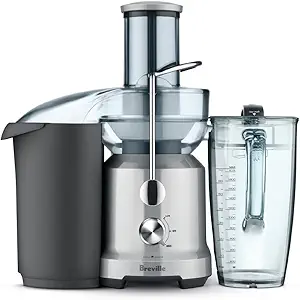 |
| Best Quality Built to a higher standard if you want something more solid | Hurom H330 Cold Press Juicer |  |
| Best Value The sweet spot between price and what you get | AMZCHEF Masticating Juicer 1902B |  |
| Best Budget The cheapest option that still gets the job done reliably | Airon AMR530 Centrifugal Juicer |  |
| Top Rated A top-rated pick with lots of positive feedback | anybear Cold Press Juicer SJ054C |  |
| Most Popular A crowd favorite that many people choose with confidence | Breville Juice Fountain Plus JE98XL |  |
| Best Seller A high-volume bestseller chosen again and again | EanOruus 3-in-1 Masticating Juicer E-18 |  |
Breville Juice Fountain Cold BJE430

| Power | 850 watts |
|---|---|
| Number of Speeds | 2 |
| Feed Chute | 3" extra-wide |
| Capacity | 70 fl oz jug |
| Blade Material | Titanium |
The Breville Juice Fountain Cold is a high-speed centrifugal juicer designed for quick, everyday juicing of fruits, leafy greens, and hard vegetables. Its 850-watt motor and Cold Spin Technology aim to limit heat during extraction so juices retain more nutrients than typical high-speed machines, while the 3" extra-wide chute reduces prep by allowing many whole fruits and vegetables to be fed without chopping. You get a 70 fl oz seal-and-store jug and a drip-free nozzle for mess-free pouring, plus a large pulp container for extended juicing sessions. Two speed settings let you choose gentler extraction for softer produce or higher speed for tougher items like carrots and beets. Cleanup is simplified by dishwasher-safe parts and an included cleaning brush, though the unit is fairly large and some parts still require rinsing by hand. For those who want fast yields and the convenience of producing several days' worth of juice, this model delivers strong performance, but it will be louder and less slow-extracting than masticating alternatives when processing delicate leafy greens.
Best for: Buyers who want a fast, no-fuss juicer that handles hard vegetables and everyday leafy greens while saving prep time with a wide chute and a large sealable jug.
Less Ideal for: People seeking the quietest machine or maximum extraction from delicate leafy greens and wheatgrass should consider slow masticating juicers instead.
- Cold Spin Technology to reduce heat during extraction and help preserve nutrients
- 3" extra-wide chute lets you juice many whole fruits and vegetables with less prep
- Powerful 850-watt motor handles hard vegetables and produces fast yields
- 70 fl oz seal-and-store jug with froth separator for storing juice up to several days
- Dishwasher-safe components and included cleaning brush simplify cleanup
- Centrifugal design is louder and can be less efficient on very leafy greens compared with masticating juicers
- Relatively large footprint and multiple parts still require rinsing and assembly
Verdict: Choose this Breville if you want fast, powerful juicing with a wide chute and a large seal-and-store jug for convenient, everyday extraction of hard vegetables and leafy greens.
Hurom H330 Cold Press Juicer

| Capacity | 2 liters |
|---|---|
| Auger Speed | 50 RPM |
| Power Source | Corded Electric |
| Material | Plastic; stainless steel blade |
| Special Features | Easy to Clean |
The Hurom H330 is a slow, single-auger cold press juicer built for batch juicing of whole fruits, leafy greens, and hard vegetables without extensive prep. Its 2-liter self-feeding hopper accepts whole apples, carrots, celery and leafy greens so you can load a full recipe, start the machine, and walk away while the 50 RPM auger squeezes juice gently to reduce heat and oxidation. It includes fine and coarse strainers for low-pulp or fuller texture juice and can be used for nut milk and smoothies with the appropriate strainer. Practical benefits include quiet operation suitable for early mornings, quick disassembly for hand washing, a safety shutoff if the lid opens, and a detachable cord for neater storage. The machine is built from BPA-free materials and stainless steel components and is positioned for higher juice yield and longer fridge life of up to 72 hours. Downsides are its hand-wash-only care and relatively heavy footprint compared with compact models, plus the additional ice cream strainer is sold separately rather than included.
Best for: Buyers who prioritize extraction performance and nutrient retention for leafy greens and hard vegetables and who want a hands-off batch juicer for family-size recipes.
Less Ideal for: Those seeking a lightweight, travel-friendly, or fully dishwasher-safe unit or buyers who only need occasional single-serving juicing should consider simpler or more compact alternatives.
- Large 2-liter self-feeding hopper accepts whole produce to batch-juice without pre-cutting
- Slow 50 RPM auger minimizes heat and oxidation for higher nutrient retention and longer juice life
- Includes fine and coarse strainers for low-pulp or fuller-texture juice
- Quiet motor and safety shutoff make it practical for morning use around family
- Removable parts and quick disassembly simplify cleaning and maintenance
- Parts require hand washing rather than dishwasher-safe cleaning
- Heavier and larger countertop footprint compared with compact juicers
- Some specialty accessories such as the ice cream strainer are sold separately
Verdict: Choose the Hurom H330 when you want a performance-focused slow juicer that extracts nutrient-rich juice from leafy greens and hard vegetables with minimal prep and quiet, hands-off batch operation.
AMZCHEF Masticating Juicer 1902B

| Wattage | 300 watts |
|---|---|
| Maximum Power | 350 watts |
| Power Source | Electric |
| Voltage | 120 volts |
| Capacity | 5 pounds |
The AMZCHEF 1902B is a single-auger masticating juicer built for extracting juice from whole fruits, leafy greens, and hard vegetables with minimal prep. Its 5.4-inch oversized feed chute accepts whole apples, carrots, and similar produce so you spend less time chopping, and the upgraded spiral auger plus stainless steel blade is tuned for higher juice yield and drier pulp. The unit runs quietly on a heavy-duty motor with overload protection and an auto-reverse to clear jams, which helps when processing fibrous greens or root vegetables. Detachable parts and one-button operation make assembly and rinsing straightforward, though the manufacturer advises hand washing for care. For homes that want nutrient-rich green juices or consistent carrot and celery extraction without frequent clogging, this juicer delivers solid results; it is not a quick-blend or centrifugal machine so yields come from slower, higher-efficiency pressing rather than speed.
Best for: Buyers who want efficient, low-speed extraction for leafy greens and hard vegetables and prefer less prep work with reliable, higher-yield results.
Less Ideal for: People who need very fast, high-throughput juicing or prefer dishwasher-safe parts and minimal hand-cleaning.
- 5.4-inch wide feed chute accepts whole fruits and many vegetables, reducing prep time
- Single-auger masticating design and upgraded auger produce higher juice yield with drier pulp
- Stainless steel blade and body offer durability for frequent use
- Quiet heavy-duty motor with overheat protection and auto-reverse reduces clogging and noise
- Simple one-button operation and removable parts make cleaning and maintenance easier
- Requires hand washing of parts rather than dishwasher-safe convenience
- Slower juicing speed compared with centrifugal juicers, so batch runs take more time
Verdict: Choose this masticating juicer if you want high-yield, low-speed extraction of leafy greens and hard vegetables with minimal chopping.
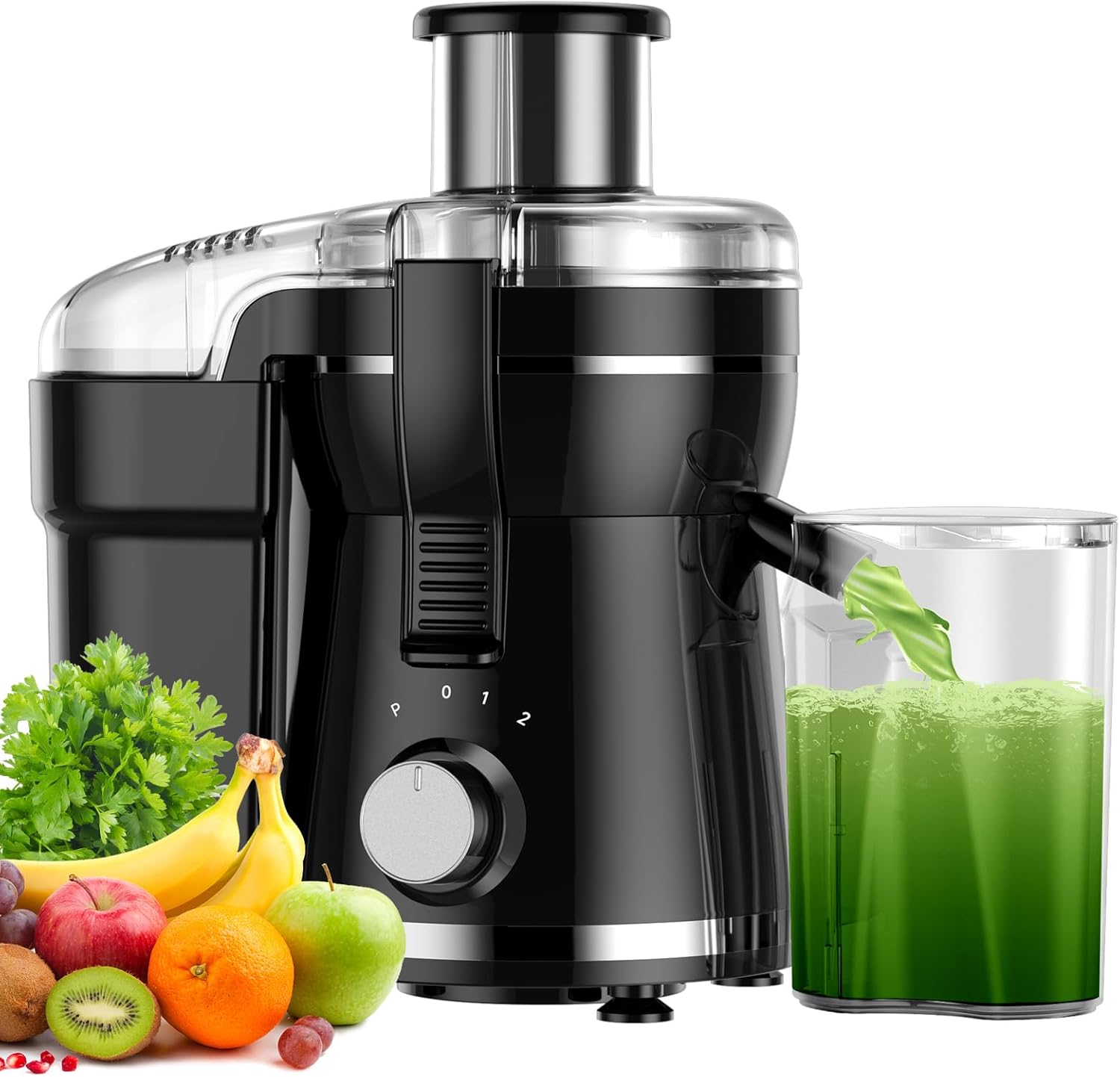
Airon AMR530 Centrifugal Juicer
| Maximum Power | 500 watts |
|---|---|
| Power Source | Corded Electric |
| Voltage | 120 volts |
| Material | Plastic, Stainless Steel |
The Airon AMR530 is a budget-friendly centrifugal juicer built around a 500W motor and a 3-inch wide feed chute that accepts larger pieces of fruit and many vegetables with minimal prep. It offers three speeds so you can dial back rpm for soft fruits and ramp up for harder produce like apples and carrots, and a pulse-style high setting for stubborn items. The unit uses a stainless steel high-density filter and multi-blade cutter to push juice yield higher than basic models, and removable parts are dishwasher-safe which simplifies cleanup. Safety features include a locking lid, overheat protection, and an anti-slip base for stable operation. As a centrifugal model it delivers fast extraction and good yields for hard vegetables and leafy greens when fed in thin strips, but it will produce more foam and less nutrient retention than a slow masticating juicer and may struggle with very fibrous leafy greens compared with slow auger machines. For buyers who want quick daily juices from hard vegetables without a high price or complicated cleaning, this is a practical pick; those prioritizing maximum green yield or cold-pressed quality should consider a masticating model instead.
Best for: Buyers looking for an affordable, fast juicer that handles hard vegetables and general daily juicing with minimal prep and easy cleanup.
Less Ideal for: People who prioritize cold-pressed quality, maximum nutrient retention from leafy greens, or the highest possible green-juice yield should look at slow masticating models instead.
- 500W motor provides strong, fast extraction for hard fruits and vegetables
- 3-inch wide feed chute reduces chopping and speeds up preparation
- Three speed settings let you match speed to soft or hard produce
- Stainless steel filter and multi-blade design aim to increase juice yield
- Removable parts are dishwasher-safe for easier cleaning
- Centrifugal design tends to produce more foam and less nutrient retention than slow masticating juicers
- Less efficient at extracting juice from very fibrous leafy greens compared with auger-style juicers
Verdict: A low-cost, fast centrifugal juicer that delivers strong extraction for hard vegetables and easy cleanup, making it a practical choice for budget-minded daily juicing.
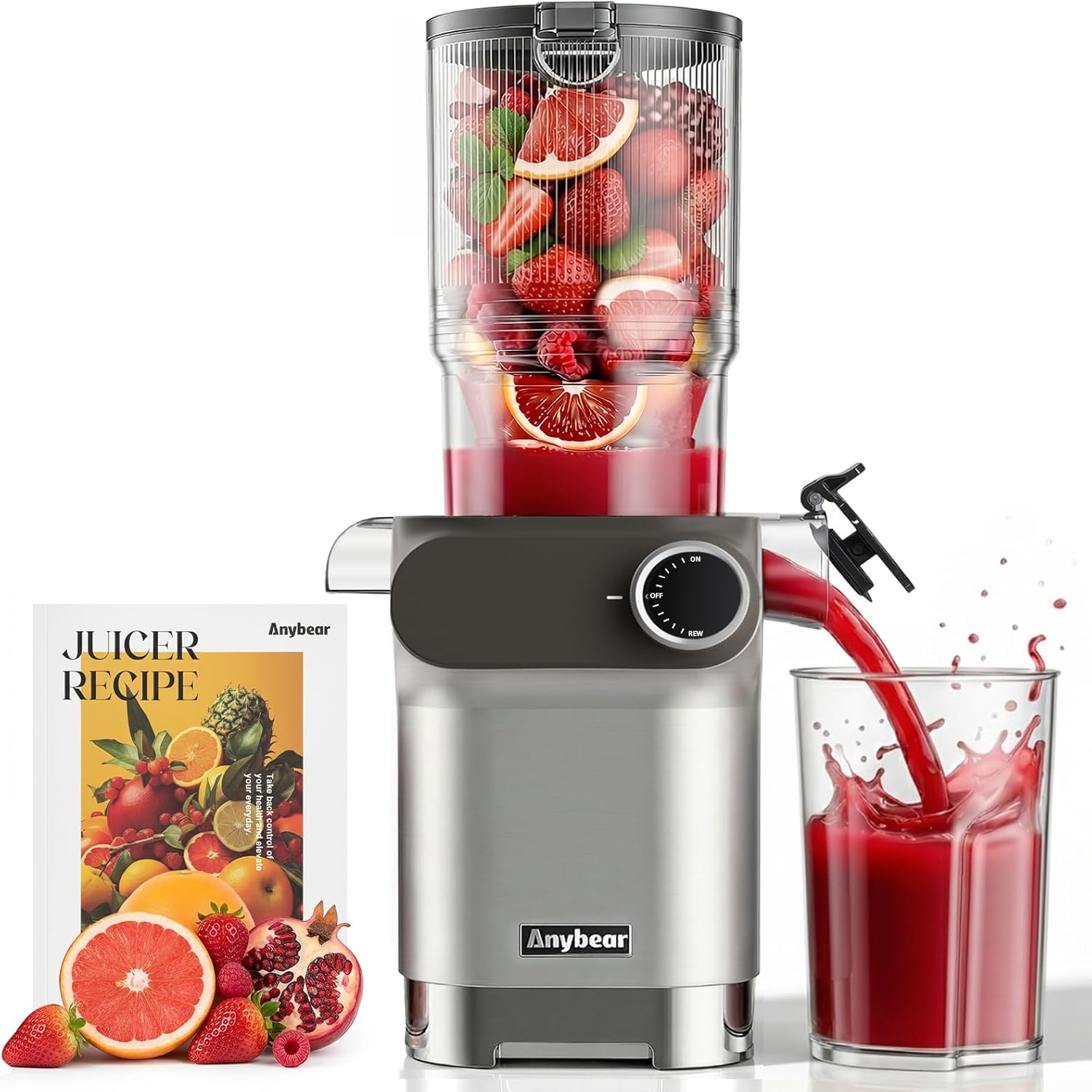
anybear Cold Press Juicer SJ054C
| Maximum Power | 200 watts |
|---|---|
| Wattage | 200 watts |
| Voltage | 110 volts |
| Special Features | Easy to Clean |
The anybear Cold Press Juicer SJ054C is a slow masticating juicer built to extract juice from whole fruits and vegetables with minimal oxidation. It uses a 200W, high-torque motor that turns at about 65 RPM and a heavy-duty auger to press produce slowly, which the brand says boosts yield and preserves flavor. The large 4.3-inch feed chute accepts bigger items so you can juice with less prep, and key parts are made from BPA-free Tritan and stainless steel for food-safe contact. The unit disassembles into a few pieces and includes a brush, and the manufacturer highlights a one-rinse cleaning flow thanks to a simplified filter design. Expect quieter operation and better performance on leafy greens and hard root vegetables compared with centrifugal models, though masticating juicers are naturally slower and require more time when processing large volumes. Hand wash care is required for the components. The included recipe guidance and extended warranty add practical value for someone building a daily juicing habit.
Best for: Buyers who prioritize consistent, long-term performance and want a machine that preserves nutrients and handles leafy greens and hard vegetables efficiently in daily or frequent juicing routines.
Less Ideal for: People who need very fast throughput for large-volume batches or want fully dishwasher-safe parts should consider other juicer types.
- High-torque 200W motor optimized for slow extraction and higher yield
- 4.3-inch feed chute reduces chopping and speeds prep
- Tritan and stainless steel food-contact parts for safer juice taste
- One-piece filter design simplifies cleaning and disassembly
- Quiet operation suitable for morning juicing routines
- Slower processing speed than centrifugal juicers when handling large batches
- Requires hand washing of parts rather than dishwasher-safe components
Verdict: Choose this masticating juicer if you want reliable, high-yield cold extraction for leafy greens and hard vegetables with minimal oxidation.
Breville Juice Fountain Plus JE98XL

| Wattage | 850 watts |
|---|---|
| Number of Speeds | 2 |
| Power Source | Corded Electric |
| Capacity | 1 liters |
The Breville Juice Fountain Plus JE98XL is a fast centrifugal juicer built for short prep time and straightforward daily use. Its 850W motor and two-speed control let you switch between low speed for soft fruits and leafy greens and high speed for denser vegetables, while the 3-inch wide chute reduces chopping. A titanium-reinforced disc and stainless steel micro mesh filter basket aim to maximize extraction and the included 35.2 oz juice jug with integrated froth separator helps pour clearer juice. Cleanup is simplified by a detachable pulp container and dishwasher-safe parts, and the cord stores under the base for neater counters. As a centrifugal model it excels at speed and convenience but will produce more froth and slightly less yield from leafy greens compared with slow masticating juicers, and some users may need to reprocess very fibrous kale or wheatgrass. For buyers who prioritize fast, everyday juicing of mixed produce, it delivers solid performance with practical features.
Best for: Buyers who want a fast, reliable juicer for daily mixed produce use and who value speed and easy cleanup backed by many user recommendations.
Less Ideal for: Those whose primary goal is maximum yield from leafy greens or delicate wheatgrass should consider a slow masticating juicer instead.
- Powerful 850W motor for quick extraction
- 3-inch wide chute reduces prep time by allowing larger pieces or whole fruits
- Two-speed control adapts to soft fruits, leafy greens, and harder vegetables
- Titanium-reinforced disc and stainless steel micro mesh filter for improved extraction
- Dishwasher-safe parts and detachable pulp container make cleanup easier
- Centrifugal design yields more froth and slightly lower juice yield from leafy greens compared with slow juicers
- May struggle or require reprocessing with very fibrous ingredients like wheatgrass or thick kale
Verdict: Choose the Breville Juice Fountain Plus if you want a fast, easy-to-use centrifugal juicer that minimizes prep time and simplifies daily juicing.
EanOruus 3-in-1 Masticating Juicer E-18

| Capacity | 100 fluid ounces |
|---|---|
| Wattage | 250 watts |
| Power Source | ac |
| Voltage | 110 volts |
The EanOruus E-18 is a single-auger cold press juicer built to handle whole fruits and vegetables with minimal prep thanks to its 6.5-inch feed chute and large 100 oz hopper. It uses a 250-watt AC brushless motor and masticating auger to slowly crush produce, which helps preserve nutrients and extract juice from leafy greens and hard vegetables more effectively than centrifugal machines. The unit ships with interchangeable strainers for juice and sorbet plus accessories for nut milk, and features auto-reverse and overheat protection to reduce jams and extend run time during heavy use. Detachable parts are hand-wash only but are designed to disassemble for cleaning, and the plastic construction keeps weight manageable. Important trade-offs are the slower extraction speed compared with high-speed juicers and the need to clean parts by hand after each use, but for anyone prioritizing yield and nutrient retention from greens and tough roots, this model is a practical, quiet option with features that lower mechanical risk and clogging during routine juicing.
Best for: Buyers who want a reliable, nutrient-preserving juicer that minimizes prep and handles leafy greens and hard vegetables with reduced clogging risk and quiet operation.
Less Ideal for: Users who need very fast single-serving juices or prefer dishwasher-safe components and metal construction should consider other options.
- Extra-wide 6.5-inch chute reduces prep time by accepting larger whole fruits and vegetables.
- Large 100 oz hopper lets you batch juice for multiple servings without frequent refills.
- Masticating single-auger design with 250W AC motor preserves nutrients and improves yield from leafy greens and hard vegetables.
- Auto-reverse and overheat protection help prevent jams and protect the motor during heavy use.
- Removable parts are hand-wash only, so cleaning requires time and effort after each use.
- Plastic components and blade material are non-metallic which may feel less durable than metal alternatives.
Verdict: Choose this juicer if you want a quiet, high-yield masticating machine that handles leafy greens and hard veggies with minimal prep and reduced clogging risk.
Choosing the Right Juicer for Leafy Greens and Hard Vegetables: Key Factors to Consider
Extraction Method
The extraction method determines how gently and thoroughly the juicer separates juice from pulp. Cold-press or masticating systems use slow, grinding action that squeezes juice out of leafy greens and hard roots with minimal heat, preserving more vitamins and enzymes.
A machine with a true low-speed extraction is usually better for mixed produce because it reduces oxidation and produces less foaming. Centrifugal machines run faster and can be quicker, but they often yield less from fibrous greens and may generate more heat, which can reduce nutrient retention.
Yield for Leafy Greens Vs Hard Vegetables
Different produce requires different mechanics to achieve high yield. Leafy greens compress and bind together, so efficient juicers must shear and press rather than simply spin; otherwise much of the liquid remains in the pulp. Hard vegetables need strong grinding or shredding followed by pressing to extract juice effectively.
Look for specification details or manufacturer descriptions that indicate testing with both greens and roots. High yield reduces waste and lowers the amount of produce you must buy to reach the same juice volume, which matters for regular juicers.
Cleaning and Maintenance Time
Ease of cleaning will determine whether you actually use the juicer regularly. Units with a few large, dishwasher-safe parts or quick-rinse screens make post-juicing cleanup faster. Complex assemblies with many small screens, brushes, and nooks increase the effort and time required.
Consider how often seals or gaskets need replacement and whether routine maintenance requires special tools. Regular cleaning also prevents residue buildup that can affect flavor and performance, so realistic cleaning time should factor into your decision.
Motor Strength and Heat Management
Power matters for handling dense roots without stalling. But raw wattage is only part of the picture; how the motor handles continuous loads and dissipates heat is equally important. Slow, high-torque motors in cold-press designs deliver steady force with less heat buildup.
If a motor overheats under heavy use, manufacturers may include thermal cutouts that stop the machine mid-juice. For frequent juicing of hard vegetables, choose a machine engineered for sustained torque and with clear guidance on duty cycles to avoid interruptions.
Build Quality and Materials
Durable construction and food-safe materials extend the usable life of a juicer. Stainless steel augers, BPA-free feed chutes, and long-wearing seals resist corrosion and staining from acidic produce like beets and citrus.
Check for warranties and the availability of replacement parts. A well-built machine costs less to own over time if key components can be serviced or replaced without throwing out the entire unit.
Pulp Management and Versatility
How a juicer handles pulp affects both convenience and the type of recipes you can make. Some systems produce very dry pulp, indicating thorough extraction, while others leave wetter pulp and lower yield. Depending on your preferences, you might want pulp that is usable in baking or composting, or you may prefer a machine that separates pulp cleanly for easy disposal.
Also consider whether the juicer can handle occasional soft fruits or leafy-herb blends without clogging. Versatile feed systems and adjustable speed or pressure settings increase the range of recipes you can prepare.
Why Cold-Press Matters for Greens and Roots
Cold-press extraction minimizes heat and oxidation during juicing, which helps preserve delicate nutrients and flavor in leafy greens while reducing foaming and separation. For hard vegetables, the slow, consistent torque of a cold-press system yields more liquid with dryer pulp than high-speed centrifugal shredding.
- Lower operating speeds reduce heat-related nutrient loss
- Slower extraction improves yield and reduces foam
- Drier pulp typically signals better extraction efficiency
Prep Tips to Improve Performance
Proper prep shortens processing time and reduces wear. Trim thick stems from some greens to prevent tangling, and cut large roots into feed-friendly pieces so the machine can handle them without stalling. For very fibrous items, alternate leafy and hard pieces during feeding to maintain consistent throughput.
- Cut roots into 1 to 2 inch pieces when recommended by the manufacturer
- Alternate greens and roots while feeding to keep augers moving
- Remove thick central stalks if they tend to wrap around the auger
Daily Routine and Workflow Suggestions
Plan a consistent workflow to make juicing a repeatable habit. Set up a comfortable juicing station with a cutting board, knife, and two bowls for juice and pulp. Rinse parts immediately after use to prevent dried residue, and run a quick rinse cycle or brush-clean according to the machine instructions before a deeper clean.
- Organize a pre-cut produce batch for faster mornings
- Rinse components within minutes of juicing to prevent stuck-on residue
- Schedule full cleaning times so maintenance does not get skipped
Troubleshooting Common Issues
Clogging, low yield, and overheating are common complaints but usually have simple fixes. Clogs often result from feeding too much leafy material at once or not alternating produce types. Low yield can come from underpowered machines or overly wet pulp signaling ineffective pressing. Overheating indicates the motor is under constant heavy load; let the unit rest according to recommended duty cycles.
- If the auger stalls, reverse or clear the feed and try smaller pieces
- Check for worn seals or screens if yield drops over time
- Allow cool-down periods during prolonged juicing sessions to protect the motor
How We Chose the Best Juicer for Leafy Greens and Hard Vegetables
We focused on machines engineered to handle two distinct categories of produce: delicate leafy greens and dense, hard vegetables. Our selection filters favored juicers that consistently extract high juice yield from fibrous greens while also processing hard roots without excessive pre-cutting or clogging. We prioritized cold-extraction methods and durable components to reduce heat-related nutrient loss and to extend service life. Concrete evaluation criteria included extraction efficiency on both leafy and hard produce, cleaning and maintenance time, motor durability and heat management, chute and feed design for ease of use, and build quality with food-safe materials. We excluded centrifugal-only machines that showed consistently low yield on greens or required frequent reprocessing. Units with unclear maintenance needs or poor parts availability were also filtered out. The final list represents products that balance high juice output, reasonable cleanup, and long-term reliability for everyday juicing routines.
Our full evaluation process is outlined in our review methodology.
FAQ
Can one juicer handle both delicate greens and tough roots well?
Often, yes. Machines designed specifically for mixed produce use low-speed, high-torque extraction to handle fibrous greens and hard roots. However, performance varies, so look for specifications that mention both categories and user notes about yield and clogging.
How often should I clean the juicer after use?
Rinse the removable parts immediately after each use and perform a full cleaning daily if you juice every day. Regular cleaning prevents residue buildup and maintains flavor and performance. Some parts may be dishwasher-safe, but follow the manufacturer cleaning guidance.
Is a slow masticating juicer always better than a centrifugal model?
Slow masticating juicers usually preserve more nutrients and yield drier pulp from greens and roots, but centrifugal units can be faster for occasional use. If you juice leafy greens and hard vegetables frequently, a slow extractor typically gives better results.
Will juicing destroy fiber and nutrients?
Juicing separates most insoluble fiber into the pulp while concentrating vitamins, minerals, and phytonutrients in the liquid. Some soluble fiber remains in the juice, but you will lose most insoluble fiber compared with eating whole produce. Selecting a gentler extraction method helps preserve heat-sensitive nutrients.
How can I increase juice yield from beets and carrots?
Cut roots into uniform, feedable pieces and feed them steadily rather than in large batches. Alternate with leafy pieces to maintain auger motion, and ensure the juicer is rated for dense vegetables so it can apply sufficient torque without stalling.
Final Verdict
Prioritize extraction method, yield differences between greens and roots, and cleaning effort when choosing a juicer for leafy greens and hard vegetables. A low-speed, high-torque design usually gives the best balance of nutrient retention and juice output, while easy-to-clean assemblies keep the machine in regular use. Decide which tradeoffs matter most for your routine. If daily leafy-green juices are a priority, focus on machines with proven green yield and manageable maintenance. If you alternate between roots and greens, pick a model engineered for sustained torque and good pulp dryness to get consistent results.