
Note: This article contains affiliate links. If you click on these links and make a purchase, we may earn a small commission at no extra cost to you. This helps support our research and content. Read our full affiliate disclosure here.
If you make juice from carrots, beets, ginger, and other dense roots, the right juicer changes how frequently you reach for fresh produce. Root vegetables demand machines built for tough, fibrous material so you get higher juice yield, less waste, and pulps that are easier to manage. This guide collects seven top juicers selected specifically for extracting roots efficiently. We shortlisted models based on extraction efficiency, cleaning time, durability with hard produce, and ease of use. Below you will find concise evaluations and guidance to help you match a juicer to your daily routine, kitchen space, and maintenance tolerance.
Top Picks at a Glance
| Best Overall The best all-around choice for most situations | AMZCHEF Cold Press Juicer ZM1939 |  |
| Best Quality Built to a higher standard if you want something more solid | Hurom H400 Slow Juicer |  |
| Best Value The sweet spot between price and what you get | TUUMIIST Cold Press Juicer TM-580SJ |  |
| Best Budget The cheapest option that still gets the job done reliably | GDOR Centrifugal Juicer GS378 |  |
| Top Rated A top-rated pick with lots of positive feedback | ECOSELF Cold Press Juicer |  |
| Most Popular A crowd favorite that many people choose with confidence | Ninja NeverClog Cold Press Juicer JC151 |  |
| Best Seller A high-volume bestseller chosen again and again | EanOruus 3-in-1 Cold Press Juicer E-18 |  |
AMZCHEF Cold Press Juicer ZM1939

| Maximum Power | 600 watts |
|---|---|
| Power Source | dc |
| Voltage | 120 volts |
| Number of Speeds | 2 |
| Capacity | 5.6 pounds |
The AMZCHEF ZM1939 is a single-auger cold press juicer designed to handle whole or large-cut produce using its 6.5-inch reversible wide chute and built-in cutting blades, which reduce prep time for thicker items like carrots and beets. It runs on a 600W DC motor with two speeds and a reverse function to help clear jams, and comes with two interchangeable filters for regular juice and sorbet or nut milk. The large auger and low-speed masticating action prioritize higher yield and reduced oxidation, so juices from root vegetables retain more nutrients and stay fresher longer. Assembly and cleaning are straightforward: parts are removable and dishwasher-safe, and the included brush helps remove pulp from strainers. Trade-offs are typical for slow juicers — processing very hard or fibrous roots can be slower than centrifugal machines, and juices will require occasional reverse cycles to prevent clogging despite the anti-clogging design.
Best for: Buyers who want a versatile cold-press juicer that handles whole or large-cut root vegetables with minimal prep and prioritizes nutrient retention and yield.
Less Ideal for: If you need very fast single-serving juices from large volumes of hard roots several times daily, a high-speed centrifugal model is a better fit.
- 6.5-inch wide reversible chute reduces chopping for whole fruits and many root vegetables
- 600W DC motor with reverse and two speeds helps power through dense produce
- 3-in-1 capability with interchangeable filters for juice, nut milk, and sorbet
- Design and large auger maximize juice yield and minimize oxidation
- Removable parts are dishwasher-safe for easier cleanup
- Slower processing speed for very hard or highly fibrous roots compared with high-speed centrifugal juicers
- May need occasional reverse cycles to clear clogs when juicing dense batches
Verdict: Choose this juicer if you want a versatile, wide-chute cold press that extracts high yields and preserves nutrients from root vegetables while cutting prep time.
Hurom H400 Slow Juicer

| Special Features | Masticating |
|---|---|
| Wattage | 240 watts |
| Power Source | Corded Electric |
| Number of Speeds | 1 |
| Capacity | 2 liters |
The Hurom H400 is a single-auger masticating juicer built for steady, high-yield extraction of fruits, leafy greens, and firm produce such as root vegetables. It runs at a low speed and uses Hurom's slow squeeze approach plus a two-part auger and strainer-free chamber to minimize oxidation and reduce pulp, which helps juice stay fresher for up to 72 hours. The large self-feeding hopper accepts larger pieces so you can skip detailed prepping, and the motor is designed to be quiet for early-morning use. Cleaning is simpler than traditional juicers because the strainer-free design reduces clogged pulp and scrubbing. The 240-watt motor and single-speed button control keep operation straightforward but mean you cannot change speeds for very hard or fibrous items. It is a heavier, countertop-focused unit intended for regular use rather than occasional blending, and it requires hand washing for parts care. For anyone who prioritizes juice yield, low oxidation, and a smooth texture from root vegetables, the H400 delivers consistent performance with minimal fuss.
Best for: Buyers who want a performance-focused slow juicer that maximizes yield and produces smooth, low-oxidation juice from root vegetables and firm produce while minimizing prep and pulp.
Less Ideal for: People looking for a compact, lightweight travel-friendly unit or a multi-speed appliance for variable-texture blending should consider other options.
- Masticating single-auger design yields more juice with less pulp from roots and firm produce
- Strainer-free chamber reduces clogged pulp and simplifies cleaning
- Self-feeding wide-mouth hopper cuts prep time by accepting larger pieces
- Low-speed operation minimizes oxidation so juice stays fresher up to 72 hours
- Quiet motor suitable for early-morning juicing
- Single-speed control limits adjustment for extremely fibrous or hard items
- Parts require hand washing rather than dishwasher cleaning
- Relatively heavy and countertop-sized, not ideal for compact kitchens
Verdict: Choose the Hurom H400 when you want a high-yield, low-oxidation slow juicer that handles root vegetables and firm produce with minimal pulp and prep.
TUUMIIST Cold Press Juicer TM-580SJ
| Maximum Power | 300 watts |
|---|---|
| Wattage | 300 |
| Number of Speeds | 55 |
| Power Source | AC |
| Capacity | 3.8 pounds |
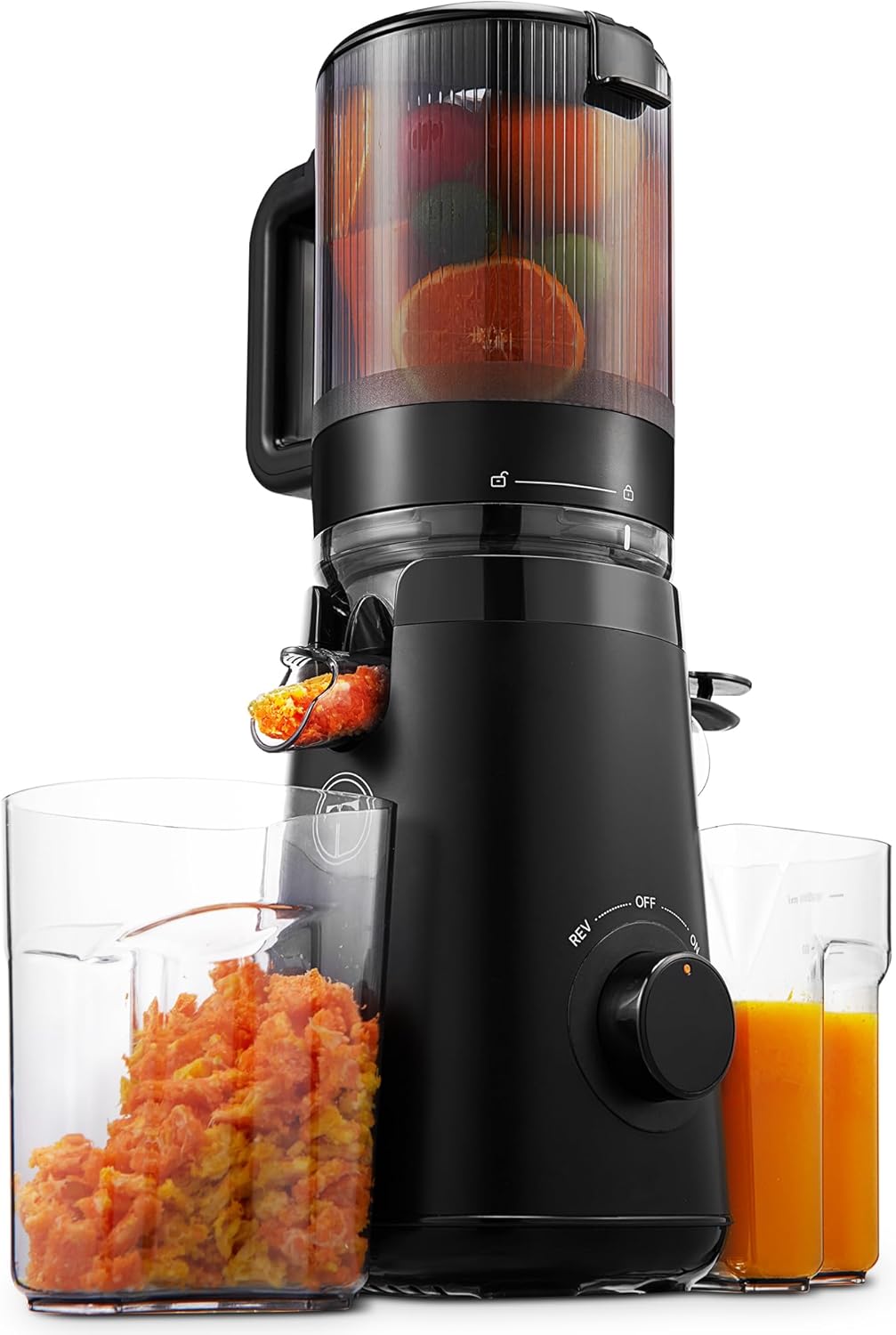
The TUUMIIST TM-580SJ is a masticating cold-press juicer that uses a slow 55 RPM auger and 300 watt motor to extract juice from whole fruits and vegetables with minimal prep. Its large 5.8 inch feed chute accepts bigger pieces and reduces chopping, making it convenient for batch juicing of carrots, beets, and other root vegetables. The unit is built from BPA-free ABS parts and ships with a cleaning brush, juice cup, and pulp cup; the simple one-piece assembly is intended to speed cleaning and reassembly. Because it operates at low speed the juicer preserves more nutrients and yields a higher juice output from fibrous produce, though extended runs may require occasional stopping to clear pulp. Practical controls are basic: a knob controller and stable AC power. Limitations include modest motor power compared with heavy-duty commercial units and plastic construction that may not feel as durable as metal-bodied models, but for home use it balances yield, ease of use, and cleaning for frequent vegetable juicing.
Best for: Home cooks who prioritize efficient, high-yield juicing of root vegetables and want minimal prep and easy cleaning for regular at-home use.
Less Ideal for: Users who need a commercial-grade machine for continuous heavy-duty juicing or who prefer metal-bodied, industrial-strength appliances.
- Large 5.8-inch feed chute reduces prep by fitting whole or large pieces
- Slow 55 RPM masticating action maximizes juice yield and preserves nutrients
- Includes cleaning brush and simple one-piece assembly for faster cleaning
- BPA-free construction for safer food contact
- 300W motor is less powerful than commercial or heavy-duty juicers for very dense root batches
- Mainly plastic construction may feel less robust over long heavy use
Verdict: If you want an easy-to-clean, whole-fruit cold-press juicer that boosts juice yield from fibrous root vegetables without a lot of chopping, this TUUMIIST model is a practical choice for home use.
GDOR Centrifugal Juicer GS378
| Maximum Power | 800 watts |
|---|---|
| Number of Speeds | 2 |
| Power Source | ac |
| Voltage | 120 volts |
| Capacity | 1.1 pounds |
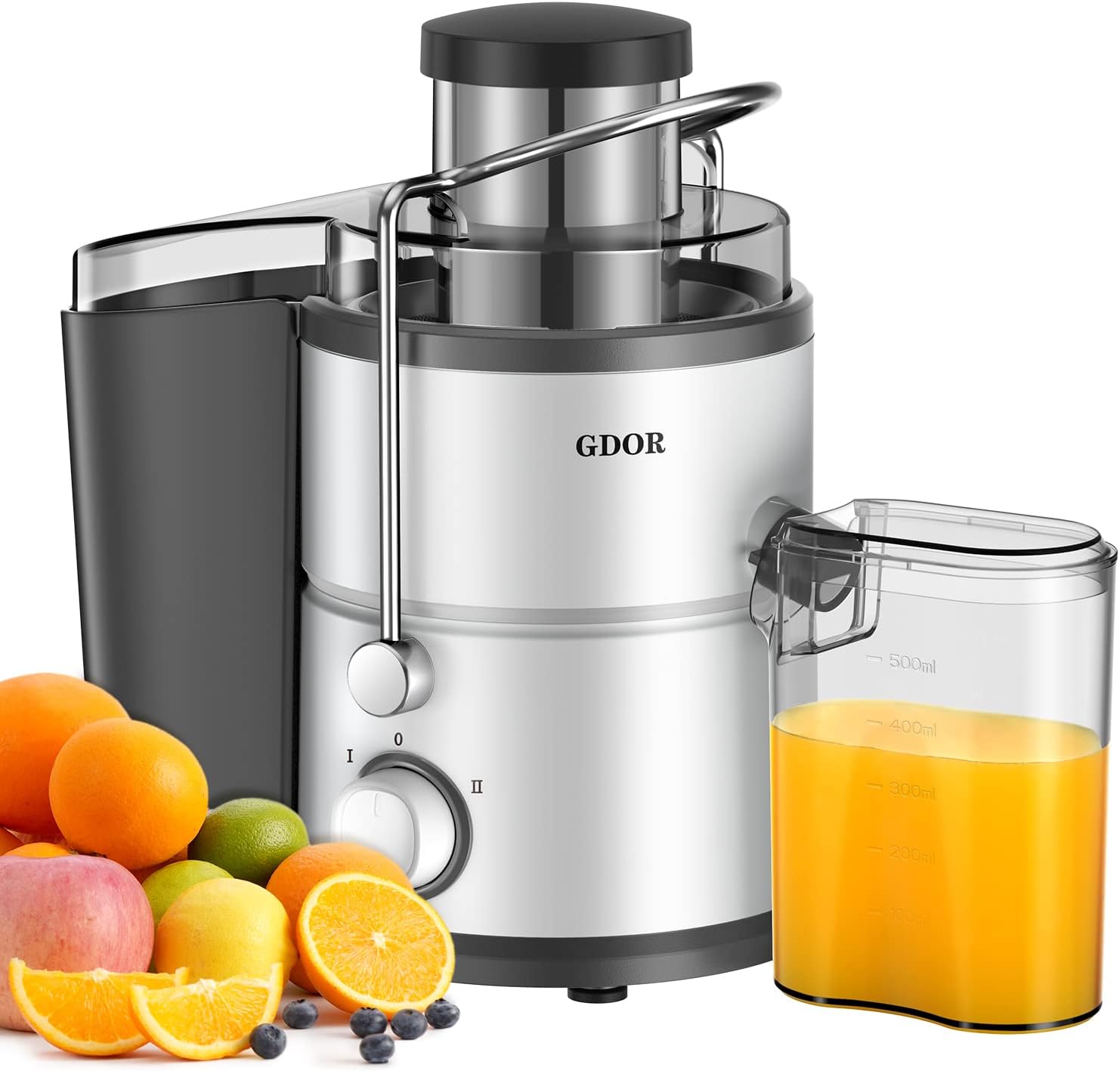
The GDOR Centrifugal Juicer GS378 is a straightforward centrifugal machine aimed at quick juice prep from whole fruits and many root vegetables. Its 800W motor and dual-speed control let you choose lower RPMs for soft produce and a higher setting for harder items like carrots and beets, while a 3-inch feed chute reduces the need to pre-chop. The included 17 oz jug has a built-in foam separator and an anti-drip spout to keep counters cleaner, and safety features such as a locking arm, micro switch protection, and overheat shutoff improve household use. Cleanup is simplified by removable parts and a small cleaning brush, though centrifugal designs typically leave more pulp and extract slightly less juice from fibrous roots than slow masticating machines. The compact plastic and stainless steel build keeps the unit lightweight and budget friendly, but noise and vibration are noticeable during high-speed runs. For those who want fast daily juices from apples, carrots, and other root vegetables without a big investment, this model balances power and practicality.
Best for: Buyers looking for an affordable, fast juicer that handles carrots, beets, and other roots with minimal prep and straightforward operation.
Less Ideal for: People who prioritize maximum juice yield and dry pulp from fibrous root vegetables or who need near-silent operation should consider slow masticating alternatives.
- 800W motor with dual-speed control for soft and hard produce
- 3-inch wide feed chute reduces prep time by fitting larger pieces or whole fruits
- Built-in foam separator and anti-drip spout improve pour quality and reduce mess
- Safety features including locking arm and overheat protection enhance household safety
- Removable parts and included brush make cleaning easier than non-removable designs
- Centrifugal extraction leaves more pulp and yields less juice from very fibrous root vegetables compared with slow masticating juicers
- Can be relatively loud and vibrate on high-speed setting
Verdict: A budget-friendly centrifugal juicer that delivers quick, convenient root-vegetable juicing with a wide feed chute and enough power for everyday use.
ECOSELF Cold Press Juicer

| Brand Name | ECOSELF |
|---|---|
| Material | Acrylonitrile Butadiene Styrene (ABS) |
| Special Features | Easy to Clean, High Juice Yield, Reverse Function, Self Feeding, Wide Feed Chute |
The ECOSELF Cold Press Juicer is a slow masticating single-auger machine designed for daily home juicing, especially useful when you want to drop in larger produce without pre-cutting. Its wide feed chute and self-feeding, hands-free design make it straightforward to run whole fruits, leafy greens, and many root vegetables with minimal prep. The low-speed cold-press operation reduces heat and oxidation to preserve nutrients and deliver smoother, pulp-reduced juice, while the reverse function and one-touch rotary control keep jams from interrupting a session. Assembly and teardown are simple, and the included brush plus integrated hopper and filter make cleaning reasonably quick for everyday use. The claims of very high juice yield mean less wasted produce, but masticating juicers are naturally slower than centrifugal units and require more time if you are processing large volumes of hard roots. If you need very fast throughput for continuous commercial use, a higher-capacity model would be better, but for reliable, nutrient-focused home juicing of root vegetables and greens this unit performs as expected.
Best for: Buyers who prioritize consistent, nutrient-preserving juicing and want a reliable home machine that handles leafy greens and most root vegetables with minimal fuss.
Less Ideal for: Shoppers who need very fast, high-throughput juicing for large batches or commercial use should consider higher-capacity, faster models instead.
- Wide feed chute and auto-feeding design reduce prep time by allowing larger pieces or whole produce
- Slow masticating extraction preserves enzymes and yields smoother, lower-oxidation juice
- Reverse function and simple rotary control minimize and clear jams for continuous operation
- Integrated hopper and included brush make assembly and cleaning faster for daily use
- Slower processing speed compared with centrifugal juicers when handling large volumes
- High juice-yield claims may depend on technique and tougher root vegetables can still require cutting
Verdict: Choose this ECOSELF cold-press juicer if you want a reliable, nutrient-focused home machine that handles root vegetables and greens with minimal prep and dependable anti-jam features.
Ninja NeverClog Cold Press Juicer JC151

| Maximum Power | 150 watts |
|---|---|
| Number of Speeds | 2 |
| Capacity | 24 fluid ounces |
| Power Source | Corded Electric |
The Ninja NeverClog JC151 is a slow masticating juicer designed to handle fibrous and dense ingredients like carrots, beets, and ginger without frequent clogging. Its 150-watt high-torque auger runs at low speed to extract juice while reducing foam and preserving nutrients. The unit includes two interchangeable pulp filters so you can choose smoother juice or a thicker, fiber-rich result, plus a 24 oz juice jug and 36 oz pulp container that let you make larger batches without stopping. Operation is simple with two one-touch programs including a reverse function to clear jams and improve yield, and the anti-drip lever helps avoid spills when pausing to pour. Most juice-contact parts are dishwasher safe and the design is compact enough for countertop use. The motor is not as powerful as some commercial models, so extraction may take a bit longer and very hard roots could require pre-cutting, but for home use it balances yield, ease of cleaning, and clog-reduction well—especially for frequent juicing of root vegetables and greens.
Best for: Buyers who prioritize reliable, clog-resistant cold press juicing of root vegetables and want a countertop machine that yields smooth, nutrient-rich juice with easy cleanup and simple controls.
Less Ideal for: People seeking the fastest possible single-serving juices or a heavy-duty commercial machine for large-scale juicing should consider more powerful commercial models instead.
- High-torque 150W auger designed to power through fibrous and dense produce
- Two interchangeable pulp filters for customizable pulp level
- Large 24 oz juice jug and 36 oz pulp container support continuous batch juicing
- Reverse function and anti-drip lever reduce jams and spills
- Most juice-contact parts are dishwasher safe for easier cleanup
- 150W motor is less powerful than commercial juicers and may need pre-cutting of very hard roots
- Slower extraction speed compared with centrifugal models, so juicing takes more time
Verdict: Choose the Ninja JC151 if you want a countertop cold press juicer that reliably handles fibrous root vegetables with customizable pulp control and easy cleanup.
EanOruus 3-in-1 Cold Press Juicer E-18

| Capacity | 100 fluid ounces |
|---|---|
| Wattage | 250 watts |
| Power Source | ac |
| Voltage | 110 volts |
The EanOruus E-18 is a single-auger cold-press juicer built for high-capacity home use and multi-function cooking tasks. It accepts whole fruits and vegetables through a 6.5-inch wide chute and feeds them into a slow-turning auger driven by a 250 W AC motor that emphasizes steady extraction and reduced heat. You can swap strainers to produce juice, creamy nut milk, or frozen-fruit sorbet, and the 100 oz hopper means fewer refills when juicing large batches or prepping for several servings. Practical features include auto-reverse and overheat protection for smoother operation with fibrous produce, plus detachable parts that hand-wash for easier cleanup. Because it is a masticating unit with a robust motor, it handles tough, stringy root vegetables more effectively than typical centrifugal models, but hand washing and its larger footprint mean it is less convenient for quick single servings. The plastic components and polycarbonate housing keep weight and cost down, but buyers wanting fully metal internals or dishwasher-safe parts should note those differences.
Best for: Buyers who prioritize reliable, low-heat extraction for nutritious juice and want a high-capacity machine that handles fibrous root vegetables and batch prep without frequent refills.
Less Ideal for: If you need a compact, grab-and-go juicer for single servings or prefer dishwasher-safe components and all-metal internals, this model is not the best fit.
- Extra-large 100 oz hopper reduces refills for batch juicing
- 6.5-inch wide chute accepts whole fruits and large vegetables to cut prep time
- 250 W AC motor and auto-reverse handle fibrous and root vegetables with steady, low-heat extraction
- Interchangeable strainers let you make juice, nut milk, or sorbet from the same machine
- Removable parts are hand-wash only which adds cleaning time
- Plastic blade/materials rather than metal may feel less heavy-duty to some buyers
Verdict: Choose this juicer when you want a high-capacity, low-heat masticating machine that reliably extracts juice from tough root vegetables and large produce.
Choosing the Right Juicer for Root Vegetables: Key Factors to Consider
Extraction Yield
High yield matters because root vegetables are dense and can leave a lot of liquid behind if the juicer lacks sufficient pressure or efficient separation. A machine that extracts more juice from the same quantity of carrots or beets reduces produce waste and lowers ongoing grocery costs.
Yield also affects texture and flavor concentration. Better extraction typically produces smoother, less fibrous juice that mixes more easily with lighter fruit juices. When evaluating yield, consider whether the design requires multiple passes or produces consistently dry pulp in a single run.
Clog Resistance and Pulp Management
Root vegetables produce stringy, compacted pulp that can block screens and feed paths. Clog resistance reduces interruptions during juicing and extends the life of the unit by avoiding motor strain from jammed parts.
Look for wide feed chutes, auger or screw geometries designed for fibrous material, and continuous pulp ejection systems. Easy-access pulp chambers and clear inlet paths make it simpler to clear jams when they do occur, keeping the process faster and less frustrating.
Ease of Cleaning
Cleaning is often the deciding factor for daily use. Root pulps tend to cling, stain, and smell if not rinsed promptly. Machines with fewer nooks, straightforward disassembly, and dishwasher-safe parts will save time and reduce the temptation to avoid juicing altogether.
Screens and strainers are the parts that typically require the most attention. Models with pre-rinse features, included brushes sized for the mesh, or coatings that resist staining will make routine maintenance easier and more hygienic.
Motor Power and Durability
A robust motor handles the resistance of hard vegetables without overheating or bogging down. Durability is especially important for frequent users who process sizable batches or prep pulps for recipes besides drinking juice.
Consider motor ratings and whether the unit has thermal protection or a duty cycle specification. Solid construction and warranties that cover motor issues are useful indicators of long-term reliability for root-heavy use.
Feeding Convenience and Prepping Needs
Feed-chute size and design directly influence how much time you spend prepping produce. A wider chute reduces chopping but can be less effective at forcing roots into the cutting or crushing elements; conversely, narrow chutes require more prep but can improve extraction effectiveness.
Also consider whether the machine accepts whole roots, needs them halved, or requires trimming. Features like a pusher that fits the inlet securely and keeps hands clear improve safety and speed during use.
Noise, Countertop Footprint, and Stability
Juicing roots can produce significant vibration and noise. If you have an open kitchen or early morning routine, a quieter, stable unit makes juicing less disruptive. Stability also prevents the unit from walking on countertops when processing tough vegetables.
Footprint matters for storage and setup. More powerful, heavy-duty models typically occupy more counter space, so think about where you will store and run the machine before committing.
Cold-Press Versus Centrifugal: Which Suits Root Vegetables?
Cold-press (slow) juicers and centrifugal (fast) juicers take different approaches to extract liquid. For roots, slow juicers often excel because they crush and squeeze fibers rather than rely solely on high-speed blades. That process typically yields more juice with less froth and heat buildup.
Centrifugal models can be faster for quick batches and are useful if you also juice a lot of soft fruits. However, they may be more prone to clogging and can produce wetter pulp with roots, meaning lower yield per pound.
- Cold-press: usually higher yield and less heat buildup
- Centrifugal: faster throughput but potentially lower extraction with dense roots
Prep Tips to Improve Performance
How you prepare roots affects throughput and extraction. Trim any woody ends, remove large dirt clumps, and cut oversized pieces to fit the feed chute. For very fibrous ingredients like ginger, slicing thinly helps the machine engage the fibers.
Soaking beets is unnecessary, but firmer produce benefits from being pushed steadily rather than forced, which prevents jams. Also rotate different root types during a run to maintain a consistent feed.
- Remove dirt and cut to appropriate sizes for the feed chute
- Alternate dense and softer items to reduce strain
- Use the included pusher and avoid pressing with hands
Managing Pulp and Repurposing Waste
Pulp left from root juicing is rich in fiber and can be reused rather than discarded. Common options include adding it to baked goods, incorporating into veggie patties, or composting for garden use. Dry, crumbly pulp indicates good extraction efficiency.
If you plan to repurpose pulp, aim for machines that eject dry, relatively compact material. Wet, soggy pulp is harder to handle and less versatile in recipes.
- Bake into muffins or crackers to add fiber
- Mix with breadcrumbs and seasonings for patties
- Compost to return nutrients to the garden
Maintenance Routines to Extend Lifespan
Regular cleaning after each use prevents staining and buildup that can degrade seals and screens. Inspect seals, brushes, and screens periodically for wear. Replace consumable parts as recommended by the manufacturer to preserve performance.
Store the unit disassembled or with parts separated to ensure airflow and avoid trapped moisture. Schedule a deeper cleaning every few weeks if you juice daily, focusing on mesh screens and tight crevices where pulp can accumulate.
- Rinse immediately after juicing to prevent staining
- Use manufacturer-recommended brushes for mesh screens
- Check seals and moving parts for wear
Kitchen Integration and Space Considerations
Think about where you will use and store the juicer. Larger cold-press machines deliver great yield but require more counter and storage space. If you have limited room, look for compact designs that still offer robust extraction for roots.
Also plan for cord length, room for pulp containers, and ease of assembly. A machine that is awkward to set up will likely see less use even if it provides excellent results.
- Measure available counter and cabinet space before choosing
- Consider where you will empty pulp and rinse parts
- Check that the unit fits comfortably under cabinets when assembled
How We Chose the Best Juicer for Root Vegetables
We evaluated machines for their ability to handle dense, fibrous root vegetables without clogging or excessive wear. Extraction efficiency was key because roots contain tightly bound cellulose; we prioritized methods and designs that consistently deliver higher yield from carrots, beets, and ginger. Ease of cleaning was another primary filter since root pulps can stick and stain; we favored designs with removable parts, simple screens, and dishwasher-safe components. Durability and motor resilience were assessed to ensure continuous performance when processing frequent batches of hard produce. We also considered feed-chute design and pulp ejection to minimize pre-cutting and downtime. Noise and vibration were noted for practical, everyday use, especially for early-morning routines. Finally, we excluded machines that are strictly for soft fruits or that require specialty attachments to handle roots, focusing on units that perform well with dense vegetables out of the box.
Our full evaluation process is outlined in our review methodology.
FAQ
Can I juice raw beets and carrots without damaging the juicer?
Often yes. Many juicers are designed to handle raw beets and carrots, but the machine must be robust enough for dense produce. Use steady feeding, avoid overloading, and follow the manufacturer's guidance on duty cycles to prevent motor strain.
How much prep do root vegetables need before juicing?
Usually trim ends, remove dirt, and cut items to fit the feed chute. Large or irregularly shaped roots may need to be halved or quartered so they pass smoothly and reduce strain on the mechanism.
Will juicing roots remove the fiber I need?
Juicing separates most fiber from the liquid, so you will lose some insoluble fiber. The juice concentrates vitamins and minerals but lacks the bulk of whole-food fiber. You can reuse pulp in recipes to retain some of that fiber in your diet.
What maintenance keeps a juicer safe for root vegetables?
Regular cleaning of the screen and feed path prevents buildup that leads to jams or odors. Check seals and brushes for wear, avoid running overly large batches without breaks, and allow the motor to cool if the unit has a rated duty cycle.
Is cold-press juicing better for nutrients in roots?
Cold-press methods operate at lower speeds and can generate less heat, which may better preserve heat-sensitive nutrients and reduce oxidation. That said, both methods extract vitamins and minerals; the differences are often modest for casual home use.
Final Verdict
When selecting a juicer for root vegetables, prioritize extraction yield, clog resistance, and ease of cleaning because those factors determine how much juice you get and how often you will actually use the machine. Balance motor durability and feeding convenience against your available counter space and how much prep you are willing to do. Choose a model that fits your routine: pick higher-capacity, slow-extract units for frequent root juicing and better yield, or a compact, faster machine if you need quick servings with less counter commitment. Focus on the tradeoffs described here to find a reliable option that meets your daily juicing habits.