
Note: This article contains affiliate links. If you click on these links and make a purchase, we may earn a small commission at no extra cost to you. This helps support our research and content. Read our full affiliate disclosure here.
Getting the most liquid from fruits and vegetables matters whether you make juice daily or occasionally. A juicer that extracts the most juice reduces waste, stretches produce, and gives you stronger flavor and nutrition per serving. Picking the right model affects kitchen cleanup time, counter space, and how reliably it handles leafy greens versus hard roots. This guide shortlists the top juicers focused on extraction yield and practical use. We evaluated machines across extraction performance, ease of cleaning, and everyday reliability to help you choose the best option for higher yield and simpler upkeep. Read on to see the picks and why each dimension matters.
Top Picks at a Glance
| Best Overall The best all-around choice for most situations | Omega Cold Press Vertical Juicer VSJ843QR |  |
| Best Quality Built to a higher standard if you want something more solid | Hurom H400 Slow Juicer |  |
| Best Value The sweet spot between price and what you get | Breville Juice Fountain Cold | 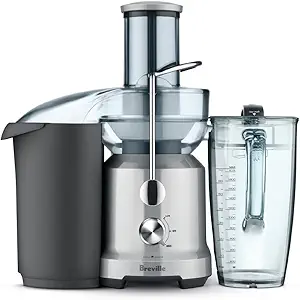 |
| Best Budget The cheapest option that still gets the job done reliably | QCen Centrifugal Juicer KS-501 | 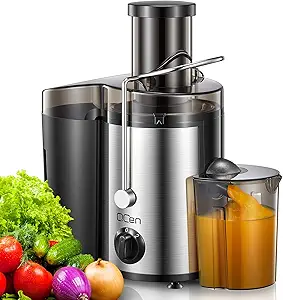 |
| Top Rated A top-rated pick with lots of positive feedback | Breville Juice Fountain Plus JE98XL |  |
| Most Popular A crowd favorite that many people choose with confidence | Hamilton Beach Big Mouth Juicer 67601A |  |
| Best Seller A high-volume bestseller chosen again and again | EanOruus 3-in-1 Masticating Juicer E-18 |  |
Omega Cold Press Vertical Juicer VSJ843QR

| Maximum Power | 150 watts |
|---|---|
| Power Source | Corded Electric |
| Voltage | 120 |
| Number of Speeds | 1 |
The Omega Cold Press Vertical Juicer is a slow masticating extractor designed to maximize juice yield and preserve nutrients by operating at 43 RPM with a three-stage auger. It is used for batch juicing of fruits, vegetables, leafy greens, wheatgrass and for making nut milks, with a no-drip tap that lets you stop flow to mix or remove the cup cleanly. The low speed reduces heat and oxidation, producing smoother, less foamy juice and longer shelf life compared with high-speed machines. Practical touches include an auto-cleaning screen to reduce clogging and quieter operation than many centrifugal juicers, and many components are top-rack dishwasher safe for easier cleanup. Important limitations are its single speed and corded design, and its slower output means longer run time for large volumes compared with fast centrifugal units. The robust build and 15-year warranty make it a good long-term choice for buyers focused on max extraction and nutrient retention rather than quick one-off batches.
Best for: Buyers who prioritize maximum juice extraction and nutrient retention and are willing to accept slower batch processing for smoother, higher-yield results.
Less Ideal for: People who need very fast juicing for large quantities or want multi-speed control for different ingredient types should consider faster centrifugal or multi-speed models instead.
- Slow 43 RPM masticating action preserves enzymes and reduces oxidation for nutrient-dense juice
- Three-stage/dual-edge auger increases juice yield and reduces pulp in the output
- No-drip tap allows mess-free stops and the ability to mix or remove the cup mid-cycle
- Auto-cleaning screen and many dishwasher-safe parts simplify cleanup
- Quiet operation compared with high-speed juicers and a long 15-year warranty for peace of mind
- Single speed limits flexibility for very soft or delicate ingredients
- Slower throughput means longer time to process large volumes
Verdict: Choose this Omega vertical cold press juicer when your priority is getting the most nutrient-rich juice and highest yield from produce rather than fastest throughput.
Hurom H400 Slow Juicer

| Wattage | 150 watts |
|---|---|
| Power Source | Corded Electric |
| Voltage | 230 volts_of_alternating_current |
| Capacity | 550 ml |
| Number of Speeds | 1 |
The Hurom H400 is a single-auger, cold-press juicer built to pull high yield from whole and chopped produce while keeping cleanup simple. It uses a low-speed auger and a two-part Easy Clean chamber that meshes to separate pulp without a removable strainer, so you get clearer juice with less scrubbing. The large self-feeding hopper accepts bigger pieces and lets you add produce while running for continuous batching, and the 150-watt motor is tuned for quiet operation. In practice the H400 performs well with hard fruits and vegetables and extracts noticeably more liquid and less wet pulp than many centrifugal models, and the front juice gauge helps monitor output without stopping the machine. The reduced number of parts makes assembly and dishwasher-safe cleaning faster, though capacity is modest at 550 ml so frequent emptying is needed for larger batches. The unit runs on a single speed and is optimized for juice yield rather than multi-speed control or pure smoothie work, so it is best suited to people focused on efficient cold-press extraction.
Best for: Buyers who prioritize maximizing liquid yield and low pulp in fresh juice and want a quiet, efficient cold-press machine for regular home juicing.
Less Ideal for: If you need large-capacity commercial throughput, variable-speed control for blending textures, or a machine primarily for smoothies, this compact, single-speed juicer is not the best fit.
- High juice yield thanks to slow-squeeze auger and strainer-free mesh chamber
- Large self-feeding hopper for quicker loading and continuous juicing
- Easy Clean chamber with fewer parts reduces assembly and scrubbing time
- Quiet 150W motor suitable for early-morning use
- 550 ml capacity requires frequent emptying during larger batches
- Single-speed operation limits control for softer fruits or smoothie-style preparations
Verdict: Choose the Hurom H400 when your top priority is extracting the most juice with minimal pulp and simple cleanup.
Breville Juice Fountain Cold

| Wattage | 850 watts |
|---|---|
| Number of Speeds | 2 |
| Feed Chute | 3 inch extra-wide |
| Capacity | 70 fl oz |
| Blade Material | Titanium |
The Breville Juice Fountain Cold is a high‑speed centrifugal juicer built for quick, everyday juicing. Its 850 watt motor and 3-inch extra-wide chute let you feed whole apples, carrots, and oranges with minimal prep, and two speed settings help match power to softer or harder produce. Cold Spin Technology and a precision mesh filter are designed to reduce heat during extraction so juice retains more vitamins and minerals than typical high-speed machines, and the included 70 fl oz seal-and-store jug makes batch juicing convenient for families or meal prep. Cleanup is reasonably straightforward because the juice cover, stainless steel filter bowl, puree disk and jug are dishwasher safe, though some plastic parts require hand washing. The juicer is fairly large and not the quietest option, so it suits a dedicated countertop rather than small kitchens or very noise-sensitive households. If you want fast, high-yield extraction with easy bulk storage, this model delivers a strong balance of speed, capacity, and nutrient-focused design.
Best for: Buyers who value fast, high-yield juicing and want to prep larger batches for the week while preserving more nutrients than standard high-speed juicers.
Less Ideal for: People with very limited counter space, those who need an ultra-quiet machine, or users who prefer slow masticating juicers for maximum yield from leafy greens.
- 850 W motor with two speeds provides fast extraction for a wide range of produce
- 3-inch extra-wide chute reduces prep time by fitting whole fruits and many vegetables
- Cold Spin Technology and precision mesh filter aim to preserve vitamins and minerals
- Large 70 fl oz seal-and-store jug lets you batch juice and refrigerate for up to three days
- Most removable parts are dishwasher-safe, simplifying cleanup
- Relatively large footprint and noticeable operating noise
- Some plastic components require hand washing despite other dishwasher-safe parts
Verdict: Choose this juicer if you want fast, bulk extraction with a nutrient-preserving cold-spin design and a large seal-and-store jug for easy meal prep.
QCen Centrifugal Juicer KS-501

| Maximum Power | 500 watts |
|---|---|
| Wattage | 500 watts |
| Power Source | Corded Electric |
| Number of Speeds | 2 |
| Capacity | 3 liters |
The QCen KS-501 is a straightforward centrifugal juicer built for quick everyday juicing. Its 500W motor and two-speed control let you run softer fruits at the low setting and harder produce like carrots or apples at the high setting, while the 3-inch feed chute reduces prep by fitting larger pieces. The stainless steel filter and blade do the heavy extraction, and the safety lock arm plus overload protection add basic safeguards during use. Detachable parts make cleanup manageable, though the product care instruction lists hand washing only. In practice the unit is compact on the counter and works well for morning juices where speed matters more than squeezing every last drop from pulp. It will not match slow masticating extractors for yield or nutrient retention, but for a budget-focused centrifugal option it delivers fast, consistent results and reasonable durability for routine home juicing.
Best for: Buyers wanting an affordable, fast countertop juicer that minimizes prep time and delivers quick morning or casual juices without the expense of a slow extractor.
Less Ideal for: Those who prioritize maximum juice yield, minimal foam, or nutrient-preserving cold-press extraction should choose a masticating juicer instead.
- 500W motor provides fast extraction for most fruits and vegetables
- 3-inch wide feed chute reduces chopping and speeds up prep
- Two-speed control adapts to soft and hard produce
- Stainless steel parts and safety lock arm improve durability and safe operation
- Centrifugal design yields less juice and more foam compared with slow masticating juicers
- Requires hand washing of parts rather than dishwasher-safe convenience
Verdict: A budget-friendly centrifugal juicer that speeds up prep with a wide feed chute and two speeds for everyday home juice extraction.
Breville Juice Fountain Plus JE98XL

| Wattage | 850 watts |
|---|---|
| Number of Speeds | 2 |
| Power Source | Corded Electric |
| Capacity | 1 liters |
The Breville Juice Fountain Plus JE98XL is a desktop centrifugal juicer built for fast, everyday use. It uses an 850W motor, titanium-reinforced disc and stainless steel micro-mesh filter basket to pull juice from fruits and vegetables, and the 3-inch wide chute reduces prep by allowing many items to be fed whole. Two speed settings let you choose low for soft or leafy produce and high for denser fruits and root vegetables, while a built-in froth separator on the included juice jug helps deliver clearer pours. Cleanup is straightforward thanks to a detachable pulp container and dishwasher-safe parts, and cord storage under the base keeps the counter tidy. For users prioritizing reliable, high-throughput extraction, this model consistently yields a good volume of juice for its class, though as a centrifugal unit it will produce more foam and slightly less nutrient-retaining juice than a slow masticating juicer. The JE98XL is best where speed and ease of use matter most rather than maximum cold-press extraction efficiency.
Best for: Buyers who want a reliable, fast juicer that maximizes throughput and minimizes prep time for daily fresh juice rather than squeezing every last drop using slow-press methods.
Less Ideal for: Users seeking the absolute highest cold-press yield and minimum foam for long-term storage should consider slow masticating juicers instead.
- Extra-wide 3-inch feed chute reduces prep time by letting many fruits and vegetables be juiced whole
- Powerful 850W motor with titanium-reinforced disc and stainless steel micro-mesh filter for strong extraction
- Two speeds let you tailor performance for soft or hard produce
- Built-in froth separator yields clearer juice pours
- Detachable parts are dishwasher-safe and cord stores under the base for neat storage
- As a centrifugal juicer it creates more foam and slightly less nutrient-preserving extraction than slow masticating models
- Not the quietest option during high-speed extraction
Verdict: Choose the JE98XL when you want a dependable, fast centrifugal juicer that extracts a large volume of juice quickly with minimal prep.
Hamilton Beach Big Mouth Juicer 67601A

| Maximum Power | 800 watts |
|---|---|
| Power Source | Corded Electric |
| Number of Speeds | 1 |
| Material | Plastic, Stainless Steel |
| Capacity | 5 pounds |
The Hamilton Beach Big Mouth Juicer is a centrifugal extractor built for speed and convenience. Its 800W motor and stainless steel strainer spin hard and soft produce to separate juice from pulp, while the 3-inch feed chute accepts whole apples and long stalks of celery so you can skip most pre-cutting. It collects pulp in a large bin and sends juice through a short spout into your glass; removable parts are dishwasher safe and a cleaning brush is included to help clear the mesh. The single-speed knob makes operation simple, and motor overload protection reduces the risk of overheating during heavy runs. Because it is a centrifugal design you get fast yields for everyday fruits and many vegetables, though very fine extraction from leafy greens will be less efficient than a slow press juicer and the juice can be slightly frothy. The unit does not include a juice cup or foam separator, so expect some manual settling or straining for clearer juice. For buyers focused on quick, high-throughput juicing with easy cleanup, this model delivers reliable performance.
Best for: Buyers who prioritize fast, no-fuss juicing and want social proof of reliability will appreciate this unit for daily fresh juice and high-throughput preparation.
Less Ideal for: If you need maximum yield from leafy greens or want the quietest, lowest-foam juice, choose a slow masticating juicer instead.
- Large 3-inch feed chute reduces prep by letting you juice whole fruits and long produce
- 800W motor provides strong, fast extraction for hard and soft produce
- Removable, dishwasher-safe parts and included cleaning brush simplify cleanup
- Large pulp bin supports continuous juicing sessions without frequent emptying
- Stainless steel strainer and blade for durable contact with produce
- Centrifugal design is less efficient at extracting juice from leafy greens compared with slow press juicers
- Single-speed control limits optimization for different produce textures
Verdict: Choose this Hamilton Beach model if you want fast, high-throughput juicing with minimal prep and easy cleanup.
EanOruus 3-in-1 Masticating Juicer E-18

| Capacity | 100 fluid ounces |
|---|---|
| Maximum Power | 250 watts |
| Power Source | AC |
| Voltage | 110 volts |
The EanOruus E-18 is a slow single-auger masticating juicer aimed at making high-yield juice, nut milk, and fruit sorbet with minimal prep. You feed whole or large-cut produce into the 6.5-inch chute and the auger crushes and presses ingredients slowly to extract juice while the included strainers let you switch between juice and sorbet or nut milk. The wide 100 oz hopper reduces refilling for batch juicing and the AC brushless 250W motor is designed for steady, quiet operation and to handle tougher fibrous produce. The unit offers auto-reversing and overheat protection to reduce jamming and stress on the motor, and most removable parts are dishwasher-safe only by hand wash instruction, which helps with everyday cleanup. Practical limits are the plastic blade components and mostly polycarbonate construction rather than metal, and the machine is relatively heavy and sizable on a counter, so it is better for committed home juicers than for occasional single-serving use.
Best for: Buyers who want high-yield, batch-friendly cold-press juice and plan to juice regularly for family meals or meal prep and value quiet, consistent extraction.
Less Ideal for: If you only want occasional single cups of juice, need the lightest, most compact countertop appliance, or prefer mostly metal construction for long-term heavy commercial use, this is not the best fit.
- Large 6.5-inch feed chute accepts whole fruits to cut prep time
- 100 oz hopper allows batch juicing for families or meal prep
- 250W AC brushless motor provides steady, quiet extraction and better yield from fibrous produce
- Auto-reverse and overheat protection reduce jams and protect the motor
- Major components use plastic/polycarbonate rather than metal, which may affect long-term durability
- Hand-wash care recommended for removable parts rather than full dishwasher-safe convenience
Verdict: Choose the EanOruus E-18 if you want a quiet, high-capacity masticating juicer that maximizes yield for batch home juicing.
Choosing the Right Juicer That Extracts the Most Juice: Key Factors to Consider
Juicer Mechanism
The internal mechanism determines how thoroughly produce is broken down and how much liquid is separated. Centrifugal machines spin at high speed and rely on blade and mesh action, while masticating or cold-press systems crush and press produce more slowly to extract additional liquid.
Mechanism choice affects yield and the types of produce the juicer handles best. Slower-acting press-style designs typically return drier pulp and higher juice yield from leafy greens and soft fruits. Faster-spinning units may be quicker but often leave wetter pulp and less usable liquid from the same ingredients. Match the mechanism to the kinds of produce you plan to juice most often.
Pulp Dryness and Waste
How dry the expelled pulp is after juicing is a practical proxy for extraction efficiency. Drier pulp means more of the fruit or vegetable was converted into juice, which saves money on produce and reduces waste volume.
Inspect expected pulp moisture for the types of produce you use. Some machines include adjustable settings or double-press steps that improve dryness at the cost of time. Consider whether you want the absolute maximum yield for occasional longer sessions or a faster routine with slightly wetter pulp.
Ease of Cleaning
Ease of cleaning strongly affects whether a juicer becomes part of a daily routine. Machines with many small parts or fine mesh filters can trap fibers and require more time to scrub, discouraging frequent use.
Look for components that disassemble easily, are dishwasher-safe when appropriate, or can be rinsed quickly with minimal nooks. The simpler the cleaning process, the more likely you are to use the juicer consistently and benefit from higher overall yield over time.
Throughput and Feeding Convenience
Throughput describes how quickly a juicer converts whole produce into juice. Wide feed chutes and strong feeding action reduce prep time by allowing larger items to be processed without chopping.
If you plan to juice large volumes or frequently prepare morning batches, prioritize machines with high throughput and comfortable feeding. Slower, more thorough systems may trade speed for yield, so consider whether you prefer faster turnaround or maximum extraction per item.
Noise Level and Countertop Impact
Noise and footprint influence where and how often you can operate a juicer. High-speed centrifugal designs are typically louder, which can be disruptive in shared living spaces, while slower-acting machines run quieter.
Countertop footprint determines storage and placement options. If space is tight, choose a compact model or one with manageable disassembly for storage. Balance noise tolerance and space against extraction needs to find a machine you will actually use regularly.
Durability and Maintenance Requirements
A durable juicer sustains consistent extraction performance over time. Look for robust materials in drive mechanisms, quality seals that resist leaks, and serviceable parts that can be replaced if worn.
Maintenance includes regular inspection of gaskets, brushes for filters, and any drive belts or gears. Machines engineered for easy part replacement and straightforward maintenance minimize downtime and preserve yield across years of use.
Why Extraction Yield Varies Between Machines
Extraction yield depends on mechanical approach, rotor or auger design, and how the machine spaces and compresses fibers. Machines that apply sustained pressure or multiple-stage crushing will typically recover more liquid from the same produce than devices that rely on high-speed centrifugal force.
Produce type also affects yield. Leafy greens, wheatgrass, and soft berries require different mechanical action than hard roots like carrots. A machine tuned for leafy greens may not need the same throughput features as one intended for heavy root juicing.
- Press-style and twin-gear mechanisms generally achieve higher dry-pulp results.
- Centrifugal units often trade some yield for faster processing.
- Adjustable speed or pressure settings can help tune yield by produce type.
Maintenance Tips to Preserve Extraction Performance
Routine cleaning immediately after use prevents fiber buildup that can reduce filter effectiveness and lower extraction over time. Rinse removable parts while pulp is still fresh to avoid dried residue that requires scrubbing.
Inspect filters and seals periodically. Tiny clogs in mesh screens or worn gaskets can allow bypass or reduce centrifugal efficiency, depending on the mechanism. Replacing consumable parts on schedule maintains consistent extraction yield.
- Soak fine mesh filters briefly in warm, soapy water to loosen trapped fibers.
- Check and replace rubber seals if you notice leaks or reduced suction.
- Store disassembled components to ensure they dry fully and avoid mold.
Best Produce Prep Practices to Maximize Yield
Cutting produce to the size recommended for the feed chute or mechanism reduces strain and ensures consistent feeding. For slow-acting press systems, smaller pieces allow the auger to crush and press uniformly. For centrifugal machines, balanced loading prevents motor strain and uneven extraction.
Combine produce types strategically. Mixing hard and soft ingredients can help the machine extract more liquid from the softer items while the harder items provide structural support for better compression. Peel only when necessary to avoid removing edible nutrients.
- Trim fibrous cores and large leaves for smoother feeding.
- Alternate soft and hard items to maintain consistent output.
- Remove large pits and stones to avoid damage to internal components.
Noise and Placement Strategies for Home Use
Choose a quieter model or schedule juicing for times when household noise is acceptable if you have early morning routines. Position the juicer on a stable surface to reduce vibration and perceived noise.
Consider ventilation and splatter control. Some high-yield machines expel wetter pulp that can splash if not properly seated. A cutting board or absorbent mat under the unit can simplify cleanup and protect counters.
- Place the machine away from cabinet doors to prevent rattling.
- Use rubber feet or a mat to dampen vibration.
- Plan storage so the juicer is accessible for frequent use.
When to Prioritize Speed Over Maximum Yield
If you juice small quantities occasionally or value quick morning routines, a faster machine with simpler cleaning may fit your lifestyle better than a slow-press model that squeezes more juice. Faster machines reduce prep and processing time but may require you to accept slightly wetter pulp.
Evaluate how often you will juice and how much time you are willing to spend on cleaning. For daily juicers, investing time in the device with higher yield often pays off. For weekly users, convenience and speed may be the deciding factors.
- Choose throughput-optimized designs for large batch juicing.
- Select low-maintenance models for sporadic use.
- Balance yield expectations with available time for upkeep.
How We Chose the Best Juicer That Extracts the Most Juice
We prioritized measurable extraction efficiency and everyday usability when assembling this list. First, extraction performance was treated as the primary filter, favoring designs and mechanisms known to squeeze more liquid from the same quantity of produce. Next, we assessed cleaning and maintenance requirements because high-yield machines that are difficult to keep clean discourage regular use. Durability and build quality were weighted to ensure units tolerate frequent use without rapid wear. We also considered throughput and feeding behavior, including how well machines accept whole fruits, handle fibrous greens, and manage pulp discharge. Noise level and countertop footprint were secondary filters for home settings where space and household tolerance matter. Safety features and included accessories were evaluated to determine real-world usability. Excluded from consideration were devices with unclear extraction claims, models lacking basic safety features, and machines that require extensive aftermarket modifications to reach acceptable performance. The final selections balance extraction yield with maintenance burden, throughput, and reliability so buyers can expect both high juice output and reasonable everyday upkeep.
Our full evaluation process is outlined in our review methodology.
FAQ
Does a slower masticating juicer always yield more juice?
Often, slower masticating designs produce drier pulp and higher yield, especially with leafy greens and soft fruits. However, yield gains depend on the specific mechanism and produce mix, and some high-quality centrifugal designs can approach similar results for certain items.
How can I tell if my juicer is underperforming?
Compare pulp dryness and juice volume from the same batch of produce over a few runs. Wetter pulp and noticeably lower juice volume suggest reduced extraction. Check filters and seals for buildup or wear before assuming a mechanical fault.
Will juicing different produce together affect extraction?
Yes. Mixing soft and hard produce influences how well the machine compresses fibers. Alternating item textures during feeding usually improves compression and overall yield compared with processing only soft or only hard items consecutively.
How often should I replace filters or seals?
Replacement frequency depends on use intensity. For daily users, inspect filters and seals every few months and replace when you notice wear, clogging that cannot be cleaned, or leakage. Occasional users can extend intervals but should still check parts before heavy sessions.
Can I improve yield by re-processing the pulp?
Re-processing pulp can extract additional liquid but adds time and may increase cleaning needs. Some machines allow a second pass or include a press attachment to squeeze more juice; evaluate whether the yield gain justifies the extra effort for your routine.
Final Verdict
Focus on the extraction mechanism, expected pulp dryness, and how much time you are willing to spend on maintenance when choosing a juicer. Higher-yield designs often require slower processing or more involved cleaning, so balance extraction performance against throughput and ease of upkeep. Prioritize the factors that match your daily habits. If maximum yield is the priority, choose a machine built for sustained pressure and efficient pulp separation. If convenience and speed matter more, accept modest tradeoffs in yield for faster, lower-effort operation.